
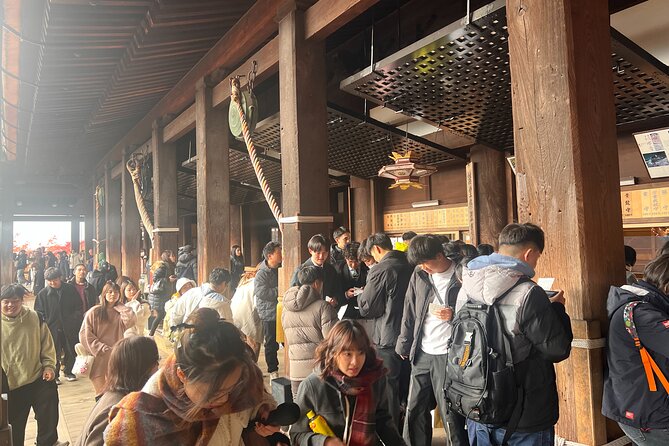
Reviewed · KYOTO BUS & SIGHTSEEING TOURS
Kyoto Highlights Eastern Western Northern and Southern Routes
A Kyoto route built for calm, not crowds. This private day trip stacks some of Kyoto’s most famous spiritual and street scenes in a smooth order, with admission ticket-free stops and a welcoming, low-pressure guide style that works for couples and solo visitors alike. I like that you get a steady rhythm, not a frantic hit list, while still seeing the big visual moments, from panoramic viewpoints to Zen rock and red torii.
One thing to keep in mind: this experience is weather-dependent and the booking is non-refundable, so plan with some flexibility in your schedule. If the day gets canceled due to poor weather, you’ll be offered a different date or a full refund, but the stakes are still higher than with free changes.
You start at Namba Station in Osaka, hop in private transport, and return to the same meeting point. Expect an 8 to 14 hour day (approx.), with multiple short temple and shrine stops, each around 40 to 60 minutes.
Key things that make this Kyoto route worth it
- Ticket-free admissions at every stop, so you can budget for food and transit without surprise entry fees.
- Private transportation for your group, which makes the schedule feel calmer and easier to control.
- A smart mix of Kyoto moods, geisha district streets, imperial gardens, and Zen temples in one line.
- Zen highlights in sequence, from minimalist rock garden style to a gold-leaf temple and more garden-tea calm.
- A big red torii shrine climb, with time to walk, pause for photos, and decide your pace.
From Namba to Kyoto, the day runs on comfortable timing
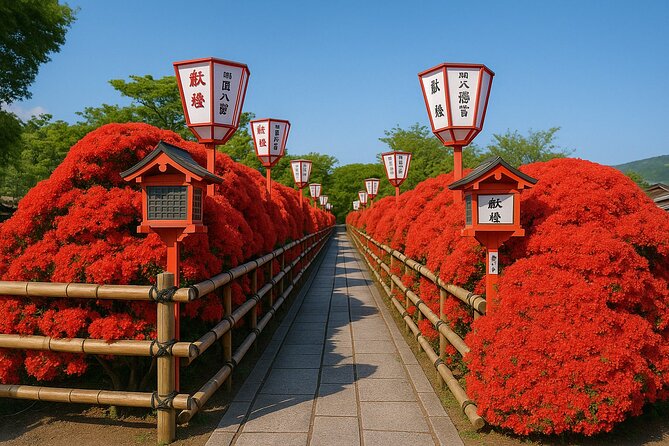
This is a private tour, meaning it’s only your group, up to 2 people per booking. That matters because it changes the feel of the day. You are not squeezed into a crowd at each stop, and the guide can keep the pace realistic.
Pickup is offered, and you meet at Namba Station (1 Chome-9 Namba, Chuo Ward, Osaka, 542-0076). The tour ends back at that same meeting point, so you do not need to figure out separate trains or transfers mid-route.
The itinerary is designed in shorter segments, usually 40 to 60 minutes per site, which is a classic Kyoto move. You get enough time to look closely and take photos, but you avoid burning the day in transit and long waits. That also helps if you want to keep the experience relaxed, not exhausting.
You will get a mobile ticket, so you can show on your phone instead of tracking paper. And because private transportation, fuel surcharge, and parking fees are included, you are not guessing at extra costs or logistics once you’re in the car.
If you are the type who likes a plan, this one gives you structure. If you are the type who gets annoyed by rigid plans, the private nature means you can usually shape the day to your comfort level.
You can also read our reviews of more tours and experiences in Namba.
The UNESCO panoramic, wooden-stage viewpoint stop
The first stop is a UNESCO World Heritage site known for a wooden stage and historic significance, with breathtaking panoramic views of Kyoto. This is the kind of opening that helps you understand the layout of the city. Once you see the hills and the temple silhouette from above, the rest of the day makes more sense.
Why I like this stop for a first or early slot: it gives you context fast. Instead of running from one attraction to another, you build a mental map. Even if you only spend 45 minutes, the viewpoint helps you notice how Kyoto’s sacred sites relate to the surrounding terrain.
Also, it’s admission ticket free in this route, so the time feels like pure sightseeing value. You can focus on the wooden-stage architecture and the sweeping views rather than on budgeting for an entry fee.
Practical tip: wear shoes with solid grip. Viewpoints and temple approaches can be uneven, and you’ll want footing for steady photos.
Possible drawback: panoramic spots can be sensitive to weather and visibility. If the day is foggy or rainy, you may get fewer long-distance views, and you’ll rely more on details like woodwork and atmosphere.
Geisha district streets, machiya-style charm, and quiet street time
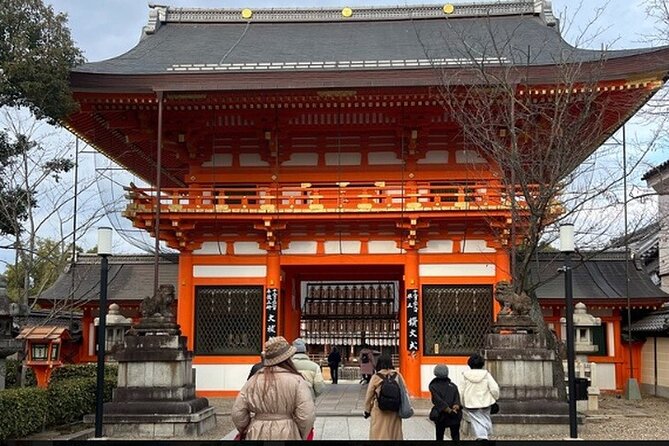
Next you head to Kyoto’s iconic geisha district, known for historic machiya houses and tea house culture. This is a totally different mood than the viewpoint stop. Here it’s about walking slowly and letting the street scenes do the talking.
This segment is also a smart use of time at 45 minutes. You can drift down the atmospheric lanes, look at the wooden townhouses, and catch the traditional street character without feeling like you’re rushing through a neighborhood.
Why you’ll like it: Kyoto’s most memorable street moments are often the small ones, not the big billboard photo. A guide can help you know what you’re looking at, especially with the architecture. And since this stop is also ticket free, you’re paying for the time and the pacing, not another entry cost.
What to watch for: street areas can be busy depending on the hour. Even in a private format, you may still need patience. If you want the most relaxed vibe, keep your expectations flexible and let the guide set the walking pace.
If you’re traveling as a couple, this kind of stop fits the romantic and relaxing tone that shows up in the best experiences. If you’re solo, it’s also a good place to feel at ease while still talking naturally with your guide.
Kyoto Gyoen gardens: a calm break with imperial-era context
Then comes Kyōtogyoen, the former residence area connected to Japan’s Imperial Family. You get beautiful gardens and traditional architecture, with a serene atmosphere that works as a breather after geisha district streets.
The value here is pacing. Kyoto can feel like back-to-back “look at this, now look at that.” A garden-focused stop helps you slow down and reset. You still get culture and architectural detail, but you’re not fighting crowds at a single point.
This is also admission ticket free on the route and timed at about 45 minutes. That’s enough time to walk through key garden areas, admire the seasonal style, and take photos without feeling like you are racing your own attention span.
If you like gardens, you’re going to appreciate the structure. If you do not, you can still enjoy the traditional architecture and get an easy win, because you’re not forced into a single “one and done” photo spot.
Ryoan-ji-style rock simplicity, then a gold-leaf Zen temple

After the garden break, the route turns into Zen mode with a strong sequence.
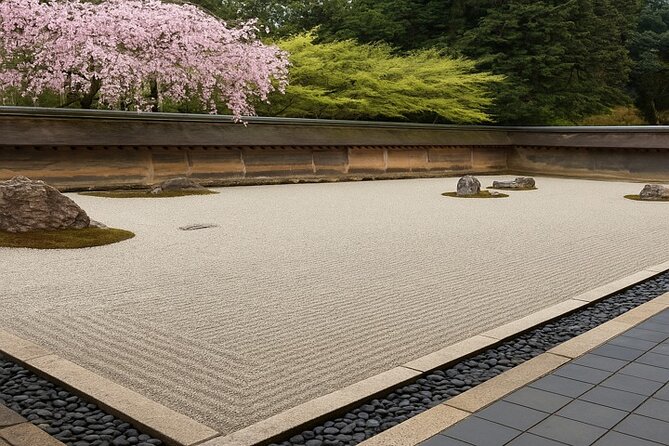
First, you visit a UNESCO Zen temple area famous for a minimalist rock garden representing profound simplicity. The stop is about 45 minutes and is designed for quiet observation. Even if you don’t think you care about rock gardens, this one is worth it because the design pushes you to look longer. You start noticing patterns you would miss if you just glanced at it.
Next is a Zen temple covered in gold leaf, with reflections in the surrounding pond. This is a classic Kyoto visual moment, and it tends to hit differently after the minimalist rock garden. Where the rock garden asks for patience, the gold-leaf temple rewards attention with bright detail and mirrored calm.
Then the route continues to a serene collection of Zen temples, known for beautiful gardens, tea culture, and traditional architecture, timed at around 40 minutes.
Why this Zen run works: it creates contrast. You are not repeating the same visual experience 6 times. You move from minimalist thinking, to shimmering surface reflections, to garden-and-tea peace. That makes it easier for you to stay interested without feeling “templed out.”
Practical tip: bring a light layer if you run hot during walking. Zen temple yards can be cooler, and time spent standing and looking can make you feel the temperature change.
One consideration: temple sequences mean a lot of stationary minutes. Plan your stamina so you’re comfortable sitting, standing, and walking slowly without rushing.

The red torii shrine on a mountainside: pace it like a pro
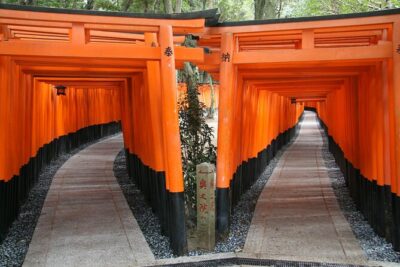
The next big scene is a Shinto shrine famed for thousands of red torii gates winding up a mountainside. It lasts about 1 hour and is also listed as admission ticket free.
This is the moment most people associate with “Kyoto photos.” The practical part is that the shrine path can turn into a stair-and-walk rhythm. If you try to go too fast, you’ll arrive at the gates already tired.
So pace it. Use the first stretch to get your bearings, then decide how far you want to push. You do not have to sprint to the farthest point to enjoy it. The visual effect builds as you walk, and stopping for photos along the way is part of the experience.
Why you’ll like this stop on a private tour: you can adjust based on your energy. You can pause longer if the light is right, or shorten the walk if you want to save your legs for the final stop.
Keep this in mind if you have mobility limits. This is not listed as an accessibility-focused tour, and mountainside shrine walking can be uneven. Good shoes and smart pacing help a lot.
Honmachi gardens and Tsutenkyo Bridge for autumn-minded seasonal magic
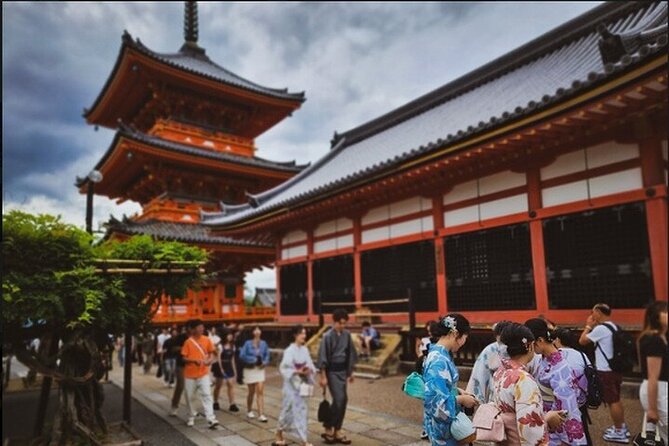
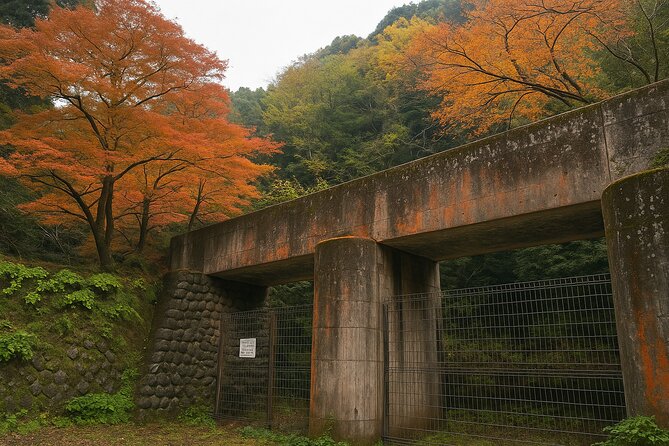
The final stop is Honmachi, a historic Zen temple known for stunning gardens and the iconic Tsutenkyo Bridge. This is one of those places where the structure of the walk and the garden views matter as much as the main photo.
It’s timed at 45 minutes, and the route notes especially seasonal color appeal, with autumn highlighted. Even if you’re not in fall, the garden design tends to reward a slow stroll because you keep seeing different angles as you move.
What makes this stop feel complete after the earlier Zen sites: Tsutenkyo Bridge adds a horizontal focal point. The earlier temples draw your attention through rock designs, gold reflections, and torii rhythms. Here, your attention gets guided through architecture framed by gardens.
Practical tip: if you’re chasing autumn colors, consider timing your day so the light is helpful. If weather shifts, focus more on textures in stone and wood rather than on distant color.
Price and value: what $325.76 gets you for up to 2
The price is $325.76 per group, up to 2 people. On paper, that’s not cheap. In practice, it can be very fair because the cost is covering private transport and the guide-led route, not just “getting taken to places.”
Also, because admission is ticket free on each listed stop, you are not stacking entry fees on top of the tour price. What you do need to plan for is lunch, since it is not included. The tour also notes landing and facility fees are not included, so if you see any unexpected venue charges during the day, you’ll need to cover them.
Here’s the simple value math I use:
- If you’re 2 people, your per-person cost is much closer to what you’d pay for a shared tour, but you get the private format.
- If you’re 1 person, you still get the private experience, but your “split cost” advantage disappears. In that case, it’s most worth it if you care about pacing and guide flexibility.
This tour feels best when you want a structured day that still leaves room to breathe. It also suits couples and solo visitors because the best-reviewed experiences describe a peaceful, welcoming environment and a guide who makes conversation feel natural, not forced.
Who this Kyoto route fits best, and what to bring
This is a good match if you want:
- A private day trip from Osaka that runs in a clear, easy-to-follow order.
- Major Kyoto themes in one go: geisha district atmosphere, imperial gardens, Zen temples, and the red torii shrine.
- Short site visits so you don’t end up dragging yourself through the city.
It may not be the best match if you hate walking a lot, dislike temple quiet time, or want long free-time wandering without guidance. Also, because the experience is weather-dependent, rainy days can change how enjoyable outdoor viewing feels.
What to bring:
- Comfortable walking shoes, especially for the mountainside torii area.
- A light rain layer or umbrella if your weather forecast looks uncertain.
- Water and a simple snack plan for the gap until lunch.
And if you’re a solo traveler, you can treat the day as both sightseeing and easy social comfort. The best tone from the experience highlights that the guide works to make you feel included.
Should you book this KyotoHighlights private route?
I would book this tour if you want a high-value private day from Osaka and you like a “see the big scenes, then slow down” approach. The ticket-free stops, the private transport, and the Zen-geisha-red torii mix are a strong combo, especially if you’re traveling as a couple or you really value a guide who sets a relaxed mood.
I would hesitate if you have no flexibility for weather, since the tour is weather-dependent and the booking is non-refundable if you cancel. Also, if you’re hoping for lots of unstructured time, this is more guided route than free roam.
If the idea of an authentic tea ceremony or samurai history moments is important to you, ask ahead how those fit into the route timing. The tour overview mentions those themes, but your best move is to confirm your specific day plan after booking.
FAQ
Where does the tour start and end?
The tour starts at Namba Station (1 Chome-9 Namba, Chuo Ward, Osaka, 542-0076, Japan) and ends back at the same meeting point.
How many people can join this private tour?
This is a private tour/activity. Only your group participates, and the price is listed per group up to 2 people.
Is pickup included?
Yes, pickup is offered.
Are admission tickets included for the stops?
The listed stops show admission ticket free for each stop on the route.
How long is the tour?
The duration is listed as 8 to 14 hours (approx.).
Is lunch included?
No, lunch is not included.
What is included in the price?
Included items are private transportation, fuel surcharge, and parking fees.
What should I do if the weather is bad?
The experience requires good weather. If it’s canceled due to poor weather, you’ll be offered a different date or a full refund.
What is the cancellation policy?
This experience is non-refundable and cannot be changed for any reason. If you cancel or ask for an amendment, the amount you paid will not be refunded.
More Tour Reviews in Namba
Not for you? Here's more nearby things to do in Namba we have reviewed
Kyoto Bus & Sightseeing Tours, compared.
 ★ 5.0PERFECT KYOTO 1-Day Bus TourFrom $12913,518 reviews
 ★ 4.8Fushimi Inari, Kinkakuji, Bamboo Grove 1 Day Bus TourFrom $1224,316 reviews
 ★ 4.9Best of Kyoto: Gion, Geisha, Pagodas & CobblestonesFrom $242,058 reviews
 ★ 3.9Hop-on Hop-off Sightseeing Bus TicketFrom $272,034 reviews
 ★ 5.0Private Kyoto Tour with a Local, Highlights & Hidden Gems, PersonalisedFrom $1021,543 reviews
 ★ 4.7Kyoto/Osaka: Nara, Fushimi Inari Taisha, Arashiyama Bus TourFrom $521,275 reviews
 ★ 5.010 Must-see Spots in Kyoto One Day Private Tour (up to 7 people)From $1791,108 reviews
 ★ 4.5One-Day Tour of Kyoto’s Highlights from Osaka/KyotoFrom $661,092 reviews
Browse the lists this tour appears in