
Reviewed · KYOTO BUS & SIGHTSEEING TOURS
From Osaka or Kyoto: Kyoto and Nara 1-Day Bus Tour
One day, four big Kyoto classics, plus Nara deer. This bus tour strings together UNESCO temples and Kyoto’s most photo-friendly spots with live commentary, so you spend less time navigating and more time looking up.
I especially like that you get a round-trip ride from Kyoto or Namba, which makes the whole day feel easy. Another big win is the mix of loud-and-iconic (Fushimi Inari) with quieter stops around Kyoto and Arashiyama, all with time to actually wander and take photos.
The only real catch is time limits. It is a long day with fixed stop durations, and that can feel rushed if you want to linger, especially around Todai-ji or the bamboo area.
Key things worth knowing
- Round-trip bus from Kyoto or Namba means less stress and fewer train transfers.
- Live English or Chinese guide commentary helps you know what you are looking at as you arrive.
- Kinkaku-ji entrance is included, so you only need to plan for extras like Todaiji if you choose to enter.
- Arashiyama is a highlight block, but it is still time-boxed, so wear good walking shoes.
- Fixed meeting points and on-time departures matter, because the bus leaves on schedule.
- You are on a group bus (up to 99 people), so expect other visitors and sometimes brief explanations at each stop.
How the Osaka or Kyoto to Nara to Kyoto route makes sense
This is built for one simple goal: see the headline sights of Nara and Kyoto without juggling trains, stations, and transfers all day. You start either from the Kyoto side or the Osaka side (Namba is a common departure), then ride to Nara first, before heading back toward Kyoto for the temples and shrines.
The order is smart. Nara Park gives you the deer and the big Todai-ji complex early, then you move toward Kyoto for Arashiyama, the Golden Pavilion area, and finally Fushimi Inari, which is best when you still have energy to climb a bit. The tour runs about 9 to 10 hours, so it is long, but it is also a compact way to hit a lot of iconic stops.
One practical note I would plan around: the schedule can shift due to weather, road traffic, or other unforeseen conditions. The bus also departs on time. That means you should build your day around the tour, not around your own plan to arrive late.
More Kyoto temple visits, food tours, tea experiences, and day trips to compare
Price and what your money actually buys
At $64.33 per person, the value mostly comes from the included transportation and the guide. You are not just paying to get dropped off at a few places. You are paying for:
- Round-trip bus fare from Kyoto or Namba
- Air-conditioned vehicle
- All fees and taxes
- English or Chinese speaking guide
- Entrance to Kinkaku-ji
- A lunch option if you choose it for the Osaka departure
On top of that, the tour uses a mobile ticket, so you should be able to keep everything digital.
Where you might spend extra is Todai-ji. The tour notes that the entrance fee to Todaiji is optional, so you may need to pay if you want to go in. Also, meals are only covered if you select the lunch option. If you do not, bring backup snacks or be ready to buy something near stops.
For me, this price feels most reasonable if you like having someone else handle routing and timing. If you are the kind of person who loves DIY walking routes and is comfortable using local transit, you might find cheaper alternatives. But if you want the convenience of a single bus day, this is priced to fit.
Nara Park and Todai-ji: deer, the Great Buddha, and short stroll time
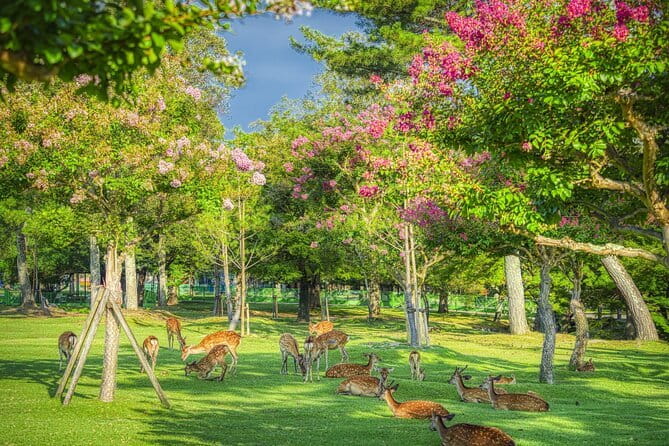
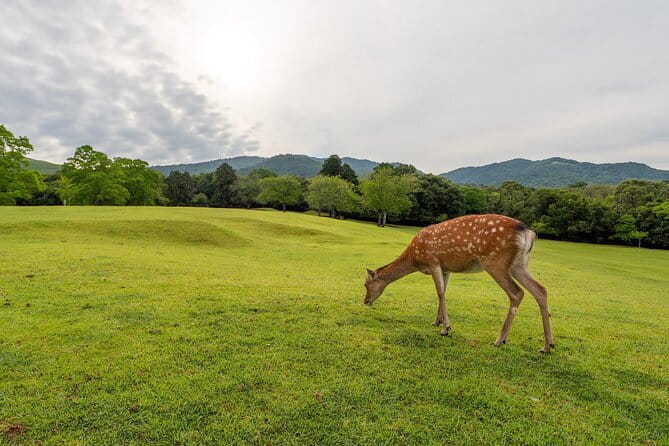
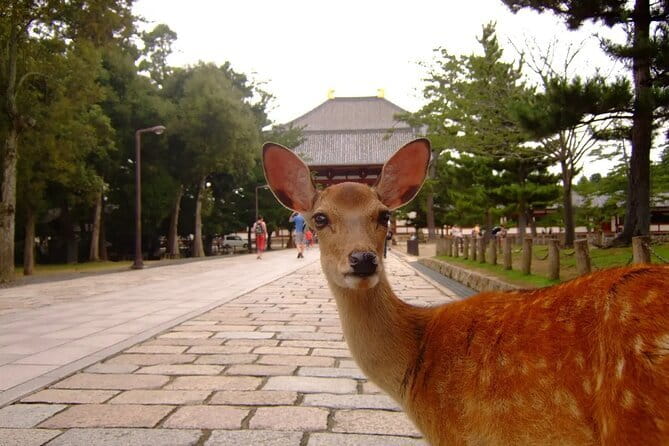
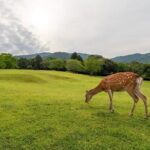
Your first stop is Nara Park, with about 1 hour 20 minutes on the schedule. This is enough time to get your deer photos, walk the main paths, and decide how far you want to go toward the Todai-ji area.
Todai-ji is the big draw. It is home to the Great Buddha and also the world’s largest wooden building. That alone is worth planning for, because this is not a small temple you can see in passing. The tour includes some time in the broader park area, and it also lists several nearby spots that many people pair naturally with the Todai-ji visit.
Two smaller additions that make the time feel more “local” than just a photo stop:
- Manyo Botanical Garden, also known as Kasuga Taisha Garden, located next to Kasuga Shrine
- Tamukeyama Hachiman Shrine, a Hachiman shrine near Todai-ji, established in 749
About timing: if you want to fully appreciate Todai-ji, consider whether you will pay the optional entrance fee and how much walking you want to do inside. With only about 1.5 hours total, it can feel tight if your group includes slower walkers or if you get stuck waiting for space to take clear photos.
Arashiyama Bamboo Grove plus nearby Kyoto nature stops
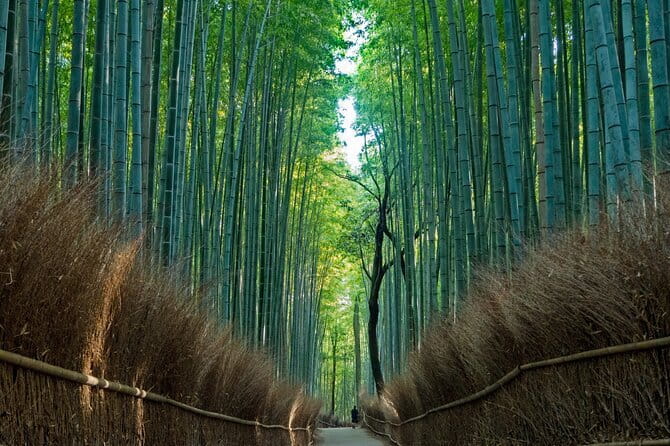
Next comes Arashiyama, with about 2 hours. This is where the day gets atmospheric. The tour’s core Arashiyama highlight is the Bamboo Forest, often called the Bamboo Grove or Sagano Bamboo Forest. Even when it is crowded, the visuals are strong: towering bamboo stalks with pathways that funnel you into the scene.
The schedule also points to other Arashiyama sights you might see in the same time block, including:
- Yusai-tei, tied to a modern art setting and kimono-dyeing work
- Ōkōchi Sansō, the former home and garden of actor Denjirō Ōkōchi
- Tenryū-ji, a major Zen temple linked to the Tenryū-ji branch of Rinzai Buddhism
- Nonomiya Shrine, a shrine near the bamboo area
- Fudo-in, a temple associated with Koyasan Buddhist practices
- Iwatayama Monkey Park, with monkeys in a hilltop setting (a bit of uphill walking is involved)
- Fukuda Art Museum and the Arashiyama Kimono Forest art installation at Randen Arashiyama Station
I like this variety because it gives you options. If bamboo is your top priority, you can focus your energy there. If you want a breather from the crowd, the temple and shrine stops can shift the mood. If you like quirky photo stops, the Kimono Forest art installation is the kind of detail you would miss if you only followed a tight temple checklist.
One reality check: Arashiyama is time-boxed. You are not getting an all-day “slow Kyoto” feel here. Plan your priorities before you board, so you do not burn minutes wandering randomly and then realize you are running out of time for what you actually came for.
Kyoto stop: Tenryū-ji area, shrines, and the Osaka Kobe beef lunch choice
After Arashiyama, you get a shorter Kyoto window (around 50 minutes) that often connects to the Arashiyama temple area. This part is particularly appealing if you like Zen gardens and forest-temple vibes more than shopping streets.
Tenryū-ji is listed as a stop here. It is a head temple connected to the Rinzai Zen line, and it fits well after bamboo. Nonomiya Shrine is also mentioned nearby, and there is even Fudo-in listed as a quieter forest temple stop.
If you depart from Osaka, there is also a lunch option. The tour description points to Kobe beef shabu-shabu, and the guide provides an explanation of Kobe beef along the way. Reviews attached to this experience also repeatedly praise the Kobe beef lunch as a must for Osaka departures.
Practical takeaway: shabu-shabu is filling. If you choose the lunch option, you might want to keep your second half of the day lighter, because you will still have Kinkaku-ji and then Fushimi Inari later. Bring water, and save your biggest walking energy for the Inari torii climb.
Kinkaku-ji Golden Pavilion in about 40 minutes
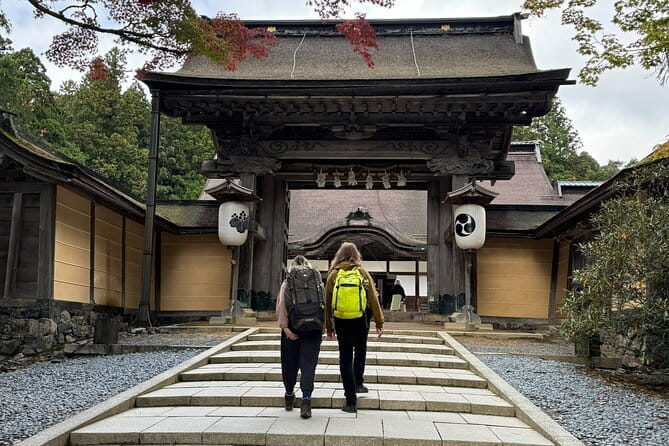
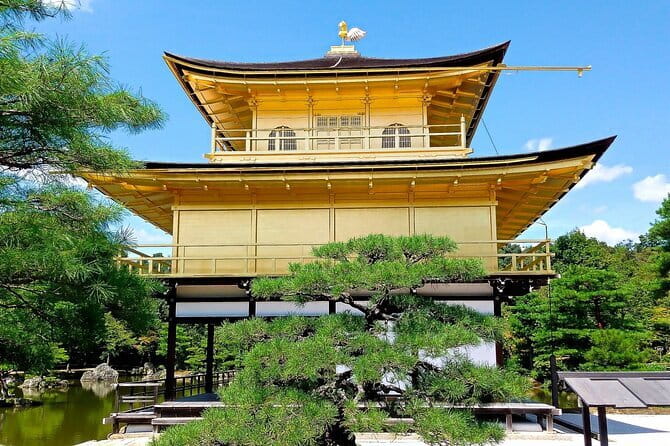
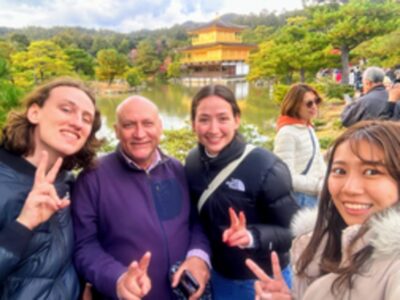
Your next major temple is Kinkaku-ji, the Golden Pavilion, a UNESCO World Heritage site. You get about 40 minutes, and the entrance ticket is included.
This is one of those sights that makes sense on a fixed schedule. The Golden Pavilion is the visual centerpiece, and the surrounding gardens frame the views. You are also likely to see extra details referenced in the tour content, like features connected to shrines and artistic elements within the broader complex, plus the Togetsukyō Bridge name is included as part of the area highlights.
Can you see everything? Probably not in a perfect way. But you can see the main pavilion, get the garden views, and grab your photos without turning your whole day into a queue festival. The key is to go in with a photo plan. Decide where you want your pavilion shots before you enter, because time can disappear fast once lines form.
Fushimi Inari Taisha: the red torii tunnel and what to do with 1 hour 20 minutes
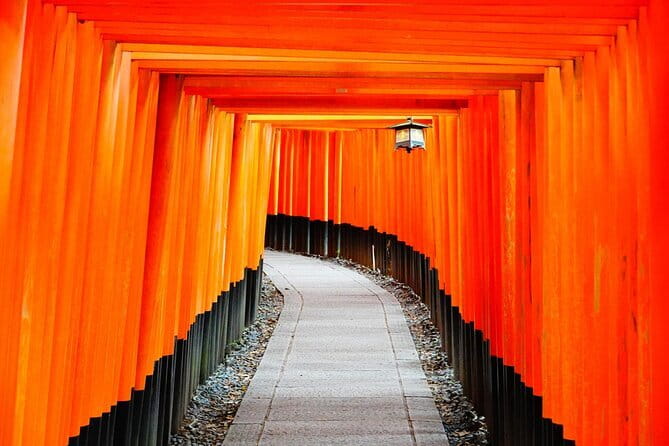
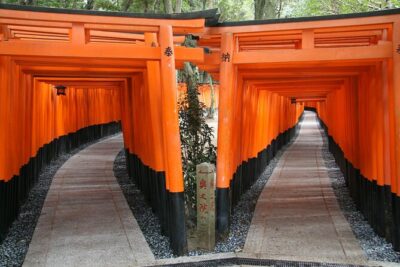
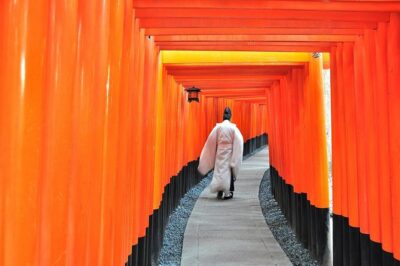
The final big stop is Fushimi Inari Taisha, with about 1 hour 20 minutes. Admission here is free, and the show is the famous red torii gates. The gates create a tunnel effect that looks even better the closer you get to the deeper paths.
This is one of my favorite moments of the day because it is so easy to feel like you are walking inside a storybook. You will also see a detail included in the tour notes: a small garden feature registered as a scenic beauty spot, with an earthen jar buried in the garden that makes a sound when flowing water drips and touches the ceramic bottom. It is the kind of little Kyoto detail you would otherwise miss.
With your time limit, here is the best way to use it:
- Walk into the torii paths until you hit your personal “perfect viewpoint”
- Then decide if you want to climb higher based on energy and crowd levels
- If you want calmer photos, aim for a spot where you can frame the torii rows without too many people blocking the lines
Also remember: the bus day is a schedule game. You are not doing a two-hour “full hike.” You are doing the torii experience as a highlight, then heading back.
Guide quality, live commentary, and how to make it worth your money
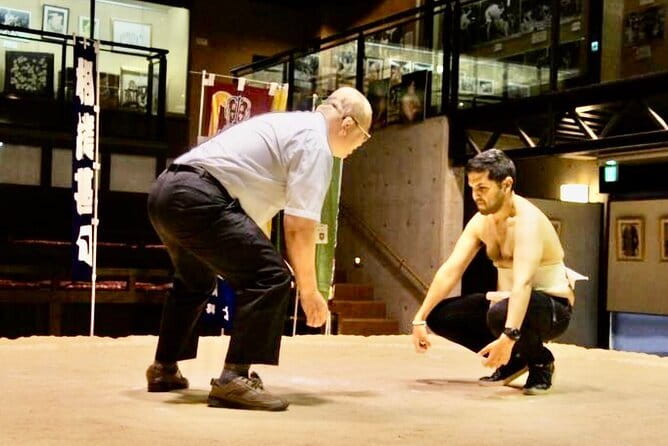
The tour runs with live commentary in English or Chinese. Depending on how many people book, you might even hear the same bus mix languages.
When I looked at the strongest notes people shared about this experience, certain guide names came up again and again, including Nick, Eric, Garry, Harry, Mike, and Masa. The consistent theme was simple: guides who explain clearly and keep the day moving help you get more out of short stop times.
Because this is a group bus day, you should help your guide do their job:
- Arrive at the meeting point early. The tour asks for 10 minutes early because late arrivals can miss the departure.
- Follow the guide’s instructions fast. The bus leaves on time.
- Keep your luggage manageable. You are allowed one piece per person, and trunk storage is based on size limits. Valuables should stay with you since you cannot access luggage between stops.
One more group-bus reality: some stops require walking from where the bus parks to the attraction entrances. That means you should wear shoes you can move in confidently. Rain happens too. Bring an umbrella you can actually hold and manage while you walk.
Who should book this Kyoto and Nara bus tour, and who should skip it
You should book if you want a high-output day. This is a solid fit for:
- First-timers who want Kyoto and Nara headline sights without transit stress
- People who enjoy guided context, where the guide sets the scene before you arrive
- Families who want to see a lot in one day, as long as everyone can handle walking and time limits
You should think twice if you want a slower, deeper temple experience. This tour may feel rushed if:
- You want lots of time inside Todai-ji and the related areas
- You get frustrated by fixed schedules and “move along” pacing
- Your group has mobility limits that make short stops stressful
Also, confirm your priorities before you go. Kinkaku-ji entrance is included, but Todaiji entrance is noted as optional. If Todai-ji is your must-do, plan for that extra cost. If Arashiyama Bamboo is your top reason for booking, decide how you will handle time constraints and keep expectations realistic.
FAQ
How long is the Kyoto and Nara 1-day bus tour?
It runs about 9 to 10 hours.
Are tickets to Kinkaku-ji included?
Yes. Entrance to Kinkaku-ji is included in the tour price.
Is Todai-ji entrance included?
The tour notes that the entrance fee to Todai-ji is optional and is not included.
Is lunch included?
Lunch is included only if you select the lunch option. The Osaka departure lunch option is described as Kobe beef shabu-shabu.
Where does the tour depart from?
The tour includes round-trip bus fare from Kyoto or Namba. Hotel pickup and drop-off are not included.
What happens if weather disrupts the day?
If the experience is canceled by the supplier due to extreme weather or a natural disaster, you receive a full refund. If weather affects the schedule, the itinerary may change without notice.
Should you book this tour?
If you want one day that covers Nara Park, Todai-ji area, Arashiyama, Kinkaku-ji, and Fushimi Inari with a guide and a bus you do not have to drive yourself, I think this is a good value. The included Kinkaku-ji ticket, the live commentary, and the round-trip transportation from Kyoto or Namba are what make it work.
I would only skip it if you need long, unhurried time in a single place, or if you know your group struggles with a schedule that moves you from stop to stop. For everyone else, it is a practical way to get the big Kyoto and Nara moments in one go.
More 1-Day Tours in Namba
More Tour Reviews in Namba
Not for you? Here's more nearby things to do in Namba we have reviewed
Kyoto Bus & Sightseeing Tours, compared.
 ★ 5.0PERFECT KYOTO 1-Day Bus TourFrom $12913,518 reviews
 ★ 4.8Fushimi Inari, Kinkakuji, Bamboo Grove 1 Day Bus TourFrom $1224,316 reviews
 ★ 4.9Best of Kyoto: Gion, Geisha, Pagodas & CobblestonesFrom $242,058 reviews
 ★ 3.9Hop-on Hop-off Sightseeing Bus TicketFrom $272,034 reviews
 ★ 5.0Private Kyoto Tour with a Local, Highlights & Hidden Gems, PersonalisedFrom $1021,543 reviews
 ★ 4.7Kyoto/Osaka: Nara, Fushimi Inari Taisha, Arashiyama Bus TourFrom $521,275 reviews
 ★ 5.010 Must-see Spots in Kyoto One Day Private Tour (up to 7 people)From $1791,108 reviews
 ★ 4.5One-Day Tour of Kyoto’s Highlights from Osaka/KyotoFrom $661,092 reviews
Browse the lists this tour appears in