
Reviewed · KYOTO BUS & SIGHTSEEING TOURS
Kyoto: Hop-on Hop-off Sightseeing Bus Ticket
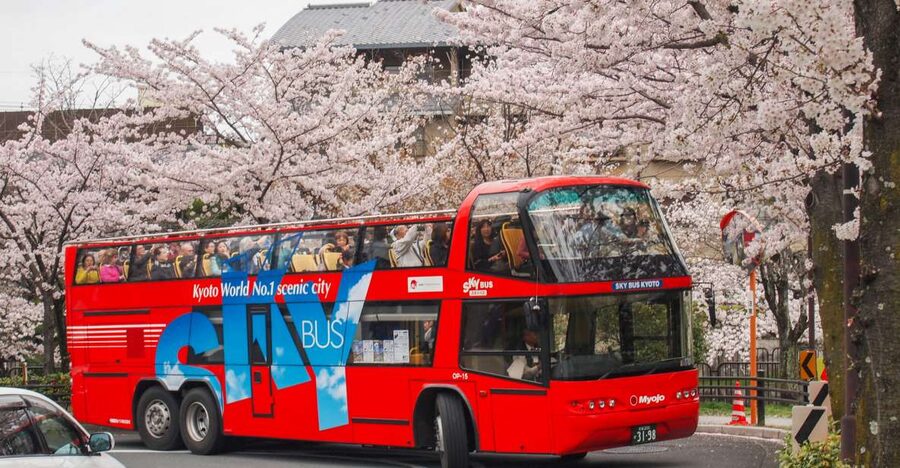
Kyoto looks better from a double-decker. This hop-on hop-off bus ticket lets you hop at key stops with a mobile voucher, then enjoy panoramic views from the open top at your pace.
I love the freedom to linger at major sights, especially UNESCO highlights like Nijo-jo Castle and Kinkakuji. I also like that the bus gives pre-recorded audio in 7 languages, so you get the who, what, and why while you ride.
One consideration: the open top means you are in direct sunlight, and on hot days or crowded stops you may spend more time waiting than you expect.
Key Highlights You Will Feel Right Away
- Hop on and off freely at stops like Kyoto Station, Gion, Kinkakuji, and Kiyomizu-dera area
- 1-day or 2-day flexibility, with unlimited rides during your ticket window
- Audio commentary in English, French, Japanese, Korean, Chinese, Spanish, German
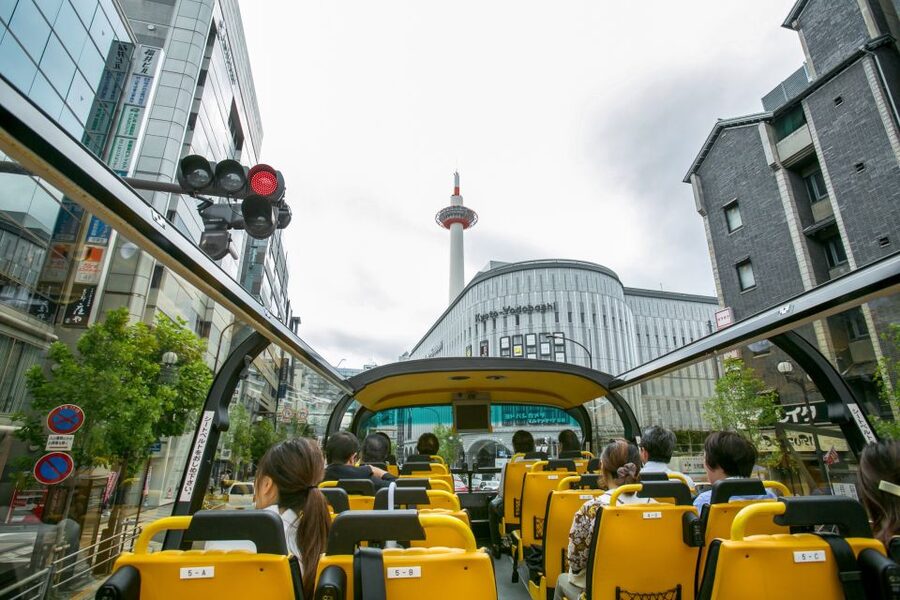
- Open-top double-decker views for a sweeping look at Kyoto’s neighborhoods
- Easy orientation for first-timers, since the stops cover the classic temple and geisha districts
- Plan ahead for entrances, since entry fees are not included (and Kinkakuji can mean cash planning)
A $27 Ticket That Lets You Stitch Kyoto Together at Your Speed
For $27 per person, this ticket is mainly about saving effort. Kyoto attractions are spread out, and the bus route is built to connect the biggest “I came to Kyoto for this” stops in one go. You are not buying museum entry here, you are buying mobility plus narration. That is a smart swap if you want to spend your energy on walking around the places you care about.
The big value play is the 1-day or 2-day option. One day works if you are efficient and pick only a few stops. A two-day ticket makes more sense if you want to slow down, especially because Kyoto’s top sights can be packed. With unlimited rides across your validity period, you can move when you are ready, then return to your favorite stops without feeling trapped in a rigid tour schedule.
If you hate wasting time, this bus is a good fit. It turns Kyoto’s layout into something you can manage. And that matters, because Kyoto can feel like a maze if you are bouncing between train lines and bus transfers.
More Kyoto temple visits, food tours, tea experiences, and day trips to compare

How the Hop-On Hop-Off Works From Kyoto Station
You can board at any of the stops along the route. The first stop is Kyoto Station, at the north central exit, with the bus stop directly in front of Isetan department store. From there, you choose your rhythm, ride to the next zone, and get off near whichever temple, market, or neighborhood you want to explore.
Using a mobile voucher keeps it straightforward. You are not hunting for a paper ticket, and you are not trying to explain anything complicated to a ticket booth. That seems small, but in Japan it can save you stress when you are already dealing with crowds, signage, and jet lag.
Also, the practical truth is this: the bus route is built to reduce decision fatigue. You do not have to figure out which local bus serves which temple. You just pick the stop that matches your plan that day, then walk the last bits on foot.
Double-Decker Views, 7-Language Audio, and What You Should Expect Onboard
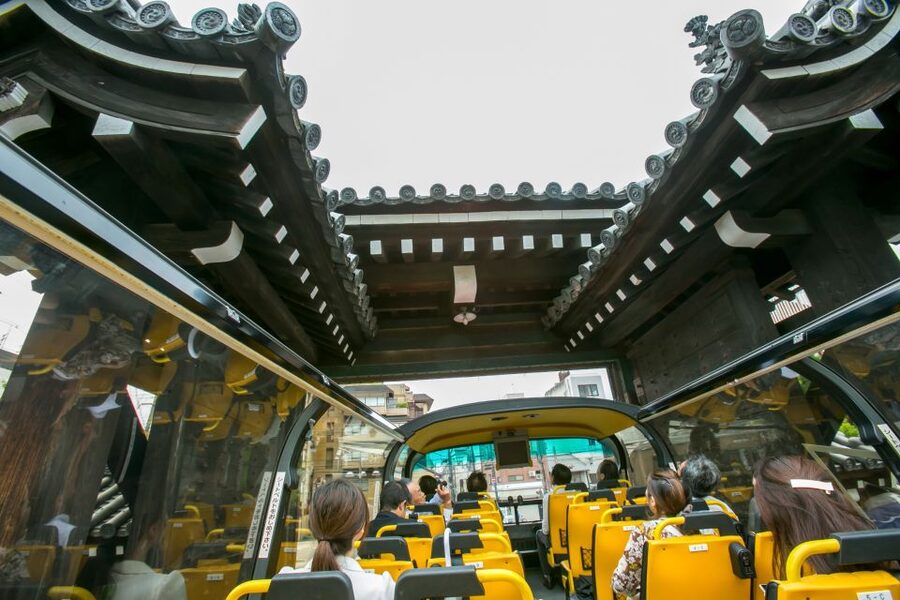
This is the kind of bus where the ride itself counts. The open-top double-decker design gives you a wide-angle view of Kyoto as you travel, which helps you understand where things sit relative to each other. It is also a great way to spot landmarks before you commit to walking.
The narration is pre-recorded audio available in 7 languages: English, French, Japanese, Korean, Chinese, Spanish, and German. It is there to orient you, not to replace guidebook research. Think of it as a moving signpost system. You get the basic story at each stop, then you do your own deeper looking once you are off the bus.
A couple onboard notes that affect your comfort:
- Wi-Fi is listed as temporarily suspended, so do not rely on it.
- The top deck is open to the weather. You will be in the sun directly.
- In wet weather, raincoats are provided, and umbrellas are not allowed.
On days with harsh sun, plan smart. Wear sunscreen and a hat, and consider sunglasses on the top deck. You will enjoy the views more when you are not baking.
Kyoto Station, Nishihonganji, and Nishiki Market: Your Easy Start in the City Core
If you start at Kyoto Station, you are in the right place. It is a central hub, and the bus route begins with a simple anchor point: Kyoto Station, right outside Isetan. From there, you can head toward areas that are easiest to explore on foot.
Nishihonganji (near Kyoto Tokyu Hotel)
This stop is handy if you want something close to transportation before you head deeper into the temple districts. You can use it as a warm-up area, or as a quick break point between longer walks.
Shijo Karasuma and Nishiki-ichiba Market
This is the food and street-life lane. Nishiki-ichiba Market is one of Kyoto’s most famous markets, and getting off here is a fast way to plug into local flavor. Even if you do not buy much, it is a great place to people-watch and snack your way through Kyoto’s everyday rhythm.
What to watch for: this area can be busy. If you want photos without constant shoulder-to-shoulder movement, aim for earlier hours. And if you are planning a big temple day afterward, keep your time budget tight at the market.
Nijo-jo Castle and Kitano-Tenmangu to Kamishichiken: Built Heritage and Old Neighborhood Mood
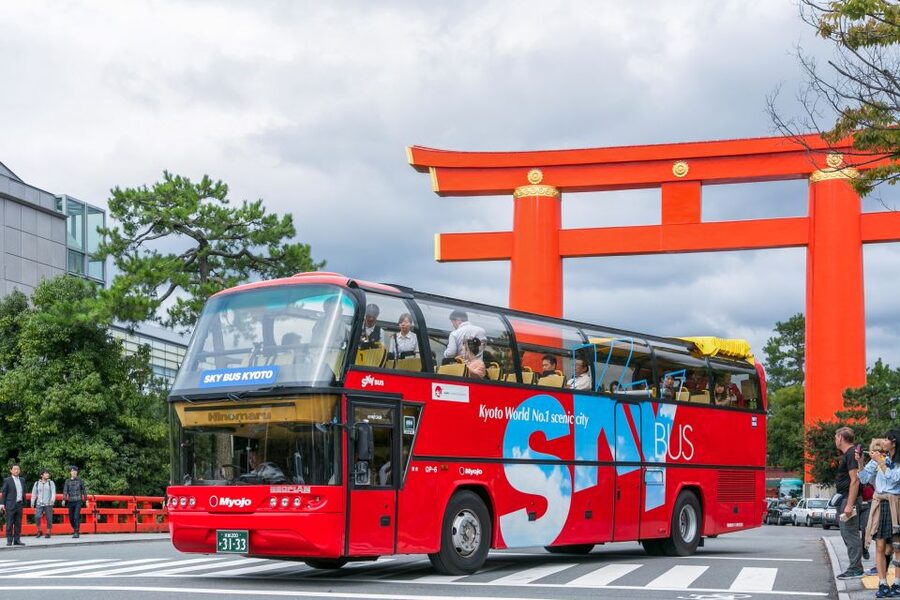
After you get your bearings in central Kyoto, the route heads toward historic landmarks and north-side atmosphere.
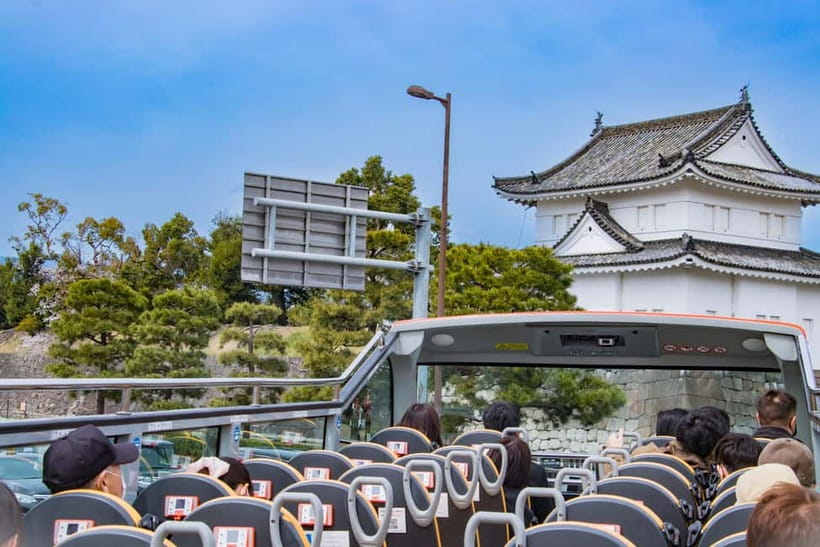
Nijo-jo Castle
This is a UNESCO highlight on the route. It is one of those places where you feel the scale of Kyoto’s historical power. The castle is also a strong choice for your first UNESCO stop, because you will be fresh and ready to absorb details.
Practical tip: plan your walking time here like you would for a museum, because you will move through multiple spaces. If you rush, you lose the best parts.
Kitano-tenmangu Shrine and Kamishichiken
Kitano-tenmangu brings shrine energy, and Kamishichiken adds that older Kyoto neighborhood feel. Getting off at this stop is a good way to step away from the busiest central corridors and into something quieter, even while still being in the tourist zone.
If you like old streets, small lanes, and atmosphere, this is a good pairing stop. You can choose to spend more time here if your day is moving too fast elsewhere.
Kinkakuji and Daitokuji: The West Temple Loop and How to Pick Your Priorities
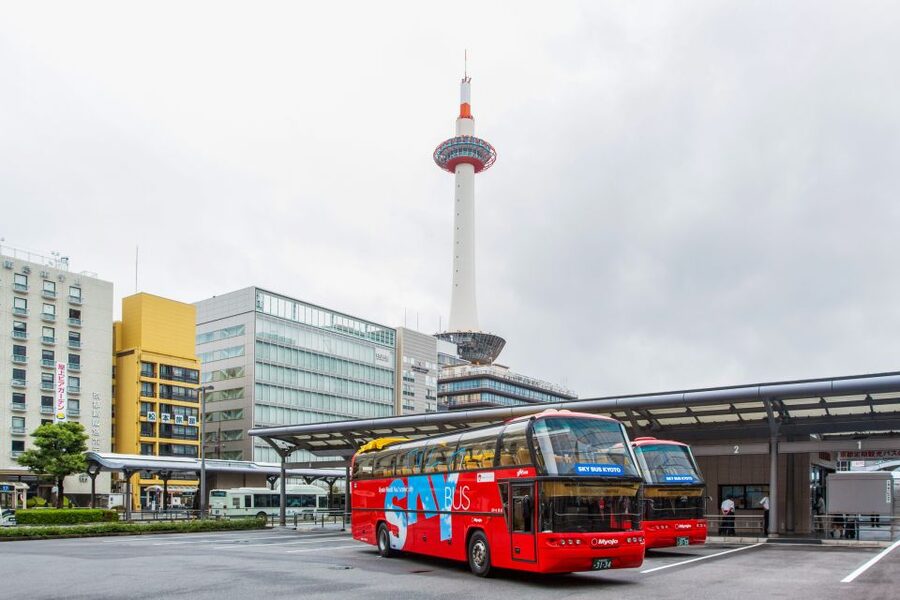
The route covers Kyoto’s temple highlights in a way that makes sense for short stays: you can do the “big icon” first, then decide whether you want something more off the main conveyor belt.
Kinkakuji (Golden Pavilion)
This is the marquee stop. It is another UNESCO highlight, and it tends to draw huge crowds. If you want classic golden views without spending your whole time behind other people’s heads, try to time your arrival for when lines are shorter.
One very practical money tip: plan on cash. Kinkakuji can require cash for entry, and there is no ATM on the premise.
Daitokuji Temple
Daitokuji is a strong contrast. Kinkakuji gives you the famous visual punch, while Daitokuji can feel more reflective. It is a good stop to break up your day, especially if you want a temple experience that is not only about one iconic photo.
If you are going hard on temples in one day, do not stack too many. Kyoto rewards slower pacing, especially in crowded weather.
Imperial Palace, Ginkakuji, and Okazaki Park: East Kyoto Classics Without the Stress
As the route shifts east, you hit the kind of Kyoto scenery that feels instantly familiar: palatial grounds, iconic pavilions, and park space that makes the whole area feel breathable.
Kyoto Imperial Palace (listed near Doshisha University)
This stop is a solid option if you want a change of pace from pure temple walking. Palace grounds give you a different kind of historical context, and the setting can feel less like an attraction queue and more like a stroll through an important district.
Ginkakuji (Silver Pavilion)
This stop is the “other” iconic pavilion. Like Kinkakuji, it can get crowded, but it offers a different mood. If you already did one famous pavilion, Ginkakuji gives you a satisfying comparison without requiring major extra travel.
Tip: If you are doing both Kinkakuji and Ginkakuji in a single day, consider taking a longer break between them. It is easy to burn out.
Heian-jingu Shrine and Okazaki Park
This is a great combo stop. You get shrine culture plus park space, which is useful if you want to rest your legs for a bit before heading into the most atmospheric streets later.
Okazaki Park is also a nice place to slow down and absorb the feel of the neighborhood, instead of treating Kyoto as a checklist.
Gion (Kotowa-Kyoto Yasaka) and Gojozaka for Kiyomizu-dera: The Evening-First Strategy
This is where Kyoto shifts from “famous sights” into “neighborhood magic.”
Gion (Kotowa-Kyoto Yasaka)
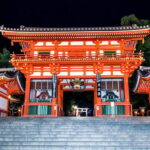
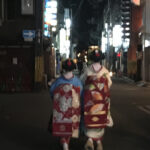
Gion is the geisha district zone. Getting on the bus and off here helps you arrive without fighting transit connections, then you can wander the streets at your own pace. Even if you do not see a performance, the atmosphere alone is worth it.
If you care about photos, night and late afternoon can be more forgiving. If you care about comfort, avoid the hottest sun hours.
Gojozaka (Kiyomizu-dera Temple / Gion)
Gojozaka is the stop that serves Kiyomizu-dera. Kiyomizu-dera is also a UNESCO highlight on the route, and it is one of those Kyoto icons that people remember long after they leave.
The drawback is that it can be crowded. You may spend some time in queues or waiting for space to move. So plan for a slower visit, and expect that your best photos might be the ones you take while walking, not the ones you take from a single stationary spot.
Sanjusangendo and Kyoto National Museum (Hyatt Regency Kyoto): Culture Time Without Extra Planning
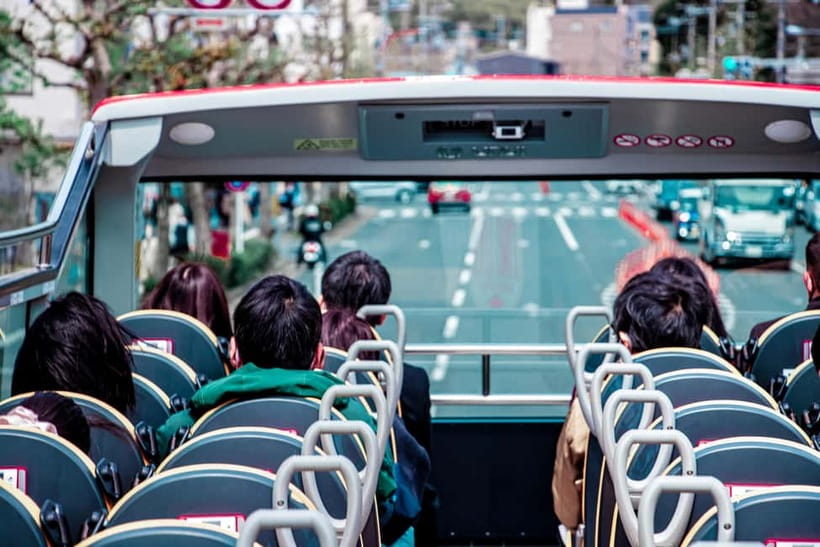
If you want at least one stop that feels like a calm, indoor option or a museum break, this is your anchor.
Sanjusangendo / Kyoto National Museum (Hyatt Regency Kyoto)
This combo stop covers major cultural choices in one location. Sanjusangendo can be a powerful stop if you like religious art and interior spaces. Kyoto National Museum is a solid choice if you want to get out of the sun or rain.
This is also a smart stop on days when your outdoor stamina is lower. You are still doing something distinctly Kyoto, without spending the entire day exposed.
Timing, Crowds, and Bus Frequency: How to Avoid Wasted Waits
The bus is designed for ease, but Kyoto is Kyoto. The biggest timing challenge is crowds at the stops, plus bus gaps at certain times.
From real experience patterns you might run into: buses can run about every 45 minutes, and there can be longer gaps during mid-morning periods. That means if your plan relies on being off at multiple major sites in quick succession, build in flexibility. If you miss a bus, you are not usually stranded, but you might wait.
A simple strategy that works well:
- Use the first loop to get your bearings.
- Pick one or two priority stops for longer visits.
- Treat the rest as bonus stops.
- If a place is overwhelmed, move on and come back later within your 1- or 2-day window.
Also, the most famous spots can mean intense crowd pressure. If you want to enjoy your walk, not just survive your way through it, you need a relaxed mindset and a willingness to choose when you arrive.
Rules of the Ride: Sun, Raincoats, and What You Cannot Bring
This is practical stuff, but it matters for comfort.
Onboard you cannot:
- Smoke in the vehicle
- Use selfie sticks
- Eat food in the vehicle
- Use umbrellas
- Bring alcoholic drinks
What you can bring:
- Only soft drinks with lids are mentioned, like plastic bottles or coffee.
And because this is an open-top bus, weather is a real factor. When it rains, raincoats are provided. When weather turns severe, buses may not operate during things like typhoons or thunderstorms.
In other words, pack for both sun and wet. Even if your forecast looks okay, Kyoto weather can change your plans fast.
Who This Hop-On Hop-Off Bus Ticket Fits Best
This ticket is best when you want structure without strict schedules. It suits:
- First-time Kyoto visitors who want to reduce transit stress
- Short-stay travelers who want to hit the biggest sights efficiently
- People who like to decide on the fly, then spend time where they feel pulled
- Travelers who enjoy panoramic rides and want a view of Kyoto’s neighborhoods between stops
It is not the best match if:
- You want deep lectures at each attraction, because the audio is an overview
- You hate the sun, since the top deck is open and exposed
- You are planning to skip walking entirely, because even with convenient stops, you still do your share of foot travel
One more value reality check: entrance fees are not included. So budget for tickets at the sights you choose. The bus helps you get there, but it does not pay the admission.
Should You Book This Kyoto Hop-On Hop-Off Bus Ticket?
If you have one to two days and you want the classic Kyoto highlights without complicated transit, I think this is an easy yes. The route connects major UNESCO stops, the audio keeps you oriented, and the unlimited riding option helps you avoid the all-or-nothing feeling of one fixed day plan.
Book it if your priority is practical sightseeing, freedom, and big views from the open top. Consider skipping if you already feel totally confident with local transit and you prefer a very specific, preplanned museum-or-temple schedule where a bus ride feels like extra time.
If you want a smart middle ground, do this: reserve your ticket, then pick one priority per area. Kyoto rewards that approach.
FAQ
How much is the Kyoto hop-on hop-off sightseeing bus ticket?
The price is listed at $27 per person.
How long is the ticket valid?
You can choose a 1-day or 2-day ticket. The ticket is valid for 1 to 2 days depending on the option you select.
Can I board at any stop along the route?
Yes. You can board at any of the available stops and show your mobile voucher.
Where is the first boarding stop in Kyoto?
The first stop is at Kyoto Station. Use the north central exit of Kyoto Station, and look for the sightseeing bus stop directly in front of the Isetan department store.
What languages are included for the audio commentary?
Audio commentary is available in English, French, Japanese, Korean, Chinese, Spanish, and German.
Is Wi-Fi available on the bus?
Wi-Fi is listed as temporarily suspended, so plan without relying on it.
Are raincoats or umbrellas available?
Raincoats will be provided in wet weather, and umbrellas are not allowed on the bus.
What items are not allowed on the vehicle?
Smoking, selfie sticks, food in the vehicle, umbrellas, and alcoholic drinks are not allowed. Soft drinks with lids are allowed.
Can I cancel, and do children 0-5 need a ticket?
Cancellation is free up to 24 hours in advance for a full refund. Children aged 0-5 do not need a ticket if they sit on an adult passenger’s lap (1 child per passenger with a ticket).
More Tickets in Kyoto



More Tour Reviews in Kyoto

Not for you? Here's more nearby things to do in Kyoto we have reviewed


Kyoto Bus & Sightseeing Tours, compared.
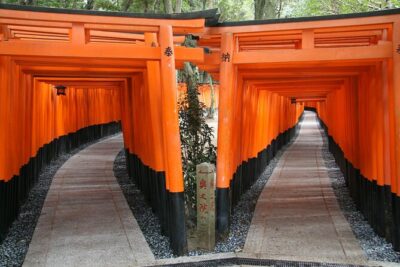 ★ 5.0PERFECT KYOTO 1-Day Bus TourFrom $12913,518 reviews
 ★ 4.8Fushimi Inari, Kinkakuji, Bamboo Grove 1 Day Bus TourFrom $1224,316 reviews
 ★ 4.9Best of Kyoto: Gion, Geisha, Pagodas & CobblestonesFrom $242,058 reviews
 ★ 5.0Private Kyoto Tour with a Local, Highlights & Hidden Gems, PersonalisedFrom $1021,543 reviews
 ★ 4.7Kyoto/Osaka: Nara, Fushimi Inari Taisha, Arashiyama Bus TourFrom $521,275 reviews
 ★ 5.010 Must-see Spots in Kyoto One Day Private Tour (up to 7 people)From $1791,108 reviews
 ★ 4.5One-Day Tour of Kyoto’s Highlights from Osaka/KyotoFrom $661,092 reviews
 ★ 4.7Osaka/Kyoto: Hiroshima Miyajima Bus Tour & Shinkansen TicketFrom $277919 reviews
Browse the lists this tour appears in