Reviewed · KYOTO BUS & SIGHTSEEING TOURS
Kyoto Top Four Highlights Day Trip from Osaka or Kyoto
One-day Kyoto can feel like a sprint, but it is a smart one. This trip strings together Nijo Castle and Kinkaku-ji plus Arashiyama and the red-gate stroll at Senbon Torii, with a guide to keep you moving and making sense of what you are seeing. The main drawback is simple: entry tickets are not included, so you need extra cash for Nijo Castle and Golden Pavilion.
I also like the practical setup for a day like this, with an air-conditioned vehicle and a mobile ticket that makes check-in smoother. The route runs about 9 hours, and it caps at 45 people, so you get enough structure without it feeling like a private tour.
Key Highlights Worth Your Attention

- Nijo Castle’s Edo-period palace feel, built as Tokugawa Ieyasu’s Kyoto residence
- Golden Pavilion time that actually works, about 40 minutes at Kinkaku-ji to see the temple and gardens
- Arashiyama Bamboo Forest plus the nearby shrine and iconic bridge, grouped so you do not waste transit time
- Kimono Forest and the Rilakkuma Tea House stop, a fun art-and-pop-culture break inside a classic area
- Senbon Torii (thousands of red gates) as the finale, giving you a dramatic Kyoto moment to end on
- Guides who keep timing tight, with clear instructions and help getting back to the vehicle
One-Coach Day: how the 9-hour route plays out from Osaka or Kyoto

This is a full-day Kyoto sampler. You start with a castle, then move to the Golden Pavilion, then head west to Arashiyama, and finally end at the Senbon Torii area. It is all structured, not random. That matters, because Kyoto rewards a plan: sights are spread out, and waiting around for transport can eat your time fast.
You get an air-conditioned vehicle plus a guide, so you are not doing the hardest part, which is figuring out the order and timing. With a maximum of 45 travelers, expect a real group, not a tiny circle of friends. You can still explore on your own during the free moments, but you do need to stay aware of when the group regroups.
One more thing I like: the tour includes a mobile ticket. You still bring your passport and usual travel items, but this reduces friction on day-of logistics. Also, you get lunch time for independent dining, which is useful if you have food preferences. The flip side is that lunch is not included, so you cannot count on the tour to solve that part of the day.
More Kyoto temple visits, food tours, tea experiences, and day trips to compare
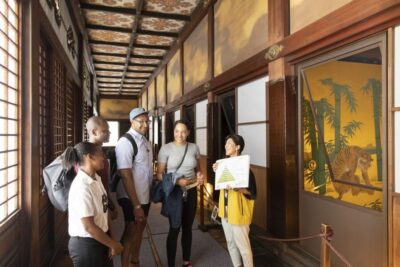
Nijo Castle and Ninomaru Goten: Edo-era power in palace buildings

Nijo Castle (Nijo-jo Castle) is the kind of stop that makes your other Kyoto sights click into place. It was built in 1603 as the Kyoto residence of Tokugawa Ieyasu, the first shogun of the Edo period. If you want a quick grasp of how Japan’s political center of gravity shifted, this is one of the clearest places to start.
At roughly an hour, you can do more than just the highlight photos. The important thing is the palace architecture vibe. This is not a medieval fortress scene. It is a palace setting, and the buildings are considered among the best surviving examples of Japan’s castle palace style from the feudal era. You also get UNESCO World Heritage context here, since the site was designated in 1994.
What to watch for while you are there:
- Keep an eye on how the palace spaces feel designed for control and ceremony, not casual touring.
- Move at a steady pace. A lot of people rush castle interiors and miss the “why this mattered” feeling.
- If you like detail, you will be glad you stayed the full time. If you do not, still take 10 minutes to slow down and absorb the layout.
Potential consideration: admission tickets for Nijo Castle and Ninomaru Goten Palace are not included in the tour price. That is normal for Japan, but it changes your budgeting. You should also plan to buy or prepare tickets ahead of your visit time, so you do not burn minutes when you arrive.
Kinkaku-ji, the Golden Pavilion: what 40 minutes should feel like
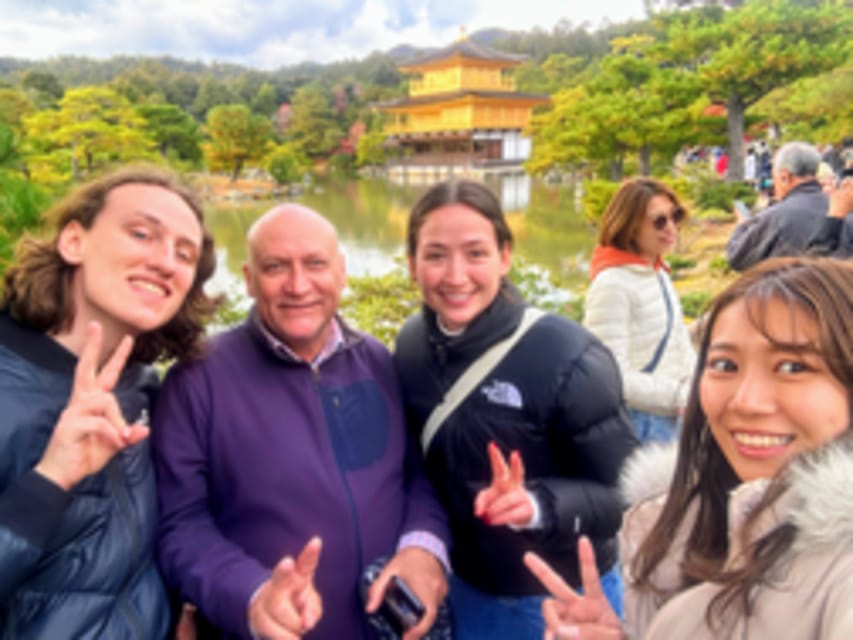
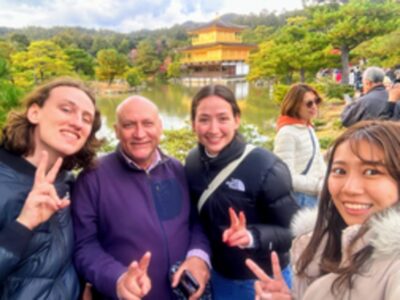
Then you move to Kinkaku-ji, the Golden Pavilion. Even if you have seen pictures before, the first real view has a way of stopping you. It is a Zen Buddhist temple with a dazzling golden exterior, and it sits in calm gardens that make the temple feel even more dramatic.
Your time here is about 40 minutes, and that is a sweet spot for this type of temple. You do not have to rush through every path, but you also do not end up stuck for hours. Since the tour includes guided context, you are not just counting steps. You are learning what you are looking at: the temple design language, the garden role, and how Zen aesthetics show up in place and sightlines.
The UNESCO angle matters here too. Kinkaku-ji is a UNESCO World Heritage site, so it is not just a pretty stop. It is a preserved cultural statement.
Tickets are not included for Kinkaku-ji either, so plan for that extra fee. Once you factor it in, the value of this stop becomes more obvious: you are paying for the convenience of reaching it, plus the guide time that helps you understand what is worth your attention.
Quick photo and timing tip: water reflections and bright light can change fast. If the day is sunny, you will get classic views. If it is cloudy, the contrast shifts, but it can still look great. Either way, take a moment to stand still. With a short time window, quick walking only gives you quick photos.
Arashiyama Bamboo Forest: serenity you reach faster with a plan

After the Golden Pavilion, the day pivots into Arashiyama, one of Kyoto’s most famous west-side districts for scenery and historic sites. The tour gives you multiple related stops here, which is the smart part. Instead of jumping around Kyoto separately, you bundle the “must-sees” into one Arashiyama block.
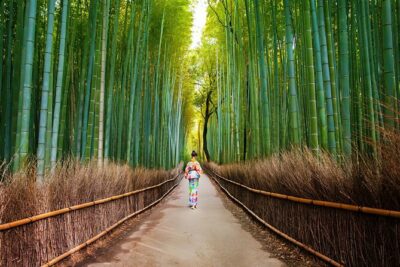
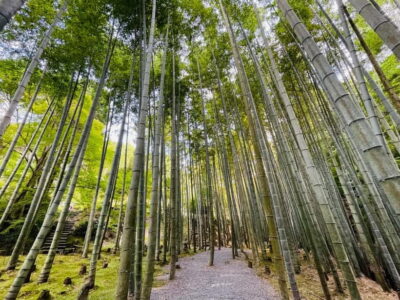
You start with brief time in Arashiyama and then go into the Arashiyama Bamboo Forest area, about 40 minutes. This is the classic bamboo corridor most people imagine. Tall stalks, a quiet tunnel feel, and that faint sense that Kyoto is still Kyoto, even when the crowds show up.
Is it peaceful the whole time? Not always. You will likely share the path with other visitors. Still, you can make it feel calmer if you:
- Start your photos quickly, then switch to slow walking.
- Step aside from the center flow when you want a quieter view.
- Keep moving. If you stop in a busy choke point, you feel trapped instead of relaxed.
When you want a break from bamboo photos, the tour includes Nonomiya Shrine and its distinctive black torii gate. Most Kyoto shrines use bright red gates, so the color difference is a great detail to notice. That small design twist can make your visit feel more “you noticed things,” not just “you arrived.”
Kimono Forest and Togetsukyo Bridge: iconic views plus a playful intermission

In Arashiyama, you also get two stops that are more modern and photo-friendly: the Arashiyama Kimono Forest and the Rilakkuma Tea House.
The Kimono Forest is an art installation made of 600 clear acrylic cylinders, each about 2 meters tall, decorated with vibrant kimono fabrics designs. It is not traditional temple architecture, but it is Kyoto in the present tense, where modern installations can coexist with historic districts. Even if you are not into pop culture, it breaks up the day and gives your eyes something different after bamboo.
Then you have a stop at Arashiyama Rilakkuma Tea House. Rilakkuma means relaxed mood, and the whole place is built around that character theme. It is a short stop, about 15 minutes, and it is more of a wander-and-snack vibe than a major attraction. Still, that kind of reset can be the difference between enjoying a long day and feeling worn out.
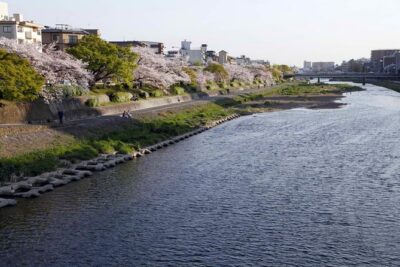
From there, you reach Togetsukyo Bridge, the iconic bridge in Arashiyama. Originally built during the Heian period and reconstructed most recently in the 1930s, it spans the Katsura River. This is where you get the wide-angle Kyoto feeling, even if you just take it from the bridge area rather than searching for viewpoints off the route.
What I like about pairing Togetsukyo with bamboo and shrines is that you get variety without extra travel. Bamboo is narrow and tall. River views are wide and horizontal. Shrines are symbolic and quiet. Bridges connect all that visual mood.
Senbon Torii at Fushimi Inari: the red-gate finale

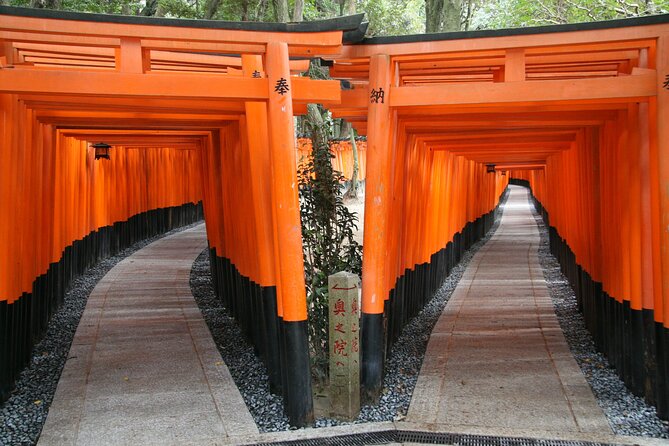
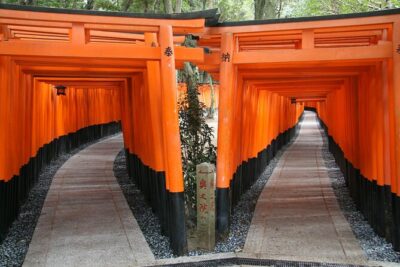
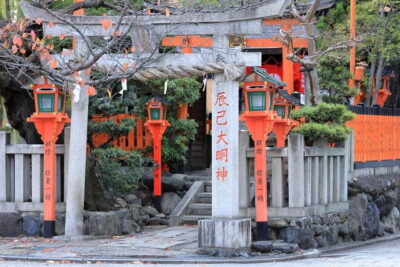
The final big stop is Senbon Torii, often called the Thousand Torii Gates. This area is closely associated with Inari, the Shinto god of rice. The shrine complex is famous because there are around 30,000 Inari shrines across Japan, and Fushimi Inari Taisha is the head shrine.
Your time here is about 1 hour 10 minutes, which is plenty to walk in, pause for photos, and enjoy the rhythm of the gates. The gates themselves are striking: thousands of vermilion red torii leading you along a pathway that feels almost tunnel-like as you go.
Practical advice for the last stop:
- Wear shoes you can walk in comfortably. Even if the route is not long, it adds up.
- If you care about photos, aim for a few minutes off the busiest stream. Then keep moving so you do not get stuck waiting for openings.
- Use the guide for orientation. Getting turned around here is easy once you start exploring.
The tour ends with a strong visual payoff. Starting with castles and temples, then adding scenery, then finishing in a sea of red gates gives you a full-range Kyoto story.
Value and tickets: is $67 worth it for a packed 9-hour day?

Let’s do the real math on value. The tour price is listed at $67 per person, and it includes an air-conditioned vehicle and a guide. You also get a mobile ticket, which reduces hassle.
But two major attractions are not included in admission:
- Nijo Castle and Ninomaru Goten Palace: ¥1,300 per person
- Kinkaku-ji (Golden Pavilion): ¥500 per person
In other words, you should expect about ¥1,800 total in entry fees for the two paid highlights. Lunch is also not included, but you do get time for independent dining.
So what are you really paying for?
- You are paying for the smooth transportation and the route logic. Trying to stitch together Nijo Castle, Kinkaku-ji, Arashiyama bamboo area, and the Senbon Torii in one day on your own is doable, but it is stressful.
- You are paying for a guide to explain context, help you prioritize what to look for, and keep the timing realistic. For short visit windows like 40 minutes at Kinkaku-ji, that explanation helps you get more from less time.
If you already planned to spend your own money on those admissions anyway, the tour price mostly covers the “getting there and understanding it” part. For a one-day Kyoto hit, that is often a good deal.
Where it can feel less worth it is if you hate crowds, dislike structured schedules, or are the type who wants to linger for hours at one place. This is a highlight sprint, not a slow Kyoto day.
Timing, pacing, and group size: how to avoid feeling rushed

One reason this tour gets strong feedback is that the day is paced with intention. Stops have specific time blocks, and the guide helps you move with confidence. In previous tour runs, guides such as Teddy, Amy, Jackson, Anson, Theodore Chan, Saki, Charlie, and Brian have been singled out for clear direction, good humor, and keeping people on schedule.
You can also expect practical help during the day. Some guides send directions ahead of time, even messaging about motion-sickness needs so they can seat people closer to the front. That sort of small care can matter more than you think when you are on a long coach day.
Still, group tours have trade-offs:
- You are coordinating with the pace of up to 45 people.
- Communication clarity can vary by guide. If you have a hard time catching accents, you might want to bring patience and use the guide’s visual cues.
- You must pay attention to regroup times. The Senbon Torii stop at the end is especially easy to miss if you drift away.
My best advice: treat the guided time as your “core route,” then use free moments for your own pace. When you get to each site, do a quick plan. Take the first 2 to 5 minutes for orientation, then focus on what matters most to you, then accept that you will not do everything.
Practical tips for your Kyoto highlight day
Here are the small choices that make the biggest difference on a tour like this:
- Bring light layers. Kyoto weather can shift, and temples and river areas can feel cooler than you expect.
- Pack a small umbrella. Even if rain only shows up for a bit, it can make bamboo and bridge walking less comfortable.
- Have cash or card ready for admission fees. You do not want to scramble when you arrive at a queue.
- Set expectations: 9 hours is long, but it is still one day. You will not “master Kyoto.” You will see the major icons.
- If you are traveling with stroller or large luggage, flag it during booking. The operator specifically asks you to indicate this.
For lunch, you get time for independent dining. That is a benefit. It lets you eat what you like instead of being stuck with a group meal schedule. Let your guide know what you want, for example quick and cheap versus sit-down, and follow their suggestions.
Who this tour fits best, and who might want another option
This Kyoto Top Four-style highlight day trip is a great match if you:
- Want to see major Kyoto sights without planning every transit step.
- Like having a guide explain what you are seeing, especially at places like Nijo Castle and Kinkaku-ji.
- Prefer a clear itinerary with multiple stops rather than choosing only one area.
- Have limited time, maybe only a day in Kyoto between Osaka plans or onward travel.
It may not fit as well if you:
- Hate schedules and want long unhurried time at just one temple or garden.
- Need full quiet, because bamboo and torii gate areas can be crowded.
- Have strong sensitivity to language clarity. Most guides do a good job, but accents can vary.
Also, keep in mind that the paid admissions and lunch are extra. The tour price is fair, but you should not think it covers everything.
Should you book this Kyoto highlight day trip?
If you are making a one-day decision, I would book this if your goal is clear: see Nijo Castle, Kinkaku-ji, the Arashiyama bamboo area, and Senbon Torii without turning Kyoto into a logistics puzzle. The guide, the air-conditioned ride, and the way the stops connect give you real value.
Do not book it if you want slow travel and long stays. This is built for coverage. It works best when you are willing to sprint lightly, stop for photos, and then enjoy what you chose to prioritize.
If you want my simple rule: book it when you have limited time and want maximum Kyoto icons in one day. Skip it when your heart says one place and staying there.
FAQ
How long is the Kyoto Top Four Highlights day trip?
The tour runs about 9 hours.
What is included in the tour price?
You get an air-conditioned vehicle and a guide.
Are lunch and meals included?
Lunch is not included, but the itinerary includes time for independent dining.
Are the attraction entry tickets included?
No. Nijo Castle and Ninomaru Goten Palace cost ¥1,300 per person, and Kinkaku-ji costs ¥500 per person.
Do I receive a mobile ticket?
Yes, the tour uses a mobile ticket.
Where does the tour start?
The trip departs from Osaka or Kyoto.
How many people are on the tour?
The maximum group size is 45 travelers.
Is free cancellation available?
Yes, you can cancel for a full refund if you cancel at least 24 hours before the experience starts.
What if I’m traveling with a stroller or large luggage?
You should indicate this when booking, since the tour asks travelers to flag stroller or large luggage needs.
More 1-Day Tours in Osaka
More Tour Reviews in Osaka
Not for you? Here's more nearby things to do in Osaka we have reviewed
Kyoto Bus & Sightseeing Tours, compared.
★ 5.0PERFECT KYOTO 1-Day Bus TourFrom $12913,518 reviews
★ 4.8Fushimi Inari, Kinkakuji, Bamboo Grove 1 Day Bus TourFrom $1224,316 reviews
★ 4.9Best of Kyoto: Gion, Geisha, Pagodas & CobblestonesFrom $242,058 reviews
★ 3.9Hop-on Hop-off Sightseeing Bus TicketFrom $272,034 reviews
★ 5.0Private Kyoto Tour with a Local, Highlights & Hidden Gems, PersonalisedFrom $1021,543 reviews
★ 4.7Kyoto/Osaka: Nara, Fushimi Inari Taisha, Arashiyama Bus TourFrom $521,275 reviews
★ 5.010 Must-see Spots in Kyoto One Day Private Tour (up to 7 people)From $1791,108 reviews
★ 4.5One-Day Tour of Kyoto’s Highlights from Osaka/KyotoFrom $661,092 reviews
Browse the lists this tour appears in