
Reviewed · GION & GEISHA DISTRICT TOURS
Kyoto : Chopsticks Making Workshop in Gion with Engraving Option
One of my favorite Kyoto ideas is making something you’ll actually use. In this Gion workshop, you craft a pair of chopsticks from raw wood using a traditional kanna hand plane, then finish them with sanding and natural oil. My favorite parts are the hands-on carving step and the optional engraving that turns your chopsticks into a real keepsake. The one thing to consider is that the wood choices can be limited by what’s available that day, so don’t assume every advertised option will be there.
This is a beginner-friendly, guided workshop that runs about an hour and ends where you start. With a small English-speaking team on hand, you’re not left floundering with tools you’ve never seen before, and you walk away with a souvenir you made, not just bought.
Key Things You’ll Notice Before You Go
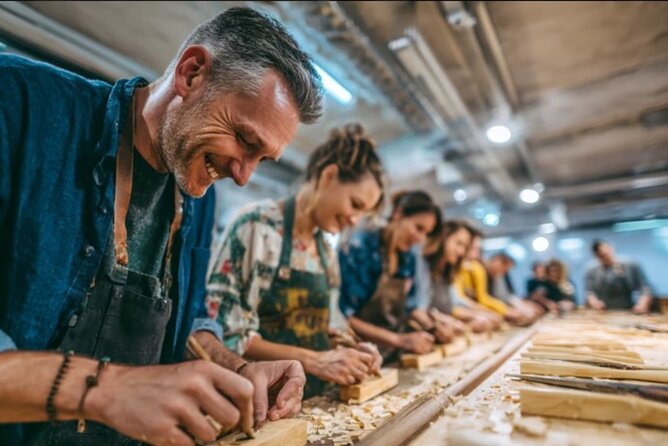
- You craft from raw wood, so you feel every stage of the process, from rough shaping to smooth edges
- Traditional hand plane carving (kanna) is the star move, taught in a calm, step-by-step way
- Two wood options are included, and extra premium woods are sometimes available as an upgrade
- Natural oil finishing gives your chopsticks a comfortable feel and a protective coat
- Optional engraving lets you add a name in Japanese or your native language
- Small-group format, with a maximum of 32 people
Kyoto Gion Chopsticks in One Hour, With Optional Name Engraving
This workshop in Gion is a simple, satisfying idea: you make your own chopsticks in about an hour. No complicated route planning. No long wait. You start at the shop, choose your materials, carve, smooth, oil, and (if you want) personalize everything with engraving.
What makes this more than a basic souvenir stop is the tactile focus. You’re shaping wood with a hand plane, so you feel the grain and learn how the material responds to your pressure. It’s the kind of craft where progress is visible right in front of you, not vague “we did stuff in a studio” magic.
It also lands well in Kyoto timing. If you have a busy day walking temples and neighborhoods, this kind of workshop gives you a break that’s still cultural. And since it ends back at the meeting point, you can plug it into your day without major logistics.
More Kyoto temple visits, food tours, tea experiences, and day trips to compare

Finding Zen Chopsticks Workshop and Settling In
The meeting point is Zen Chopsticks Making Workshop, located at Yasaka Koji South, machi-71-13 Tamamizu, Higashiyama Ward, Kyoto 605-0851. The activity ends back at the same location.
Two practical perks matter here. First, it’s described as near public transportation, which helps when you’re juggling Kyoto’s lots-of-steps reality. Second, you get a mobile ticket, so you can keep everything on your phone instead of hunting for paper.
The workshop is capped at a maximum of 32 travelers, which usually means you won’t be stuck waiting forever for help. It’s also set up for first-timers, so you don’t need to arrive knowing anything about tools, carving angles, or sanding technique.
Choosing Your Japanese Wood, Color, Grain, and Aroma
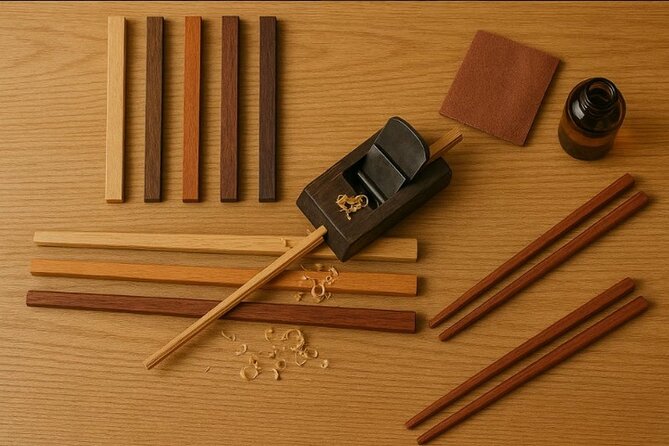
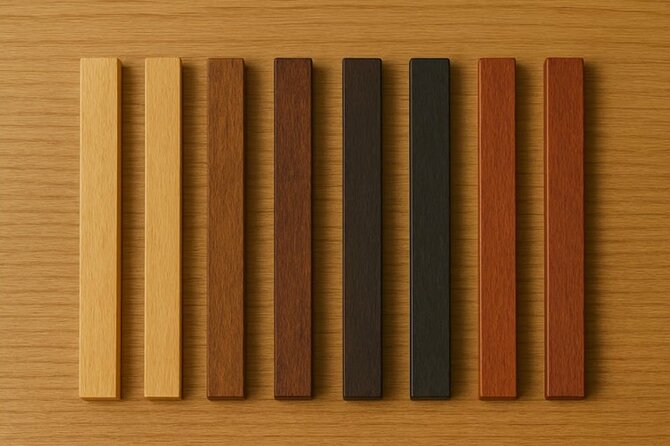
The first real decision you make is the wood. You pick from a curated selection of Japanese woods, each with its own texture, natural color, and even aroma.
Two important value points come from the way the workshop is described:
- Two wood types are included with your price
- Premium woods are available as upgrades if you want to spend a little more for something extra special
In other words, you’re not locked into one “default” material. You can choose a lighter tone or a darker tone based on what you like visually, and you’ll notice differences as you carve. That’s where this workshop becomes memorable, because wood isn’t just a background detail. It’s part of the learning.
One consideration based on real-world experience: wood availability can vary. If you’re picky about a specific option, go in flexible. Decide what you want most, but be ready to choose another good-looking wood if that day’s supply is limited.
Shaping Blanks With a Traditional Kanna Hand Plane
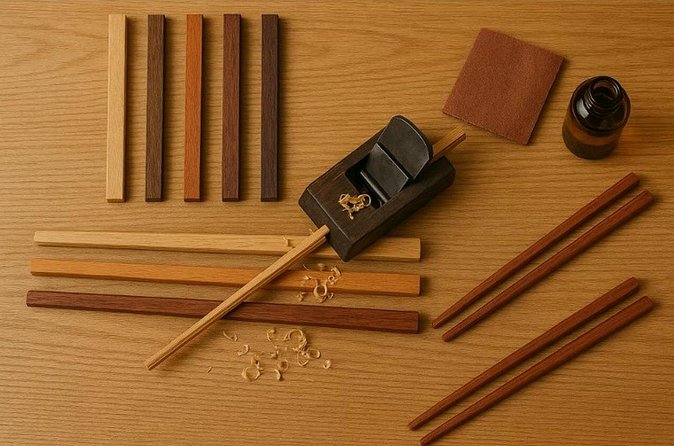
Now for the main event: carving your chopsticks into shape.
Here’s the core flow. You begin with simple wooden blanks. Then you place them on a stand and use a traditional kanna (a Japanese hand plane) to carve. You’re guided from rough shaping toward a cleaner profile, with instruction designed for people who’ve never done woodworking before.
This step is where your workshop brain switches gears. Instead of rushing, you slow down. You learn how to take off thin layers, how the tool bites, and how to keep your passes even enough that the chopsticks become comfortable and balanced.
What I like about this stage is that it teaches patience without feeling boring. The work is repetitive in the best way, like drawing the same line until it becomes smooth and confident. And because you’re working by hand, you can feel the wood grain as you go.
If you’re traveling with kids or you just want something hands-on that doesn’t require prior skills, this part is especially strong. The whole design of the workshop is built around the idea that you can start from zero and still end with a usable, good-looking result.
Sanding, Oiling, and Making It Comfortable to Eat
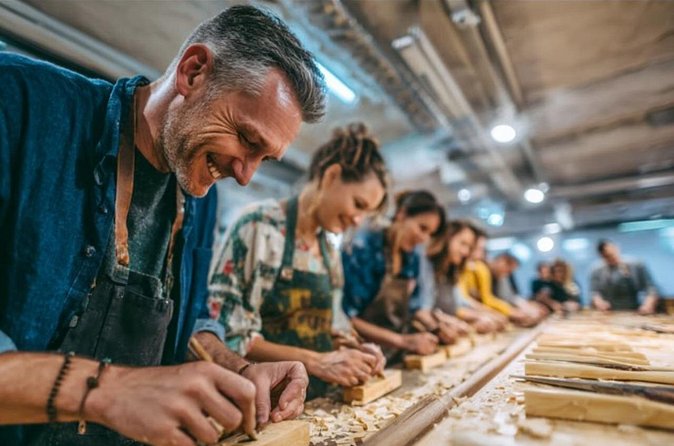
Once the shape is carved, you move from “carving” to “finishing,” and that’s when the chopsticks turn from rough craft to real tool.
You sand the surface and edges to smooth things out. That comfort step matters. Chopsticks aren’t just about looking nice. You’ll use these when you eat, and you want them to feel pleasant in your fingers and not too sharp on the edges.
After sanding, you apply a coat of natural oil. This does two things:
- it protects the wood
- it brings out the wood’s natural look with a soft, polished finish
This is also a good time to slow down and really check your work. Are the edges even? Does the surface feel smooth to the touch? The instructor support helps, but this is your final chance to adjust how your chopsticks will feel at the table.
You finish with a product you can take home. That’s the difference between a craft workshop and a quick demo. Here, you’re not only watching woodwork, you’re making something you’ll actually use.

The Engraving Choice, Japanese or Your Native Language
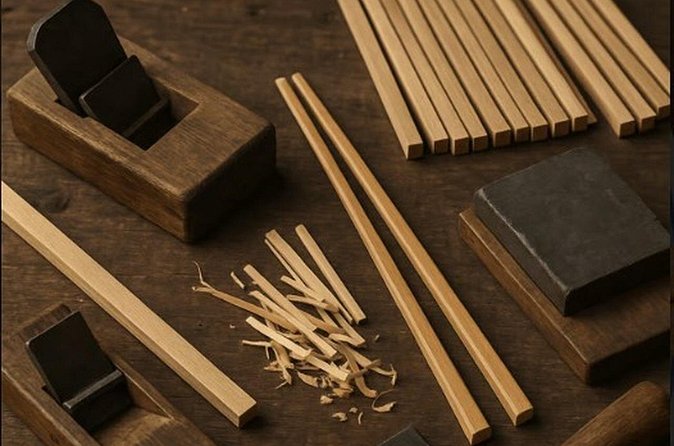
The optional upgrade is engraving, and it’s one of those details that makes a workshop like this feel personal.
You can have your name engraved in Japanese or your native language. The goal is to add a unique touch so your chopsticks don’t feel like a generic set. It’s also practical, since it makes them easy to recognize later if you share chopsticks at home or keep them in a travel kit.
From what’s emphasized in the experience, the engraving step is handled neatly, so it doesn’t feel rushed or sloppy. If you like souvenirs that go beyond a fridge magnet, engraving is a great way to make the effort you put into carving actually matter.
One tip: think about what you want engraved before you arrive. You’ll enjoy the process more if you’ve already decided how you want your name to look.
Price and Logistics: Value for About $15.25
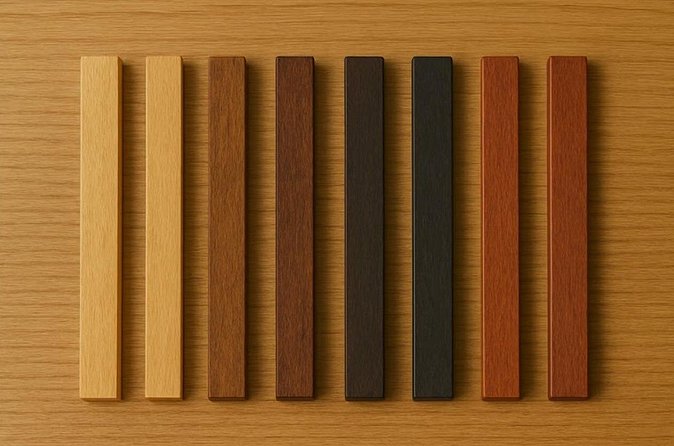
At about $15.25 per person, this workshop is priced like an accessible craft activity. The value comes from what’s included in that price: the guided carving using traditional tools, the sanding and finishing process, and access to the wood choices where two wood types are included.
If you add engraving or premium wood upgrades, your final cost will vary, but the workshop still reads as affordable for Kyoto. Also, you’re paying for labor and instruction, not just a pre-made souvenir you take home.
One logistical plus: it runs about one hour (approx.). That makes it easy to fit into a day without sacrificing half your afternoon. For solo travelers, couples, and families alike, that time efficiency is a big deal. You’re not commuting forever to get one neat photo moment.
And since it ends back at the meeting point, you don’t need to build a complicated transit plan after the session.
Who This Workshop Suits Best (And Who Might Skip It)
This workshop is ideal if you want a hands-on cultural activity that’s beginner-friendly. You don’t need woodworking experience. You’ll get clear guidance through rough shaping, carving, smoothing, and finishing.
It’s also a solid fit for:
- families looking for a calm, structured activity
- couples who want a memorable take-home item
- travelers who like craft more than crowds
- anyone who wants a Kyoto souvenir that isn’t mass-produced
Who might skip it? If you’re only looking for big sightseeing thrills, this is more “slow craft” than “monument.” It’s also worth considering if you’re extremely picky about a specific wood type. Because wood can be subject to availability, you might want to choose based on what looks appealing rather than what you saw in a list.
Final Thoughts: Should You Book This Kyoto Chopsticks Workshop?
I think you should book this if you want a genuine, usable souvenir and you enjoy working with your hands. The best part is the carving with a traditional kanna, because you feel the wood transformation in real time. Add engraving if you want it to feel like a personal Kyoto artifact, not just a souvenir purchase.
If you’re flexible about wood choices and you’re okay with an experience that feels structured and teacher-led, this workshop is a strong use of an hour in Gion. And with consistently high ratings and a reputation for patient, detail-focused support, it’s the kind of activity that’s easy to trust.
FAQ
What is the price of the Kyoto chopsticks workshop in Gion?
The price is $15.25 per person.
How long does the workshop take?
The workshop is about 1 hour.
Do I need any woodworking experience?
No. The experience is designed for first-timers and is taught in a clear, beginner-friendly way.
Can I choose the type of wood for my chopsticks?
Yes. You can select from a curated set of Japanese woods. Two wood types are included, and premium woods are available as an optional upgrade.
Is engraving available, and what languages can be engraved?
Engraving is optional. Your name can be engraved in Japanese or your native language.
Where do I meet for the workshop?
You meet at 禅(ZEN) Chopsticks Making Workshop, Yasaka Koji South, machi-71-13 Tamamizu, Higashiyama Ward, Kyoto, 605-0851, Japan.
What is the cancellation policy?
You can cancel for a full refund up to 24 hours before the experience’s start time. Free cancellation is offered, and changes within 24 hours of the start time are not accepted.
More Workshops & Classes in Kyoto
More Tour Reviews in Kyoto

Not for you? Here's more nearby things to do in Kyoto we have reviewed





Gion & Geisha District Tours, compared.
 ★ 4.7Kyoto Geisha Walking Tour: Gion District & Hidden GemsFrom $253,273 reviews
 ★ 4.9Gion Magical Night Walking Tour with Geisha TriviaFrom $242,393 reviews
 ★ 4.7Gion Geisha District Walking Tour – Stories of GeishaFrom $202,187 reviews
 ★ 4.9Best of Kyoto: Gion, Geisha, Pagodas & CobblestonesFrom $242,058 reviews
 ★ 4.5Night Walk in Gion: Kyoto’s Geisha DistrictFrom $212,003 reviews
 ★ 5.0Kyoto Night Foodie Tour in Gion (9+ dishes + 6 Sake tastings)From $1631,762 reviews
 ★ 5.0Kyoto Gion Geisha District Walking Tour – The Stories of GeishaFrom $251,441 reviews
 ★ 5.0Kyoto Gion: 2-Hour Geisha Culture & History Walking TourFrom $231,186 reviews
Browse the lists this tour appears in