Kyoto Satoyama Cycling with Lunch and English Guide

Reviewed · KYOTO BIKE & E-BIKE TOURS

Kyoto Satoyama Cycling with Lunch and English Guide

5.0 · 19 reviews From $78 Operated by Kyoto Satoyama cycling tour · Bookable on Viator
Book on Viator →

Half-day Kyoto, minus the crowds.

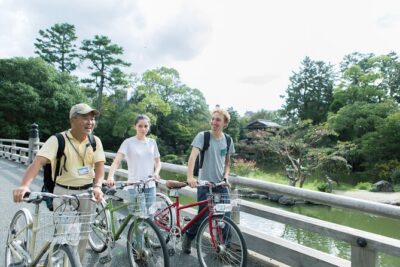
In Sonobe, you get real rural rhythms, birds calling and the river nearby, with a guided e-bike loop that mixes history stops and hands-on food.

I love how e-bikes make the countryside feel effortless, even when roads curve and the pace slows for sights. I also love that the guide is Maki, a local from the area, with clear English and a warm, practical way of guiding you through each stop.

One thing to weigh: the tour can run past the planned window if you add extra experiences like the Mt. Komugi, Mario-related exploration, and it is also weather dependent.

Quick takeaways

Kyoto Satoyama Cycling with Lunch and English Guide - Quick takeaways

  • Sonobe satoyama by e-bike: you ride local lanes without turning the day into a workout
  • Maki’s local English guidance: friendly explanations at each stop, plus safety-minded setup
  • Two lunch styles: Course A leans into hands-on soba, Course B into local produce at a traditional house
  • Shrines and castle ruins that make sense in daily life: Tenmangu and Sonobe Castle tie into learning and local agriculture
  • Optional add-ons that change the feel: kimono photo, koto, spring water, and Mt. Komugi exploration

Sonobe satoyama, not postcard Kyoto

Kyoto Satoyama Cycling with Lunch and English Guide - Sonobe satoyama, not postcard Kyoto
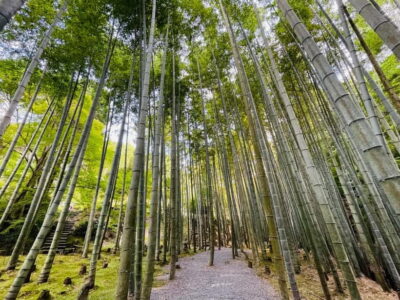
This is one of those Kyoto-area experiences that feels like you took the train out of the guidebook loop. Sonobe is described as countryside where you can hear birds and the river, and that tone matches what this tour is built to deliver: quiet roads, small shrines, and everyday rural landmarks.

The big reason it works is the e-bike setup. You still ride, you still slow down for views and photos, but you are not grinding uphill like you are in a cycling race. The route segments between stops are short, around 10 to 20 minutes, so you stay fresh and actually pay attention.

And since this is run by local guides born and raised in the town, the day has context. You are not just looking at places. You are getting the meaning behind them, including why people pray at certain shrines and how agriculture ties into Kyoto’s food story.

My only caution is timing. Add-ons can extend the day, and the tour needs decent weather. If skies turn ugly, you may need to pivot plans.

You can also read our reviews of more cycling tours in Kyoto Prefecture

Course A vs Course B, choose your kind of lunch

The lunch is the heart of the difference between the two courses, so pick based on what you want to learn and taste.

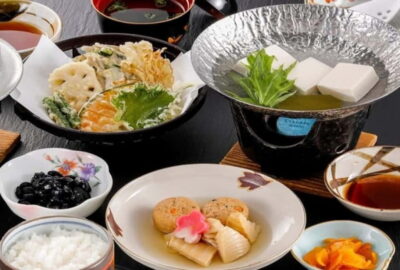
Course A centers on hands-on soba noodle making and then a soba set meal. This lines up with the soba stop that happens at a closed elementary school, where you use buckwheat flour harvested locally and enjoy freshly boiled soba. You also get tempura and rice balls as part of the meal plan for that segment, which means the lunch has range, not just plain noodles.

Course B is for people who prefer a meal focused on local produce in a traditional Japanese house setting. The tour frames it as a more produce-forward experience, and it often feels like you are eating the region, not only learning a single technique.

Either way, your day still revolves around the same core sights: Tenmangu shrine, Sonobe Castle ruins, another shrine stop, and the rural ride in between.

If you are traveling with kids or a mixed group, I like knowing the lunch structure is different enough to satisfy different tastes. Course A is interactive. Course B is more purely culinary.

Ikimi Tenmangu Shrine and the learning prayer theme

Kyoto Satoyama Cycling with Lunch and English Guide - Ikimi Tenmangu Shrine and the learning prayer theme
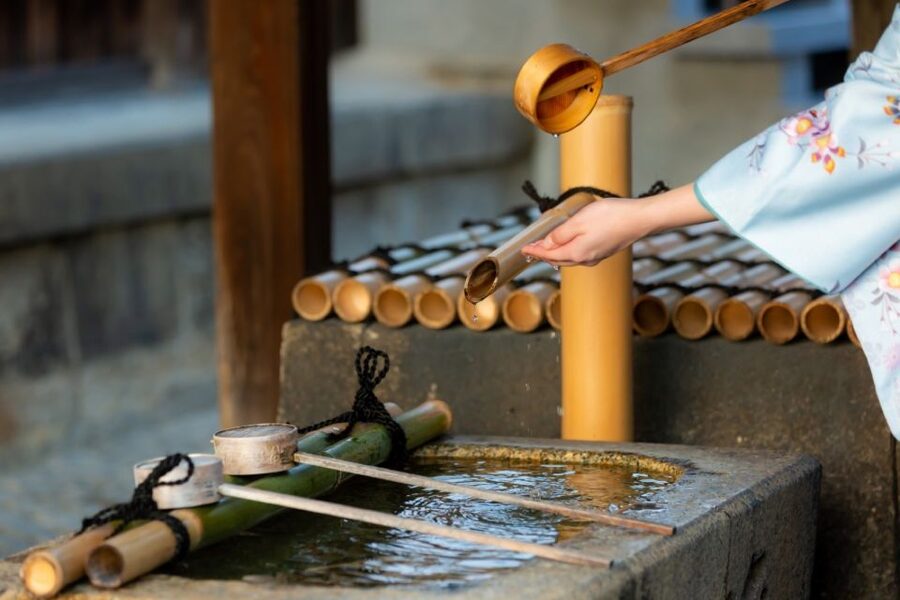
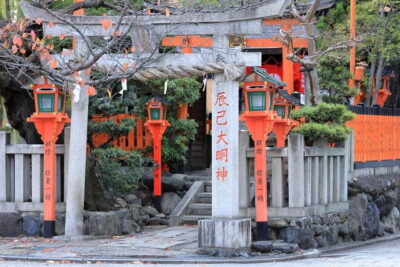
Stop 1 is Ikimi Tenmangu Shrine, and it is not a small detail that this is described as the oldest Tenmangu shrine in Japan. Tenmangu shrines are associated with Sugawara no Michizane, and here people visit to pray for success, especially for exams.

What you get on this stop is more than a quick photo. The whole tour leans into how Japanese religion and daily hopes overlap, and this is a clear example. Even if you do not consider yourself religious, it is still fascinating to see how learning and community traditions connect.

There is no admission ticket cost for this stop, so you are not losing time or budget here. You can also take it at a calm pace, because the ride segments are short and the schedule builds in enough breathing room.

The ruins of Sonobe Castle, now part of school life

Kyoto Satoyama Cycling with Lunch and English Guide - The ruins of Sonobe Castle, now part of school life
Stop 2 is the ruins of Sonobe Castle, described as the last castle built in Japan. That alone sparks curiosity, but the more interesting part is how it lives on.

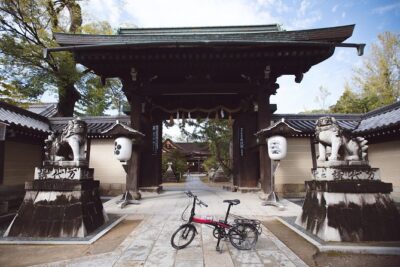
The remaining structures are used as the main gate of Sonobe High School. So instead of an isolated historic monument, you are looking at remnants that still function as part of everyday place-making.

You can see main gate structures, castle walls, turrets, and a guardhouse, depending on timing. It is the kind of history stop that feels real because it is not frozen behind fences and tickets.

The admission is free for this stop too. That means your time is spent walking and looking, not budgeting extra.

One small consideration: because it is connected to a school, you will want to follow your guide’s directions and be mindful of surroundings. Keep it respectful, keep it quiet, and you will get more out of the place.

A closed elementary school and the soba-making moment

Kyoto Satoyama Cycling with Lunch and English Guide - A closed elementary school and the soba-making moment
This is where Course A fans typically light up. Stop 3 takes place in front of a closed elementary school, and that matters because it gives the soba-making experience a different setting than a typical workshop.

You make noodles using buckwheat flour harvested locally, and then you enjoy freshly boiled soba. The inclusion of tempura and rice balls means you are not leaving hungry, and it also gives you a balanced plate after the ride.

There is an important practical win here: doing this in the countryside tends to feel tactile and unhurried. Buckwheat and boiling noodles do not care about jet lag, and the whole process makes it easier to remember the day, not just the photos.

If you booked for hands-on learning, this is the stop that delivers. If you booked Course B, you might want to confirm how much of this soba segment is included for your specific course, since the tour offers two different lunch focuses.

Either way, you will likely walk away knowing where the buckwheat comes from and what freshly cooked soba tastes like right after boiling.

Make Shrine and the agriculture behind Kyoto’s food

Kyoto Satoyama Cycling with Lunch and English Guide - Make Shrine and the agriculture behind Kyoto’s food
Stop 4 is Make Shrine, and this one has a very specific theme: it enshrines the god of agriculture from the Tanba region. Tanba historically supported the food supply of Kyoto, and this stop gives that story a place you can point to.

The main hall has a traditional thatched roof. That detail makes the shrine feel less like a stone stop and more like a living structure within rural tradition.

Your guide also helps you learn the proper way to worship. I like when tours do this kind of thing because it keeps you from just wandering. You get a script, even if it is a simple one, and you feel like you understand what you are doing.

Admission for this stop is free, so it is another low-cost, high-meaning part of the day.

If you care about food culture, this stop pairs well with whichever lunch you chose. Soba, produce, and agriculture beliefs all line up in one arc.

Extra experiences you can add without wrecking the day

Kyoto Satoyama Cycling with Lunch and English Guide - Extra experiences you can add without wrecking the day
The tour includes options you can add, and the key word is included, not extra cost. You can choose two or three extra experiences from the list at the start of the tour.

Examples include:

  • Castle visit and additional Shinto shrine worship
  • Drinking spring water over a small mountain
  • Taking a photo in a kimono
  • Playing the koto, the traditional Japanese instrument
  • Mario Mountain exploration related to Mt. Komugi, the birthplace of Super Mario

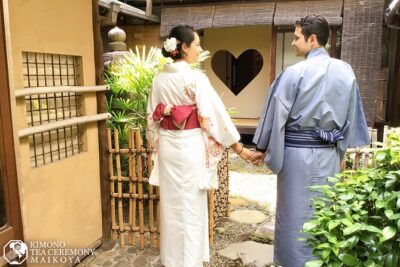
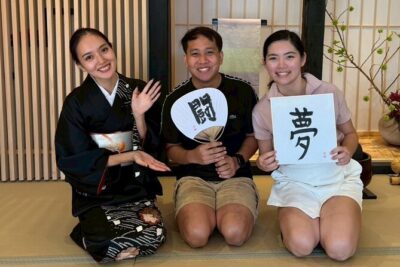
A kimono photo is the kind of add-on that instantly changes how you will remember the day, especially if you spend most of the rest of your trip in regular clothes. The koto option is more interesting than people expect, since it is not only spectacle. You get a chance to interact with something cultural and musical in a way that feels connected to the town.

The Mt. Komugi option is the wildcard. The tour notes that exploring Mt. Komugi may extend the tour past 2 PM. If you have a later dinner plan or you are traveling with kids who get cranky after a certain hour, factor that in before you choose it.

I also like the drinking spring water idea, mainly because it is framed as a small mountain effort rather than a distant trek. Still, if anyone in your group dislikes walking uphill, you can skip it and keep the day smooth.

E-bikes, timing, and how the 4 to 5 hours actually feel

Kyoto Satoyama Cycling with Lunch and English Guide - E-bikes, timing, and how the 4 to 5 hours actually feel
The duration is listed as about 4 to 5 hours, including travel time by bicycle between stops. Between each point, the ride is about 10 to 20 minutes, which means you are not in the saddle for hours with only brief stops for photos.

Instead, you get a pattern:

  1. Ride a short segment
  2. Stop for shrine or ruins explanation
  3. Spend time at the food or craft segment
  4. Ride again, with the guide keeping you on schedule

Start time is 10:00 am, and the tour ends back at the meeting point.

You meet at Mizobe-6-21 Sonobechō Oyama Higashimachi, Nantan, Kyoto 622-0041, Japan. It is also described as near public transportation, which is useful if you want to pair this with other Kyoto plans rather than rely on private transfers.

Safety is not just lip service here. In a review, the team prepared disposable hand warmers and neck warmers, and there is mention of full safety equipment. If you are riding in cooler months, that kind of small prep makes a big difference in comfort.

Because this is a private tour with only your group, the pacing can be adjusted. That is a strong advantage for families and school groups, where one slow walker can otherwise throw off a shared schedule.

What you eat, and how to handle vegan, vegetarian, and allergies

Lunch is included, and the meal changes depending on your course choice, but the tour also states that vegan, vegetarian, and allergy-friendly meals are available upon request.

That matters in Japan, where it is easy to accidentally book something with soy, seafood, or hidden ingredients. Here, you have a clearer path to planning.

If you choose Course A, expect soba as a central element, plus a cooked meal pairing that includes tempura and rice balls. If you choose Course B, expect a meal built around local produce, served at a restaurant in a traditional Japanese house.

One detail I really liked seeing in the feedback is that lunch can be served in a guest house themed with frogs, which makes the meal feel playful without losing the rural character. Another named spot that shows up is Kaeyuno Oyado restaurant, which is worth remembering if you like knowing where your food is coming from.

If you have serious allergies, treat the request process as part of your planning. Message preferences clearly at booking so the kitchen has time to prepare.

Price and value: why $78.83 can be fair for what you get

The price is listed as $78.83 per person, and the participation fee is 15,000 yen for one person. That price sits in a very reasonable zone for a guided half-day with multiple stops, an e-bike, and an included lunch.

Here is what you are paying for in practical terms:

  • English guidance by a local, including explanations at each stop
  • A countryside e-bike ride with short segments that keep the day enjoyable
  • Shrine and ruins visits, with admission noted as free for the stops listed
  • Lunch built into the course, with soba making and meal service for Course A
  • Optional add-ons you can select from and that are included in the tour price

This is also described as a private tour, so you are not dealing with the logistical mess of large mixed groups. Group discounts and a mobile ticket are listed too, which can make it easier if you are traveling with friends.

The main value question is whether you want a guided rural day. If your Kyoto plan already includes a lot of temples and food stops, this tour is a good contrast because it adds living countryside, not just famous monuments.

Who this tour suits best, and who should think twice

This tour is a strong match if you:

  • Want a rural Kyoto experience in Sonobe without spending the whole day commuting
  • Like practical, hands-on food moments, especially if you pick Course A
  • Prefer an English guide who can explain meaning, not only recite facts
  • Travel with family or a group and want a private setup
  • Appreciate safety-minded guidance, including comfort prep for cooler weather

It might be less ideal if:

  • You hate any walking at all, because there are stops on foot, and the day includes small transfers and a bit of outdoor time
  • You have a hard deadline after 2 PM and plan to add Mt. Komugi Mario exploration
  • Weather is uncertain for your visit window, since the experience requires good weather

Should you book Kyoto Satoyama Cycling with Lunch and an English Guide?

I would book this if you want a half-day that feels local, calm, and fun, not rushed. The mix of Sonobe satoyama, shrine and castle ruin stops, and a lunch plan that you actually participate in makes it better than a basic sightseeing loop.

Pick Course A if you want a hands-on soba story with freshly boiled noodles and a full meal. Pick Course B if you want to focus more on local produce in a traditional house setting.

Choose extra add-ons like kimono photo and koto if you want the day to feel special beyond the main route. Be cautious with Mt. Komugi timing if your schedule is tight.

If the weather forecast looks shaky, keep expectations flexible. When conditions are good, this is the kind of Kyoto day that feels like it belongs to someone who lives there, not only someone passing through.

FAQ

What are the main stops on the Kyoto Satoyama Cycling tour?

The tour includes Ikimi Tenmangu Shrine, the ruins of Sonobe Castle, a stop at the front of a closed elementary school for soba-making, and Make Shrine. Admission for each of these stops is listed as free.

How long is the tour?

It is approximately 4 to 5 hours. The duration includes bicycle travel time between points.

Is there an English guide?

Yes. The tour includes an English guide.

What time does the tour start, and where does it meet?

The start time is 10:00 am. The meeting point is Mizobe-6-21 Sonobechō Oyama Higashimachi, Nantan, Kyoto 622-0041, Japan, and the tour ends back at the meeting point.

What is included in Course A and Course B?

Course A includes hands-on soba noodle making and a soba set meal. Course B focuses on local produce at a restaurant in a traditional Japanese house.

Can the tour accommodate vegan, vegetarian, or allergy-friendly meals?

Yes. Vegan, vegetarian, and allergy-friendly meals are available upon request.

What extra experiences can I add during the tour?

You can choose two or three extra experiences included in the tour price, such as a castle visit, Shinto shrines worship, drinking spring water over a small mountain, kimono photo, playing the koto, and Mario Mountain exploration (Mt. Komugi).

Is this a private tour?

Yes. This is a private tour/activity, and only your group participates.

What happens if weather is bad?

The experience requires good weather. If it is canceled due to poor weather, you are notified by 5:00 PM the day before and you can choose transportation by car, reschedule to another date, or cancel for a full refund.

More Guided Tours in Kyoto Prefecture