
Reviewed · KYOTO BUS & SIGHTSEEING TOURS
Best of Kyoto and Nara Highlights Day Tour from Osaka (7~9 spots)
A perfect Kyoto and Nara day starts early. This tour is a packed highlight circuit from Osaka, with an English or Korean-speaking guide and two route options that swap in either Fushimi Inari or Arashiyama depending on the day. You get the core sights without the usual train math, and it’s built for a smooth one-day visit.
I like that the morning is anchored by iconic Nara stops like Kasuga Grand Shrine and Nara Park, then flows into big-name Kyoto landmarks later. I also like the practical structure: clear time blocks, a set meeting point, and a guide who can adjust for real-world issues like traffic and weather.
One thing to consider is that some of the most famous buildings are optional admission, so you’ll want cash or a card ready for Todai-ji, Byodoin, and Kiyomizu-dera. If you hate buying tickets on the spot, this day tour may feel a bit pay-as-you-go.
Key things I found especially good
- Two rotating routes (Fushimi Inari style or Arashiyama style) so you can match the day to your interests
- Guided time management from Osaka, with a return by about 6:00 PM
- Landmark mix in one day, from Nara’s deer and lanterns to Kyoto’s classic temple views
- Free scenic stops are balanced with a few optional paid main halls
- Small-group feel in practice, with examples of groups around 16 people, even though the cap is higher
How the 10-hour plan works from Osaka

This tour is built around a simple rhythm: you start at 8:00 AM at Tsurutontan Soemoncho, get to the first destination around 9:00 AM, and come back to the meeting point by about 6:00 PM. It’s the right length for people who want Kyoto and Nara highlights without losing two days to transit.
The biggest value of a guided day like this is that it cuts down on decision fatigue. You’re not trying to plan the order of stops, figure out which shrine is quickest, or guess which line will move faster. The guide runs the flow, and you follow along at a comfortable pace.
There is one practical catch: the day can change slightly. Japanese road rules limit the bus to no more than 10 hours, and the guide may shift the itinerary based on traffic and weather. That’s normal here. If you’re the type who needs zero flexibility, you may want a slower, independent plan.
You can also read our reviews of more tours and experiences in Osaka.

Two route options, and which days they run
You’re not stuck with a single itinerary. There are two different versions, and the day of the week determines which one you’ll take.
Fushimi Inari route (Mon, Wed, Fri)
This version focuses on Nara first, then moves into Kyoto through Byodoin Temple and Uji, and finishes with Fushimi Inari Taisha (the torii gate climb).
Arashiyama route (Tue, Thu, Sat)
This version keeps the Nara core, then heads into the Kyoto west side with Arashiyama highlights: Bamboo Forest, Nonomiya Shrine, and Togetsukyo Bridge. You also get a shopping stop at Nishiki Market before Kiyomizu-dera.
There’s also a seasonal tweak: during cherry blossom season on the Arashiyama days, Nishiki Market can be replaced by Maruyama Park, and the stop order may be adjusted. If you love spring scenery, that swap can be a win. If you came for food stalls at Nishiki, it’s worth knowing this could change.
Kasuga Grand Shrine and Nara Park: start with the soul of Nara
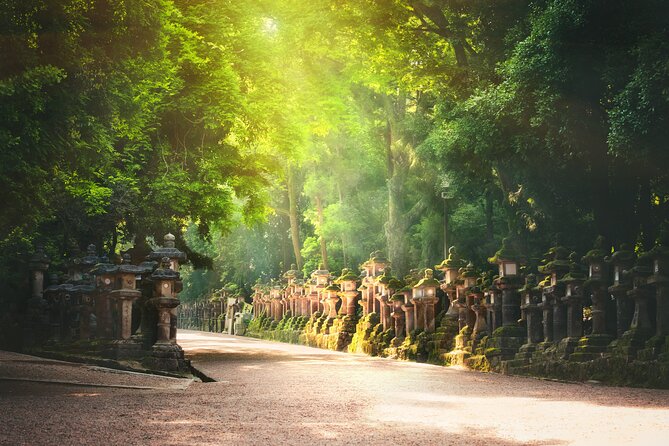
The tour opens its Nara section at Kasuga Grand Shrine. It’s a Shinto shrine known for its hundreds of lanterns, including stone and bronze. The time block is about 30 minutes, and that’s just right for seeing the key areas without feeling rushed.
Next up is Nara Park for about 30 minutes. This is where you get the landmark experience most people come for: open green space, historic temples nearby, and deer that roam freely. You don’t need to over-plan this stop. Treat it like your morning breather, get your bearings, and use the time to enjoy the vibe.
Practical tip: wear shoes you can walk in. Even with guided timing, you’ll be moving on and off transit and between temple grounds.

Todai-ji Temple: the big Buddha, and the admission choice
From Nara Park, the tour goes to Todai-ji Temple for about 30 minutes. This is the home of the Great Buddha inside a massive wooden hall, one of those places where you feel the scale fast.
Todai-ji is marked as optional admission not included, with an 800 yen main hall fee listed. The tour’s value depends partly on whether you choose to pay and go inside the hall. If you skip paid access, you’ll still get the sense of place from outside areas, but the main reason people connect this stop with wonder is that interior scale.
If you’re traveling with limited time for museum-like spaces, this is still a good place to spend your temple ticket budget. The structure is the point.
Wakakusayama views in the Arashiyama route, or Byodoin and Uji on Fushimi days
Here’s where the routes diverge in a meaningful way.
Arashiyama route includes a short hill viewpoint near Nara
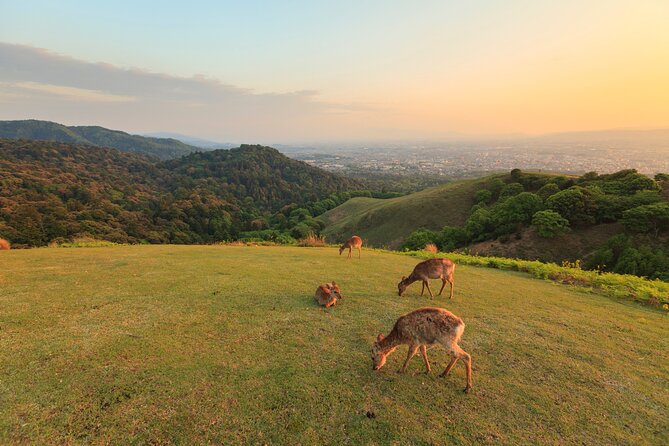
In the Arashiyama version, you get a stop described as a gentle grassy hill behind Nara Park, including panoramic views of Nara City and major landmarks like the great roof of Todai-ji. It’s quick but rewarding, and it acts like a reset before you shift neighborhoods.
That viewpoint is great if you like photos, but more importantly, it gives you context. From the hill, the city makes sense, then the later Kyoto sections feel less like random stops and more like a coherent day.
Fushimi Inari route adds Byodoin Temple and Uji’s tea streets
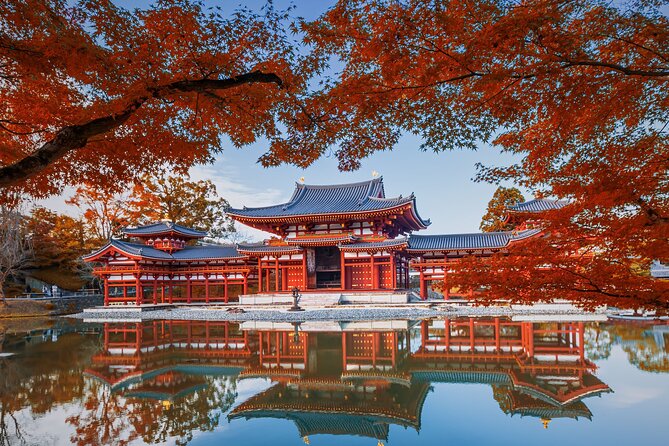
In the Fushimi Inari version, the middle of the day shifts to Byodoin Temple for about 40 minutes. Byodoin includes the iconic Phoenix Hall image on the 10-yen coin. Admission is optional and not included, with 700 yen listed for the main hall. If you do pay, focus on the pond reflection aspect, because that’s part of the visual payoff.
Then you move to Byodoin Omotesando, about 50 minutes. This is Uji’s traditional tea house street, perfect for a relaxed lunch at your own expense. The tour doesn’t include meals, so this is one of your best opportunities to stop, eat what you want, and refuel before the Fushimi Inari torii gates.
If you have matcha on your wishlist, this is where it fits. Uji is a strong place to treat matcha like a planned experience rather than an afterthought.
Fushimi Inari torii gates, or Arashiyama bamboo and Togetsukyo Bridge
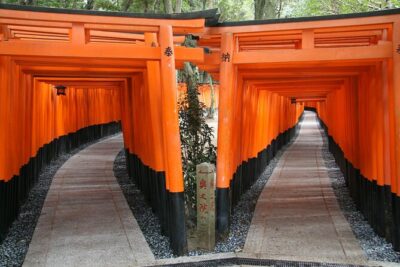
The Fushimi Inari Taisha walk, in vermillion
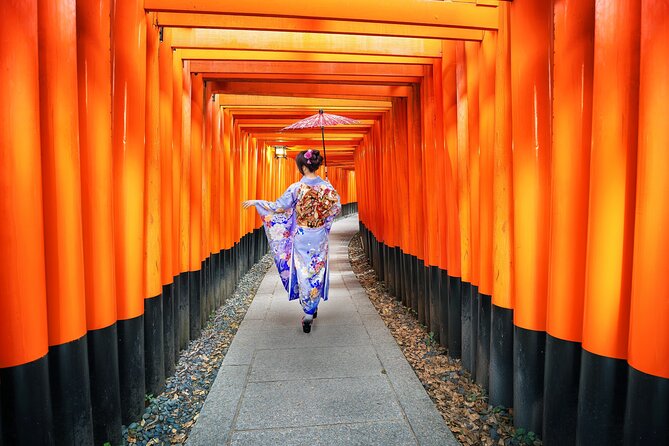
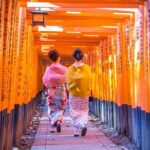
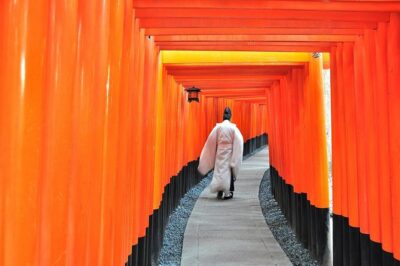
On the Fushimi Inari days, you’ll visit Fushimi Inari-taisha Shrine for about 50 minutes. It’s famous for thousands of vermillion torii gates winding up Mount Inari. With a time block like this, you can do a comfortable portion of the path, snap photos, and soak in the feeling without trying to reach the farthest points of the hike.
One helpful mindset: don’t treat it as a steep endurance climb. It’s more about the repetition of gates and the changing views as you move upward.
Arashiyama’s Bamboo Forest and the small shrine stop
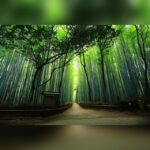
On the Arashiyama days, you get Arashiyama Bamboo Forest for about 25 minutes, then Nonomiya Shrine for about 30 minutes. The bamboo forest is short but memorable. The Nonomiya Shrine stop is smaller, more quiet, and it gives the day a spiritual counterweight before you finish with the big postcard bridge.
Togetsukyo Bridge, the classic river crossing
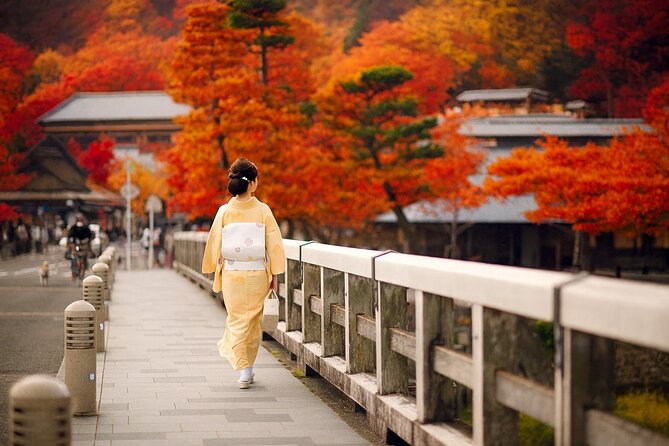
Finally, you reach Togetsukyo Bridge for about 25 minutes. The stop description calls it the Moon Crossing Bridge, spanning the Katsura River, with Heian period origins and later reconstruction. Even if you’re not a bridge history nerd, it’s a great place for a breather, photos, and watching the flow of people and river activity.
Between bamboo and river views, this section is where the Arashiyama route feels most distinctly Kyoto, not just “another temple town.”
Nishiki Market and Kiyomizu-dera: finish with food and views
The Arashiyama route includes Nishiki Market Shopping District for about 1 hour, described as Kyoto’s kitchen with many stalls selling snacks and specialties. This is free time in the sense that you can buy what you want, not an organized meal. If you love nibbling your way through a market, this is a good match.
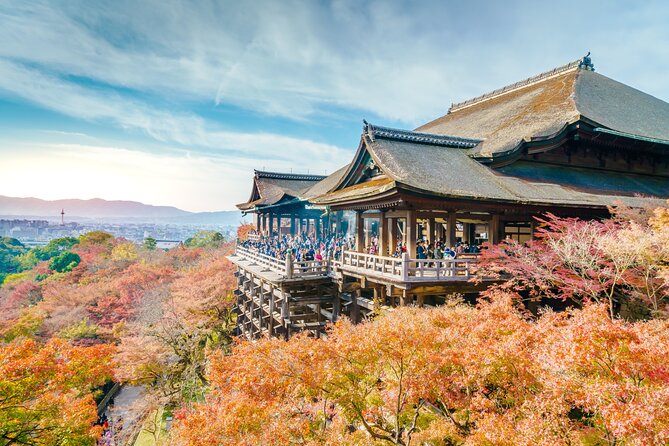
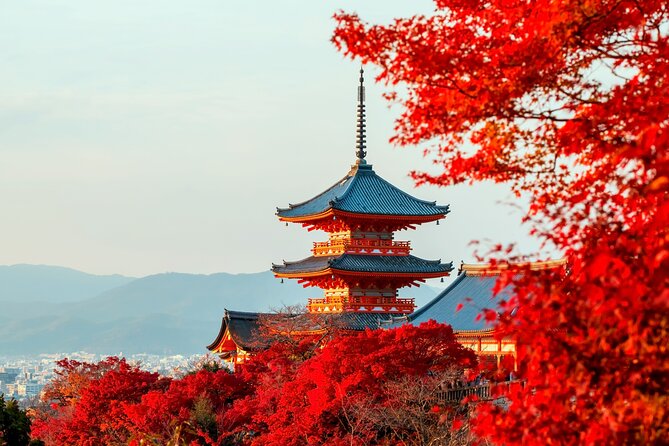
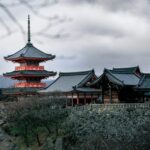
Then comes Kiyomizu-dera Temple for about 1 hour 20 minutes. It’s a UNESCO World Heritage site with a grand wooden stage and panoramic views. Admission for the main area is optional and not included, listed at 500 yen.
The timing works well because you’re not finishing the day on a long “maybe we get in” ticket line. You’re on a guided schedule, then you’re given enough time to explore the main viewpoint area and enjoy seasonal scenery when it’s in season.
If you skipped paid admission at earlier temples, Kiyomizu-dera is the best place to consider spending extra. The view is the payoff.
Price and what you’re really paying for
At $55.17 per person for a roughly 10-hour day from Osaka, the math is all about what’s included.
Included:
- Transportation
- English and Korean speaking guide
Not included:
- Meals
- Optional admissions (listed fees for Todai-ji, Byodoin main hall, Kiyomizu-dera)
- Personal expenses
So the value question is simple: you’re paying for a guided bus day that strings together major sights in a way that would take you longer to plan on your own. For most people, that’s the sweet spot. You get less stress and more sightseeing per hour.
My practical suggestion: set a small “temple ticket budget” in your head before you go. The listed optional fees add up, but you’re not forced to pay all of them. Choose based on your priorities:
- If the Great Buddha matters most, consider Todai-ji.
- If you want the Phoenix Hall icon and pond atmosphere, consider Byodoin.
- If you care about a view that looks over Kyoto, consider Kiyomizu-dera.
Guide quality is the hidden ingredient
This tour’s star is not just the itinerary. It’s the people running the day.
In the feedback, guides like Yuri, Min, and Soae Lee get repeatedly praised for patient explanations and real help with the logistics of a crowded sightseeing day. One very practical detail stands out: if you’re traveling solo and want photos, the guide may step in so you’re not stuck asking strangers. That’s the kind of small service that changes how fun the pictures turn out.
Also, guides here are expected to adjust timing based on conditions. That matters more than it sounds. A rigid plan fails in Japan. A flexible one keeps you aligned with what you came for.
Group size and pace: what it feels like in real life
The tour caps at 49 travelers, but reviews also point to smaller practical group experiences, including cases around 16 people. That means your day can feel more conversational, not like you’re trapped in a moving crowd.
The itinerary gives each stop a specific time, mostly 30 to 50 minutes, with Kiyomizu-dera being longer at 1 hour 20 minutes. That’s not “deep study,” but it’s enough to understand what you’re looking at and see the key views.
The pace is ideal if your goal is highlights. If you want to linger for hours in one place, you’ll probably feel the schedule tugging you onward.
Who should book this tour, and who should skip it
This fits best if:
- You’re short on time in Osaka and want Kyoto and Nara highlights in one day
- You prefer a guided plan with transportation handled
- You don’t mind paying optional admissions at major temples
- You want a mix of classic shrines, big temples, and iconic views
You may want a different format if:
- You’re the type who needs lots of free time at each sight
- You hate any plan changes due to traffic or weather
- You’re on a strict budget and would rather avoid optional admission fees entirely
That said, the tour’s structure gives you choices. You can decide how many of the optional main halls you want to include.
Should you book this Kyoto and Nara highlights tour?
I’d book it if you want a high return day. The combination of Nara’s lantern shrine vibe, deer park energy, a major Buddha stop, and then Kyoto’s either torii gates or bamboo-and-river views is exactly what makes a one-day highlights trip work.
Pick the route that matches your mood:
- Choose the Fushimi Inari + Uji days if you love temples with iconic visuals and you want matcha and traditional streets.
- Choose the Arashiyama days if you want nature-feeling Kyoto and photo-friendly scenery, then finish with Nishiki and Kiyomizu-dera views.
If you go in with comfy shoes, a simple plan for temple ticket spending, and a willingness to let the guide keep things moving, this is one of those days that feels like you visited much more than you actually had time for.
FAQ
Where does the tour start?
It starts at Tsurutontan Soemoncho. The tour also ends back at the same meeting point.
What time does the tour depart and return?
Departure is at 8:00 AM, and it returns to the meeting point at about 6:00 PM.
How long is the tour?
The duration is approximately 10 hours.
What is included in the tour price?
Transportation and an English and Korean speaking guide are included.
Are meals included?
No, meals are not included. Lunch time is provided on your own expense, especially during the Uji Omotesando portion.
Are temple admission fees included?
No. Optional admissions are not included. The listed optional fees are: Todai-ji Temple (800 yen), Byodoin Temple main hall (700 yen), and Kiyomizu-dera Temple (500 yen).
Which route includes Fushimi Inari, and which days does it run?
The Kyoto and Nara + Fushimi Inari route runs on Mon, Wed, and Fri.
Which route includes Arashiyama, and which days does it run?
The Kyoto and Nara + Arashiyama route runs on Tue, Thu, and Sat.
How big is the group?
The tour has a maximum of 49 travelers.
Can I cancel for a full refund?
Yes, you can cancel for a full refund up to 24 hours before the experience’s start time.
More Tours in Osaka
More Tour Reviews in Osaka
Not for you? Here's more nearby things to do in Osaka we have reviewed


Kyoto Bus & Sightseeing Tours, compared.
 ★ 5.0PERFECT KYOTO 1-Day Bus TourFrom $12913,518 reviews
 ★ 4.8Fushimi Inari, Kinkakuji, Bamboo Grove 1 Day Bus TourFrom $1224,316 reviews
 ★ 4.9Best of Kyoto: Gion, Geisha, Pagodas & CobblestonesFrom $242,058 reviews
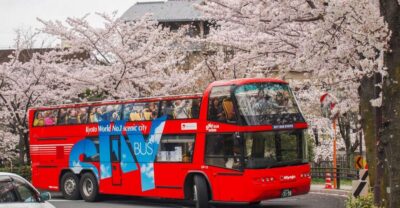 ★ 3.9Hop-on Hop-off Sightseeing Bus TicketFrom $272,034 reviews
 ★ 5.0Private Kyoto Tour with a Local, Highlights & Hidden Gems, PersonalisedFrom $1021,543 reviews
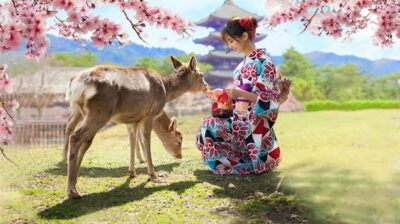 ★ 4.7Kyoto/Osaka: Nara, Fushimi Inari Taisha, Arashiyama Bus TourFrom $521,275 reviews
 ★ 5.010 Must-see Spots in Kyoto One Day Private Tour (up to 7 people)From $1791,108 reviews
 ★ 4.5One-Day Tour of Kyoto’s Highlights from Osaka/KyotoFrom $661,092 reviews
Browse the lists this tour appears in