
Reviewed · NARA DAY TRIPS FROM KYOTO
Kyoto and Nara Day Trip from Osaka
Kyoto and Nara in a single day feels magical. This day trip is a smart, guided way to hit major World Heritage stops in Kyoto and Nara without spending your whole trip figuring out trains and entrances. You get a professional English-speaking guide team and timed visits to icons like Nijo Castle and Kinkaku-ji, with Shinkansen travel built in to protect your time.
I really like the focus on the big ticket sights. You also get a structured plan with included entry fees for most stops, so you can spend your energy looking instead of calculating. One thing to consider is that it is a long day and the pacing is fast, so if you want quiet, slow temple wandering, you may feel a bit rushed at each location.
Key highlights to know before you go
- Shinkansen saves the day between Kyoto and Osaka, using JR trains with non-reserved seats
- World Heritage stops are the main course, not random photo stops
- Kyoto Imperial Palace is included, but the plan swaps to Kitano Tenmangu if the palace is closed
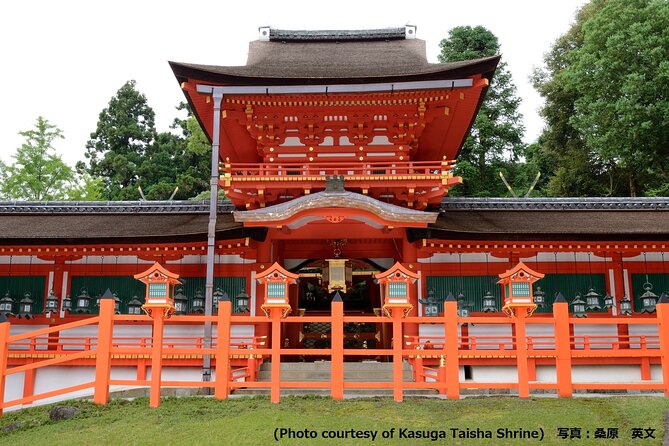
- Nara’s top monuments are grouped well, with Todai-ji and Kasuga Grand Shrine on the same day
- Group size is capped at 40, which helps keep things organized for a full-day itinerary
- Lunch is optional, and the included meal style may not match what you expect from traditional Kyoto food
The “from Osaka to two capitals” setup that works
Osaka is a great base, and this tour uses that advantage by pulling you out early and getting you to Kyoto fast. The schedule is built around one key idea: you should spend daylight in Kyoto and Nara, not stuck traveling between stations. The Shinkansen legs are part of that, and the tour keeps everything coordinated with guides and clear meeting points.
You also start with an easy morning rhythm. You meet at Hotel Granvia Osaka (the lobby area), board trains toward Kyoto, and then switch to bus transport once you arrive. That matters because Kyoto Station and the surrounding transit maze can eat up time if you are traveling on your own.
The tour also uses a mobile ticket, which is helpful in Japan where paper tickets are sometimes still around but not always the easiest. You will still want to have your phone battery ready, because you will be checking into parts of the day as you go.
More Kyoto temple visits, food tours, tea experiences, and day trips to compare

Price and value: what you are really paying for
At $198.15 per person, this is not a budget tour. But it is priced like a day package that bundles the hard parts: English interpretation, transportation between Osaka and Kyoto, and admission fees for multiple major sites.
Here is how I think about the value. If you plan to do Nijo Castle, Kinkaku-ji, Kyoto Imperial Palace, Todai-ji, and Kasuga Grand Shrine in one day, you are stacking up entry costs plus time-consuming logistics. This tour trades money for speed and planning. In exchange, you get a guided route where the itinerary order is set to reduce backtracking.
If you are the type who enjoys organizing your own transit, you might be able to do it cheaper. But if you want someone to handle train changes, meeting points, and entry logistics, this is a reasonable “pay for structure” option.
Morning transfer from Osaka: timing, seats, and how to handle them
You start at 7:15 am, meeting at Hotel Granvia Osaka. The plan uses public transportation and includes comfortable Shinkansen travel between Shin-Osaka and Kyoto. The tour notes that trains have non-reserved seats and seating is not guaranteed.
That detail matters. Non-reserved seats in Japan can still be smooth, but on a long day trip you want to be ready to stand briefly if you arrive during peak flow. If you are traveling with mobility limits, keep that in mind and consider it carefully, since the tour itself does not promise designated seating.
Once you reach Kyoto, you walk to the Sunrise Tours desk at Kyoto Avanti (B1 level) to meet the bus for the next stretch. This is one of those small steps that keeps the day moving, and it helps explain why the tour can fit multiple stops.
Nijo Castle: Tokugawa power with a guided walkthrough
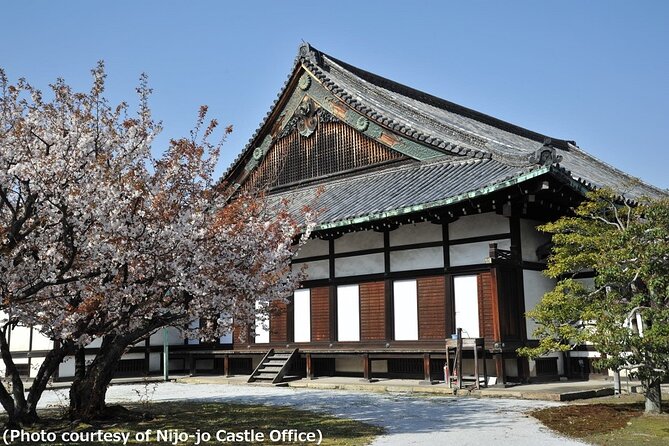
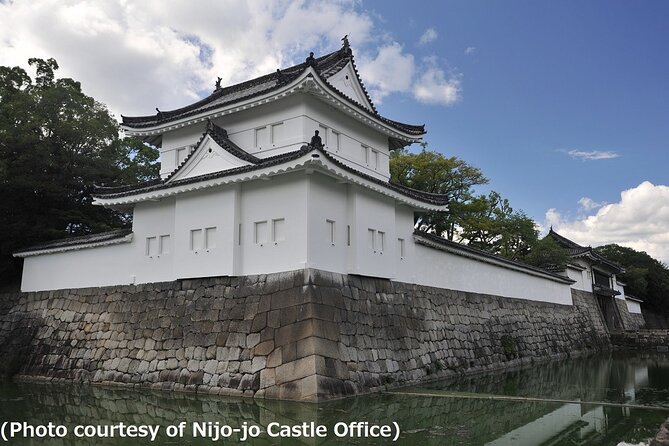
Nijo Castle is one of the best places to start in Kyoto because it gives you immediate context for why Kyoto looked the way it did in the shogunate era. The castle was completed in 1626 and is connected to the Tokugawa Shogun, with a strong relationship to Kyoto Imperial Palace. You get a guided visit that helps you read what you are seeing, from the exterior seriousness to the more decorated interior spaces.
The scheduled time is about 50 minutes, with the admission ticket included. That is enough for a solid overview, but it is not enough to park yourself in one room for long reflection. If you are the type who loves details like ceiling designs, carvings, and room-by-room history, you may wish for extra time.
Still, this is a strong stop for first-timers because it sets the historical tone before you jump to the much more visually iconic sites.
Kinkaku-ji, the Golden Pavilion: why this stop is so popular
After Nijo Castle, you go to Kinkaku-ji, the Golden Pavilion. This is one of those places where the setting helps explain the fame. The wooden architecture is coated in thin layers of pure gold and sits near a pond, so the reflections and light changes are part of the experience.
Your time here is about 45 minutes, with admission included. This is a good length for most people if your goal is to see the pavilion, take photos, and still hear the guide’s context. The one drawback is that Kinkaku-ji can be crowded during peak periods, so moving quickly may feel like a constant. If you really want slow photo time, this is the stop where you might feel it most.
One practical tip: wear comfortable shoes and plan for standing around viewpoints. Even with a guide, this is a sightseeing stop, not a sit-down museum moment.

Kyoto Imperial Palace: included, but flexible when it is closed
Kyoto Imperial Palace is included, with admission listed as free for this stop. The tour also explains a key reality: the palace is not always open to visitors. On Mondays it is closed (or closed the following day if Monday is a holiday), and it can also close on days tied to Imperial Household Agency events.
If that happens, the tour swaps in Kitano Tenmangu Shrine instead. If the closed day falls on the 25th, the tour visits Nishi Hongan-ji Temple. This flexibility is important because it prevents you from arriving at a dead end.
The scheduled time is about 40 minutes. That is enough to understand the palace layout and absorb the “simple Japanese style” the tour emphasizes, but it is still a quick visit. Think of it as guided orientation more than deep study. If you love imperial-era architecture and want to linger in courtyards and corridors, you may want to pair this day trip with another Kyoto day later.
Lunch option: what included food usually feels like
Lunch is only included if you select the with-lunch option when booking. The tour offers meal choices, including an Indian thali option for vegetarians in that specific lunch category, and a Western-style set menu for the general with-lunch option. Requests like halal and gluten-free are not available, so plan around what is offered.
Based on what people highlighted, lunch can be the weak spot if you expected more classic Kyoto style. One common theme is that the meal can feel like a buffet or group-style stop, sometimes with less traditional flavor. That does not make it bad food, but it might not match the experience you want after temple hopping.
My advice: if you care a lot about food variety, treat lunch as practical fuel. You can still hunt for Kyoto-style snacks before or after the tour on your own.
Nara by afternoon: how the day shifts gears
Once you finish Kyoto, you head to Nara. The timing matters because Nara feels different depending on crowd level and daylight. Your afternoon route starts with Todai-ji, then Kasuga Grand Shrine, plus time around Nara Park and the Great Buddha area.
The tour is built to get you to the most famous monuments without you needing to plan multiple transfers. That is the real value of this format. Nara’s big sites are spread out enough that a guided path can save stress and footsteps.
If you are someone who gets tired from nonstop walking, this is where pacing matters. Nara still involves walking and moving through crowds, but it is generally easier to enjoy once you hit the temple scale.
Todai-ji Temple: the Great Buddha scale test
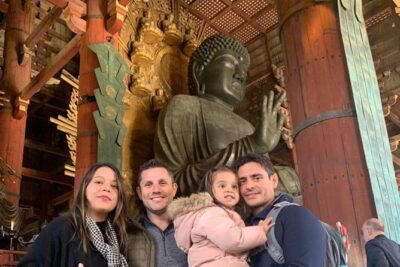
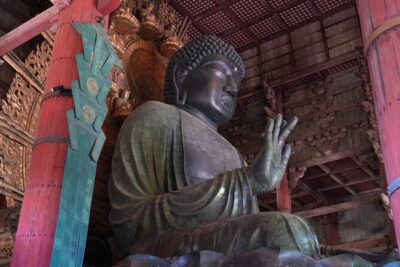
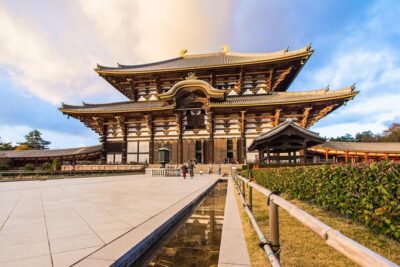
Todai-ji is a showstopper because of size and because it has a strong sense of historic presence. It is an ancient 8th-century structure and is described as one of the world’s largest wooden buildings. It houses Japan’s Great Buddha, plus many national treasures.
Your time is about 1 hour 10 minutes, and admission is included. That amount of time is usually enough to take in the main hall, understand what you are looking at through the guide, and still get a few meaningful moments of quiet inside.
The practical challenge is crowds. Todai-ji often draws big tour groups and school groups, and the flow can feel busy. If you are the type who likes to step aside and regroup, give yourself a few minutes to slow your pace. Even in a guided schedule, you can usually pause briefly to look upward and soak in the scale.
Kasuga Grand Shrine and the deer messenger idea
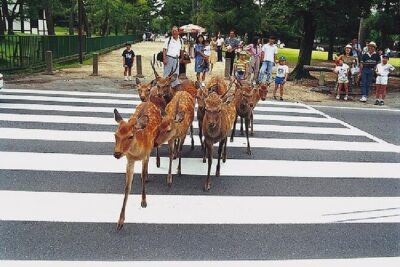
Kasuga Grand Shrine is where Nara turns from pure architecture to more spiritual atmosphere. It is a Nara Period shrine and a World Heritage site. The tour also connects the shrine to the deer in Nara Park, which are thought to be shrine messengers.
You get about 1 hour, with admission included. The tour notes something you might not know until you are there: entry includes the Main Sanctuary special visit area starting from January 2025, and if the special area cannot be entered due to events or operations, the tour visits the Kasuga Taisha Museum or the Todai-ji Museum instead.
That swap matters because it protects your schedule. It also means you are not just walking past a shrine and leaving. You get more cultural context in one of the connected facilities.
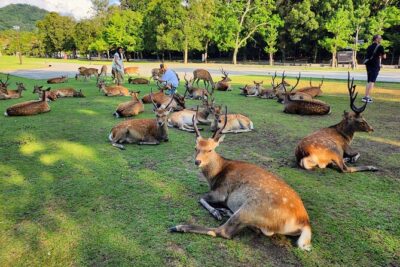
If you are visiting with kids, the deer interaction in Nara Park can be fun, but you should also expect to manage animal behavior around crowds. The tour does not mention rules, but your common sense will matter here.
The transport back to Osaka: getting home without a hotel drop-off
After Nara, you return to Osaka by Kintetsu Railway with non-reserved seats. The tour mentions an assistant from Kintetsu Nara Station to Osaka Namba Station.
One more key detail: the tour ends at Osaka-Namba Station around 6:30 pm, and there is no drop-off service to hotels. So you should plan your own route back from Namba. Osaka-Namba is big and underground-heavy, so build in time to navigate from the station exit closest to your accommodations.
This is also where you want to keep your energy. The day is long, and the travel back can feel like one more transit hurdle if you are not ready for stairs, crowds, and station signage.
Who this day trip fits best
This is a strong fit if you want an efficient, guided overview of Kyoto and Nara’s top icons from Osaka. I think it is especially good for first-timers who want to see the headline sights like Nijo Castle, Kinkaku-ji, Todai-ji, and Kasuga Grand Shrine without building your own route.
It is also a decent option if you prefer a group structure. The tour is set up to keep you moving, and the guide team approach seems to work well for people who value getting historical context while on the move.
If you are a slow traveler, or you want time to linger for photos and quiet exploration, this might not satisfy. You will still see a lot, but you will not slow down enough to do these places justice at a wandering pace.
Should you book this Kyoto and Nara day trip from Osaka?
I would book this tour if your goal is simple: see the major sights, learn what you are looking at, and avoid transportation stress. The included admissions, the guided interpretation, and the use of Shinkansen make it a practical way to compress two regions into one day.
Skip it if you are picky about lunch being traditional, if you strongly dislike rushed pacing, or if you know you need long time at each stop to feel satisfied. In that case, you might be happier splitting your time into separate Kyoto and Nara days and traveling more slowly on your own.
If you do book, pack comfortable shoes, bring water, and treat each stop as a guided highlights visit. You will come away with a clear mental map of both cities, and that makes it easier to plan a second trip where you can slow down.
FAQ
What time does the tour start and when does it end?
The tour starts at 7:15 am and ends at Osaka-Namba Station around 6:30 pm. There is no hotel drop-off.
Where do we meet in Osaka?
The meeting point is Hotel Granvia Osaka, 3-chōme-1-1 Umeda, Kita Ward.
Is admission included?
Yes. Admission fees are included for Nijo Castle, Kinkaku-ji Temple, Kasuga Grand Shrine, and Todai-ji Temple. Kyoto Imperial Palace admission is listed as free.
What if Kyoto Imperial Palace is closed?
If the Kyoto Imperial Palace is closed, the tour visits Kitano Tenmangu Shrine instead. If the closed day falls on the 25th, the tour visits Nishi Hongan-ji Temple.
What if Nijo Castle is closed on the tour date?
Nijo Castle is closed on certain Tuesdays in January, July, August, and December. If it is closed, Ryoan-ji Temple will be visited instead.
How does the transportation work between Osaka, Kyoto, and Nara?
You use public transportation. The Osaka to Kyoto and Nara to Osaka train rides use non-reserved seats. Seating is not guaranteed.
Is lunch included?
Lunch is included only if you select the with-lunch option. The tour offers a Western-style set menu or an Indian thali option (vegetarian suitable) based on the lunch type you booked.
Does the tour use a mobile ticket?
Yes, the tour features a mobile ticket.
How big is the group?
The tour has a maximum of 40 travelers.
Can I cancel for a refund?
Free cancellation is available up to 24 hours before the experience’s start time for a full refund. If you cancel less than 24 hours before, the amount paid is not refunded.
More 1-Day Tours in Osaka

More Tour Reviews in Osaka

Not for you? Here's more nearby things to do in Osaka we have reviewed




Nara Day Trips from Kyoto, compared.
 ★ 5.0World Heritage Kyoto & Nara Uji Authentic Matcha ExperienceFrom $1291,573 reviews
 ★ 4.7Kyoto/Osaka: Nara, Fushimi Inari Taisha, Arashiyama Bus TourFrom $521,275 reviews
 ★ 5.0Nara Half Day Trip Walking Tour (Private Option Available)From $105937 reviews
 ★ 4.4Osaka/Kyoto: Arashiyama, Nara & Fushimi Inari Shrine w/LunchFrom $61754 reviews
 ★ 5.0Nara Early Morning Tour (Kyoto or Osaka Departure Available)From $61676 reviews
 ★ 4.5Kyoto and Nara Day Trip from KyotoFrom $194445 reviews
 ★ 5.0Full Day Guided Tour to Kyoto and Nara from Osaka by VanFrom $106420 reviews
 ★ 4.5Nara Afternoon Tour from Kyoto or OsakaFrom $102390 reviews
Browse the lists this tour appears in