Reviewed · KYOTO
Hammer Pattering Experience of Ring
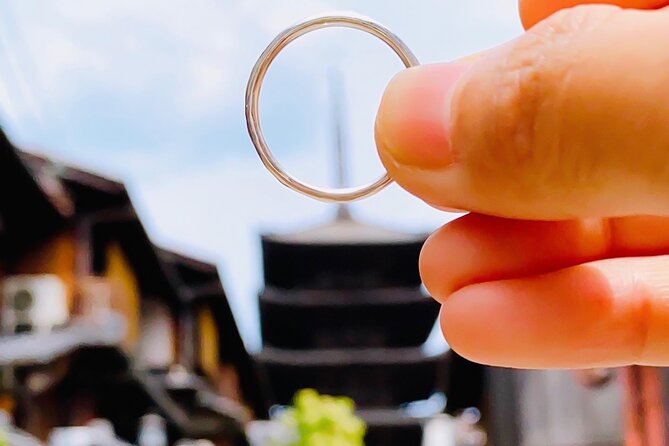
Hammering metal sounds aggressive. The results look delicate. This Tankin style ring workshop in Kyoto has you create a texture pattern with special hammers and tools, while you customize your ring’s look. You get to pick the details, then get help finishing it so it feels like a real craft souvenir, not a mass-produced trinket.
What I like most is how much control you have over the final appearance, down to the material, thickness, shape, and texture choices. My second favorite part is the end-to-end support, including a commemorative photo and the fact that skilled craftsmen polish and clean your ring before you take it home. One drawback to consider: this is not a full ring-smithing class, there is no welding work on-site, and you’re mainly adding texture patterns to a ring that is already made and polished.
Key things to know before you go
- Tankin hammer texture: you create pattern by hammering texture into the ring
- Customization choices: you select material, thickness, shape, and texture design
- No welding for you: the workshop focuses on texturing, not building a ring from raw metal
- Polishing is included: craftsmen handle the final polish and cleaning step
- Private group feel: only your group participates, not mixed with strangers
- About 1 hour: the full process takes roughly 60 minutes and you take it home the same day
Where Itoaware Kyoto puts you in the mood for craft
You meet at Itoaware Kyoto, 91-5 Hoshinochō in Higashiyama Ward. That location matters because Higashiyama is a classic Kyoto area, easy to pair with a walk through nearby lanes before or after your class.
The format is simple and calm. You arrive, you get guided through the choices, you make the texture, then you finish and leave with your ring. Since it ends back at the meeting point, you do not have to worry about transit right when you are done, which is a small but real stress saver.
This is a private activity, so it tends to feel more like a one-on-one or small-group studio session rather than a cattle-call schedule. And because it is near public transportation, you can slot it into a normal Kyoto day without building your entire itinerary around one complicated detour.
You can also read our reviews of more tours and experiences in Kyoto.


What Tankin hammering actually means for your ring
This workshop is built around a Japanese traditional approach called Tankin, where texture comes from controlled hammering. In plain terms: you are not drawing a pattern with a tool like you would in a craft store. You are shaping the surface with repeated impacts that create the texture effect you chose.
You will use special hammers and tools designed for this kind of metal texturing. The goal is to make a pattern that reads well on the finished ring, with texture that catches light as you move your hand. It is a cool contrast with Kyoto’s more visual crafts like weaving or dye work, because here you are shaping the metal directly.
One important note, and it will help your expectations: the experience adds patterns to rings that have already been welded or polished. So you are not doing the foundational metal joining yourself. What you contribute is the texture design work, and that is still the part that makes the ring feel personal.
Designing your ring: material, thickness, shape, and texture
Before you pick up the hammer, you choose your ring’s look. The workshop lets you select your favorite material, plus the thickness, shape, and texture. That is the heart of the experience, because those choices decide what the hammered surface will look like once light hits it.
If you are buying a souvenir gift, this part is where you can get strategic. A thicker band tends to show texture more boldly. A thinner band can look more refined, but the texture detail still matters, since it is created by your hammer work.
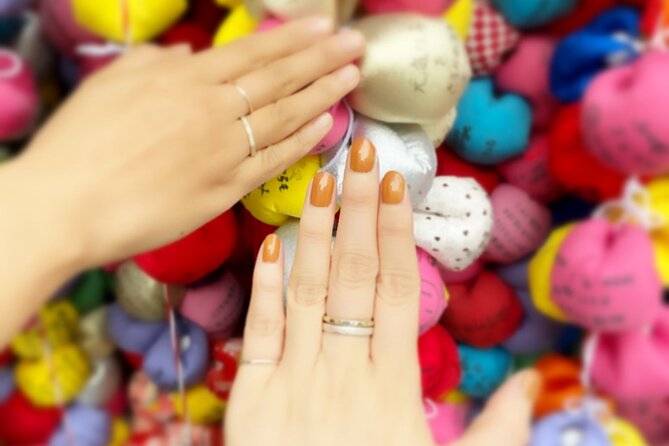
You can also think like a designer: choose a texture that matches the mood you want. Even with just one hour, you can end up with something that feels tailored, not generic. If you are traveling with a partner, it also works well for matching sets. Make one ring with a texture you like most, and the other with a slightly different pattern so they feel connected but not identical.
The hammer session: tools, hand fit, and creating the pattern
Once the design is chosen, you get to the hands-on part. You hammer the texture into the ring using the shop’s tools. It can feel oddly calming, despite the concept, because you are following guidance step-by-step and repeating consistent motions to build the surface effect.
In practice, this is not about contouring and soldering like you might imagine from online ring-making videos. You get a prepared ring base and then add the texture pattern to it. The process still has a real skill element, because pattern depth and placement can change how the final look reads.
Also, the staff support you until the end, and you get help along the way. That includes making sure your ring fits right during the process. So if you are nervous about sizing, you can relax, because you are not left to figure it out alone at the bench.
What you do not do: no welding, then pros finish the look
Here is the clearest distinction in the whole experience: this workshop does not include welding work. The ring you work on is already welded or polished, and your contribution is adding the pattern.
That may sound like a limitation, but it also explains why the workshop can stay around 60 minutes and still deliver a clean result. If you had to do welding from scratch, the time, skill demands, and risk of mistakes would be much higher.
The finishing is the other side of the equation. After your hammering, skilled craftsmen polish and clean the ring in the final process. So you get the best of both worlds: your personal design input, plus professional finishing that keeps the ring comfortable and camera-ready.
If you are the type who wants a class that is all technical metalwork, you might feel this is more of a texture workshop than a full forge-and-sculpt session. But if your main goal is a beautiful, wearable Kyoto-made ring you can take home same day, this setup is honestly smart.





A smooth one-hour timeline with photo and take-home results
The workshop time is about one hour for the full process. In that window, you are doing the design choices, the hammer texture work, and then the final polishing step.
A small but meaningful touch: they help you with a commemorative photo. It sounds simple, but it is the kind of thing that makes a craft workshop feel like an experience, not just a transaction. You can mark the day in a way that fits Kyoto travel, where so many moments are about the objects you bring home.
At the end, you take the ring home on the day. That matters because you do not have to add another plan to your calendar later for pickup or shipping. For most travelers, that is the difference between a craft you enjoy making and a craft that becomes a headache.
Price and value: why about $21.68 feels reasonable
The price is $21.68 per person. For ring making, that is low enough to feel surprising until you understand the structure: you are not building the ring from raw metal, you are adding texture to a prepared base, and the finishing is handled by craftsmen.
This matters for value. You are paying for hands-on creative time, guided support, and the materials and tools that make Tankin texture possible. You are also paying for the final polish step, which is often where amateur attempts can look rough or sharp.
One practical way to think about it is as a high-memory souvenir. You leave with a wearable item tied to Kyoto, and you created a surface texture yourself. That is why this kind of workshop works for couples, families, and anyone who wants more than a shop-bought trinket.
And if you are thinking about gifting, it is a good option because it looks intentional. It is not just engraved plastic or a generic keychain. You can craft a design that fits the person you are giving it to.
Booking wise, it is often booked around 8 days in advance on average. If your Kyoto dates are fixed, I would not wait until the last moment. A class that only runs for your group still needs an exact time slot, and popular workshop times can fill.
Who should book this, and who might skip it
I think this workshop is a great fit if you want a hands-on Kyoto activity that feels genuine and results in something you can wear immediately. It also fits well for families, since the session is short and staff guide the whole process. If you are on a honeymoon or celebrating something small, it is also a thoughtful way to make matching keepsakes without dragging out a full multi-day project.
It may be less ideal if you are specifically searching for a workshop where you learn full ring construction skills like welding, contouring, and soldering from scratch. Your work here is texture pattern creation, and the ring base is already prepared.
Because it is private and near public transportation, you can pair it with the rest of your day in Higashiyama without needing complicated logistics. And since most travelers can participate and service animals are allowed, it is broadly accessible for a workshop format, assuming you are comfortable with the physical act of hammering.
Should you book Hammer Pattering Experience of Ring in Kyoto?
If you want a fast, guided, craft-based souvenir with a real Kyoto technique, I would book it. The combination is strong: you customize the look, create the Tankin hammer texture yourself, get help with the process, and still get a polished, clean final ring you can take home the same day.
If you want a full metalworking class where you personally handle welding and building the ring from the start, this may feel too focused on texturing. But if your goal is creativity with a dependable result, this workshop hits the sweet spot.
One last tip for deciding: think about what you want your ring to say. If it is about personal texture, handwork, and a wearable memory, this is a smart use of one hour in Kyoto. If you want a deeper technical metal journey, you might look for a different style of workshop.