
Reviewed · MARKETS
Kyoto Flea Market Cultural Exchange with English Learners
Kyoto markets get real fast with English support. You’ll explore the To-ji Temple flea markets, Kobo-ichi and Kotto-ichi, hunting through antiques and old collectibles, while a local English learner helps you with price negotiation in a friendly way. The tradeoff is that this outing stays focused on one main temple area, so it is less about covering lots of different sights.
I like how personal this feels for a low price. It is a private walking experience (only your group) that runs about 1 hour 30 minutes to 2 hours, starting at 544 Yamabushiyamachō in Nakagyo Ward and ending at To-ji Temple in Minami Ward. You’ll also get a free stretch to walk the temple grounds, not just the stalls.
Quick hits before you go
- To-ji Temple flea markets centered on Kobo-ichi and Kotto-ichi, with plenty to browse
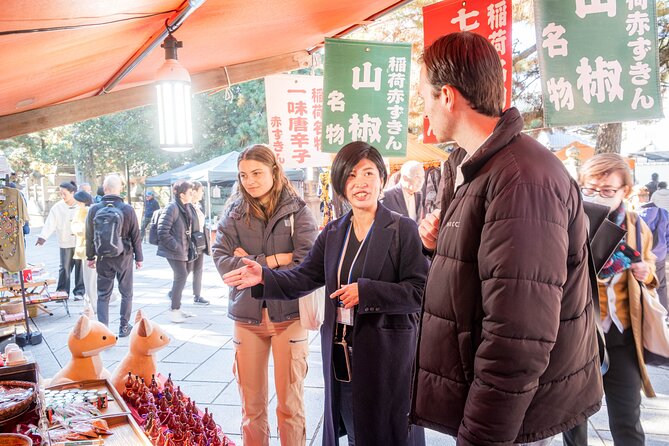
- English-learning local guide who chats with you while you shop and ask questions
- Haggling help that makes negotiations feel less awkward
- Free temple grounds area to balance market time with calm sightseeing
- Private group so the pace stays in your control
- Affordable price point at $13.01, plus options for group discounts
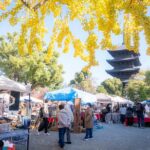
To-ji Temple Flea Markets Under the Five-Story Pagoda
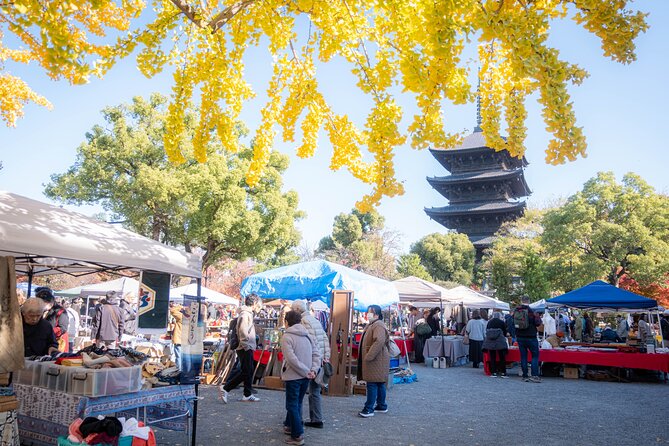
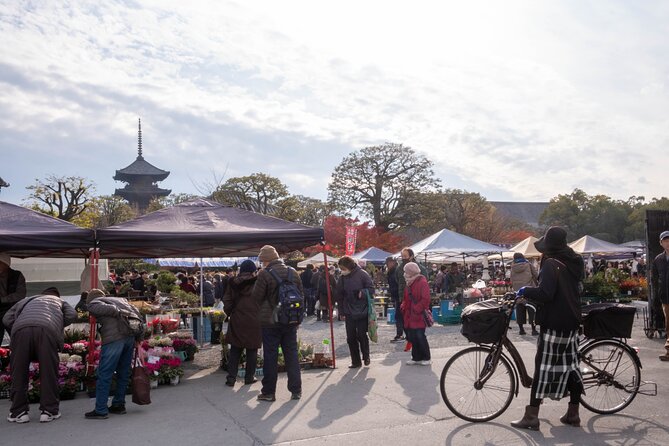
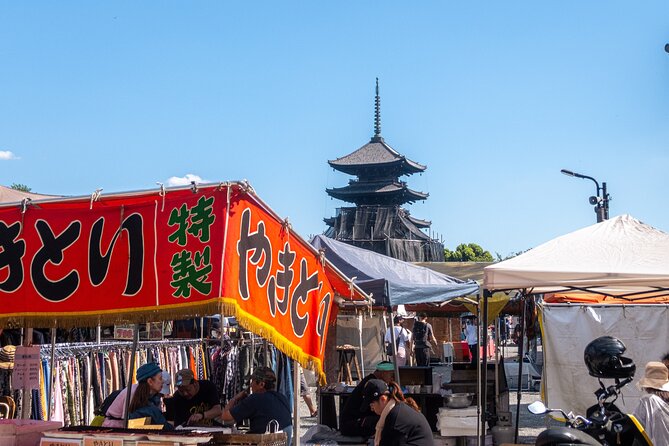
The heart of this experience is the To-ji Temple area, built around the famous Five-Story Pagoda. Even if you have seen other temple grounds in Kyoto, this one has a different mood when the flea markets are on. Stalls cluster close to the historic setting, and you get that rare combination of old-school Kyoto and everyday market life.
You start your stroll at To-ji, with the tour focused on two flea market names you’ll hear on the ground: Kobo-ichi and Kotto-ichi. These are where you can spend real time browsing, rather than rushing through a few photo stops. The stalls tend to reward curiosity. If you like small objects, hand-me-down style goods, paper ephemera, and things that look like they have a story, you’ll likely enjoy the search.
One practical point: because this is a private walking tour with a set market focus, it is not designed as a multi-temple sightseeing marathon. If you want several separate shrines and major landmarks on the same afternoon, you might need to pair this with other time on your own.
You can also read our reviews of more shopping tours in Kyoto
How the English-Learner Guide Changes the Market Game
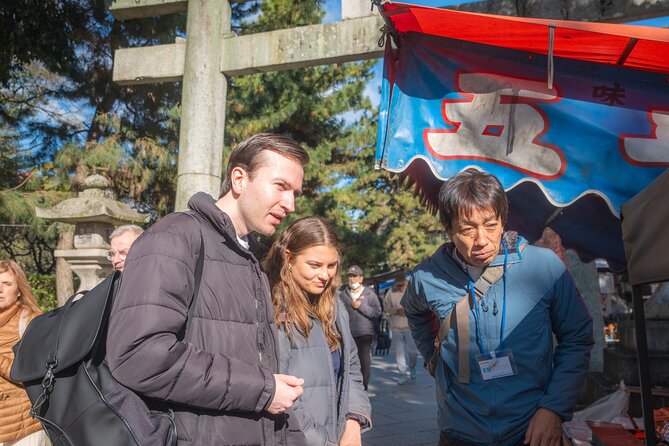
What makes this tour different is the guide. You are walking with a local Kyoto resident who is also an English learner, so the conversations naturally flow in a language you can use. In a market setting, that matters more than you might think.
Markets can be tricky when you do not share language with the seller. The guide helps you bridge that gap through normal, human back-and-forth: what something is, why it is priced that way, and what you should pay attention to. And in the best case, you are not just buying, you are learning how people talk about everyday Japanese customs and shopping habits.
The English-learning angle also changes your role. Instead of being a silent observer who only points and guesses, you become part of a chat. One of the strongest themes from people who have done this is how friendly the guides are, and how they help you negotiate without turning it into a stressful scene. You are there to practice, and that takes the edge off.
Also, you get recommendations during the walk. You might get ideas for what to look for, what to ask about, and how to spot something worth your money without feeling like you are being sold at.
What You’ll Find in the Stalls, and What to Look For
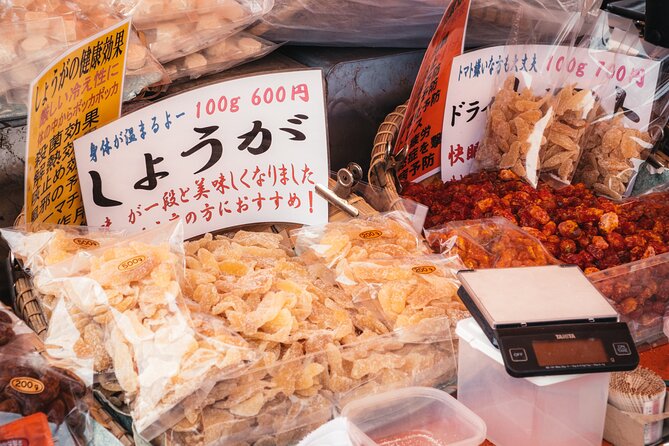
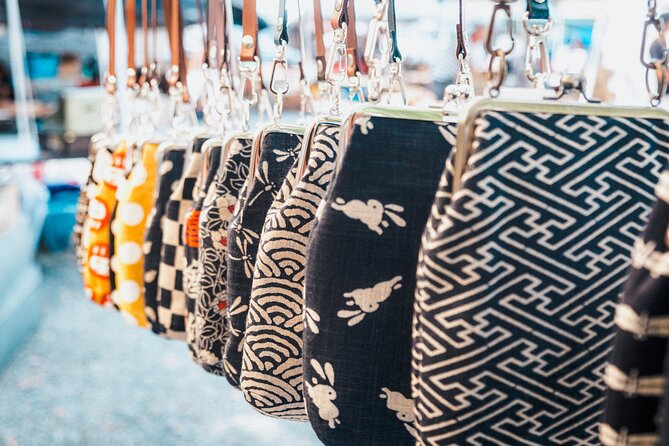
The market spread includes items like antique ceramics, vintage clothing, old toys, and rare collectibles. That’s a lot of variety for a short walking tour, and it means you can enjoy it even if you have no intention to buy.
If your goal is to shop, I’d treat this as a browsing workout. Look for:
- Condition clues, like chips, fading, and repairs, especially on ceramics and older items
- Labels, maker marks, or any text on collectible pieces (even partial info can help you judge value)
- Personal fit questions for clothing, like sizing markers and fabric feel
- What feels special to you, not just what looks old
If your goal is learning, you can still have a great time. Markets teach you Kyoto in a way guidebook stops cannot. You learn what locals might reuse, collect, or repurpose, and you hear how sellers describe their items in everyday language.
And because the guide is there, you have a built-in way to ask follow-up questions. You will not need to guess as much, and that saves time and avoids the awkward pause.
Timing, Route, and Getting There Without Guesswork
This is a 1:30 to 2 hour experience, with a start time of 1:00 pm. Your listed start point is 544 Yamabushiyamachō, Nakagyo Ward, and the walk ends at To-ji Temple, 1 Kujōchō, Minami Ward.
A key logistics detail: public transportation is part of how you get moving, but it is not included in the price. So budget for transit when you plan your afternoon. The good news is the meeting point is described as near public transportation, which usually means less scrambling and fewer “Where is the entrance?” moments.
Because this is a private tour/activity, it is only your group, not a shared bus full of people. That usually makes it easier for the guide to set a comfortable pace, including time for conversations and slower browsing.
One more timing thing: you also get a free area to walk around the temple grounds. That gives you a natural reset during the market walk. You can step back, look at the historic setting, then return to the stalls with less sensory overload.
Price and Value: Why $13.01 Can Feel Like a Lot More
At $13.01 per person, this tour is priced like an entry-level activity, but the structure gives you more value than you might expect.
Here is why:
- You are paying for a guided English conversation plus cultural context, not just walking direction
- You get practical market help, including haggling tips and assistance when talking with sellers
- You cover a compact area, so you get time in the places that matter, the flea market stalls and temple grounds
- The tour is private for your group, which often means less wasted time waiting behind other people’s slower choices
The “included” piece is also simple: gratuities are listed as included. Meanwhile, transit is not included, so factor that into your true cost. Even with transit, it tends to come out as good value compared with tours that cost a lot more but offer less time in market spaces.
Group discounts are mentioned too, which is a helpful detail if you are traveling with a friend or two. This is one of those tours where splitting the decision and taking a shared stroll can make it even easier to justify.
More Kyoto temple visits, food tours, tea experiences, and day trips to compare


Best For Who, and When It Might Not Fit
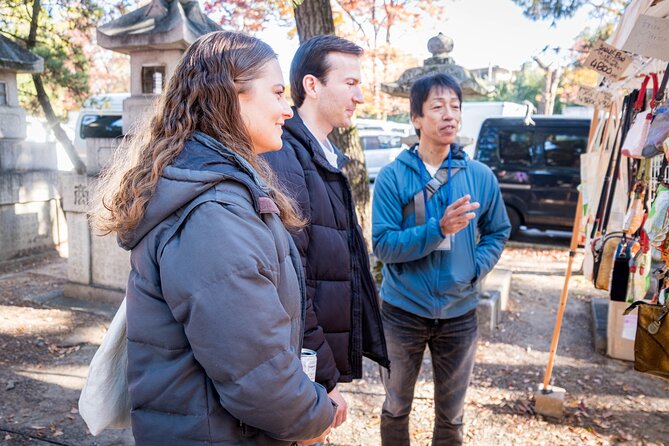
This tour fits best if you want Kyoto in a human, everyday way. It is especially good for:
- People who like markets and antiques more than museum-style attractions
- Travelers who want conversation practice with real local interaction
- Anyone who feels uncomfortable negotiating and wants help doing it politely
It may be less ideal if:
- You want a long list of famous sights in one afternoon
- You only want shopping districts with modern storefronts
- You dislike walking in market conditions, even though the duration is short
Also, it is a good-weather dependent experience. The tour notes that it requires good weather, and if it is canceled due to poor weather, you’ll be offered a different date or a full refund. So keep an eye on your schedule before you commit.
Smart Ways to Haggle Nicely (With Less Awkwardness)
You will likely get haggling help during the visit, but you can make the conversation go smoother with a few small habits. The markets are about negotiation, but they are also about respect and tone.
Try this approach:
- Ask about the item first, then follow with interest about the price
- Keep your tone calm and curious, not competitive
- Use the guide as your shortcut for what to ask, especially if you are unsure how to phrase a question
- If you do not plan to buy, still ask, because you’ll learn faster
The value of this tour is that it gives you a way in. Instead of thinking you must handle everything alone, you can focus on understanding the object and the seller’s explanation. That is how people actually enjoy shopping markets rather than treating every purchase like a negotiation contest.
You’ll also get cultural context on what to expect in Japanese customs around shopping and conversation. That kind of background makes the whole experience feel more natural.
Should You Book This Kyoto Market English Exchange Tour?
Book it if you want a compact, affordable Kyoto outing that mixes market browsing, temple atmosphere, and real conversation with a local English learner. It is ideal when you like finding objects with character, and when you would rather talk with people than just photograph scenes.
Skip it, or plan it as only one piece of your day, if you need a route that covers many famous sites beyond To-ji. This experience is strongest when you commit to the flea market zone and let the shopping and chatting take center stage.
If you are balancing a tight schedule, the timing is friendly. About 1.5 to 2 hours is enough time to explore Kobo-ichi and Kotto-ichi without eating your entire afternoon. And at $13.01, it is an easy add-on even for budget-minded plans, especially if you get the most out of the English conversation and haggling guidance.
FAQ
How long is the Kyoto flea market cultural exchange tour?
It runs about 1 hour 30 minutes to 2 hours.
What does the tour cost?
The price is $13.01 per person.
Where does the tour start and where does it end?
It starts at 544 Yamabushiyamachō, Nakagyo Ward, Kyoto, and ends at To-ji Temple, 1 Kujōchō, Minami Ward, Kyoto.
What time does the tour begin?
The start time is 1:00 pm.
Is this tour private or shared with other groups?
It is private, meaning only your group participates.
What markets and area are included in the experience?
The focus is on flea markets at To-ji Temple, including Kobo-ichi and Kotto-ichi, plus time to walk in the free area of the temple grounds.
Does the tour include admission fees for To-ji Temple?
Admission is listed as free for the included portion.
What is included in the price?
Gratuities are included.
Is public transportation included?
No. Public transportation is not included.
Is the tour refundable if weather is bad?
The experience requires good weather. If it is canceled due to poor weather, you will be offered a different date or a full refund.
More Markets in Kyoto
More Shopping Tours in Kyoto
More Tour Reviews in Kyoto

Not for you? Here's more nearby things to do in Kyoto we have reviewed

Markets, compared.
 ★ 5.0Nishiki Market Brunch Walking Tour (7 Tastings + Brunch)From $681,355 reviews
 ★ 5.0Kyoto Nishiki Market Food and Culture Walking TourFrom $80412 reviews
 ★ 4.8Nishiki Market Tea Ceremony with Koto PerformanceFrom $56294 reviews
 ★ 4.8Nishiki Market Brunch Walking Tour-7 Tastings+BrunchFrom $66197 reviews
 ★ 4.7Local Food Tasting Tour at the Nishiki MarketFrom $78135 reviews
 ★ 4.7Nishiki Market and Depachika Food Tour with a LocalFrom $4276 reviews
 ★ 4.5Nishiki Market Tour with a Local Foodie & TastingsFrom $6767 reviews
 ★ 5.0Nishiki Market Lunch TourFrom $7247 reviews
Browse the lists this tour appears in