
Reviewed · GION & GEISHA DISTRICT TOURS
Kyoto Samurai and Geisha Town Private Walking Tour
Kyoto through samurai and geisha sights, in one smart morning route. This private walking tour stitches together the stories behind samurai-era Kyoto and the preserved streets of Gion, starting early so you can see more without getting swallowed by crowds.
I especially like that the tour keeps a clear theme, from Shogun power to Zen temples to geisha culture, rather than treating Kyoto as a checklist. You also get a guide who helps you understand what you are seeing, including details you would miss on a basic stop-and-snap visit. One drawback to plan around: this is still a walking day, and it is not stroller accessible, plus it is only suitable for moderate physical fitness.
Key highlights you will feel the most
- A 7-hour private plan that only your group does, with public transport included
- Nijo Castle, Kinkaku-ji, and Kennin-ji admissions included, so you are not hunting tickets between stops
- Early 8:00 am start near Kyoto Station, a simple way to beat peak crowds
- Gion as the geisha district anchor, with time to slow down and read the neighborhood
- A route that tracks Kyoto’s political shifts, from Shoguns in Kyoto to Zen in Kyoto
Start at Kyoto Station, 8:00 am, and beat the day’s crowd math
The tour meets at Kyoto Station, at the Kyoto Station Building address listed by the operator, and starts at 8:00 am. That early start matters in Kyoto. You get to enjoy the main sights when many people are still getting themselves together, and your photos and walks feel more relaxed.
Logistically, I like that you are near a major transit hub. It makes meeting up easy, and it also helps if you need to jump back into public transport at the end, since the tour returns to the meeting point.
One practical note: moderate physical fitness is requested. Even with breaks and smooth pacing, you are still on your feet for hours. Wear shoes that handle stone, stairs, and the kind of tight sidewalks you often get around temple and district areas.
You can also read our reviews of more walking tours in Kyoto
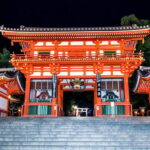
Nijo Castle: where Shogun visits were staged in Kyoto
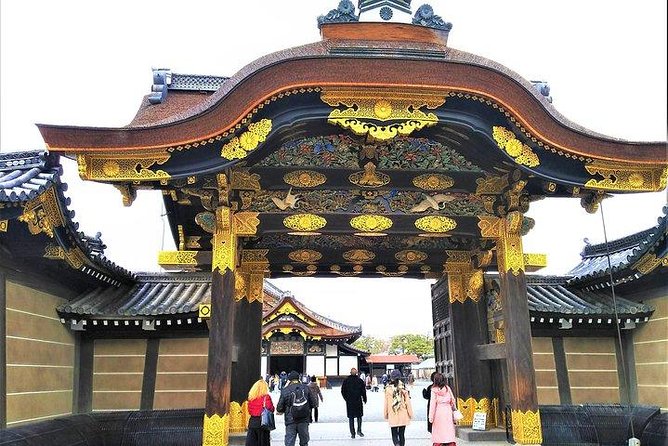
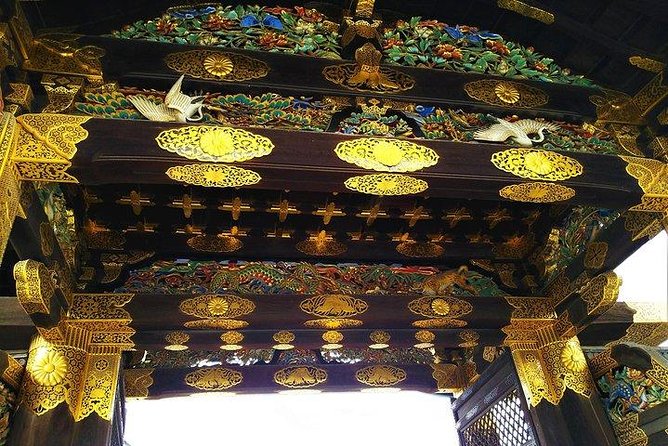
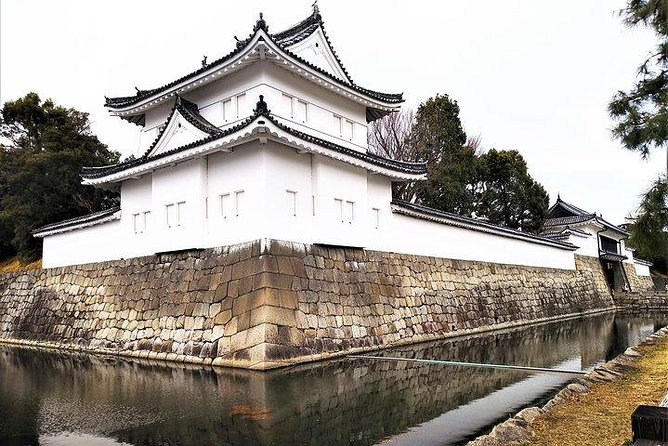
Your first stop is Nijo Castle, with about 1 hour on site and an admission ticket included. This is the castle where the Shogun would stay when visiting Kyoto, a detail that instantly gives the place more meaning than just old walls and rooms.
A key historical hook here is the year 1603, when the shogunate shifted to Edo (today’s Tokyo). Kyoto did not lose its status, though. It stayed important enough that Shoguns still visited, and Nijo Castle was built for those visits. When you walk through, it is easier to imagine power and ceremony, not just architecture.
What to watch for during your hour:
- How rooms and corridors are arranged, since the castle was built for hosting a powerful visitor
- The feel of the interior spaces, since you are moving through a residence built to impress
- Photo stops at the right angles, especially when light hits exterior areas you might otherwise rush past
Potential drawback: castle interiors can feel like a lot in one go. If you are the type who likes reading every sign, you might want a lighter pace so you do not feel overloaded by the time you reach the next stop.
Kinkaku-ji, golden pavilion Zen, and the Shogun connection
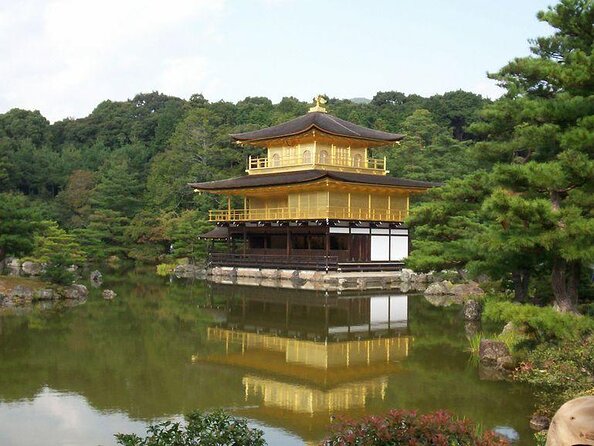
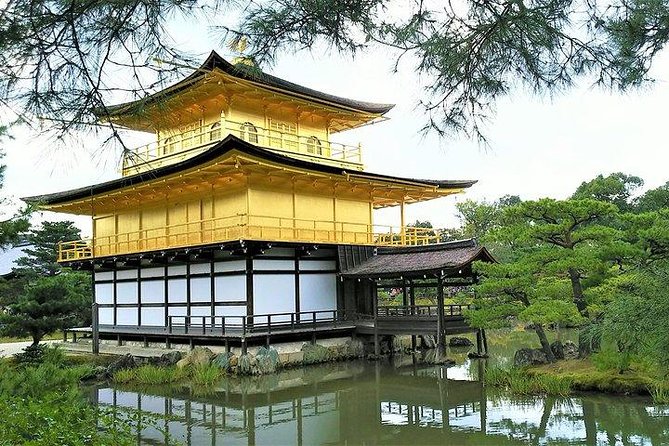
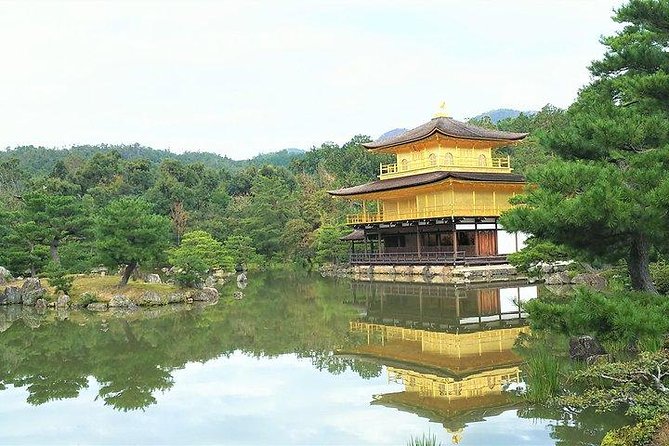
Next comes Kinkakuji Temple (Kinkaku-ji), also about 1 hour, with admission included. This is one of Kyoto’s most recognizable sights for a reason. The golden pavilion and its reflection on the pond are iconic, and the setting makes it hard not to pause.
The historical anchor is the Ashikaga shogunate. The temple was built in 1397 by the 3rd Shogun of the Ashikaga period. That means you are not just looking at a Zen temple in isolation. You are seeing a Zen landmark connected to the political world that shaped Kyoto at the time.
How to get the most out of your time here:
- Let your eyes adjust before you start snapping. The pavilion and water views are often best when you pause first
- If you like calm, plan on slow walking through the best viewpoints, not sprinting from one angle to the next
- Use the guide’s context to connect what you see to why it was built when it was built
The main consideration is simple: it is popular. Even with a morning start, the area can be busy. Your best move is to focus on angles and pacing rather than trying to see everything instantly.
Gion, the biggest geisha district, with time to notice the neighborhood
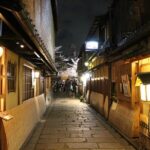
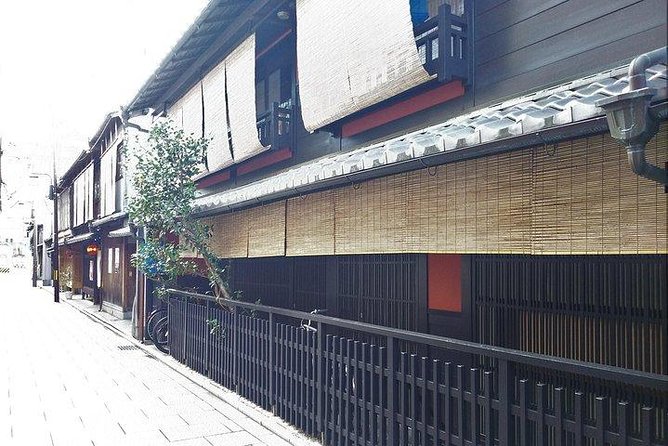
From Kinkaku-ji, you head to Gion, Kyoto’s best-known geisha district area. Your time here is about 40 minutes, and there is no admission fee.
Gion matters because it is the biggest of the five kagai (geisha districts) in Kyoto. Geishas are trained professional performers, with traditions passed on across generations. Instead of treating Gion as a photo zone only, the tour format encourages you to slow down and understand it as a preserved neighborhood.
What you can expect from a 40-minute stop:
- Short, guided walking segments where you learn what you are seeing and why it is set up this way
- Time to look at streetscapes and the overall vibe of the district without turning it into a sprint
- A chance to connect the cultural side of Kyoto after the political and temple-heavy stops
How to handle Gion like a respectful visitor: keep your tone low, avoid blocking walkways, and remember this is still a living district. You are there to observe the culture and the streets, not to treat it like a stage.
Kennin-ji Temple and its dry garden design
Your final major temple stop is Kennin-ji Temple, located in the Gion area. You get about 40 minutes here, and admission is included.
Kennin-ji has a long timeline. It dates back to 1202, and it was founded by the 3rd Shogun of the Kamakura shogunate. The tour also frames it as the first Zen temple in Kyoto, which is a big deal if you are interested in how Zen spread and took root locally.
The highlight mentioned for Kennin-ji is its dry garden design. That kind of garden experience is different from the pond reflection at Kinkaku-ji. Instead of water and shimmer, you tend to get a more controlled, meditative feel, where the viewing takes patience.
Quick ways to make the most of your 40 minutes:
- Spend the first minutes orienting yourself, so you can see how the garden is meant to be looked at
- Pause, even briefly, before you photograph, so you do not miss the design intent
- Ask your guide about what makes it historically meaningful as a Zen temple in Kyoto
A consideration: since your time is capped, if you love long garden readings, you may feel you could stay longer. The tradeoff is that you finish the day without rushing through everything at the last second.
You can also read our reviews of more private tours in Kyoto



How the route turns Kyoto’s timeline into a storyline
What makes this tour work is not just that you see famous places. It is that the order gives you a narrative arc you can carry with you after the walk.
You start with Nijo Castle, tied to Shogun visits and Kyoto’s role even after the shogunate shifted to Edo. Then you go to Kinkaku-ji, a Zen landmark linked to the Ashikaga era. After that, Gion brings in the cultural side that Kyoto kept and preserved while political power moved around. Finally, Kennin-ji adds the deeper Zen roots, dating back to the Kamakura period.
I also like the pacing described in feedback about the tour style. You are not rushed from one stop to the next, and you do not feel stranded on your own. You get efficient movement plus the kind of context that makes each location click.
If you prefer tours where you spend more time absorbing and less time waiting, this setup fits. If you prefer total freedom and minimal talking, you might want to mentally prep for a guided rhythm.
Price and value: what you pay for, and what you still need to budget
The price is $135.59 per person for an approximately 7-hour tour. That sounds like a number to check carefully, but here is what you are actually getting based on the included items:
Included:
- Admission fees (tickets for Nijo Castle, Kinkaku-ji, and Kennin-ji)
- Guide fare
- Public transportation
Not included:
- Food and drink
So you are paying for the guide experience plus the major entrances, and you are not stuck paying extra ticket fees at each stop. For Kyoto, where many famous spots are ticketed and timed entry can complicate planning, having admissions handled is real value.
What you should budget for separately:
- Lunch or snacks, since food is not included
- Drinks you buy along the way
You will likely want to eat before or around Gion, depending on how your group pace feels that day. A light plan helps. A heavy lunch might make walking feel slower, but a snack early on keeps you comfortable.
The tour is listed as private, meaning only your group participates. Private tours cost more than group bus options, so the value is strongest if you care about learning, pacing, and not being mixed into a large crowd.
Who this private Kyoto samurai and geisha walk is best for
This tour fits best if you want Kyoto with context. You like stories that connect political power, Zen temples, and cultural districts, not just stand-alone sightseeing.
It is also a good match if:
- You want an 8:00 am start to avoid the thickest crowd waves
- You care about temples with a specific historical link to Shogun eras
- You want a guided walk through Gion, not just a quick glance from the sidewalk
- You prefer a private format where your group can move efficiently without feeling hurried
Consider choosing something else if:
- You rely on a stroller, since the tour is not stroller accessible
- You need a very low-walking day, since it calls for moderate physical fitness
- You want food included, because you will need to handle meals yourself
On pets, the details are inconsistent. The information notes animals or pets allowed, but it also states it is not suitable for pets. If you are traveling with a pet, you should confirm directly with the provider before you book, so you do not get surprised on the day.
Should you book this Kyoto samurai and geisha walking tour?
I would book this if you want Kyoto in a single coherent storyline, from Shogun-linked landmarks to Zen temples and then into Gion. The included admissions, the guided context, and the early start near Kyoto Station make it feel like a well-run half-day-to-evening structure, even though it is about 7 hours.
Skip it only if your priority is minimal walking or maximum free time to wander alone with no guiding. Otherwise, this is the kind of tour that helps you leave Kyoto feeling like you understood the city, not just visited it.
FAQ
What time does the tour start?
The tour starts at 8:00 am, meeting at the Kyoto Station Building address listed by the operator.
How long is the Kyoto Samurai and Geisha Town private walking tour?
It is approximately 7 hours.
Is this tour private?
Yes. Only your group participates.
Where is the meeting point and where do we end?
You meet at Kyoto Station Building (901 Higashishiokōjichō, Shimogyo Ward, Kyoto 600-8216, Japan). The tour ends back at the meeting point.
Are admission tickets included?
Yes. Admission fees are included for the stops that list admission tickets.
Is food included?
No. Food and drink are not included.
What transportation is included?
Public transportation is included.
Is the tour suitable for people with limited mobility or limited eyesight?
The activity is listed as accessible for those with limited eye sight and limited mobility, and it is near public transportation.
Is the tour stroller accessible, and can I bring a pet?
It is not stroller accessible. The details also include notes about animals or pets allowed and that it is not suitable for pets, so you should confirm with the provider before bringing a pet.
What happens if the weather is bad or I need to cancel?
The experience requires good weather. If it is canceled due to poor weather, you will be offered a different date or a full refund. You can cancel for a full refund up to 24 hours before the experience start time.
More Walking Tours in Kyoto
More Tours in Kyoto

More Tour Reviews in Kyoto
Not for you? Here's more nearby things to do in Kyoto we have reviewed
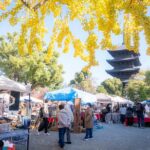

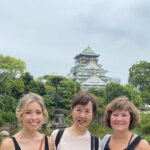

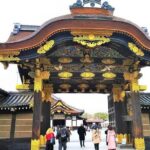
Gion & Geisha District Tours, compared.
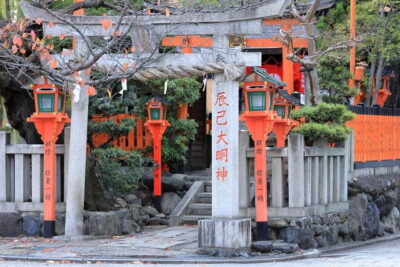 ★ 4.7Kyoto Geisha Walking Tour: Gion District & Hidden GemsFrom $253,273 reviews
 ★ 4.9Gion Magical Night Walking Tour with Geisha TriviaFrom $242,393 reviews
 ★ 4.7Gion Geisha District Walking Tour – Stories of GeishaFrom $202,187 reviews
 ★ 4.9Best of Kyoto: Gion, Geisha, Pagodas & CobblestonesFrom $242,058 reviews
 ★ 4.5Night Walk in Gion: Kyoto’s Geisha DistrictFrom $212,003 reviews
 ★ 5.0Kyoto Night Foodie Tour in Gion (9+ dishes + 6 Sake tastings)From $1631,762 reviews
 ★ 5.0Kyoto Gion Geisha District Walking Tour – The Stories of GeishaFrom $251,441 reviews
 ★ 5.0Kyoto Gion: 2-Hour Geisha Culture & History Walking TourFrom $231,186 reviews
Browse the lists this tour appears in