
Reviewed · KYOTO PRIVATE GUIDED TOURS
Kyoto 9hr Private Tour (Kobe Dep. ) with Licensed Guide
Kyoto from Kobe feels like a shortcut through time. You get a licensed English-speaking guide and a private walking plan that can be tailored to your pace and interests. I especially like the mix of big-name Kyoto sights plus smaller districts, and I also like that the day is built around public transportation instead of waiting around for a private van. One consideration: transport and many temple or castle admissions are not included, so you should budget extra once you confirm your exact stop choices.
Because this is a private day, your guide can help you pick 3 to 4 stops from a long menu of Kyoto landmarks, instead of forcing you into a one-size-fits-all route. In past tours, guides like Shogo and Kazuko got praised for smooth timing and smart guidance, including making Gion easier to navigate and keeping the pace workable even on hot days. If you want to see everything on the list, you will not have time, so choosing well is the whole game.
Quick takeaways
- Licensed English guide with a flexible plan: You choose 3-4 sites from a menu, so the day fits you.
- Walking plus smart transit: You ride public transport from Kobe, with a guide helping you make connections.
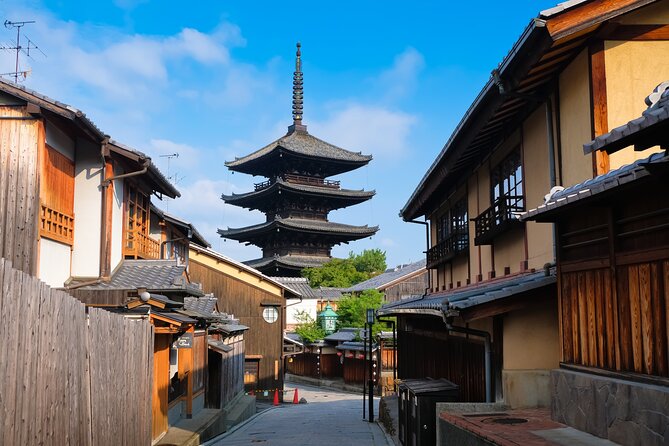
- Major Kyoto districts, not just temples: Think Gion, Nishiki Market, Pontocho, and Higashiyama areas.
- Cost is mostly in the tickets and transit: Entrance fees and rail or other transit fees are on you.
- Arashiyama options can change the vibe: Bamboo groves and temple gardens give you a calmer contrast to central Kyoto.
A Kobe-to-Kyoto private day that actually feels efficient
Kyoto can swallow a whole vacation day fast. This tour is designed to avoid that problem by getting you moving early, then using a guided walking route through the places that define old Kyoto culture. The private format matters here, because you are not just following a script, you are making choices with a guide who can steer the day.
What makes it more satisfying than a basic sightseeing day is the balance. You are not only looking at famous temples, you are also getting city texture in neighborhoods like Gion and shopping and dining streets like Nishiki Market and Pontocho. That mix helps you leave with a Kyoto that feels lived-in, not like photos on a checklist.
You can also read our reviews of more guided tours in Kobe
Price and what you really get for $221.52 per person
At $221.52 per person, you are paying for a private licensed guide for about 9 hours, plus a lot of planning that would be hard to do alone if you want to move efficiently from Kobe. You also get a mobile ticket and the option of pickup, which reduces friction when you are starting outside Kyoto.
Here is the catch that affects value: transportation fees and many admissions are not included. So if you pick paid sites like major Zen temples and landmark castles, your final out-of-pocket can climb. One past guest flagged issues when rail costs were added later if they chose a Shinkansen option recommended by the guide, so treat transit costs as a key budgeting item, not a surprise.
A realistic way to think about value is this: the tour is best when you have a small group, can choose a smart set of sights, and want a guide to manage the flow. If you are solo and you mostly want low-cost wandering, you might feel the per-person price more than the guide does.
Your 3 to 4 stop menu from a long list of Kyoto highlights
The tour is described as a customizable walking day where you select 3-4 sites from a list of major attractions. That is a big deal because the menu includes everything from Fushimi Inari to Arashiyama gardens, plus north and east Kyoto temple areas.
So instead of thinking of this as a tour that hits everything, think of it as a curated menu. Your guide can help you avoid repeating themes. For example, if you want temples and gardens, you might pick several in the east mountains or in Arashiyama. If you want culture and city life, you might prioritize Fushimi Inari, Gion, Nishiki Market, and Pontocho, then add one signature temple.
A smart strategy is to choose one “anchor” sight that you care about most, then build around it with complementary neighborhoods that are close by or that create a clear contrast in atmosphere.
Getting there from Kobe: 90 minutes of guided public transit
You meet your guide at a designated meeting point in Kobe, and the day starts with getting to Kyoto by public transportation, which takes about 90 minutes. That approach is practical because it keeps you from burning time on logistics and because the guide can help you navigate connections and stations.
One guest praised the fact that the group used tram, train, subway, and bus connections with minimal waiting. That is the big payoff of having a guide who can read the city’s transit patterns. You still need to stay flexible, because public transport depends on schedules and timing, but it is usually straightforward with guidance.
If you plan to use the Shinkansen bullet train, remember that rail fares are explicitly not included. Plan your budget based on your preferred transport method before you lock in your final stop mix.
Stop-by-stop: what each Kyoto choice is like and what to watch for
Below is the full menu of sites included in the tour’s selection list. You will not do all of these in one day, but knowing what each one offers makes it easier to choose your 3-4 stops.
You can also read our reviews of more private tours in Kobe

Kobe and the travel handoff
- Kobe (start and return): You meet in Kobe, then head back at the end. The day is structured around that round trip, so start thinking about energy and timing early.
Fushimi area: Kyoto’s shrine identity
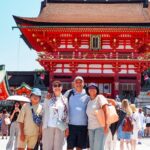
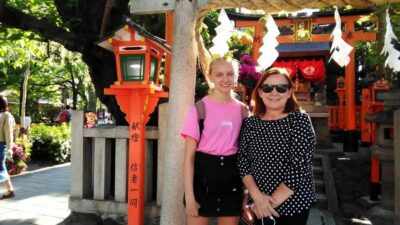
- Fushimi Inari-taisha Shrine: You get a short visit that focuses on the main experience of this famous shrine complex. Since it is listed with admission ticket free, it can be a great anchor stop when you want maximum impact with less cost.
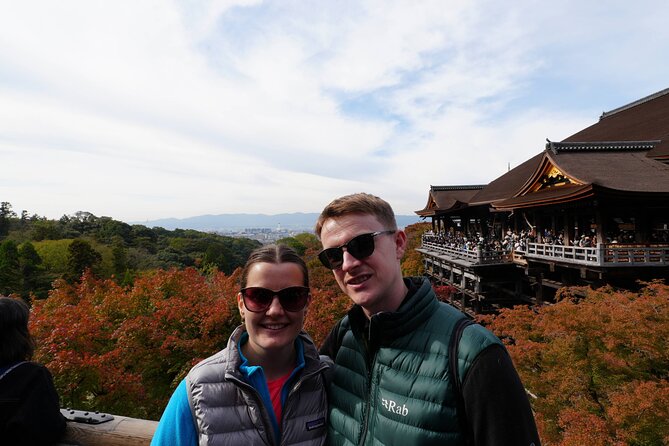
- Kiyomizu-dera Temple: Expect a guided visit of about 1 hour at one of Kyoto’s most popular temples. It is a classic choice for views and atmosphere, but plan for temple crowds and the fact that admissions are not included in this tour setup.
Castle and power history in central Kyoto
- Nijo Castle (UNESCO): Built in 1603 as the Kyoto residence of Tokugawa Ieyasu, it adds a political and historical layer to your day. It is listed as not included for admission, so treat it as a paid highlight where the guide helps you understand what you are seeing beyond the walls.
Gion and the old streets that people actually care about
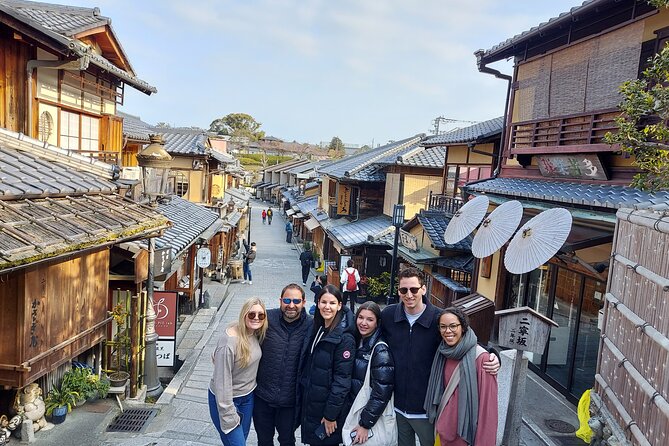
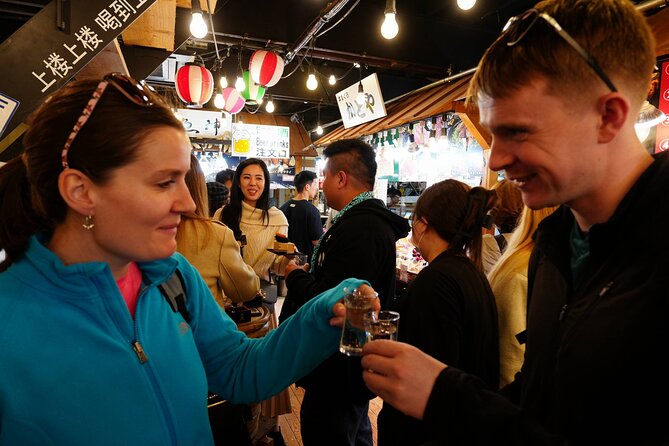
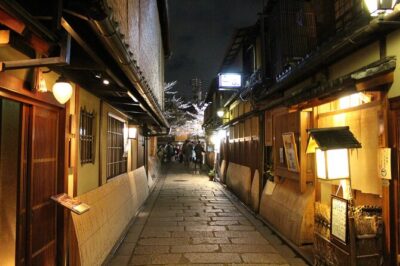
- Gion: This is the geisha district area. The value here is not only the scenery, it is not getting lost in narrow lanes. One recurring theme from praised tours is that the guide helps you find the right streets without wasting time.
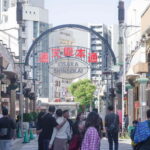
- Nishiki Market Shopping District: Think of this as Kyoto Kitchen, a narrow, multi-block food and shop street. It is listed as admission ticket free, so it is ideal for a low-cost break, but you should expect browsing to take time.
- Pontocho: This is an atmospheric dining alley area running near the river. It is listed as admission ticket free, which makes it a good option if you want a relaxed stop for photos and atmosphere without another ticket line.
- Higashiyama Ward: A preserved historic district along the eastern mountain slopes. It is listed as admission ticket free, which is helpful because it lets you spend time walking and absorbing neighborhood atmosphere instead of paying for entrances.
- Kennin-ji Temple: Close to Hanamikoji and Shijo streets, with expansive grounds and dry landscape garden areas. It is listed as not included for admission, so this one works best if you specifically want a temple stop rather than just a neighborhood stroll.
East Kyoto Zen and pavilion stops
- Ginkakuji Temple (Silver Pavilion): A Zen temple known for its retirement-villa origins, with Ashikaga Yoshimasa linked to the story. Admissions are not included for this tour, so go if you want a signature Zen stop.
- Nanzenji Suirokaku: Part of the Nanzenji area, known for its spacious temple setting at the base of the Higashiyama mountains. Admissions are not included, but the grounds can feel like a reset compared with busier streets.
- Tofuku-ji Temple: A large Zen temple in southeast Kyoto, especially known for seasonal autumn colors. Since admissions are not included, it is a better pick when you are there for that particular seasonal focus or you really like temple gardens.
- Toji (East Temple): A major Heian-period-era temple with a big presence in Kyoto’s temple lineup. Admissions are not included, so treat it like a ticketed anchor if it fits your interests.
The wow factor: Kinkakuji and more north-temple choices
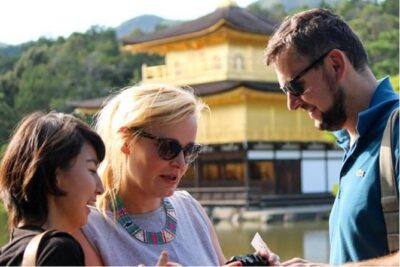
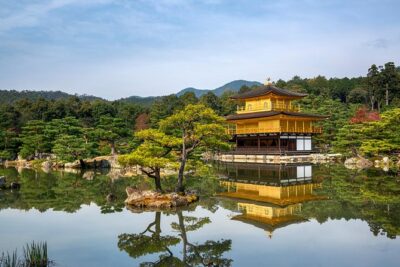
- Kinkakuji Temple (Golden Pavilion): Rokuonji, covered in gold leaf on the top two floors. Admissions are not included, and that is part of why it is so popular. If you pick it, it is worth letting the guide explain the why behind the look.
- Ninna-ji Temple: A World Heritage site and head temple of the Omuro School of the Shingon sect. Admissions are not included, so it is best for people who genuinely want a temple-with-context stop.
- Myoshinji Temple: A large walled complex with many subtemples and main buildings where only some halls may be entered. Admissions are not included, so it can be a good choice for visitors who like temple complexity, but you will likely spend time walking the grounds.
- Daitoku-ji Temple: A major northern Zen complex with nearly two dozen subtemples. Admissions are not included, and this is the kind of place where your comfort with temple-only pacing matters.
- Eikando Zenrinji Temple: Known for autumn colors and evening illumination. Since admissions are not included, it is a great pick if your timing matches the season focus, or if you enjoy lantern-style ambiance.
- Sanjusangendo Temple: Famous for 1001 statues of Kannon. Admissions are not included, so choose it if this specific temple feature is what you want most.
Imperial and palace-adjacent stops
- Kyoto Imperial Palace: Former residence of Japan’s Imperial Family until 1868. Admissions are not included, so it is a strong option if you want the imperial angle instead of only religious sites.
- Shugakuin Imperial Villa: Managed by the Imperial Household Agency and split into Upper, Middle, and Lower Villas. Admissions are not included, and because it is an imperial site style attraction, you should expect a more structured experience.
Quiet forest valleys and the northern mountain mood
- Kibune River: A small town in a forested valley, developed around Kifune Shrine. Admissions are not included. This is a good contrast stop if you want nature and a calmer pace away from dense central streets.
- Kurama-dera: A rural town in the northern mountains known for Kurama-dera and its hot spring. Admissions are not included. If you are picking only a few paid sights, this can be a great “mood switch” from urban Kyoto.
Rock garden and refined garden aesthetics
- Ryoan-ji Temple: The site of Japan’s most famous rock garden. Admissions are not included, and it is one of those places where the guide can help you slow down and see why people care.
- Ginkakuji and Kinkakuji (already covered) pair well with Ryoan-ji conceptually because they all lean into Zen aesthetics, but you will want to avoid stacking too many similar-sounding garden stops.
Uji and the extra travel time reality
- Byodoin Temple: Known for the Phoenix Hall, a National Treasure of Japan and UNESCO World Heritage site. Extra travel time is expected because it is in Uji city in Kyoto prefecture. This is the one menu item that can steal time from the rest of your day, so only include it if you truly want that highlight.
Katsura, Saga, and Arashiyama garden country
- Katsura Imperial Villa: A top example of Japanese architecture and garden design, completed in 1645. Admissions are not included.
- Daikaku-ji Temple: A large temple in the Saga district, originally built in the early 800s as a detached palace for Emperor Saga. Admissions are not included.
- Tenryu-ji Temple: The most important temple in Arashiyama, ranked first among Kyoto’s five great Zen temples, and registered as a World Heritage site. Admissions are not included.
- Yoshimine-dera: A Tendai sect temple in the western mountains. Admissions are not included.
- Togetsukyo Bridge: Arashiyama’s most iconic landmark, reconstructed in the 1930s. Admissions are not included since it is a public landmark.
- Arashiyama bamboo grove paths: The walking paths through the bamboo groves are a major part of the experience, especially when the breeze moves the stalks. This is a great pick for travelers who want something visual and calm without a paid ticket.
- Okochi Sanso Garden: A former villa in the back of the Arashiyama bamboo groves, with multiple gardens and buildings. Admissions are not included.
Hillside stone-and-moss temple clusters
- Jojakkoji Temple: Mountainside temple with small buildings, gates, maple trees, and moss nearby. Admissions are not included.
- Nisonin Temple: Similar hillside temple atmosphere with larger, imposing buildings. Admissions are not included.
- Gio-ji Temple: Even more tucked into the forest, known for a moss garden with tall maple trees, plus a thatched-roof entrance area. Admissions are not included.
- Adashino Nenbutsu-ji Temple: Located at the end of the Saga-Toriimoto Preserved Street, known for stone statues placed for souls by a famous monk. Admissions are not included.
- Otagi Nenbutsu-ji Temple: Known for 1200 stone statues of rakan, each with a different facial feature. Admissions are not included.
Walking temple routes in the north-west
- Nanzenji Suirokaku, Myoshinji, Daitoku-ji and Eikando all work well if you like Zen environments, but they each come with their own pace. Pick only one cluster if you do not want the day to feel like constant stepping in and out of grounds.
How the licensed English guide improves the day, not just the facts
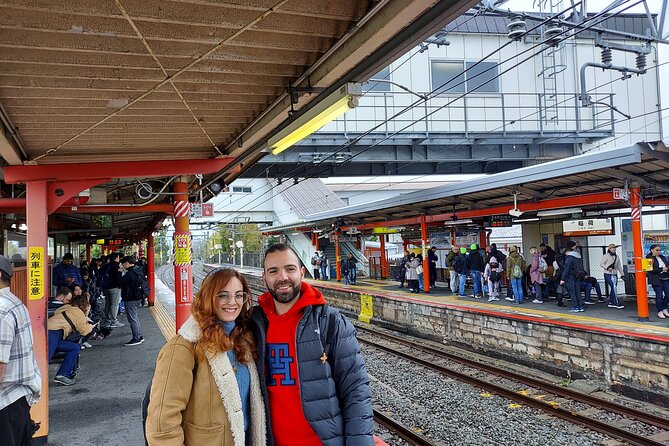
The best praise in the feedback you gave centers on flow. People liked guides who met promptly, handled the day plan smoothly, and adapted when the group needed adjustments. That is the practical value of having a licensed guide, especially when you start in Kobe and use public transit.
In Gion, a guide matters because the streets can be confusing fast. In market areas like Nishiki, a guide helps you focus so you are not just walking until you get hungry. And at temples, the difference between seeing a building and understanding why it exists is huge, even if you are not chasing deep academic explanations.
From the names that showed up in feedback, guides such as Shogo, Kazuko, and Kazuo Sumi were singled out for making the day feel well paced. If your group’s needs vary by age or interest level, this private format is also where customization shines.
Pace, comfort, and when you should scale back
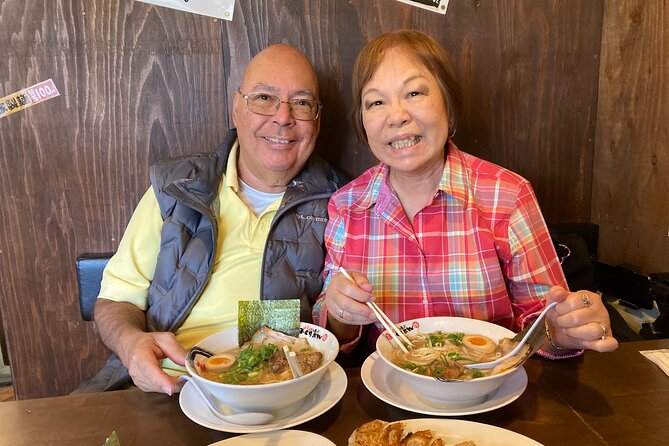
A 9-hour walking day can be great, but it is still a walking day. If you pick too many paid temple stops with long entry queues, you can lose the neighborhood time that makes Kyoto feel real.
Heat is a real factor. One praised experience specifically mentioned that even in hot conditions, the guide kept the day workable. Still, plan for shade breaks, water, and comfortable shoes, because Kyoto’s best walking routes are rarely flat.
Also, remember this is private, but not private vehicle. If you prefer to avoid transit stations, this is still a city where you use connections, so build in a mindset for moving through stations efficiently.
Should you book this Kyoto tour from Kobe?
Book it if you want:
- A licensed English guide who can shape the day around your preferences
- A Kyoto sampler that includes districts like Gion and Nishiki, not just temples
- An efficient use of your time that relies on public transportation instead of slow logistics
Skip it or choose a lighter plan if:
- You expect admissions and rail costs to be fully included, they are not
- You want to check off dozens of temple names in one day, because you will only have time for 3-4 menu stops
- Your ideal day is mostly low-walking with minimal transit, because this tour is built around moving
If you do book, the best move is to pick your 3-4 stops around a clear theme. One shrine highlight, one big temple, one neighborhood, and maybe one garden or Arashiyama option is a strong formula for most people.
FAQ
How long is the Kyoto private tour from Kobe?
The tour is approximately 9 hours, including travel time between Kobe and Kyoto.
Do I get a licensed English-speaking guide?
Yes. The tour includes a licensed local English-speaking guide.
Where do we meet the guide in Kobe?
You meet your guide on foot within a designated area of Kobe.
Is pickup offered?
Pickup is listed as offered.
What is included in the price?
The tour includes the licensed local English-speaking guide, meet-up with the guide on foot within the Kobe area, and a customizable walking tour of 3-4 sites. A mobile ticket is also mentioned, and group discounts are available.
What is not included?
Not included are transportation fees, entrance fees, lunch, and other personal expenses. A private vehicle is also not included.
Can we choose which sights to see?
Yes. The walking tour can be customized with 3-4 sites chosen from the provided list of What to expect options.
Is it okay to use the tour if I have a service animal?
Service animals are allowed.
What is the cancellation policy?
Free cancellation is available if you cancel up to 24 hours in advance of the experience start time for a full refund.
More Guided Tours in Kobe
More Tours in Kobe
More Tour Reviews in Kobe
Not for you? Here's more nearby things to do in Kobe we have reviewed

Kyoto Private Guided Tours, compared.
 ★ 5.0Private Kyoto Tour with a Local, Highlights & Hidden Gems, PersonalisedFrom $1021,543 reviews
 ★ 5.0Kyoto 6hr Private Tour with Government-Licensed GuideFrom $1551,369 reviews
 ★ 5.010 Must-see Spots in Kyoto One Day Private Tour (up to 7 people)From $1791,108 reviews
 ★ 5.0Kyoto 4hr Private Tour with Government-Licensed GuideFrom $109629 reviews
 ★ 4.8Private Tour with Local Licensed GuideFrom $106463 reviews
 ★ 5.0Private Kyoto Tour with Licensed Guide & Vehicle (Max 15 persons)From $634417 reviews
 ★ 5.0Kyoto Customized Private Tour: See Top Attractions in 1 DayFrom $132342 reviews
 ★ 4.6Kyoto/Osaka: Kyoto and Nara Customized Private Guided TourFrom $477258 reviews
Browse the lists this tour appears in