
Reviewed · KYOTO PRIVATE GUIDED TOURS
Kyoto 6hr Private Tour with Government-Licensed Guide
Kyoto in six hours sounds intense, until it works. You get a government-licensed English guide and you move between neighborhoods by public transportation, which keeps the day efficient without turning it into a bus tour. One thing to plan for though, this is a walking tour and lunch is not included, so you will want to pace yourself and bring a snack plan.
What I really like is that you do not have to suffer through a fixed checklist. Instead, you pick 3-4 priority stops from a menu of Kyoto classics, then your guide shapes the route around your interests and the time of day. I also appreciate that pickup and drop off are handled on foot in a designated area, so you get local help right from the first minute.
Key Things That Make This Kyoto Private Tour Worth Your Time
- Government-licensed, English-speaking guide who helps you connect the dots at every stop
- 3-4 customizable highlights chosen from a big menu of shrines, temples, and neighborhoods
- Public transit between areas, so you get real Kyoto navigation without stress
- Walking route with on-foot meetup, which usually means more site time and less waiting
- Meal and personal costs not included, so you control where and what you eat
What a Government-Licensed Guide Changes in Kyoto
Kyoto is not just famous, it is confusing. Streets curve, alleyways appear and disappear, temples share similar names, and bus stop signs can look like a secret code. With a government-licensed English guide, you do not just get a description of what is in front of you. You get context you can actually use, plus help timing your route so you spend more time looking and less time wondering.
In the best moments of this kind of tour, the guide is also your translator for the city itself. One guide, Yuji, matched the day to a quieter winter mood. Joy adjusted the flow so the schedule felt natural instead of rushed. Andy (Atsushi) and Noriko both helped families feel comfortable with subway and train connections, which is a big deal on day one.
The main tradeoff is simple. Because you are walking and using public transit, you will want to communicate your limits early. If you want a slow pace, say so before you start.
You can also read our reviews of more guided tours in Kyoto
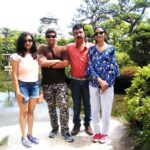
How the 6-Hour Plan Works: Pick 3-4 Stops, Then Go Deeper
This tour is built as a private experience, so only your group participates. That matters because the guide can tailor the route instead of herding strangers through the same photo spots in the same order. Your day is designed around your choice of 3-4 sites from a list of Kyoto favorites, with time to ask questions as you go.
Here is the practical side of choosing: Kyoto spreads out. If you pick sites that are all over town, your transit time rises. If you pick a tight cluster, you get more time at each location and less time in stations.
A good strategy for a first trip is to combine:
- One big shrine or temple landmark (something iconic)
- One neighborhood stroll (something you can wander)
- One artistic or garden stop (something that rewards slower walking)
For example, one family route in practice went from Fushimi Inari to Sanjusangendo, then to Kiyomizu-dera, finishing with geisha-culture spots. Another group tailored around Kinkakuji, Ryoanji, and Arashiyama. You do not have to choose the same mix, but the logic is solid.
Fushimi Inari and Kiyomizu-dera: Kyoto’s Spiritual Mood in One Day
If I had to pick two Kyoto anchors that work for almost everyone, it would be Fushimi Inari and Kiyomizu-dera.
Fushimi Inari-taisha Shrine (Admission free)
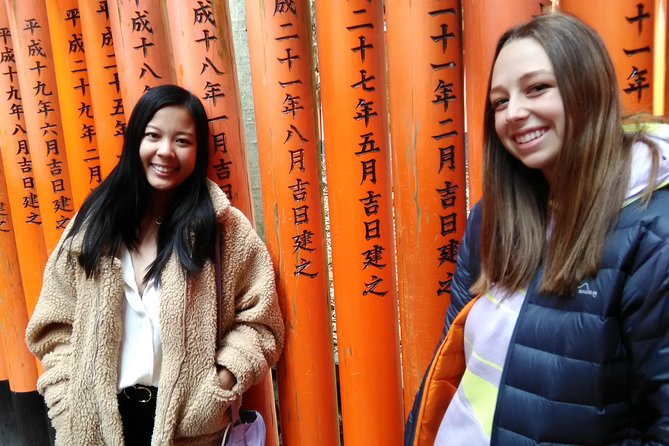
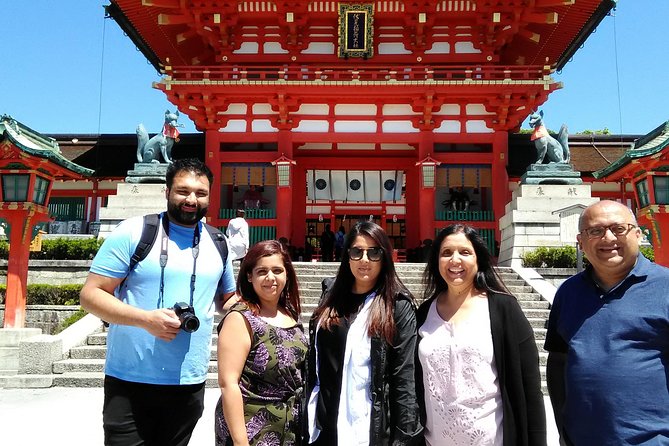
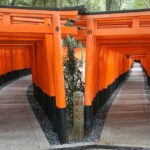
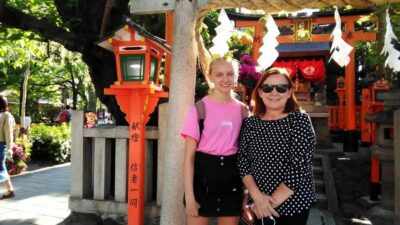
Fushimi Inari is the torii-gate shrine where the path feels like it is going somewhere. The famous vermillion-red torii gates create tunnels of color, and the guide helps you understand the why behind what you see, not just the what. You get a strong sense of Shinto practice in motion, since the shrine experience is about walking the grounds.
One useful detail from a real day: if your timing lines up, seeing the torii after dark can feel mysterious and special. You should not plan your whole trip around that, but it is a nice bonus when it happens.
Kiyomizu-dera Temple (Entry not included)
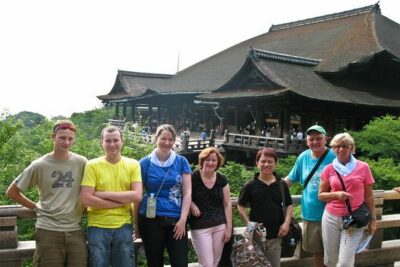
Kiyomizu-dera is one of Kyoto’s most popular temples, and it makes sense. The views from the temple area are famous, and the setting gives you that classic Kyoto photo angle. With a guide, you also get better at reading the site, so you notice details that disappear when you are just rushing.
A second useful detail from a real experience: night views from Kiyomizu-dera can be stunning. Again, it depends on the day and your route, but it is good to know your guide may be thinking about light and timing.
How these two stops feel together: Fushimi Inari gives you a dramatic spiritual walk. Kiyomizu-dera gives you a stage-like temple experience plus scenery. Together, they cover a lot of Kyoto in a way that feels balanced.
You can also read our reviews of more private tours in Kyoto
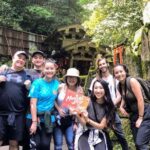

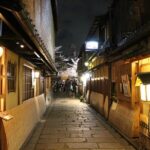

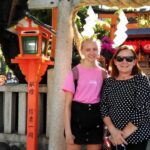
Nijo Castle and Kyoto Imperial Palace: Power Past, Up Close
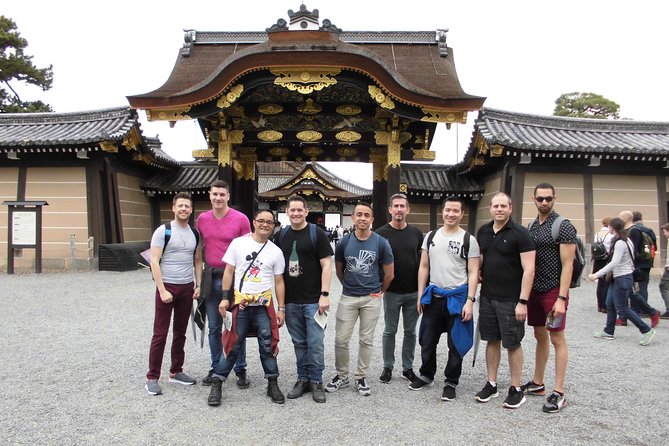
This is Kyoto that feels political, in the best way.
Nijo Castle (Entry not included)
Nijo-jo is tied to Shogun Tokugawa Ieyasu’s era, and that connection makes the architecture easier to understand. You are not just touring a building. You are seeing how power wanted to look and sound. A guide can point out what the design communicates, which makes the castle feel less like a museum and more like a time machine.
Kyoto Imperial Palace (Entry not included)
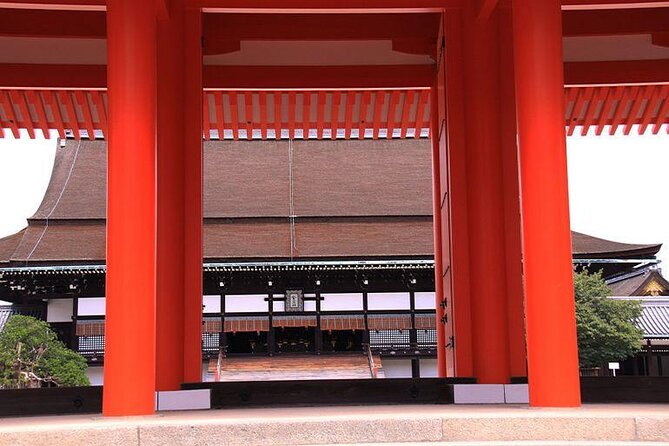
The Kyoto Imperial Palace used to be the residence of Japan’s Imperial Family until 1868, when the emperor and capital moved to Tokyo. That shift is big, and a guide helps you see why Kyoto still matters even after the move.
If your group likes layers of Japanese history, this pairing works well. If you want only scenery and street life, you could swap these for neighborhoods.
Gion, Higashiyama, Nishiki Market, and Pontocho: Streets You Can Actually Enjoy
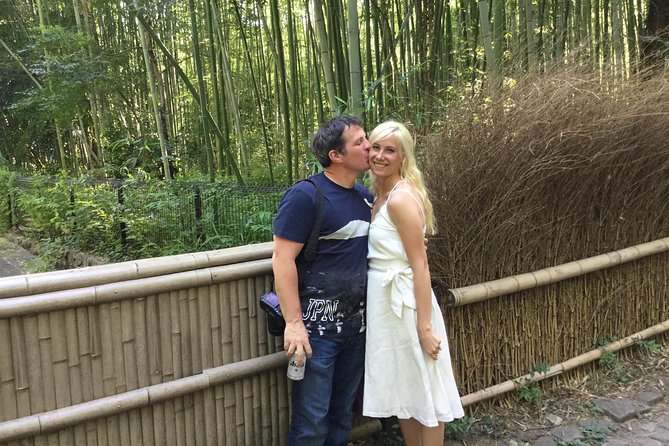
Kyoto’s best strolling is also the most overwhelming when you do it alone. Narrow lanes, sudden turns, and tourist crowds can make you feel like you are constantly lost even when you are technically still moving.
Gion (Admission free)
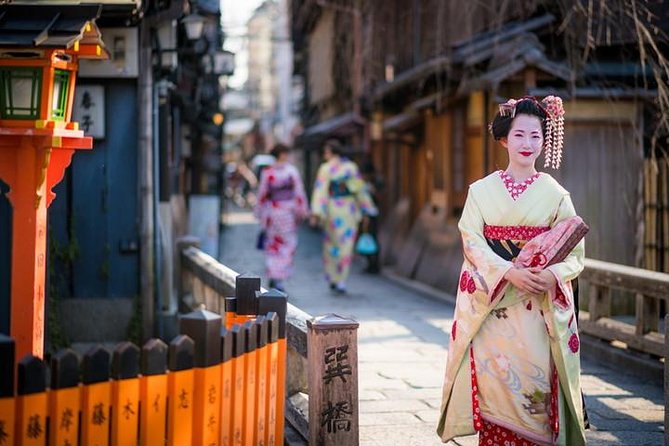
Gion is the geisha district area people recognize instantly. With a guide, you reduce the fear factor. You will know where to go, when to slow down, and which lanes are worth your time.
Higashiyama Ward (Admission free)
Higashiyama is one of the city’s best-preserved historic districts. The charm is the streets and the mood as you move along the lower slopes of the eastern mountains. If you like Old Kyoto, this is the stop that makes you slow down naturally.
Nishiki Market Shopping District (Admission free)
Nishiki is often called Kyoto’s Kitchen. It is a narrow, multi-block shopping street packed with small food shops and restaurants. A guide helps you choose what makes sense to taste, especially if you are not sure what you are ordering.
This is also a great place to buy small gifts if you like edible souvenirs, since it is designed for browsing.
Pontocho (Admission free)
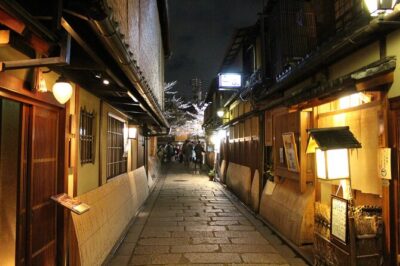
Pontocho is an atmospheric dining alley near the Kamogawa River. It is perfect for that moment when Kyoto feels like a movie set. Even if you do not eat there, it is worth walking at least part of it.
Practical tip: If your 3-4 stops include Gion or Higashiyama, wear shoes that can handle long stairways and uneven stone. Kyoto rewards steady walking, not heroic sprinting.
Zen Temples and Classic Gardens: Ginkakuji, Nanzenji, Tofukuji, Toji
Kyoto’s temple variety is part of why you can return and still feel like you saw something new.
Ginkakuji (Silver Pavilion) (Entry not included)
Ginkakuji is a Zen temple along the eastern mountains. Even if you have never studied temple details, the setting and the overall design do the talking. If you like gardens and quiet spaces, this fits.
Nanzenji Suirokaku (Entry not included)
Nanzenji’s grounds sit at the base of Higashiyama’s forested mountains. It is an important Zen temple in Japan, and the scale gives you a calmer feeling than smaller, more crowded areas.
Tofuku-ji (Entry not included)
Tofukuji is known for spectacular autumn colors, but even outside fall it can still be a great stop if your guide builds time around slower pacing.
Toji (Entry free)
Toji Temple is a major Heian-period temple connected to the capital’s move to Kyoto. It is one of the stops that can feel different because it is not only about a quiet walk, it is about a larger temple presence.
Why this cluster works: it lets you see multiple “moods” of Kyoto Zen, from pavilion serenity to mountain-grounding views.
Golden Pavilion to Rock Garden: Kinkakuji, Ryoanji, and Arashiyama’s Big Names
If you want postcard Kyoto, this is where it starts.
Kinkakuji (Golden Pavilion) (Entry not included)
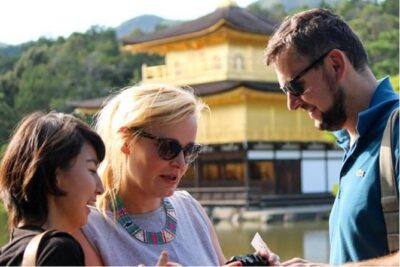
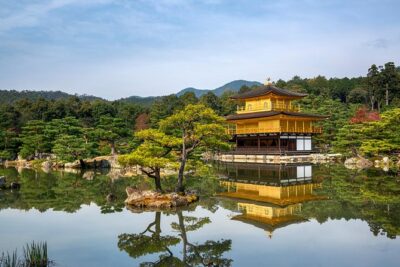
Kinkakuji, officially Rokuonji, has the top floors covered in gold leaf. The effect is immediate, and a guide helps you understand why the design and setting matter, not just how it looks.
Ninna-ji, Daikaku-ji, and the Imperial Villa Options (Entry not included)
Ninna-ji is a World Heritage Site tied to the Omuro School of Shingon Buddhism. Daikaku-ji is a large temple area in Sagano, originally built as a detached palace for Emperor Saga. If your group loves temple settings and you have time to spread out, these are good picks.
Shugakuin Imperial Villa and Katsura Imperial Villa are also in the mix as garden and architecture destinations. They are not included in your guide’s cost, since entry is not included, but they can be worth it if you like designed landscapes and calm walking.
Ryoan-ji (Entry not included)
Ryoanji is famous for Japan’s most well-known rock garden. Even if you have seen images, seeing it in person is a different experience, and it gets better with a guide who can explain what you are looking at.
Arashiyama: Bamboo, Bridge Views, and Garden Stops (Entry not included for most)
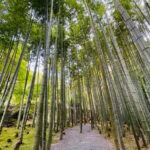
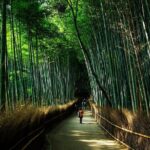
Arashiyama is a district, not one stop. The famous bamboo grove walking paths are a major draw, and Arashiyama includes a lot of nearby temple options.
- Tenryu-ji is the key Zen temple in Arashiyama and is registered as a world heritage site.
- Togetsukyo Bridge is the iconic Moon Crossing Bridge, originally from the Heian Period and reconstructed in the 1930s.
- Okochi Sanso Garden is known for its location behind the bamboo groves, with multiple gardens and buildings.
- Yoshimine-dera, Jojakkoji, Nisonin, Gio-ji, Adashino Nenbutsuji, Otagi Nenbutsuji, Daitoku-ji, and Myoshinji are additional temple choices that can give you more hillside calm if you are willing to walk a bit further.
How to avoid “Arashiyama overload”: pick one main Arashiyama anchor plus one extra. If you try to cover too many temple names in a single 6-hour window, you will feel the pace, not the place.
Northern Kyoto Escape: Kibune and Kurama for a Forest Break
Kyoto’s northern mountains offer a different texture than central Kyoto.
Kibune River (Admission free)
Kibune is a forested valley area with development around Kifune Shrine. If you want a break from big crowds and temple-hopping, it is a good directional choice.
Kurama-dera (Entry not included)
Kurama is a rural town less than one hour from the city center. Kurama-dera is the famous temple, and a guide can help you plan the time so it still fits inside your 6-hour visit.
If your group wants something slower and greener, northern Kyoto can be the right move.
East Kyoto Art and Temple Icons: Sanjusangendo, Kennin-ji, and Byodoin in Uji
Kyoto also has stops that feel like big cultural set pieces.
Sanjusangendo (Entry not included)
Sanjusangendo, also called Rengeo-in, is famous for 1001 statues of Kannon. It is a temple experience where the sheer scale does the work, and a guide helps you understand the significance of what you are seeing.
Kennin-ji (Entry not included)
Kennin-ji sits close to Hanamikoji and Shijo streets. It has expansive grounds and includes dry landscape gardens that are pleasant to walk.
Byodoin Temple (Phoenix Hall) in Uji (Entry not included)
Byodoin Temple is known for the Phoenix Hall, a National Treasure of Japan and a UNESCO World Heritage Site. The one big practical consideration is that it is in Uji city, so you should expect extra travel time to fit it into a short day.
Using Trains and Feet Like a Local, Without Losing Your Day
This is where the private guide earns their keep. You are not in a private vehicle. You are near public transportation, and you will use trains and walking segments. Your guide helps with route logic and timing so you are not stuck in the station guessing.
You meet your guide on foot in a designated Kyoto area, and pickup and drop off are also handled on foot. That sounds small, but it shapes the day. You will start walking quickly, so you should:
- Wear comfortable shoes
- Carry water
- Have a simple plan for snacks since lunch is not included
In real experiences, guides also helped families with getting comfortable on subway and trains. That is a huge stress reducer for first-time visitors.
Price and Value: Is $155.86 per Person Fair for 6 Hours?
At $155.86 per person for about 6 hours, you are paying for three things: a private, English-speaking licensed guide, custom routing around your chosen sites, and help navigating Kyoto efficiently without a private vehicle.
Is it cheap? Not really. Is it good value for a first-timer with limited time? Often yes. A day in Kyoto can burn time fast if you are trying to do everything independently. This format buys you time back in the form of direction, explanations, and smoother transit between areas.
Your best value depends on how you choose your stops.
- If you pick a tight cluster that you truly care about, the day feels worth every yen.
- If you pick wildly spread-out targets, you may spend more of the 6 hours in transit than at sites.
The Best Guides Make It Feel Like Kyoto, Not a Checklist
The strongest praise in the experiences comes through clearly: friendly, patient guides who tailor the day and answer questions.
I saw patterns in guide performance:
- Yuji, Joy, Noriko, Emi, and Yasu were all highlighted for making the day feel smooth, with good pace control.
- Kazuo and Michi were praised for communication and for making the explanation part of the experience, not an afterthought.
- Louis and Kiyoshi stood out for combining passion for Kyoto with strong guidance that made each stop more meaningful.
- Several guides worked with families and adjusted to different needs, including keeping pace comfortable for seniors.
One caution from a negative experience: if your group needs strict pacing, clear regrouping, or extra attention to lunch time, say it during planning. If you want a lunch break built into the schedule, make that part of your request.
Who Should Book This Tour, and Who Should Skip It
Book this if:
- You want a first-day overview with real context
- You want to pick 3-4 priorities instead of being forced into a long route
- You like the idea of trains and walking with local help
Consider skipping it if:
- You prefer to wander alone with no structure at all
- Your group has very limited walking ability and you cannot communicate that early
- You want a schedule that includes lunch or a long sit-down meal, since lunch is not included
Should You Book This Kyoto 6-Hour Private Tour?
If you are in Kyoto for a short stay and you want your day to feel guided but not boxed in, I think this is a strong choice. The customization to 3-4 sites is the key. It lets you focus on what you actually want to see, whether that is torii tunnels at Fushimi Inari, the gold-and-rock contrast of Kinkakuji and Ryoanji, or an Arashiyama bamboo walk plus one calm garden.
If you do book, do two simple things to make the day better: pick your sites with transit distance in mind, and tell your guide your pace and food expectations up front. You will get a much smoother day, and Kyoto will feel like it is unfolding with you.
FAQ
How long is the Kyoto private tour?
It is about 6 hours.
How many sites do we visit?
You choose a customizable tour of 3-4 sites from the available list of places.
Is the guide available in English?
Yes. The tour includes a licensed local English-speaking guide.
Do we use a private vehicle?
No. The tour is described as near public transportation, and pickup and drop off are on foot. A private vehicle is not included.
Is lunch included?
No. Lunch is not included.
Are admission tickets included?
Some admissions are free, and some are not included. The tour includes site experiences, but ticket costs for certain temples and attractions are listed as not included.
Where do we meet the guide?
You meet your guide on foot within a designated area of Kyoto. Pickup and drop off are also on foot.
Can I cancel for a full refund?
Yes. Free cancellation is available up to 24 hours before the experience start time.
Are service animals allowed?
Yes, service animals are allowed.
How far in advance should I reserve?
You should reserve at least 2 weeks in advance. Confirmation is received at booking.
More Guided Tours in Kyoto

More Tours in Kyoto
More Tour Reviews in Kyoto
Not for you? Here's more nearby things to do in Kyoto we have reviewed

Kyoto Private Guided Tours, compared.
 ★ 5.0Private Kyoto Tour with a Local, Highlights & Hidden Gems, PersonalisedFrom $1021,543 reviews
 ★ 5.010 Must-see Spots in Kyoto One Day Private Tour (up to 7 people)From $1791,108 reviews
 ★ 5.0Kyoto 4hr Private Tour with Government-Licensed GuideFrom $109629 reviews
 ★ 4.8Private Tour with Local Licensed GuideFrom $106463 reviews
 ★ 5.0Private Kyoto Tour with Licensed Guide & Vehicle (Max 15 persons)From $634417 reviews
 ★ 5.0Kyoto Customized Private Tour: See Top Attractions in 1 DayFrom $132342 reviews
 ★ 4.6Kyoto/Osaka: Kyoto and Nara Customized Private Guided TourFrom $477258 reviews
 ★ 5.0Nara 6hr Private Tour with Government-Licensed GuideFrom $155219 reviews
Browse the lists this tour appears in