
Reviewed · NARA DAY TRIPS FROM KYOTO
Kyoto and Nara Day Trip from Kyoto
One day, two ancient capitals. I love the UNESCO lineup packed into a single, guided route, and I love the air-conditioned comfort that keeps a long day from feeling brutal. The one drawback to plan for is the tight schedule, so some stops feel like a well-run whirlwind rather than a slow wander.
This tour also has a “ready to go” feel: you use a mobile ticket, and the group stays small, with a maximum of 40 people. Many guides get praised by name, including KC, Momo, and Yuki, so you can expect lots of clear, in-the-moment explanations and humor that help the temples make sense.
Key highlights you will feel in your day
- UNESCO stops that actually fit together: Kyoto’s Nijo Castle, Kinkaku-ji, and Imperial Palace area views, plus Nara’s Todai-ji and Kasuga Shrine
- English guidance that turns landmarks into stories, with licensed interpretation throughout
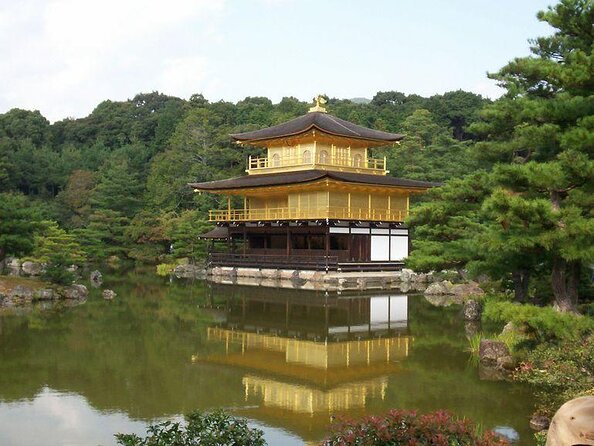
- Golden Pavilion photo time at Kinkaku-ji with the pond setting you will want for pictures
- Todai-ji and Nara Park in one flow so you get the Great Buddha experience plus real time with the park atmosphere
- Kasuga Shrine lanterns and a deer-finale that ends the day with Kyoto vs. Nara contrast
- Air-conditioned transportation that makes the drive south to Nara much easier on a full day
How this Kyoto and Nara day trip sets up a perfect first look
If Kyoto and Nara are on your list, this is the kind of tour that helps you get your bearings fast. You are not bouncing around between random bus stops. Instead, you get a guided line of sight from Tokugawa-era Kyoto to Nara’s older religious heart.
What makes it especially practical is the mix of big-ticket sights and “supporting” context. You see the obvious stars, like Kinkaku-ji’s Golden Pavilion and Todai-ji’s Great Buddha. Then you also get the framing details, like why Nijo Castle matters in Japanese political history and how Kasuga’s lantern-lined spaces connect to the shrine’s beliefs.
The pace is the main tradeoff. The tour runs about 10 to 11 hours, and each stop is timed. If you like to sit in silence for a long stretch, you will want to keep your own expectations realistic and save deeper temple time for a separate visit later.
More Kyoto temple visits, food tours, tea experiences, and day trips to compare

Getting on the bus: meeting point, start time, and why it matters
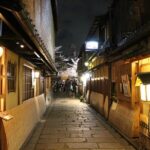
The day starts at 8:20 am at the JTB SUNRISE TOURS DESK KYOTO desk, inside the Avanti building area near Kyoto Station. This matters because Kyoto traffic and crowding can turn a small delay into stress, especially when you are trying to hit multiple UNESCO sites in one day.
The tour ends at Kyoto Station around 6:30 pm if you choose the Kyoto start and end option. There is no hotel drop-off, so you should plan on navigating back on your own once you step off the bus.
One more small tip: seats may not be designated. In plain terms, show up early, and you will have an easier time settling in and getting comfy for the drive.
Nijo Castle: Tokugawa power behind a calm, ornate shell
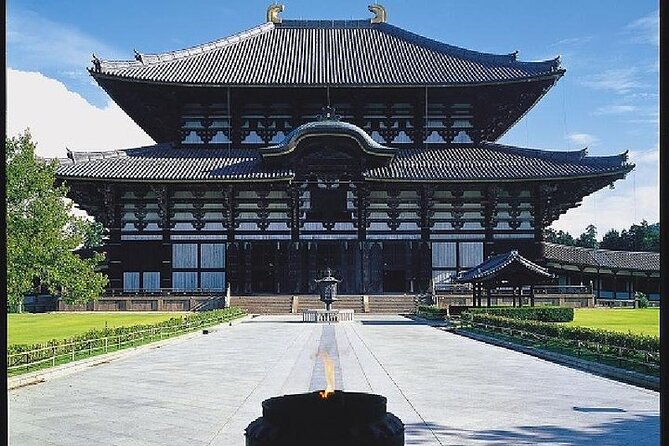
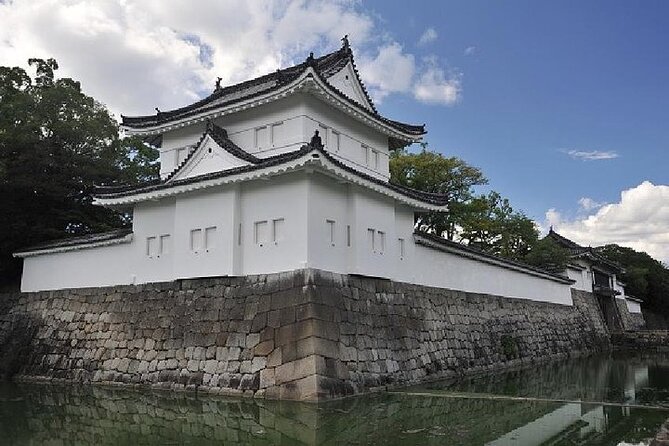
Nijo Castle is where this tour earns its “history you can see” reputation. You get about 50 minutes, and admission is included.
What you are looking at is a palace-fortress built for the Tokugawa shogun before the mid-1800s, designed to support Kyoto Imperial interests. The castle is known for the contrast between the outside and the inside, where you can find intricate detailing inside a solemn, imposing façade.
In practice, this stop rewards you for moving with purpose. You cannot slow-walk every hallway and carving at this timing. But you can still catch the highlights if you do two things:
- Follow your guide’s route.
- Take a second to look at the ceiling and wall details when the group gathers, because that is where the castle’s personality lives.
Also note a very practical thing: at Nijo Castle, you will need to remove your shoes.
Kinkaku-ji and the Golden Pavilion pond setting
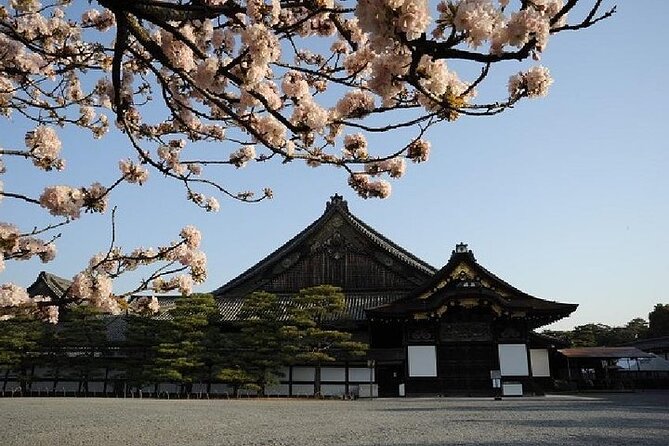
After Nijo Castle, you head to Kinkaku-ji for around 45 minutes. Admission is included.
Kinkaku-ji is famous for the wooden Golden Pavilion covered in thin layers of gold leaf, sitting beside a pond. That pond is not decoration. It is part of the experience, because it shapes the light and reflections you will want for photos.
Here is how to get the most from the time you have:
- Use the first few minutes to orient yourself, then pick one or two viewpoints you really care about.
- Expect crowds. Plan to be patient rather than trying to force a perfect shot at the exact same moment everyone else is shooting.
If you only get one “wow, Japan looks unreal” moment in Kyoto, Kinkaku-ji is that moment.
Kyoto Imperial Palace area: Shishin-den views and smart substitutions
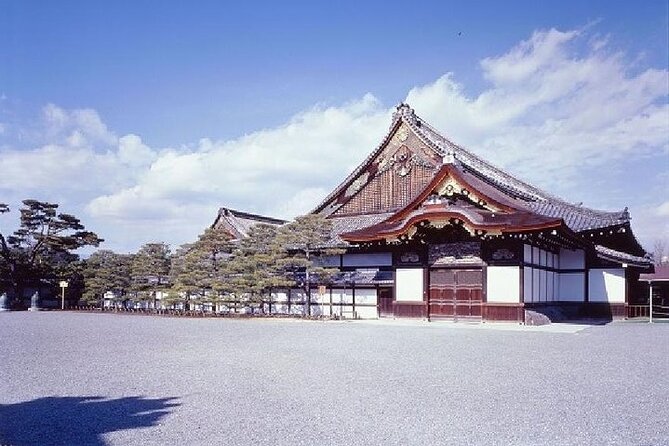
The Kyoto Imperial Palace stop is about 40 minutes, and admission is free. You may get a chance to see the Shishin-den, which is tied to key state ceremonies.
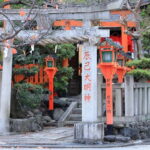
Here is the practical part: Kyoto Imperial Palace does not always open to visitors. It is closed on Mondays, and it can also close on days tied to Imperial Household Agency events. If the palace is closed, the tour swaps in Kitano Tenmangu Shrine. If the closed day falls on the 25th, the alternative is Nishi Hongan-ji Temple.
So you are not just “stuck.” You still get a major cultural stop, and your day stays on track. The only catch is that you should not assume you will always see the same exact palace scenes. If that matters to you, check your travel day.
The drive to Nara: staying comfortable on a long day
Between Kyoto’s sights and Nara’s sights, you get air-conditioned transport. This is not a small detail. A 10 to 11 hour day can drain you fast if the middle is spent sweating in traffic.
The drive also gives your guide space to set context. You will typically get a clearer sense of what you are about to see before you arrive, which makes Todai-ji and Kasuga feel less like random stops and more like a connected theme.
And remember, the order of activities can shift a bit depending on road conditions and congestion. That is normal with any multi-site day. The good news is the core experiences remain the same.
Todai-ji and the Great Buddha Hall you will actually remember
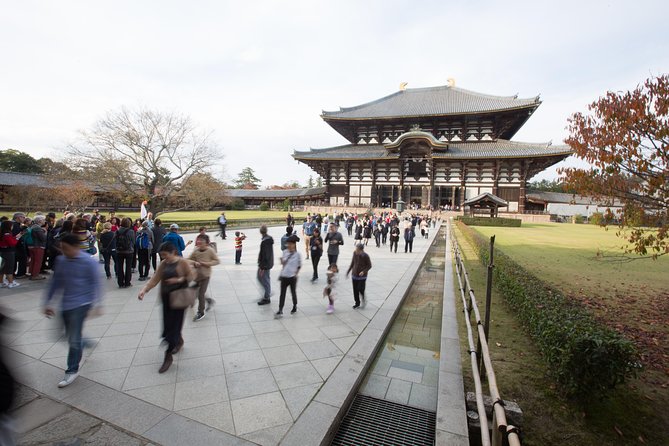
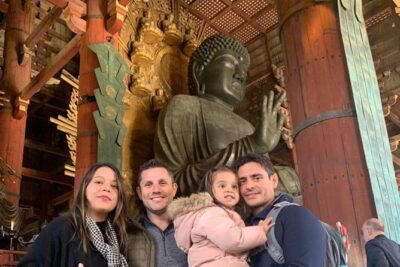
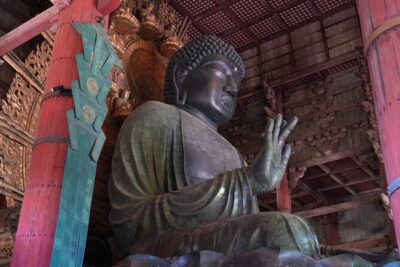
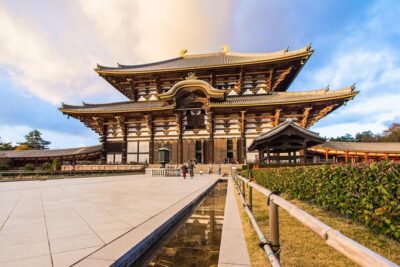
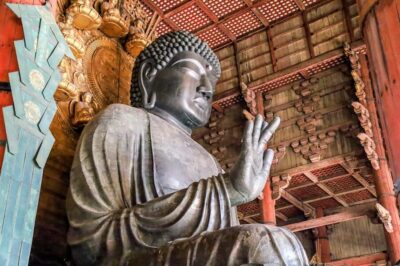
Todai-ji is the Nara anchor stop, with about 1 hour 10 minutes and admission included. This complex is known for housing one of the world’s largest statues of the Buddha, often described as the Great Buddha Hall.
The scale hits immediately. You are dealing with one of the world’s largest wooden structures, and the space is designed to make the Buddha feel monumental, not just impressive.
After Todai-ji, the tour continues to the adjacent Nara Park area. This is where the day starts to feel less like “architecture sightseeing” and more like “real Nara energy.” If you want photos beyond temple walls, this transition is useful.
One more planning note: this is a long walking day. If your legs are not happy, wear supportive shoes and keep water in mind. The tour is organized, but you still have to move through the sites.
Kasuga Grand Shrine lanterns and the Main Sanctuary visit situation
Kasuga Grand Shrine is a longer, about 1 hour stop, and admission is included. It is famed for more than 3,000 lanterns lined through the shrine interior area.
You will also learn a key belief connection: the deer of Nara are thought to be messengers for the shrine. That matters because it helps you understand why the deer are more than cute background animals.
There is also a specific access detail tied to a “Main Sanctuary special visit area.” The tour includes entering that special visit area, and from January 2025 it is noted as newly added. But if events or operational circumstances prevent entry, the tour uses an alternative visit instead, such as the Kasuga Taisha Museum or the Todaiji Museum.
So you still get meaningful access, even if you cannot enter the most scenic interior viewing zone that day.
Nara Deer Park finale: when cute turns into keep-your-distance
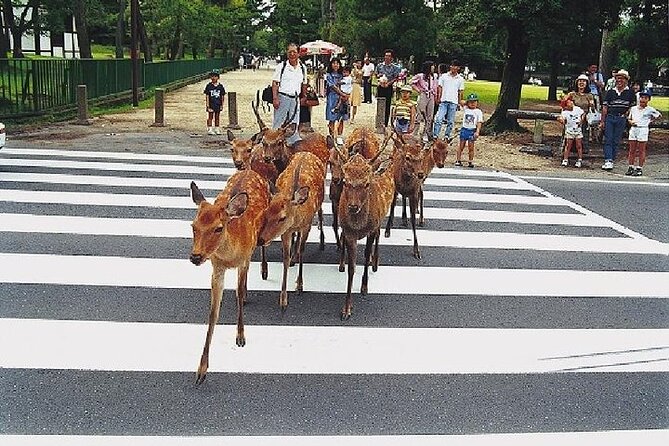
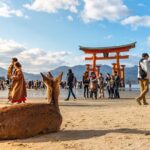
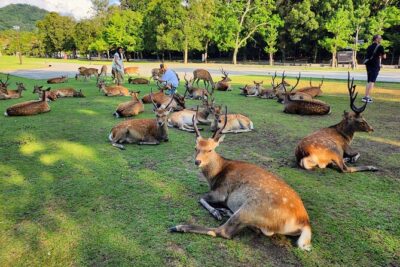
The tour’s last big moment in Nara is the deer in Nara Park, with free-roaming groups of deer. This is why so many people remember the tour even if they forget the exact dates in a temple’s history.
Here is the respectful, practical way to enjoy this part:
- Stay aware of where other people are walking.
- Do not assume every deer is gentle because some are used to people.
- Keep your hands and food situation under control, so you are not encouraging begging behavior.
Some guides also warn about deer that can act more assertively. It is smart to take those cautions seriously and treat the deer like you would any wild animal that happens to be comfortable around humans.
The payoff is a classic Nara scene: temples, lantern light vibes, and deer everywhere, all in one final stretch.
Lunch, dietary limits, and how to avoid day-trip meal frustration
Lunch is included only if you pick the With Lunch option. If you did not book lunch, you get free time to eat on your own in the Kyoto Station area.
For the lunch itself, you have options:
- Western-style lunch is a set menu (only for the Western-style lunch option).
- Indian thali is described as vegetarian-friendly, with multiple curries, pakora, yogurt, naan or roti, rice, salad, and a non-alcoholic drink.
There are also limits you should know up front. Halal, gluten-free, and other meal requests are not available. For Western-style lunch, vegetarian needs can be requested at reservation time, but same-day changes are not accepted.
Another practical detail: lunch seating is separated for Western-style and Indian thali customers, so do not expect to swap meal types on the day.
If your group has allergies, plan carefully. The tour’s meal flexibility is not described beyond what is offered in the data, so it is safer to rely on the specified lunch choices and your own food planning if you need something outside the stated options.
Price and value: what $194.85 really covers
At $194.85 per person, this is not a cheap “just transport” tour. But it is priced like a day that includes the hardest-to-organize parts.
From the inclusions, you get:
- A national government licensed English guide interpreter
- Admission fees and transportation costs
- Optional lunch, depending on your booking choice
That combination matters in Kyoto and Nara. If you do it alone, you are paying for transit and ticket time. You also spend mental energy figuring out which sites require reservation logic, which are closed on certain days, and how to hit multiple locations without wasting time.
This tour also has a group cap of 40 travelers, and most people rate the day well for fitting in major highlights without spending the whole time “figuring it out.”
So the real question is whether you value guidance and included tickets over the freedom to linger longer at one place. If yes, the value makes sense. If you hate structure, you will feel the schedule.
Who this day trip suits best, and who should reconsider
This tour is a good match if you:
- Want a fast, guided introduction to both Kyoto and Nara UNESCO sites
- Prefer air-conditioned transport over piecing together your own local routing
- Like learning in context, not just taking photos and moving on
It is less ideal if you:
- Want lots of slow time at each temple and shrine
- Have strong mobility limits, since you will be walking through multiple sites in one day
- Want deep customization around dietary needs beyond the listed lunch options
Should you book this Kyoto and Nara day trip?
If you are doing Kyoto and Nara as a “big highlights” stop during a short trip, this one earns a strong yes. You get the famous hits, you get them with an English guide, and you do not waste the day on ticket lines and routing puzzles.
My advice is simple: book it if you want structure and meaning in one day. Skip it or plan a follow-up on your own if you know you will want longer temple time, more flexibility, or very specific meal needs that go beyond what the tour states.
FAQ
How long is the Kyoto and Nara day trip?
It runs about 10 to 11 hours.
What is included in the price?
The tour includes a national government licensed English guide interpreter, admission fees, and transportation costs. Lunch is included only if you select the With Lunch option.
What lunch options are available?
There is a With Western-style Lunch option (Western-style set menu). There is also an Indian Thali Lunch option described as suitable for vegetarians. Halal, gluten-free, and other meal requests are not available.
Where do I meet the tour?
The meeting point is the JTB SUNRISE TOURS DESK KYOTO desk at the Avanti building near Kyoto Station.
Where does the tour end?
The tour ends at Kyoto Station around 6:30 pm for guests who select the Kyoto start and end option, with no hotel drop-off.
What if the Kyoto Imperial Palace is closed?
If the palace is closed, the tour visits Kitano Tenmangu Shrine. If the closed day falls on the 25th, the tour visits Nishi Hongan-ji Temple.
What if Nijo Castle is closed?
If Nijo Castle is closed, the tour visits Ryoan-ji Temple instead.
Do you visit Nara Park and see deer?
Yes, the tour finishes at Nara Deer Park with free-roaming deer.
How large is the group?
The tour has a maximum of 40 travelers.
What is the cancellation policy?
You can cancel for a full refund if you cancel up to 24 hours before the experience’s start time. If you cancel less than 24 hours before, the amount paid is not refunded.
More 1-Day Tours in Kyoto

More Tour Reviews in Kyoto
Not for you? Here's more nearby things to do in Kyoto we have reviewed


Nara Day Trips from Kyoto, compared.
 ★ 5.0World Heritage Kyoto & Nara Uji Authentic Matcha ExperienceFrom $1291,573 reviews
 ★ 4.7Kyoto/Osaka: Nara, Fushimi Inari Taisha, Arashiyama Bus TourFrom $521,275 reviews
 ★ 5.0Nara Half Day Trip Walking Tour (Private Option Available)From $105937 reviews
 ★ 4.4Osaka/Kyoto: Arashiyama, Nara & Fushimi Inari Shrine w/LunchFrom $61754 reviews
 ★ 5.0Nara Early Morning Tour (Kyoto or Osaka Departure Available)From $61676 reviews
 ★ 5.0Full Day Guided Tour to Kyoto and Nara from Osaka by VanFrom $106420 reviews
 ★ 4.5Nara Afternoon Tour from Kyoto or OsakaFrom $102390 reviews
 ★ 4.6From Kyoto: Nara Guided Morning TourFrom $77335 reviews
Browse the lists this tour appears in