Reviewed · KYOTO
kyoto:Experience creating one-of-a-kind special fragrances
Your scent, mixed in real time. This Kyoto fragrance workshop is all about making a custom-made perfume with advisor guidance you can actually follow, and I like that the process is hands-on from start to finish, though you may want more basic perfume education if you expected a longer lesson on the craft.
You’ll begin by sampling dozens of scents in a boutique-style setup, then narrow down what you like by note style and how strong you want it. The end result is practical and personal: you leave with a bottle you helped create, including the chance to name it and get a label made for your own creation, but the experience is not for everyone.
If you’re sensitive to strong smells, or if you have epilepsy, skip this one, and plan to speak up during the consultation if you want clearer help or more direction.
Key things I’d mark on your Kyoto plan

- Work with a dedicated fragrance advisor, not a generic script.
- Pick your favorites from many scents, then fine-tune your direction with the advisor.
- Watch the blending happen right before your eyes, with measured mixing.
- Control intensity, from subtle to statement-making.
- Name and label your bottle, so it feels like yours, not a souvenir.
- A price that includes sales tax, making budgeting easier.
Finding the Kyoto boutique by Shijo-Kawaramachi
This experience is based in a fragrance shop near the Shijo-Kawaramachi area in Kyoto (Honshu). The meetup point is simple: from the Shijo-Kawaramachi intersection, head south about 300 meters, roughly a five-minute walk, and look for the storefront with the shop name clearly visible.
This location is useful because it drops you into a normal walking radius of Kyoto sights and dining. You do not need special transit planning, and because the activity ends back at the meeting point, you can slot it into a day without worrying about getting back across town.
I suggest you arrive a little early with your senses ready. If you’ve just eaten something very spicy or you’ve been exposed to strong incense, your ability to tell the difference between florals, woods, and oriental-style notes can get fuzzy.
You can also read our reviews of more tours and experiences in Kyoto Prefecture.


From scent wall to short list: how you start choosing
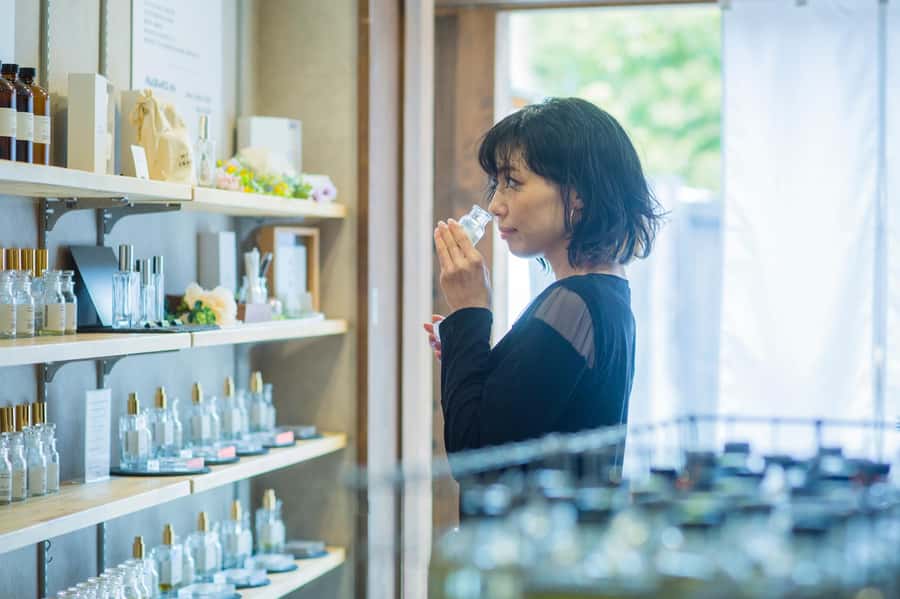
Once you step into the boutique, you’ll see a lineup of scents arranged so you can compare and filter them. The setup is made for browsing at your own pace, not for being rushed down a checklist.
Here’s the key idea: you sample and listen to your instincts first. The shop encourages you to explore freely, then select several favorites so the advisor can build a composition from what actually clicks with you.
I like this approach because it prevents the common souvenir problem. Instead of buying a popular smell you don’t fully connect with, you’re making decisions based on what you’re enjoying in the moment. If you’re the type who worries you’ll get “stuck” choosing, don’t overthink it. Choose what feels right now, and let the advisor help you connect the dots.
The fragrance advisor consultation, and what you should ask for
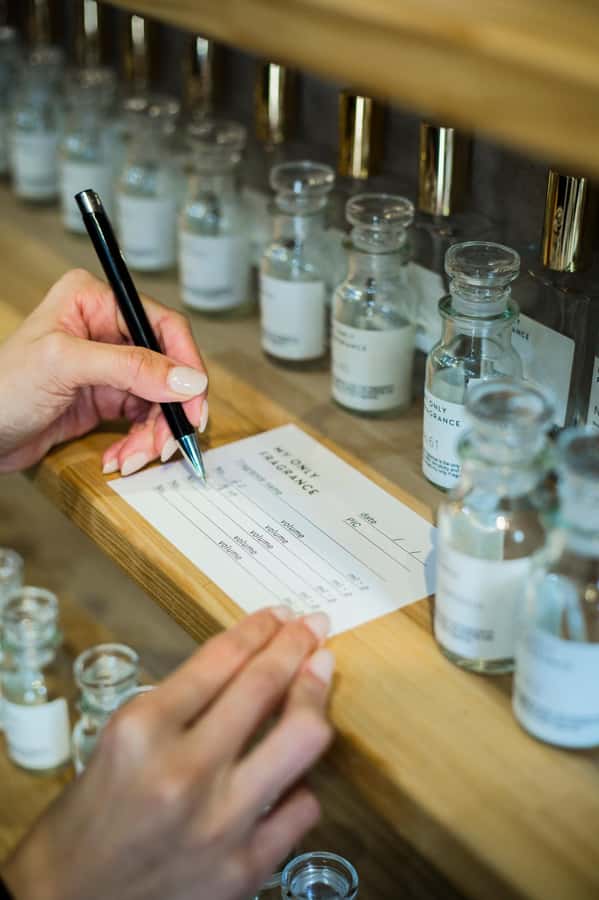
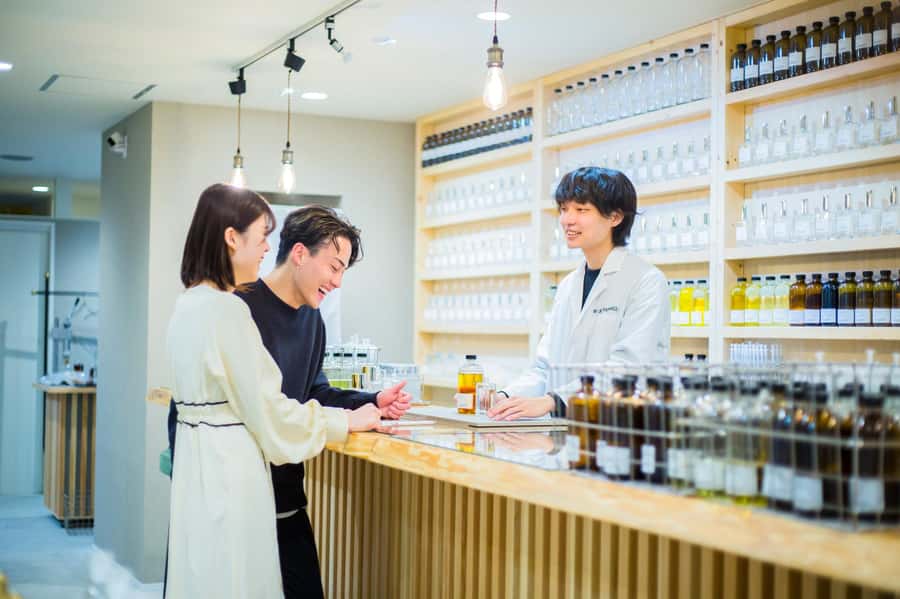
The consultation is where the experience becomes truly personalized. The fragrance advisor talks through your preferences in depth and works out the direction you want your custom perfume to take.
You’ll cover what kinds of notes appeal to you most. The process explicitly points to categories like floral notes, woody scents, and oriental-style fragrances, and you also decide on intensity. That intensity part matters more than most people realize, because two people can love the same note family and still want totally different wear results.
During the chat, I recommend you come prepared with one or two words that describe the vibe you’re chasing. Think along the lines of fresh, warm, crisp, smoky, soft, or elegant, even if you don’t know the formal perfume vocabulary.
The advisor will measure and then guide the blend based on those preferences. If you want a deeper explanation of the perfume-making art itself, this is your moment to ask. One concern you might run into is that the experience can feel more like practical mixing than a long classroom-style history lesson, so set expectations early by asking specific how-and-why questions.
Watching the blending: measured mixing you can see
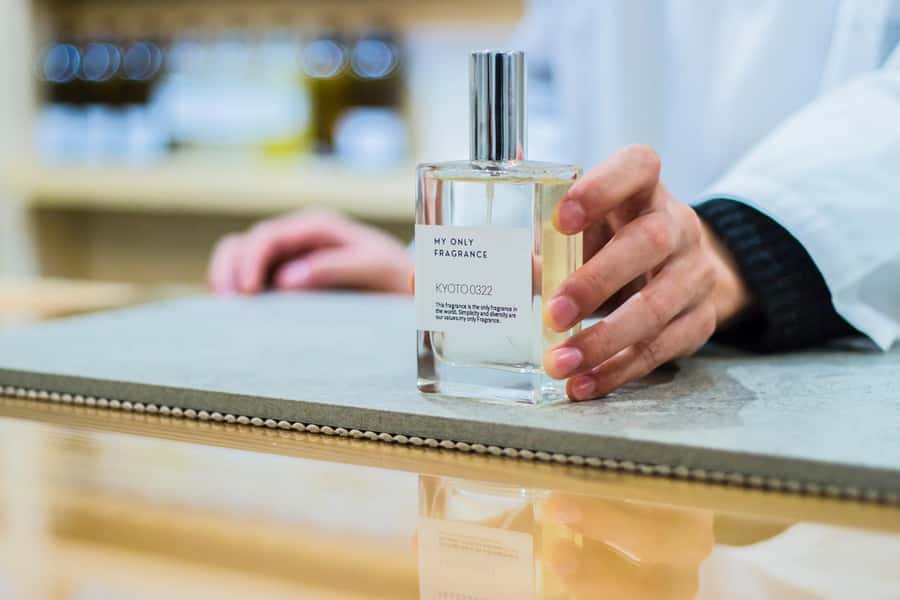
After you pick your favorites, the blending step starts. This is one of the most satisfying parts of the whole workshop because the advisor measures and mixes the ingredients in front of you.
Seeing it happen matters, especially if you’re used to perfumes being a mystery product. Here, you watch your choices turn into a formula, and you can understand the shift when components combine. It feels less like buying something and more like creating a final product.
The process is also transparent in the way it supports balance. You’re aiming for a scent that matches your desired strength, not one that’s too overpowering. That aligns with what people highlight most as a positive, including careful help with measurements so the result stays wearable.
If you’re sensitive to strong smells, be ready for brief moments of intensity during mixing. But the format is still designed for your selection choices to drive the outcome, not the other way around.
Naming your bottle, then taking home a true signature
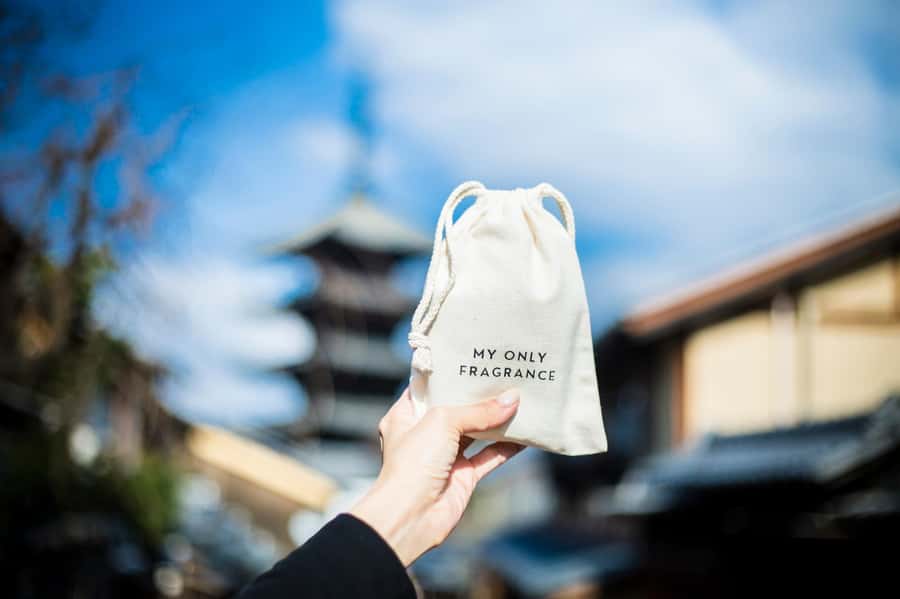
Once the mixture is complete, you get to name your creation. Then your bottle gets labeled with your original name, turning the final perfume into something more meaningful than a generic label.
I love that detail because it changes how you’ll remember the scent later. Instead of thinking, I bought a perfume in Kyoto, you’ll think, I made this, and you’ll remember the moment you chose the notes and adjusted the intensity.
It also makes the bottle easier to use day to day. If you’re the kind of person who likes rotating scents, having a name you picked helps you keep track of what you want to wear and when.





Pricing and value: what $47 means in real terms
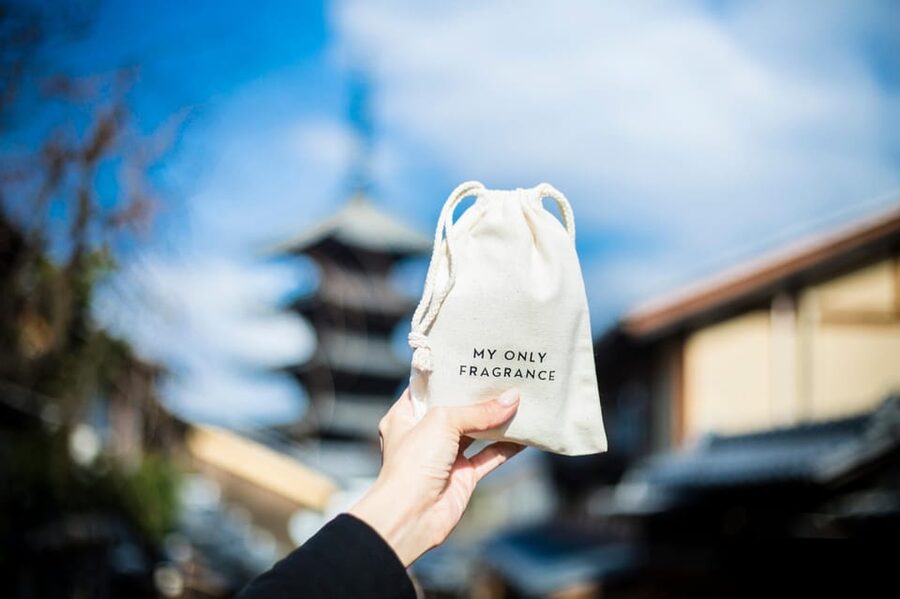
The price is $47 per person, and sales tax is included. That inclusion is a small but real value booster because it keeps the total price from changing when you get to the register.
What you’re paying for is not just a bottle and a nice experience. You’re paying for advisor time, guided selection, and measured blending that happens live. The process also includes the naming and labeling step, which is part of the “you made this” experience.
Is it good value? For most people, yes, because you’re leaving with a custom-made perfume rather than a standard product with a Kyoto sticker. If you’re only browsing scents casually, you might find the workshop style better for people who actually want to wear their creation.
Also note the trust signals. The experience is reported as having thousands of created fragrances and more than 15,000 five-star ratings. On top of that, the experience has a 4.8 average rating, which suggests the format generally lands well for many different scent preferences.
What to do before you go: practical scent prep
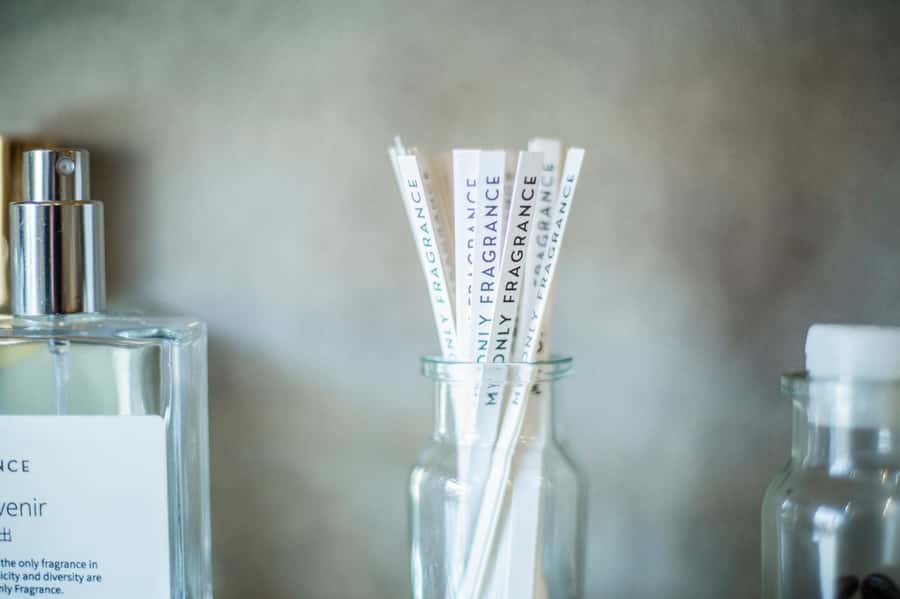
This is a sensory activity, so a little prep makes a big difference.
First, decide what you want to use the perfume for. Everyday wear usually calls for a controlled intensity, while special nights may lean toward stronger presence. The workshop can tailor either way because you explicitly choose intensity during the consultation.
Second, think about your personal comfort zone with scents. If you love florals, start with that direction. If you’re more drawn to woody notes or oriental-style fragrances, lead with that. The advisor can blend, but your preferences steer the result.
Third, set yourself up to compare scents clearly. Try not to smell too many things back-to-back without pausing. If you start mixing impressions, you can lose track of what you actually like.
Finally, bring curiosity. If you’re unsure about what you like, that’s normal. The sampling stage is literally built so you can figure it out in the shop rather than guessing ahead of time.
Who this experience suits best (and who should rethink it)
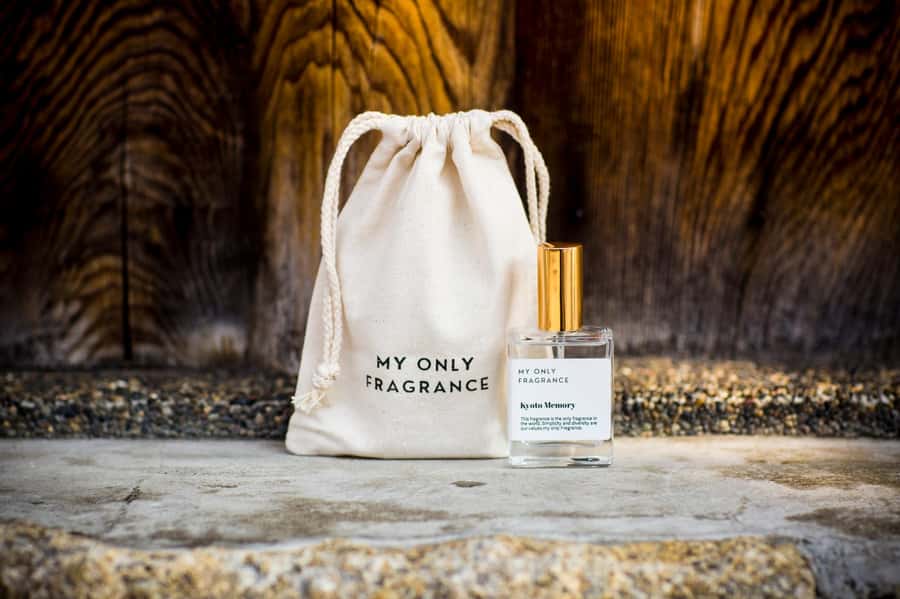
This works best if you want a personal souvenir that you’ll actually wear. It’s also a great fit if you enjoy scent as an art form, even if you don’t know perfume terminology.
You’ll likely enjoy it if you:
- want hands-on customization with an advisor
- like choosing by note family such as floral or woody
- enjoy watching the transformation from ingredients to final blend
- value the added meaning of naming and labeling your bottle
You might want to rethink it if:
- you’re looking for a long, lecture-style lesson on perfume history and technique
- you’re highly sensitive to strong smells
- you have epilepsy, since the experience is listed as not suitable
The bottom line: it’s a guided creation experience. It’s not just testing fragrances and leaving with a safe pick. You’re designing something.
Quick logistics, timing, and language support
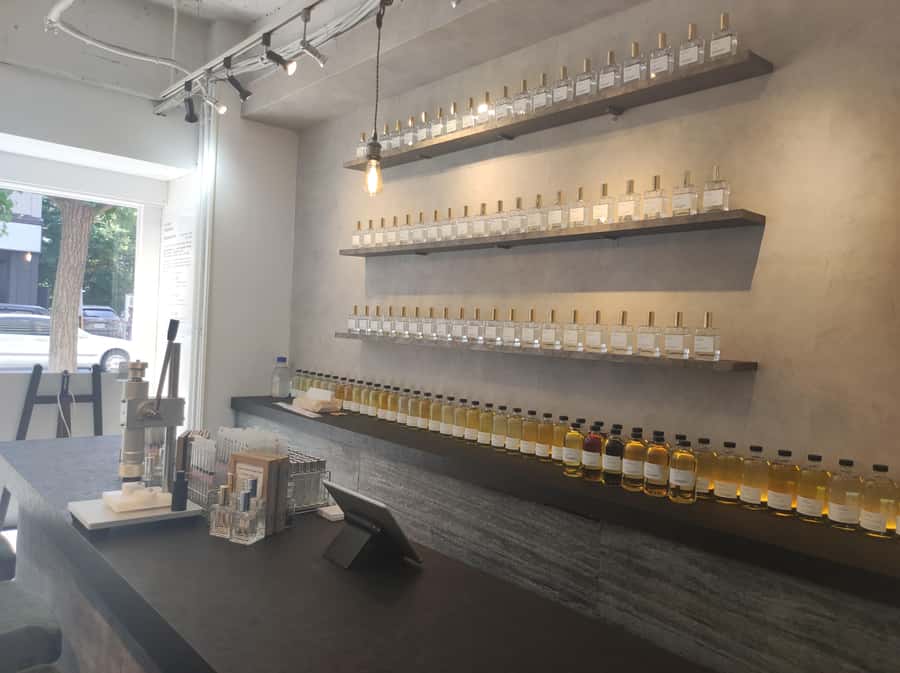
The experience is conducted in English and Japanese, which helps if you don’t speak Japanese fluently. The session starts at the shop near Shijo-Kawaramachi and ends back at the same meeting point.
You also have the option to reserve first and pay later, which is useful if your Kyoto day plans are still moving around. If your schedule is tight, that flexibility can reduce stress.
Plan for a focused block of time inside the shop, because you’ll be sampling, consulting, and blending. Wear something that doesn’t clash with fragrance, and avoid using other perfume right before you start.
Should you book this Kyoto custom perfume workshop?
Book it if you want a Kyoto memory that turns into a daily ritual. The combination of advisor consultation, live measured blending, and the chance to name and label your bottle makes it feel personal in a way typical shopping cannot match. At $47 with sales tax included, it also prices like an experience, not like a lottery ticket.
Skip it if your goal is mainly a lesson about the science and history of perfumery, or if you’re not comfortable around concentrated scents. In those cases, you might get more value from a lighter scent tour or a museum stop.
If you’re on the fence, here’s my practical test: if you can picture yourself wearing this perfume, go for it. If you just like the idea but doubt you would wear it, you’ll probably prefer a simpler fragrance purchase instead.