
Reviewed · MUSEUMS
Shibori Fukusa Course at Kyoto Shibori Museum
There is something calming about tying up silk. This Shibori Fukusa Course at the Kyoto Shibori Museum teaches you the practical steps behind shibori dyeing, then gives you time to look around while your piece dries. I especially liked the hands-on focus on Kasamaki winding and Nuishime sewing, and I also liked that the museum itself feeds the experience with displays you can explore right after class.
The one thing to consider is the class length can run 30 to 60 minutes inside a total 1 hour visit, so you will want a bit of scheduling slack if you are stacking it tightly with other Nijo Castle area stops.
6 Key things to know before you go
- Small group, real attention: Limited to 8 participants, so you are not just watching.
- Two classic techniques in one session: You work with Kasamaki winding and Nuishime sewing.
- A shibori stand is part of the process: You use a stand for the techniques, which helps you get the positioning right.
- You get time to explore while it dries: The museum has art pieces, samples, and tools on display during your wait.
- You leave with a scarf project: The course focuses on making your own shibori scarf.
- Museum admission is included: Workshop participants get free admission to the Kyoto Shibori Museum (normally 1,000 yen).
Entering Kyoto Shibori Museum and the Shibori Fukusa Course
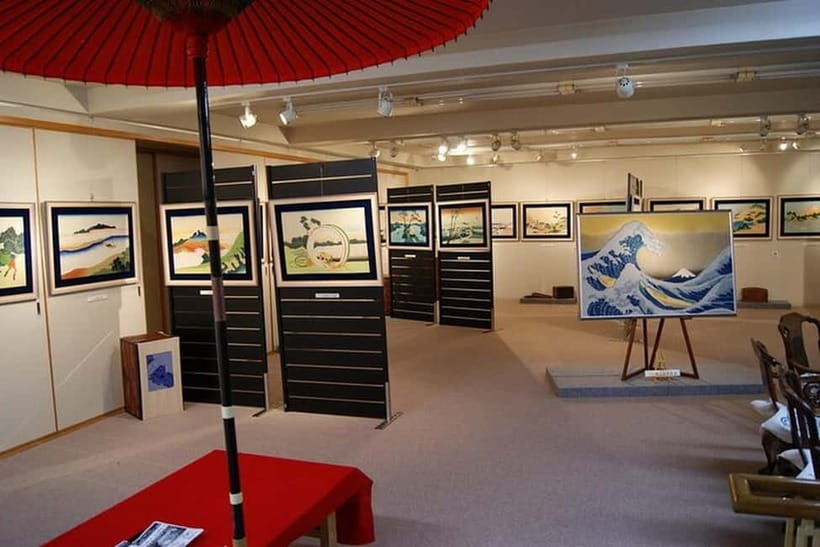
Kyoto Shibori Museum is all about shibori, from tools to finished work. The museum opened in 2001, and it was built to help more people understand shibori through actual examples and process. If you like crafts where you can see both the “how” and the “why,” this place makes that easy.
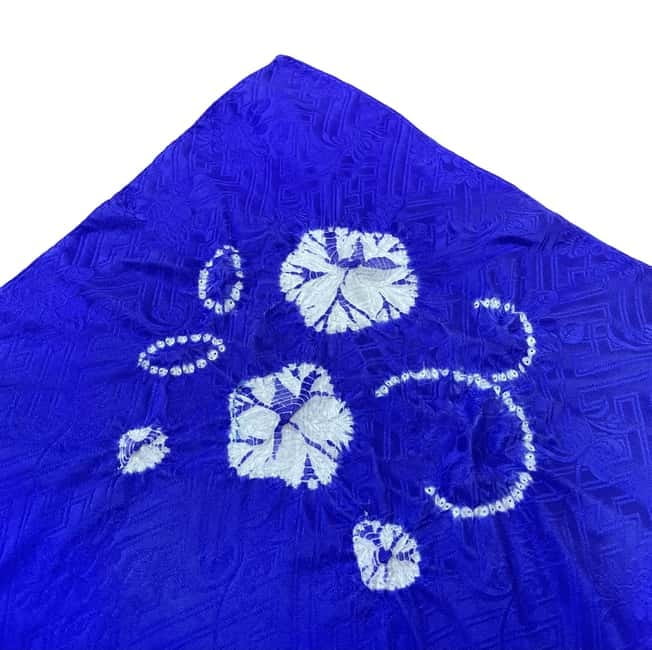
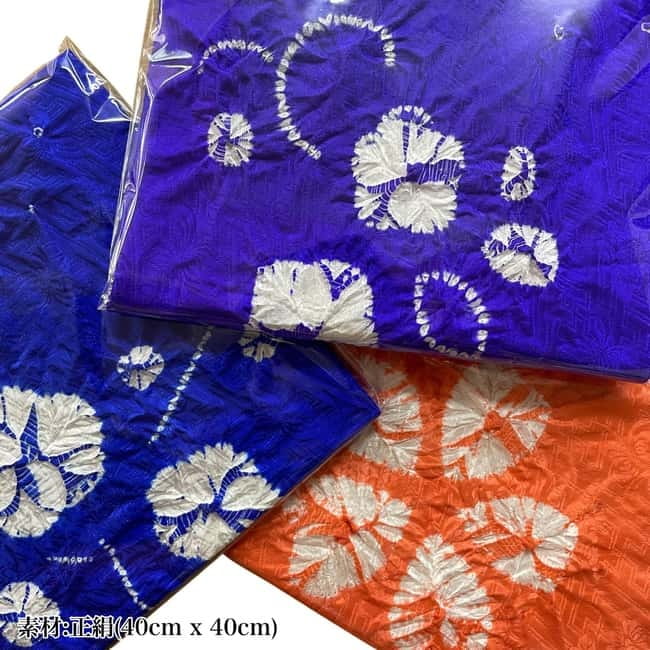
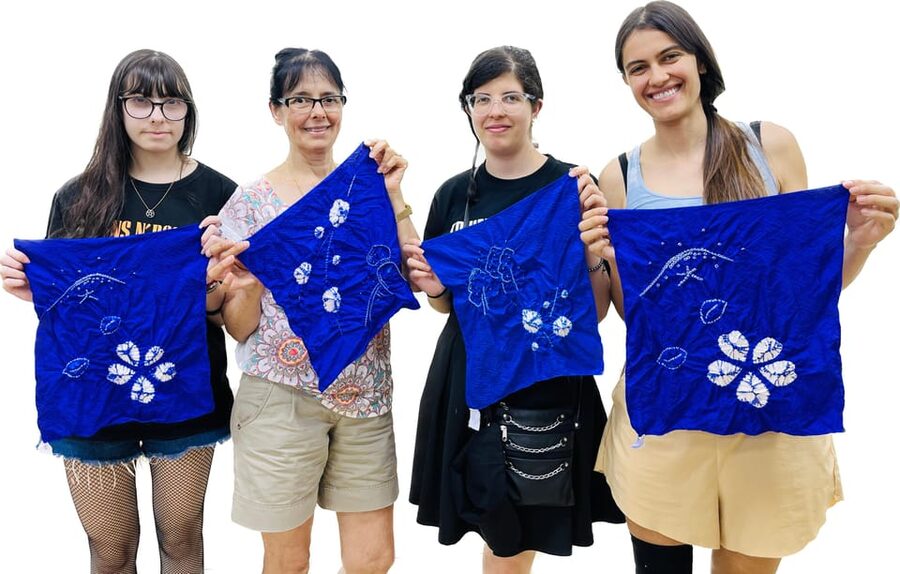
This specific course is designed around making a small shibori item, described as a scarf in the highlights. You start with silk fabric that has a background pattern, then you apply your resist work using shibori techniques before dyeing.
The whole experience sits in a very doable timeframe. The total duration is 1 hour, and the active class portion is typically 30 to 60 minutes, which is a nice rhythm for a Kyoto day.
You can also read our reviews of more museum experiences in Kyoto Prefecture
What you make: a silk scarf shaped by resist dyeing
Your finished piece begins as silk fabric with a pleasing background pattern. The “magic” part is that the areas you treat with shibori resist end up separating the dye effects into that distinctive shibori look.
In your workshop, you will do the steps in sequence. First you apply resist using Kasamaki shibori (a winding technique). Then you use Nuishime shibori (a sewing technique). After those steps, the fabric is dyed.
Even if you are new to textiles, this format is beginner-friendly because it is not trying to teach everything at once. It is focused on the core idea of shibori, which is controlling where dye can and cannot go.
Kasamaki and Nuishime, plus why the shibori stand matters
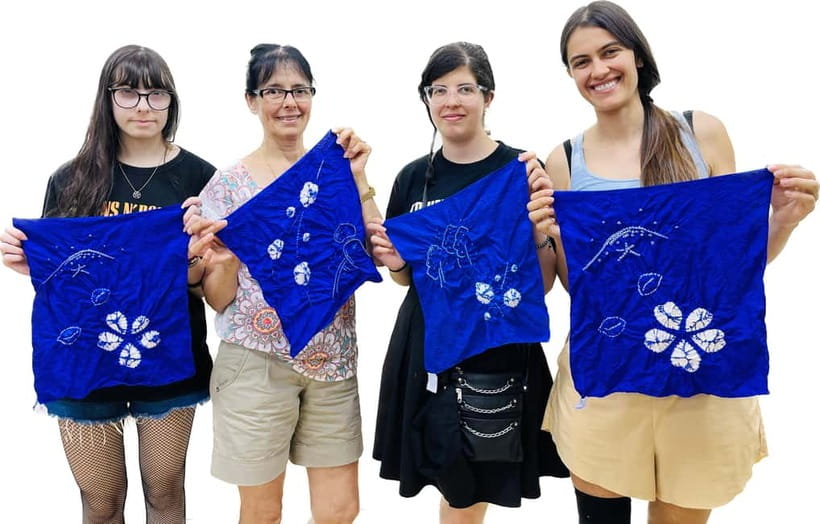
Kasamaki shibori is the winding portion, and it is where you shape the fabric into the resist pattern. Nuishime shibori is the sewing portion, which adds another layer of control. Together, these two techniques help create the texture and pattern effects you see in finished shibori work.
You will use a shibori stand while doing the techniques. You can think of it as a support system for precision. It is easier to keep tension and placement consistent when you are working with the right setup, and that consistency is part of what turns a messy first attempt into a piece you can be proud of.
The class is taught by an instructor who speaks English and Japanese. Since there is no need to guess your way through the steps, you can focus on doing it correctly the first time.
Timing the class: how the 1 hour experience feels in real life
Your total booking is 1 hour, but your actual hands-on crafting time can be 30 to 60 minutes. That means you should expect at least a short stretch of instruction and preparation, followed by the resist work at your own pace.
The key part is what happens afterward. While your piece dries, you are not stuck staring at the wall. This is when the museum becomes part of the lesson, because you can walk through displays that help you connect technique to results.
If you like “instant context,” this structure works well. You make something, then you see other shibori pieces and samples while yours is processing.
Exploring the museum displays while your scarf dries
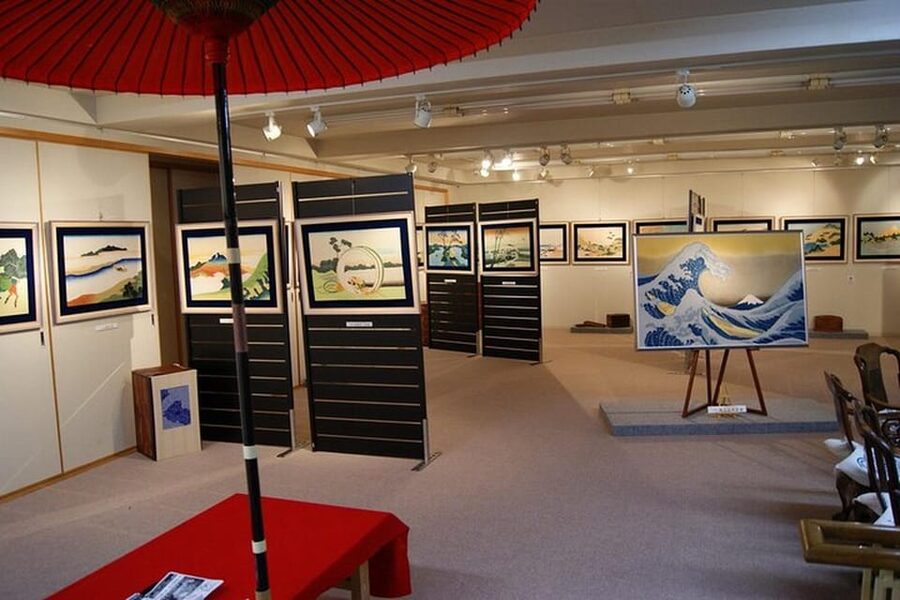
One of my favorite parts of the setup is the timing, because you are allowed to use the drying window intelligently. The museum has art pieces and samples displayed, and you can explore them while your scarf project finishes setting.
There is also a display of valuable tools used in the shibori process. That matters because shibori is not just dye, it is controlled folding, winding, sewing, and handling. Seeing the tools in person helps you understand how artisans get consistent results over many pieces.
The museum’s overall mission is to spread shibori to the world, and that comes through in how the displays are organized. You can learn about shibori from different angles instead of treating it like one isolated craft step.



Kyoto location: a 5-minute walk from Nijo Castle
If you are already visiting Nijo Castle, this course slots in nicely. The Kyoto Shibori Museum is a 5-minute walk away, so you can combine history time with craft time without burning your day in transit.
Because the class is only 1 hour, you can plan it as a “break” segment. For example, you can do a couple of hours around Nijo Castle, take the short walk to the museum, then return to your Kyoto route for dinner.
In practical terms, being close to a major sight is a big deal. It reduces the stress when timing changes, because you are not committing to a long cross-city hop.
Price and value: is $70 worth it?
The price is listed at $70 per person. For a hands-on textile workshop, that is not unusual in Kyoto, especially when you consider what is included.
The standout value point is that workshop participants receive free admission to the Kyoto Shibori Museum, which is normally 1,000 yen. That may not sound huge compared to the course price, but it signals something important: you are not paying just for a quick demo. You are paying for a small-group class plus access to the museum displays.
You also get a small group experience, limited to 8 participants. That small size is where your money turns into actual instruction, not just presence.
My advice on value: if you like crafts where you leave with a tangible object, this is the kind of activity that feels worth the cost. If you are only looking for photos and browsing, a museum visit alone might fit better.
What kind of instructor energy to expect
A bright theme from the experience is that the class is lively and taught with passion. The tone is described as kind and enthusiastic, and that kind of human energy matters when you are learning something hands-on.
You will be working at an instructional pace, using a setup like a shibori stand and following steps for Kasamaki and Nuishime. When the teaching style is supportive, it reduces that beginner frustration that can happen with fabric techniques.
Even if you have zero craft background, the course is structured so you can finish your scarf project and still have time to enjoy the museum side of things.
Who should book this shibori workshop
This course is a strong match if you:
- Want a short, focused activity (total 1 hour) in Kyoto
- Like textile arts and want to see the connection between technique, tools, and finished work
- Prefer small group learning (max 8 participants)
- Would enjoy having time to explore exhibits while your piece dries
It is also a good option for people who like structured activities with a clear outcome. You know you will make a shibori scarf, not just observe.
If you hate waiting around at all, the drying-time museum exploring can feel like “time spent,” but it is built into the experience on purpose. It gives you a reason to slow down and look closely at other shibori work.
Should you book the Shibori Fukusa Course?
Yes, if you want a hands-on shibori experience that feels authentic and not rushed. The combination of making your own silk shibori scarf, learning Kasamaki and Nuishime, and then using the drying window to explore museum samples and tools is a practical package.
Before you book, think about your priorities. If your main goal is deep craft education, this one is designed for that. If you are traveling with limited time, the 1 hour duration and close location to Nijo Castle help a lot.
If you want a craft souvenir with meaning, and you like seeing how a process becomes pattern, this is a very solid Kyoto stop.
FAQ
How long is the Shibori Fukusa Course?
The total duration is 1 hour. The class portion takes about 30 to 60 minutes.
What will I learn to make?
You will learn how to make your own shibori scarf during the class.
Which techniques are used in the course?
The course uses Kasamaki shibori (winding technique) and Nuishime shibori (sewing technique).
Do I get to visit the museum during or after the workshop?
Yes. While your piece dries, you can explore art pieces, samples, and tools on display, and you can also browse the museum shop.
Is museum admission included?
Yes. Workshop participants receive free admission to the Kyoto Shibori Museum, which is normally 1,000 yen.
How large is the group?
The course is a small group with a limit of 8 participants.
What languages are available for the instructor?
The instructor can teach in English and Japanese.
Are flexible booking and refunds available?
The experience offers free cancellation up to 24 hours in advance for a full refund, and it also offers reserve now & pay later to keep travel plans flexible.
Where is the Kyoto Shibori Museum located?
It is in Kyoto, Honshu, Japan, and it is about a 5-minute walk from Nijo Castle.
More Museum Experiences in Kyoto Prefecture
More Tour Reviews in Kyoto Prefecture

Not for you? Here's more nearby things to do in Kyoto Prefecture we have reviewed

Museums, compared.
 ★ 4.9Tea Museum Tickets and Matcha Grinding ExperienceFrom $23739 reviews
 ★ 4.5Skip the lines Basic Ticket at SAMURAI NINJA MUSEUM KYOTOFrom $28632 reviews
 ★ 4.6Geiko Maiko Dance of Kyoto & Visits of Gion MuseumFrom $25415 reviews
 ★ 4.5Kyoto Sword Experience – includes Museum Ticket/Ninja ExperienceFrom $83149 reviews
 ★ 4.8Samurai Ninja Museum guided tourFrom $28145 reviews
 ★ 4.5Ninja Experience (Family Friendly) at Samurai Ninja Museum KYOTOFrom $56132 reviews
 ★ 5.0Kyomai Dance by Maiko Geiko and Visits of Gion Art Museum KyotoFrom $2065 reviews
 ★ 4.5Samurai Sword Experience (Family Friendly)at SAMURAI MUSEUM KYOTOFrom $6563 reviews
Browse the lists this tour appears in