
Reviewed · WALKING TOURS
Otsu-e Folk Art Workshop & Local Culture Walk Near Kyoto
Otsu-e feels personal once you start painting. This Otsu, Japan tour pairs a hands-on folk art session with a guided stroll through old streets, food stops, and Lake Biwa landmarks, led by Misato Takahashi, an Otsu native tied to the Otsu-e family tradition. You get real context for Otsu-e as a 400-year local craft, while Otsu itself stays easy and relaxed, with Kyoto Station only about a 10-minute train ride away.
Two things I really like are the you-hold-the-brush workshop and the snack-and-shopping rhythm built into the walk. You eat sweets before you paint, then you keep sampling local specialties as you go, which makes the day feel more like a slow cultural visit than a checklist of sights.
One consideration: it’s still a walking tour for about 3.5 hours, with a moderate fitness level recommended, so comfortable shoes matter. If you want a fast, sightseeing-heavy day, this pace might feel calm rather than intense.
Key highlights you should care about
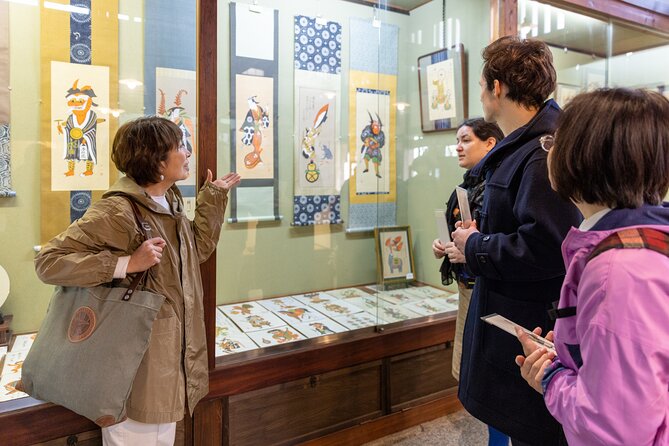
- A family-taught Otsu-e workshop: Led by Misato Takahashi, connected to the Takahashi Shozan Otsu-e line.
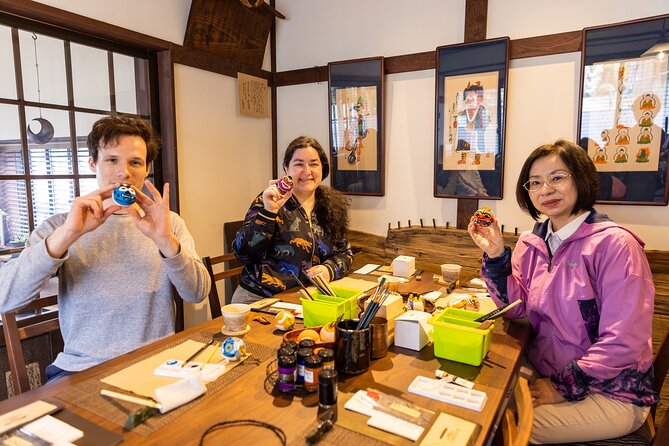
- You paint a Lucky Oni Bell or Three Wise Monkeys: The workshop is hands-on, and you take home Otsu-e souvenirs.
- Sweets before painting: You pick up Japanese sweets to enjoy before you start the art session.
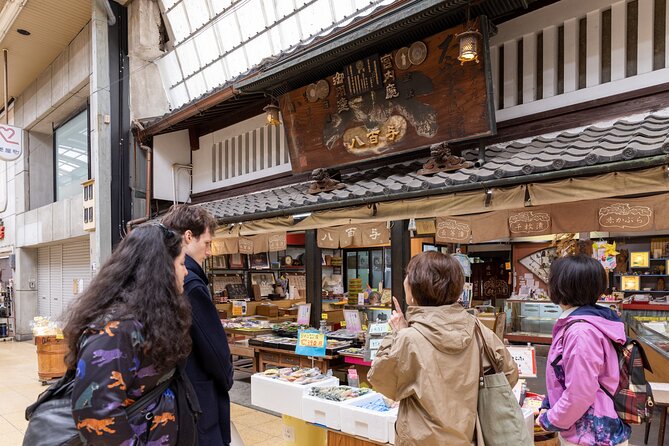
- Old Otsu neighborhoods on foot: Stops include preserved merchant streets and a traditional machiya house tour at Otsu Hyakuchokan.
- Food culture is part of the class: You sample from long-standing shops, including dried foods and pickles.
- A float on display: You see an actual Otsu Festival hikiyama float at the exhibition pavilion.
Otsu-e and Otsu: why this feels different from central Kyoto
Otsu is the kind of town that helps you slow down. It sits on the edge of Lake Biwa, and it is close enough to Kyoto that you can treat it as a day plan without the stress of a full overnight trip. What makes this tour stand out is that it does not just place you near art, it teaches you how Otsu-e is tied to everyday local life.
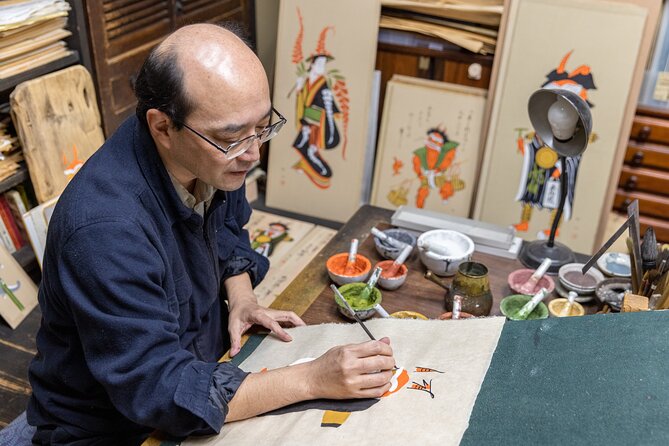
Otsu-e itself is a folk art tradition that began in this area about 400 years ago. In many places, “traditional art” can feel like a museum topic. Here, it works like a living skill. Misato Takahashi is a key part of that, because she is an Otsu native and carries the craft through her family line, connected to Wado Takahashi and the Otsu-e master family, Takahashi Shozan. That matters, because you are not only learning what the art looks like, you are learning what it means in Otsu.
You can also read our reviews of more tours and experiences in Otsu.

Your guide connection: Misato Takahashi and the Otsu-e family story
Misato Takahashi leads the experience, and the tour is built around her passion for keeping the local Otsu-e tradition alive. She is described as an Otsu native and the daughter of Wado Takahashi, herself tied to the craft’s lineage through the Takahashi Shozan family.
That family connection is not just background. It shapes the tone of the day. You’ll get explanations about what makes Otsu-e distinct, and why certain designs and formats are recognizable as local tradition. In a small private group setting, you also get more room for your questions, and Misato can adjust the flow to your interests. That flexibility is the difference between “watch and move on” and actually absorbing the story.
The walk begins at Otsu Station, then straight into old-town landmarks
You start near Otsu Station, then the tour steers you toward quieter, more local corners of the city. One of the early outdoor stops is at the ginkgo trees of Keikaiji Temple, in an area called Kyomachi 3-chome. These trees used to be a major landmark for boats on Lake Biwa.
I like this kind of start because it sets the geography fast. You stop thinking only about Kyoto sights, and you start recognizing how the lake and the town used to connect. Even if you are not a history person, the ginkgo landmark detail gives the area a sense of purpose.
From a comfort standpoint, this portion is a good warm-up. It gets you outside, gives you a first look at the neighborhood mood, and then it layers in the food stops that keep the day moving.
Mochihyo sweets and Senmaruya dried foods: eating your way through Otsu
Next comes the part that makes the tour feel local right away: you stop for treats from long-standing shops.
At Mochihyo, you pick up Japanese sweets to enjoy before the painting session. This is smart scheduling. You are not plopped into a craft class on an empty stomach, and the sweetness helps you settle in for the creative part later.
Then you visit Senmaruya, a dried food store on Nakamachi Street. You’ll pick up a retro snack, and you get a sense of how practical Otsu cuisine is. Dried goods are not glamorous, but they are a real backbone in Japanese home cooking. If you like food culture as much as landmarks, these stops are a big reason the day works.
A detail that stood out from my perspective: these stops are short, but they are not random. Each one feeds the next stage of the experience, from sweet pre-painting energy to snack timing that keeps things enjoyable.
Sake, shopping arcades, and an Otsu Festival float you can see up close
As the tour moves through the older shopping arcades around Maruya-cho, it adds a few “you can only see this in this town” moments.
One stop is Hirai Shoten, a sake brewery with 365 years of history, selling its own local sake brand. Even if you do not plan to drink today, it’s useful context. A brewery that old hints at why local commerce shaped Otsu’s streets, storefronts, and community identity.
Then you hit the Otsu Festival Hikiyama Exhibition Pavilion. One of the actual floats pulled during the Otsu Festival is on display. This is the kind of sight that can be missed if you only focus on Kyoto’s temples. Here, you get a concrete look at festival culture without needing to time your trip around festival dates.
These arcade stops are also convenient for pacing. They are compact, so you are not walking long distances between “wow” moments.
Otsu Hyakuchokan: a preserved merchant house with a real house tour
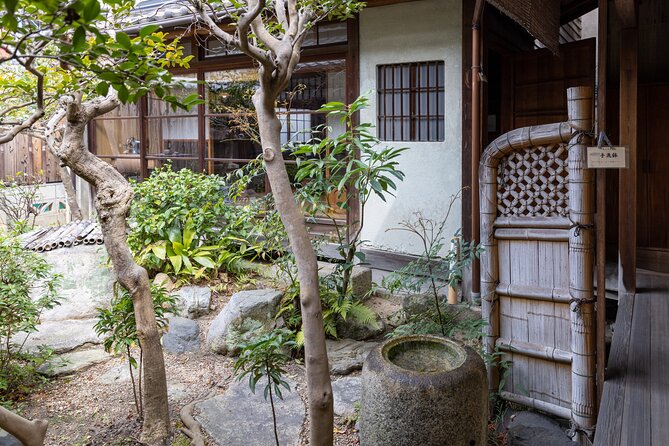
One of the most valuable stops is Otsu Hyakuchokan. This is a well-preserved example of an old, typical Otsu machiya merchant house. Your guide includes a house tour here, which is different from just passing by a building from the sidewalk.
Why this matters: machiya architecture is hard to understand from outside. You can see the outside, sure, but a house tour helps you grasp how a merchant home worked in a pre-modern town setting. You also get a stronger sense of what kind of daily life could have surrounded the Otsu-e tradition.
If you enjoy atmosphere, this stop pays off. It’s indoors enough to give your legs a break, but it’s still connected to the theme of local craft and local living.
Otsu-e no Mise and the walk toward the workshop: craft shops as living classrooms
Later you visit Otsu Enomise, also referred to as Otsu-e no Mise, on Miidera sando. This is an Otsu-e store and workshop, associated with the craft lineage that succeeded the 5th Takahashi Shozan.
I like this kind of stop because it shows you how Otsu-e is sold and practiced. A craft tradition is more than technique, it is also presentation, materials, and community transmission. Seeing the shop-workshop setup helps you understand what you will do at the end of the tour, so your workshop time feels less like an art class and more like participation.
Ichie Wado painting time: Lucky Oni Bell or Three Wise Monkeys
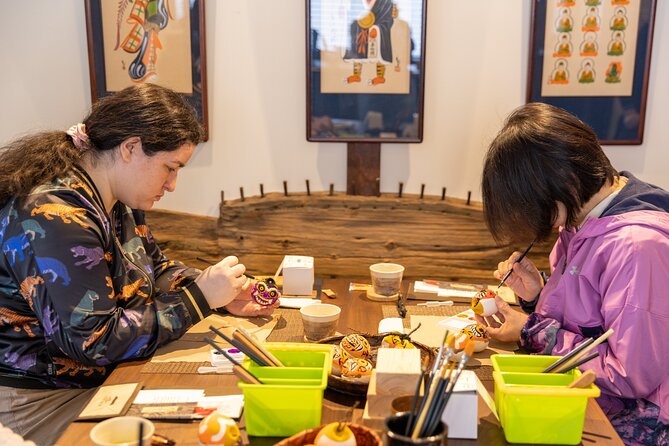
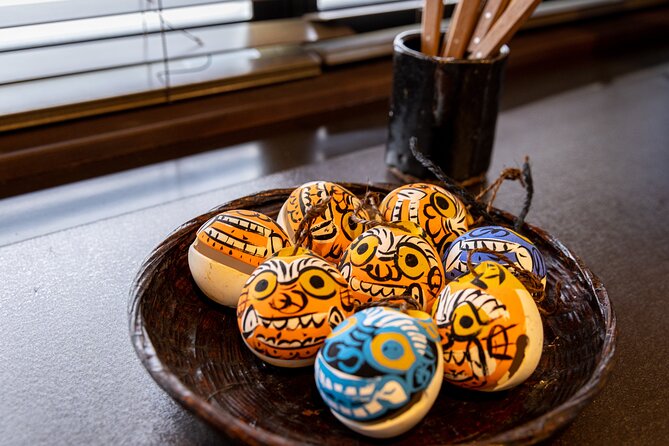
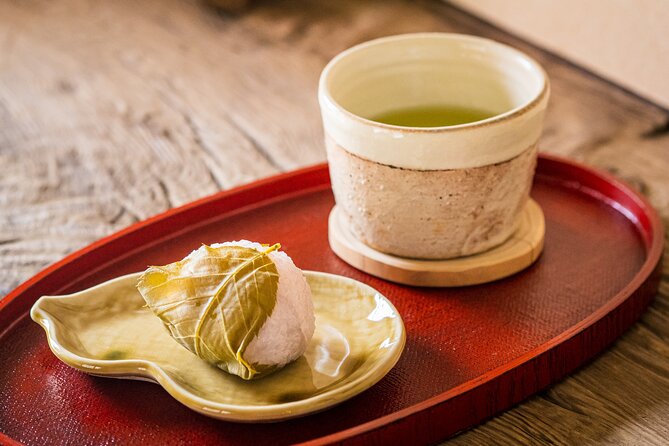
The heart of the experience is the workshop at Ichie Wado Seminar House. This is where you learn Otsu-e history and features, with a welcome tea and sweets added to set the mood.
Your included workshop centers on painting a Lucky Oni Bell or Three Wise Monkeys. You get English-speaking support from a professional guide with a deep interest in Japanese culture, and you leave with original Otsu-e souvenirs.
I consider this a good use of your time, because it is not a “watch someone else paint” demo. The goal is for you to walk away with a piece you made yourself. That instantly changes how you see the rest of Otsu. The snack stops stop being just food, the shop stops stop being just shopping, and the architecture stops being just architecture. It all becomes part of the same local story.
One practical tip: keep your expectations realistic. Folk art still needs patience and steady hand work. If you are the type who loves crafts, this will feel great. If you are not, treat it like a guided try. The satisfaction comes from the fact that you participate, not from making something that looks perfect.
Food stops that actually teach you something about Japanese daily life
This tour spends a surprising amount of energy on food culture, and it works because it ties into daily Japanese habits.
You pick up retro snacks at a dried foods store. You enjoy sweets before painting at Mochihyo. Later you visit Yaoyo, a long-established pickle shop in the Hishiya-cho shopping arcade. You learn one aspect of Japanese dietary culture and pick a seasonal pickle for later as a treat.
This is also where the experience gets personal. One review detail that matches what the route includes is the standout taste of a pickled cucumber, plus the pleasure of the mochi sweets. If you like trying small bites, this tour gives you multiple chances to taste Otsu without committing to a full lunch plan.
And yes, lunch is not included, so you’ll want to plan either a light meal before you go or a post-tour snack afterward.
Price and value: is $104.51 worth it?
At $104.51 per person for about 3 hours 30 minutes, you are paying for a guided, private, English-speaking experience plus a real craft workshop and multiple inclusions. The price is not only for time, it is for added value that usually costs extra if you book pieces separately.
Here’s what’s included that helps the value feel real:
- English-speaking professional guide
- The Otsu-e painting workshop with supplies and a take-home product
- Welcome tea and sweets, plus local snacks you pick up along the way
- Admission fees to Otsu Hyakuchokan and the Otsu Festival float exhibition pavilion (or alternative places if needed)
- Original Otsu-e souvenirs
- Local taxes
What is not included is also clear: train fares, like Kyoto to Otsu by JR at JPY200 per adult (covered by a valid JR Pass), and lunch. That means your base price is focused, and you can plan the rest without surprises.
My bottom-line take: this feels like good value if you want both hands-on art and town culture in one package. If you only want one side, like a short art class, then it might feel pricier than a basic workshop. But if you want the full Otsu context, the inclusions add up.
Logistics that keep the day easy, not stressful
The big practical plus is distance. Otsu is about a 10-minute train ride from Kyoto Station. That makes the tour a manageable half-day plan, especially if you are already spending most of your time in Kyoto.
Also note the tour is private, meaning only your group participates. That tends to make for a more relaxed pace, and it matters when you are doing a careful craft like Otsu-e. You can ask questions without feeling rushed.
Finally, the tour ends back at the workshop venue at Ichie Wado. That makes it easy to plan after it ends, since you are not stranded across town.
As for timing, it runs roughly 3 hours 30 minutes. It’s not a whole day, so bring the energy for steady walking, then settle into the craft part.
Should you book the Otsu-e folk art workshop and local culture walk?
Book it if you want an authentic art experience tied to a real town tradition, not just a craft activity dropped into a generic itinerary. You’ll be happiest here if you like hands-on making, you enjoy food culture, and you want to see Otsu beyond its shadow as a Kyoto add-on.
Skip it if your ideal day is fast temple-hopping or if you do not want to walk for about 3.5 hours with a moderate fitness level. Also, since lunch is not included, plan your meal timing so you do not end up hungry right when the workshop finishes.
If your goal is to bring home a piece you made yourself, plus a clear picture of how Otsu-e fits into Otsu life, this one is a strong choice.
FAQ
How long is the Otsu-e Folk Art Workshop & Local Culture Walk?
The experience runs for about 3 hours 30 minutes.
What will I paint during the workshop?
The workshop includes painting an Otsu-e design such as the Lucky Oni Bell or Three Wise Monkeys.
Is this tour private?
Yes. It is a private tour/activity, and only your group will participate.
What is included in the tour price of $104.51 per person?
Inclusions include an English-speaking professional guide, the Otsu-e painting workshop, original Otsu-e souvenirs, welcome tea and sweets, local snacks, admission fees to Otsu Hyakuchokan and the Otsu Festival Float Exhibition Pavilion or other alternative places, and local taxes.
Are train fares included from Kyoto to Otsu?
No. Train fares are not included. The Kyoto to Otsu JR fare is listed as JPY200 per adult, and it is covered by a valid JR Pass.
Where does the tour start and end?
The tour meeting location and end point are at Ichiewado Seminar House, 4-17 Kozekichō, Otsu, Shiga 520-0035, Japan.
Can I cancel for a full refund?
Yes. You can cancel up to 24 hours in advance for a full refund. If you cancel less than 24 hours before the start time, the amount paid is not refunded.
More Workshops & Classes in Otsu

More Tour Reviews in Otsu
Not for you? Here's more nearby things to do in Otsu we have reviewed
Walking Tours, compared.
 ★ 4.7Kyoto Geisha Walking Tour: Gion District & Hidden GemsFrom $253,273 reviews
 ★ 4.9Gion Magical Night Walking Tour with Geisha TriviaFrom $242,393 reviews
 ★ 4.7Gion Geisha District Walking Tour – Stories of GeishaFrom $202,187 reviews
 ★ 4.5Night Walk in Gion: Kyoto’s Geisha DistrictFrom $212,003 reviews
 ★ 5.0Kyoto Gion Geisha District Walking Tour – The Stories of GeishaFrom $251,441 reviews
 ★ 5.0Nishiki Market Brunch Walking Tour (7 Tastings + Brunch)From $681,355 reviews
 ★ 5.0Kyoto Arashiyama Walking Tour: Bamboo, Monkeys, Gardens & SecretsFrom $651,216 reviews
 ★ 5.0Kyoto Gion: 2-Hour Geisha Culture & History Walking TourFrom $231,186 reviews
Browse the lists this tour appears in