
Reviewed · KYOTO BIKE & E-BIKE TOURS
Discover Kyoto at Night by Bike
Kyoto at night feels like another world. This bike tour strings together the city’s best-lit spots with an easy, small-group ride and bilingual storytelling. I like the way the lantern-lit streets make big sights feel calm, and I also like that entrance fees and bottled water are handled for you. One heads-up, if you crave nonstop pedaling, you might find the guide’s explanations run long at times.
The route is built around classic Kyoto neighborhoods, but the night timing changes everything. I especially enjoy riding through areas you usually only rush through in daylight, like the river-adjacent streets near Gion and the photo alleys around Higashiyama. Still, you should be comfortable riding a bike in busy, uneven urban areas.
Key highlights at a glance
- Small group (max 9): You get more attention and an easier pace than big bus tours
- Night timing for big landmarks: Fewer crowds and warmer photos around shrines and temple areas
- Bilingual guides: Stories and practical pointers in more than one language
- Fushimi Inari, Gion, Yasaka Pagoda route: All the heavy hitters in one evening
- Entrance fees included: Less hassle at stops, plus you can focus on the view
Why Kyoto at night on two wheels works
Kyoto after sunset has a softer rhythm. Streets that feel hectic at midday can feel almost ceremonial when lanterns glow and shop signs dim. On this tour, the bike is the secret ingredient. It keeps you moving between spots, instead of spending your evening stuck in one area while the rest of the city does its own thing.
You also get a natural flow to the sights. The itinerary is not just a list of famous names. It’s arranged so you can see how Kyoto’s mood shifts block by block, from shrine gates to traditional alleys to temple viewpoints. Even the short stops feel like part of the same story.
One more practical win: the tour runs for about 3 hours 45 minutes starting at 5:00 pm. That timing usually hits the sweet spot where daylight fades, lanterns start to pop, and you still have enough light to appreciate details. If you’re worried you’ll miss the “real night Kyoto” vibe, this schedule is set up to deliver it.
You can also read our reviews of more cycling tours in Kyoto

Price and value: what $80 buys you
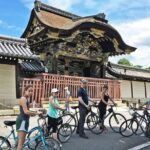
At $80 per person, the price feels reasonable for a guided night route with a bike and site access. You’re not just paying for someone to walk you around. You’re paying for the combination of a working bicycle, a guide, and all entrance fees plus bottled water.
Is it a bargain? Not in the sense of a cheap sampler. It’s more like paying for convenience and a curated route. If you’ve ever tried to build a Kyoto night plan yourself, you know how long it can take to coordinate bike logistics and decide which places are worth your limited evening time.
Also, with a small group, the guide can adjust pacing to your ride comfort. That can be worth real money if you’re the type who likes to feel safe and guided instead of shoved into a crowd.
Bikes, riding skill, and what to wear
This tour is for people with moderate physical fitness and, importantly, some real bike confidence. One of the best pieces of advice is simple: don’t treat this as your first-ever bike ride. The route goes through areas where you need to steer well and react quickly.
You should plan for urban riding conditions: stops that require you to balance, narrow corners, and streets that can feel busier than expected at certain times. The guide helps with safety, and you’ll use the bike provided, but you still need your own comfort level.
What to wear? Think night in Kyoto, not beach vacation. Wear breathable layers you can adjust as you ride and then stand around for photos. Bring something light for temperature change. If you want clear photos, have a jacket with secure pockets so you’re not juggling camera gear at every stop.
The meeting point and how to start smoothly
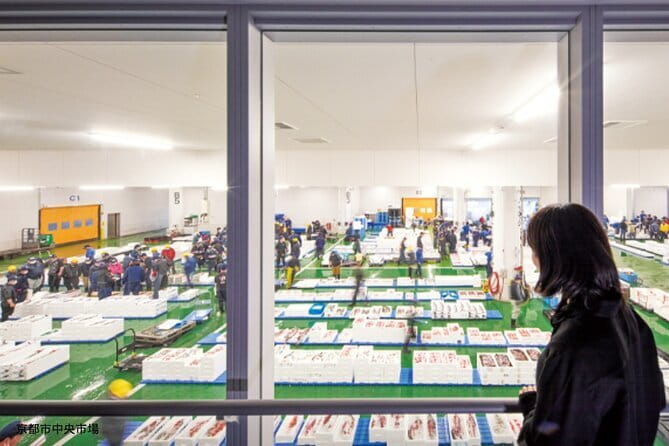
Meetup is at a 7-Eleven at 44-1 Higashikujō Kamitonodachō in Kyoto’s Minami Ward. The tour starts at 5:00 pm, and the activity ends back at the same meeting point. There’s also a note that it’s near public transportation, which helps if you’re not staying close.
You’ll receive a mobile ticket, which is one of those small details that can save time. Just make sure your phone battery is happy, and avoid relying on weak Wi-Fi in the moment you need to show your ticket.
Finally, the maximum group size is 9 travelers, which generally keeps things organized. It also means if you’re slightly late, you might feel the pressure more than on giant tours.
Stop-by-stop: Fushimi Inari-taisha Shrine at night
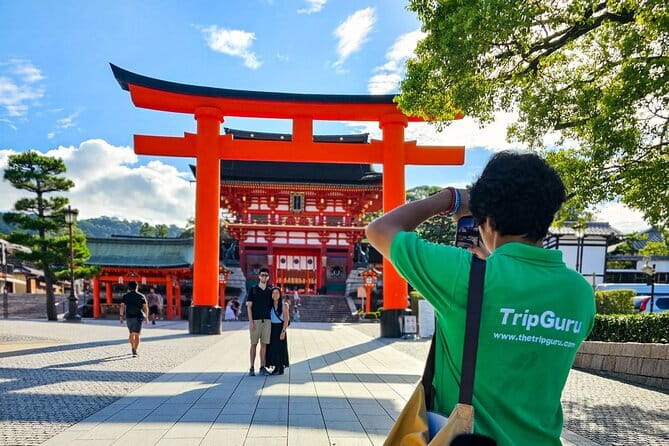
Stop 1: Fushimi Inari-taisha Shrine (about 40 minutes, free entry).
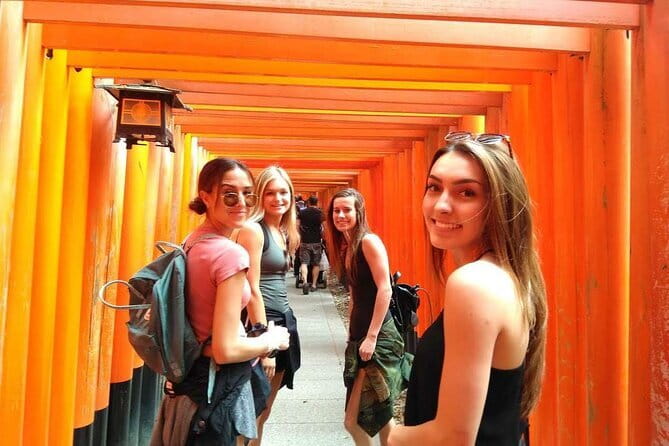
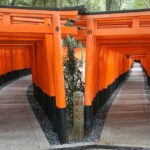
Fushimi Inari is famous by day, but at night it feels more like a guided dream. The thousands of torii gates form corridors of repeating color and shadow, and the night atmosphere makes the place feel less like a checklist and more like a slow walk through Kyoto iconography.
What I like about this stop in particular is timing. Early evening is often when you get a better sense of the space rather than feeling instantly overwhelmed by the crowd energy. You can focus on the pattern of gates, the way stone paths guide you forward, and the mood changes as you move deeper.
Practical consideration: torii-gate areas can be uneven, and you’ll be switching between riding and walking. Wear shoes that grip well, and don’t expect a perfectly flat stroll.
You can also read our reviews of more evening experiences in Kyoto

Miyakawa-cho Dori: lantern mood near the river
Stop 2: Miyakawa-cho Dori (about 15 minutes, free entry).
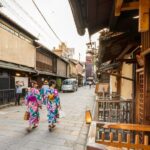
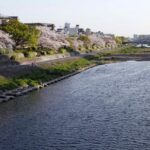
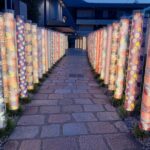
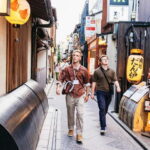
This is the “Kyoto look” stop. Miyakawa-cho transforms after sunset with lantern-lit charm and traditional streetscape energy. It runs just south of Gion and runs parallel to the Kamogawa River area, so the surroundings support that night-glow atmosphere.
Even if you only spend a short time here, it works as a tonal shift. You go from the intensity of the shrine gates to streets that feel quieter, more cinematic, and more about atmosphere than big landmark structures.
Photo tip: aim for shots where you include street depth, not just a single building. The lantern lighting often looks best when you capture the way the road guides your eyes forward.
Gion at night and Hanamikoji street
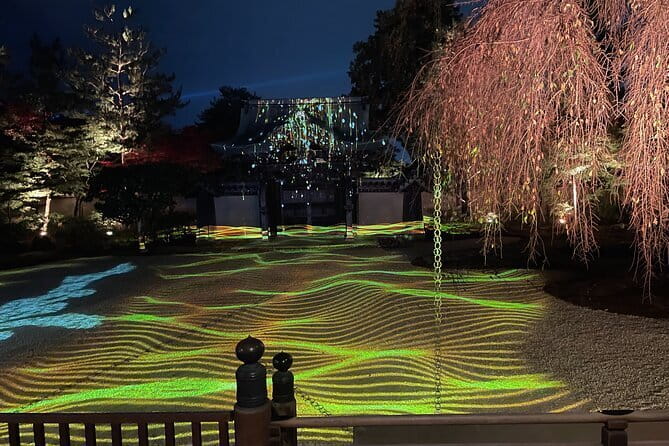
Stop 3: Gion (about 10 minutes, admission included).
Gion is iconic for a reason, and nighttime adds a layer of quiet spectacle. The centerpiece here is Hanamikoji street, lined with historic ochaya (tea houses). Even in a brief stop, you get the sense that this neighborhood runs on tradition, rhythm, and careful visibility.
The value of keeping this stop short is that you avoid the trap of spending your evening staring at the same view while your battery for night walking fades. Instead, you get a taste and then you move on to another style of Kyoto.
One possible drawback: if your favorite part of Kyoto is long wandering time, ten minutes may feel tight. But the bigger promise is that the rest of the route stays tightly connected.
Yasui-Konpiragu: the shrine with a more unusual focus

Stop 4: Yasui-Konpiragu (about 10 minutes, free entry).
This is one of the more distinctive stops. Yasui-Konpiragu is known for people coming to “cut ties” with bad relationships or habits and to form stronger luck or ties in their lives. That theme matters because it makes the shrine more than a photo location.
In practice, you might notice how people behave here. It tends to feel purposeful, not purely sightseeing. If you like cultural context and how local beliefs show up in daily life, this is a strong moment on the tour.
Since your time is limited, focus on a few details rather than trying to see everything at once. The narrow streets and shrine presence can reward a slower look.
Hōkan-ji and Yasaka Pagoda: Kyoto’s night postcard area
Stop 5: Hōkan-ji Temple, including Yasaka Pagoda area (about 15 minutes, free entry).
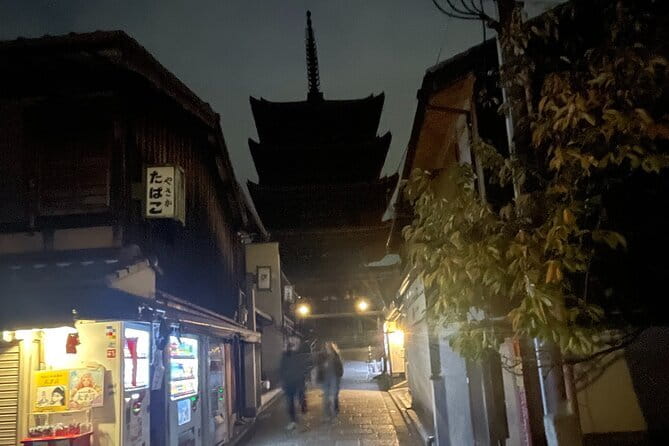
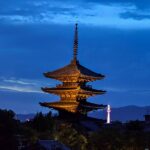
This is the area around Yasaka Pagoda, one of Kyoto’s most photographed spots. What makes it work at night is the contrast. The pagoda is a clear focal point, while the surrounding streets add texture and context.
The streets are cobblestoned and lined with traditional machiya townhouses, which helps you understand Kyoto as a lived-in city, not a theme park of isolated monuments. Even if you’ve seen pictures before, the night lighting changes the feel of the architecture.
Photo tip: don’t shoot only from the front. Walk to where you get a layer of street in your frame. The pagoda often looks best when it is not the only thing you show.
Ninenzaka: the slope for classic night scenery
Stop 6: Ninenzaka (about 15 minutes, free entry).
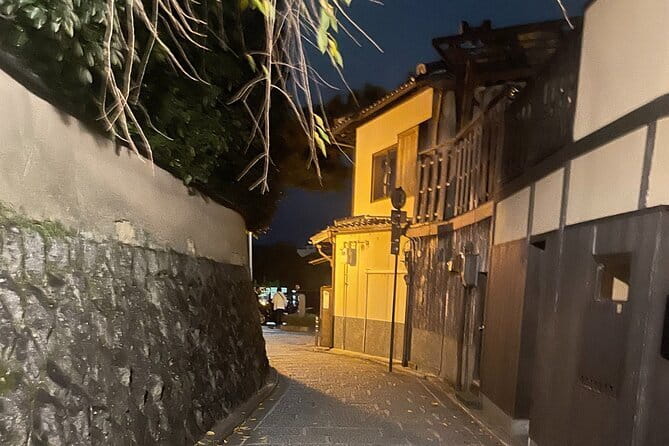
Ninenzaka is known for classic Kyoto slopes and a traditional streetscape look. At night, it becomes a photo-friendly corridor. You’re in Higashiyama style territory now, where small streets and traditional building fronts can make even short walks feel like a set from a period film.
This stop is the one where you’ll likely appreciate the “photo stop” structure of the itinerary. The tour gives you time to step off the bike, take pictures, and then regroup without feeling like you’re racing the clock.
Practical consideration: slopes plus uneven pavement can make the walk part more tiring than it sounds. Keep moving comfortably, and don’t try to rush your photos at the expense of your footing.
That final Higashiyama park moment with cherry trees, ponds, and wooden bridges
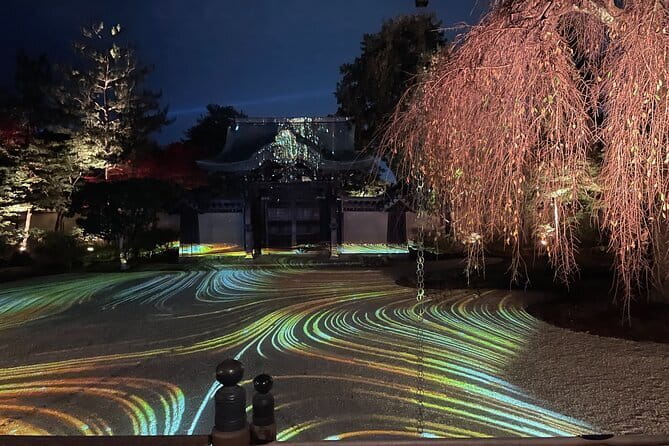
The last portion ends in a well-known park in Higashiyama. It’s described with cherry trees, ponds, and wooden bridges, which sounds very much like a place designed for calm evening strolls. Even if cherry season is not happening, the layout still makes sense for quiet night photos and reflective pacing after you’ve seen the big shrine and temple moments.
Why it’s a good close: after a night that moves through gates, lantern streets, and pagoda views, you need a breather. This kind of park end can make your whole evening feel less like “stop and shoot” and more like “experience the area.”
Then you’ll cycle back to the meeting point to end the tour.
The biggest upside: safety, pacing, and a guide who cares
One of the strongest reasons to book this is the overall feel of guidance. A good bike tour is not just about route planning. It’s about keeping you safe when streets get busy and when you need to stop in a smooth way. You’ll likely get the benefit of an attentive, safety-minded guide.
There’s also a strong emphasis on culture and tradition. That shows up as stories, context, and practical pointers as you move between stops. If you like understanding what you’re looking at, this tour fits that style.
One detail to keep in mind from the experience design: this is not purely a ride for maximum distance. The stops are part of the experience, and you may find that storytelling and group management can take more time than you expect.
A balanced caution: when you want more riding
If you’re the type who expects a mostly pedal-and-views evening, keep your expectations realistic. The tour has multiple brief stops, and those breaks can include explanations and time standing around.
In other words, if your idea of fun is sustained riding time, you might feel the tour is more “guided night walk stops from the bike” than “ride for miles.” That doesn’t make it bad, it just helps you decide if it matches your travel style.
My practical suggestion: if you prefer more biking time, go in with a mindset of short photo and culture breaks rather than nonstop movement.
Who should book this Kyoto night bike tour
You’ll likely enjoy it most if you:
- want a guided night route through Kyoto’s key districts without planning
- like photography but don’t want to manage timing alone
- can ride a bike with confidence on city streets
- enjoy cultural stories tied to the places you see
It may not be the best fit if you:
- want a bike tour that feels like continuous riding with minimal talking
- are a brand-new cyclist and nervous about traffic and quick stops
Quick facts you should know before you go
- Duration: about 3 hours 45 minutes
- Start time: 5:00 pm
- Price: $80 per person
- Group size: up to 9 travelers
- Ticket type: mobile ticket
- Included: bicycle, bottled water, and all entrance fees
- Not included: hotel transportation, guide gratuities
- Language: bilingual guides
- Weather: requires good weather, with an option for a different date or full refund if canceled due to weather
Should you book it or skip it?
Book it if you want a structured evening that hits Fushimi Inari, Gion, the Yasaka Pagoda area, and Higashiyama streets without you doing a ton of planning. The included entrance fees and bottled water help, and the small group size keeps the experience feeling more personal.
Skip it if you’re hoping for a mostly cardio-heavy, long-distance ride with minimal stopping. Also skip if bike comfort is shaky for you. For the right rider, this tour is a strong way to see Kyoto after dark, with lanterns, torii gates, and temple lighting doing most of the heavy lifting.
FAQ
FAQ
What is the price for the Kyoto at Night by Bike tour?
The tour costs $80.00 per person.
How long is the tour?
It runs for about 3 hours 45 minutes.
What time does the tour start?
The start time is 5:00 pm.
Where do I meet for the tour?
You meet at 7-Eleven, 44-1 Higashikujō Kamitonodachō, Minami Ward, Kyoto, 601-8002, Japan.
Where does the tour end?
The tour ends back at the meeting point.
What is included in the price?
The tour includes the bicycle, bottled water, and all entrance fees.
What is not included?
Hotel transportation and guide gratuities are not included.
Is the tour suitable for beginners?
The tour requires travelers to have a moderate physical fitness level, and you should be comfortable riding a bike in the city setting.
How many people are in a group?
The tour has a maximum of 9 travelers.
What happens if the weather is poor?
The activity requires good weather. If it’s canceled due to poor weather, you’ll be offered a different date or a full refund.
What is the cancellation policy?
You can cancel for a full refund up to 24 hours before the experience’s start time. If you cancel less than 24 hours before, the amount paid is not refunded.
More Evening Experiences in Kyoto
More Cycling Tours in Kyoto

More Tour Reviews in Kyoto
Not for you? Here's more nearby things to do in Kyoto we have reviewed



Kyoto Bike & E-Bike Tours, compared.
 ★ 5.0Hidden Kyoto E-Biking tourFrom $1161,843 reviews
 ★ 5.0Bike Tour Exploring North Kyoto plus LunchFrom $1061,087 reviews
 ★ 5.0Arashiyama Bamboo Forest & Hidden Gems Bike Tour (Early Bird)From $106613 reviews
 ★ 5.05 Top Highlights of Kyoto Full Day Bike Tour (E-bike option)From $172511 reviews
 ★ 5.0Full Day Biking Tour Exploring the Best of KyotoFrom $119498 reviews
 ★ 5.0E-Bike Tours of the highlights of Kyoto!!!From $109291 reviews
 ★ 5.0Afternoon Kyoto Bike Tour: Bamboo Forest, Monkeys & Hidden SpotsFrom $106283 reviews
 ★ 5.0South Kyoto in a Nutshell: Gentle Backstreet Bike Tour!From $79225 reviews
Browse the lists this tour appears in