
Reviewed · MORNING
Explore Hidden Alleyway with a Local Expert (Morning tour)
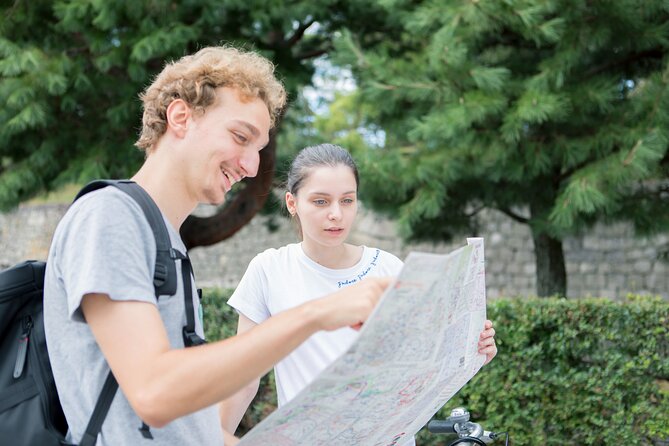
Kyoto reveals itself at bike speed. This private morning e-bike tour helps you glide past landmarks and quiet backstreets without dragging a map around. You get rental e-bike equipment ready to go, and the private group pace keeps things relaxed instead of rushed.
I especially love how the route hits both the postcard areas and the calm, older-street vibe. Stops like Miyagawacho’s traditional wooden-house lanes and Gion’s refined atmosphere make the city feel close up. Guides such as Rich-San, Yuichi, and Annie are a big reason this works, since they explain what you’re seeing and stick with your questions.
One drawback to think about: you need to feel comfortable riding a bike on city streets and gravel paths, because this is not a pure walking tour.
Key things that make this Kyoto e-bike morning tour worth it
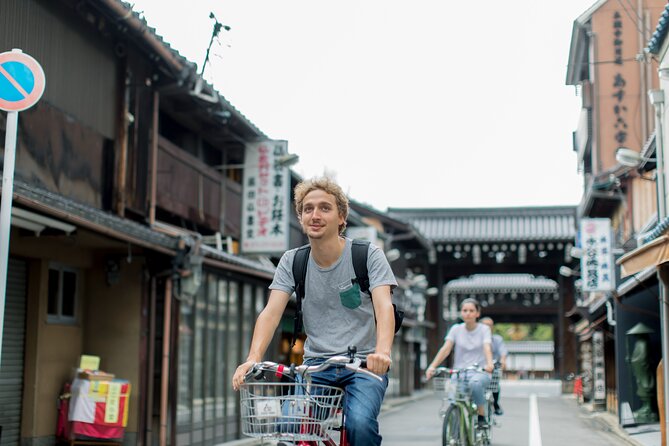
- Small private group (up to 6 per guide) means fewer waits and a pace you can actually enjoy
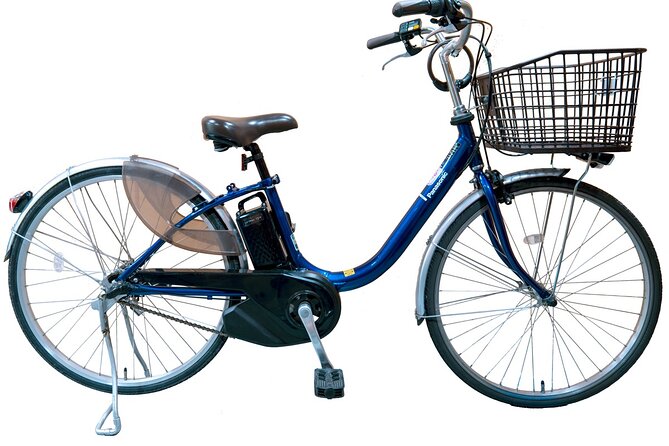
- E-bike equipment rental included, plus battery help for hot or tiring days
- Built around Kyoto’s famous areas and backstreets, including Miyagawacho, Gion, and the Kyoto Imperial Palace
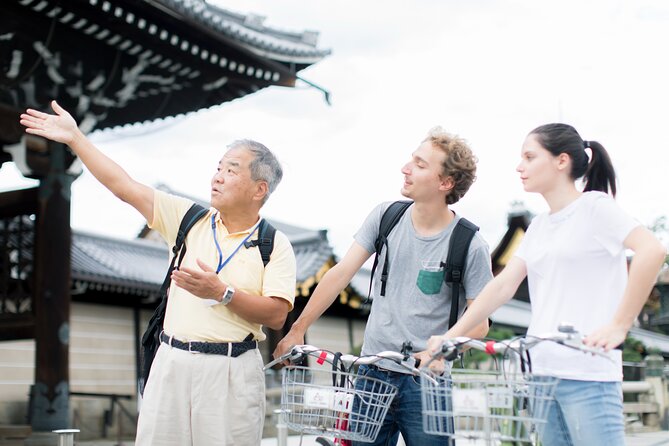
- Guides who talk, with clear explanations and lots of room for your questions (Rich-San, Yuichi, Annie)
- A real rest stop by the Kamo River in Kashiwayacho, not just quick photos
- Rain-ready options, either continue with ponchos or switch to a walking tour using public transport
A Morning Kyoto E-Bike, Built for Backstreet Discovery
This is the kind of Kyoto outing that saves you energy while still feeling local. In about three hours, you ride through a compact set of neighborhoods that most people see one at a time. The difference is that you’re not spending the whole morning crossing town on foot or trying to stitch together directions.
The ride is also why a morning start can be smart. You’re more likely to meet quieter streets and comfortable temperatures than later in the day. And since the tour is private, you are not stuck with a one-size-fits-all rhythm.
More Kyoto temple visits, food tours, tea experiences, and day trips to compare
Why the Private Guide Beats Following Maps
The biggest value is not the e-bike itself. It’s the fact that you’re guided through places you might not connect correctly on your own.
You start at 552-13 Higashiaburanokōjichō, Shimogyo Ward and head into two major geisha districts. Guides keep you oriented so you understand what you’re seeing, not just where to stop. That is a key detail. One review style theme came through again and again: guides gave strong context and stayed patient while people grilled them with questions.
You also get more than a route. You get interpretation. For example, Miyagawacho is framed as a calmer, older-feeling geisha district, and Gion is framed as the refined center where maiko girls and geiko women represent an elegant side of Kyoto. With a guide, those terms stop being trivia and start being part of how you read the streets.
E-Bike Comfort and Who This Fits Best
This is an e-bike tour, but it is still a bike tour. You should expect real riding time, including turning corners and dealing with road conditions. The good news is that e-bikes cut the strain, and one hot-day review explicitly called the ride easy thanks to the battery.
That said, the tour sets a clear expectation for participants: children must be at least 10 years old, at 145 cm or above, and able to ride a bicycle safely on the road unassisted. So if you struggle with balance, or you’re uneasy around traffic, this may not be your best first-day bike moment.
If you’re the kind of traveler who likes to move efficiently but still wants to stop and look, you will match the tone well. This is also a strong fit for a couple, small family, or friends traveling together since the cap is 2 to 6 guests per guide.
Stop 1: Miyagawacho Kaburenjo and the Quiet Alley Feeling
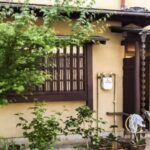
Miyagawacho Kaburenjo is where the tour turns from movement into mood. You spend about 15 minutes here, in an alley lined with traditional wooden houses on both sides.
What you’re looking for is not a single attraction with one entrance. It’s the atmosphere: calm, old Kyoto energy, and a narrow-street feel that you usually only get when you’re not rushing. The tour frames Miyagawacho as the second biggest of Kyoto’s five geisha districts, which helps you understand why the area feels both established and intimate.
Practical tip: keep your photos quick and your eyes up. If you only aim your camera forward, you’ll miss the character of the lanes. This is one of those stops where slowing down for 2 minutes does more than capturing 10 shots.
Stop 2: Gion for Maiko, Geiko, and Old Kyoto Refinement
Next comes Gion, another 15-minute stop. The vibe here is more elegant and polished, and it’s tied to Kyoto’s geisha culture, specifically maiko girls and geiko women.
This is also where you benefit from having a guide. Gion can feel like a theme park if you treat it like one photo spot after another. With context, it reads as a living cultural neighborhood. You’re there long enough to absorb the streets and signage, not long enough to feel trapped in one place.
If you plan to visit Gion anyway on your own, consider what you’re really buying. A quick self-guided walk might show you the main lanes. This guided ride adds a broader flow, so Gion isn’t the only stop you remember.
Stop 3: Tatsumi Bridge and the Willows Along the Stream
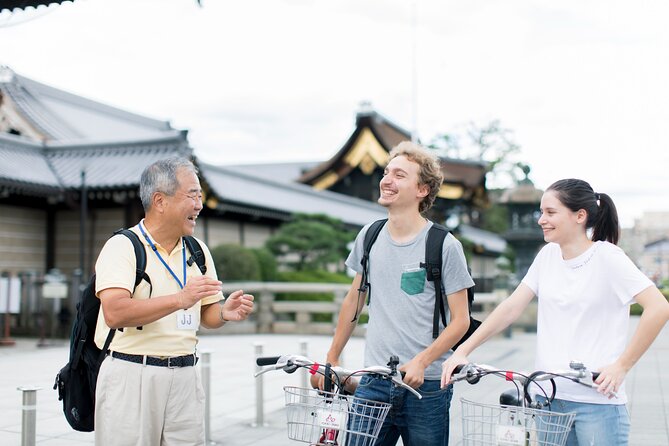
At Tatsumi Bridge, the tour shifts to nature and a little breathing room. You get about 15 minutes. The path runs along a stream, and the stop is described as refreshing, with willows swaying in the breeze.
This works well in the itinerary because it’s the contrast stop. After geisha districts, the scenery gets softer. If you’re traveling during warm months, this is also a good place to reset your legs and take in the slower pace that comes with water and trees.
Practical tip: pause on the bridge area for a minute, then walk back along the path. From one angle the stream looks like a line. From another, you see the rhythm of the banks and greenery.
Stop 4: Kyoto Imperial Palace, Gravel Paths, and Seasonal Garden Views
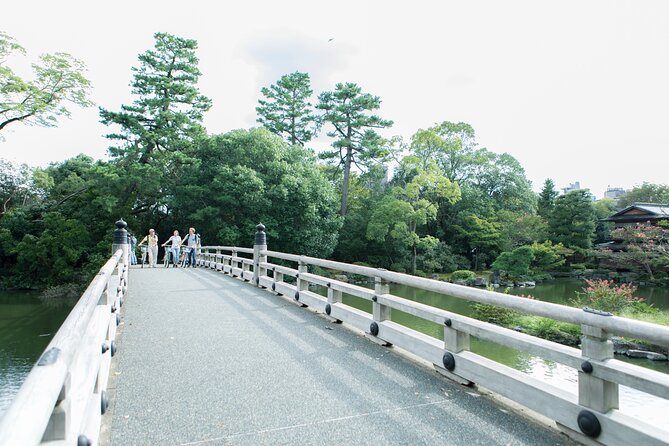
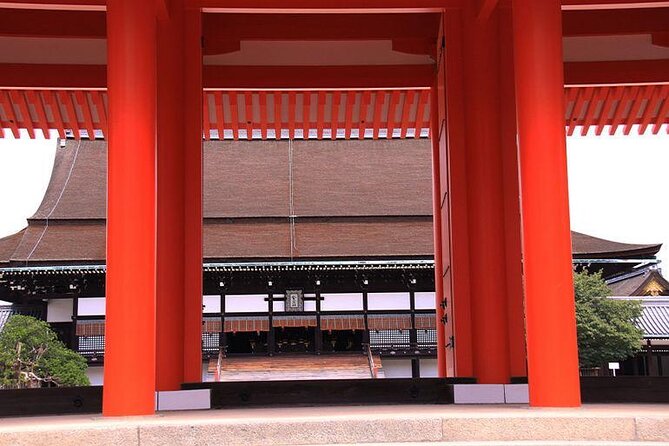
The most historically weighty moment is Kyoto Imperial Palace. You spend about 20 minutes and cycle along gravel paths inside the garden grounds.
The palace once served as the residence of Japan’s Imperial Family, and today it’s open to the public as a national garden with seasonal flowers. That seasonal angle matters. Even if you don’t know the plant varieties, you can usually feel the difference between sections that are in bloom and sections that are winding down.
A quick caution: because you’re biking, you’ll likely be moving at a steady pace through the palace grounds. This is ideal for seeing the garden layout and feeling the space, but it is not designed for long, sit-down sightseeing the way a longer standalone visit might be.
If you’re a detail person, tell your guide what you care about. A good guide can steer you toward the best-view segments quickly without turning the stop into a blur.
Stop 5: Kashiwayacho and a Kamo River Rest
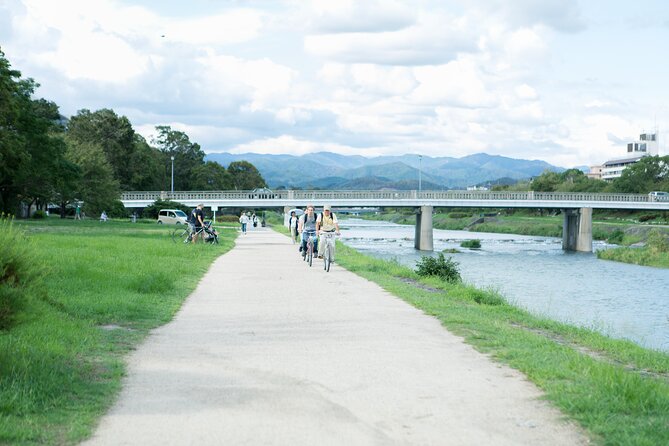
Finally, you end with a more local-feeling break in Kashiwayacho, with about 20 minutes by the Kamo River. This stop includes an admission ticket for the rest area.
The Kamo River zone is a clever choice to close the ride. You’re not just arriving at another monument. You’re finishing with a relaxed moment that feels like Kyoto daily life, where people gather near the water when the weather is good.
Practical tip: treat this as your “slow down” window. If you want snacks or a calm cup of something, this is the moment to do it rather than trying to fix your energy mid-route.
Price and Value for a Private E-Bike Morning
At $103.04 per person, the price is not a budget impulse buy. So you should judge it by what it replaces.
This morning tour replaces three hard things:
- The mental effort of route planning and navigation
- The stamina drain of walking long distances in Kyoto
- The time you’d spend figuring out what you’re looking at without context
You also get equipment rental included. E-bikes are doing real work here. One review noted that on a hot day, the battery made the ride easy when walking would have been too much. When your legs are fresh, you spend more time looking at streets and details instead of just getting through the day.
Then there’s the private element. This tour runs with a maximum of 6 guests per guide (and it is private for your group). For couples and small groups, that can feel like a fair trade for not having to squeeze into someone else’s pace.
What the 3 Hours Actually Feels Like
The schedule is tight enough to feel efficient, but it is not a nonstop sprint. If you add up the stop times, you get a clear picture of the rhythm: multiple 15-minute cultural blocks, one 20-minute palace garden segment, then a 20-minute river rest.
Because the tour is private, you can usually adapt your pace, within reason. If you want to linger a touch longer at an alley, or you want to stop for a quick coffee moment, the guide can often help you shape that time window. One review specifically mentioned fitting in a cafe break by request, which tells you the guide mindset is flexible.
Rain Plan: Ponchos or Public Transport Walking
Kyoto weather can be unpredictable, so it helps that the tour has a built-in plan. The tour operates in rain, with free ponchos if you continue on bikes.
If riding in the rain feels like a deal-breaker, there’s a second option: switch to a walking tour using bus or metro, and it is included in the tour fee. That flexibility matters because you do not end up with a wasted morning or a half-experience.
Still, one consideration from real-world experience: if the day turns stormy, you might find communication varies by guide. A few guides are described as clear and answer-ready, while one review raised an issue with English depth. If your group has strong expectations for conversation, it may be worth noting that the tour still runs rain-or-shine and you may need to accept some limits on topic depth depending on the guide.
Who Should Book This Morning Tour
Book this if you want:
- A first or early-day overview of Kyoto that does not exhaust you
- A guided look at Miyagawacho, Gion, Kyoto Imperial Palace, and the Kamo River
- A small-group experience where your questions get room
- Easy logistics, since you are not trying to figure out bike navigation yourself
It’s also a good call for couples and friends who want to see more than one neighborhood without hopping between separate taxis or trains all morning.
Skip it if:
- You are not comfortable riding a bike on city roads
- Your priority is long, slow museum-style time inside one place (this is timed for moving and seeing)
- You dislike weather exposure, even with ponchos, and you do not want to pivot to walking
Should You Book This Tour?
Yes, if you like the idea of covering a smart slice of Kyoto in a relaxed way. The combination of private pacing, rental e-bike support, and guided context makes this feel like paying for time and sanity, not just transportation.
I’d book it especially if it’s your first week in Kyoto and you want to get your bearings fast. Miyagawacho’s wooden-house alley quiet, Gion’s refined geisha district atmosphere, the willow-sway stop at Tatsumi Bridge, and the Imperial Palace garden loop are a strong mix for a single morning.
If you are on the fence, think about this simple test: can you comfortably ride a bike for a sustained period, even if it’s slightly busy and you might see gravel? If yes, this tour is a high-value way to experience Kyoto in motion.
FAQ
How long is the Kyoto morning e-bike tour?
The tour lasts about 3 hours.
Where does the tour start?
The meeting point is 552-13 Higashiaburanokōjichō, Shimogyo Ward, Kyoto, 600-8235, Japan.
What time does the tour begin?
The start time is 9:00 am.
Is this a private tour?
Yes, it is a private tour, and only your group participates.
How many people can join per guide?
The minimum is 2 guests and the maximum is 6 guests per guide. One-person participants are not accepted.
What is included with the e-bike?
Equipment rental is included, and you ride stress-free with the guide.
Are any admissions included?
Admission is free for stops 1 to 4. Stop 5 has an admission ticket included.
What happens if it rains?
The tour operates in rain. You can continue on bikes with a rain poncho at no extra charge, or you can switch to a walking tour using bus or metro, included in the tour fee.
What are the age and height requirements for children?
Children must be at least 10 years old, 145 cm or above, and able to ride a bicycle safely on the road unassisted.
Is the tour refundable if I cancel?
No. This experience is non-refundable and cannot be changed for any reason.
More Morning in Kyoto

More Tours in Kyoto
More Tour Reviews in Kyoto
Not for you? Here's more nearby things to do in Kyoto we have reviewed

Morning, compared.
 ★ 5.0Kyoto Early Morning Tour with English-Speaking GuideFrom $681,427 reviews
★ 4.9Early Morning Tour with English-Speaking GuideFrom $1011,128 reviews
★ 5.0Kyoto Early Morning Tour with English-Speaking GuideFrom $681,427 reviews
★ 4.9Early Morning Tour with English-Speaking GuideFrom $1011,128 reviews
 ★ 5.0Nara Early Morning Tour (Kyoto or Osaka Departure Available)From $61676 reviews
 ★ 4.6From Kyoto: Nara Guided Morning TourFrom $77335 reviews
 ★ 4.0Kyoto Morning Tour from Kyoto or OsakaFrom $87281 reviews
 ★ 5.0Morning Japanese Bento Cooking ClassFrom $67149 reviews
 ★ 5.0Arashiyama Bamboo Forest Morning Tour by BikeFrom $103115 reviews
 ★ 5.0Traditional Japanese Washi Papermaking- Kyoto morningFrom $3377 reviews