
Reviewed · KYOTO TEA CEREMONIES
Kyoto: Authentic Tea Ceremony in a Small Group
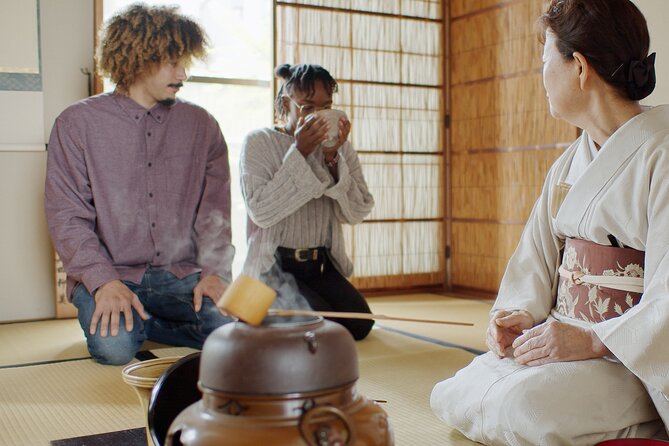
Tea time in Kyoto slows everything down. I love how this small-group chanoyu in Uzumasa pairs Marukyu Koyamaen matcha with Kyoto wagashi in a real, carefully arranged tea room. It feels less like a class and more like you’ve stepped into an older rhythm for an hour.
One possible drawback: the time is short, about an hour, so if you want a long, staged production or lots of extra sightseeing, you may feel it moves fast.
Key highlights you will actually care about
- Uzumasa setting and a tea room garden you get to view up close
- Haori dressing to make the experience feel truly formal
- Urasenke tea procedure with guided observation
- Real ingredient quality with matcha from Marukyu Koyamaen and wagashi from a long-established Kyoto shop
- Hands-on matcha whisking so you are not just watching
- Private group of up to 6 rather than mixing with strangers
Kyoto Tea Ceremony in Uzumasa: Where the Atmosphere Matters
Kyoto can feel like a constant motion machine. This experience gives you a controlled pause in Uzumasa, an area known for historic surroundings, including the lingering elegance of the Heian period. When the setting is done right, the ceremony becomes easier to understand because you are not mentally juggling the street outside.
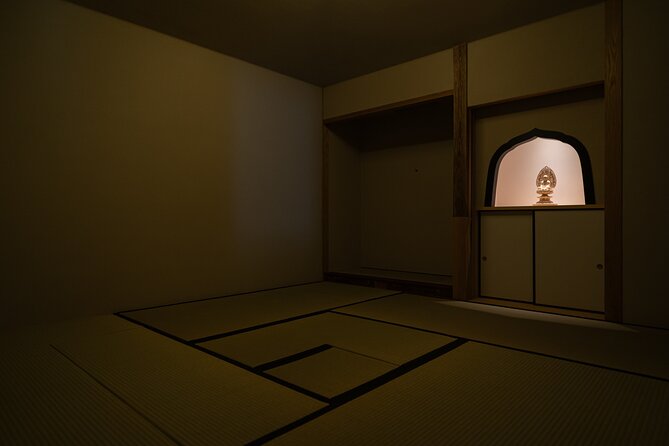
The host space is also part of the appeal. You enter a stylish shop interior, then you’re led toward a garden layout and an authentic tea room. That flow matters because it sets expectations: chanoyu is about attention, not performance for a crowd.
If you want an experience that feels authentically Kyoto without feeling like a rushed stop on a checklist, this one fits that mood. Your group stays together, and you get to slow down in the same way the ceremony expects you to.
You can also read our reviews of more tours and experiences in Kyoto.

The 1-Hour Experience: What Happens From Start to Finish
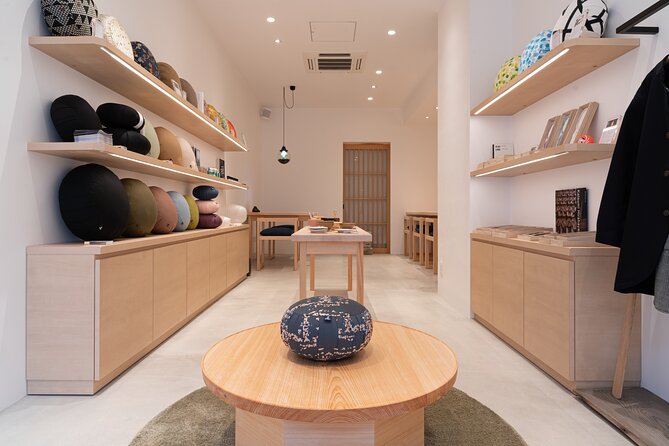
This is an approximately 1-hour activity. That time window is not a flaw, it is a feature, as long as you plan for calm pacing rather than trying to pack the rest of the day around it.
Here is the flow you should expect:
You start at Chanoyu The KYOTO Uzumasa (TEA CEREMONY). From there, the ceremony begins with you being guided into the full experience rather than just tasting things. You will be asked to wear a haori, a kimono-style jacket, which instantly changes how you carry yourself and how you pay attention.
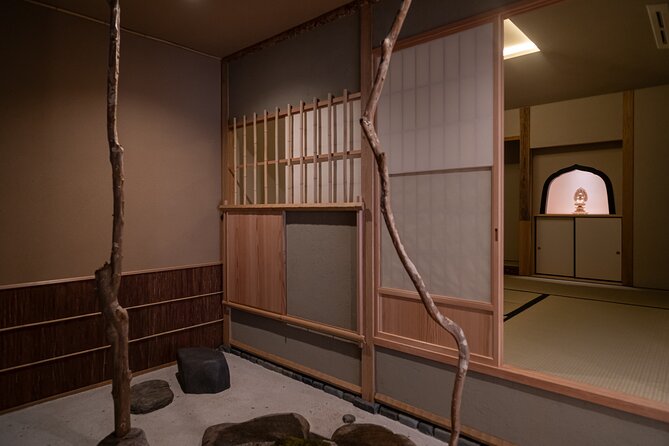
Next, you’re invited to appreciate a meticulously designed miniature garden inside the tea-room setting. This is not decorative filler. In chanoyu, the environment is part of the teaching, and you’ll see that reflected in how the garden is arranged for viewing.
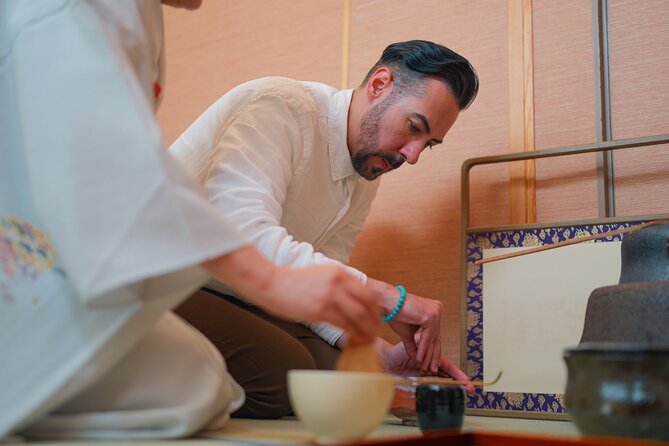
After the garden moment, you observe the Urasenke tea procedure. You’re not left guessing what you are seeing. There’s an explanation of the history and cultural origins of chanoyu, along with the meaning tied to the utensils used in the ceremony.
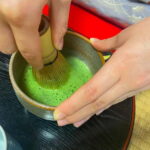
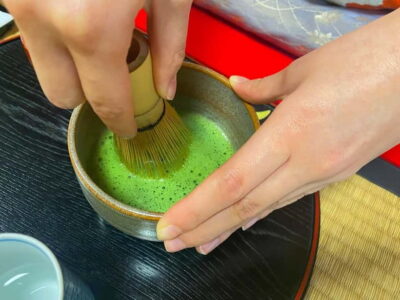
Then comes the hands-on part. You will whisk your own bowl of matcha. You’ll enjoy it together with the second traditional sweet provided as part of the pairing.
The big takeaway: it is balanced. You get viewing, explanation, and participation. You are not just consuming, and you are not just learning theory.
Haori Dressing and the Miniature Garden You See Up Close
The haori step is one of the best “small touches” because it makes you act like you belong in the space. You’re not doing a quick costume moment. You’re dressing to match a ceremony that cares about formality, timing, and quiet focus.
Then you get a close look at the miniature garden, arranged with the tea room experience in mind. One of the strongest impressions from recent visitors is how “elaborate” and thoughtfully designed the garden feels. That matters for you because it turns the tea ceremony from something abstract into something visual, spatial, and easy to follow.
I also like that the garden is part of your experience instead of being something you pass on the way to the tea room. You spend time looking at it, and that changes how you experience the rest of the ritual. It’s a built-in mental shift to slow down.
If you’re the kind of person who loves small details, this is where you’ll feel most rewarded.
Watching the Urasenke Procedure Without Feeling Lost
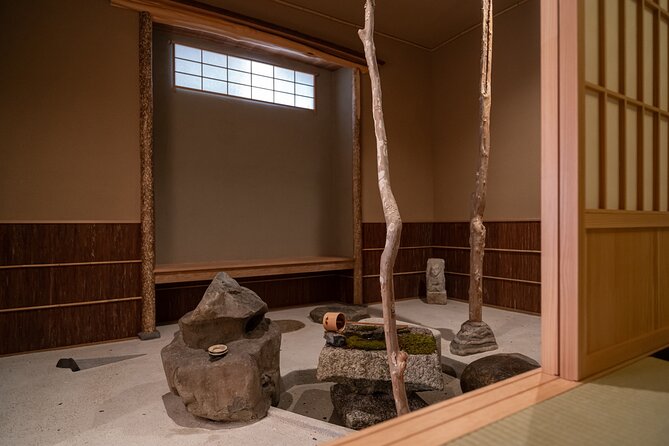
Observing the tea ceremony can be intimidating if you think you need to already know the rules. The good news here is that you are guided. You’ll watch the Urasenke procedure and receive context so the movement and sequence make sense.
A key part of this is the explanation of chanoyu’s history and cultural origins, plus how the utensils fit into the practice. Even without specific utensil names listed in the information you provided, the intent is clear: you will learn what the tools symbolize and why they matter.
This is where the ceremony becomes more than a drink tasting. You start understanding the idea of chado, the Way of Tea, which is framed as hospitality. The experience is designed to help you appreciate the mindset behind the ritual, not just the steps.
From the review themes, many people really responded to feeling that the host explained things clearly and politely, and that the experience carried a quiet, refined elegance. That kind of atmosphere is not accidental. It’s part of what makes the procedure easier to appreciate.
Whisking Matcha Yourself: The Moment That Makes It Stick
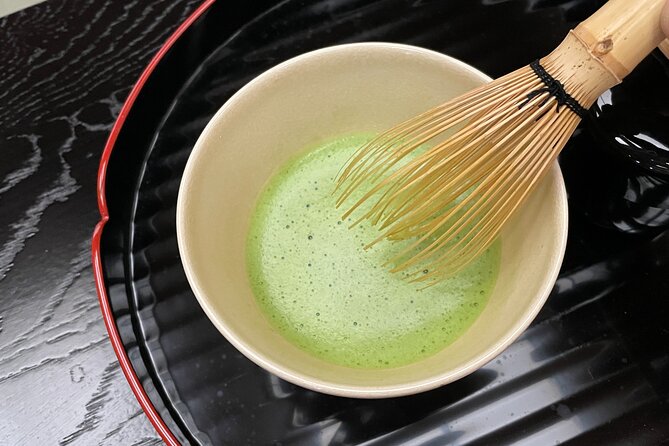
The hands-on matcha step is the best reason to book this rather than just visiting a casual tea shop. You will actually whisk your own bowl of matcha, which turns the ceremony into something you remember with your own hands, not just your eyes.
Also, the matcha quality is a major selling point. This experience uses matcha from Marukyu Koyamaen. That matters because matcha quality is not subtle once you taste it. Multiple visitors highlighted that the matcha was the best they had ever had, and one person specifically said they were surprised because it was unlike matcha they had tried before.
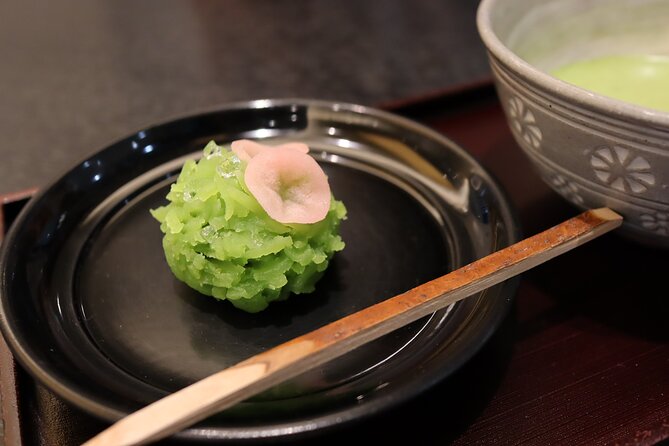
You will pair your matcha with a second traditional sweet. Since sweets are served as part of the ceremony flow, you’re not just drinking green tea. You’re learning how Kyoto-style wagashi and matcha fit together in flavor and timing.
If you’re worried about doing this wrong, don’t be. The point is participation. The ceremony teaching style here focuses on getting you through the ritual at a comfortable pace.
One practical note: matcha has a strong taste profile. If you generally like tea flavors and you enjoy desserts, you’ll probably love the pairing. If you dislike bitter or grassy flavors, you might find matcha intense, even when it’s top quality.
Matcha and Wagashi Quality: Why This Feels Like Real Value
At $586.38 per group (up to 6), the price is not cheap on a per-person basis. But the value changes depending on how you travel.
If you can fill the full group size, you are looking at roughly $98 per person for an hour of private, guided cultural instruction plus high-quality matcha and Kyoto sweets. That can be a smart trade for a place like Kyoto where experiences like this often cost more, especially when they stay small and personal.
The ingredient choices also support the price. The sweets come from a long-established Kyoto wagashi shop, and the matcha comes from Marukyu Koyamaen. In other words, you’re not just getting a generic tasting. You’re getting a pairing that’s been selected for the ceremony.
And you get more than the meal. The ceremony includes:
- A garden viewing element designed for the tea room
- Haori dressing
- An explanation of the cultural origins of chanoyu
- An introduction to the tea utensils used in the ceremony
- A hands-on moment whisking matcha
That is the real value. Most tea experiences sell tasting. This one sells understanding plus participation, with quality ingredients acting as the backbone.
Private and Small-Group Format: What That Means for Your Day
This is described as a private tour/activity, meaning only your group participates. That changes how the hour feels.
With private format, you get less pressure and less noise. You’re more likely to follow the sequence of the ceremony calmly, ask questions if the host invites them, and actually pay attention to the details like the garden arrangement and utensil meaning.
It also means the experience is more flexible in feel. Even though the duration is still about an hour, you are not forced to share the moment with strangers who may be more focused on speed or selfies.
The meeting point is near public transportation, and transportation to the start is not included. So you should plan to arrive yourself and avoid building in delays. This is a situation where being a few minutes late can make you feel rushed, and chanoyu is not the right setting for rushed energy.
Who Should Book This Kyoto Tea Ceremony
I’d book this if you fit one or more of these:
- You want a genuine cultural experience in Kyoto that is not crowded chaos
- You care about quality food and drink, especially sweets and tea
- You like structured experiences where you are guided step-by-step
- You’re visiting as a group of up to 6 and want something private
It also works well for first-timers. Several review themes mention that people were experiencing it for the first time and still felt comfortable and impressed. That suggests the host approach is welcoming, with clear explanations that do not assume prior knowledge.
If you’re chasing a long itinerary with multiple stops, this one is not that. It is a focused hour. Treat it as the main event, not a side quest.
Should You Book Chanoyu The KYOTO Uzumasa?
Yes, if you want a calm, guided tea ceremony with real quality matcha and Kyoto wagashi, plus a hands-on matcha whisking moment. The combination of the Urasenke procedure, the explanation of the cultural meaning, and the tea room setting is what makes it worth your time.
Before you book, do a quick self-check:
- Are you okay with about one hour of formal culture rather than a longer day tour?
- Do you like matcha and Kyoto-style sweets enough to enjoy them as the centerpiece?
- Can you make it to Uzumasa easily on your own, since transportation is not included?
If those answers are yes, this is exactly the kind of experience that leaves you feeling refreshed, not just informed.
FAQ
How long is the Kyoto tea ceremony experience?
The experience lasts about 1 hour.
Is this tour private or shared with other people?
It is private. Only your group will participate.
How many people can be in a group?
The price is per group up to 6.
What will I do during the ceremony?
You’ll wear a haori, view a miniature garden, observe the Urasenke tea procedure, get an explanation of chanoyu and its utensils, and then whisk your own matcha and enjoy it with traditional sweets.
What is included in the price?
Included are Kyoto sweets and matcha, viewing a miniature garden, wearing a haori, an introduction to tea utensils used in the ceremony, and a brief explanation of the history and cultural origins of chanoyu.
Is transportation included?
No. Private transportation is not included.
Where is the meeting point?
Meet at Chanoyu The KYOTO Uzumasa (TEA CEREMONY), Japan, 616-8101 Kyoto, Ukyo Ward, Uzumasa Izumishikibuchō, 19 北1階.
When should I book?
On average, it is booked about 27 days in advance.
Is there free cancellation?
Yes. You can cancel for a full refund if you cancel at least 24 hours in advance of the experience start time.
More Tour Reviews in Kyoto
Not for you? Here's more nearby things to do in Kyoto we have reviewed




Kyoto Tea Ceremonies, compared.
 ★ 4.9Tea Ceremony in a Traditional Tea House in KiyomizuFrom $493,519 reviews
 ★ 4.9Tea Ceremony Ju-An at Jotokuji TempleFrom $293,207 reviews
 ★ 4.345-Minute Tea Ceremony Lesson ExperienceFrom $222,378 reviews
 ★ 5.0World Heritage Kyoto & Nara Uji Authentic Matcha ExperienceFrom $1291,573 reviews
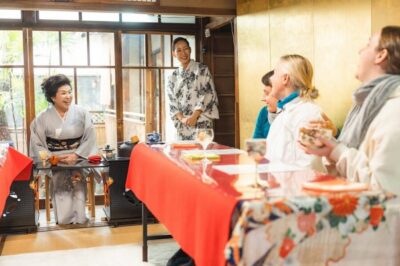 ★ 4.9Table-Style Tea Ceremony at a Kyo-MachiyaFrom $451,211 reviews
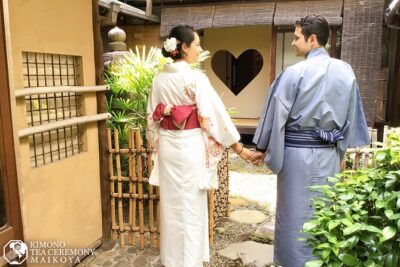 ★ 5.0Kimono Tea Ceremony at Kyoto Maikoya, NISHIKIFrom $65911 reviews
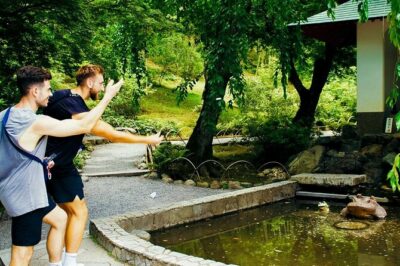 ★ 5.0Arashiyama Bamboo Forest, Monkeys, Matcha & Temple TourFrom $53759 reviews
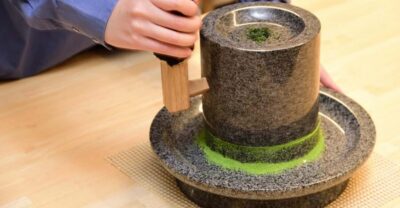 ★ 4.9Tea Museum Tickets and Matcha Grinding ExperienceFrom $23739 reviews
Browse the lists this tour appears in