
Reviewed · KYOTO TEMPLE & SHRINE TOURS
KYOTO: Golden Pagoda, Bamboo Forest, Arashiyama (Italian)
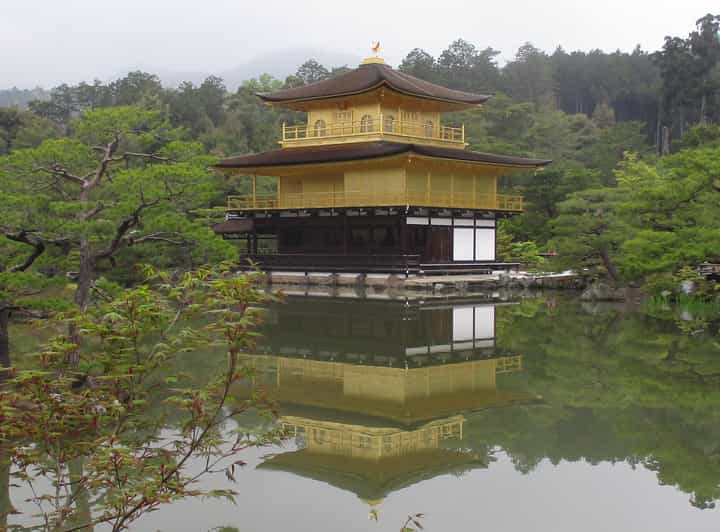
Golden Pagoda and bamboo, with context included. In just 5 hours, you move through Kyoto northwestern suburbs, seeing Kinkaku-ji and the Sagano bamboo grove with an Italian-speaking guide who explains how this city shaped daily life past and present.
I really like the way a native Kyoto guide keeps it personal, answering questions about the historical capital and the routines of imperial relatives, aristocrats, and the samurai class. I also like that the tour bundles the practical stuff, including transport and monument entrance fees, so you can spend your time walking instead of organizing.
The schedule is tight, so if you want to linger for hours at one site, this half-day pacing may feel brisk, even though you can choose to leave halfway.
Key things to know before you go
- Italian-speaking, Kyoto-native guide who answers questions, not just a script
- Kinkaku-ji (Golden Pagoda) covered in about an hour, with enough time to orient and wander
- Sagano Bamboo Forest in the Sagano area for a focused, scenic walk
- All transportation and entrance fees included, which helps value for a short day
- Return to Kyoto Station with the option to leave halfway
Half-Day Kyoto: Kinkaku-ji and Sagano Bamboo Forest
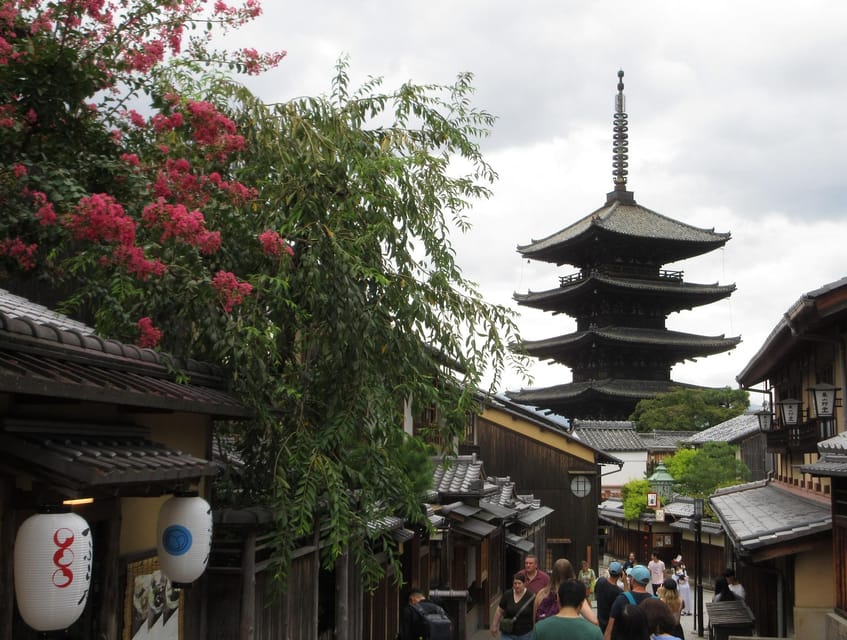
This is a smart way to do Kyoto in a short window without turning it into a frantic checklist. You get two of the big-name experiences people travel for, but you also get the kind of context that makes the places feel connected, not random.
The arc of the day works well. You start in central Kyoto at Kyoto Station, head west toward the Sagano area for the bamboo grove, then swing back toward the famous temple district for Kinkaku-ji. You end back at Kyoto Station, which makes it easy to keep moving after the tour.
At a glance, it sounds like just sightseeing. In practice, the tour’s real value is that it’s built around understanding Kyoto as a former political and cultural center, and then comparing that to daily life now. That’s where the guide comes in.
You can also read our reviews of more tours and experiences in Kyoto.

Getting Started at Kyoto Station, North Entrance (Karasuma-guchi)
Kyoto Station can be a maze if you are arriving for the first time. This tour keeps it straightforward by meeting at a very specific spot: on the space between the four escalators in front of the cab terminal, toward the east just outside the central north entrance, at Karasuma-guchi.
There’s even a visual clue built into the meeting instructions. From that spot, you can see Kyoto Tower in front of the station, top left from where you stand. If you use that as your reference point, you will almost certainly find the right place quickly.
You also get confirmation by email the day before with the meeting details. That matters because the difference between a smooth start and a stressful start in Kyoto is often just knowing where to stand.
Finally, the tour is wheelchair accessible. That doesn’t mean every single cobblestone side street will be easy, but it does signal that the provider has planned this route with access in mind.
Sagano Bamboo Forest: How the 1-Hour Walk Works
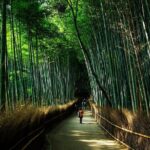
Your first major stop is Sagano Bamboo Forest, in the Sagano area. You have about 1 hour for the guided visit, plus time to shop and sightsee around the area. That mix is useful because the bamboo grove itself is short on time. If you only had 10 or 20 minutes, you’d miss the real feeling. But with an hour, you can slow down, look up, and get your bearings.
What makes Sagano special is that it is not just a photo stop. The surrounding area gives you a hint of how daily life and leisure overlap in Kyoto’s outskirts. The guide’s job here is to connect what you see to why this area became a favorite setting for rest and culture.
You’ll also notice that bamboo changes the soundscape. Even without being told, you tend to move more quietly. The guide’s explanations help you make that atmosphere feel intentional, not accidental.
A practical thought: plan to dress for walking. Bamboo areas involve standing still for views, then moving again, then standing. If your shoes are not comfortable for mixed pace walking, this part of the day will feel more tiring than it should.
Transit Rhythm: Trains, Buses, and a Smooth Return
One reason I like half-day tours like this is that they compress the “getting there” pain. You spend limited time in transit, and it’s timed so you still get value from the stops.
In this route, you take a train to start, then another train later, then bus/coach connections, and even a subway/metro segment on the way back. The time breakdown is clear and built into the pacing: about 20 minutes between segments, plus shorter bus and metro legs.
Why this matters for you: in Kyoto, the difference between a good day and a messy one is often route planning. You do not have to figure out every transfer. You follow the guide, arrive where you need to be, and then you get to decide how much energy you want to spend once you are on foot.
Also, because the tour returns to Kyoto Station, you are not stuck guessing what to do next. You can head back to your hotel, grab lunch, or hop on another plan.
Kinkaku-ji Golden Pagoda: What One Hour Is Actually For
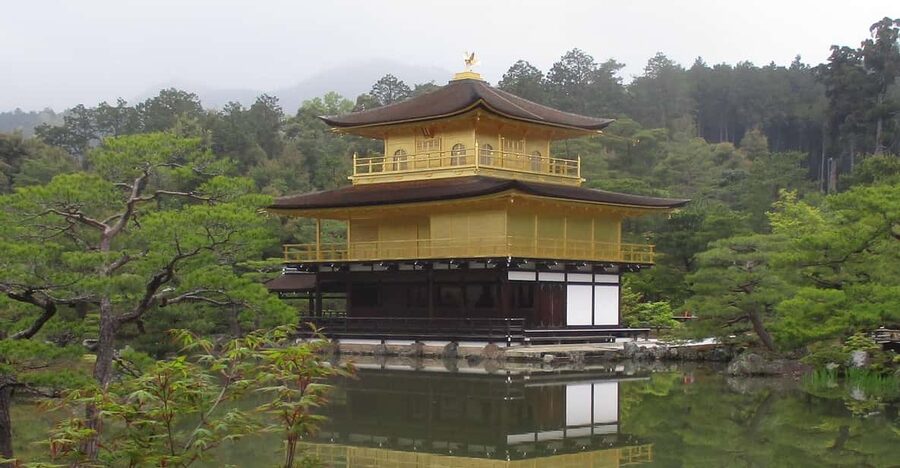
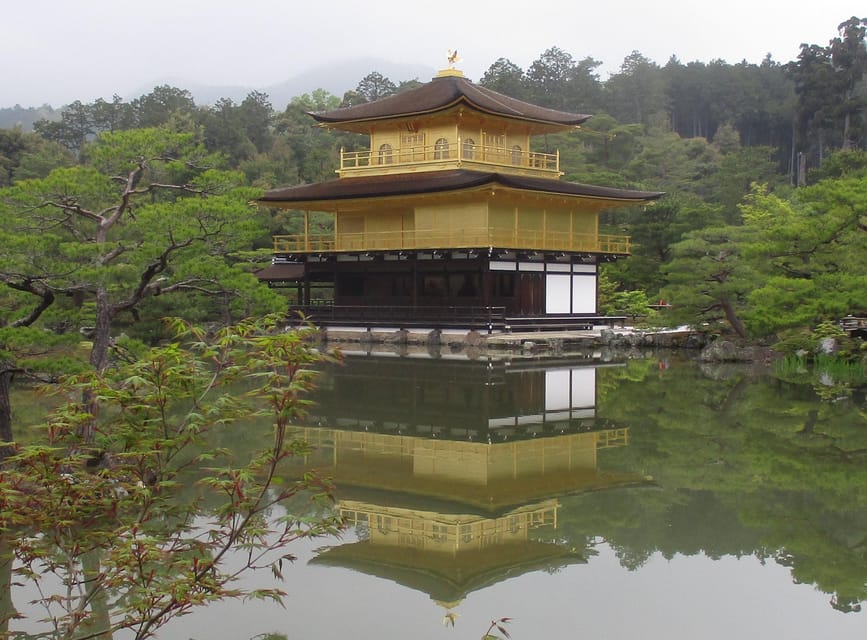
Next up is Kinkaku-ji, the Golden Pagoda. You get about 1 hour for the guided visit.
A single hour might sound short for a world-famous site, but it is usually enough for three things:
1) understand what you are looking at,
2) see the key viewpoints without rushing,
3) have time for a little wandering once you know where to look.
Kinkaku-ji is all about visual impact and symbolism. The guide’s explanations help you notice details that your camera will not automatically catch. You learn how the setting supports the temple’s presence and why this kind of landmark matters in Kyoto’s story.
There is another practical advantage to visiting with a guide here. You spend less time trying to decode the flow of crowds and more time focusing on what each angle tells you. If you have ever been stuck waiting for the perfect photo while missing the point, you will probably appreciate this structure.
You also have transit right after, so you are not stuck lingering when your legs are ready to rest.
Why the Italian-Speaking Kyoto Guide Changes Everything
This tour leans hard on guide quality. The guide is described as Italian-speaking and Kyoto-native, and the standout theme is how he handles questions.
The practical benefit is simple: in Kyoto, people often don’t know what to ask. They know they want history, but they do not know how it connects to real life. A good guide turns that into something you can actually use.
From the information provided, you can expect explanations that cover:
- the history of Kyoto as a historical capital
- daily life themes, including the roles of imperial relatives and aristocrats
- the samurai class, and how the past shows up in the present
This matters because it changes how you experience the sites. You stop treating the Golden Pagoda and bamboo as separate attractions. Instead, they become part of a bigger picture of how power, culture, and leisure shaped different parts of Kyoto.
If you get a guide like Omae, who has been highlighted as especially prepared and friendly, you’re likely to have an easier time asking questions and getting clear answers.
One more thing I value: the day ends at Kyoto Station. That creates a natural reset point. If the guide has helped you understand what you just saw, you can carry those ideas into the rest of Kyoto on your own.
Price and Value: Is $117 Worth a Half-Day?
At $117 per person for a 5-hour experience, this is not the cheapest way to see Kyoto. But it also is not trying to be a bare-bones bus tour. The value comes from what is included.
Here’s what you’re getting for that price, based on the tour details:
- an Italian-speaking guide
- transportation between stops
- entrance fees to the scheduled monuments
- a tight half-day route that includes returning to Kyoto Station
For a short day, those inclusions can be the difference between paying extra and just enjoying your time. If you tried to replicate the same plan independently, you’d still have transit costs, admissions, and the cost of time spent figuring out routes and timing.
So the real question for you is your travel style. If you like organizing, self-guided wandering, and you are confident in navigating Kyoto transit, you might feel boxed in. If you want a guided framework plus convenience, this is the kind of pricing that can make sense.
Also, the guide-led format helps prevent the classic Kyoto problem: spending half the day confused about logistics and only catching the “pretty parts” without understanding them.
Leaving Halfway: A Flexible Plan That Respects Your Energy
This tour ends at Kyoto Station, and you are free to leave halfway. That flexibility is surprisingly important in real life because energy and interests vary.
Since the day is roughly structured into two major sightseeing blocks, leaving halfway often means you get the bamboo grove experience without committing to the later temple segment. That can work well if:
- you are tired from jet lag or earlier days of walking
- you are prioritizing nature and scenery over temples
- you have your own dinner or evening plan near the station
Just be sure you know what you are optimizing. If you leave early, you’re trading the Golden Pagoda visit for more time on your own terms. The tour design makes it easy to choose, and that’s a genuine quality-of-life feature.
Who Should Book This Kyoto Tour
I think this fits best for:
- you want a half-day introduction to two major Kyoto highlights
- you prefer an Italian-speaking guide over translating everything yourself
- you like structure when time is limited, but still want the option to break away
It may be less ideal if:
- you hate group pacing and want to roam slowly without a timetable
- you already know Kyoto deeply and want a longer temple day
- you want to add extra sights on the fly without sticking to the guide plan
Still, even seasoned Kyoto fans often appreciate having a guide explain what to look for, especially at Kinkaku-ji, where the important details are not always obvious.
Should You Book This Tour?
If you want a guided, efficient Kyoto day with Kinkaku-ji plus Sagano Bamboo Forest, this is a strong option. The biggest reasons to book are the included transport and entrance fees, the fixed half-day structure, and the fact that the guide focuses on answers and context, not just pointing.
I’d especially recommend it if:
- you are in Kyoto for a short stay and want two icons without logistical stress
- you enjoy historical and cultural explanations tied to real daily life themes
- you want the day to end at Kyoto Station so your next step is easy
If you are the type who needs unlimited time at one place, or you dislike group schedules, then you may feel time pressure. But if you want a clean, convenient path through northwestern Kyoto in a single sitting, booking this makes practical sense.
FAQ
How long is the Kyoto Golden Pagoda and Bamboo Forest tour?
The tour lasts about 5 hours, which fits a half-day schedule.
Where do I meet the tour in Kyoto Station?
Meet at Kyoto Station, north entrance (Karasuma-guchi), on the space between the four escalators in front of the cab terminal, toward the east just outside the central north entrance.
What stops does the tour include?
It includes Sagano Bamboo Forest and Kinkaku-ji (Golden Pagoda), with the tour ending back at Kyoto Station.
What language is the guide?
The live tour guide speaks Italian.
Is the tour wheelchair accessible?
Yes, the tour is listed as wheelchair accessible.
Does the price include transportation and entrance fees?
Yes. The tour includes all transportation and entrance fees for the monuments visited during the scheduled itinerary.
More Tour Reviews in Kyoto
Not for you? Here's more nearby things to do in Kyoto we have reviewed



Kyoto Temple & Shrine Tours, compared.
 ★ 4.9Tea Ceremony Ju-An at Jotokuji TempleFrom $293,207 reviews
 ★ 4.8Arashiyama Bamboo, Temple, Monkeys, or Secret Sake BreweryFrom $87886 reviews
 ★ 5.0Arashiyama Bamboo Forest, Monkeys, Matcha & Temple TourFrom $53759 reviews
 ★ 4.4Osaka/Kyoto: Arashiyama, Nara & Fushimi Inari Shrine w/LunchFrom $61754 reviews
 ★ 4.2Ninnaji Temple Entry TicketFrom $5650 reviews
 ★ 4.7Imperial Palace & Nijo Castle Guided Walking TourFrom $49453 reviews
 ★ 5.0Kyoto Zen Meditation & Garden Tour at a Zen Temple with LunchFrom $110441 reviews
 ★ 5.0Zen Experience in a Hidden TempleFrom $109437 reviews
Browse the lists this tour appears in