
Reviewed · KYOTO TEA CEREMONIES
Oboro | Mindful Tea Ceremony in a 100-Year-Old Kyoto Teahouse
Some rituals slow your breathing. This one is a candlelit Kyoto matcha ceremony in a 100-year-old teahouse, led with English support so you can follow every step. I like the small group size, because the room stays quiet and uncrowded, not like a rushed show. I also like that you actually get to see the utensils cleaned and matcha whisked properly, then taste it from a single prepared bowl. One thing to consider: it is short, about 50 minutes, and you need to be on time, since you cannot join if you’re more than 10 minutes late.
I found this style of tea practice fits Kyoto really well. The setting is minimally decorated, meditative, and candle-lit, so you’re not “doing culture” while waiting for the next stop. It ends with a small handmade candle, a gentle reminder to bring that pace back out into the city.
Key highlights that matter before you go
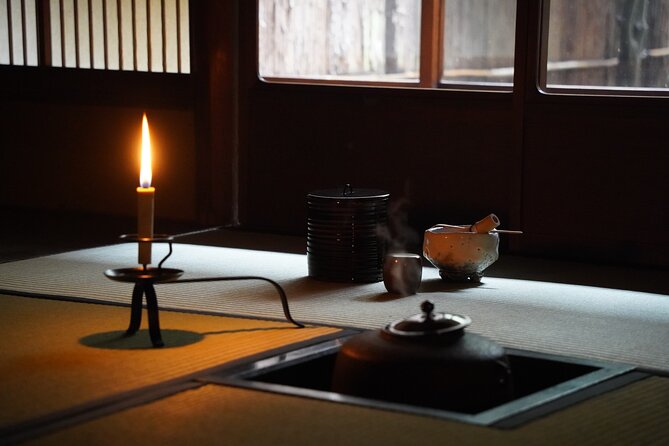
- 100-year-old teahouse mood: minimal décor, candlelight, and quiet sounds do the work for you
- Matcha, one bowl at a time: you taste the tea as it is made, not after the fact
- English translation included: you can ask questions and understand what’s happening
- Maximum of 8 people: small group keeps the atmosphere calm
- Mindful pacing, not showy formality: shared respect and quiet attention guide the flow
- Host-led details: utensils are cleaned and the tea is prepared carefully before serving
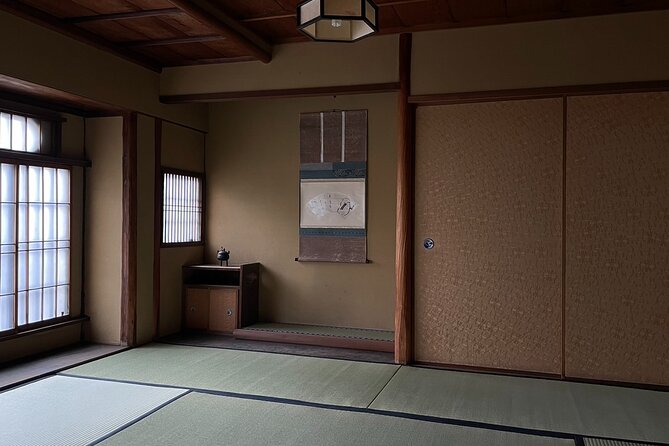
Entering Oboro: a 100-year-old room built for calm
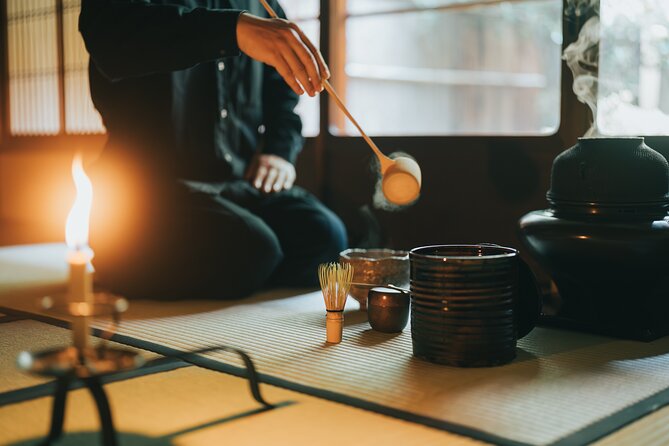
Kyoto has plenty of tea stops. This experience feels different because it is designed around stillness. You’re taken into a softly lit space with minimal décor and gentle sounds, and the candlelight becomes part of the ritual. Instead of standing, snapping photos, and moving on, you settle into the pace of the room.
The age of the teahouse matters, too. A 100-year-old setting naturally discourages loud behavior. Even if you’re used to lively travel days, this room pushes you to slow down, look closely, and notice small sensations. Think warmth of the bowl in your hands, the sight of whisked matcha, and the moment you pause before the first sip.
You can also read our reviews of more tours and experiences in Kyoto.
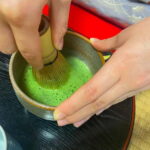
Welcome tea and sweets: the reset before matcha
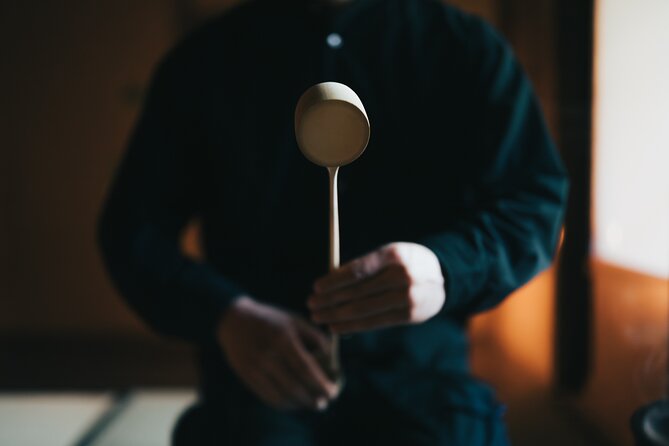
The ceremony starts by shifting your focus. First comes a welcome tea and sweets, served as an easy on-ramp. That matters because matcha can feel intense if you jump straight into it. This opening gives your senses time to adjust and helps you settle into the idea of mindful eating and drinking.
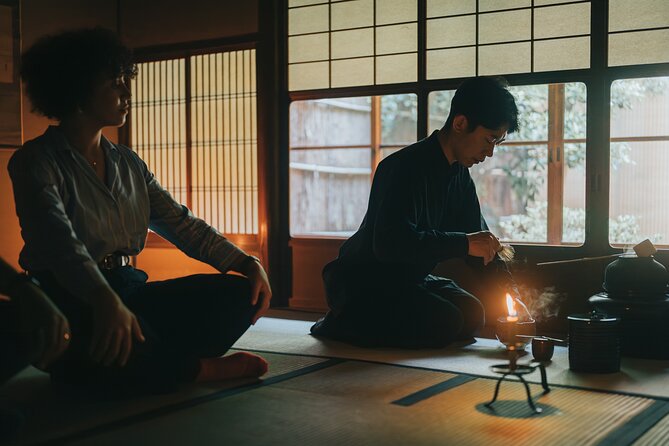
Then you move from the initial greeting into the tearoom portion. The host handles the transition with care, cleaning and preparing utensils before making the matcha. This isn’t just tidiness for show. Watching the tools get prepared helps you understand that the quality of the tea is tied to attention at every step.
If you like structured experiences that still feel personal, this pacing works well. You’re given time to observe, taste, and ask questions through an English-speaking guide.
Matcha preparation you can actually see
Here’s the best part if you’ve only had matcha in a café. This ceremony doesn’t feel like a drink presentation. It feels like a process.
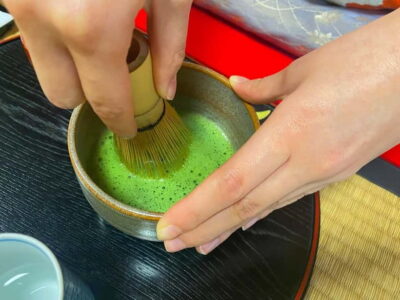
The host whiskes rare organic green tea into a bowl, and it is served one bowl at a time. You’re invited to notice subtle flavors, not just whether the tea tastes good. The ritual also puts the physical experience in the foreground, including the warmth of the tea bowl in your hands and how each sip lands after a quiet pause.
In the feedback, I keep seeing the same theme: watching the preparation is mesmerizing, because the movements are deliberate and the room stays respectful and calm. One review even praised learning about tea history, with mention of the tradition going back over 1,200 years. Even if your goal is purely sensory, you’ll probably come away with a better sense of why matcha is treated like an art form rather than a trendy beverage.
The English guide makes the ritual make sense
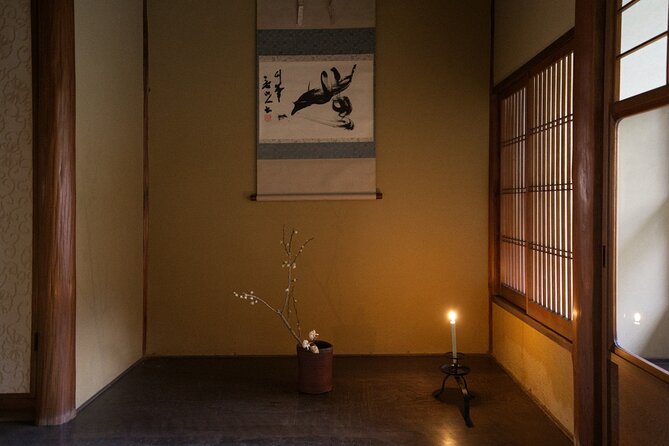
Tea ceremonies can be hard to enjoy when you don’t understand the steps. Here, English interpretation is included, which changes everything. You can follow what’s happening while the host cleans utensils, prepares the tea, and guides you through tasting.
The experience is led by Taku Okamoto, and reviews mention hosts such as Taku and Naoki, with an emphasis on patient guidance. That matters because in a mindful setting, you don’t want to feel rushed or lost. Instead, you can ask questions, and the explanations help you connect the actions to the meaning.
If you’re traveling with friends who worry they won’t “get it,” this is a solid choice. The ceremony becomes understandable without breaking the quiet mood.
Candlelight as atmosphere, not decoration
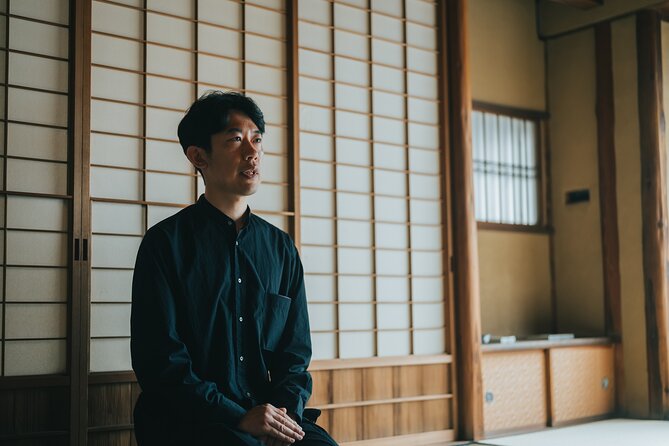
Some experiences slap on lighting for photos. This one uses candlelight to change your state of mind. The ceremony is lit by handmade candles, and the tearoom is minimally decorated. The result is a space that feels more like a meditation session than a restaurant.
You might notice how the flicker slows you down. Even the way you hold the bowl, take your first sip, and then pause afterward feels more intentional in a candle-lit room.
At the end, you receive a small handmade candle as a token. It’s not a gimmick. It’s a physical reminder of the tone you experienced in the teahouse, something you can place at home and think about when daily life gets loud again.
Time, group size, and why it keeps its calm
The ceremony runs about 50 minutes. That short duration is actually part of the value. You get a full ritual flow without turning it into a half-day plan. It’s long enough to learn, taste, and watch the steps. It’s short enough to fit into a Kyoto itinerary full of temples, shrines, and neighborhoods.
The group limit is 8 travelers, which helps a lot. Small groups keep the room quiet and the attention focused on you. You’re not competing with a crowd for sightlines, and the mood stays meditative instead of turning into a performance.
One practical point: you’ll want to plan your arrival carefully. The rules state that if you’re more than 10 minutes late from the start time, you cannot participate. So build in buffer time, especially if you’re using transit connections.
Price and value in Kyoto: what you get for $45.98
At $45.98 per person, this isn’t the cheapest thing you can do in Kyoto. But it also isn’t a generic tea lesson that feels like a marketing video.
Your money covers a small-group ceremony in a 100-year-old Kyoto teahouse, a guided experience in English, and the tea service itself. You also get the full ritual pacing, including welcome sweets, utensil preparation, one-bowl matcha serving, and the handmade candle token at the end. Even the short duration is efficient, because it avoids the “you sat there for ages while you waited” problem.
If you’re choosing between a quick matcha drink and a real ceremony, this is the option that gives you meaning and context. If you dislike tea altogether, it could feel like work rather than pleasure. But if you enjoy quiet cultural moments, watching craft, or learning by doing, it’s strong value for what you experience.
Also, tips are not included, so you’re making a deliberate choice about gratuity.
Where it fits in your day (and what to do with it)
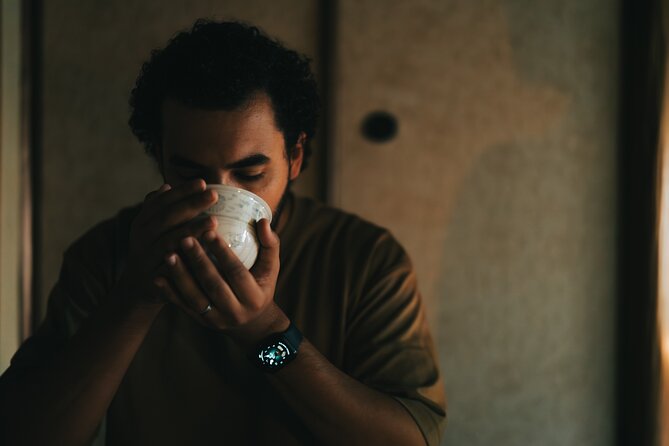
Because this is a mindful experience, I like pairing it with a lighter day mentally. After, you’ll likely feel more patient and present for the rest of Kyoto. The ritual is designed to pull you out of the rush and into slow noticing, and that mood can carry into your next walk through streets and gardens.
You also don’t need a complicated route plan. It’s near public transportation, and the experience is walk-in friendly in the sense that the meeting point is clearly specified. The start location is 237 Nakaogawachō, Kamigyo Ward, Kyoto, 602-0053, Japan.
Bring a calm mindset. This is one of those experiences where checking your phone constantly will make it feel flat.
Who should book this ceremony, and who should skip it
This is best for you if:
- you want a quiet, candlelit cultural experience rather than a busy, photo-heavy stop
- you like learning through observation, not just listening
- you want help with English translation so you can understand the steps
- you enjoy matcha enough to taste it mindfully, not just sample it
It might not be for you if:
- you need a fast, casual activity with zero structure (this has a clear flow)
- you’re very sensitive to silence and prefer high-energy settings
- you show up late to tours. The 10-minute cut-off is strict.
One nice bonus from the feedback: even people who said it was their first tea ceremony described it as memorable. If you’re new to matcha, this format is easier than you might expect.
Should you book Oboro Mindful Tea Ceremony?
Yes, if you want a real Kyoto tea moment with English support, a genuinely calm setting, and matcha you taste in context. The small group size and candlelit atmosphere are the big reasons to choose it over a quick matcha drink. Also, the process is the point, not just the beverage, and you’ll see how the utensils are cleaned and the tea is whisked before you drink.
I’d book it as an intentional break from the day’s noise. Arrive on time, lean into the quiet, and give the tea a full moment. If you do that, this is the kind of experience that sticks longer than most souvenirs.
FAQ
How long is the Oboro tea ceremony?
It lasts about 50 minutes (approx.).
What is the price per person?
The price is $45.98 per person.
Is there an English speaking guide?
Yes. An English speaking guide is included, and translation helps remove language barriers.
How many people are in each group?
This experience has a maximum of 8 travelers.
What if I’m late to the start time?
You cannot participate if you arrive more than 10 minutes after the start time.
What is the meeting point address?
The meeting point is 237 Nakaogawachō, Kamigyo Ward, Kyoto, 602-0053, Japan. The activity ends back at the meeting point.
More Tour Reviews in Kyoto
Not for you? Here's more nearby things to do in Kyoto we have reviewed


Kyoto Tea Ceremonies, compared.
 ★ 4.9Tea Ceremony in a Traditional Tea House in KiyomizuFrom $493,519 reviews
 ★ 4.9Tea Ceremony Ju-An at Jotokuji TempleFrom $293,207 reviews
 ★ 4.345-Minute Tea Ceremony Lesson ExperienceFrom $222,378 reviews
 ★ 5.0World Heritage Kyoto & Nara Uji Authentic Matcha ExperienceFrom $1291,573 reviews
 ★ 4.9Table-Style Tea Ceremony at a Kyo-MachiyaFrom $451,211 reviews
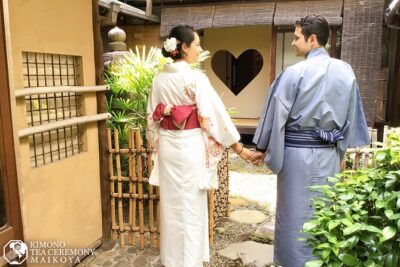 ★ 5.0Kimono Tea Ceremony at Kyoto Maikoya, NISHIKIFrom $65911 reviews
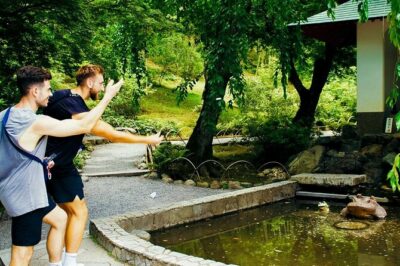 ★ 5.0Arashiyama Bamboo Forest, Monkeys, Matcha & Temple TourFrom $53759 reviews
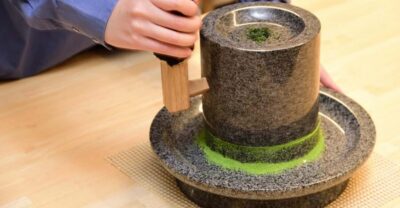 ★ 4.9Tea Museum Tickets and Matcha Grinding ExperienceFrom $23739 reviews
Browse the lists this tour appears in