
Reviewed · KYOTO BIKE & E-BIKE TOURS
See What You Can’t See by Day — Explore Kyoto at Night by E-Bike
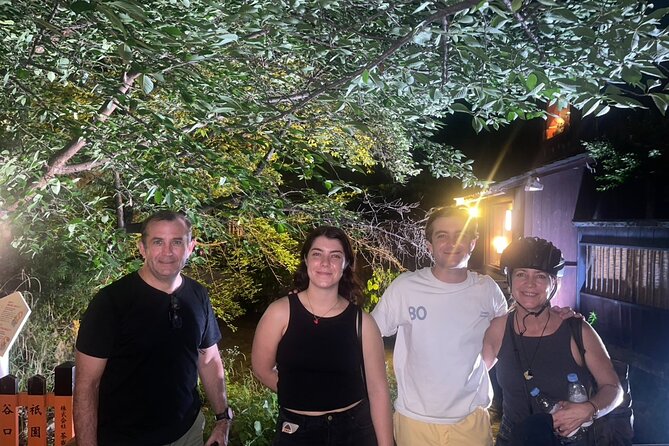
Kyoto turns gentler after dark. On this e-bike ride, you glide through temple streets and water routes while the lights soften the city. I like that the experience is built around easy riding and relaxed pacing, so you actually get to look around.
What I like most is the human side: your guide, often named Yuki, keeps things calm and clear. You get a real briefing on cycling hand-signs and safety before you roll, and you have time at each stop to take photos and soak in the nighttime atmosphere.
One drawback to consider: the tour runs only with good weather, and it is about 3 hours in motion. If rain hits, you may need to reschedule, and if night cycling makes you nervous, you’ll want to speak up early.
Key Highlights You’ll Feel Right Away
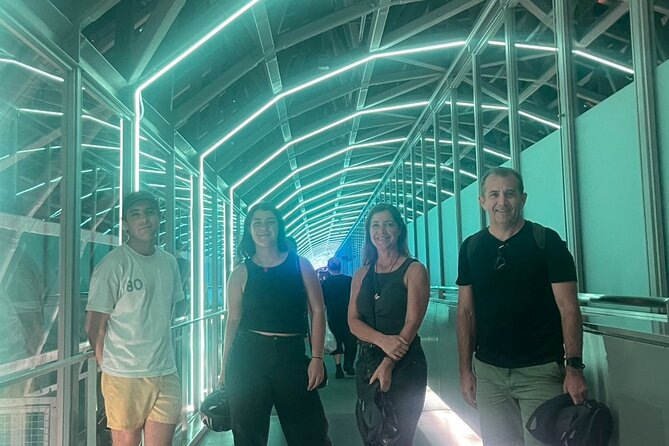
- A small group vibe with a maximum of 5 travelers, so the ride stays personal
- Night lights with fewer crowds, plus quieter roads for an easier-feeling cruise
- Clear pre-ride safety briefing including cycling hand-signs
- Photo-friendly timed stops at major Kyoto sights, many listed as admission free
- Kamo River time to slow down and even cool your feet at the end
Why Kyoto-at-Night on an E-Bike Makes Sense
Kyoto at night is a different city. The air feels cooler, traffic patterns change, and many streets look more intimate once the day crowds thin out. On this ride, the e-bike is the trick that makes the contrast possible, because you’re not fighting distance on foot while still getting close to the sights.
I like how the pacing is structured. You’re not rushing from one landmark to the next with zero time to breathe. Each stop has a set window, so you can actually stop, look up, and photograph what you came for, without feeling like you missed the moment.
You’ll also appreciate the practical setup. A helmet is provided and you get step-by-step guidance for bike control at night, including the hand-signs part. That matters more than most people think, because nighttime roads require extra attention even when the routes are calmer.
You can also read our reviews of more cycling tours in Kyoto

Price and Value for a 3-Hour, Small-Group Night Ride
The price is $117.28 per person, for about 3 hours. For Kyoto, that’s not the cheapest thing you can do, but it also isn’t overpriced for what you’re getting.
Here’s the value angle I’d focus on:
- Time savings: e-bikes let you cover multiple neighborhoods in one evening instead of piecing together buses and walking.
- Guide support: the Mandarin and Japanese speaking guide plus safety briefing reduces the guesswork.
- Small group format: a maximum of 5 travelers keeps the experience more flexible and easier to manage at each stop.
If you’re traveling as a couple, it’s a romantic, low-effort way to see Kyoto’s nighttime mood. If you’re a family, the e-bike can make the ride doable for more ages and fitness levels, as long as kids meet the height and bicycle requirements.
The big question is your comfort with riding after dark. If you’re unsure, the pre-ride instructions are your safety net, and you should use the first minutes to ask questions before you start rolling.
Where You Start: Thousand Kyoto and the Clew Share-Cycle Port
Your meet-up is at 570 Higashishiokōjichō, at Thousand Kyoto, in Shimogyo Ward. You’ll find the share-cycle port called Clew, located in front of Seikouin Wagatazizou, which is described as being behind the hotel.
This start location matters because it’s not a random street corner. If you arrive late, it can be harder for a small group to wait, so give yourself a little buffer. The tour includes an initial briefing time (about 15 minutes), which is when you’ll learn the cycling hand-signs and get comfortable with the bike.
If you’re using a map app, zoom in close. The landmark reference here is the temple name near the Clew port area, not just a general neighborhood pin.
How the Guide Runs a Safe, Relaxed Night Ride
This tour includes a cycling guide, plus an installed cycling helmet and use of the bicycle. You’ll also have a guide who can speak Mandarin and Japanese.
The best part, in plain terms, is how the ride is explained before you move into traffic-like situations (even if the routes are intended to be calmer). You get clear instructions for bike use, and you’re taught hand-signals so communication stays simple.
In the reviews, the guide approach comes up again and again: patience, clarity, and a friendly sense of humor. That’s not fluff. With a group as small as 5, a confident guide can make the difference between an anxious night ride and a smooth one.
You should also know that you’ll be on the move for the full route, so wear something practical and comfortable for evening cycling. If you’re camera-heavy, bring a secure way to carry your phone or small camera so you can actually put your hands back on the handlebars when needed.
Stop 1: Seikouin Wagatazizou Area and the First Photo Moment
The tour starts near Seikouin Wagatazizou, and you’ll get your briefing around this area. The first segment is about 15 minutes, with cycling hand-signs training and bike readiness.
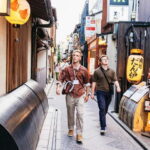
This early stop is useful because it sets your rhythm. Once the basics click, the rest of the evening feels calmer. You’ll also start by riding through traditional Kyoto streets and alleys with a very Kyoto feel, the kind of lanes where lantern light and narrow views make the scene instantly Japanese.
Because this is private and small-group style, you’re not just being herded past what you can see. You can slow down for photos at what catches your eye, which is exactly what I want from a night tour.
You can also read our reviews of more evening experiences in Kyoto

Stop 2: Nishi Hongan-ji Temple for Big Structures and Quiet Gravitas
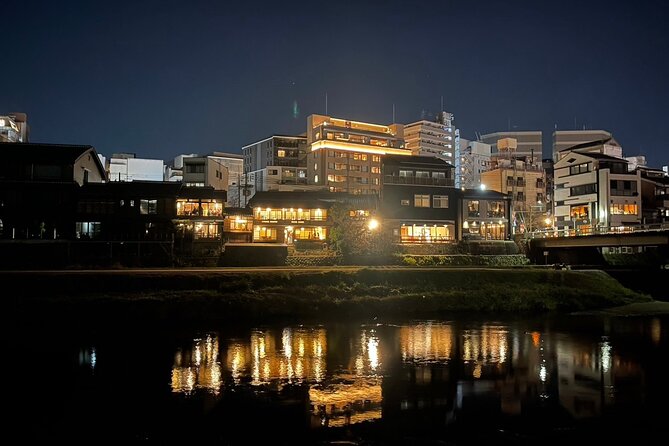
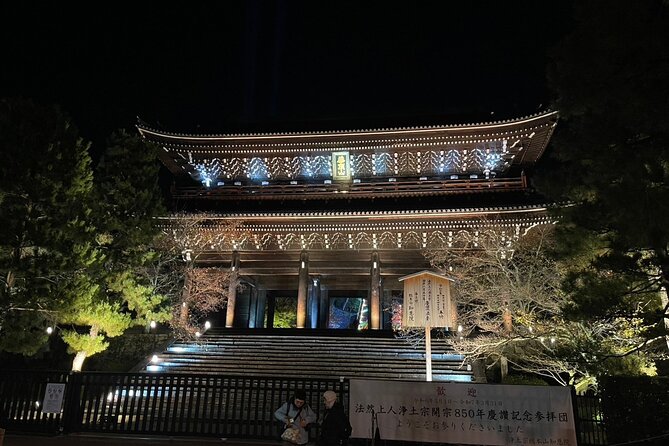
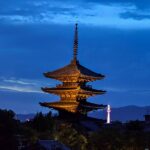
Next up is Nishi Hongan-ji Temple, listed with about 20 minutes. The head temple of the Jodo Shinshu Hongwanji-ha sect is the key context here, and the tour description emphasizes historical buildings and major architecture.
Even without paid admission tickets listed for the stop, you’ll usually get enough time to appreciate the scale. At night, temple silhouettes tend to look cleaner and more graphic, especially when lights highlight gates and main halls from a distance.
What to watch for here:
- The way the buildings hold their shape in nighttime lighting
- Photo angles from the street approach before the foot traffic thins even more
A small consideration: if you’re expecting a fully inside-the-temple experience, the data only confirms admission is free, not what parts are entered. Plan to treat each stop as a look-and-photo moment guided by the route.
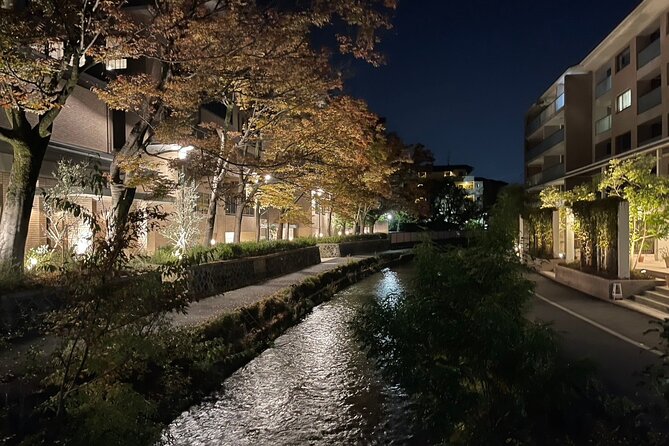
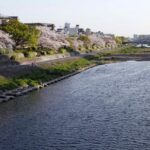
Stop 3: Shirakawa Canal, Tea District Atmosphere, and Old Buildings by Water
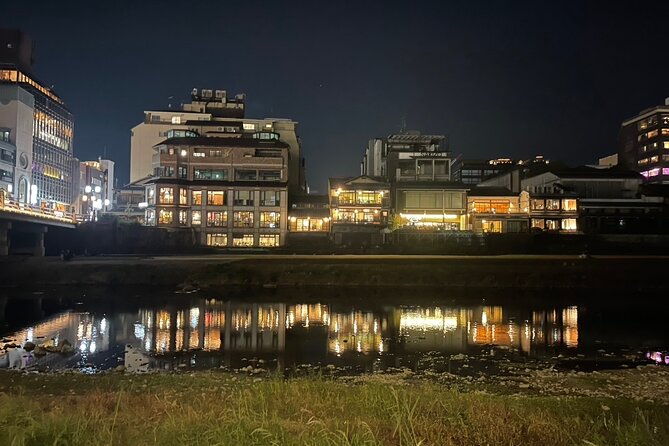
You’ll then move to Shirakawa Canal for about 20 minutes. This area is described as a former chaya-mati, a tea district, with Kyoto-like scenery along the river and old buildings lining the water.
At night, canal areas often feel extra still, because reflections soften the contrast. Even if you keep your eyes on your bike route, you’ll notice the change in atmosphere immediately when you approach water.
This stop is ideal for:
- Slowing down for a few composed photos
- Taking in the old-street feel along the canal
- Enjoying seasonal plants when they’re in bloom (the tour description mentions cherry blossoms)
If you’re visiting in summer or another non-bloom season, the water-and-street mood still works. You’re coming for the nighttime character, not only for a single flower moment.
Stop 4: Shomen-dori Street and the Nintendo Headquarters Pass-By
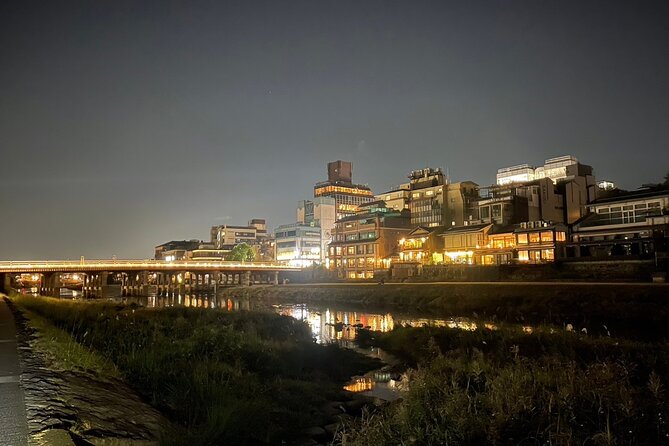
About 20 minutes later, the ride passes through Shomen-dori Street. Here, a huge building catches your eye: the old headquarters of Nintendo, described as having historical significance.
This is a fun contrast stop. Kyoto at night can feel timeless, and then you get a modern landmark mixed into the scene. On a bike, the pass-by is quick, but it gives you that reality-check view that Kyoto isn’t only temples and old lanes.
Practical note: because it’s a ride-through and not clearly described as an entrance stop, treat it as a visual checkpoint where you might get a snapshot, then keep moving.
Stops 5 to 7: Nanzen-ji Area and the Lake Biwa Canal System
You spend several stops in the Nanzen-ji area, each about 20 minutes:
- 13 Nanzenji Fukuchichō
- 17 Nanzenji Kusakawachō
- 86 Nanzenji Fukuchichō
The common theme across these is the waterway known as the Lake Biwa Canal, which links Kyoto and Lake Biwa, and the tour description notes it was designed to handle elevation differences between the two places.
This is one of the most interesting parts of the tour for me, because it’s Kyoto you might not look for on your own. Temples are the headline, but water infrastructure is part of how Kyoto grew. Seeing the canal segments at night turns a technical topic into something visual: long lines, stone or channel edges, and lights that track along the route.
Then at 86 Nanzenji Fukuchichō, the tour highlights that Nanzen-ji is regarded as special among the Five Mountains of Kyoto, with the magnificent main temple and gate noted as big draws.
What to expect in these stops:
- Time to look and take photos without the pressure of a ticket line
- Guided explanation that connects architecture and water systems
- Night lighting that often makes stone and pathways look dramatic
A small consideration: with multiple canal and temple checkpoints close together, your attention needs to stay focused. If you keep stopping for photos on every corner before the guide signals, you might get rushed. I’d follow the guide pace first, then grab your extra shots during your stop time windows.
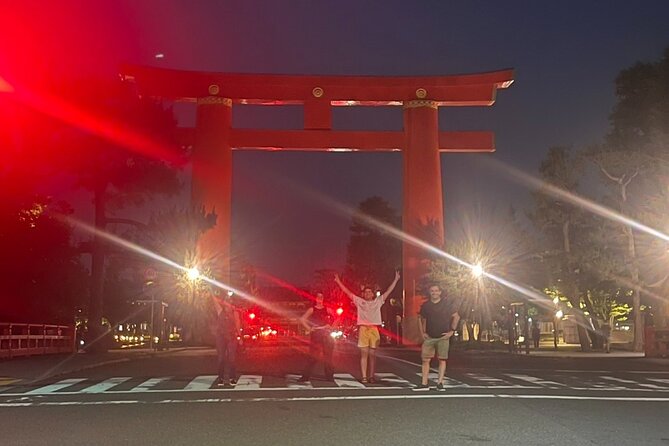
Stop 8: Heian Shrine’s Red Torii and the Okazaki Area Glow
Next is 97 Okazaki Nishitennōchō for about 20 minutes, centered on Heian Shrine. The shrine is described as established to commemorate the 1100th anniversary of the transfer of the capital to Heian-kyo, with Emperor Kanmu as the enshrined deity.
The large red torii gate is highlighted too, which is exactly the kind of structure that looks great at night when the surrounding light is controlled.
This stop feels like a payoff moment. After canals and temple gates, you get one iconic shape, and you can frame it with the night sky or street lighting. Even if you’re not a shrine superfan, the torii and the formal shrine setting make a strong visual impression from outside the main approach routes.
What I’d do here: give yourself the full time. It can be tempting to sprint through when you’re excited, but this is one of the stops where you’ll get your best photos if you wait for a clean moment when the road feels clear.
Stop 9: Kamo River at Hokodencho, a Cool-Down Pause
The final big sight stop is Hokodencho, about 10 minutes. This takes you to a famous spot along the Kamo river.
The tour description encourages you to relax in the riverbed area or enjoy cycling on the riverbank. At the end of the tour, you can put your feet in the water to cool down and feel the evening breeze.
This is a smart final touch. By the time you reach the river, you’ve already seen temples and gates, so the mood shifts into decompression. It also turns the ride from just sightseeing into a small physical memory you’ll remember.
One caution: keep your phone secure. Water and evening reflections are great for photos, but wet footing and slippery riverbed areas can turn into an accident if you’re not careful. Follow the guide’s instructions for where it’s safe to put your feet.
Stop 10: Return to 570 Higashishiokōjichō and Your Next Moves
You end by returning the bicycle at 570 Higashishiokōjichō. The activity ends back at the meeting point, with about 5 minutes at the end.
This wrap-up matters because it frees you up after the tour. You can keep exploring on your own while the neighborhood still feels calm and lit up. Also, returning at the same area makes it simpler for you to plan dinner or a night walk.
If you’re continuing your evening, I’d suggest staying close rather than hopping across town. The tour is designed to show you Kyoto’s nighttime atmosphere in a tight loop, and you’ll get more out of your night if you keep moving within the same general area.
Who This Tour Fits Best (and Who Should Think Twice)
This tour is designed for most travelers, with a note that it’s also family-friendly when kids can actually ride a bicycle. Children under 10 can participate if they are taller than 140 cm and can ride, but the fee is the same as an adult.
So it tends to fit:
- First-time Kyoto visitors who want a quick nighttime highlight hit
- Couples who want something charming without complicated logistics
- Families who want a unique way to see Kyoto while avoiding long walks
- People who don’t want to plan a route for night sightseeing on their own
Think twice if:
- You are very nervous about riding a bike in low light
- Your weather outlook is uncertain, since the experience requires good weather
- You want long, ticket-based temple time rather than guided stop-and-photo pacing
Should You Book This Kyoto Night E-Bike Ride?
I think you should book if you want Kyoto at night in a way that feels easy and personal. The biggest strengths are the small group format, the clear safety briefing, and the way the route combines temples, canals, and Kyoto streets without turning your evening into a sprint.
If you’re the type who loves night lighting, short stops for photos, and a guide who keeps the ride comfortable, this is a great choice. If weather is perfect and you’re comfortable with a few hours of cycling, you’ll likely feel like the cost bought you real access to Kyoto’s nighttime rhythm.
If you want, tell me your travel month and whether you are comfortable biking at night. I can help you decide if this is the best time to do it and what kind of evenings pair well with it.
FAQ
How long is the Kyoto at Night e-bike tour?
The tour lasts about 3 hours.
What does it cost per person?
The price is $117.28 per person.
Where do we meet for the tour?
You meet at the Thousand Kyoto, 570 Higashishiokōjichō, Shimogyo Ward, Kyoto 600-8216, Japan, at the share-cycle Clew port located in front of Seikouin Wagatazizou.
Does the tour end at the same place?
Yes. It returns to the meeting point at 570 Higashishiokōjichō.
What’s included with the tour?
Included are a cycling guide, an installed cycling helmet, use of the bicycle, and a Mandarin and Japanese speaking guide.
How many people are on the tour?
The tour has a maximum of 5 travelers.
Can children join?
Children under 10 can participate if they are taller than 140 cm and can ride a bicycle. The same fee applies.
Is the tour language English?
The guide is listed as Mandarin and Japanese speaking.
Does the tour require specific weather?
Yes. The experience requires good weather. If it is canceled due to poor weather, you’ll be offered a different date or a full refund.
What is the cancellation policy?
Free cancellation is available. You can cancel up to 24 hours in advance for a full refund. Cancellations inside 24 hours are not refunded.
More Evening Experiences in Kyoto
More Cycling Tours in Kyoto

More Tour Reviews in Kyoto
Not for you? Here's more nearby things to do in Kyoto we have reviewed
Kyoto Bike & E-Bike Tours, compared.
 ★ 5.0Hidden Kyoto E-Biking tourFrom $1161,843 reviews
 ★ 5.0Bike Tour Exploring North Kyoto plus LunchFrom $1061,087 reviews
 ★ 5.0Arashiyama Bamboo Forest & Hidden Gems Bike Tour (Early Bird)From $106613 reviews
 ★ 5.05 Top Highlights of Kyoto Full Day Bike Tour (E-bike option)From $172511 reviews
 ★ 5.0Full Day Biking Tour Exploring the Best of KyotoFrom $119498 reviews
 ★ 5.0E-Bike Tours of the highlights of Kyoto!!!From $109291 reviews
 ★ 5.0Afternoon Kyoto Bike Tour: Bamboo Forest, Monkeys & Hidden SpotsFrom $106283 reviews
 ★ 5.0South Kyoto in a Nutshell: Gentle Backstreet Bike Tour!From $79225 reviews
Browse the lists this tour appears in