
Reviewed · GION & GEISHA DISTRICT TOURS
2 Hour Night Walking Tour Throughout Gion with snack
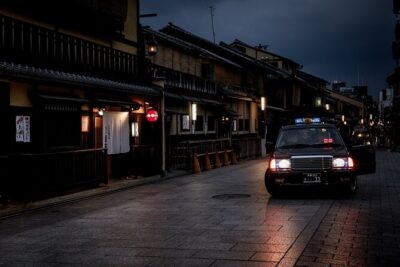
Gion at night feels like a movie scene. What I like most is Yasaka Shrine for real Kyoto context and Hanamikoji Street for the geisha district lesson with guide Simon keeping it funny. One possible drawback is that crowd levels can make the pacing feel tight, so you will want to stay close to the group.
You also get a traditional Japanese snack plus a nice geisha chocolate, and Simon shares practical restaurant leads for the rest of your trip. If it is your first night in Kyoto, this tour can help get your bearings fast.
Key things to know before you go through Gion at night
- Up to 10 people means a more human-sized group for a 2-hour stroll
- Four focused stops fit into 30 minutes at Yasaka Shrine, 40 minutes each for Hanamikoji and Kiyamachi, then 10 minutes by the river
- Geiko vs Maiko explanation gives you language to understand what you are seeing in Gion
- Snack and geisha chocolate included so you are not hunting for food mid-walk
- Simon’s humor and Q and A time are a big part of why people rate this tour so highly
Meet at Disney Store Shijo-Kawaramachi and plan for a 2-hour night focus
The tour starts at the Disney Store – Kyoto Shijo-Kawaramachi, in the Kotokross Hankyu Kawaramachi building (1 and 2F), near Shijo-Kawaramachi. It ends back at the same meeting point, which is great after a night walk when your brain is tired and maps stop helping.
This is a 2 hours (approx.) experience, and the timing matters in Gion. You are walking through areas that can get crowded fast, so a tight schedule is part of the deal. Dress for comfort and keep your phone ready, because you will be moving and stopping for photos.
One more practical note: the experience requires good weather. If weather turns, you should expect it to be rescheduled or refunded.
You can also read our reviews of more walking tours in Kyoto
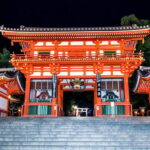
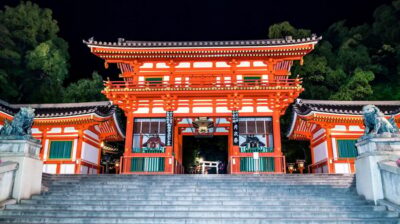
Stop 1: Yasaka Shrine, Kyoto’s key nighttime context stop
Yasaka Shrine is where the tour gives you footing. You spend about 30 minutes here, wandering the grounds, taking photos, and getting a guide-led history explanation. It is a helpful anchor because Gion is not just a “pretty streets” experience. The shrine helps you understand why this part of Kyoto matters and how the area connects to the city’s identity.
Admission at this stop is listed as free, so you do not need to plan extra money or ticket time before you see it. In practice, that means you can spend your headspace on what you are looking at, not on logistics.
Why this stop is worth doing on a night walk: shrine atmosphere at evening has a different feel than daytime crowds. Even with people around, the mood tends to be calmer, and the guide’s storytelling lands better when you are not sprinting to the next landmark.
If you are the type who likes a “why this matters” start, Yasaka Shrine is your payoff moment.
Stop 2: Hanamikoji Street and the Geiko vs Maiko lesson
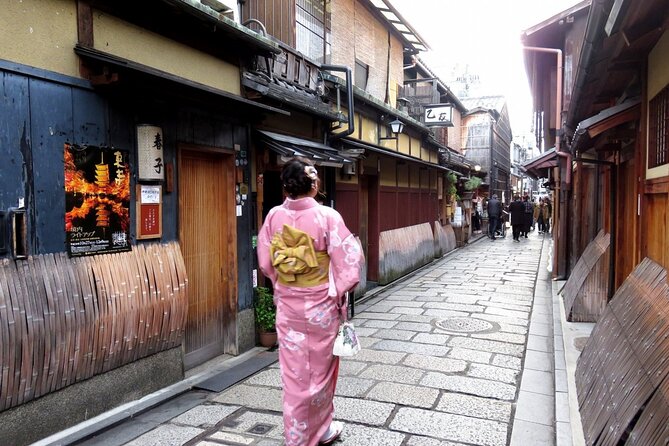
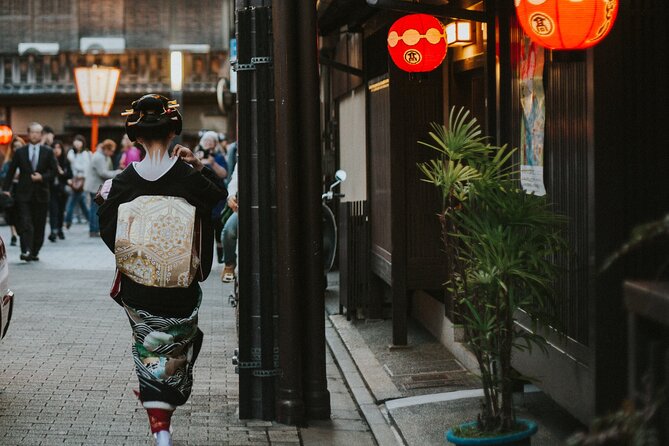
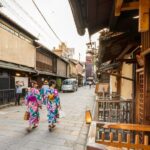
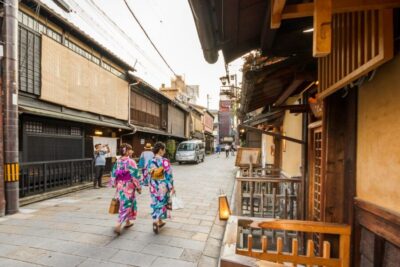
Hanamikoji Street is the classic Gion postcard street, but the tour experience is more useful than a quick photo stop. You spend about 40 minutes here exploring what is described as the oldest examples of a hanamachi, the traditional districts where geisha live and work.
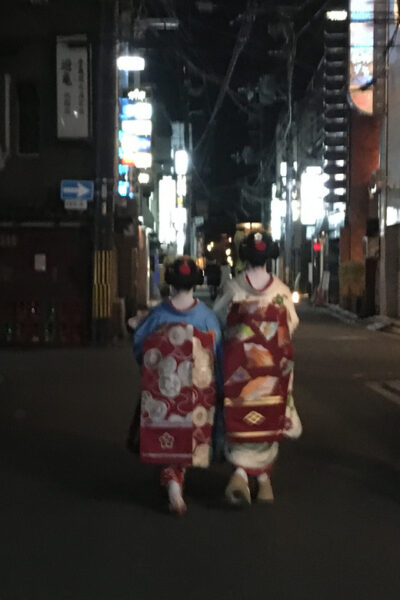
This is also where you get the lesson that makes everything else clearer. The guide explains the difference between Geiko and Maiko. You do not need to memorize details in advance, but you will likely come away knowing what those terms mean and why you might notice differences in appearance and role.
A nice bonus: guide Simon is known for being quick with answers and keeping things light. People especially mention his mix of humor and culture, which helps when the street is busy and you need a guide to keep your attention from bouncing around.
Practical tip: at this stop, crowd pressure can build. You will want to stay aware of where the group is stopping for explanations, then step back when you take photos so you do not block others.
Stop 3: Kiyamachi Street for food tips in the entertainment district
Next is Kiyamachi Street, another 40-minute segment. This area is described as Kyoto’s modern entertainment district, and the vibe is different from Hanamikoji. Think more contemporary energy, more everyday nightlife feel, and a lot of people treating the street like a social meeting point.
Here, the tour shifts from history and identity into practical planning for your next meal. The guide recommends restaurants off the beaten track where you do not necessarily need reservations. That kind of advice is gold in Kyoto, because the popular places can feel impossible on short notice.
This stop is also where pacing can start to feel intense. Some people felt the group moved quickly through busy streets, and in at least a few cases the guide was difficult to keep up with when the crowd thickened. Your best strategy is simple: stay within a few steps of Simon, not at the back, so you can hear explanations and rejoin quickly at each stop.
If you like eating well without stress, this is your “future dinner plans” stop.
Stop 4: Kamogawa River, where the night gets its sound track
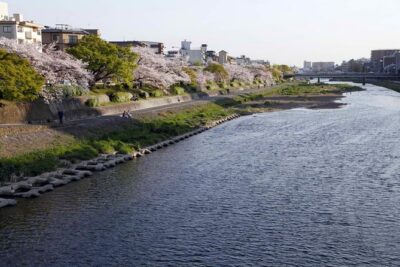
You wrap up near the Kamogawa River (often called the Kamo River in English). The walking time here is about 10 minutes, but the point is not a long hang. It is the atmosphere: the magical sounds of the river area and people gathering along the water.
This is where the night becomes less about buildings and more about Kyoto in motion. You might see entertainers gathering, you might notice locals and visitors lingering, and you get a sense for why this river is described as the heart and soul of the entertainment district.
Also, this stop is a great moment to reset your brain. By now you have shrine history plus geisha district context, and then you get a more sensory finish. It helps the whole tour feel like one story instead of four unrelated stops.
You can also read our reviews of more evening experiences in Kyoto


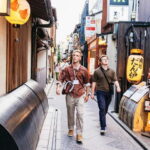
The snack and geisha chocolate, plus how you use the recommendations
Food on a walking tour is not just a perk. It keeps your energy steady when you are navigating busy streets, and it gives you something to focus on besides your feet.
This experience includes a traditional Japanese snack and a nice geisha chocolate. Even if you are not a big snack person, you will appreciate not having to choose food on the fly during the walk.
The bigger value, though, is what Simon adds around food. People mention that he shares restaurant recommendations and uses the tour to teach you how to move through the area like a local, not like a tourist trying to read signs in a rush.
If you follow the tour’s restaurant leads, you can turn this evening walk into a multi-night strategy. You learn what neighborhoods to target, and you reduce the guesswork for where you will eat later.
Price and value at $32.58 for a small-group guided stroll
At $32.58 per person for about two hours, the question is whether you get more than a simple walk.
Here is what you are actually paying for:
- a guided route through four major areas in Gion
- the guide’s explanations and answers, with Simon singled out in feedback for humor and clarity
- a traditional snack plus geisha chocolate included
- restaurant recommendations you can use immediately after
For many visitors, the value comes from timing. Two hours is the sweet spot on a first night: long enough to get context, short enough to still have energy for dinner plans.
If you were going to explore Gion on your own, you would still likely spend time piecing together where to go, what you are seeing, and which streets are worth lingering in. The guided format compresses that into a single evening.
Could it feel rushed in peak crowds? Yes. Crowds can make any 2-hour plan feel like speed-walking. But that is part of Gion at night, and the small group size helps more than you might think.
Keeping up in crowded Gion, and avoiding the end-of-tour scramble
Gion can turn into a squeeze. Multiple comments point to the same reality: crowds can make it hard to keep up, and some people had trouble finding the guide at the end when the pace sped up.
So, make it easy on yourself:
- Stay close enough to hear the guide, not just to see him
- Use the photo stops as your “reset points,” then step back to let others pass
- If you ask a question, keep an eye on where the group is standing so you can rejoin quickly
- Wear shoes you can move in, because you are not doing a slow stroll with frequent long rests
If you prefer slow, quiet walking, you might find the crowds to be the limiting factor, not the tour content. On the other hand, if you like a guided hit of history and practical tips in a compact window, this format fits well.
Who this Gion night walk suits best
This tour is a strong fit for:
- First-time Kyoto visitors who want structure on night one
- travelers who care about meaning, not just scenery, like understanding what makes a hanamachi and how terms like geiko and maiko connect to what you see
- couples and small groups who want local restaurant leads without a formal reservation hunt
- anyone who enjoys walking with a guide who talks through questions, not just reading a script
It is also a good match if you want a low-effort way to learn the layout of Gion. You get a route through key areas, plus the context that helps you choose what to revisit later.
If you are traveling solo, you will still get value because the route is designed for orientation, and the guide encourages questions. And because it is capped at 10 travelers, you are less likely to feel like part of a faceless crowd.
Should you book this Gion night walking tour?
Book it if you want a fast, guided way to understand Gion at night, with snack and geisha chocolate included, and with restaurant ideas that help you eat well for the rest of your Kyoto stay. I would especially recommend it for your first night in town, because the shrine context plus the geiko and maiko lesson plus the river atmosphere gives you a mental map you can reuse.
Skip it or be cautious if you hate crowded streets or you need a slow pace with plenty of lingering time. In peak situations, staying with the group is the main challenge, and that is not the tour failing, it is just Gion being Gion.
FAQ
How long is the Gion night walking tour?
It runs for about 2 hours.
What is the cost per person?
The price is $32.58 per person.
What food is included during the tour?
You get a traditional Japanese snack and a geisha chocolate.
Where do I meet the guide?
The meeting point is at Disney Store – Kyoto Shijo-Kawaramachi, Kyoto, in the Kotokross Hankyu Kawaramachi building (1 and 2F).
Is there a limit on group size?
Yes. The tour has a maximum of 10 travelers.
Do I need to pay admission fees at the stops?
The stops listed on the route show free admission (Yasaka Shrine, Hanamikoji Street, Kiyamachi Street, and Kamogawa River).
How do I receive my ticket?
You receive a mobile ticket.
What happens if the weather is bad?
The experience requires good weather. If it is canceled due to poor weather, you are offered a different date or a full refund.
More Walking Tours in Kyoto
More Tours in Kyoto
More Tour Reviews in Kyoto
Not for you? Here's more nearby things to do in Kyoto we have reviewed


Gion & Geisha District Tours, compared.
 ★ 4.7Kyoto Geisha Walking Tour: Gion District & Hidden GemsFrom $253,273 reviews
 ★ 4.9Gion Magical Night Walking Tour with Geisha TriviaFrom $242,393 reviews
 ★ 4.7Gion Geisha District Walking Tour – Stories of GeishaFrom $202,187 reviews
 ★ 4.9Best of Kyoto: Gion, Geisha, Pagodas & CobblestonesFrom $242,058 reviews
 ★ 4.5Night Walk in Gion: Kyoto’s Geisha DistrictFrom $212,003 reviews
 ★ 5.0Kyoto Night Foodie Tour in Gion (9+ dishes + 6 Sake tastings)From $1631,762 reviews
 ★ 5.0Kyoto Gion Geisha District Walking Tour – The Stories of GeishaFrom $251,441 reviews
 ★ 5.0Kyoto Gion: 2-Hour Geisha Culture & History Walking TourFrom $231,186 reviews
Browse the lists this tour appears in