
Reviewed · KYOTO SAMURAI & NINJA EXPERIENCES
Ancient Katana Training in Kyoto with Local Students
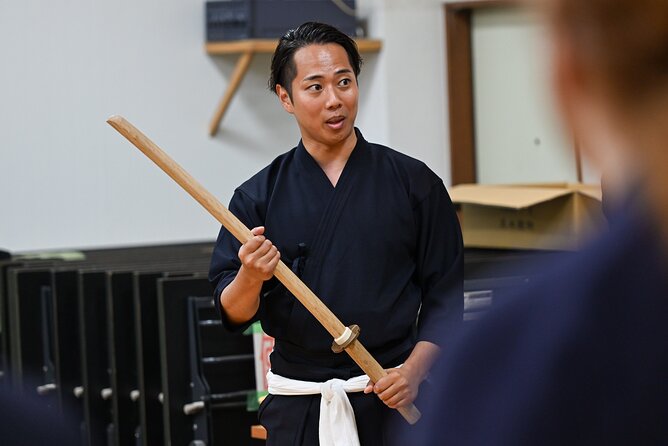
Kyoto does samurai training, but this one is the real deal. You get hands-on dojo instruction in Iaijutsu and Kenjutsu, not a staged performance, and you do it alongside local students under Shogo’s guidance. What I love most is the practical feedback and pace, plus the focus on correct reihō etiquette, so the sword work has structure. One thing to consider, though, is that this is not set up as a total beginner experience, and they generally do not accept people with no prior budo background.
This class runs through regular dojo training with the Kyoto Branch of Asayama Ichiden Ryu Hyōhō, a Kobudo tradition that’s been practiced for over 400 years. You’ll use bokutō (wooden katana) and work on the basics that matter, like safe handling, timing, and body positioning, all inside a setting that still feels like training, not tourism.
The group is intentionally small, up to 4 travelers, and the session is about 3 hours long. It starts at 6:30 pm, and you’ll meet at 7-chōme-27-1 Honmachi in Higashiyama Ward, so plan to be there a bit early to settle in and match the dojo’s rhythm.
Key highlights to know before you go
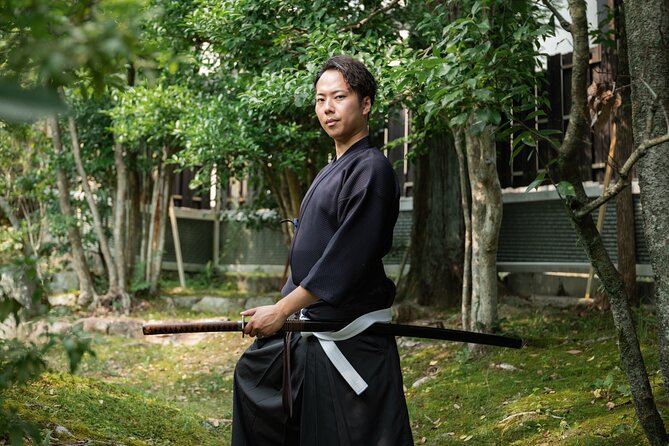
- Real koryū dojo practice with actual students, not a one-and-done demo
- Iaijutsu and Kenjutsu focus using bokutō, with form corrections and practical repetition
- Reihō etiquette training so you learn how to move and interact the right way
- Shogo’s bilingual instruction in English and Japanese, making the class easier to follow
- Small group size (max 4), which helps you get more direct coaching
A real Kyoto dojo session, not a sword show
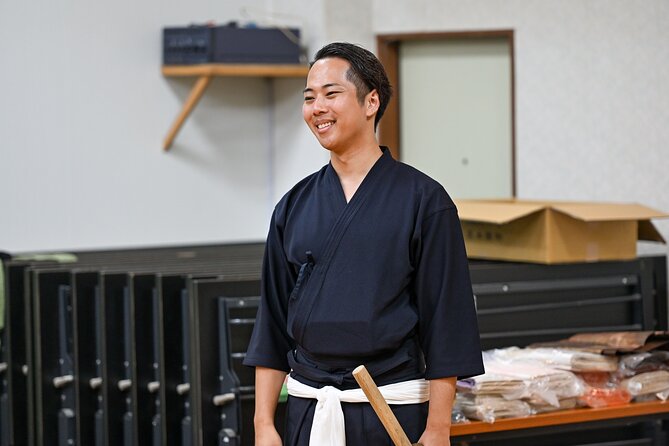
If you want the samurai vibe, you’ll find it here. But the bigger win is the training mindset. This is set up like a genuine session with Shogo and the dojo’s regular members, so you’ll feel the difference right away in how the class is run.
Most katana experiences aimed at visitors give you a highlight reel. This one is different. You’re not just swinging a sword for photos. You’re working on technique in a controlled way, with attention to timing and correctness, and you keep returning to the fundamentals.
That matters because the fundamentals are where confidence comes from. When you understand what reihō etiquette is asking you to do, and you know how the iaijutsu motion should land, the rest gets easier to learn. Even if you do not become a master by the end, you leave with a clearer mental map of how the art actually works.
You can also read our reviews of more tours and experiences in Kyoto.

Meet Shogo and the Asayama Ichiden Ryu Hyōhō lineage
This dojo trains the Kyoto Branch of Asayama Ichiden Ryu Hyōhō, a Kobudo tradition tied to a 400-year timeline. That word, Kobudo, is worth your attention. It points to classical martial disciplines that preserve methods from older fighting contexts.
The tradition also includes the atmosphere of koryū training, where basics are treated seriously. You’ll also notice that the system is bigger than just sword work. Asayama Ichiden Ryū Hyōhō is described as including arts such as kama-jutsu (sickle techniques), bōjutsu (staff), jōjutsu (short staff), tanbōjutsu (short stick), kusarifundōjutsu (chain and weight), and shurikenjutsu (throwing darts). In this specific session, though, the practical focus is on reihō etiquette, Iaijutsu, and Kenjutsu.
That balance is a good thing for you. It means you get a real slice of the art without needing to cram every weapon system into one night. It also helps you respect the craft. The class isn’t trying to impress you with variety, it’s trying to teach you how to train.
I also appreciate the way Shogo teaches. He’s described as proficient in communicating in both English and Japanese, and the instruction feels well-paced. In practice, that matters because fencing or sword training has a lot of moving parts. If you miss one key cue, you can develop the wrong habit fast. Clear coaching helps prevent that.
What you do in the 3 hours: reihō, iaijutsu, kenjutsu
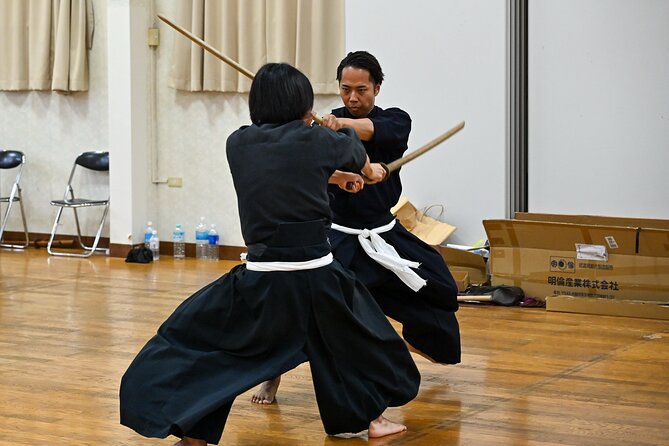
This training session is about 3 hours, starting at 6:30 pm and ending back at the meeting point. The main content is structured around dojo fundamentals, which makes the time feel purposeful.
Reihō etiquette: the discipline before the sword
You start with reihō etiquette. In sword arts, etiquette is not just formality. It shapes how you stand, how you enter space, how you move without rushing, and how you show readiness. It’s also a safety tool.
If you’ve never trained in a dojo, this part can feel strict. But it’s also what keeps practice controlled, especially with weapons in the background of your mind. When reihō is taught clearly, you can relax into learning because you understand what the dojo expects from you.
Iaijutsu: quick-draw principles with bokutō
Then you move into Iaijutsu, the quick-draw katana techniques. You’ll practice this with bokutō, which is a wooden katana designed for training.
Iaijutsu sounds simple on paper: draw, cut, control. In reality, it’s about synchronization, timing, and body mechanics that start long before the draw. A good instructor will help you break it down and repeat it enough that your body starts to learn the sequence, not just your brain.
What I like about this setup is that it’s not framed as a stunt. Even when it looks dramatic, the focus stays on correct technique and control.
Kenjutsu: swordsmanship that keeps you honest
Finally, the class moves into Kenjutsu, Japanese swordsmanship. This is where you feel whether your stance and grip choices actually hold up when you move. It’s also where training becomes more interactive with partners and dojo standards, depending on your level.
Kenjutsu is a great complement to iaijutsu. Iaijutsu can trick you into thinking you only need speed. Kenjutsu reinforces that you need balance, distance awareness, and clean movement.
The result is that you’re not only learning a trick, you’re learning a system of how the sword works in training.
Bokutō practice and dojo feedback that actually helps
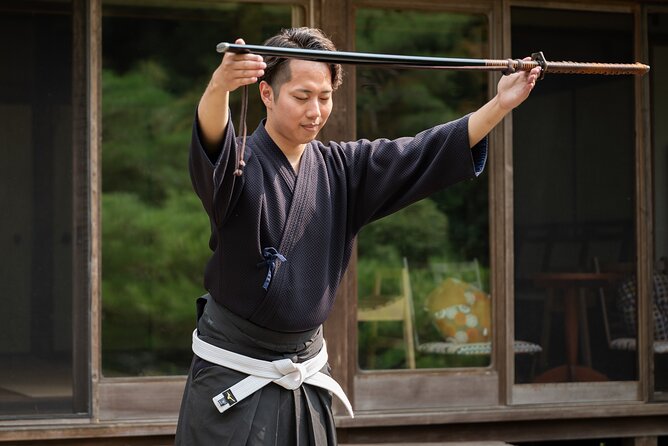
Using bokutō is important, because it removes the intimidation factor while still giving you a real feel for sword mechanics. The class is built around bokutō, and it becomes the tool for learning form safely.
One detail that stood out from prior participants is that even if you do not bring a sword, Shogo can provide what you need to train comfortably. That is a practical relief if you are traveling and do not want to pack gear you might not use again.
The other high-value ingredient is the way the class is directed. The instruction is described as well paced, easy to follow, and forgiving when you get something wrong. That combination is rare.
When a class is too fast, you spend the whole time trying to catch up. When it is too forgiving, you never improve. Here, the feedback seems designed to help you get the motion right while still keeping you from freezing up.
Also, because the session is limited to a maximum of 4 travelers, the coaching has room to be personal. You get more chances to adjust, instead of watching from the back row all night.
Who this is for, and who should ask before booking
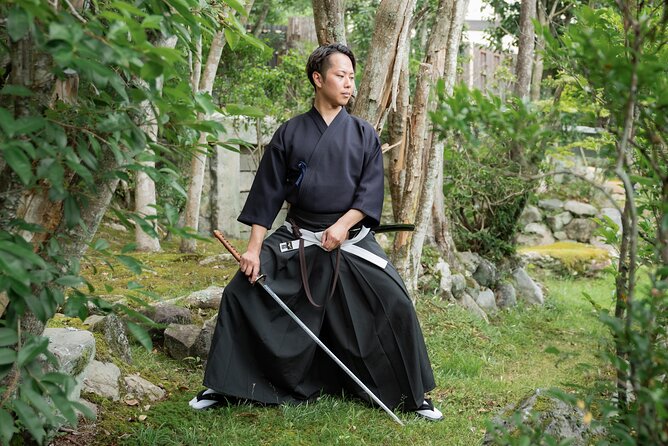
This is not marketed as a casual sightseeing activity. It’s genuine training with actual students, and there’s a general rule: they do not accept participants with no prior budo experience.
That does not mean you are automatically out. The guidance says you can contact them for a consultation if you are very eager to join despite having no prior budo background. If you are on that fence, I’d do the consultation step instead of guessing.
You should also have a moderate physical fitness level. Sword training involves stance work and repetition, and you’ll feel it if your body is not used to that kind of controlled movement.
Who benefits most?
- People who want authentic dojo-style learning in Kyoto, not a photo session
- People who have at least a small amount of budo background, even from a local dojo elsewhere
- People who like clear coaching and structured practice
If you are a true beginner, bring patience. You might need extra time to learn the etiquette and basic mechanics before you can execute the techniques confidently.
Price and value at about $45 for a 3-hour class
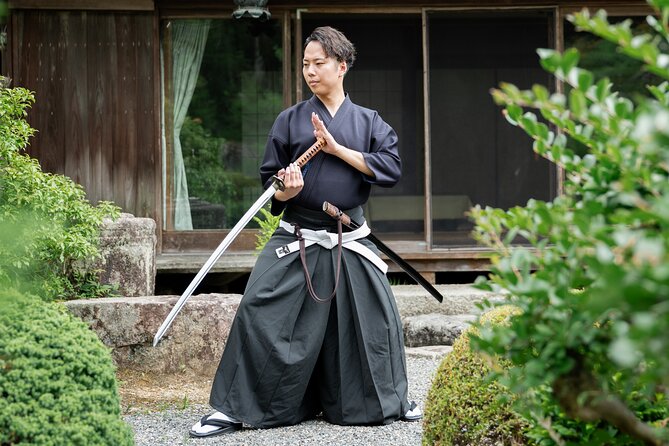
At $45.61 per person for roughly 3 hours, the price is relatively modest for something this focused. The big value is not the cost alone, it’s what you get for that cost.
You are paying for:
- Real instruction from Shogo and regular dojo members
- A small group setting, max 4 travelers
- Bokutō-based practice in iaijutsu and kenjutsu
- Training that emphasizes reihō etiquette, not just sword swings
The best comparison is what this is trying to replace. If you’ve seen typical tourist sword experiences, you know they often feel one-note. Here, the art and the method are the point.
Also, the session length matters. A shorter demo class usually gives you just enough to feel interested and not enough to feel capable. Three hours gives time for repetition and for corrections to stick.
If you care about doing something authentic in Kyoto, this price feels fair for the quality of practice and the instructor attention you likely get in a tiny group.
Getting to the meeting point near Honmachi (and why timing matters)
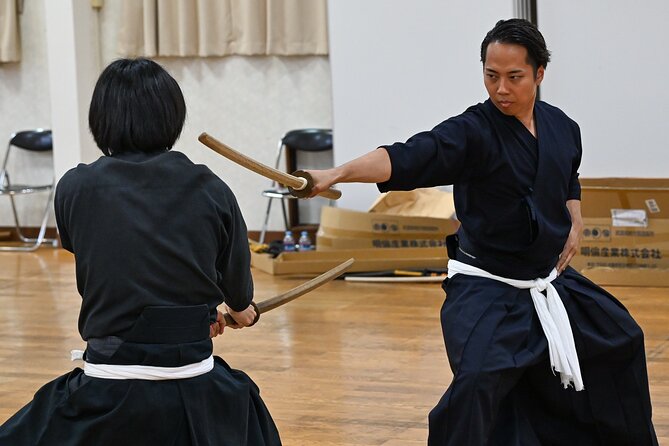
You meet at 7-chōme-27-1 Honmachi, Higashiyama Ward, Kyoto, 605-0981, and the start time is 6:30 pm. The activity ends back at the meeting point.
It is near public transportation, which helps. Still, for a dojo session, I’d treat timing as part of the etiquette. Showing up late can throw off your body, your mindset, and the flow of the class.
If you want the smoothest experience, plan to arrive early enough to settle in and avoid rushing during any pre-training steps. Even if you are excited, slow down and get ready to follow the dojo rhythm.
What to bring, what to expect physically, and how to feel comfortable
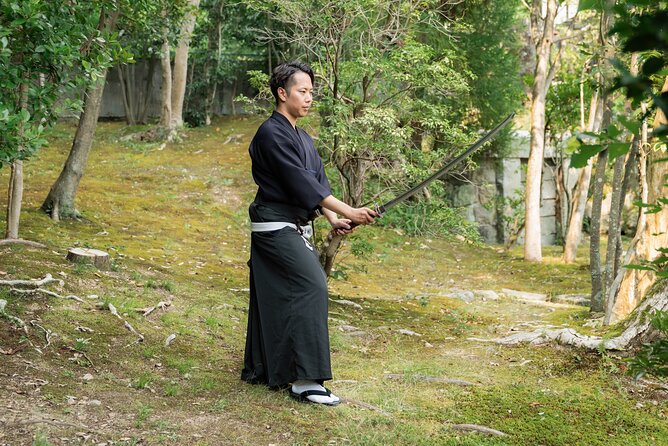
The class uses bokutō, and the training is described as suitable for people with moderate physical fitness. That means you should expect standing, controlled movement, and repeated practice.
You should also be mentally ready for etiquette. Reihō is not optional in a koryū-style session. It helps you understand how to behave in the training space, and it keeps everything safe.
One of the encouraging themes from prior participants is that the dojo feels welcoming, including for people who find classical training culture intimidating. If you are a foreigner in a traditional setting, the key is to show up with respect and willingness to follow instruction, even when you do not understand every detail right away.
Shogo’s ability to explain in both English and Japanese is a huge help here. It means you’re less likely to be left behind when the cues get specific.
Final verdict: should you book this Kyoto katana training?
Book it if you want authentic, disciplined Kyoto sword training. You’ll get real practice in reihō etiquette, iaijutsu, and kenjutsu with bokutō, guided by Shogo and local students. The small group size, the coaching style, and the emphasis on doing it correctly make it a standout value for people who care about learning, not just witnessing.
Skip it or ask for a consultation first if you have no prior budo experience. The class is not built for total beginners by default, and starting from scratch without that consult can set you up for stress.
If you do fit the general requirements, this is the kind of night training that changes how you look at samurai culture afterward. Not because you collected souvenirs, but because you understand the discipline behind the motion.
FAQ
What is the duration of the katana training in Kyoto?
It runs for about 3 hours.
What time does the training start?
The start time is 6:30 pm.
Where is the meeting point in Kyoto?
You meet at 7-chōme-27-1 Honmachi, Higashiyama Ward, Kyoto, 605-0981, Japan.
What techniques will I practice during the session?
You will practice reihō etiquette, Iaijutsu (katana drawing), and Kenjutsu (katana swordsmanship).
Do I need prior budo experience?
As a general rule, participants with no prior budo experience are not accepted. If you are very eager to join, you can contact the provider for a consultation.
What weapon do you use in training?
Training uses bokutō, wooden katana.
If I do not bring a sword, can I still join?
One prior participant shared that even without bringing a sword, Shogo provided one so training felt comfortable and easy to follow.
How many people will be in the group?
The maximum group size is 4 travelers.
How do I get my ticket?
You receive a mobile ticket.
Can I cancel and get a full refund?
Yes. You can cancel for a full refund up to 24 hours before the experience starts (based on local time).
More Tour Reviews in Kyoto
Not for you? Here's more nearby things to do in Kyoto we have reviewed

Kyoto Samurai & Ninja Experiences, compared.
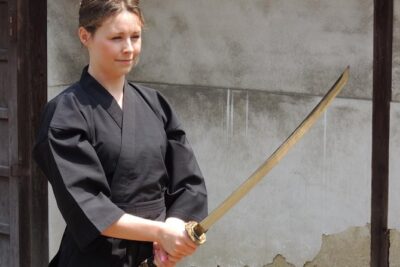 ★ 5.0Kyoto Samurai ExperienceFrom $1191,294 reviews
 ★ 4.9Kendo and Samurai Experience with Uniform and GearFrom $103815 reviews
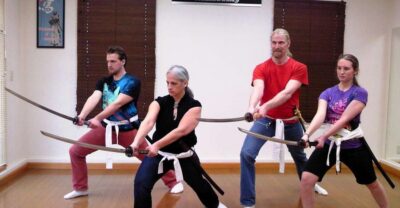 ★ 4.9Samurai Sword Class by Experts in Traditional ArtsFrom $64657 reviews
 ★ 4.5Skip the lines Basic Ticket at SAMURAI NINJA MUSEUM KYOTOFrom $28632 reviews
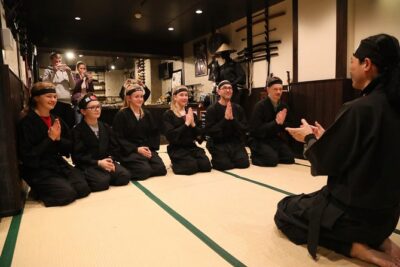 ★ 5.0Ninja 1-hour Hands-on Lesson by Japanese master in Kyoto -EntryFrom $80489 reviews
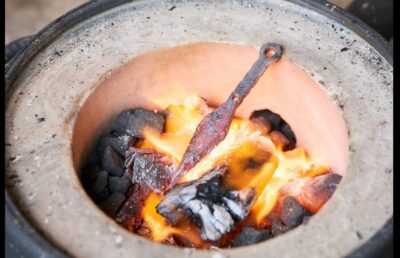 ★ 4.8Ninja Weapon Forging ExperienceFrom $148478 reviews
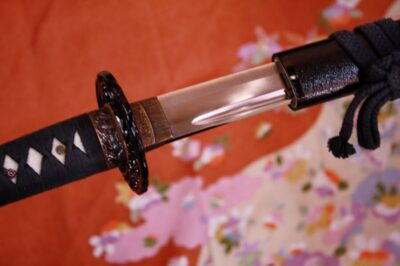 ★ 4.5Samurai Kenbu Traditional Sword Dancing ShowFrom $32426 reviews
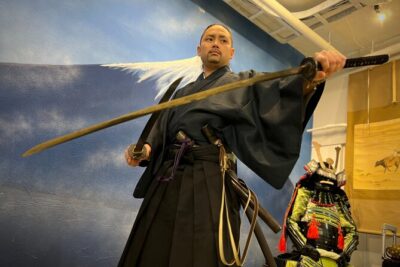 ★ 5.0Samurai Training with Modern day Musashi in KyotoFrom $132256 reviews
Browse the lists this tour appears in