
Reviewed · KYOTO SAMURAI & NINJA EXPERIENCES
Ninja 1-hour Hands-on Lesson by Japanese master in Kyoto -Entry
If you want something active, do this in Kyoto. You will train like a ninja in a real dojo setting, with an English-speaking instructor and hands-on practice that goes far beyond watching.
I particularly love the small group size (max 6), because you get real attention while you try each skill. I also like the mix of basics plus practical weapon training, from ninja breathing and walking to sword, shuriken, kunai, and blow-darts.
One thing to consider: it is very much a 1-hour skills session, so you will not leave with deep academic details about every aspect of ninja history. It can feel a bit like a performance, but the training parts are serious and safety-focused.
Key Highlights to Expect
- Max group size of 6 so you can actually practice, not just stand in line
- Ninja outfit rental included, so you look the part and get into it fast
- Kuji-In, ninja breathing, and walking as the warm-up foundation
- Sword, kunai, and shuriken training with guided technique and targets
- Blowgun (blow darts) practice aimed at wooden targets
- A trick-house style segment with playful challenge elements and safety coaching
How This 1-Hour Ninja Dojo Lesson Really Plays Out
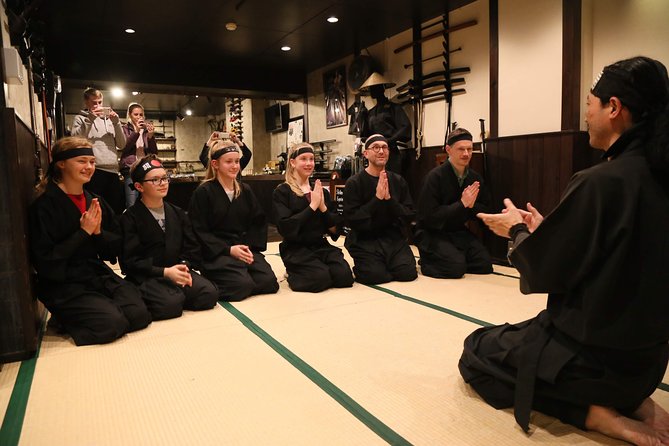
This lesson is designed as a rapid, hands-on taste of ninja training. Plan on using your body, not just your phone camera. The whole thing runs about 1 hour, and it is built around short instruction blocks, quick demos, and then you trying the moves yourself.
The class format matters. In a bigger show, you might watch a demonstration and hope you get a turn. Here, the maximum group size of 6 keeps the pace workable, and the instructor can adjust your stance and timing as you go. If you like interactive activities, this is the right kind of structured fun.
Also, you get the outfit. Ninja training in normal clothes is just awkward. The rental gives you the right feel immediately, and it helps you focus. Think of it as the easiest way to switch from visitor mode to student mode.
More Kyoto temple visits, food tours, tea experiences, and day trips to compare


Meeting at Ninja Dojo and Getting Dressed (What to Do First)
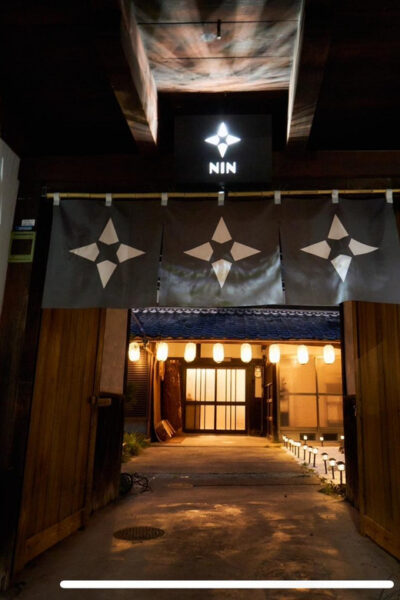
Your meeting point is NINJA DOJO and STORE KYOTOJapan, Hakurakutenchō 528, 2F in Shimogyo Ward, Kyoto. The activity ends back at the same place, so you do not need to plan a complicated return route.
When you arrive, expect a quick transition into the training mindset. The session includes ninja clothing rental, and that is usually the fastest confidence boost of the whole experience. A lot of the joy here comes from that moment when the dojo turns into your practice space.
Practical tip: wear comfortable clothing under the rental setup and avoid anything too bulky. You will be doing stance work and throwing motions. Sneakers are usually the common sense choice, if you have them.
The Core Ninja Foundations: Kuji-In, Breathing, and Walking
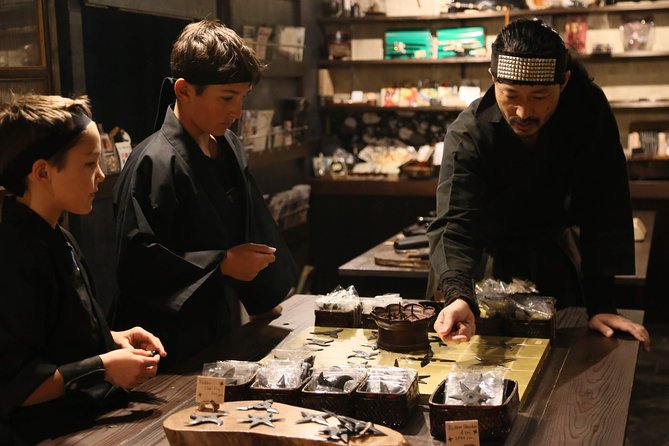
Before any weapons show up, you get the basics. This part is not filler. It is the framework the rest of the training sits on.
You will practice:
- Kuji-In (a ninja meditation-style breathing approach)
- Ninja breathing
- Ninja walking
Why this matters: weapon practice is easier when you can control your body. Breathing and walking drills help with posture and balance. That can be the difference between a good throw and an awkward one, especially with shuriken and darts.
If you have ever watched ninja-style movement in pop culture, this is where you can start turning the fantasy into something physical. You learn how to move with intent, not just copy a pose. Even if you are not aiming for skill mastery, these drills give you a clear “before and after” feeling.
And yes, the walking is a highlight. In at least some sessions, people describe a challenge scenario involving moving carefully in a darker area with a floor that includes spike-like obstacles, with coaching on how to avoid trouble. That kind of staged obstacle is part of why this feels like a real dojo lesson instead of a flat museum demo.
The Trap House Style Segment (Fun Challenge, Safety First)
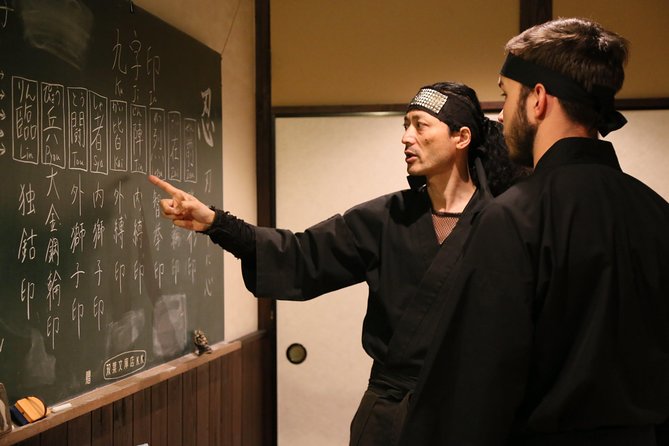
One of the most memorable elements is the intro gimmick and trap at the ninja trick house. You might see secret-style spaces or trick elements in the dojo environment. The point is not just surprise. It makes you apply your training mindset under mild pressure.
How to think about it: it is a playful problem, not a stunt. You are there to learn how ninjas trained to navigate risk with calm control. The instructors also emphasize safe technique, especially when weapons enter the picture.
Practical expectation: if you are a bit nervous about “games,” you may still enjoy this. It is short, guided, and designed for beginners. Also, it helps the lesson feel like a story, not a checklist.
Sword Training: Technique Over Swagger
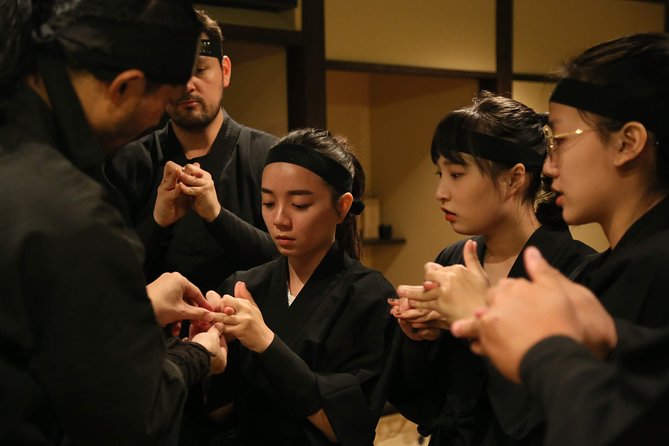
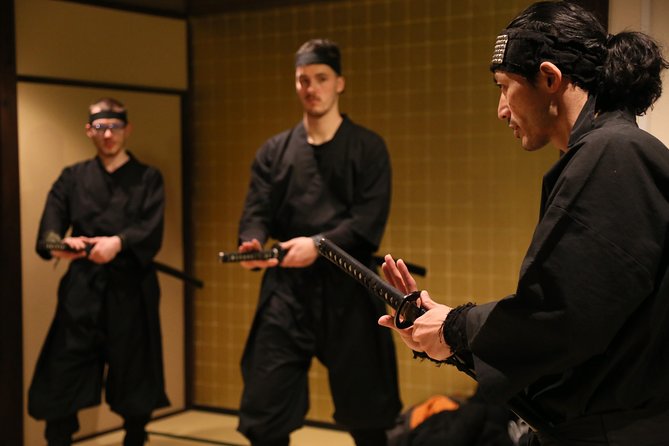
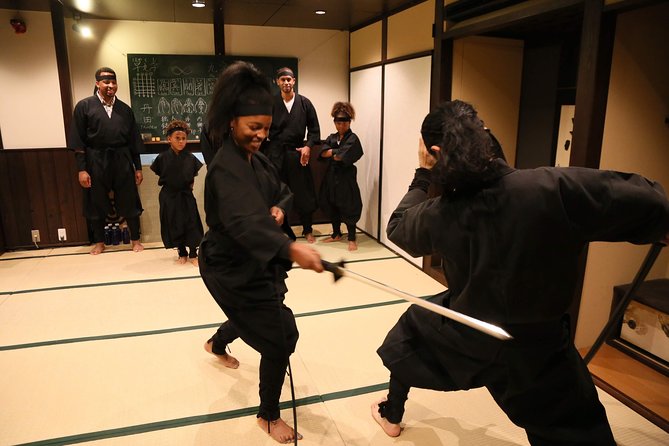
Sword training is part of the session, and it is taught in a way that fits beginners. You will receive instruction, then practice what you can safely handle within the time.
The value here is not becoming a swordsman in an hour. The value is learning:
- how to hold and position properly
- how stance and breathing connect to movement
- how to move with control instead of speed
In the class setting, instructors keep things organized so the flow stays safe. Expect guidance on basics, not flashy flourishes. If you want a confidence boost, this portion often delivers it because even small corrections can make your movements feel immediately better.
If you are traveling with kids or a mixed-age group, sword practice is usually the “main event” that gets everyone leaning in. Adults tend to enjoy it too, mostly because it is tangible. You feel the mechanics of the skill.
More Kyoto temple visits, food tours, tea experiences, and day trips to compare



Kunai and Shuriken Practice: Throwing That Actually Makes Sense
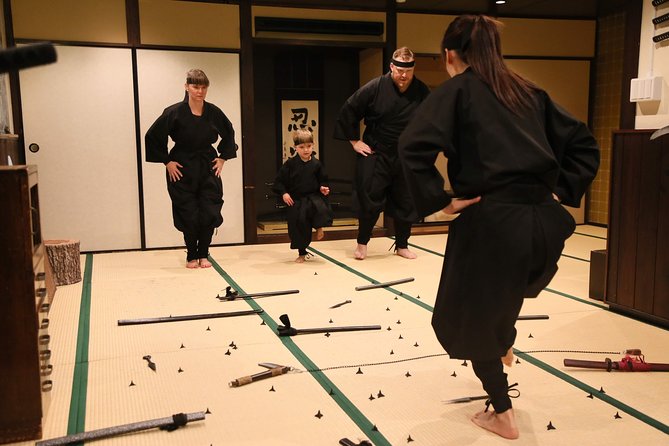
After the sword segment, you move into throws. The class includes:
- Kunai (dagger) training
- Shuriken (ninja star) training
Throwing weapons is where technique becomes visible fast. The instructor teaches how to aim, how to stand, and how to release with control. Even if you are not great at first, you get multiple chances to adjust.
A key detail: the training is careful with the weapons. You should expect safety rules and close supervision. People specifically call out that the staff is careful with the weapons, which matters a lot when you are practicing throwing items at targets.
Also, targets are involved. The lesson ends up feeling more like coaching than acting. You are learning a repeatable motion, not just tossing something once for a photo.
If you like video game mechanics, this is the real-life version of “aim and correct.” If you are into anime or shows like Naruto, this part will feel familiar, but you get the physical reality behind the myths.
Blowgun and Blow Darts: Precision With a Different Skill Set
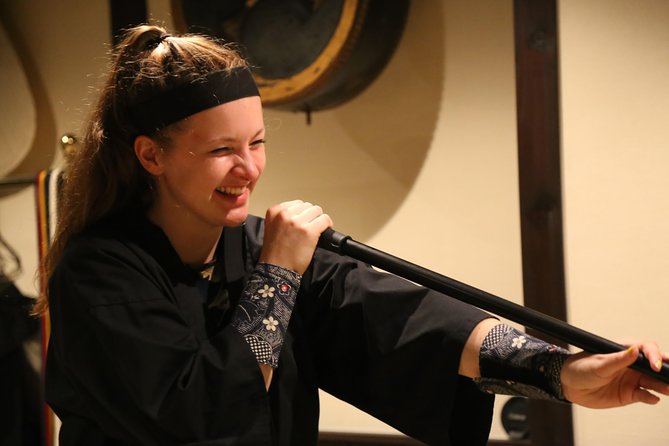
Then comes ninja blowgun (blow darts) training. Blow darts bring a different challenge than stars and kunai. Instead of arm release and spin, you deal with breath control and accuracy.
This is where the earlier breathing work pays off. If you followed the Kuji-In and breathing guidance, you will likely feel more confident in how you set your breath and aim.
Targets are wooden. That keeps things safe and repeatable, and it also makes scoring and improvement easier to notice in a short session. Adults often find blowgun practice more satisfying than they expected, because it rewards patience.
If you are bringing kids, blowgun segments can be a big hit because it feels clever and skill-based, not just strength-based.
Who the Instructors Are, and What English Support Means
The class is taught by a Japanese Sensei master who has trained in ninja arts, and they teach in English. You do not need Japanese skills to follow along.
Instructors can vary by session, and names mentioned in past classes include Sho and Jack. Both are described as energetic and funny, with clear explanations and good pacing. There is also mention of an assistant who helps keep the class flowing and supports participants during practice.
What you should take from this: the English instruction is not vague. You get enough detail to actually try the motions correctly. For many people, that is the difference between a fun gimmick and a real skill lesson.
Group Size, Pace, and How Much Practice You Get
The max 6 travelers detail changes everything about your experience.
In a small group:
- you wait less between turns
- you get corrections without being singled out too harshly
- you can move through the sequence in a way that still feels exciting
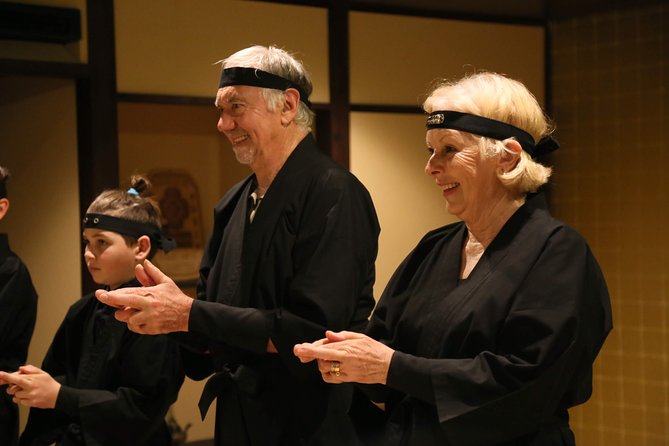
It is also why family-friendly reviews show up so often. Kids tend to do better when they are not stuck watching for too long. Adults also enjoy it because you stay engaged, even when you are not holding a weapon at that exact second.
Time pacing is tight. The session is only about 1 hour, so you should expect to go from one activity to the next quickly. If you want time to linger, shop, or chat, you will probably do that before or after.
Price and Value: Is $80.58 a Good Deal?
At $80.58 per person for about an hour, this is not a cheap “look only” attraction. But the price starts to make sense when you map it to what is included.
What you get included:
- an English-speaking Sensei master
- ninja outfit rental during training
- admission fee
What you get that is usually missing from lower-cost experiences:
- you practice multiple skills, not just one prop
- you get guided weapon technique with targets
- you do a full sequence (breathing, walking, trap-house style challenge, sword, kunai, shuriken, blow darts)
If you are comparing it to museum admissions or shrine tickets, it is a different category. This is activity-based and coached. For families and groups that want a break from walking Kyoto streets all day, it can be an excellent value, especially because it is indoor and structured.
My take: if you want to actively learn a few ninja skills, the price feels fair. If you mainly want a deep lecture or a slow cultural immersion, you might find it too short.
Practical Tips Before You Go (So You Enjoy It More)
Here are the details that can make or break an hour.
- Arrive a few minutes early. The meeting point is specific, and you want time to settle before training starts.
- Wear comfortable footwear. You will be doing stance work and moving around the dojo area.
- Bring your curiosity, not your expectations. You will get hands-on basics, not full martial arts schooling.
- Expect photos and video. Some sessions include instructors taking photos and video and sharing them with no extra cost, so if you care about memories, keep your phone ready.
Also, note what is not included: no hotel pickup and drop off, and no food and drink. Plan to eat before, then treat this as a focused stop in your day.
FAQ
FAQ
How long is the ninja training lesson in Kyoto?
The lesson runs for about 1 hour.
Is this class for beginners?
Yes. It is described as an entry level, small-group beginners class.
What weapon training is included?
You will get training with a sword, kunai (dagger), shuriken (ninja stars), and a blowgun with blow darts.
How big is the class?
The group size is capped at a maximum of 6 participants.
What’s included in the price?
The price includes an English-speaking Sensei master, ninja clothes rental during training, and the admission fee.
What if weather is poor or there are not enough participants?
The experience requires good weather. If it is canceled due to poor weather, you will be offered a different date or a full refund. If it is canceled because the minimum number of travelers is not met, you will be offered a different date or a full refund.
Should You Book This Ninja Dojo Lesson?
Book it if you want an hour in Kyoto that is physical, guided, and actually hands-on. The small group, the English instruction, and the fact that you practice multiple skills, including sword and weapon throws, makes it a strong value for families and couples.
Skip it if you mainly want a calm, scholarly tour of ninja history with lots of context and time to absorb it. Also, if you are very sensitive to performance-style gimmicks, focus on the fact that you will still be practicing techniques safely under instruction, and ask yourself if that trade is your kind of travel.
If you decide to go, treat it like training. Listen carefully, keep your movements controlled, and you will get way more out of the session than someone just trying to collect photos.
More 1-Hour Experiences in Kyoto
More Workshops & Classes in Kyoto


More Tour Reviews in Kyoto

Not for you? Here's more nearby things to do in Kyoto we have reviewed









Kyoto Samurai & Ninja Experiences, compared.
 ★ 5.0Kyoto Samurai ExperienceFrom $1191,294 reviews
 ★ 4.9Kendo and Samurai Experience with Uniform and GearFrom $103815 reviews
 ★ 4.9Samurai Sword Class by Experts in Traditional ArtsFrom $64657 reviews
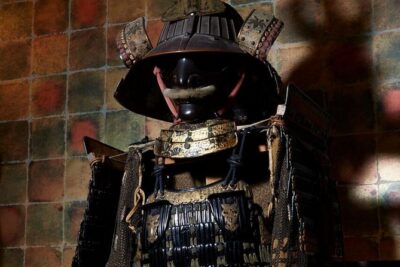 ★ 4.5Skip the lines Basic Ticket at SAMURAI NINJA MUSEUM KYOTOFrom $28632 reviews
 ★ 4.8Ninja Weapon Forging ExperienceFrom $148478 reviews
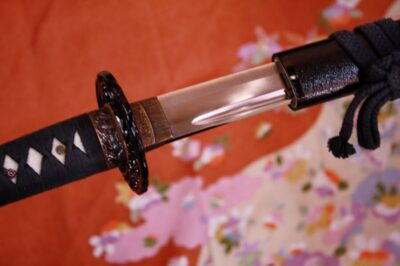 ★ 4.5Samurai Kenbu Traditional Sword Dancing ShowFrom $32426 reviews
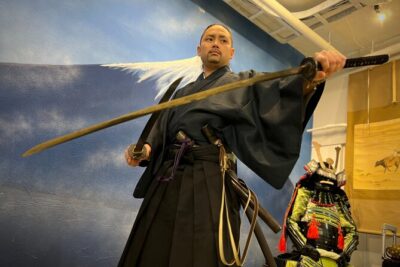 ★ 5.0Samurai Training with Modern day Musashi in KyotoFrom $132256 reviews
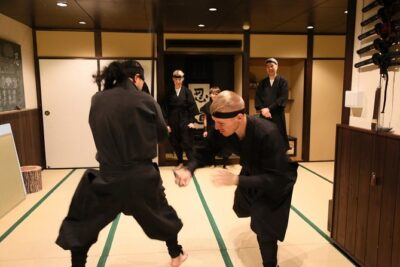 ★ 5.0Ninja 2-hour Hands-on Lesson by Japanese master in Kyoto -MediumFrom $95218 reviews
Browse the lists this tour appears in