
Reviewed · GION & GEISHA DISTRICT TOURS
Dance and Game with Maiko
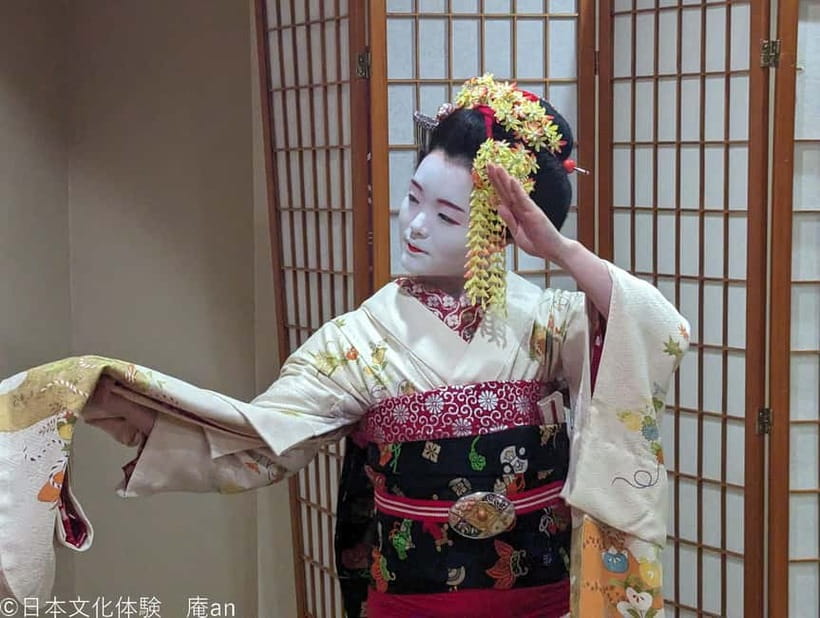
Maiko magic in Kyoto fits any schedule. In this 45 minute style program, you get to see two Maiko dances and catch the small details that make the performances feel more like living culture than a show.
I also love the chance to play along, not just watch, because the game with the Maiko turns a seated moment into something shared with the room. One possible drawback: the running time can feel closer to 30 minutes than 45 depending on how it flows.
You’ll walk into a simple building space, not a classic ochaya house, but the atmosphere is relaxed and friendly. The payoff is real, especially the close photo moment and the gift of a Senjafuda lucky charm to take home. If you hate stairs or you need a slow, flexible timeline, this setup may feel less comfortable.
Key things you will notice fast
- Two Maiko dances in a short, concentrated program
- Up close photos taken right beside the Maiko
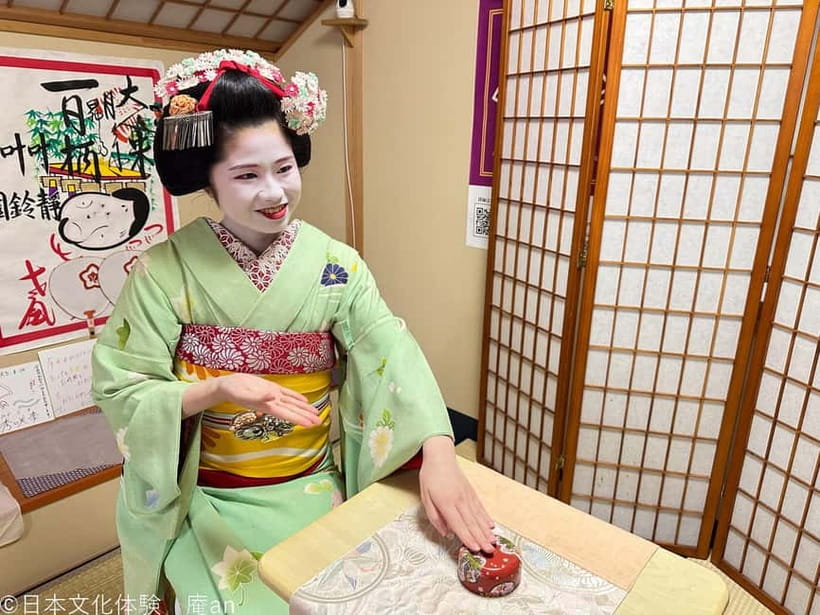
- A traditional game with audience participation encouraged
- Senjafuda lucky charm presented at the end
- Flexible performer depending on availability, with Geiko sometimes instead of Maiko
- A building venue with stairs and no elevator, near Gojo Station
Two dances, one room, and real Kyoto energy
Kyoto is famous for beauty and tradition, but a lot of the experience is packaged for long, formal evenings. This one is built for people with practical schedules. You show up, you sit down, and in a short window you get a taste of what a Maiko performance can feel like.
The key thing I like is how direct it is. You are not wandering between stops trying to piece together context. The program stays focused on the performance itself: the way the Maiko move, the rhythm of the music, and how story gets told through posture and gesture. You also get the added layer of interaction, which can make the whole thing feel warmer and more human.
And yes, you should know the venue is not an ochaya-style house. It is in a building, and you will climb stairs to reach the room. The upside is convenience and speed. The tradeoff is that it is not the full, old-world interior many people imagine when they hear Kyoto theater.
You can also read our reviews of more tours and experiences in Kyoto.

Price and what you actually get for $28
At $28 per person for a roughly 45 minute program, the value comes from density. You are paying for access, time with the performers, and a few “front row” moments that are hard to recreate on your own.
You are getting:
- Two Maiko dances
- A traditional game involving the Maiko and audience participation
- A photo taken right beside the Maiko
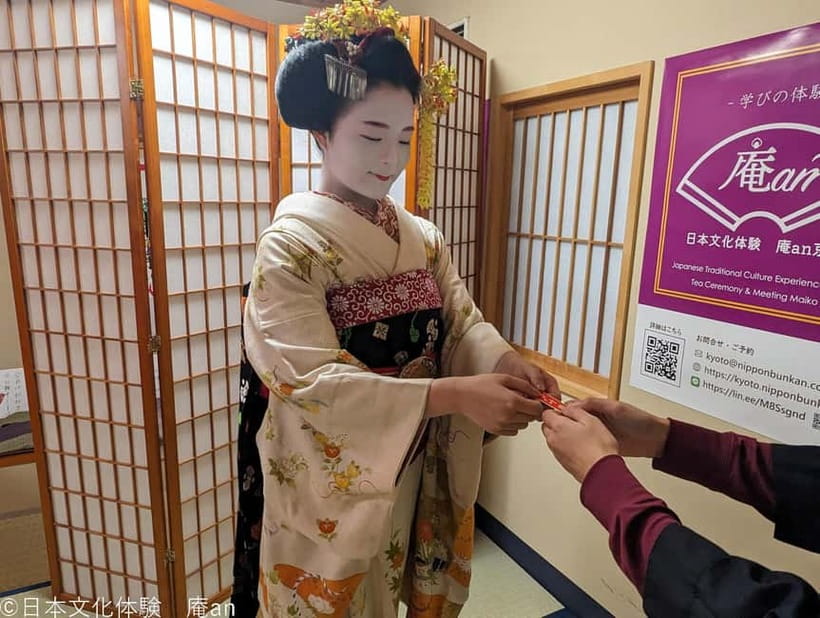
- A Senjafuda lucky charm presented as a keepsake
If your goal is meeting a Maiko and having a memory that feels specific to Kyoto, this price can make sense, especially because the whole experience is designed to be quick. If your goal is a long, uninterrupted cultural immersion with lots of explanation, you might prefer a longer format program, since this one is intentionally compact.
Also note that translation support is provided as much as possible. The instructor is Japanese, so you will likely get enough English help to follow the key beats, but it is still not a private, fully guided lecture.
Where to go near Gojo Station
The meeting point is very straightforward. You walk about one minute from Exit 1 of the Karasuma Line Subway Gojo Station. The store entrance faces Gojo-dori, which makes it easier to spot.
This matters because the program is short and the team cannot hold the event if you arrive late. So having a clear meeting point helps you show up calm instead of sprinting through Kyoto streets.
One more thing to keep in mind: there is no elevator. You will need stairs to reach the venue. If you are traveling with heavy luggage or you prefer minimal stair work, plan your route accordingly.
The program flow, from dances to the Senjafuda
This experience moves in a clean sequence, and you will usually feel the pacing tighten once the first dance begins. Here is what to expect and why each step matters.
1) Maiko dance performance
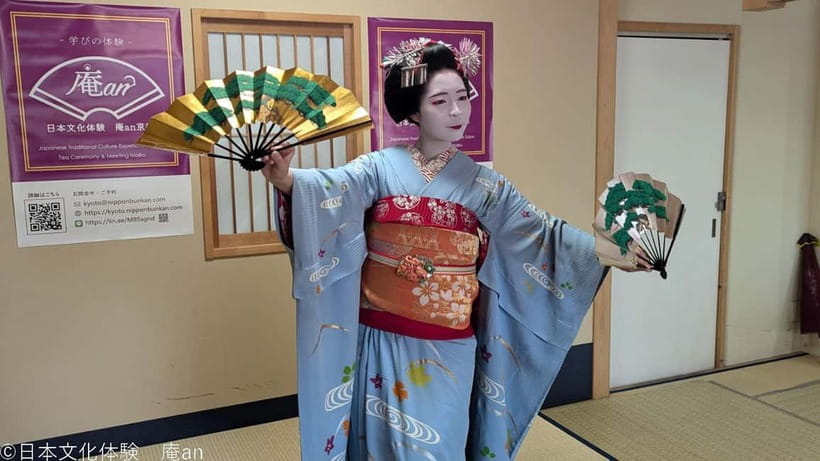
You start with the Maiko dancing. The dances are elegant and expressive, and they are meant to represent themes like the seasons, love stories, and everyday life. Even when you do not catch every spoken explanation, you can still “read” the performance through movement.
Two dances in a short window is a smart format. It gives you variety without dragging out the program. And if you like photography, this is the moment where you will want to be ready, because you get the best chance to capture the atmosphere of the performance.
Practical tip: keep your camera settings simple. Rapid, graceful movement can make complicated settings frustrating, so a reliable auto or simple mode often works better than constant fiddling.

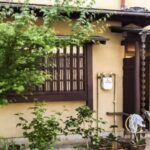
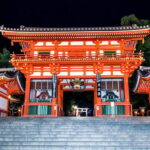
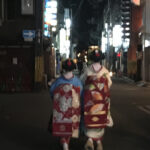
2) A traditional game with Maiko
Next comes the game. It is playful, simple, and a real crowd-energizer. Audience volunteers are invited to play with the Maiko, but even if you do not participate, watching can still be fun. You will often find it easier to clap and cheer than to do something yourself, and that shared energy is part of what makes the room feel lively.
From my perspective, this is the most “human” part of the program. Watching someone in a formal art form is beautiful, but games add spontaneity. They also lower the distance between performer and audience, which can make the experience feel less like a ticketed show and more like a moment you shared.
One consideration: if you are traveling with kids, participation can feel embarrassing in a room full of people. If that is your situation, it helps to decide in advance what your child is comfortable with. You can still enjoy the game even if you stay seated.
3) Photo right beside the Maiko
After the game, you get the commemorative photo. This is the moment many people come for: you are not photographing from the back of a theater. You are close enough for a real keepsake.
This is also where you should treat your posture like you would for any photo. Smile, stand steady, and listen to the directions you receive on timing. The moment is short, so you want to be ready instead of adjusting everything at the last second.
4) Senjafuda lucky charm
Then the Maiko presents the Senjafuda lucky charm. This is a small object, but it carries meaning. It is a tangible reminder that you were part of a Kyoto moment, not just a visitor outside it.
If you like souvenirs that feel connected to what you did, rather than generic shop items, this is one of the better types of included mementos. It is also easy to take home and keep.
5) Time to chat and the program ends
After the charm, there is chatting time before the Maiko leaves the room and you depart. You are not left hanging with nowhere to go, which is another reason this program works well for tight schedules.
Will you see a Maiko or Geiko?
This is one point worth understanding early. Depending on the situation, the program may invite Geiko instead of Maiko.
That does not mean the experience is worse. It means you should think of it as a traditional performance and interaction with Kyoto performers, with the exact role potentially shifting based on availability. If your heart is set specifically on Maiko, you can still book with confidence that you will meet a traditional performer type, but it is smart to keep expectations flexible.
Timing reality check: it can run shorter than 45
The program is listed as 45 minutes. In practice, it can run closer to 30 minutes depending on how things flow. That is not necessarily bad. Many people actually like it that way, because you leave with a complete experience and still have time for dinner or sightseeing.
The only real downside is mindset. If you are expecting a full 45 minutes, you might feel a little briefed at the end. So I suggest you plan it as a short Kyoto stop, not as a long anchor activity.
Who this experience is perfect for
This program fits certain traveler styles especially well.
You will probably love it if:
- You want a Maiko encounter without sacrificing an entire afternoon
- You care about photos and want a close, clear keepsake moment
- You are okay with a compact, performance-first format
- You like light participation energy, even if you are not planning to volunteer
You might skip it or choose a different program if:
- You need a fully paced, long explanation with no surprises
- You are uncomfortable with stairs
- You strongly prefer traditional interiors over building venues
- You want a calm, quiet atmosphere only, without interactive clapping and game energy
Practical tips to make it smoother
These small moves help you enjoy the experience more and feel less stressed.
- Arrive a bit early. The event is not held for delays, and the program is short.
- Wear comfortable shoes. You will take stairs to reach the room.
- Keep your camera ready before the first dance starts.
- If you are traveling with kids, talk through participation expectations. Watching is still part of the fun.
- If you have questions you want answered in English, try to communicate clearly, since translation is provided as much as possible.
Also remember: those who do not participate in the experience will not be allowed to enter. That means you should be ready to join in as directed, even if your participation is simply being part of the room and clapping along.
Is it worth booking?
Should you book Dance and Game with Maiko? I think it is a strong choice for the right traveler.
Book it if you want a fast Kyoto hit: two dances, a close photo, and a Senjafuda charm, all near Gojo Station. The value comes from getting multiple “high access” moments in one short visit, without complicated planning.
Skip it if you are chasing a long, slow, traditional setup, or if you need an elevator and a more flexible timeline. Also, if your idea of cultural value is mostly storytelling and deep explanation, you may want a different format with more time to listen.
For most people, though, this is a fun, practical way to meet a Maiko in Kyoto and leave with a real memory, not just photos from afar.
More Tour Reviews in Kyoto
Not for you? Here's more nearby things to do in Kyoto we have reviewed






Gion & Geisha District Tours, compared.
 ★ 4.7Kyoto Geisha Walking Tour: Gion District & Hidden GemsFrom $253,273 reviews
 ★ 4.9Gion Magical Night Walking Tour with Geisha TriviaFrom $242,393 reviews
 ★ 4.7Gion Geisha District Walking Tour – Stories of GeishaFrom $202,187 reviews
 ★ 4.9Best of Kyoto: Gion, Geisha, Pagodas & CobblestonesFrom $242,058 reviews
 ★ 4.5Night Walk in Gion: Kyoto’s Geisha DistrictFrom $212,003 reviews
 ★ 5.0Kyoto Night Foodie Tour in Gion (9+ dishes + 6 Sake tastings)From $1631,762 reviews
 ★ 5.0Kyoto Gion Geisha District Walking Tour – The Stories of GeishaFrom $251,441 reviews
 ★ 5.0Kyoto Gion: 2-Hour Geisha Culture & History Walking TourFrom $231,186 reviews
Browse the lists this tour appears in