
Reviewed · KYOTO BIKE & E-BIKE TOURS
Discover Kyoto by Bike: Authentic Half Day Tour
Two wheels turn Kyoto into your own route. This half day ride uses a comfortable Mamachari bike and an English-speaking guide to string together big sights like Gion, Nanzen-ji, and Ginkakuji at a relaxed pace. You get the feeling of Kyoto as locals move through it, not just a checklist of monuments.
I especially like the way the route mixes energetic streets with calmer temple time, so your brain gets a break from crowds. The bike setup also keeps things practical, since you’re not planning your own rental, helmet, or insurance. One possible drawback: it’s on a standard, non-electric bike with time-boxed stops, so you need to enjoy cycling and keep your expectations realistic about how much you can see at each place.
Key points worth knowing before you pedal
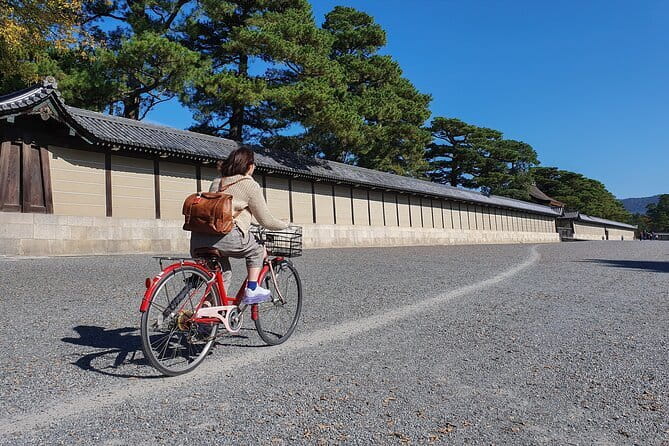
- You ride between famous sights on mostly easy terrain, with only gentle slopes in the mix.
- Bike rental, helmet, and insurance are included, so you can focus on the route instead of logistics.
- Your guide helps with real street navigation, including curbs and pavement transitions that are tricky on your own.
- You get a classic Kyoto route in 4 hours, without the slow back-and-forth of hopping buses.
- Nanzen-ji entrance is covered, and several other stops are listed as free on the tour notes.
- It’s private for your group, so the pace can match your crew.
A bike-first way to see Kyoto in four hours
Kyoto can feel like two different cities at once. One minute you’re in souvenir-and-street energy, the next you’re in quiet temple grounds where the pace slows to a whisper. This tour is designed for that shift, using cycling to move you efficiently between areas that are easier by bike than on foot.
The “half day” length is also a smart trade. You get a lot of variety, but you still have time afterward to wander your own neighborhoods. And because the route is built around recognizable Kyoto anchors, you don’t waste your energy figuring out what’s worth seeing first.
You can also read our reviews of more cycling tours in Kyoto
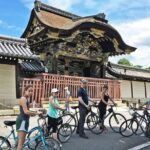

The Mamachari rental: gears, comfort, and how the tour actually moves
You’ll ride a standard non-electric Mamachari style bike, labeled B-type, with 3 gear shifts. That matters because Kyoto is not a steep city, but you do hit a few gentle climbs, especially as you move across neighborhoods. The gear set is there to keep your legs comfortable if you’re trying to pedal without breaking into a sweat.
Helmet and insurance are included, which is exactly what you want to see before you start riding in a city. The tour also keeps you near public transportation, and it ends back at the meeting point, so there’s no stressful mystery about where you’ll land.
Most travelers can participate, but here’s the practical reality: if you’re not used to riding in urban conditions, you’ll be glad the guide handles navigation. One guide name that came up in past groups is Alex, and the key takeaway was that you may appreciate help getting around streets and pavement seams.
Starting at Gojō Station, ending back where you begin
Your day begins at Gojō Station near Osakacho, Shimogyo Ward, Kyoto. The practical win here is simple: you’re starting in a zone that’s easy to reach by rail, and you’re not stuck coordinating a pickup from a random hotel area.
It’s also a private tour for your group. That tends to make the ride feel less like herding and more like you’re being guided through a route that fits your group’s timing.
The tour typically runs about 4 hours, including short stops and cycling between them. That means you’ll spend most of your time actively moving, with brief windows for looking around and photos.
Stop 1: Gion on a bike, where Kyoto feels most like a daily commute
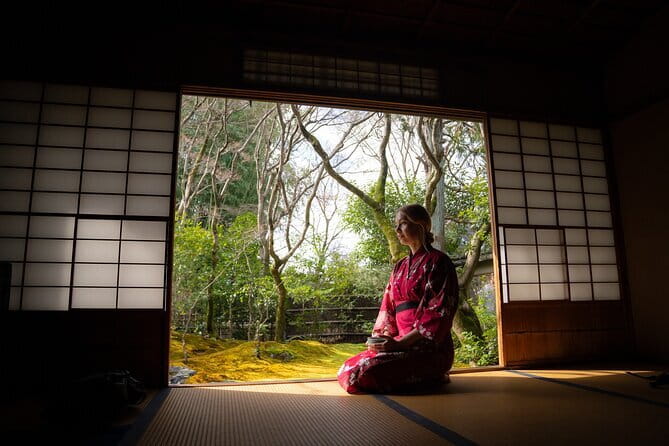
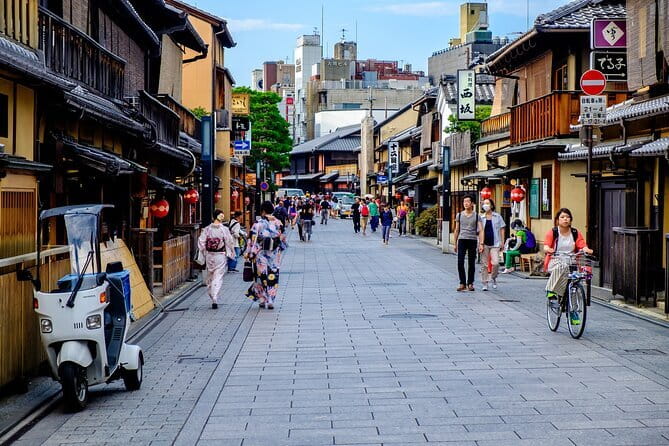
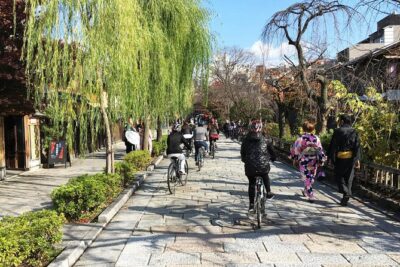
You start in Gion, one of the most iconic districts in Kyoto. The cool thing about doing Gion by bike is that you’re not only standing still and photographing from the curb. You’re moving through the street rhythm that locals live with, and you get a better sense of how the area connects to the rest of the city.
The tour note gives you about 20 minutes here, and that’s just enough for a first orientation. You can spot the streetscape, get your bearings fast, and then roll on before the area gets too gridlocked.
This is also where the guide’s street experience matters. One recurring theme from guides in prior groups is that they pick routes that are easier on bikes than walking paths, including short cuts that you might not notice as a visitor.
Stop 2: Nanzen-ji Temple, calm time after the street energy
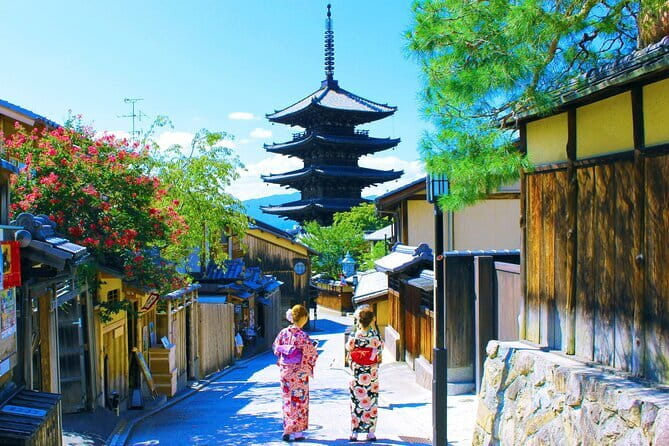
Next up is Nanzen-ji Temple. You get about 30 minutes, which is a generous pocket of time for a temple stop during a bike tour. Nanzen-ji is valued for its Zen atmosphere, and a guided visit helps you read what you’re seeing instead of just moving past it.
The tour includes the entrance fee at Nanzenji Temple, which is one less thing you have to budget for or figure out on the spot. The notes also say the admission ticket is free in the tour context, but either way, the important part for you is that the tour has handled entry for Nanzen-ji.
A drawback to know: with only about half an hour, you won’t be doing a slow, linger-all-day temple experience. Think of it as a focused taste, with enough time to absorb the mood and take a few photos.

Stop 3: Philosopher’s Path, canal-side riding and a story you can see
After Nanzen-ji, you cycle along Philosopher’s Path, a canal-side route known for its natural beauty. The tour gives you about 20 minutes there. That’s more about the feel than the full strolling experience, but it’s still a great way to experience the classic Kyoto corridor without committing an entire afternoon.
A smart advantage of the bike format is that you arrive with momentum. You can look, pause briefly, then move on before you lose your energy or get stuck in a dense pedestrian moment.
One prior guide mentioned a balanced rhythm that includes riding near the river and then later time on the Philosopher’s Path. If that’s the pacing your group gets, you’ll feel like the tour is not just rushing temples, it’s timing breaks in the route.
Stop 4: Ginkakuji (Silver Pavilion), peaceful gardens and quick photo time
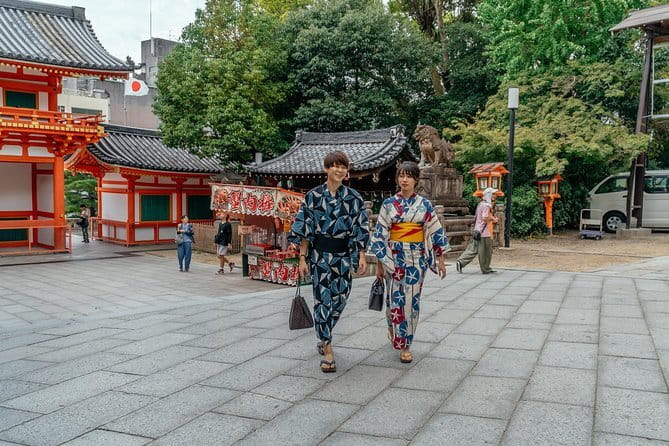
Next is Ginkakuji, also called the Silver Pavilion. You’ll have about 20 minutes here, with the tour noting admission as free for this stop.
Ginkakuji works well as a bike tour stop because it’s a place where you can enjoy stillness without needing hours of deep study. You get time to take in the garden feel and to frame a few photos from sensible viewing angles.
One consideration: like many major Kyoto sights, the busiest moments can happen when you’re there. With only 20 minutes, you’ll want to move intentionally when you enter, not wander in circles. If you’re the type who wants to linger slowly, you might want to come back later on your own after the tour ends.
Stop 5: Shimogamo Jinja, old Shinto roots in wooded grounds
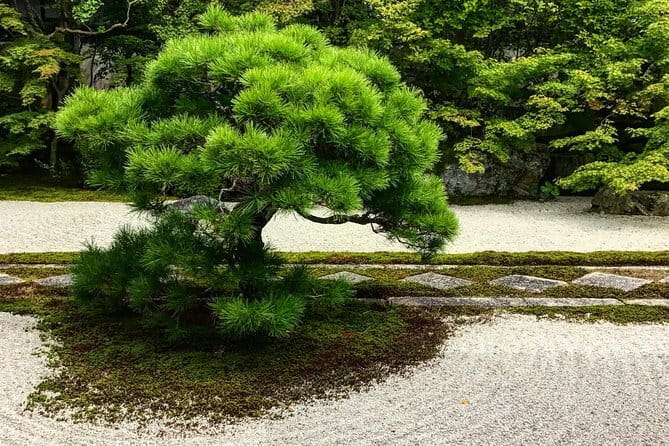
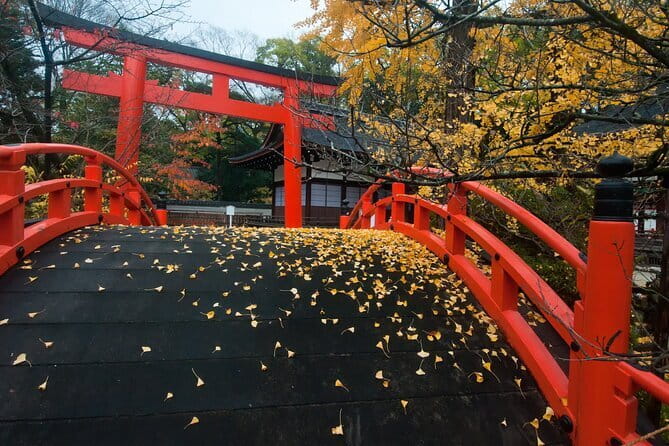
Then you head to Shimogamo Jinja, one of Kyoto’s oldest Shinto shrines. You get about 1 hour, which is a meaningful chunk of time compared with earlier stops.
The shrine is set in serene, wooded surroundings, and that time window lets you slow down. You can pay attention to how the grounds feel and how people move through the space, rather than treating it as a quick photo stop.
The one-hour duration is also a practical hedge against tour fatigue. After several shorter temple moments, this is where you can settle in and breathe.
Stop 6: Kyoto Imperial Palace, a big finishing scene with room to relax
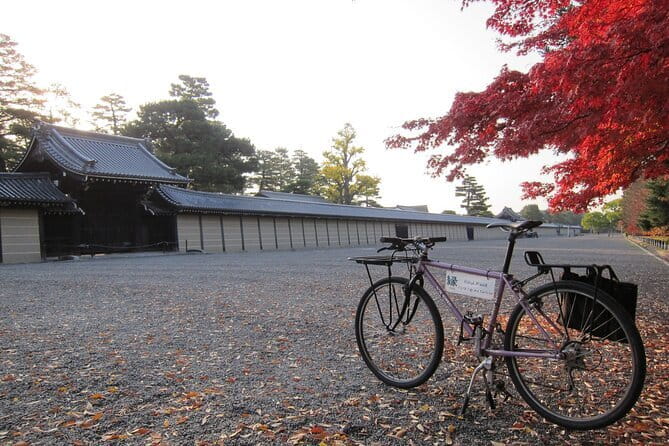
Your last stop is the Kyoto Imperial Palace. You’ll spend about 30 minutes, and the tour notes admission as free here as well.
This final phase is a good match for the way bike tours work. The earlier stops give you spiritual and cultural variety, and the Imperial Palace adds scale and formality. It’s also the kind of place where taking a breather works, even if your time is limited.
The tour ends back at the meeting point, so you’re not stuck figuring out how to get across Kyoto after you’re already tired. That matters when you’re trying to keep your whole day working.
Price and value: what $85 buys you beyond a simple sightseeing ride
At $85 per person, you’re paying for more than bike rental. You’re also paying for an English-speaking guide, the helmet, and insurance, plus bike logistics that would be annoying to handle solo. You’re also getting help covering entry at Nanzen-ji.
It’s worth thinking about value as a bundle:
- If you tried to do this on your own, you’d still need a rental bike and helmet, plus you’d spend time navigating from stop to stop.
- If you hired a guide just for temples, you’d likely lose the bike benefit that gets you between districts efficiently.
- If you used public transit, you’d spend more time transferring and less time watching the neighborhoods change as you ride.
The big question for you is pace. If you want a quick, structured half day that hits several anchors, this price can feel reasonable. If you want a slow, no-rush exploration of one or two top sights, you may prefer a longer day with fewer stops.
Who you should book this for, and who might want a different plan
This tour fits best when you want:
- A guided bike route through Kyoto’s most recognizable areas
- A mix of streets, temples, shrines, and palace grounds
- A pace that feels active but not frantic
It can also be a good choice if you’re worried about riding in a foreign city. One earlier experience credited Alex with helping around streets and pavements, and that kind of support can make the difference between feeling stressed and feeling confident.
It may not be the best match if:
- You dislike cycling or want a mostly walking-based day.
- You strongly prefer deep time in one temple or garden instead of a sampler route.
Practical riding tips you’ll appreciate on the day
Even when a tour is well run, you’ll enjoy it more if you show up ready to ride.
- Wear comfortable shoes you trust on pavement and near temple entrances.
- Keep your camera accessible, because you’ll have short pauses that reward fast photo decisions.
- If your bike feels unusual at first, slow down. Get your rhythm early, so the later ride segments feel easier.
Also, remember this is not an e-bike setup. If you’re planning hills, do it with realistic expectations. The route is described as mostly flat with gentle slopes, but your comfort still depends on your cycling habits.
Finally, if you want the history explanations to really land, lean into them. Several guides were described as patient with photos and clear with storytelling, including examples like Nobumasa and Miya. If you get a guide with that style, the places start to make sense fast.
Should you book this Kyoto bike tour?
If you’re visiting Kyoto for the first time and you want an efficient, fun way to connect major sights without spending your day transferring, I think you should seriously consider booking. The tour’s strength is that it gives you a structured route plus the kind of street guidance that makes biking feel natural instead of risky.
My recommendation is especially strong if you value:
- English guidance to make sense of what you’re seeing
- A bike plan that handles rental and safety basics for you
- A route that balances quick stops with one longer moment at Shimogamo Jinja
If you hate the idea of cycling for a few hours, or you want to linger for long periods, you might get more joy from a walking-focused plan. But if you’re game for a half day on two wheels, this one is set up to feel like Kyoto, not just a photo collection.
FAQ
How long is the Discover Kyoto by Bike tour?
The tour lasts about 4 hours.
What does the tour cost?
It costs $85.00 per person.
What is included in the price?
Included are an English-speaking tour guide, bicycle rental (standard non-electric B-type with 3 gear shifts), helmet, insurance, and the entrance fee at Nanzenji Temple.
Is hotel pickup or drop-off included?
No. Hotel pickup and drop-off are not included.
What is the meeting point for the tour?
The start is at Gojō Station, Osakacho, Shimogyo Ward, Kyoto 600-8177, Japan. The tour ends back at the meeting point.
Is the tour private or shared?
It is private for your group, meaning only your group participates.
Do I need to pay for temple or attraction admissions?
The tour includes the entrance fee for Nanzenji Temple. Other stops are listed as free in the tour notes, while Philosopher’s Path has the admission ticket not included.
What about food and drinks?
Meals and other drinks are not included.
What is the cancellation policy?
Cancellation is free. You can cancel up to 24 hours in advance for a full refund, based on local time.
More Cycling Tours in Kyoto

More Tours in Kyoto
More Tour Reviews in Kyoto
Not for you? Here's more nearby things to do in Kyoto we have reviewed

Kyoto Bike & E-Bike Tours, compared.
 ★ 5.0Hidden Kyoto E-Biking tourFrom $1161,843 reviews
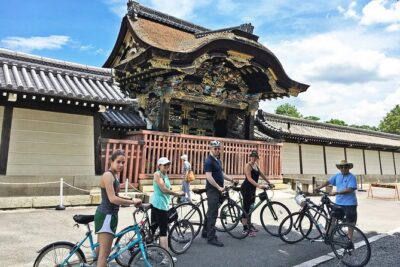 ★ 5.0Bike Tour Exploring North Kyoto plus LunchFrom $1061,087 reviews
 ★ 5.0Arashiyama Bamboo Forest & Hidden Gems Bike Tour (Early Bird)From $106613 reviews
 ★ 5.05 Top Highlights of Kyoto Full Day Bike Tour (E-bike option)From $172511 reviews
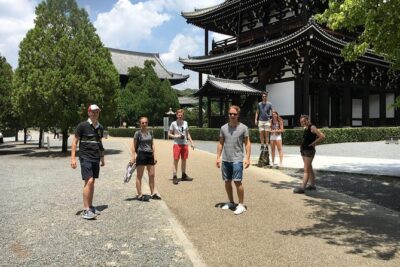 ★ 5.0Full Day Biking Tour Exploring the Best of KyotoFrom $119498 reviews
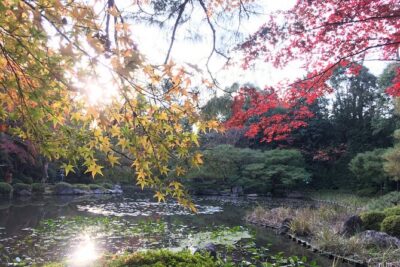 ★ 5.0E-Bike Tours of the highlights of Kyoto!!!From $109291 reviews
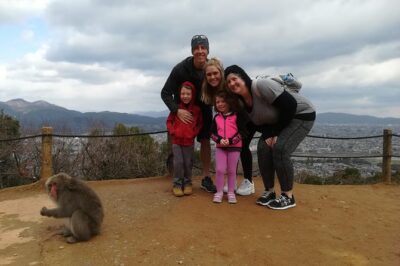 ★ 5.0Afternoon Kyoto Bike Tour: Bamboo Forest, Monkeys & Hidden SpotsFrom $106283 reviews
 ★ 5.0South Kyoto in a Nutshell: Gentle Backstreet Bike Tour!From $79225 reviews
Browse the lists this tour appears in