
Reviewed · KYOTO BUS & SIGHTSEEING TOURS
Early Half Day to Kyoto Highlights
Five hours, Kyoto hits hard.
This early-morning highlights route is built for people who want big sights, smart timing, and real explanations of what you are seeing. You start at 8:00am near Kyoto Station and move by public transport between landmarks like Fushimi Inari-taisha, the Arashiyama Bamboo Forest, and Kinkakuji, the Golden Pavilion. It is also a half day, so you can still plan an afternoon in Kyoto instead of losing the whole day to transit lines and ticket lines.
I especially like two things: the early start that helps you enjoy the famous red gates with less pressure, and the way the local guide keeps the pace organized without feeling rushed. Guide Indra stands out for being friendly, efficient, and great at weaving history and culture into the walk, so the stops make sense instead of feeling like checkboxes.
One thing to consider is cost creep. The tour price covers the guide and routing, but you still need to budget extra for Kinkakuji entrance (¥500) and public transportation (¥1,300), plus gratuity.
Key highlights and why they matter
- Early timing that works for the big Kyoto names before the worst crowd surges
- Small group (max 8), so questions get answered and you feel less like a herd
- Three major landmarks in one half day, plus a final touch at Kyoto Station
- Culture talk on the move, from Shinto at Fushimi Inari to Buddhism at Kinkakuji
- Mobile ticket convenience, so you are not juggling paper at each stop
Why an 8:00am Kyoto Highlights Walk Works
Kyoto rewards early starts. When you go at the beginning of the day, you spend more time looking at the places and less time waiting your turn. This tour is scheduled around that idea, starting at 8:00am, so you can hit the iconic spots while your morning energy is still fresh.
It also helps that this is a half day (about 5 hours). You get the most famous highlights, plus the context that makes them click. Then you are free afterward. That matters if you already planned something in the afternoon, like exploring one neighborhood slowly, doing a museum, or just eating your way through Kyoto without feeling trapped by a long tour schedule.
Finally, the format uses public transport, which keeps it realistic. You are not stuck in a van for every transfer, and you get a simple way to connect Kyoto’s highlights efficiently.
You can also read our reviews of more tours and experiences in Kyoto.

Meeting at Starbucks Kyoto Tower Sando, then getting moving fast
Your meeting point is straightforward: Starbucks Coffee – Kyoto Tower Sando, in front of Kyoto Station. It is the kind of location that makes sense on arrival day because you are already near a major rail hub, and it is easy to find.
You also get a quick reset before the walking begins. Even though the stop is short, I like that the tour starts with an easy landmark. Coffee is optional of course, but the practical benefit is that everyone gathers in one place and you get oriented before stepping onto the next part of the route.
The tour uses a mobile ticket, so you can keep things simple. And because the group is kept small (up to 8 travelers), the logistics feel controlled. You are moving together, but you are not stuck behind a giant crowd of strangers.
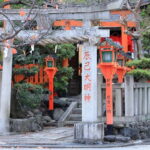
Fushimi Inari-taisha: red gates, Shinto basics, and breathing room
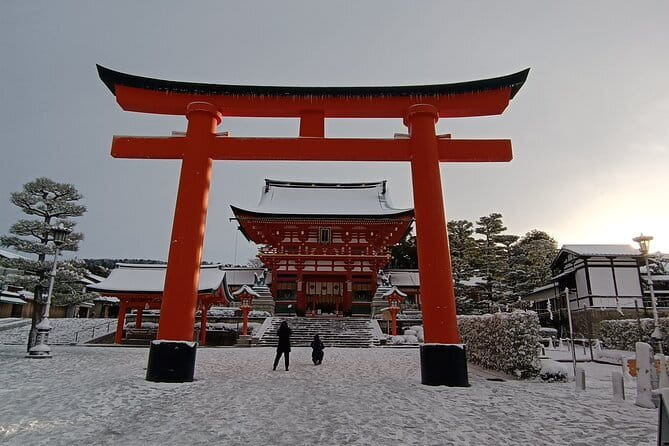
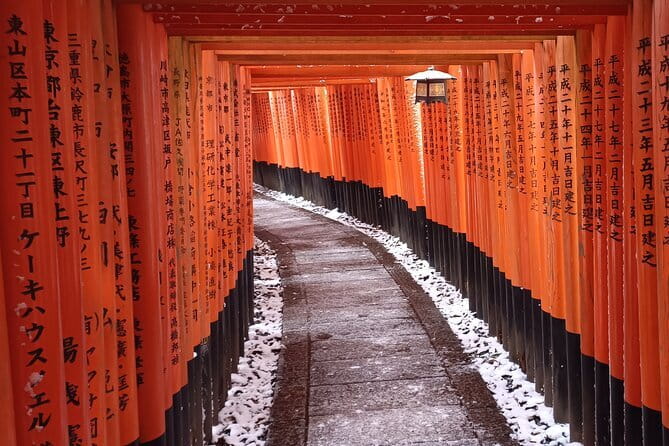
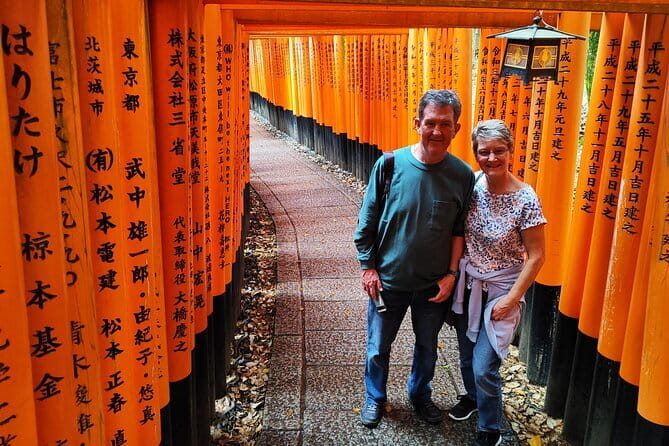
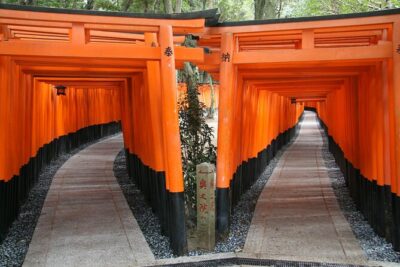
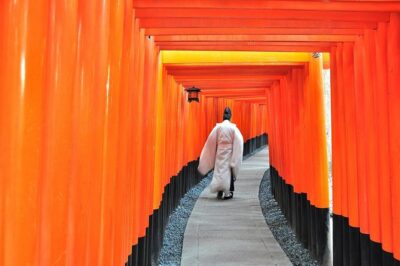
Fushimi Inari-taisha is the spot everyone recognizes, even if they cannot name it at first. You get about 1 hour 30 minutes here, and the key difference on an early tour is that the shrine experience is easier to enjoy. You still see the thousands of red torii gates, but you are not constantly squeezed by slow foot traffic.
What makes this stop more than a photo mission is the cultural framing. The guide explains Shintoism, and it changes how you read the place. Instead of treating the gates as a backdrop, you start noticing why this site matters in Japanese society and religious life. When someone gives you that context, the walk turns into a story, not just scenery.
The time allocation also works well. One part of Fushimi Inari is moving along the paths through the gates, and another part is pausing to take in views and let the scale sink in. With a guided plan, you get both without feeling like you missed the best angles.
A practical consideration: the shrine area is easy to underestimate for walking time. Wear comfortable shoes. Even at an early hour, you will want stable footing while you follow the guided flow through the gates.
Arashiyama Bamboo Forest: nature walk plus cultural context
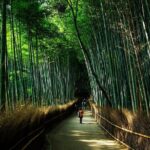
After Fushimi Inari, you shift into a totally different mood at the Arashiyama Bamboo Forest. You get another 1 hour 30 minutes here, and the focus is on the natural scenery plus the way Japanese culture relates to nature and everyday life.
This is where the early start pays off again. Bamboo areas are popular for good reasons, and when you arrive before the big rush, you can actually look up and around. You are not just taking shots over people’s shoulders. The guided pace gives you space to slow down and notice details like how the paths guide you through the grove and how the atmosphere changes as the bamboo closes in around you.
The cultural talk also helps at this stop. Rather than only describing what you are seeing, the guide connects the experience to Japanese society. That makes the bamboo forest feel less like a scenic detour and more like a meaningful part of how people experience place and nature.
If you like photography, this timing is your friend. If you just want calm, it is also a win. Either way, plan to be a little present. This stop goes best when you stop rushing.
Kinkakuji Golden Pavilion: plan for the ¥500 entrance fee
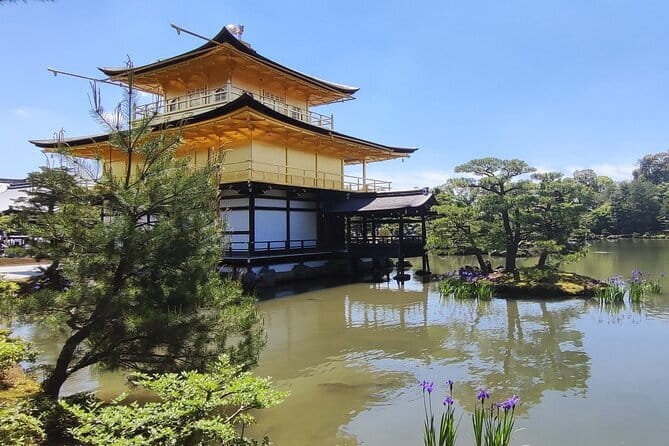
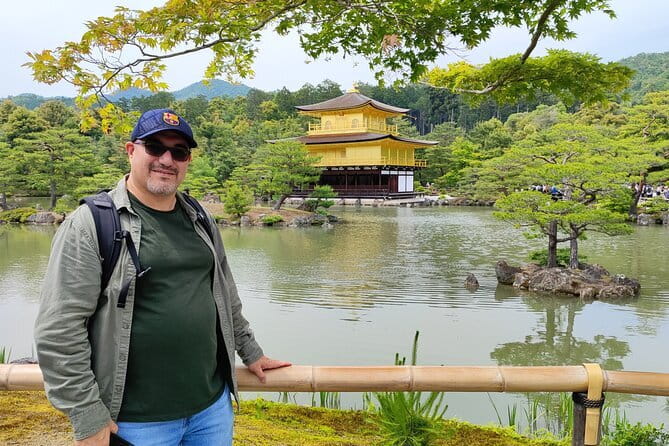
Kinkakuji, the Golden Pavilion, is another Kyoto must-see. You spend about 1 hour 30 minutes here, and it is positioned as the 2nd most visited tourist spot in Japan, so you should expect interest and activity.
This stop includes more than viewing. The guide explains Buddhism in Japan and gives history about the temple, so the building is not just a striking exterior. You start understanding what you are looking at and why the place has stayed important.
One clear note for your budget: Kinkakuji entrance is not included. The entrance fee is ¥500 per person. I like to flag this because it affects your final total, and it is easy to forget when a tour price looks clean at checkout.
Since you have a full 90 minutes here, you do not have to sprint. You can move at a comfortable pace, listen for the parts that matter, and take in the views from different angles. That combination is what makes Kinkakuji feel worth your time instead of like a quick stop.
Kyoto Station Building: a practical wrap-up near your transport hub
The final stop is back at Kyoto Station Building for about 15 minutes, returning to the meeting point. This might sound small, but I appreciate wrap-ups that land you near major transit.
It helps you transition into your own Kyoto plan with less stress. If you are heading out for lunch, shopping, or a museum afterward, being near Kyoto Station makes the next step easier. And because the tour is about half day length, you are not stuck trying to solve logistics late in the morning.
Think of this as your reset button. You finish strong, you get oriented for your afternoon, and you do not have to reverse-engineer directions from a far-flung location.
The real value: guide Indra and how the schedule stays on track
The standout theme is the guide. Indra gets repeated praise for being friendly and effective, with the kind of teaching that keeps you engaged without turning the tour into a lecture.
The best part for your day is that he plans the flow to maintain the schedule. That is not a small detail. Kyoto highlights can be slow if you fight crowds or lose time at the wrong moment. Here, the route is arranged so you cover the big three stops plus the station wrap-up in the time window of about 5 hours.
The other big value is question time. With a small group of up to 8 travelers, you are more likely to get real answers instead of hearing the guide at the far end of a line. In practice, that makes the tour feel closer to a small-group experience than a large bus tour.
If you are the kind of traveler who likes to understand the why, this guide style fits you. If you just want to see the sights with minimal talking, you can still enjoy it, but the explanations add a layer that you will remember later.
Price and logistics: what $94.71 really covers
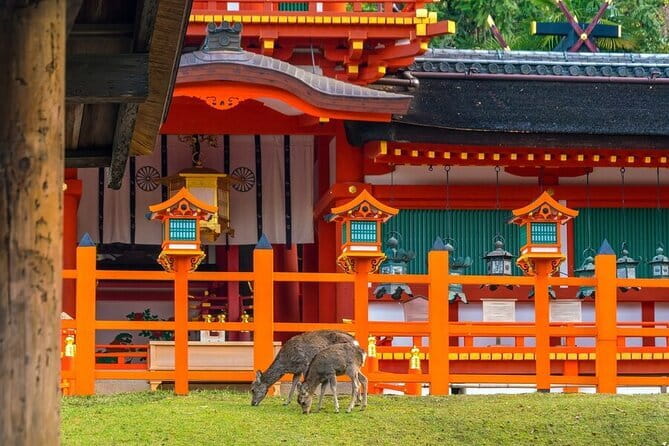
Let’s talk value in real terms. The tour price is $94.71 per person and the itinerary is designed as a guided walking experience with public transport between stops. The included items are the experienced local guide with good command of English and the planned route that strings together the big names efficiently.
Then come the extras you should budget:
- Kinkakuji entrance fee: ¥500 per person (not included)
- Public transport: ¥1,300 per person (not included)
- Gratuity: not included
Once you factor in the on-the-day costs, you are paying for two things: expert direction and time saved. In Kyoto, time is currency. This tour is structured so you do not waste your morning figuring out where to go next, and you do not get stuck missing key portions of each highlight because you underestimated the walking or the crowd flow.
Also, you are getting multiple major stops, not just one. Fushimi Inari and Kinkakuji alone are heavy hitters. Add Arashiyama Bamboo Forest and you have a compact mix of religion, nature, and landmark architecture in one half day.
If you are comparing to doing it solo, the guide’s main value is the flow plus interpretation. You can absolutely plan Kyoto on your own, but a well-run half day tour reduces the guesswork.
Practical tips so your morning stays smooth
Here’s how I’d set you up for a good experience, based on how this tour is designed.
First, treat it like a half-day walking plan. Wear shoes that feel good for repeated walking, since you are moving through shrine and forest areas and then doing another temple visit.
Second, keep your schedule flexible in the afternoon. The tour is short by design, so you can go free after the last station stop. I’d plan something nearby or something that does not require a long transit chain, so the day feels easy instead of rushed.
Third, be weather aware. The experience notes that it requires good weather. If rain hits, there is a chance of a schedule change, so I recommend you keep your Kyoto day flexible enough to accept an alternate date if needed.
Finally, arrive ready to gather. The meeting point is a specific location near Kyoto Station, and you start at 8:00am. Show up a few minutes early so you can start walking on time.
Should you book this early half-day Kyoto highlights tour?
Book it if you want a short, organized way to see Kyoto’s biggest hits with context, not just snapshots. The combination of Fushimi Inari, Arashiyama Bamboo Forest, and Kinkakuji in about 5 hours is ideal when you have limited time or you already planned the rest of your day.
You should also book if you like small groups and clear explanations. With a maximum of 8 travelers and a guide like Indra, the tour is designed so you can ask questions and keep the day on schedule.
Think twice if you hate added fees. The tour price is not the full cost, since Kinkakuji entrance (¥500) and public transport (¥1,300) are separate. Also, because it depends on good weather, be prepared for the possibility of changes if conditions are poor.
If you fit those two points, this is a strong value way to get the morning version of Kyoto done right.
FAQ
What time does the tour start?
The tour starts at 8:00am.
How long is the tour?
It runs for about 5 hours.
Where is the meeting point?
You meet at Starbucks Coffee – Kyoto Tower Sando, located in Kyoto near Kyoto Station.
What are the main stops on the tour?
The tour covers Fushimi Inari-taisha Shrine, Arashiyama Bamboo Forest, and Kinkakuji Temple, with a final stop back at Kyoto Station Building.
Is the Kinkakuji Golden Pavilion entrance fee included?
No. The Kinkakuji entrance fee is ¥500 per person and is not included.
Do I need to pay for public transportation?
Yes. Public transportation is listed as ¥1,300 per person.
Is a guide included?
Yes. An experienced local guide with good command of English is included.
What is the group size limit?
The tour has a maximum of 8 travelers.
What happens if weather is poor?
This experience requires good weather. If it is canceled due to poor weather, you will be offered a different date or a full refund.
What is the cancellation policy?
You can cancel for free up to 24 hours in advance for a full refund. If you cancel less than 24 hours before the start time, the amount paid is not refunded.
More Tour Reviews in Kyoto
Not for you? Here's more nearby things to do in Kyoto we have reviewed


Kyoto Bus & Sightseeing Tours, compared.
 ★ 5.0PERFECT KYOTO 1-Day Bus TourFrom $12913,518 reviews
 ★ 4.8Fushimi Inari, Kinkakuji, Bamboo Grove 1 Day Bus TourFrom $1224,316 reviews
 ★ 4.9Best of Kyoto: Gion, Geisha, Pagodas & CobblestonesFrom $242,058 reviews
 ★ 3.9Hop-on Hop-off Sightseeing Bus TicketFrom $272,034 reviews
 ★ 5.0Private Kyoto Tour with a Local, Highlights & Hidden Gems, PersonalisedFrom $1021,543 reviews
 ★ 4.7Kyoto/Osaka: Nara, Fushimi Inari Taisha, Arashiyama Bus TourFrom $521,275 reviews
 ★ 5.010 Must-see Spots in Kyoto One Day Private Tour (up to 7 people)From $1791,108 reviews
 ★ 4.5One-Day Tour of Kyoto’s Highlights from Osaka/KyotoFrom $661,092 reviews
Browse the lists this tour appears in