
Reviewed · GION & GEISHA DISTRICT TOURS
Geisha at Dusk: A Stroll Through Old Kyoto
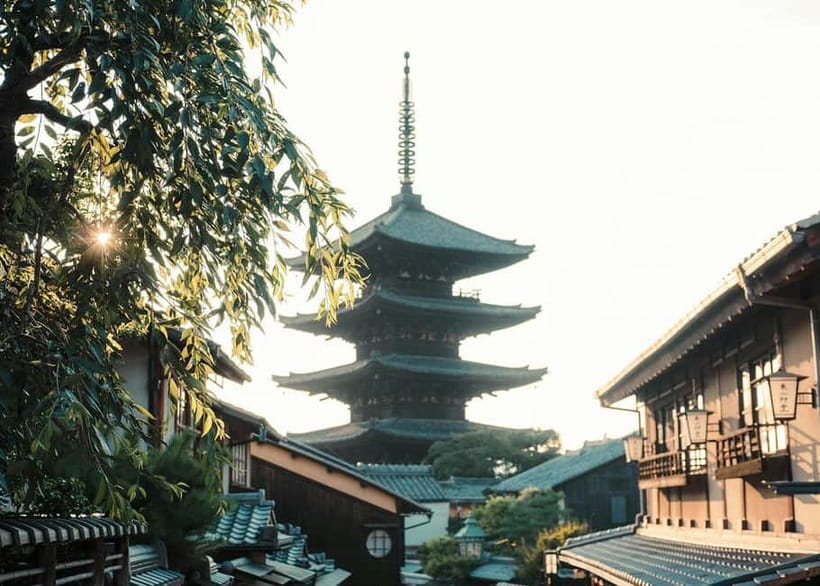
Kyoto feels playful at dusk. I love the Ebisu coin toss ritual, and I love how the walk turns the Gion streets into something you can actually feel, with preserved wooden townhouses on Hanamikoji and Gion Shirakawa. It is a short tour, but it hits the right mood: calm shrine energy, then lively street life, then dusk glow along the river.
I also like that the guide, Romi, keeps things practical and personable, pointing out details and explaining why they matter in everyday Japanese culture. One heads-up: you may not always spot a maiko or geiko during your stroll.
You start near Donguri-bashi Park, then work your way through Kyoto Ebisu Shrine, Kennin-ji Temple, Hanamikoji Street, and finally the Shirakawa area. The timing is built for sunset and after-dark atmosphere, so you get a day-to-night feeling without spending half your life in transit.
Key highlights you will feel right away
- Ebisu Shrine luck ritual: toss a coin into a box below Ebisu’s smiling face for a fun, memorable moment
- Kennin-ji Temple pause: step through serene temple grounds, including a famous Wind and Thunder Gods picture
- Hanamikoji Street atmosphere: preserved wooden townhouses and a street that seems to run on old-time rhythm
- Gion Shirakawa cobblestones by the river: classic Kyoto scenery at dusk, especially around the Shirakawa Canal area
- Small-group feel: you get time for questions and clear explanations from Romi in English
Why this Geisha at Dusk walk hits the right timing
Kyoto can feel overwhelming if you bounce from photo spot to photo spot. This 2-hour route is built to fix that problem by giving you a sequence, not just a list of streets. You begin with a shrine ritual, slow down at a temple, then pick up the pace along Hanamikoji, and finish where dusk does its best work along the Shirakawa side.
At night, Gion and Higashiyama look sharper, calmer, and more intentional. The lantern-light vibe is real, but the best part is how the wooden townhouses and stone lanes change character when the crowds thin out. You are not trying to sprint through three neighborhoods. You are walking with context, so you understand what you are seeing.
You can also read our reviews of more tours and experiences in Kyoto.

Starting at Donguri-bashi Park, then heading straight to Ebisu luck
Your meeting point is 団栗橋公園 at Donguri-bashi Park (35.0018215, 135.771567). From there, the tour’s first real moment is Kyoto Ebisu Shrine, dedicated to Ebisu, one of Japan’s Seven Lucky Gods and the deity of prosperity.
Why this first stop works: it gives you a simple frame for the day. You are not just looking at scenery. You are stepping into a belief system where good fortune is treated like something you can participate in.
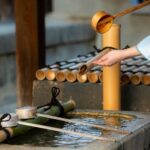
Kyoto Ebisu Shrine coin toss: the easiest way to make the culture feel personal
At Ebisu Shrine, you get a unique ritual that is usually more fun than a typical bow-and-breeze-through stop. The experience centers on tossing a coin into a box beneath Ebisu’s smiling face. It is playful, quick, and tied to the shrine’s theme of prosperity.
Here’s the practical value for you: this is the kind of moment that makes the rest of the walk click. Once you have done one simple action that feels meaningful, the signs, the space, and the symbolism along the streets feel less random. You also get a natural photo opportunity without needing to chase perfect angles.
Kennin-ji Temple grounds: quiet contrast before the streets get loud
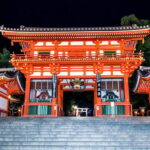
After Ebisu, you move to Kennin-ji Temple. The tour goes through the temple grounds in a calm, respectful way before you step back into neighborhood energy. The focus is on atmosphere and cultural treasures, including the famous Wind and Thunder Gods picture.
This stop gives you a necessary break. Gion can be crowded at the wrong hours. Kennin-ji is where the pace resets. Even if you have never studied Japanese art or temple symbolism, you can still enjoy the shift: softer soundscape, slower steps, and the feeling that you are entering a different layer of Kyoto.
One tip for your visit here: take a few seconds to look around before you lift your camera. The main gate area and the surrounding grounds are about more than one perfect frame.
Hanamikoji Street: traditional townhouses, street-level Kyoto energy
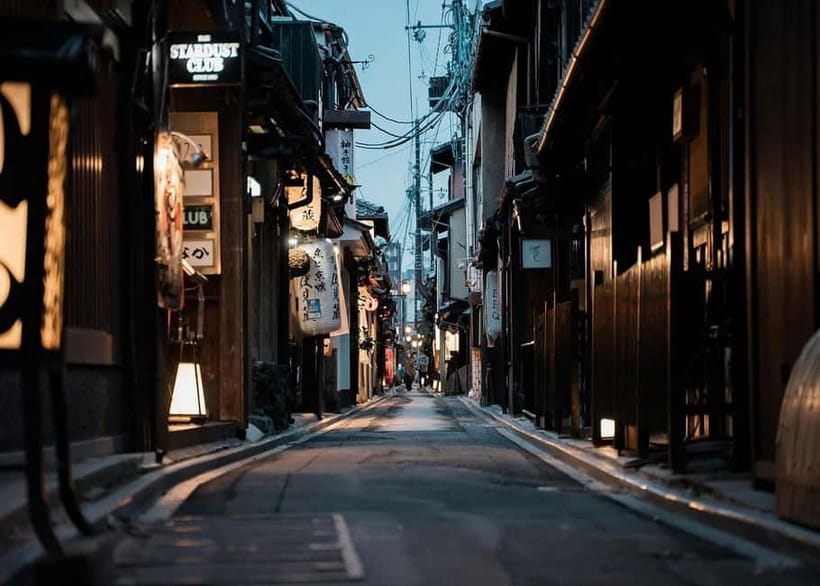
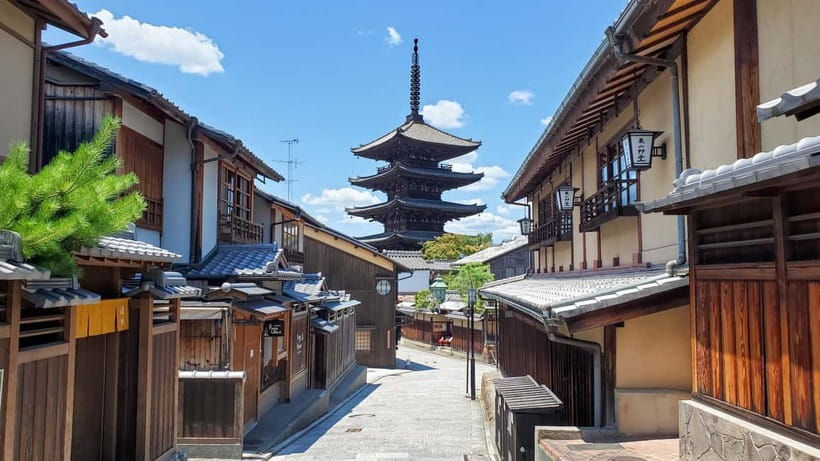
Then comes the part many people come to Kyoto for. You arrive at Hanamikoji Street, and suddenly you are in one of the city’s most atmospheric lanes. The street is lined with preserved traditional wooden townhouses, and the vibe is both lively and old-school.
This is where the tour helps you more than a self-guided stroll. Your guide points out objects and explains their significance in Japanese culture. That kind of context matters because Hanamikoji is easy to treat like a backdrop. With a guide, you notice the small cues that most visitors miss.
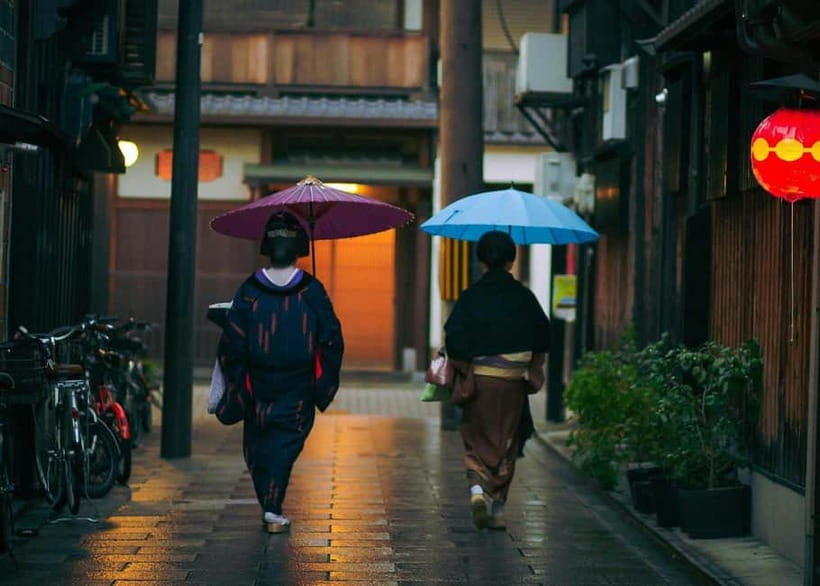
And yes, this is also where you might catch a glimpse of a maiko or geiko passing by. Your tour experience is designed to be timed for that possibility, especially as the light shifts. Still, plan for the realistic option: sightings are not guaranteed.
Practical note: keep your camera ready, but don’t block foot traffic. Walk on the edge of the lane, pause briefly, and let people pass.
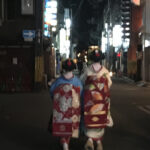
Gion Shirakawa at dusk: cobblestones, river reflections, and that Kyoto feeling
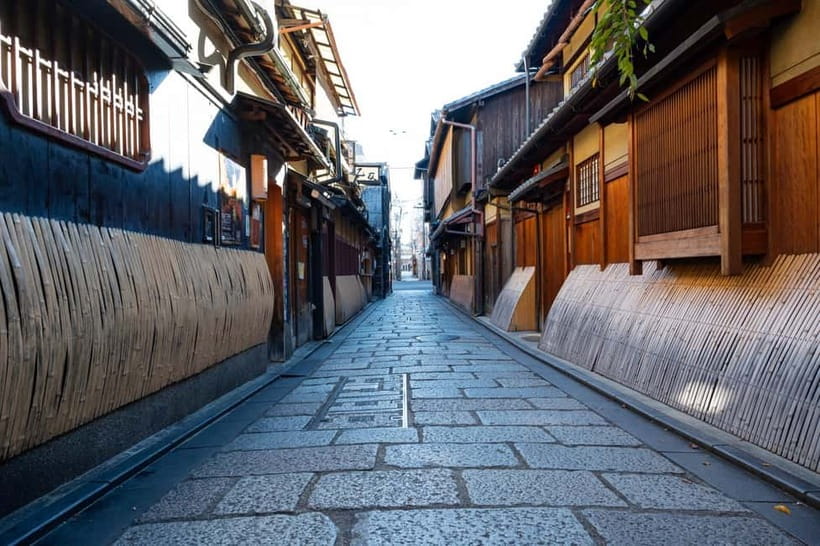
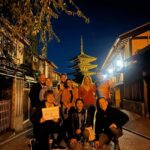
The finish is Gion Shirakawa, where the streets turn into a slow walk along cobblestones and traditional wooden townhouses by the Shirakawa River. This is the part that feels most cinematic, especially at dusk when lighting softens and shadows stretch across the townhouses.
The tour centers on walking this area at a comfortable pace, with time to enjoy the scenery and soak up the mood. This is where the extra context from earlier stops pays off. You are no longer just seeing pretty buildings. You are connecting the dots between shrine meanings, temple traditions, and the everyday cultural world that surrounds them.
If you care about photos, this is your best stretch. The river-adjacent atmosphere tends to create natural depth in your images, especially as evening lighting changes.
What makes the guide matter (Romi’s role in the experience)
The biggest difference between a good stroll and a great one is what you learn while you walk. In this tour, Romi’s strength is explaining what you are looking at in plain language. She points out interesting objects along the way and explains why they matter, and that makes the whole route feel intentional.
You will also appreciate the small-group feel. When questions pop up, you get answers instead of waiting your turn. That matters in Kyoto, where the signage and customs can be confusing if you are winging it.
Price and value for a 2-hour Kyoto evening
The price is $20 per person for a 2-hour English-guided walk. For Kyoto, that is a pretty strong value when you consider what you get: a guided sequence through Ebisu Shrine, Kennin-ji Temple, Hanamikoji Street, and Gion Shirakawa, plus a real ritual moment.
Is it a bargain? It feels like one, because the tour is not just sightseeing. You are getting cultural interpretation at multiple stops, and you get at least one hands-on moment with the coin toss. If you were to do this route alone, you could still see the streets, but you would miss the meaning behind what you notice.
The only cost to factor is time. Two hours flies by in Kyoto. If you want long shopping breaks or a long dinner detour, you will need to plan that separately.
Who should book this tour, and who should set expectations
This is a great match if you want:
- a short Kyoto evening plan that feels different from a generic city walk
- a guided route that helps you understand what you see
- a fun culture moment at Ebisu Shrine, not just passive sightseeing
- a dusk-focused walk where the streets look their best
It is less ideal if you want guaranteed celebrity-style performance viewing. Your tour includes the possibility of seeing a maiko or geiko, but you may not always encounter them. It is also a walking-focused experience with no meal included, so treat it as part of a bigger evening plan.
Quick tips so you get the best version of the experience
These are small things that make a noticeable difference:
- Wear comfortable shoes. You will be walking, and cobblestones and temple paths are not friendly to stiff footwear.
- Bring a camera and keep it ready for Hanamikoji and Gion Shirakawa, where dusk lighting helps.
- Expect some walking and change in scenery. The tour is designed to move, so keep your pace steady.
- Use the Ebisu coin toss as your anchor moment. After that, let the guide help you connect the rest of the route.
Also, plan around weather. One of the guides’ fans noted it was hot during their experience, so bring water if you think you will need it, and dress for evening temperature changes.
Should you book this Geisha at Dusk tour?
If you want a Kyoto night plan that is short, guided, and built around authentic stops, I think this is a smart booking. The combination is the win: Ebisu’s prosperity ritual, the quiet reset at Kennin-ji, the street-level charm of Hanamikoji, and the dusk magic of Gion Shirakawa by the Shirakawa River. For $20, you are paying for guidance and context, plus one genuinely memorable activity.
Book it if you like walking with meaning, and you are okay with the realistic expectation that maiko or geiko sightings are possible, not promised. Skip it only if you mainly want a long self-paced wandering session or a meal included in the price.
FAQ
How long is the Geisha at Dusk tour?
The tour lasts 2 hours.
Where do I meet the guide?
Meet your guide at Donguri-bashi Park (団栗橋公園), coordinates 35.0018215, 135.771567.
Is the tour guide available in English?
Yes. The live tour guide speaks English.
What is included in the price?
The local guide is included.
Is a meal included?
No meal is included.
What do we do at Kyoto Ebisu Shrine?
You experience a unique ritual by tossing a coin into a box beneath Ebisu’s smiling face.
Will I definitely see a maiko or geiko?
No. You may not always encounter maiko or geiko during the tour.
What should I bring?
Bring comfortable shoes and a camera.
Is the tour wheelchair accessible?
Yes, the tour is wheelchair accessible.
Can I reserve and cancel without losing money?
You can reserve now and pay later, and you can cancel up to 24 hours in advance for a full refund.
More Tour Reviews in Kyoto
Not for you? Here's more nearby things to do in Kyoto we have reviewed


Gion & Geisha District Tours, compared.
 ★ 4.7Kyoto Geisha Walking Tour: Gion District & Hidden GemsFrom $253,273 reviews
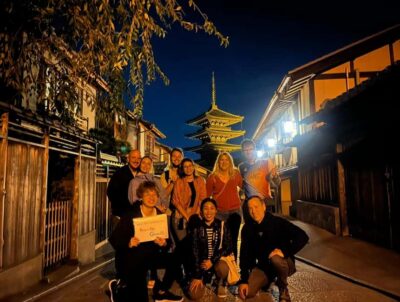 ★ 4.9Gion Magical Night Walking Tour with Geisha TriviaFrom $242,393 reviews
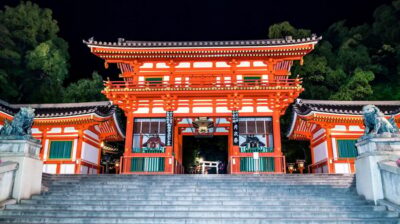 ★ 4.7Gion Geisha District Walking Tour – Stories of GeishaFrom $202,187 reviews
 ★ 4.9Best of Kyoto: Gion, Geisha, Pagodas & CobblestonesFrom $242,058 reviews
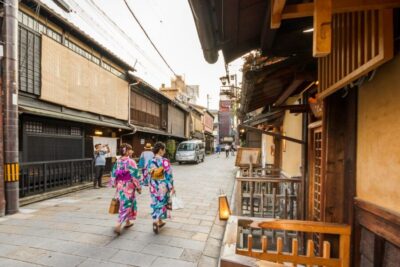 ★ 4.5Night Walk in Gion: Kyoto’s Geisha DistrictFrom $212,003 reviews
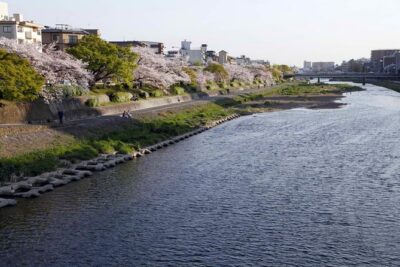 ★ 5.0Kyoto Night Foodie Tour in Gion (9+ dishes + 6 Sake tastings)From $1631,762 reviews
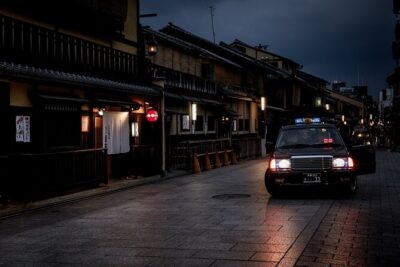 ★ 5.0Kyoto Gion Geisha District Walking Tour – The Stories of GeishaFrom $251,441 reviews
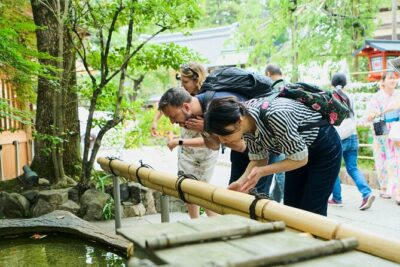 ★ 5.0Kyoto Gion: 2-Hour Geisha Culture & History Walking TourFrom $231,186 reviews
Browse the lists this tour appears in