
Reviewed · FUSHIMI INARI SHRINE TOURS
Gion and Fushimi Inari Shrine Kyoto Highlights with Government-Licensed Guide
Gion feels like a maze at first. This Kyoto evening walk strings together the famous torii at Fushimi Inari with Gion streets, so you spend less time figuring it out and more time seeing the city’s rhythm. You’ll travel at human speed with a licensed local English speaking guide, and the route is built for lanes that cars never touch.
I love how the plan knits together the right neighborhoods in one go, including Gion, Pontocho, and Miyagawacho, plus the Shirakawa canal area. I also like that the guide explains what you’re looking at, including the difference between maiko and geiko and the stories behind geisha culture.
One thing to consider: it’s a real walking tour, and admission for Kiyomizu-dera and Kennin-ji isn’t included. If you’re hoping for a guaranteed geisha sighting, don’t build your night around that.
Key things to know before you go
- A small group, max 10 makes it easier to hear your guide in tight lanes
- Car-free streets and alleyways get you closer to the places that shape Kyoto’s atmosphere
- Fushimi Inari plus Gion in one evening saves you time versus doing them separately
- Free shrine stops include Fushimi Inari-taisha and Yasaka Shrine, so you can budget smarter
- Maiko and geiko context helps you spot what matters when you’re actually there
- Some tours are led by guides such as Mari-san, who was specifically praised for clarity and storytelling
A one-evening Kyoto plan that actually makes sense
Kyoto is famous for being walkable, but also famous for being easy to get turned around. This tour is built for one evening, so you can see major districts and key landmarks without hopping across town all day.
I like the structure because it connects “iconic” and “local” in the same flow. You start with a shrine that defines Kyoto for many visitors, then you move into Gion’s narrow world where a wrong turn can cost you time and context.
You can also read our reviews of more guided tours in Kyoto


Getting started at Tatsumi-jinja Shrine, then working toward Fushimi Inari
You begin at Tatsumi-jinja Shrine (Tatsumi Dai-myojin) in Higashiyama Ward, and the tour ends back at the same meeting point. Pick-up and drop-off are on foot, so don’t plan to rely on a vehicle for the logistics. This matters because the first minutes set the tone, and you want to be ready to walk.
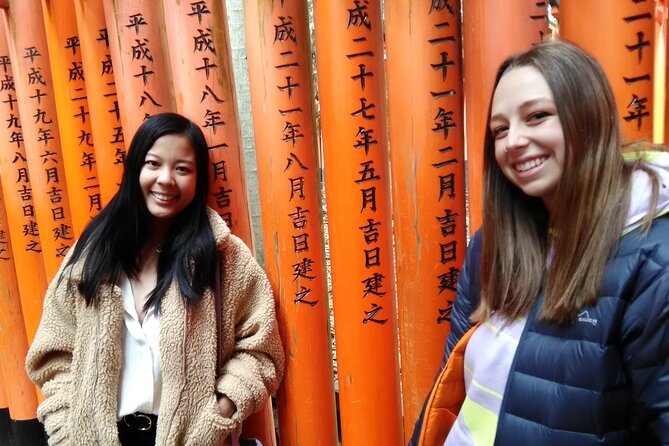
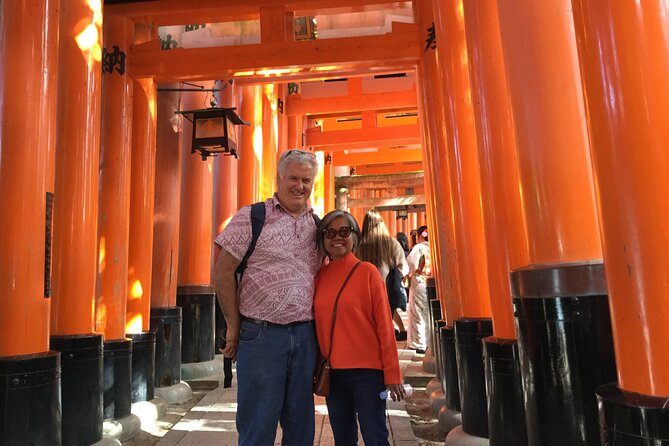
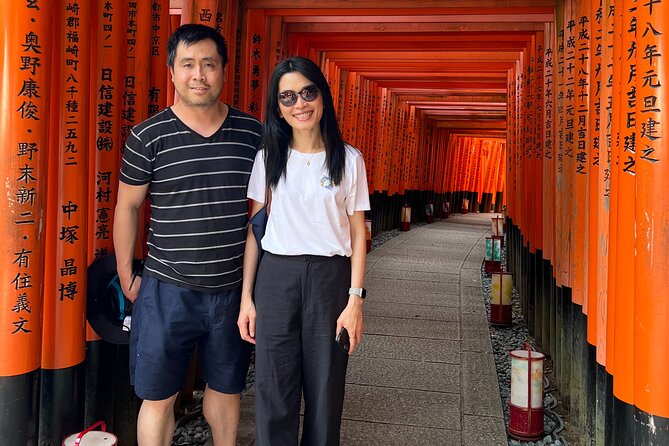
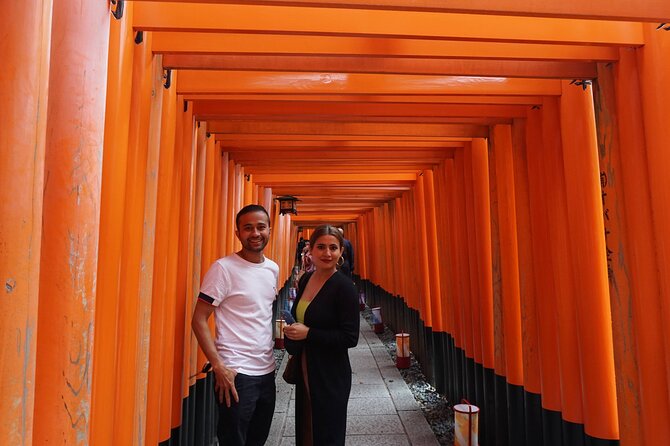
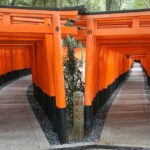
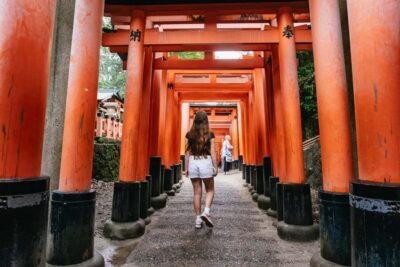
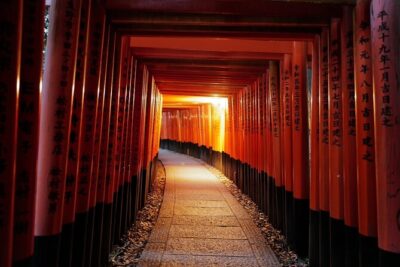
From there, the big anchor is Fushimi Inari-taisha, the Shinto shrine known for its thousands of vermilion torii gates. The ticket for this stop is free, which is a nice budget win. You’ll spend about one hour here, long enough to take in the famous gate corridor trails without feeling rushed into a checklist.
Practical note: even if you’re not doing the longest trail routes, the torii area still involves uneven steps and continuous walking. Comfortable shoes are not optional.
Gion lanes, Pontocho, Miyagawacho, and the Shirakawa canal view
Gion is Kyoto’s most well-known geisha district, and it’s centered around Shijo Avenue, between Yasaka Shrine on the east side and the Kamo River toward the west. The tour keeps you oriented in a way that’s hard to do on your own, especially when streets funnel into alleyways that don’t look like they go anywhere.
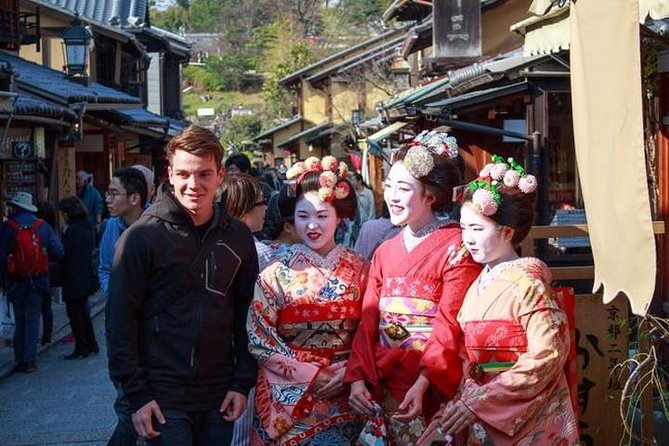
What you’ll enjoy most here is the explanation that comes with the walking. The guide talks about geisha history and how to read the area like a local, including the difference between maiko and geiko. That kind of context changes your evening, because you start noticing details instead of only chasing photos.
You also get a stop at the Shirakawa area along the Shirakawa Canal. This canal lined with willow trees runs parallel to Shijo Avenue, and it’s known for high-class restaurants and ochaya. Even without paying for any fancy meal, the canal-side pacing gives you a calmer rhythm after the busier streets.
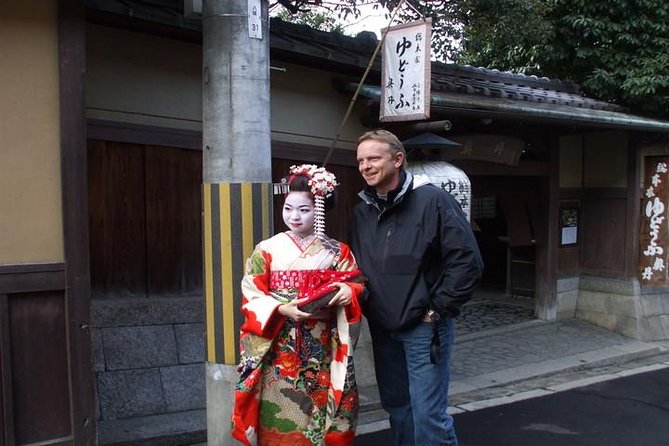
And yes, geisha or maiko sightings can happen unexpectedly. When they do, you’ll be ready to recognize what you’re seeing, instead of wondering if it was your timing or just a random person on the way home.
Yasaka Shrine and Tatsumi Daimyojin: small stops, useful context
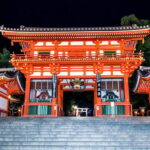
After you settle into Gion, you’ll stop at Yasaka Shrine, also called Gion Shrine. This one is free to enter, and the time is short, around 10 minutes. That brevity actually works well, because it gives you a quick cultural anchor without eating your evening.
Yasaka Shrine is one of Kyoto’s best-known shrines, founded over 1350 years ago. The tour framing helps you understand why that matters: this area isn’t just scenic, it’s rooted in long-term religious and community traditions that shaped how Gion became what it is.
Right nearby in the Gion orbit is Tatsumi Daimyojin Shrine, where you’ll spend about 10 minutes as well. This stop is noted for its inner torii, and it sits in an area linked with ochaya and geisha activity. You’re not there for the crowds, you’re there to connect the dots between the shrine world and the entertainment district world.
Kiyomizu-dera and Kennin-ji: the break from Gion’s streets
After the Gion focus, you shift to two major temple stops that add contrast.

Kiyomizu-dera Temple
You’ll spend about one hour at Kiyomizu-dera, and the admission is not included. That’s a key budget detail to keep in mind. The temple itself has been around for more than 1250 years, and it sits on the hillside of Mt. Otowa in Kyoto’s Higashiyama mountain range.
Even if you’re not a hardcore temple person, Kiyomizu-dera changes the mood of the evening. It gives your legs a different kind of challenge than flat street walking, and it reminds you that Gion is only one layer of Kyoto’s identity.
Kennin-ji Temple
Next is Kennin-ji Temple, listed for about 1 minute in the timing details you have, and admission is also not included. The grounds are described as expansive and pleasant to walk, and what you’ll be hunting for is the karesansui dry landscape garden (the famous rock and sand style).
That combination matters: if you only do famous “headline” sights, Kyoto can feel like a series of postcards. Kennin-ji helps you slow down and notice how temples use space and stillness as part of the experience.
Price and logistics: is $154.37 worth it?
At $154.37 per person, this isn’t a cheap DIY alternative. But it also isn’t a random add-on walking tour, either.
Here’s the value math that matters:
- You get a licensed local English speaking guide, and that’s the real cost driver when you’re talking about Gion’s maze-like lanes.
- The tour is about 6 hours on foot for a small group (max 10 travelers), which often beats the “busy stop, no explanation” problem you can run into with larger groups.
- Some entrances are free, including Fushimi Inari-taisha and Yasaka Shrine, which helps offset what you pay out of pocket later.
The two places where you’ll likely spend more are Kiyomizu-dera and Kennin-ji, since admission isn’t included. So think of this as a guided evening that covers the route and the key orientation moments, while temple entry fees you may need to handle yourself for those specific stops.
Also, average booking timing is about 89 days in advance, which is a quiet clue that this tour is in demand. If you’re traveling during peak seasons or you want a specific evening slot, booking early gives you more choices.
Small-group pacing and how to get the most out of it
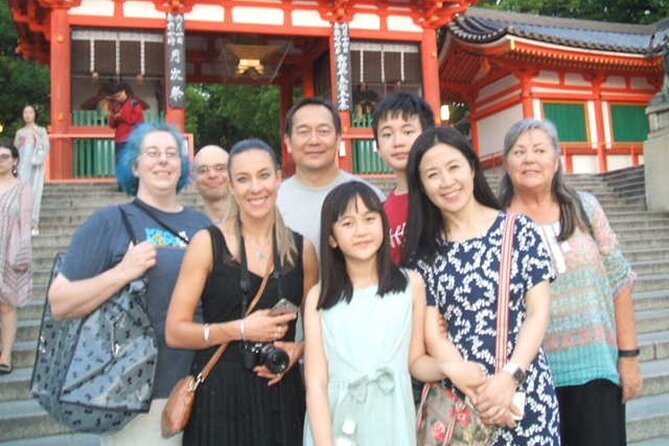
Group size is max 10 travelers, and that matters in Gion and around Shirakawa. Tight lanes can make it hard to hear instructions, and a larger group can turn into a slow shuffle where you miss details.
With a smaller group, you can actually follow along, ask questions, and take photos without constantly getting left behind. The guidance also helps because some streets that look like dead ends are not dead ends, you just need local navigation.
One more thing: the tour is designed to explore places on foot that cars cannot reach. That means you’re choosing authenticity over speed. Plan to walk, not just to stand and photograph.
If you’re sensitive to crowds, go slow with your expectations. Kyoto’s famous districts can be busy, but the value of a guide is that you can move at the right times, rather than waiting at the wrong corner.
The geisha-culture angle: what the guide helps you notice

This is one of the tour’s strongest selling points, and it’s why a guided evening feels more rewarding than wandering independently.
You’ll get explanations about geisha culture, including how to tell the difference between maiko and geiko. That detail is practical. Without it, you might see someone in traditional attire and only later realize you could have recognized the cues in real time.
You also get a route that keeps you in the right zones for the right reasons: Gion’s streets around Shijo Avenue, plus the Shirakawa canal area where ochaya and historic atmosphere are part of the visible scenery. When a surprise sighting happens, being able to categorize it quickly makes the evening feel like it clicked.
One name that came up specifically for good performance was Mari-san. The praised style wasn’t just trivia, it was clear explanations plus good navigation, so you weren’t stuck guessing what you were looking at.
Where this tour can disappoint, and how to prevent that
A walking tour is always vulnerable to mismatch between expectations and reality. The most common issue to guard against is assuming you’ll get a staged geisha performance. This sort of district walking tour is about sightlines and history, not guaranteed shows.
Another possible snag is timing. You’ll want to be at the meeting point on time, because “on foot” pick-up and close stop durations leave little room for delays. If you arrive late, you can easily miss the start and compress your evening.
Finally, remember that not all temple admissions are included. If you show up thinking everything is covered, you may get surprised when it’s time to pay entry at Kiyomizu-dera or Kennin-ji.
Should you book this Kyoto Gion and Fushimi Inari guide tour?
I’d book it if you want an evening that combines the big Kyoto headline, Fushimi Inari, with the more confusing human-scale streets of Gion. The licensed English guide angle is the best reason to choose this over a self-guided walk, especially if you care about understanding geisha culture instead of just taking photos.
I’d skip or modify expectations if you hate walking, if you need fully included admissions, or if your top goal is a guaranteed geisha performance. In those cases, the “guided context plus walking route” may not match what you’re after.
If you’re a first-time visitor to Kyoto, or you want to make your limited time count, this is a smart use of an evening, and the small group size helps you enjoy it instead of racing through it.
FAQ
How long is the tour?
It’s approximately 6 hours.
What is the meeting point for this tour?
The tour starts at Tatsumi-jinja Shrine (Tatsumi Dai-myojin) in Kyoto’s Higashiyama Ward, and it ends back at the same meeting point.
Is transportation included?
Pickup and drop-off for this tour are on foot. There is no private vehicle.
How big is the group?
The maximum group size is 10 travelers.
What does the tour cost?
The price listed is $154.37 per person.
Are tickets included?
Admission is free for Fushimi Inari-taisha and Yasaka Shrine, but admission for Kiyomizu-dera and Kennin-ji is not included.
What type of guide do you get?
You get a licensed local English speaking guide.
Is this tour mostly walking?
Yes. It is described as a walking tour, with pick up on foot.
Can I cancel for a full refund?
Yes, free cancellation is available. You can cancel up to 24 hours in advance for a full refund.
Is the tour accessible for most people?
It says most travelers can participate. Service animals are allowed, and the meeting area is near public transportation.
More Guided Tours in Kyoto


More Tour Reviews in Kyoto

Not for you? Here's more nearby things to do in Kyoto we have reviewed






Fushimi Inari Shrine Tours, compared.
 ★ 4.8Fushimi Inari, Kinkakuji, Bamboo Grove 1 Day Bus TourFrom $1224,316 reviews
 ★ 5.0Fushimi Inari Hidden Hiking Tour (Private Option Available)From $631,750 reviews
 ★ 4.7Kyoto/Osaka: Nara, Fushimi Inari Taisha, Arashiyama Bus TourFrom $521,275 reviews
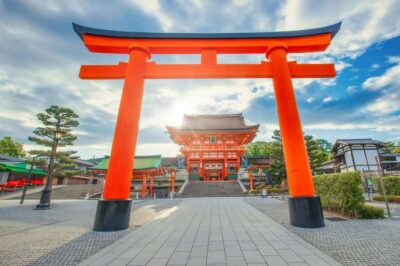 ★ 4.4Osaka/Kyoto: Arashiyama, Nara & Fushimi Inari Shrine w/LunchFrom $61754 reviews
 ★ 4.7Nijo Castle, Kiyomizu & Fushimi Inari Guided TourFrom $54700 reviews
 ★ 5.0Nijo, Kinkaku-ji, Arashiyama, Kiyomizu & Fushimi InariFrom $51699 reviews
 ★ 5.0Kyoto Fushimi-Inari Night Walking TourFrom $43320 reviews
 ★ 4.93-Hour Fushimi Inari Shrine Hidden Hiking TourFrom $72270 reviews
Browse the lists this tour appears in