
Reviewed · GION & GEISHA DISTRICT TOURS
Gion at Night: Secrets and Legends of the Geishas
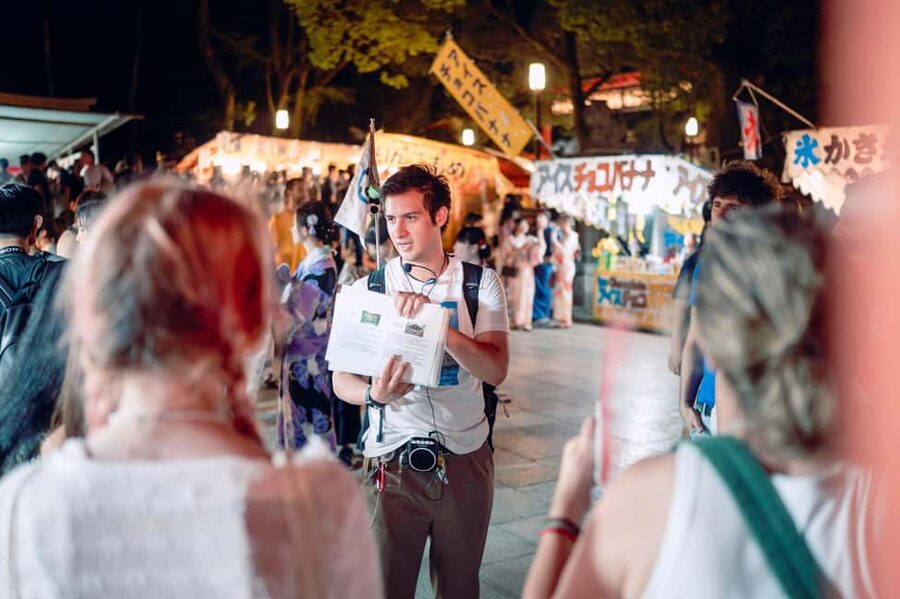
Kyoto’s charm really turns up after dark. This Gion at Night walk is built for a calmer pace, with a Spanish-speaking guide who explains geisha culture as you move through iconic streets and lantern-lit corners. I like that it targets the neighborhood’s real character, not just the busiest angles, and it keeps the group small enough to ask questions.
Two things I particularly appreciate: the route hits major sights like Minamiza and Hanamikoji Street, and the guide focuses on legends and local traditions rather than reciting trivia. One consideration: even with a max group size of 15, Gion can feel crowded because the streets are narrow, and one recent booking found it more busy than expected.
Key points to know before you go
- Spanish guide: live narration in Spanish, which makes the stories easier to follow.
- Small group feel: maximum of 15 travelers, better for questions and photos.
- Iconic stops, night lighting: Minamiza, Tatsumi Bridge, Hanamikoji Street, and the Yasaka area.
- Gion Corner included as a key stop: you’ll see where traditional performances happen, but tickets are not part of the tour.
- Clear value structure: price includes local taxes and fees, with no food, drinks, or show tickets bundled in.
A lantern-lit Gion walk built for small groups
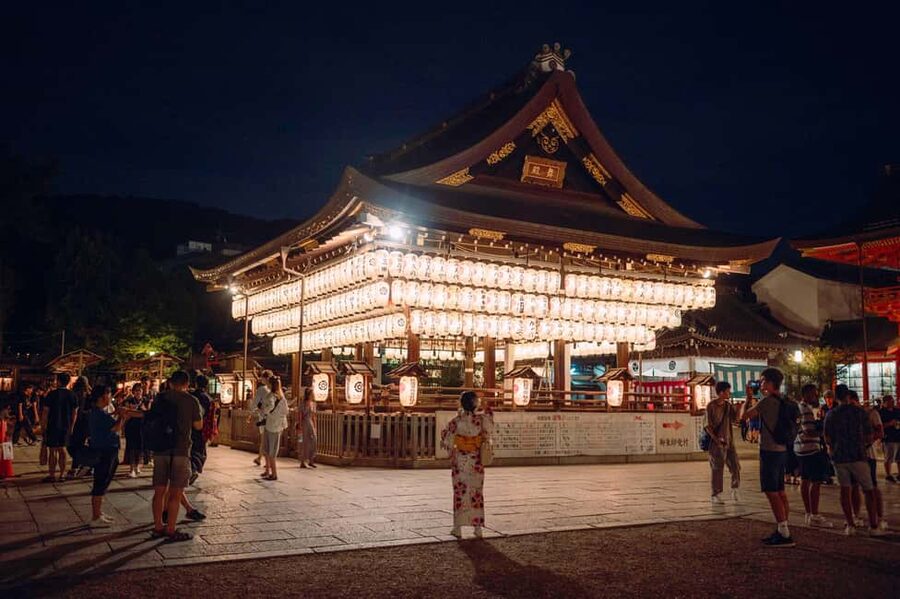
Gion at night has a different rhythm than daytime Kyoto. The streets feel quieter, and the details stand out more because you are not competing with daytime crowds. This tour is designed around that mood, with a chill atmosphere and a route that gives you time to actually hear the stories.
The other big reason this works is group size. With up to 15 travelers, the guide can keep the pace human and still point out smaller things along the way, like where traditions still show up in everyday life. That matters in Gion, where one side street can tell a different story than the next.
Now the practical reality: Gion is still a destination. Even if your group is small, you may share sidewalks with other visitors. One booking even noted it felt more crowded than expected. If that would stress you out, I suggest going with the mindset that you are visiting an active neighborhood, not a private movie set.
You can also read our reviews of more evening experiences in Kyoto
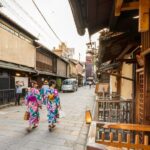

Minamiza Theater start point, why it matters
Your tour begins at Minamiza Theater (Kyōto Minami-za). Starting here is smart because it gives context. This is not just about walking for photos. It frames the evening around performance culture, which is part of how you understand geisha traditions in the first place.
From the start, the guide gives you a short guided look (about 10 minutes at the theatre area). You’re essentially setting the stage, learning what to notice as you move into the rest of the district. If you tend to connect dots only after a good intro, you’ll likely appreciate this setup.
One more thing I like about this first stop is that it helps you get oriented fast. Minamiza anchors the tour, so the later streets feel less random and more like a story you are walking through.
Tatsumi Bridge at night, more than a photo stop
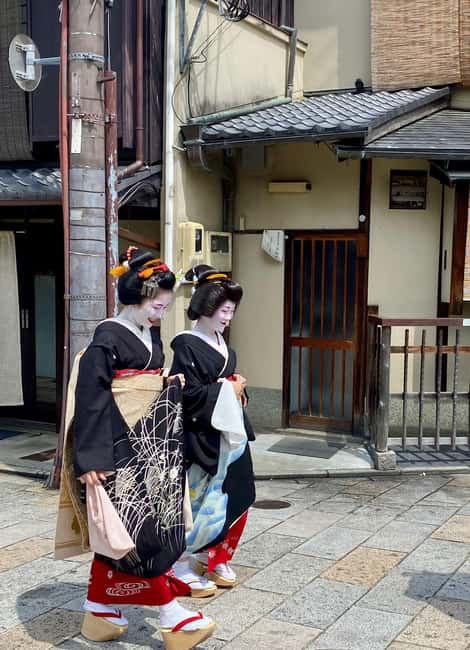
Next up is Tatsumi Bridge, another classic Kyoto landmark. The big draw is visual. At night, you get that reflective, lantern-lit feel that makes the bridge so photogenic.
But the tour’s value is that the bridge is not treated like a stand-alone sight. The guide uses it as a moment to explain local traditions and the meaning of the surrounding area. You get a short guided look here (around 10 minutes), which is usually the sweet spot for landmarks that are photo-friendly but can also become a traffic jam.
Practical tip: if you want the cleanest photos, be ready to take yours quickly once the group pauses. Bridges can get busy, and you do not want to hold up the line while people are trying to keep the schedule.
Hanamikoji Street, tea-house culture and geisha legends
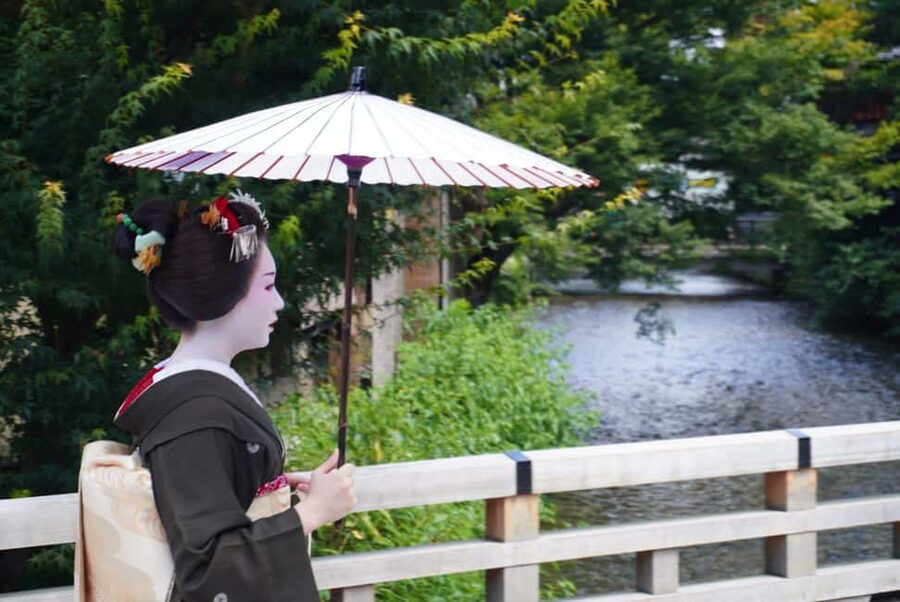
Then you hit Hanamikoji Street, the postcard lane most people recognize. It’s known for tea houses and for the way geisha culture historically ties into the district’s street life. At night, the lanterns help the street feel more atmospheric, and the stories land better because the setting matches what the guide is describing.
This is one of the main segments of the walk (about 10 minutes). The guide shares legends, customs, and fun facts, and you’ll also hear what makes these streets feel distinct. The tour’s promise is to keep things real, including “secret spots” off the busiest lines, so you’re not just marching along the most obvious curb.
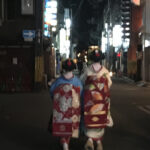
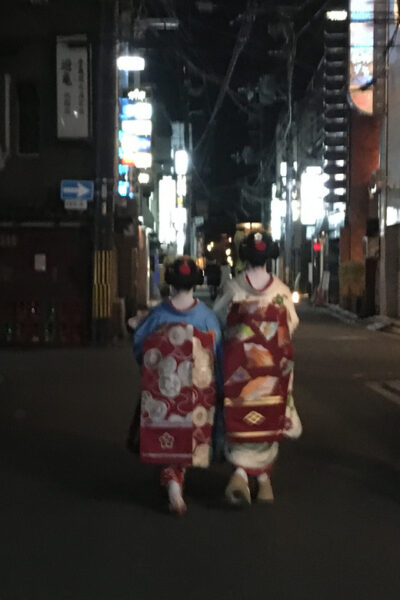
A small but important reality check: you should not count on seeing geishas at every turn. Still, the guide does set you up to recognize the signs of the neighborhood’s traditions. And one booking specifically mentioned that they saw geishas in a taxi, which shows that the right timing and attention can pay off even when you cannot predict individual sightings.
The Gion stroll, plus Gion Corner as a performance stop
After Hanamikoji, the walk continues through Gion itself, which is where the stories start to feel grounded. You’re not just passing by buildings. You’re learning how the district’s traditions connect to the spaces you see, and why certain spots matter when you’re trying to understand the culture respectfully.
The tour also includes a stop at Gion Corner, described as a place where traditional shows are held. This is a great addition because it bridges street-level legends with the idea of performance as a living tradition. One key point for your planning: tickets to shows or private tea houses are not included. So think of Gion Corner as a guided look at the venue and what it represents, not as a ticketed performance you are automatically getting.
This stop also helps you interpret what you’ve been hearing. By the time you reach Gion Corner, geisha culture is less like a random collection of facts and more like a system of customs tied to art, etiquette, and place.
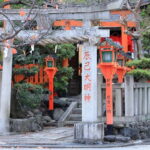
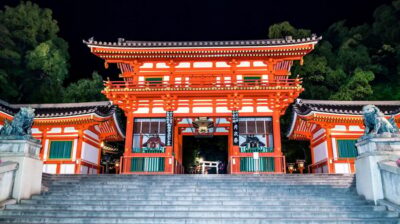
Yasaka Shrine at night, calm lighting in the middle of Kyoto
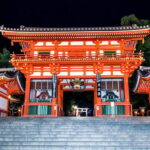
The tour is built around the Gion area and includes the Yasaka Shrine region, lit up and peaceful at night. Even if you do not go inside for a formal visit (entry is not mentioned as included), the nighttime lighting changes the feel of Yasaka. It can look like a pocket of calm compared to the surrounding streets.
This matters because Kyoto at night can be all lanterns and photo angles, and it can also get a little too hectic if you chase every viewpoint. Ending your thinking in the Yasaka area gives you a sense of scale, like you’re wrapping up the neighborhood story at a place that still feels ceremonial.
If you are the type who likes quiet moments, keep an eye out for where the group pauses. This is often the part of the walk where the atmosphere shifts and you get a breather.
Price and what you actually get for $21
At $21 per person for a 150-minute evening walk, the value is mostly about what is included and what is not. Included: you get the Spanish-speaking guide and the tour includes local taxes and handling fees, so you should not hit surprise add-ons mid-walk.
Not included is equally important:
- No food or drinks
- No tickets to shows or private tea houses
- No transportation to and from the meeting point
That mix is typical for a guided neighborhood walk, but it affects how you plan your night. You might want a light snack beforehand, especially if you expect to start late. Also, bring cash or card if you decide to buy something on your own after the tour, since nothing is provided.
The duration also tells you what to expect: you are not doing an all-day sightseeing marathon. This is a focused night experience, with time kept tight enough to stay interesting and long enough to feel like you actually learned something.
Your Spanish guide, and why one name keeps showing up
The biggest difference between a good walking tour and a forgettable one is the guide. Here, the tour has a Spanish live guide, and one of the most praised details in the feedback was the clarity of the guiding, including a guide named Sime. People highlighted how he explained things clearly and kept the group moving well.
Even if you are not with Sime, this is a sign of the tour’s core strength. The format is built for storytelling. The guide is supposed to connect the landmark you’re seeing with the customs behind it, so you understand why the place matters, not just that it exists.
Also, since it’s Spanish, I’d consider whether that’s your comfort level. If you understand Spanish well enough to follow legends and cultural explanations, you’ll likely enjoy this more than a basic English-only photo walk.
How to prepare for this 150-minute night stroll
This is a walking tour, so start with the basics. Wear comfortable shoes you trust on uneven pavement and curb edges. You’ll spend most of the 150 minutes on foot, and Gion streets can feel tighter than you expect.
For meeting and orientation, look for the guide holding a blue flag with a panda logo. The provided meeting coordinates are 35.0034444, 135.7724632. If you arrive early, take a moment to spot your reference point, then wait where your group can gather without blocking foot traffic.
One more prep note: the tour is not listed as wheelchair accessible, while it is described as stroller accessible. If you need step-free routes, you should consider that the route through this neighborhood may have limits, since accessibility isn’t guaranteed.
Finally, keep expectations practical. You may hear stories about geishas and traditions, and you may even spot geishas if you’re lucky, but sightings are not something you should demand on a schedule. The real value here is the context the guide gives as you walk.
Should you book Gion at Night: Secrets and Legends of the Geishas?
I’d book this if you want a short, story-led evening in Kyoto with a guide who talks culture, not just directions. The combination of Minamiza Theater, Hanamikoji Street, Tatsumi Bridge, and the Yasaka area makes it a strong route for first-timers who want the Gion feel without spending all night guessing where to go.
I would think twice if you are highly sensitive to crowding. Gion can be busy, and one booking flagged that it felt more crowded than expected even with a small group. Also, pay close attention to what you are paying for in your own booking details. One disappointed customer complained that they felt the payment expectations were unclear, so confirm the total you see at checkout and what is included before you go.
If your goal is simple and smart, this tour fits: learn the stories, see the icons at night, and walk away with a clearer sense of why Gion looks and feels the way it does.
FAQ
Where does the tour meet?
The meeting point is Minamiza Theater. The guide will be waiting with a blue flag that has a panda logo. Coordinates are 35.0034444, 135.7724632.
How long is the Gion at Night tour?
The duration is 150 minutes.
How much does it cost?
The price is $21 per person.
What language is the tour guide?
The tour offers a live Spanish-speaking tour guide.
Is food or drinks included?
No. The tour does not include food or drinks.
Are tickets to shows or private tea houses included?
No. Tickets to shows or private tea houses are not included.
What group size should I expect?
The tour has a maximum of 15 travelers.
Does the price include local fees and taxes?
Yes. It includes all local taxes and handling fees, with no hidden costs during the tour.
What is the cancellation policy?
You can cancel up to 24 hours in advance for a full refund.
Can I reserve and pay later?
Yes. It offers reserve now & pay later, so you can book and pay nothing today.
Is the tour wheelchair accessible?
No, it is not wheelchair accessible. It is described as accessible for baby strollers.
More Evening Experiences in Kyoto

More Tour Reviews in Kyoto

Not for you? Here's more nearby things to do in Kyoto we have reviewed



Gion & Geisha District Tours, compared.
 ★ 4.7Kyoto Geisha Walking Tour: Gion District & Hidden GemsFrom $253,273 reviews
 ★ 4.9Gion Magical Night Walking Tour with Geisha TriviaFrom $242,393 reviews
 ★ 4.7Gion Geisha District Walking Tour – Stories of GeishaFrom $202,187 reviews
 ★ 4.9Best of Kyoto: Gion, Geisha, Pagodas & CobblestonesFrom $242,058 reviews
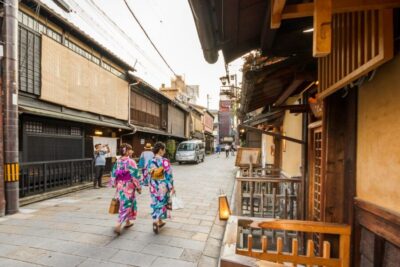 ★ 4.5Night Walk in Gion: Kyoto’s Geisha DistrictFrom $212,003 reviews
 ★ 5.0Kyoto Night Foodie Tour in Gion (9+ dishes + 6 Sake tastings)From $1631,762 reviews
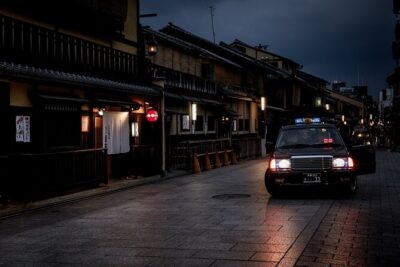 ★ 5.0Kyoto Gion Geisha District Walking Tour – The Stories of GeishaFrom $251,441 reviews
 ★ 5.0Kyoto Gion: 2-Hour Geisha Culture & History Walking TourFrom $231,186 reviews
Browse the lists this tour appears in