
Reviewed · NARA DAY TRIPS FROM KYOTO
Hidden Gems of Osaka Kyoto Nara – Private Car Tour by Local Guide
Hidden shrines, low crowds, and a real guide. This private car route connects Osaka, Kyoto, and Nara with the kind of sights you usually only stumble into by accident. I liked how Daiki explains Buddhism and Japanese culture in plain language, and how the day keeps moving through temples that feel atmospheric, not checklist-y.
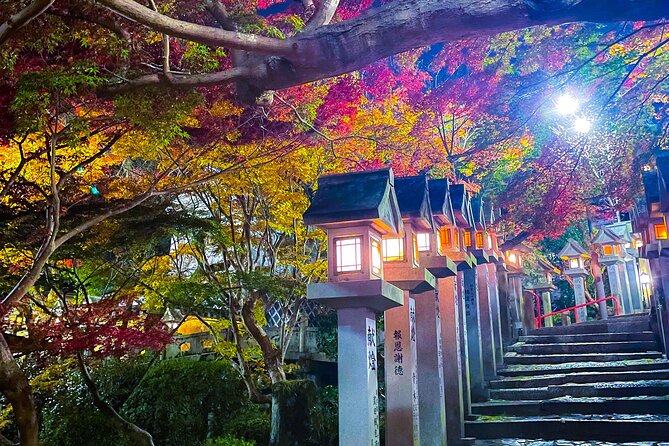
I also really liked the focus on mood. Katsuo-ji’s thousands of Daruma dolls and the night finish at Shingisan Chogosonshiji give you that cinematic, lantern-lit feeling without spending your whole day in tourist bottlenecks.
One consideration: it includes walking and some stairs at certain stops. If you have mobility limits, it is worth thinking through the uphill temple paths before you commit.
Key Things You’ll Love on This Osaka Kyoto Nara Car Tour
- Daiki’s storytelling on Buddhism and Japanese culture makes each stop click fast
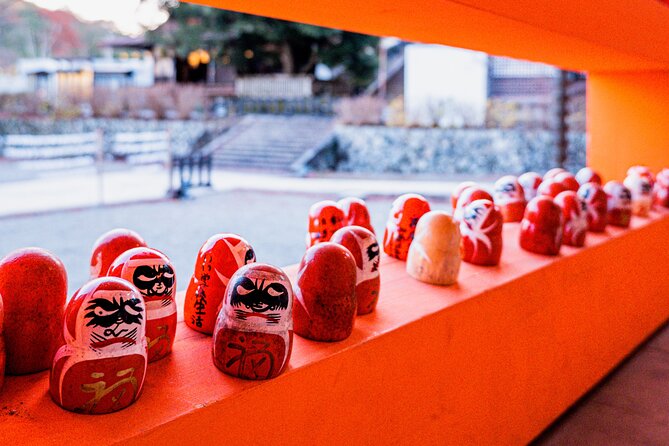
- Katsuo-ji Temple with thousands of traditional Daruma dolls, a photo magnet with real atmosphere
- Shinto nature worship at Mitsushima Shrine, plus a sense of place tied to the natural world
- Hozan-ji Temple on Mount Ikoma, with incense vibes and a Buddhist angle through Kangiten
- Night lanterns at Shingisan Chogosonshiji, where the mood turns quiet and dreamy
- Private transport and parking fees included, so you spend less energy on transit
Why This Private Car Day Works So Well in Osaka, Kyoto, and Nara
Osaka and Kyoto can feel packed, especially if you try to bounce between temples by train. This tour solves that problem by using a private car and keeping your sightseeing route tight. You get to move between Katsuo-ji, a shrine near the mountains, and then up toward Nara prefecture without the transit stress.
The timing also matters. You start at 1:00 pm, which is ideal for catching temples in daylight and then rolling into evening light. That mix is exactly where this route shines, because night lantern paths can be the difference between seeing a shrine and actually feeling the place.
Value-wise, the price shows $248.22 per group (up to 1) for a 6 to 7 hour private experience. That is not a bargain price in the absolute sense. It can be a strong value if you care more about comfort, fewer crowds, and having one guide to answer questions. You do want to factor in that entry fees are not included, and the first stop is the one most likely to have paid admission.
You can also read our reviews of more guided tours in Osaka

You’re Not Just Touring, You’re Getting a Guide-Driven Interpretation
What stands out to me is the way Daiki turns temples and shrines into something you can understand quickly. In the conversations people had with him, the pattern is consistent: he is friendly, entertaining, funny, and he is willing to explain religious context without making it feel like homework.
That matters because Japanese religious sites can look similar at a glance. One hillside temple can feel like another unless someone gives you the correct lens. With this tour, you get that lens as you go. You are not stuck reading signs for an hour and hoping it makes sense.
Also, because it is private, you can move at a pace that fits your energy. And in a good way, the day does not feel rushed. The stops are long enough for photos and quiet moments, then short enough to keep momentum.
Katsuo-ji Temple and Its Thousands of Daruma Dolls
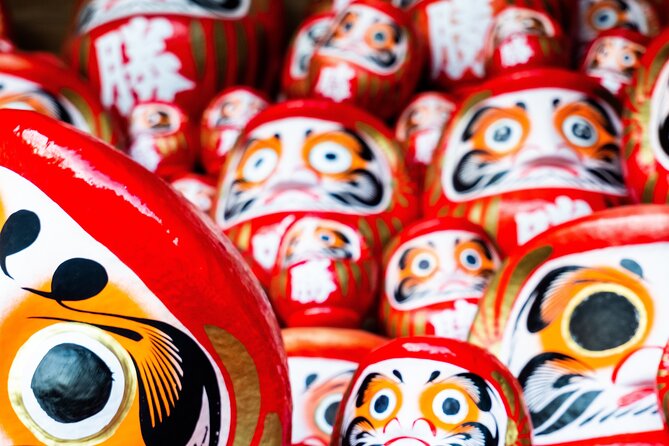
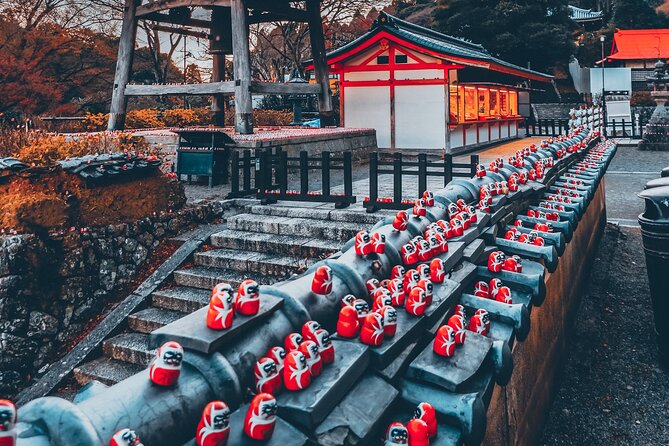
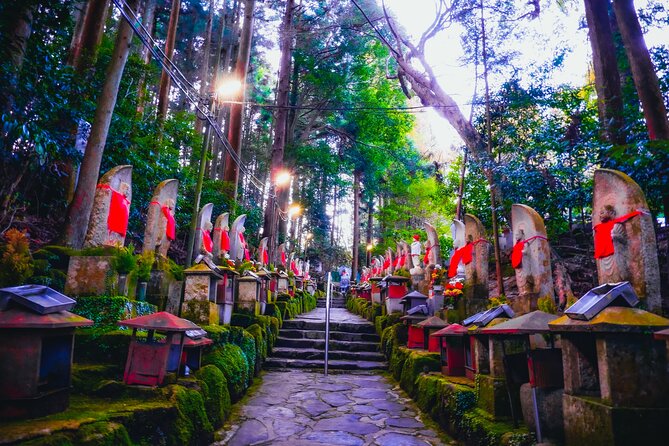
Your first major stop is Katsuo-ji Temple, tucked into the mountain area between Osaka and Kyoto. The big reason this place gets shared online is the sheer number of Daruma dolls placed throughout the grounds. Instead of one display, you get thousands. The effect is playful and slightly surreal, like you walked into a shrine built out of wishes.
You are scheduled for about 2 hours here. That is a good amount of time because you will likely do two things: take your photos and then slow down to notice how the dolls are arranged. The dolls are a recognizable theme, but the point is bigger than the photos. They connect the space to persistence and hope, which is why people treat pilgrimage and prayer seriously even when the setting looks quirky.
Important practical note: admission is not included. So plan on paying at the temple if a fee is required. Also, expect some walking in a mountain setting. Wear shoes that can handle uneven temple ground, and move carefully if it is slick at night.
If you like religious sites that feel visual and specific, Katsuo-ji is your anchor stop.
Mitsushima Shrine: Shinto Nature Worship in a Very Human-Scale Place
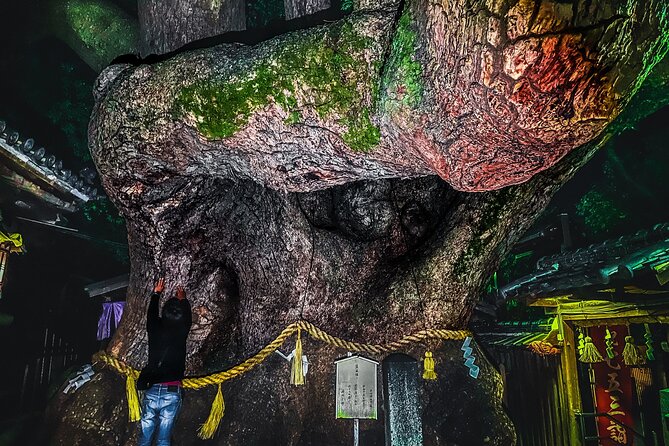
Next comes Mitsushima Shrine for about 30 minutes. This one is described as a small local shrine, which is usually the sweet spot for people who want atmosphere without the crush. Here the focus is Shinto, especially the idea that worship is tied to nature itself.
Even though the time is shorter, I like how this kind of stop balances the Buddhist-heavy feel of many temple days. Shinto shrines often reward you for paying attention to materials, spaces, and the way people behave in the moment. You may find it easier to feel respectful and calm here because it is smaller and more local.
There is also an interesting theme from the tour description: a shrine worshiping a 1000-year-old camphor tree in an industrial-area setting. That combination sounds unusual, and that is the point. Japan sometimes places sacred things where you would not expect them. It helps you understand that spirituality in this region is not always about perfect postcard scenery.
Since the stop is listed as free, you can spend your budget on snacks or extra time later. But keep your energy in check, because the day is still set up to reach deeper into the hillside and night-lit parts.
Hozan-ji Temple on Mount Ikoma: Incense, Intrigue, and Kangiten
After that, you head to Hozan-ji Temple, about 1 hour on the slopes of Mount Ikoma in Nara prefecture. This stop is framed around incense smoke and intrigue, and it has a distinct religious angle: it is dedicated to Kangiten, described as a Buddhist god of joy and prosperity.
This kind of detail matters because it changes what you notice. If you know the site is connected to Kangiten, you will likely pay more attention to offerings, prayers, or motifs tied to happiness and good fortune. Without that context, you might just register the buildings and not understand why people come here.
You get this stop as free, which is a nice break in the budget. The tour also flags that you will have some walking and stairs at certain temples, and mountain slopes usually mean you should expect uneven steps. If you’re visiting in comfortable shoes, this is manageable. If you’re in fashion shoes, swap them before you go.
The mood here is often calmer than the big-name temples. You are still in the same private-car rhythm, so you are not battling crowds while trying to read a hillside.
You can also read our reviews of more private tours in Osaka



Shingisan Chogosonshiji Temple at Night: Lantern Paths and a Dreamy Final Act
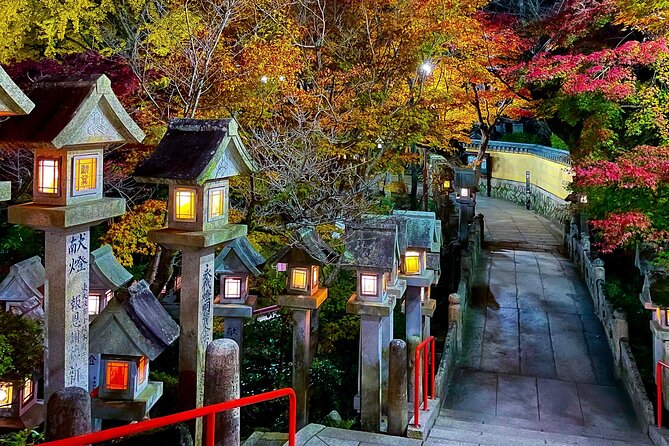
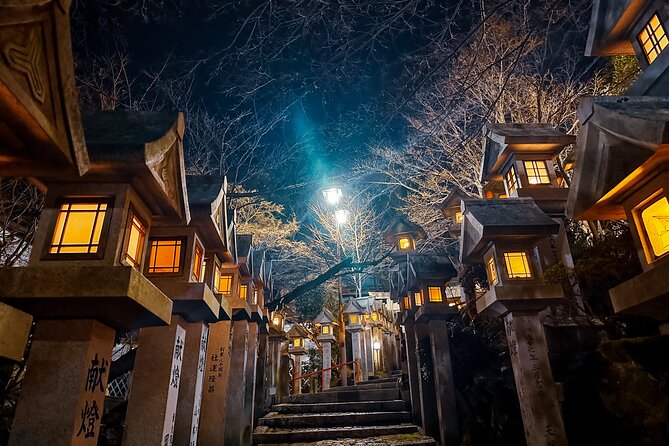
The finale is Shingisan Chogosonshiji Temple at the top of Mount Shigi. It is scheduled for about 1 hour 30 minutes, and the timing is the whole magic trick. The tour describes these isolated temples and shrines becoming absolutely dreamy at night, with ways lit by stone lanterns.
This is the moment where the day pays off. When you reach a lantern-lit pathway, you stop thinking about logistics and start thinking about the atmosphere. It becomes easier to notice how quiet the environment gets when the light changes.
Also, because this is a private setting, the tour is designed so you can enjoy the night without getting swallowed by massive group pacing. That matches what people valued most: less crowded exploration and a sense of doing your own quiet wandering for part of the time.
One more practical point: night temple sites can be harder to navigate. Bring a phone flashlight if you rely on it, watch your footing on stones, and keep your pace steady. The tour includes walks, so treat it like an active cultural evening, not a sit-and-stroll event.
How the 1:00 pm Start Shapes the Experience
Starting at 1:00 pm is smart here. Early afternoon gives you enough daylight for the first major stop, then you naturally transition into the moodier evening sites. If you start too late, you miss the clarity of your first temple. If you start too early, you might end up at night when you still need daylight for uphill walking.
This route is also built to keep you from spending all your time in transit. Since private transportation and parking fees are included, you are not paying extra to move between areas. You are also less stressed by transfers, which is a big deal if this day is your one planned break from Osaka city energy.
And because some of the itinerary can change by season or other circumstances, the afternoon start gives the guide flexibility to adapt timing so you still reach the lantern-lit final stop.
Price and Value: Is $248.22 a Smart Deal for This Route?
The listed cost is $248.22 per group (up to 1), for 6 to 7 hours, with private transport and parking fees included. Entry fees are not included, and the first stop has admission listed as not included.
So the value equation looks like this:
- You are paying for a car and a guide, not just for access to temples.
- You are paying to reduce crowd friction, because the stops chosen tend to feel less mass-touristy.
- You are paying for interpretation, since Daiki provides background on Buddhism and cultural context, not just direction.
If you are traveling as one person and you want a private day with someone handling the route, it can feel like a premium. If you are the type who hates rushing and wants your sightseeing to feel calmer and more personal, it may be worth it.
One thing to check before you book: the price is listed per group up to 1. If you want to bring more people, confirm how the tour handles additional guests. The tour is clearly private, but the capacity language matters.
Practical Tips So Your Temple Day Feels Easy
A few small choices can make your afternoon smoother.
Wear shoes for temple steps. The tour explicitly notes walks and some stairs at certain temples. I would treat this as comfortable walking plus hillside steps.
Bring a light layer. Mountain areas can feel cooler later in the day, and the night portion can get damp.
Have questions ready. The guide is set up to explain religious aspects right away, and that turns your time into something more meaningful than sightseeing.
Plan on at least one stop where you will pay admission. Katsuo-ji lists admission as not included, and you should assume entry is handled on site.
Keep the schedule flexible in your mind. The itinerary can change by season or other circumstances, which is normal for hillside and night lantern environments.
Who This Tour Is For (and Who Might Prefer Something Else)
This tour is a strong fit if you:
- Want off-the-beaten-path temple and shrine experiences around Osaka, Kyoto, and Nara
- Care about night atmosphere, especially lantern-lit paths
- Prefer a private day with one guide instead of hopping on public transport all day
- Enjoy learning the meaning behind what you see, not just taking pictures
It might not be the best fit if:
- You have difficulty with walking and stairs, since the tour includes them at some stops
- You are hoping for a mostly seated, low-movement outing
Should You Book This Private Car Tour?
I think you should book if you want a calmer, more guided way to see major countryside-feeling temples near Osaka and Kyoto, then finish in a lantern-lit evening mood. The biggest selling points are Daiki’s guide style and the way the route mixes daytime temple visuals with night atmosphere.
It is also worth booking if you plan well. The tour is described as often booked about 101 days in advance, so if you have fixed travel dates, you should not wait until the last week.
Skip it only if mobility and stairs are a concern for you, or if you feel you can handle all the logistics solo without a guide. Otherwise, this is the kind of private day that helps you understand Japanese religious culture without turning your itinerary into a sprint.
FAQ
What is the duration of the Hidden Gems of Osaka Kyoto Nara private car tour?
The tour runs about 6 to 7 hours.
What time does the tour start?
It starts at 1:00 pm.
Is pickup included?
Yes, pickup is offered.
Is this tour private?
Yes, it is a private tour, and only your group participates.
Are entry fees included?
No. Entry fees are not included.
Which places are included in the itinerary?
The itinerary includes Katsuo-ji Temple, Mitsushima Shrine, Hozan-ji Temple, and Shingisan Chogosonshiji Temple.
Are there walking and stairs?
Yes. The tour notes there will be walks and some stairs at some temples.
Is the tour suitable for most travelers?
The tour says most travelers can participate.
What is the cancellation policy?
You can cancel for free up to 24 hours in advance for a full refund. If you cancel less than 24 hours before the start time, you will not get a refund.
More Guided Tours in Osaka

More Tours in Osaka


More Tour Reviews in Osaka
Not for you? Here's more nearby things to do in Osaka we have reviewed


Nara Day Trips from Kyoto, compared.
 ★ 5.0World Heritage Kyoto & Nara Uji Authentic Matcha ExperienceFrom $1291,573 reviews
 ★ 4.7Kyoto/Osaka: Nara, Fushimi Inari Taisha, Arashiyama Bus TourFrom $521,275 reviews
 ★ 5.0Nara Half Day Trip Walking Tour (Private Option Available)From $105937 reviews
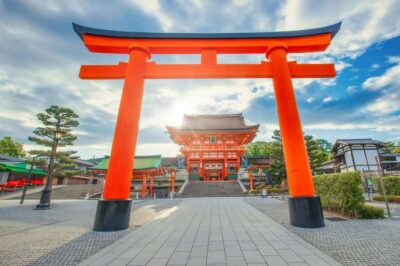 ★ 4.4Osaka/Kyoto: Arashiyama, Nara & Fushimi Inari Shrine w/LunchFrom $61754 reviews
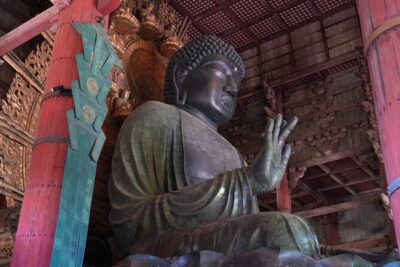 ★ 5.0Nara Early Morning Tour (Kyoto or Osaka Departure Available)From $61676 reviews
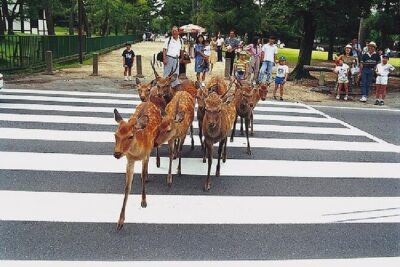 ★ 4.5Kyoto and Nara Day Trip from KyotoFrom $194445 reviews
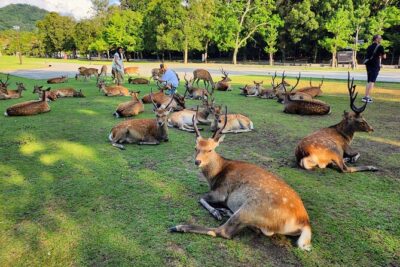 ★ 5.0Full Day Guided Tour to Kyoto and Nara from Osaka by VanFrom $106420 reviews
 ★ 4.5Nara Afternoon Tour from Kyoto or OsakaFrom $102390 reviews
Browse the lists this tour appears in