
Reviewed · KYOTO PRIVATE GUIDED TOURS
Kyoto Full-Day Private Tour (Osaka departure) with Government-Licensed Guide
Kyoto in one day feels fast, but smart guidance makes it work. This private tour from Osaka focuses on big-name sights and classic neighborhoods, with a government-licensed guide to keep you oriented, informed, and on schedule. I like that you can customize your Kyoto stops from a menu of 35 options, so the day fits your interests. I also like the mix of temple culture and street-level Kyoto, not just photo stops.
The main consideration is pacing. This is a walking tour, and many listed stops are timed briefly, so you need solid shoes and patience for crowds and transit time between areas.
Key Highlights Worth Your Time
- Government-licensed guide, real English support to explain what you’re seeing and how to move efficiently
- Custom itinerary from 35 options, designed to let you choose your priorities in a single day
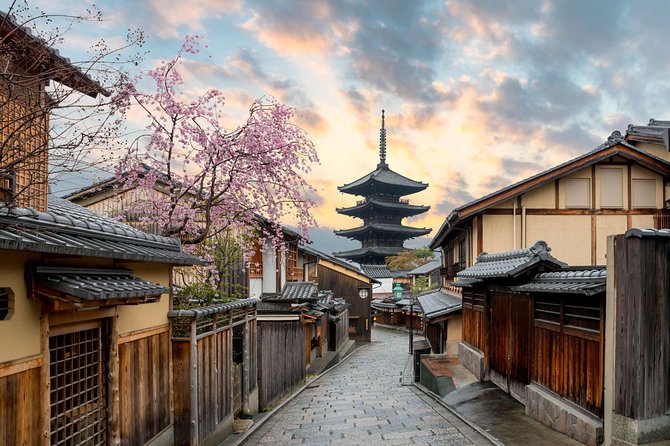
- Iconic Kyoto neighborhoods like Gion, Nishiki Market, Pontocho, and Higashiyama Ward, not just temples
- Major temples and heritage sites from Fushimi Inari to Zen gardens in Arashiyama
- Private setup for your group, so you are not getting dragged along with strangers
- A guide that adapts, with examples like Haru pacing for different stamina levels and Bell tailoring the day for a young daughter
Osaka Pickup and 8 Hours of Walking: What the Pace Really Feels Like
You’re starting in Osaka, then spending about 8 hours in Kyoto, with a pickup option offered inside designated Osaka areas. Even with pickup, this is a walking tour, and the day is built around short stretches, transit between neighborhoods, and brief orientation at each stop.
That means you’re not signing up for a slow, sit-down sightseeing day. Instead, you’re buying momentum. The best use of your time here is to arrive with a short list of must-sees, because the tour is flexible enough to route you efficiently without pretending you can see everything.
For value, the price of $201.46 per person makes more sense when you compare it to what you’d pay for separate tickets, museum time, and the mental load of figuring out routes during limited hours. It also helps if your group is small and you want the comfort of moving as a unit.
One practical tip I’d take from the experience: bring a snack and plan for a lot of walking. Several guide responses explicitly mention stamina and walking volume, and the day can feel intense in hot or rainy weather.
You can also read our reviews of more guided tours in Osaka

Fushimi Inari-taisha and Kiyomizu-dera: Kyoto Icons Without the Guesswork
This is the part of Kyoto that most people picture first, and for good reason.
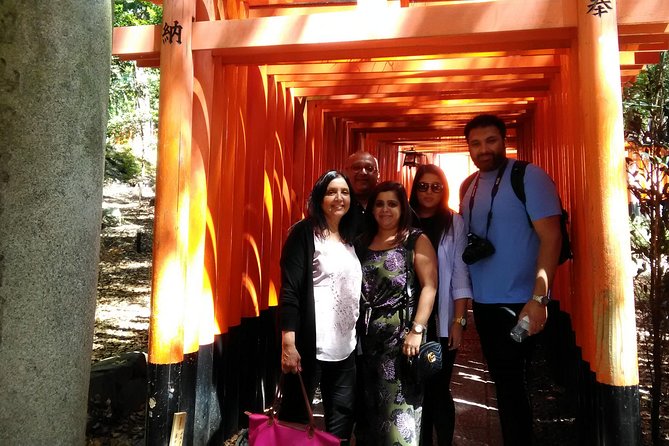
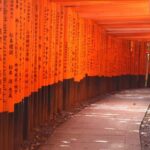
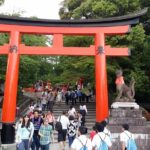
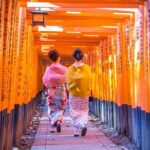
At Fushimi Inari-taisha, you’re stepping into one of Japan’s most recognizable shrine experiences. The tour notes that this stop includes a quick visit with admission free. More important than the ticket detail is what a licensed guide can do for you here: help you understand what you’re seeing, how the site is laid out, and how to navigate the flow so you do not waste minutes standing still.
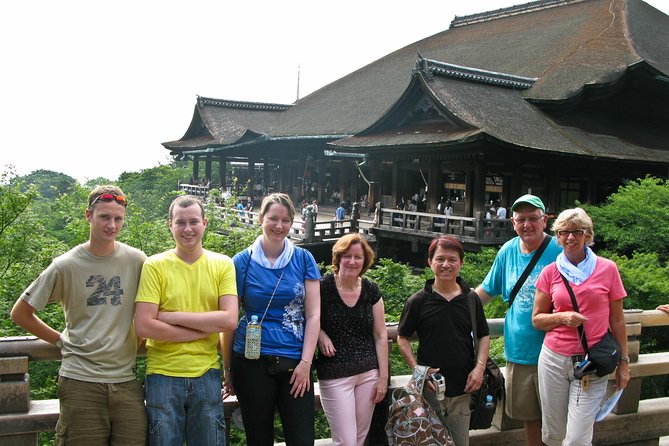
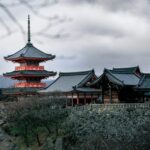
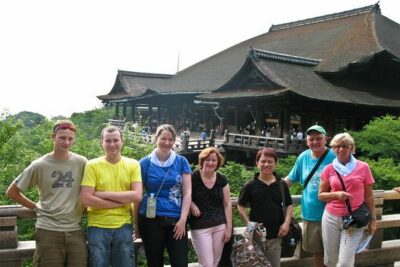
Then you move toward Kiyomizu-dera, one of Kyoto’s best-known temples. The tour schedule shows a short guided stop, around 10 minutes, and it notes that admission is not included. For me, the “not included” part matters less than the “with a guide” part. Even if you do not spend a long time inside, you’ll be less confused about why the place is famous and what architectural and cultural details to notice.
Possible drawback: both sites can be crowded, and short stop times mean you should be ready to skim the highlights the first time. If you’re the type who wants 90 minutes at one viewpoint, you might feel rushed.
Nijo Castle and Kyoto Imperial Palace: From Shogun Power to Imperial Rules
If your interest is history with dates and real political weight, this section is where the tour pays off.
Nijo Castle is a UNESCO World Heritage site and is tied to the start of the Edo Period. The tour info highlights that it was built in 1603 as the Kyoto residence of Tokugawa Ieyasu, the first shogun of the Edo era. Even with a brief stop, having context helps you read the complex as more than pretty walls.
Next, Kyoto Imperial Palace (Kyoto Gosho) brings you back to the imperial side of Japan’s story. The tour summary explains it was the residence of Japan’s imperial family until 1868, when the emperor and capital moved to Tokyo. In a single day, this pairing is useful because you see two different kinds of power, shogunal administration and imperial residence, without needing separate tours.
A consideration: these stops are not “hands-on.” If you’re expecting interactive experiences, you’ll be happier if you approach them like guided architecture and story time. That’s also why a licensed guide matters here.
Gion, Nishiki Market, Pontocho, and Higashiyama: Kyoto at Street Level
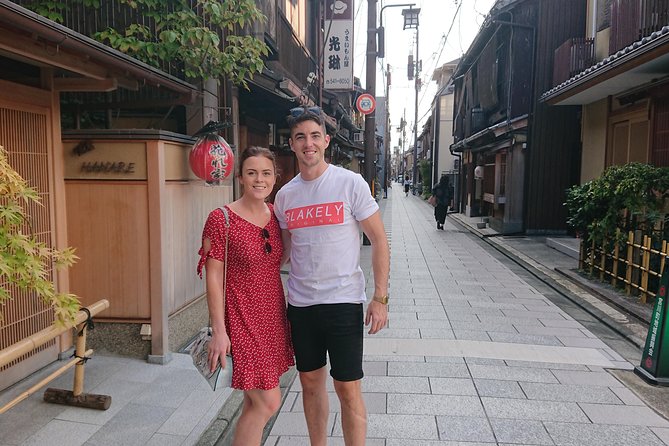
This is where Kyoto stops feeling like a checklist and starts feeling like a place.
- Gion is famous for its geisha district atmosphere. The tour specifically calls out that walking its narrow lanes can be daunting for first-timers, and a guide reduces the stress of getting lost.
- Nishiki Market is described as Kyoto’s Kitchen, a narrow five-block shopping street lined with many shops and restaurants. It’s admission free on the tour, and it’s perfect for quick bites and ingredient browsing rather than a long sit-down meal.
- Pontocho is an alley packed with dining spots, running from Shijo-dori to Sanjo-dori one block west of the Kamogawa River. Again, the guide value is navigation plus knowing what to look for.
- Higashiyama Ward is one of Kyoto’s best preserved historic districts, especially along the lower slopes of the eastern mountains. It’s a strong “walk and look” zone, and the tour lists it as an easy stop for experiencing old Kyoto character.
One of the most helpful things I see from guide-centered feedback is that guides can also help you time these neighborhoods. Some guides are praised for arranging the day so crowds are less painful and you can still get photos. You should still expect busy streets in popular areas.
For your comfort, build in snack and water breaks. The day is designed to keep moving, but you will enjoy it more if you slow down just enough to recover.
The Higashiyama Zen Circuit: Ginkakuji, Nanzenji, Tofuku-ji, and Toji
Kyoto has many Zen temples, but a guide helps you avoid treating them like similar background sets.
In the Higashiyama area, the tour options include:
Ginkakuji (Silver Pavilion), built on grounds tied to shogun Ashikaga Yoshimasa. Even if you only see a portion, the guide can help you understand why this retirement-villa story matters, and what to notice while you’re there.
Then there’s Nanzenji Suirokaku, a Zen temple with spacious grounds at the base of Higashiyama’s mountains. The included value here is perspective, because Zen sites can look “quiet and similar” until someone explains the function and the design choices.
Tofuku-ji adds another angle: it’s particularly famous for autumn colors. That’s a useful fact to keep in mind if you’re visiting during fall, because your guide can point you toward what you should prioritize visually.
And on the way through larger temple options, you’ll see Toji Temple (East Temple), founded just after the capital was moved to Kyoto in the late 700s. The tour marks Toji as an admission free stop in the schedule.
Practical advice: with short stop times, you should pick one or two details you want to remember from each temple, like a garden layout, a structural feature, or a view angle. A guide can help you choose what is worth your attention in the time you have.
You can also read our reviews of more private tours in Osaka

Kinkakuji and Ninna-ji: Golden Leaf and World Heritage Calm
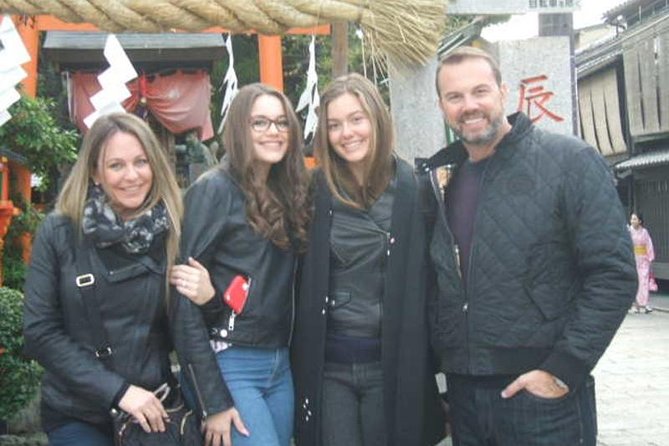
Two of Kyoto’s most iconic temples in one day can be a lot, but they work well if you want contrast.
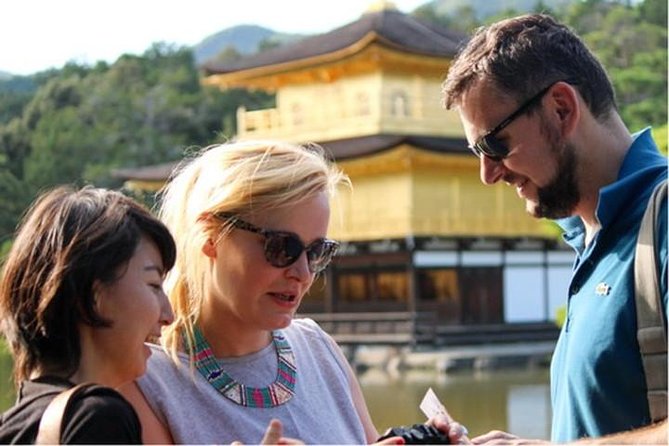
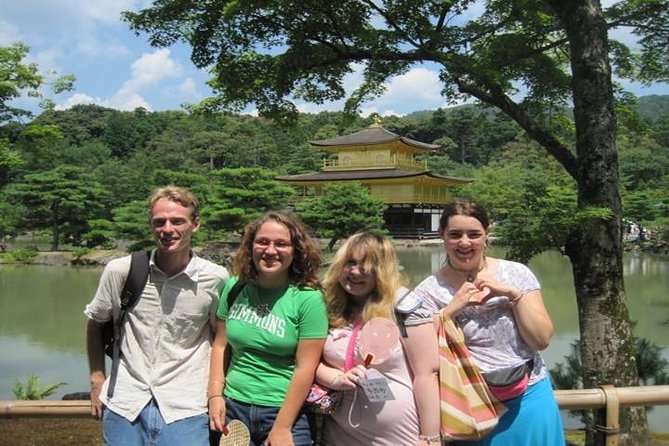
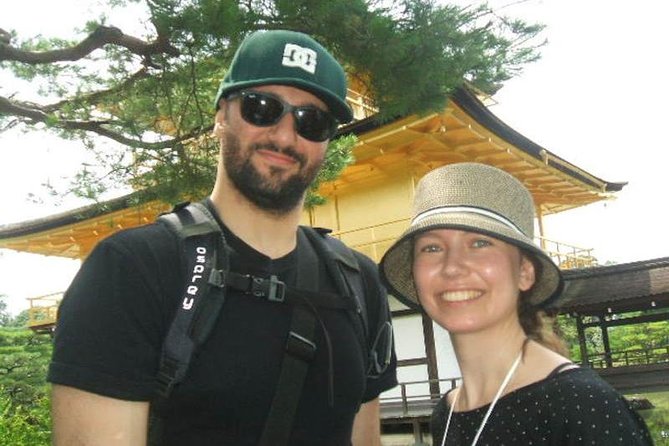
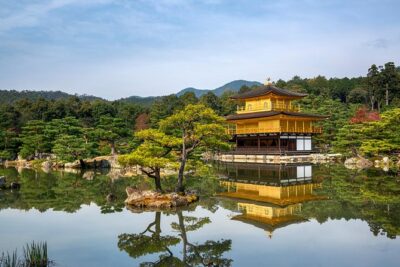
Kinkakuji (Golden Pavilion) is a Zen temple whose top two floors are covered in gold leaf. The tour notes it is formally known as Rokuonji and ties it to shogun Ashikaga Yoshimasa. If you love visual drama, this is the place for it.
Ninna-ji is listed as a World Heritage site and is described as the head temple of the Omuro School of the Shingon sect. That changes the flavor from Kinkakuji’s visual focus into something more about religious tradition and temple identity.
A drawback to consider: gold and elaborate temple surfaces often draw heavier crowds. If your priority is solitude, you might feel like you’re waiting in lines or standing with other groups. Still, the guide can help you get the best viewing angle and keep the day moving.
Shugakuin Imperial Villa, Kibune River, and Kurama: Kyoto’s Quieter Mountain Side
Not all Kyoto days have to be packed city centers.
The tour options include Shugakuin Imperial Villa, built in the 17th century by Emperor Gomizuno and managed by the Imperial Household Agency. It’s described as having Upper, Middle, and Lower Villa sections. Even if your stop is brief, the idea of an imperial retreat from the city is a great counterweight to shrine lanes and market streets.
Then the route can branch into the northern mountain direction with Kibune and Kurama:
- Kibune is described as a small town in a forested valley, developed around Kifune Shrine, with a legend involving a goddess traveling by boat up from Osaka.
- Kurama-dera is in the rural town of Kurama, less than an hour from the city center, and is associated with a famous hot spring.
This part of the day can feel more breathable than the central districts, but it can also take more planning because you’re shifting locations. If you’re sensitive to long transit times, ask your guide how they expect the day to flow.
Ryoan-ji and Arashiyama: Rock Garden to Bamboo Views
This is the section that often makes people say Kyoto looks unreal in photos, but you’ll get more out of it if you understand what you’re seeing.
Ryoan-ji is noted as the site of Japan’s most famous rock garden, drawing hundreds of visitors daily. Even in a short guided stop, a guide can explain how to view the garden properly. The goal is to help you avoid standing in one spot and missing the point.
Then you move into Arashiyama, a western Kyoto district known as a destination since the Heian Period. Arashiyama is also where the tour highlights some of Kyoto’s “iconic motion” sights:
- Togetsukyo Bridge, called Moon Crossing Bridge, first built during the Heian Period and reconstructed in the 1930s.
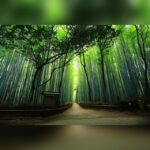
- Bamboo groves with walking paths where a light wind makes bamboo sway, based on how the guide describes it.
Arashiyama can feel touristy, but it’s a good use of time because the setting is dramatic and the walking is easy to enjoy even when it’s crowded.
Two more Arashiyama-related temple options appear too, including:
- Tenryu-ji Temple, described as the most important temple in Arashiyama and ranked first among Kyoto’s five great Zen temples.
- Daikaku-ji Temple, tied to Emperor Saga and described as a calm detached palace style setting.
If your group loves gardens, Arashiyama is where you get the most payoff for the walking you do.
Okochi Sanso and the “Forest Temples” Around Arashiyama
Arashiyama isn’t just bamboo, it’s also villas and quieter temple paths.
The tour includes Okochi Sanso Garden, the former villa of actor Okochi Denjiro. It’s described as sitting in the back of Arashiyama’s bamboo groves and consisting of several gardens and buildings.
Then you can move deeper into smaller hillside temples such as Jojakkoji, Nisonin, and Gio-ji. These are described as mountainside or hillside temples with a quiet atmosphere and details like maple trees and moss near paths and gates. The point of including them is that Kyoto has levels of quiet. These spots help you see the difference between the “famous front gate” experience and the quieter temple walkway rhythm.
Practical advice: if you get tired, this is where it’s worth telling your guide. Many guides are praised for flexibility, like Haru who worked around different group stamina and still kept the day on track.
Nenbutsu-ji Stone Statues: Adashino and Otagi’s Strangely Moving Stops
These are the stops that feel a bit off the main postcard route, and that is why they’re memorable.
The tour lists Adashino Nenbutsu-ji Temple at the end of the Saga-Toriimoto Preserved Street, connected to stone statues for the souls of the dead placed by the monk Kobo Daishi.
Then it includes Otagi Nenbutsu-ji Temple, which is famous for its 1200 stone statues of rakan, each with a different facial expression. The detail in the tour description is exactly what makes a short stop worthwhile. You don’t need a long explanation to see that this place is about individuality and prayer, not uniform decoration.
And there’s also Adashino and Otagi plus other moss and moss-adjacent temple options like Gio-ji, which is described as having a moss garden with tall maple trees and thatched roofs.
If you like unusual Kyoto experiences that are still deeply tied to Japanese religious practice, these are strong picks.
Licensed Guides Make the Difference: Real Examples From the Day
A private tour is only as good as the guide you get, and this provider clearly leans on licensed, English-speaking professionals. In responses and feedback, you see patterns that matter for your day, not just generic praise.
I’d especially trust the planning angle because multiple guides are called out for navigation and pacing:
- Andy Murao is praised for helping a group handle train navigation from Osaka and return on time when starting from a cruise port.
- Haru is praised for adapting when some people struggled with walking speed, with help staying flexible while still reaching planned spots.
- Yuko gets credit for choosing transportation methods to save time and for keeping the day professional and caring.
- Bell is praised for taking a young daughter’s stamina into account, which is exactly what you want if your group includes kids.
- Kiriko is mentioned for having excellent English and for the chance encounter of seeing a geisha in full make-up while walking in Gion.
- Ichiro is repeatedly praised for educational explanations and for making logistics feel organized, including meeting at the hotel and handling train travel arrangements.
So what does that mean for you? It means your guide should help you avoid the two biggest Kyoto day-trip problems: confusion and wasted time. Even if you love exploring on your own, a guide can shave off friction, especially when you’re crossing neighborhoods in a limited time window.
Price and Value at $201.46: What’s Included and What You Still Need to Plan For
Let’s talk value in plain terms.
Included in your $201.46 price:
- a licensed local English-speaking guide
- a customizable walking tour where you choose your Kyoto sites (the tour description says 3 to 4 Kyoto sites)
- meet-up within designated Osaka areas
- mobile ticket
- group discounts (depending on how your booking is structured)
Not included:
- transportation
- entrance fees
- lunch and personal expenses
Private vehicle is available on request, but it must be pre-booked 5+ days in advance. That matters if you’re traveling with older family members or limited mobility needs, because the core experience is walking.
Here’s how I’d decide if it’s worth it for you: if your day in Kyoto is short, and you want multiple “must see” areas without spending your vacation time studying transit routes, the guide value usually makes up the cost. If you already know Kyoto well, and you’re comfortable navigating trains and buses, you might spend less on your own. But you’ll likely spend more effort in planning.
Also, because entrance fees are not included, bring some cash or be ready for card payment at each site, depending on what each temple charges.
Who This Tour Fits Best From Osaka
This tour is a strong fit if you:
- are seeing Kyoto for the first time and want a guided path through major areas like Fushimi Inari, Gion, and a Zen temple zone
- have limited time from Osaka, including cruise-port style hours
- want history context while walking, not just sightseeing photos
- are traveling as a small private group and want your day shaped by your interests
- want a guide to help manage stamina differences, which multiple responses highlight
It’s less ideal if you:
- want long, slow visits at one or two places only
- dislike walking and are not ready for a day that moves from neighborhood to neighborhood
Should You Book This Kyoto Full-Day Private Tour From Osaka?
I’d book it if you want Kyoto to feel organized, not chaotic. The combination of a licensed guide, customizable sites, and classic neighborhoods like Gion and Nishiki Market is built for travelers who want maximum meaning in a limited day.
Before you book, I’d do three things:
- Choose your top 3 to 4 priorities and tell your guide about them early, so the route matches your energy.
- Wear comfortable shoes and plan for walking. Multiple guide responses stress that this is not a light stroll day.
- Expect that entrance fees and transportation are on you, so budget for tickets and a meal or snack.
One last angle: if your group loves temple variety and gardens, this tour gives you lots of options, from big icons like Kinkakuji to stone-statue oddities like Otagi Nenbutsu-ji. That flexibility is the part you’ll likely remember most.
FAQ
Where does this Kyoto tour start?
It includes a meet-up within designated Osaka areas, with pickup offered. The tour then operates as a walking tour.
How long is the tour?
The duration is approximately 8 hours.
Is this a private tour or a group tour?
It is a private tour, so only your group participates.
Can I customize which Kyoto sites we visit?
Yes. You choose from 35 points of interest to create a custom itinerary, and the tour notes that you can choose 3 to 4 Kyoto sites.
Is a guide included?
Yes. You get a licensed local English-speaking guide.
Are transportation and entrance fees included?
No. Transportation and entrance fees are not included, and lunch and personal expenses are also not included.
Is lunch provided?
No, lunch is not included.
Is there an admission ticket included for stops?
Some stops are listed as admission free in the schedule, but admission is not included for others. Entrance fees are listed as not included overall.
What about tickets for the tour itself?
The tour includes a mobile ticket.
Are service animals allowed?
Yes, service animals are allowed.
Is there free cancellation?
Yes. You can cancel up to 24 hours in advance for a full refund.
More Guided Tours in Osaka

More Tours in Osaka
More Tour Reviews in Osaka
Not for you? Here's more nearby things to do in Osaka we have reviewed

Kyoto Private Guided Tours, compared.
 ★ 5.0Private Kyoto Tour with a Local, Highlights & Hidden Gems, PersonalisedFrom $1021,543 reviews
 ★ 5.0Kyoto 6hr Private Tour with Government-Licensed GuideFrom $1551,369 reviews
 ★ 5.010 Must-see Spots in Kyoto One Day Private Tour (up to 7 people)From $1791,108 reviews
 ★ 5.0Kyoto 4hr Private Tour with Government-Licensed GuideFrom $109629 reviews
 ★ 4.8Private Tour with Local Licensed GuideFrom $106463 reviews
 ★ 5.0Private Kyoto Tour with Licensed Guide & Vehicle (Max 15 persons)From $634417 reviews
 ★ 5.0Kyoto Customized Private Tour: See Top Attractions in 1 DayFrom $132342 reviews
 ★ 4.6Kyoto/Osaka: Kyoto and Nara Customized Private Guided TourFrom $477258 reviews
Browse the lists this tour appears in