
Arashiyama can feel overwhelming fast. This 4-hour Kyoto tour is a smart way to see the area’s big hitters plus quieter temple stops, with small group size that makes it easy to ask your guide questions and a lot of temple context along the way. One thing to plan for: there’s a moderate amount of walking, so bring comfortable shoes.
I like that you do not have to figure out routes or hunt for landmarks. You get a guide to lead the way, plus a mobile ticket for a smoother start, and the tour runs rain or shine. The price, $79.07 per person, also feels fair for a half-day schedule that bundles several paid temple entries and a scheduled break.
Below, I’ll break down the day stop by stop, explain what makes each stop worth your time, and share who this tour is best for.
Key points at a glance
- Max 8 travelers means you can actually talk to your guide, not just follow a crowd
- Otagi Nenbutsu-ji, Jojakko-ji, and Adashino Nenbutsu-ji add depth beyond the Bamboo Forest
- A Wednesday temple swap keeps the itinerary moving when Otagi is closed
- Bamboo Forest Street and Togetsukyo Bridge give you the classic photos on a timed schedule
- Bus fee excluded (¥230), so prep an IC card or coins ahead
A half-day shortcut through Arashiyama’s best mix
This is an easy way to experience Arashiyama without spending your morning piecing together transit plans. The tour starts at Hannari Hokkori Square (20 Sagatenryūji Tsukurimichichō, Ukyo Ward) at 9:30 am and ends at the site of Kotokiki Bridge area. Expect about 4 hours on the clock, and plan to stay flexible because the itinerary works rain or shine.
What you get for the time is a balanced sweep: you see famous Arashiyama sights, but you also get scheduled stops at Buddhist temples that explain why people care about them. That matters here, because Arashiyama can be photo-heavy, and it is easy to miss the meaning behind what you are looking at.
The small group size is a real advantage. With up to 8 travelers, your guide can slow down for questions and adjust pace a bit if you need a breather.
You can also read our reviews of more tours and experiences in Kyoto.
Otagi Nenbutsu-ji: the temple stop most people rush past
The tour begins with Otagi Nenbutsu-ji Temple for about 20 minutes, and admission is included. This temple is famous for its collection of over 1,200 stone statues called rakan, each with its own expression and character.
Here’s the practical value: this stop gives your morning a quieter, more reflective start before the crowds build around the Bamboo Forest. You are not just ticking off a name in your itinerary. You get context for what you’re seeing, and it changes how you experience the area. Instead of only thinking about scenery, you start thinking about faith, memory, and why a place like this exists.
Time check: 20 minutes is not long, so keep your expectations realistic. You will see the main highlights, but you will not have hours to wander.
When Otagi is closed: Adashino Nenbutsu-ji on Wednesdays
There is one schedule twist to know: every Wednesday, Otagi-Nenbutsu-ji is closed, and the tour replaces it with Adashino Nenbutsu-ji. This substitution is clearly built into the tour, and you still get about 20 minutes with admission included.
Adashino Nenbutsu-ji is located in Kyoto’s Sagano district and was founded in 811 by the monk Kūkai. The setting is described as peaceful, and the temple has a focus connected to honoring those who died without family.
This swap is actually a good example of why guided tours help. You do not have to scramble when a temple is closed. You follow your guide to the alternative stop and keep the day moving.
Saga Toriimoto Preserved Street: a slower pace with Mount Atago views
Next comes Saga Toriimoto Preserved Street, a historic hiking trail that leads from the base of Mount Atago to its summit area, one of the higher points in Kyoto. You get around this moment to wander and absorb a traditional atmosphere, including a village feel with thatched-roof houses.
The best way to enjoy this part is to think of it as a palate cleanser between major sights. After temple viewing, you shift into a more walk-and-look rhythm. If you like viewpoints and footpaths, this stop helps you see Arashiyama from a different angle than the bamboo and river scenes.
One possible consideration: this is still part of a moderate-walking tour. If your knees are cranky on uneven ground, make sure you keep your pace easy.
Sabou Sagano break: a scheduled drink break to reset
For a short recovery moment, you stop at Sabou Sagano for about 25 minutes. You can choose a drink such as coffee, tea, or juice, and it is included.
This matters more than it sounds. In Kyoto, half-day sightseeing can turn into constant motion. A planned stop lets you cool down, refill water (even if not provided), and reset your brain so you can enjoy the next temple stop instead of just surviving the next photo.
Matcha may be on the menu, but the included drink options are the ones listed. If you want something extra, you’ll pay on your own.
Jojakko-ji Temple: gardens and calm views
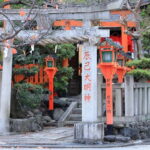
Then the tour moves to Jōjakkōji Temple for about 30 minutes, with admission included. This stop is known for a mix of nature and spirituality, and the tour schedule leans into that peaceful atmosphere.
Jojakko-ji is a great counterbalance to the Bamboo Forest. The Bamboo Forest is about iconic visuals and crowds. Jojakko-ji is more about lingering, looking at gardens, and taking in views in a slower way.
30 minutes is just enough to see the key areas without feeling rushed. Still, if you like to read details and find the best sightline, go at a relaxed pace and let the group follow your tempo.
Mikami Shrine and Ogura Pond: small stops that change the mood
The itinerary also includes a couple of smaller, atmospheric stops: Mikami Shrine and Ogura Pond.
- Mikami Shrine is described as spiritually significant and connected to beauty, specifically hair. People often pray for beautiful hair. It is different from the bigger temple experiences, which is why I like it on a tour like this.
- Ogura Pond offers a calm scene with reflective water and lush greenery. The view is meant to shift with the seasons, so your experience depends a lot on when you visit.
These are the stops that make the day feel less like a checklist. They add texture, and they help you remember Arashiyama as more than just the bamboo shot.
Bamboo Forest Street: photo time with better timing
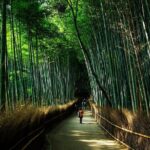
Next is Bamboo Forest Street, a photo spot for about 10 minutes. Admission is free.
Yes, the Bamboo Forest is crowded. That is Kyoto in general during peak times, and Arashiyama is not immune. But the scheduled timing helps you get your photos without spending half your afternoon just trying to enter or exit.
Practical tip: use the time for multiple angles. Stand where the path curves, then move a bit to catch straight-on stalks. If you care about photos, travel light, because you will be moving through a narrow area.
10 minutes passes quickly, so think ahead about what you want: classic vertical stalks, the path perspective, or a moment with the river and mountains in the background nearby.
Togetsukyo Bridge and river views: the classic Arashiyama finish
You end with Togetsukyo Bridge, about 10 minutes, with admission free. Togetsukyo Bridge spans the Hozu River and is known for mountain and river views.
This is a strong finish because the bridge gives you scale. Earlier you dealt with temple details and garden sightlines. Here you see the larger Arashiyama picture: mountains around you, water moving through the scene, and the sense of a place people have visited for generations.
The tour also includes a park area offering breathtaking views of the surrounding Arashiyama Mountains, with dense greenery and a peaceful riverside feel. That means your final minutes are not just about crossing a bridge, they are also about slowing down and taking it all in.
Price and value: what your $79.07 buys you
The tour costs $79.07 per person, lasts about 4 hours, and is often booked about 39 days in advance. It includes a mobile ticket, and it runs with up to 8 travelers.
Value-wise, the biggest win is how the schedule stacks included elements:
- Admission included for Otagi Nenbutsu-ji, Adashino Nenbutsu-ji (when used), and Jōjakkōji Temple
- A drink included at Sabou Sagano
- Bamboo Forest Street and Togetsukyo Bridge are free entries
- A guide handles the flow so you spend less energy figuring out where to go next
Also note the one extra cost detail you should plan for: bus fee is excluded, and you should have an IC card or coins (¥230) prepared. That’s the kind of thing that can surprise you if you assume everything is covered.
When this tour feels like a bargain: if you want the highlights plus temple context, and you do not want to spend a bunch of time arranging routes yourself.
Timing and comfort: shoes, weather, and the season question
Comfort matters on this itinerary. The tour involves a moderate amount of walking, so comfortable walking shoes are not optional. You’ll also be outside for chunks of the day. The tour operates rain or shine, so pack for wet weather if that’s typical for your dates.
About seasons: one review standout tip is that Arashiyama shines in spring (cherry blossoms) and autumn. Summer is described as hot and humid, and that is exactly the kind of weather that makes a half-day tour feel longer than it is.
If you are traveling in summer, plan a slow start and hydrate. If you are coming in spring or fall, you’re likely to enjoy both the scenery and the walking much more.
Who should book this Arashiyama tour
This tour is a great fit if you want:
- A small-group Arashiyama experience that gives you time to ask questions
- A route that mixes temples, viewpoints, and the Bamboo Forest
- Less stress with navigation, since you’re guided door to door along the main stops
- A practical half-day plan, especially if you are short on time in Kyoto
It may feel less ideal if you hate any walking at all, because the itinerary does involve moving between sites and paths.
Should you book? My take
If you want Arashiyama that feels like more than postcards, I’d book this. The strongest reason is the pairing of iconic sights with temple stops that come with explanation, not just sightseeing. The guide-led pacing also helps you enjoy the day instead of worrying about routes.
I’d hesitate only if you are extremely sensitive to walking or if you dislike being on a timed schedule for places like the Bamboo Forest. Otherwise, this is a smart value for a focused, well-structured half day.
FAQ
How long is the Kyoto Arashiyama tour?
The tour lasts about 4 hours.
What is the group size?
It has a maximum of 8 travelers.
What is the tour price?
The price is $79.07 per person.
Where do we meet and where does the tour end?
You meet at Hannari Hokkori Square (20 Sagatenryūji Tsukurimichichō, Ukyo Ward, Kyoto) and the tour ends at the site of Kotokiki Bridge (Sagatenryuji Tsukurimichicho, Ukyo Ward, Kyoto).
Is Otagi Nenbutsu-ji included every day?
Otagi-Nenbutsu-ji is closed every Wednesday. On those days, the tour takes you to Adashino-Nenbutsu temple instead.
Are temple admissions included?
Yes for the scheduled temple stops listed: Otagi Nenbutsu-ji and Adashino Nenbutsu-ji (on Wednesdays) include admission tickets, and Jōjakkōji Temple also includes admission.
Is the bamboo forest or bridge paid entry?
Bamboo Forest Street is a free photo spot, and Togetsukyo Bridge is also free.
Do I need money for transportation?
The bus fee is excluded. Bring an IC card or coins for ¥230.
Can I cancel for free?
Yes. You can cancel up to 24 hours in advance for a full refund. If you cancel less than 24 hours before the start time, the amount paid is not refunded.
More Tours in Kyoto
More Tour Reviews in Kyoto
Not for you? Here's more nearby things to do in Kyoto we have reviewed

Arashiyama & Bamboo Grove Tours, compared.
 ★ 4.8Fushimi Inari, Kinkakuji, Bamboo Grove 1 Day Bus TourFrom $1224,316 reviews
 ★ 4.1Osaka/Kyoto:Kinkakuji,Arashiyama,FushimiInariShrine,NaraParkFrom $661,596 reviews
 ★ 4.7Kyoto/Osaka: Nara, Fushimi Inari Taisha, Arashiyama Bus TourFrom $521,275 reviews
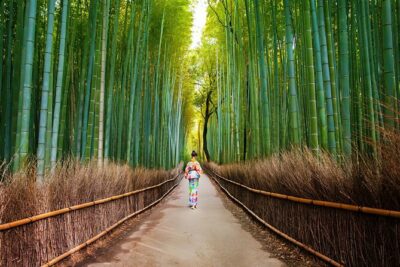 ★ 5.0Kyoto Arashiyama Walking Tour: Bamboo, Monkeys, Gardens & SecretsFrom $651,216 reviews
 ★ 4.8Arashiyama Bamboo, Temple, Monkeys, or Secret Sake BreweryFrom $87886 reviews
 ★ 5.0Arashiyama Bamboo Forest, Monkeys, Matcha & Temple TourFrom $53759 reviews
 ★ 4.4Osaka/Kyoto: Arashiyama, Nara & Fushimi Inari Shrine w/LunchFrom $61754 reviews
 ★ 5.0Nijo, Kinkaku-ji, Arashiyama, Kiyomizu & Fushimi InariFrom $51699 reviews
Browse the lists this tour appears in