
Reviewed · KYOTO PRIVATE GUIDED TOURS
Kyoto Early Morning Private Tour with Government-Licensed Guide
Kyoto before the crowds is a different city. This private early-morning tour helps you knock out major shrines and temples with a government-licensed English guide, and you can steer the day by picking 2 to 3 stops that match your interests. I especially liked the calm start and the way guides turn standard sightseeing into street-level storytelling. One drawback to note is that it’s a walking tour with no private vehicle, so far-flung picks can feel tight in a 4-hour window.
You’ll see Kyoto’s big-name hits like Fushimi Inari, Gion, Kiyomizu-dera, and Arashiyama, but at a time when the morning air is cooler and the lines are shorter. In the feedback, guides like Rie, Tomy, Kay, Yasu, Mayumi, and Nabet were repeatedly praised for good pacing and clear English. Still, like any tour business, things can go wrong, and one no-show incident was reported.
Key things I’d bet on before you book
- Government-licensed English guide who explains what you’re actually looking at, not just recites facts
- Custom 2 to 3 sites so you are not forced into a packed, one-size-fits-all loop
- Early start that helps you see places like Fushimi Inari and Kiyomizu-dera with fewer people
- Walking format with meeting nearby public transport, which keeps you flexible on foot
- Value-focused inclusions: guide service is covered for the selected sites, not for everything in Kyoto
What early mornings in Kyoto change
Kyoto is popular for a reason, and it can also feel crowded fast. The big win here is the early start. When I plan my own days, I always try to hit the top sights early because the streets are cooler and the place feels more breathable.
A 4-hour window also helps. It nudges you into “best-of” mode, where you spend your energy on the sites that truly matter to you, then move on before you’re fried. In multiple guide experiences shared, that morning timing made it possible to tour Fushimi Inari and Kiyomizu-dera smoothly when they’re usually packed.
The flip side is simple: you have to commit to an early start. If you want a late, leisurely morning with brunch and slow wandering, this may feel too strict.
You can also read our reviews of more guided tours in Kyoto
Your private guide: the real difference is the control
This is a private tour, meaning only your group participates. That matters because Kyoto sighting is not just about seeing famous buildings, it’s about knowing where to pause, which side of a street to walk down, and how to read the vibe of neighborhoods like Gion.
The guides in the feedback were named often, and that’s a good sign because it suggests consistent staff. Tomy, for instance, started early and specifically noted that Kiyomizu-dera Temple and Fushimi Inari Shrine were much quieter at the time they visited. Rie guided one group to four locations starting at 7:00 a.m., then finished around 11:00 a.m. with a lunch recommendation. Kay highlighted the bamboo forest early in the morning as a real wow moment.
What you’ll gain:
- You can pick your 2 to 3 sites from the options list, instead of being trapped in someone else’s agenda.
- You’ll get help figuring out how to move through the area afterward, so you’re not left guessing.
- You can adjust on the fly if your group is moving slower or has special interests.
A practical note: you meet the guide on foot within a designated area in Kyoto. It’s not a “park at the hotel, do nothing” style day.
Choosing 2 to 3 stops: build a route that fits 4 hours
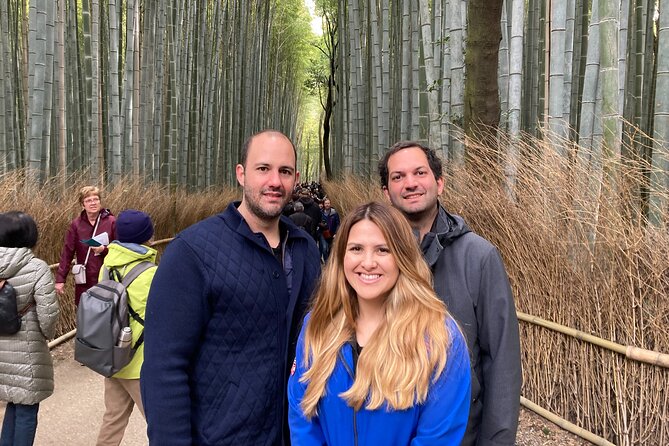
The itinerary is flexible, and that’s the point. The tour is described as a customizable visit to 2 to 3 sites from the expectation list. So you’re not meant to do everything on the long list.
Here’s how I’d choose so you don’t feel rushed.
Best “clusters” for first-time Kyoto
- Fushimi Inari + Gion: Start with the torii experience, then transition into historic streets.
- Fushimi Inari + Nishiki Market: Pair a shrine you see at sunrise with Kyoto’s food market vibe.
- Kiyomizu-dera + Higashiyama: Temple first, then classic hillside walking.
- Arashiyama + Tenryu-ji: West Kyoto temples and gardens at a calmer pace.
- Kinkaku-ji or Ginkaku-ji + nearby temple area: If you want Zen garden energy without long hops.
Options that can be harder in 4 hours
Northern mountain picks like Kurama and Kibune can be stunning, but they’re farther from many central neighborhoods. If you choose one of these, pair it with something in the same northern direction. If you try to mix, say, Arashiyama and Kurama in the same morning, you may feel speeded up.
If you want, you can tell the guide your priorities ahead of time, and guides in the feedback were praised for being responsive to interests.
You can also read our reviews of more private tours in Kyoto
Fushimi Inari at sunrise: torii gates and the story behind them
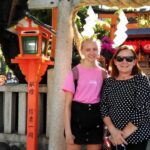
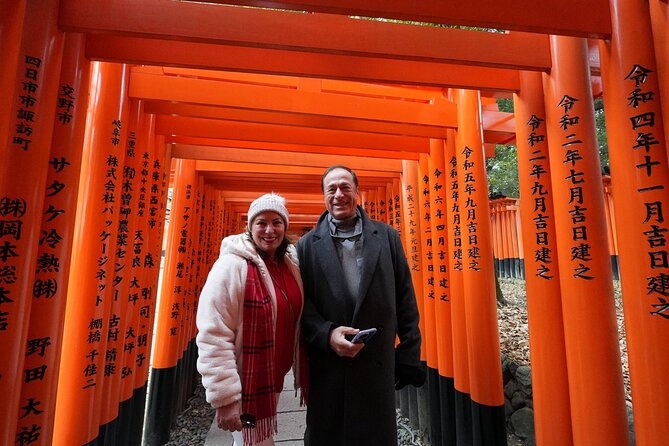
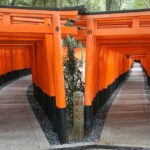
Fushimi Inari-taisha Shrine is the first stop people expect, and it’s still worth it. The most famous part is the vermillion-red torii tunnel, and at sunrise you’ll feel the difference immediately: calmer paths, easier photo spots, and more time to look up.
But the guide layer matters. The tour description points out that most people only focus on the scenic view of the torii tunnels, yet the shrine has more stories than the photos show. That’s exactly where a good guide helps. You’re not just walking through an iconic image, you’re learning how the place works spiritually and historically.
A tip based on how the morning timing landed for groups: start early enough that you can enjoy the shrine without getting swept into a human current. In one guide experience, the early start kept the shrine from feeling overcrowded, which changed the whole mood from rushed to reflective.
Possible drawback: if you choose Fushimi Inari as one of only 2 to 3 stops, it will naturally take a decent chunk of your morning. That’s not bad, just plan around it.
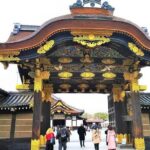
Nijo Castle: a UNESCO stop that anchors Edo-era Kyoto
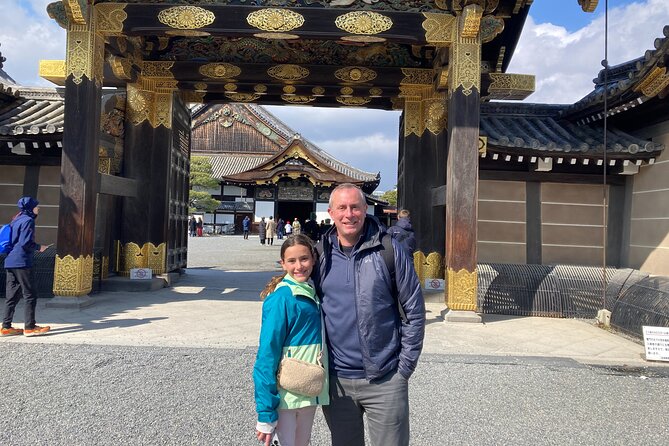
Nijo Castle is one of those places that feels bigger once you understand its purpose. It was built in 1603 as the Kyoto residence of Tokugawa Ieyasu, the first shogun of the Edo Period. That timeframe turns the visit into more than pretty walls. It becomes a window into how power played out in Kyoto.
In a private tour format, you can slow down for the parts that interest you most, whether that’s architecture, palace layout, or the overall political story. It also pairs well with Fushimi Inari if you want a “shrine to power center” morning.
Possible drawback: Nijo Castle admissions are not included, so you’ll pay any site entry costs yourself unless that specific stop is handled within the inclusions for selected sights. The tour does state that guide entry fees are covered only for sights listed under the what to expect options, so double-check how your chosen stops are treated.
Gion and the back-street feel: where the guide saves you from wandering
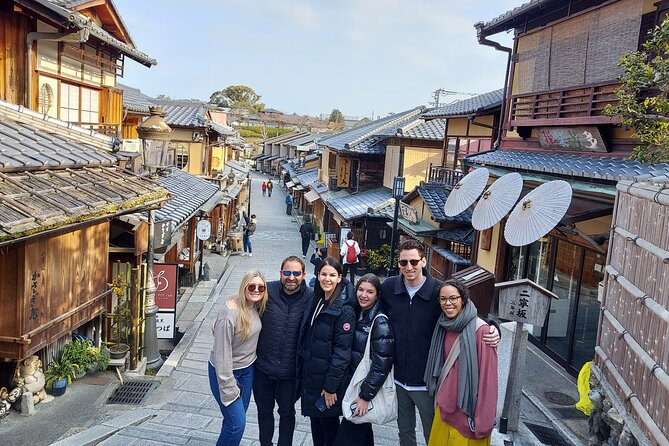
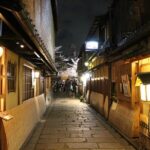
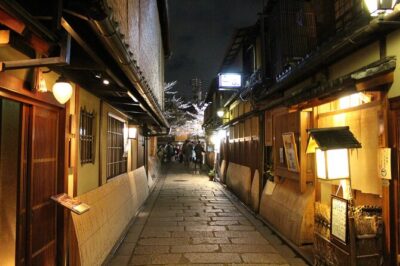
Gion is a maze of narrow lanes. If you arrive on your own, you can end up circling the same few streets while missing the quieter corners. With a guide, you can walk with confidence and pick the most atmospheric alleys without stress.
The tour description specifically calls out Gion’s narrow alleyways in the geisha district. That detail matters because Gion is not one big attraction. It’s a network of small spaces, and the best moments often show up between landmarks.
Many groups also like the way this tour bundles neighborhoods, so you can connect Gion’s old Kyoto street vibe to food stops later. In the guide feedback, the early timing kept the day feeling smoother, and that helps in Gion where you don’t want to be fighting crowds while trying to look around.
Possible drawback: Gion is famous, so even early in the morning, expect some visitors. The “private” part helps because your guide can route around bottlenecks.
Nishiki Market and Pontocho: the food neighborhood strategy
If your plan includes Nishiki Market, I’d think of it as Kyoto’s kitchen. The market is described as a narrow, five-block street with more than one hundred shops and restaurants. That’s why it works so well in a short tour: you can taste and snack without needing a full meal schedule.
And then there’s Pontocho, a narrow dining alley running from Shijo-dori to Sanjo-dori, one block west of the Kamogawa River. It’s a very Kyoto setting, especially if you like the idea of evenings that feel lived-in, not staged.
Important reality check: this tour is focused on walking and sightseeing. Lunch is not included. Some guides, though, were clearly invested in helping with food plans. One guide noted finishing at a favorite sushi restaurant, which suggests your guide will often point you toward a good meal when the tour ends.
Possible drawback: if you pick both Nishiki Market and another major temple, you may spend more time moving than tasting. I’d choose one “food-heavy” area per morning.
Kiyomizu-dera and Higashiyama: temple views with breathing room
Kiyomizu-dera Temple is one of Kyoto’s most popular temples, and popularity can equal crowd stress. That’s why an early start matters so much here. With a guide, you’re not just following the main flow, you’re getting context while you walk the grounds.
Higashiyama Ward is described as one of Kyoto’s best preserved historic districts, on the lower slopes of the eastern mountains. This is where old Kyoto feels walkable, especially when you can take breaks without fighting foot traffic.
In guide feedback, Tomy specifically mentioned the early timing making these usually busy sights feel empty enough to tour smoothly. That tells me the morning schedule is not just marketing language. It changes your experience.
Possible drawback: Kiyomizu-dera admissions are not included. Also, because you’re on foot, you’ll want comfortable shoes. Slippery stone and crowded steps can be a problem even when the crowds are smaller.
Arashiyama before the rush: bamboo, Tenryu-ji, and the riverside vibe
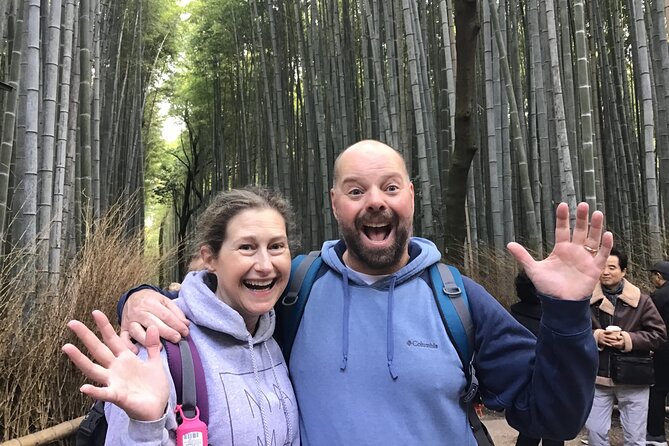
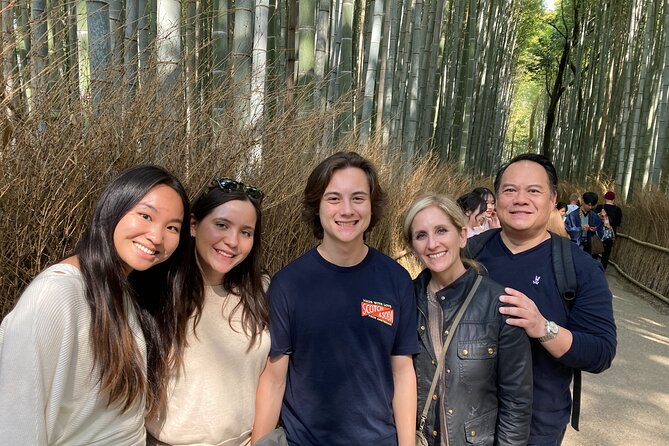
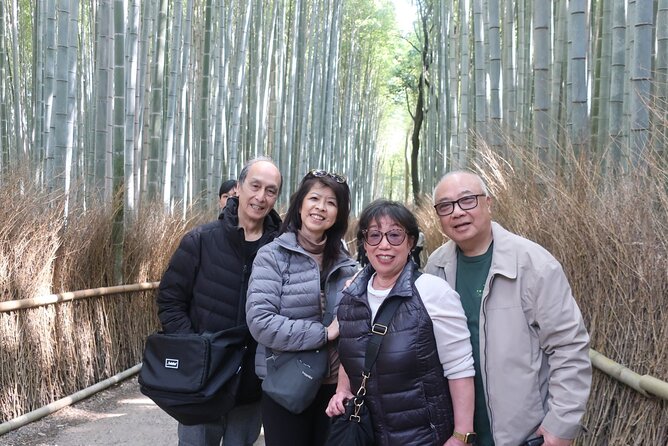
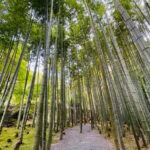
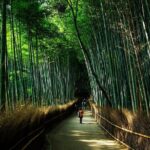
Arashiyama is one of those “yes, it’s touristy” places that still earns its reputation. The bamboo forest walking paths are described as magical, especially when there’s a light wind and the bamboo stalks sway. If you’ve ever seen photos, you know the look, but the early morning matters for the feel.
Tenryu-ji is highlighted as the most important temple in Arashiyama and one of Kyoto’s five great Zen temples. It’s registered as a world heritage site, and it’s a strong choice if you want your Arashiyama experience to include more than scenery.
Other Arashiyama options in the list include:
- Togetsukyo Bridge, the iconic “Moon Crossing Bridge”
- Okochi Sanso Garden, with multiple gardens and buildings in the back of the bamboo groves
Kay’s feedback also pointed to Arashiyama river-side views as a favorite, and that’s a good reason to pick Arashiyama if you want Kyoto to feel poetic rather than just historic.
Possible drawback: Arashiyama can be visually intense. If you’re picking only 2 to 3 stops, it can be smart to avoid overloading yourself with too many Arashiyama sub-sites, unless your guide is keeping a fast, efficient pace.
Northern mountain options: Kibune, Kurama, and the slower tempo
If you want Kyoto to feel more like a forest retreat, the northern mountain options make sense. Kibune is a small town in a forested valley. It’s described as developing around Kifune Shrine, with a legend about a goddess traveling from Osaka by boat.
Kurama-dera sits in the rural Kurama area less than an hour from the city center. The list also points out a hot spring connection, which tells me guides may steer you toward the calm, nature-first aspects rather than a packed shopping street.
These options can be great for people who:
- Want quieter atmosphere than the central sights
- Are comfortable with transit and walking
- Prefer a scenic morning where you hear birds more than crowds
Possible drawback: the time window is 4 hours approx, and this is a walking tour with no private vehicle. The more you move north, the more you have to simplify your other stop choices.
Price and logistics: what you’re paying for at $101.82 per person
At $101.82 per person, you are paying for a private, government-licensed guide plus route planning for your selected sights. That can be great value in Kyoto, because solo walking through multiple neighborhoods can turn into wasted time if you don’t know where to go first.
Here’s what’s included:
- Meeting with the guide on foot within a designated Kyoto area
- A licensed local English speaking guide
- Customizable 2 to 3 site tour
Here’s what’s not included:
- Private vehicle
- Transportation fees
- Entrance fees
- Lunch and other personal expenses
I like this pricing structure because it makes the “cost” feel tied to the guide experience, not inflated by turning the tour into a transport-heavy day. You still control your costs for admissions and meals.
What I’d watch:
- You cannot combine multiple tour groups.
- Guide entry fees are covered only for the sights that match the selected options. If you add extra places not in that selection, you likely cover those yourself.
Should you book this Kyoto early morning private tour?
Book it if you want:
- A calm start with shorter lines and cooler walking
- A private guide who can explain why a place matters, not just where it is
- A route built around your interests, picking 2 to 3 priority stops
Skip it or think twice if:
- You hate early mornings
- You want a car-based tour with minimal walking
- You want to pack too many distant sites into one morning, like mixing central Kyoto with far northern mountain stops
If your top goal is to feel the real Kyoto rhythm, this tour format is a strong fit. Based on the guide stories shared, the best outcomes usually come from choosing nearby sites that match the morning energy, then letting your guide tighten the route for your time.
FAQ
How long is the Kyoto early morning private tour?
It’s listed as 4 hours approximately.
How many sites can I customize for this tour?
The tour is described as customizable, focused on 2 to 3 sites you choose from the expectation list.
Is pickup available?
Pickup is offered, but the tour is a walking tour, and pickup is on foot. You meet the guide within a designated area of Kyoto.
Is this a private tour or a group tour?
This is a private tour/activity, with only your group participating.
Do I need to pay entrance fees?
Entrance fees are not included. Guide entry fees are only covered for sights listed under what to expect.
Is lunch included?
No. Lunch is not included.
Will I ride in a private vehicle?
No. A private vehicle is not included, and transportation fees are not included.
Is the guide an English speaking guide?
Yes. The included guide is described as a licensed local English speaking guide.
Can I cancel for a full refund?
Free cancellation is offered up to 24 hours in advance for a full refund.
Are service animals allowed?
Service animals are allowed.
More Guided Tours in Kyoto

More Tours in Kyoto
More Tour Reviews in Kyoto
Not for you? Here's more nearby things to do in Kyoto we have reviewed
Kyoto Private Guided Tours, compared.
 ★ 5.0Private Kyoto Tour with a Local, Highlights & Hidden Gems, PersonalisedFrom $1021,543 reviews
 ★ 5.0Kyoto 6hr Private Tour with Government-Licensed GuideFrom $1551,369 reviews
 ★ 5.010 Must-see Spots in Kyoto One Day Private Tour (up to 7 people)From $1791,108 reviews
 ★ 5.0Kyoto 4hr Private Tour with Government-Licensed GuideFrom $109629 reviews
 ★ 4.8Private Tour with Local Licensed GuideFrom $106463 reviews
 ★ 5.0Private Kyoto Tour with Licensed Guide & Vehicle (Max 15 persons)From $634417 reviews
 ★ 5.0Kyoto Customized Private Tour: See Top Attractions in 1 DayFrom $132342 reviews
 ★ 4.6Kyoto/Osaka: Kyoto and Nara Customized Private Guided TourFrom $477258 reviews
Browse the lists this tour appears in