
Reviewed · GION & GEISHA DISTRICT TOURS
Kyoto: Gion Evening Walk with Hidden Gems, Geisha & Sake
Gion at night feels like a secret. In 90 minutes you’ll stroll Gion after dark on a relaxed, lantern-lit route, with a local English guide and included sake as you go. You’ll also hit the big icons after the day-trippers leave, so the streets feel calmer and the photos look cleaner.
I like that this is a true walking tour with a small group, capped at 10 people, so the pace stays human and your questions actually get time. I also like the built-in photo support, because the guide helps you frame shots at each stop instead of just pointing and moving on.
One catch: it’s still a walking experience, and it’s not suitable if you have back problems. Comfortable shoes matter, and you should be ready for a night walk through Kyoto’s classic slopes and stone streets.
Key highlights worth your attention
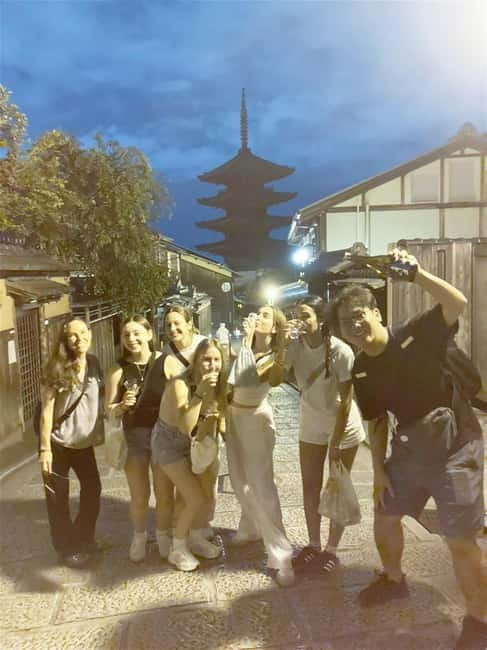
- Lantern-lit Gion with fewer crowds: You see Hanamikoji and nearby streets after the busiest hours.
- A sake sip as you walk: Included, with a chance to slow down and soak in the moment.
- Photo assistance at every main stop: The guide helps you capture Kyoto, not just pass through it.
- Shinto and temple stops in one compact route: Yasui Kompira-gū, Hōkan-ji, and Yasaka Shrine keep the story grounded.
- Small group, conversational pacing: You can ask anything, from local customs to what you’re seeing.
Why Gion after dark changes the whole experience
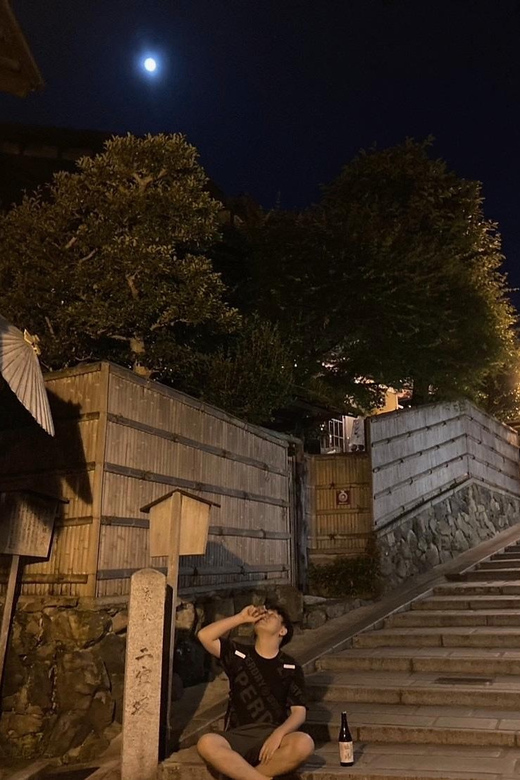
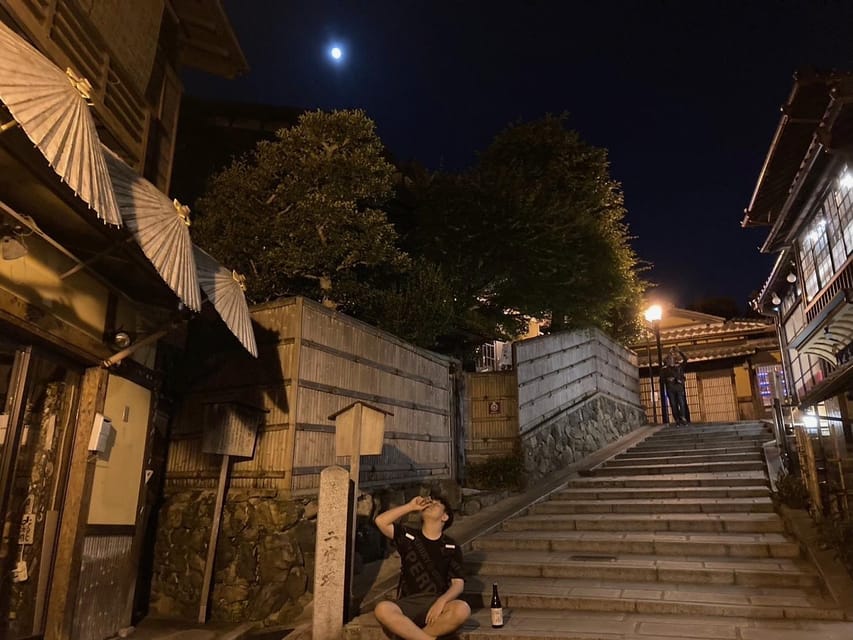
Kyoto’s Gion is dramatic in daylight, but at night it turns quieter and more cinematic. The lanterns soften the light and the alleys feel more intimate, which is exactly when a district like this makes sense. You’re not fighting crowds, and your guide can point out details you’d otherwise miss.
This tour is built around that idea: a compact route through Gion’s most recognizable spots, timed so the streets feel less chaotic. In places like Hanamikoji Street, the atmosphere is noticeably different once evening settles in, especially when tea house facades and wooden townhouses catch the warm glow.
And yes, the included sake helps. It’s not a party bus thing. It’s a small, local moment that fits the setting, giving you a reason to pause and notice what’s around you.
You can also read our reviews of more walking tours in Kyoto
Meeting at Shijo Kiyamachi, then getting into the right rhythm
The start is simple but specific: meet at Shijo Kiyamachi. The guide will be holding a sign that says Otatrip Guide, waiting between McDonald’s and the Japanese restaurant Kikunoi Roan, slightly south along Kiyamachi Street.
This matters more than it sounds. When a tour starts promptly, you’re positioned to walk when the streets are most atmospheric, not when you’re already late and catching up. If there are other participants, the group may depart on time, so arrive early, get oriented fast, and keep moving.
Once you’re with the guide, the rhythm is easy. The tour covers about 70 to 90 minutes of walking with a guide, paced so you can actually look at things, not just check boxes.
Hanamikoji Street and the stories behind Geiko and Maiko
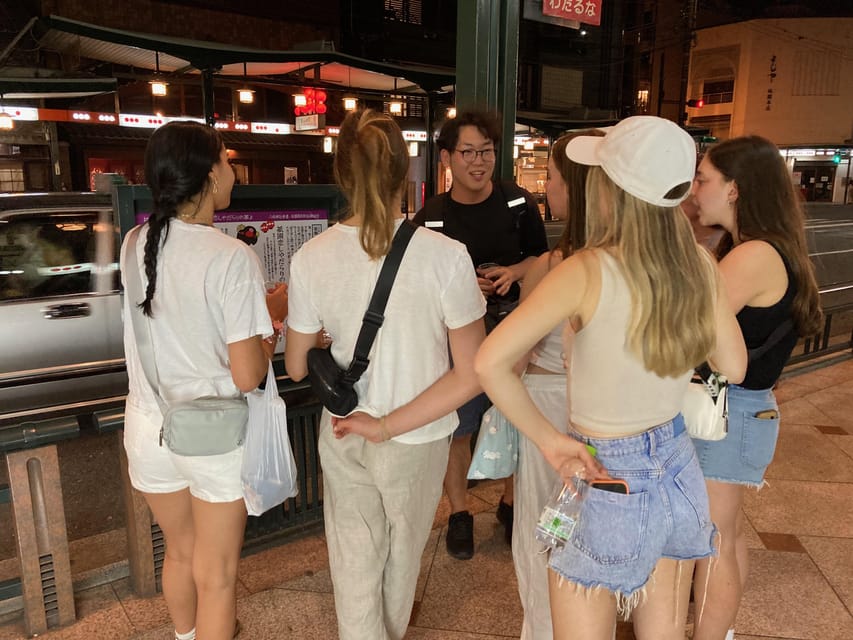
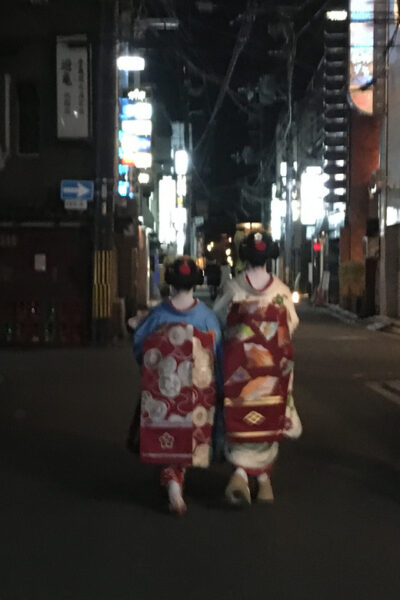
Your first real introduction is Gion, centered on Hanamikoji Street. This is the best-known geisha street in Kyoto, lined with traditional tea houses, and even if you’ve seen photos, it hits differently once you’re standing there at night.
What makes this stop valuable is the conversation. Instead of a lecture, the tour is designed as a walk with a local friend, where you can ask questions about what you’re seeing and how geiko and maiko culture works. You’ll also get plain-English context about the traditions tied to the area, so the details make sense as you walk.
Photo-wise, this is where you’ll benefit from the guide’s help. Night photography can get tricky fast, especially with moving crowds and low light. Having someone assist you at the main street early on helps you avoid the common problem of spending half your time trying to get settings right.
Yasui Kompira-gū Shrine, the power stone and the local mindset
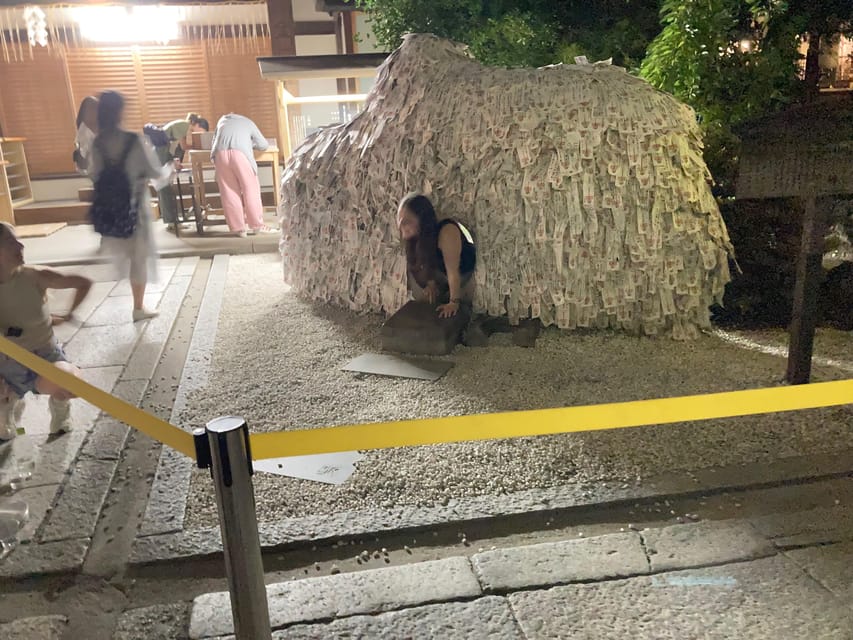
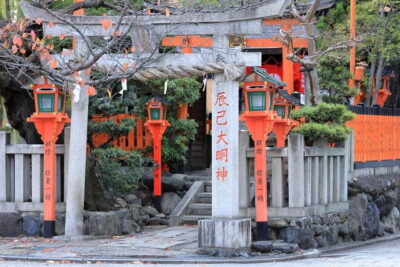
Next up is Yasui Kompira-gū Shrine, a stop that’s memorable for reasons beyond the scenery. The shrine is known for a unique power stone, and locals visit to cut bad ties and build good ones.
That theme is a perfect match for evening in Kyoto. It gives the walk meaning, because you’re not just touring buildings. You’re stepping into a place where people come with real intentions. The guide’s job here is to keep it understandable, so you get the story without needing a background in Shinto.
You’ll have a photo stop and time to visit, kept to about 10 minutes on the tour. That’s long enough to look closely and take a few solid shots, but short enough that the group stays on pace for the temples that follow.
Hōkan-ji Temple and Yasaka Pagoda, iconic without the daytime squeeze
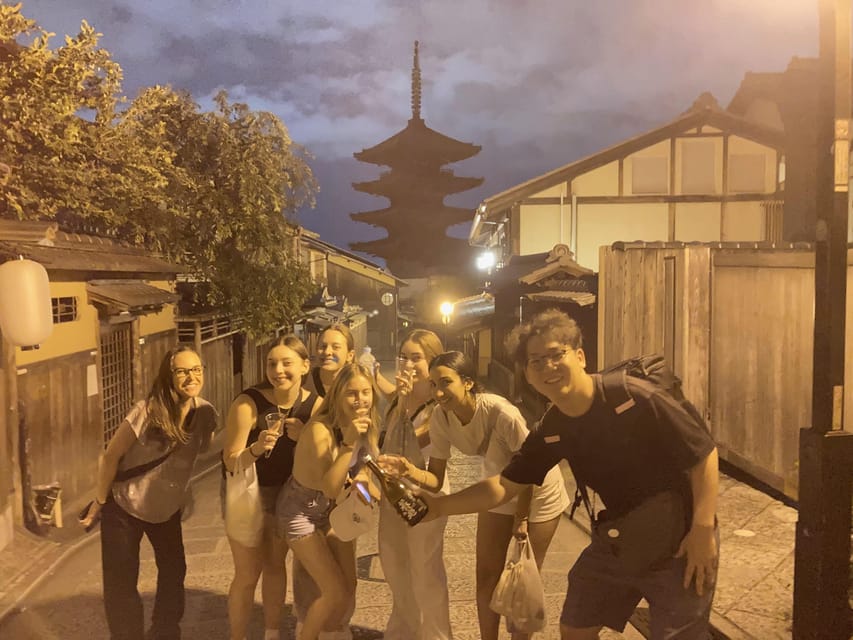
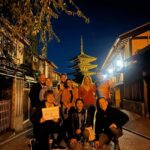
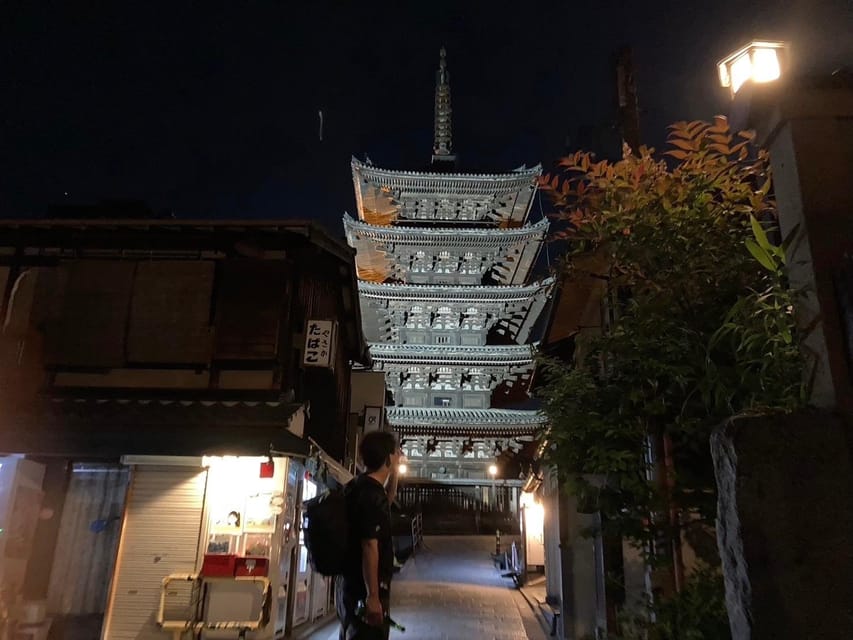
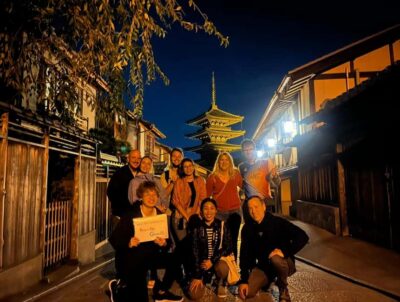
One of the best reasons to do this at night is Hōkan-ji Temple, home to the Yasaka Pagoda. Daytime visitors pack in for the five-story pagoda, but at night it’s lit beautifully and feels far less crowded.
This is one of those stops where timing is everything. The pagoda is recognizable from postcards, but in the evening you get a more layered look, with the light reflecting off nearby surfaces and the surrounding streets feeling quieter.
You’ll spend about 10 minutes here, again including a photo stop and guided time. The guide’s photo assistance is especially useful at a structure like this, because you’re trying to capture height, shape, and lighting all at once.
If you’re the type who cares about getting the best angle, you’ll probably appreciate how the route is set up so you can try a few compositions without running around.
You can also read our reviews of more food & drink experiences in Kyoto




Ninenzaka cobblestones and traditional lanes after dark
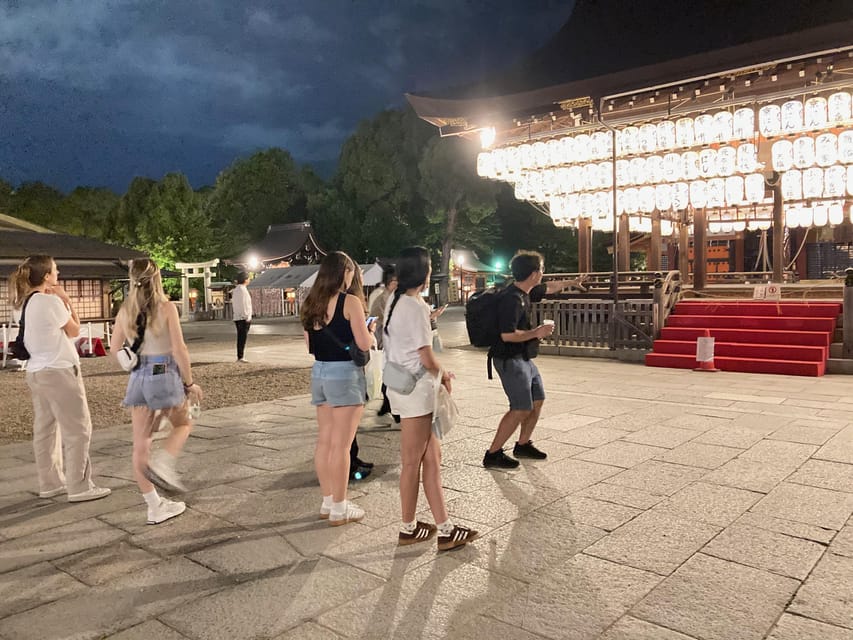
After the temples, you move to Ninenzaka, a charming cobblestone slope lined with traditional wooden townhouses. In daylight it’s pretty. At night, it becomes nostalgic in a different way, like the street is holding onto older Kyoto habits.
The tour gives you around 10 minutes here, with both a photo stop and time to visit. This is a great chance to slow down and actually walk the slope for a few minutes, because it’s a sensory stop. The stones, the narrowness of the path, and the lantern light change how your feet feel and how your eyes read the scene.
Keep in mind: cobblestones and slopes are hard on bad shoes. This is where comfortable footwear becomes non-negotiable. If you’re prone to ankle issues, take it slow on the incline.
Ending at Yasaka Shrine, where the walk’s atmosphere lands
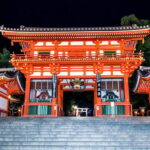
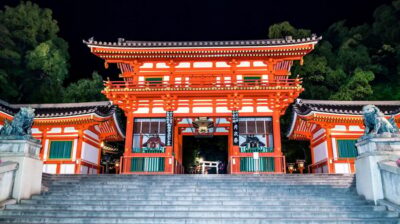
The tour finishes at Yasaka Shrine, a spiritual landmark that has watched over Gion for over 1,300 years. Ending here is a smart choice because it shifts the night from scenery to meaning, with a sense of continuity.
You’ll reach the shrine as the walk naturally winds down, which helps you feel like you’re arriving somewhere important rather than just checking off another stop. It also gives you a clear point to continue your evening. You know where you are, and you’re not left wandering in the dark trying to relocate a meeting place.
If you want to keep exploring, this is the kind of finish that helps you transition into dinner, a nearby stroll, or just soaking up the atmosphere around the shrine.
The sake moment, how it fits, and how to enjoy it right

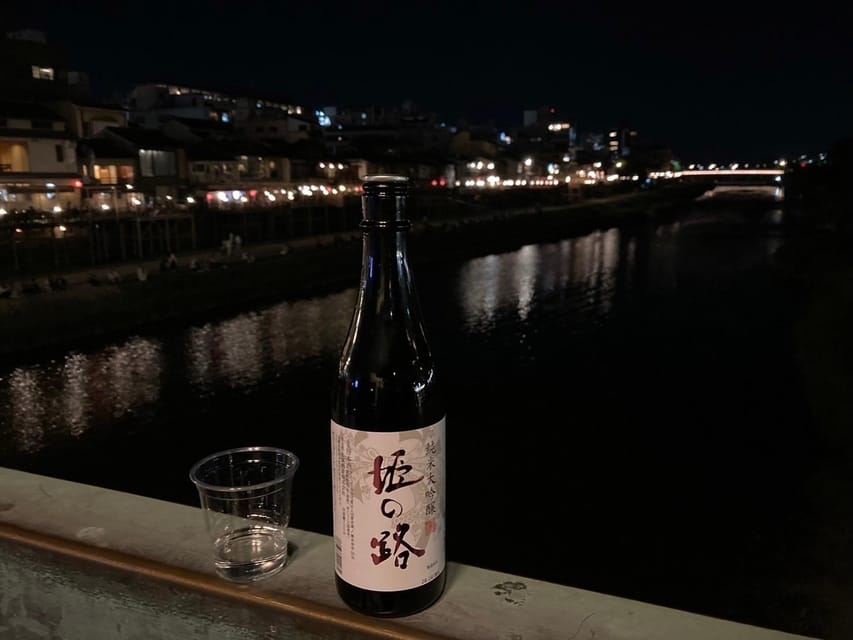
Sake is one of the small included extras that makes the tour feel more local. You’ll sip local sake as you stroll through lantern-lit streets, and the guide provides it as part of the experience.
A few practical notes for enjoying it well:
- Treat it as a cultural pause, not a shot-and-go moment.
- Keep your voice low near residential and sacred areas, since the tour itself emphasizes respect.
- If you plan to keep sightseeing after, take the sake at a slow pace, so it doesn’t knock your walking rhythm off.
In the experience you’ll likely notice that guides tend to be generous with the sake, but they also keep things respectful. The best part is that it blends into the walking, so it feels like a Kyoto moment instead of an add-on.
Price and value: what you’re really paying for
At $32 per person for about 90 minutes, this tour is priced for people who want quality time without a full evening commitment. You’re paying for several things at once: a local English guide, a small group size, photo assistance, sake, and a tightly planned route that links major sights without wasting time.
You also get value from the crowd-management angle. If you’ve tried photographing Gion during peak hours, you know the frustration. This tour aims to see iconic places with fewer crowds and better lighting, which can be the difference between decent photos and great ones.
For me, the biggest value is the format. A max group size of 10 means you’re not stuck waiting behind other people every time the guide stops. You get more attention, more chances to ask questions, and a more relaxed pace across multiple stops.
Who should book this Kyoto night walk
This tour fits best if you:
- Want Kyoto’s Gion highlights at night without the daytime rush.
- Like stories and context, not just walking past buildings.
- Care about photos and appreciate guidance at key locations.
- Prefer small group travel and a conversational guide style.
It might not be for you if:
- You have back problems or mobility limits, because it’s still a walking itinerary.
- You’re looking for a long, deep program. This is a compact, 90-minute route, so you’ll want to follow it with more independent exploration if you catch the bug.
If you’re traveling solo or as a couple, it can be especially satisfying. The small group makes it easy to feel social without losing your own pace.
How to get great photos without slowing the group
Even with photo assistance, you can make your life easier with a few simple moves:
- Wear shoes you can trust on slopes and stones.
- Keep your camera ready before each photo stop, since the guide will likely help you get set quickly.
- Aim to take a mix of wide shots and detail shots. In Gion, the details often look more interesting than just the main street view.
- Be ready to adjust for night lighting. Lantern light can create warm tones, so you might want to try different settings rather than relying on one preset.
Also, remember you’re walking through residential and sacred areas. The tour asks you to keep voices low, and that’s not just polite. It also keeps the street atmosphere calm for your photos.
Should you book this Kyoto Gion Evening Walk?
If you want Gion at the best time of day, this is a strong pick. You get lantern-lit streets, key landmarks like Yasaka Pagoda (Hōkan-ji) and Yasaka Shrine, photo help, and included local sake, all in a compact 90 minutes with a small group.
Book it if you like a relaxed pace and you want context about geiko and maiko culture without wading through a formal lecture. Skip it if you need a more accessible or less active experience, since it’s still a walking tour and not suitable for back problems.
If your goal is to see the iconic Gion feeling when the crowds fade and to leave with better photos and clearer understanding, this one makes sense.
FAQ
How long is the Kyoto Gion evening walking tour?
The tour lasts 90 minutes total, with about 70 to 90 minutes of walking with a guide.
What group size should I expect?
It is a small group tour limited to a maximum of 10 participants.
What is included in the tour besides the guide?
You get photo assistance and a cup of local sake during the walk.
Where is the meeting point, and how do I find the guide?
Meet at Shijo Kiyamachi. The guide will be holding a sign that says Otatrip Guide between McDonald’s and the Japanese restaurant Kikunoi Roan, a little south along Kiyamachi Street.
Are there any rules about smoking or behavior in sacred areas?
Smoking is not allowed. The tour also asks you to keep voices low in residential and sacred areas out of respect for the neighborhood.
Can I cancel, and can I pay later?
Yes. You can cancel up to 24 hours in advance for a full refund. You can also reserve now & pay later, so you pay nothing today.
More Food & Drink Experiences in Kyoto
More Walking Tours in Kyoto
More Tour Reviews in Kyoto
Not for you? Here's more nearby things to do in Kyoto we have reviewed


Gion & Geisha District Tours, compared.
 ★ 4.7Kyoto Geisha Walking Tour: Gion District & Hidden GemsFrom $253,273 reviews
 ★ 4.9Gion Magical Night Walking Tour with Geisha TriviaFrom $242,393 reviews
 ★ 4.7Gion Geisha District Walking Tour – Stories of GeishaFrom $202,187 reviews
 ★ 4.9Best of Kyoto: Gion, Geisha, Pagodas & CobblestonesFrom $242,058 reviews
 ★ 4.5Night Walk in Gion: Kyoto’s Geisha DistrictFrom $212,003 reviews
 ★ 5.0Kyoto Night Foodie Tour in Gion (9+ dishes + 6 Sake tastings)From $1631,762 reviews
 ★ 5.0Kyoto Gion Geisha District Walking Tour – The Stories of GeishaFrom $251,441 reviews
 ★ 5.0Kyoto Gion: 2-Hour Geisha Culture & History Walking TourFrom $231,186 reviews
Browse the lists this tour appears in