
Reviewed · GION & GEISHA DISTRICT TOURS
Kyoto: Gion Geisha District & Sake-in-Hand Walking Tour
Gion gets quieter after dark. This small-group evening walk threads through Kyoto’s geisha lanes with guide stories and just enough structure to keep you from wandering in circles. You also get the bonus of sake-in-hand, so the whole experience feels like it has a point beyond sightseeing.
I especially like how the tour explains what you are seeing. Instead of simply naming places, the guide connects the streets to geisha culture and the wider Kyoto story, including samurai-era echoes and Zen ideas along the way.
One thing to watch: it is a lot of walking for about 1 to 1.5 hours, and you need to keep your voice down as you move through residential areas at night.
Key points to know before you go

- Sake in your hand, not just in the brochure: the tasting is built into the route so it fits the evening mood.
- Maximum 10 people: smaller groups tend to feel more personal when you actually want to ask questions.
- Geisha culture context on the move: you learn what to look for while you walk narrow lanes.
- A shrine and temple lineup: Yasaka Shrine and Hokan-ji (Yasaka Pagoda) anchor the cultural side of the night.
- “Kyoto old streets” walking sequence: Sannenzaka and Ninenzaka area stone lanes give you that classic Higashiyama atmosphere.
- Respect locals after dark: the tour includes advice for quieter voices in residential stretches.
Why Gion at night works so well on this tour
If you have ever tried to see Gion on your own, you know the problem. Kyoto is gorgeous, but the streets can feel like a maze when you are chasing photos, figuring out crossings, and trying to read signs in a different alphabet.
This tour fixes that by giving you a guided route with cultural commentary. Gion is famous for geiko and maiko, but what makes the district special is the contrast, quiet residential pockets beside more public streets, and the way lantern light changes your perception. With a guide talking through what you are seeing, you spend less energy guessing and more time noticing.
Also, the tone matters. The sake tasting included in the experience is not a random add-on. It is timed for an evening walk, when you are already in “slow down and look around” mode.
You can also read our reviews of more walking tours in Kyoto
Starting where the city feels local: Kikunoi Roan to the Kamo River
The tour begins at Kikunoi Roan in Shimogyo Ward, at the address shown on the meeting info (Saitocho, near Shijo-dori area). From the first step, it feels like a practical meet-up point rather than a hard-to-find landmark.
You then head toward the Kamo River, the river that runs through Kyoto like a calm spine. The Kamo River area is known for scenic beauty, and at night it tends to feel reflective and less rushed. It is a smart opener because it gives your eyes a reset before you move into the dense lanes of Gion.
Practical tip: if you are the type who takes a lot of photos, do it here first. By the time you are deep in Gion, you will want to keep moving because the streets can get narrow fast.
Gion and Hanamikoji Street: watching the district up close
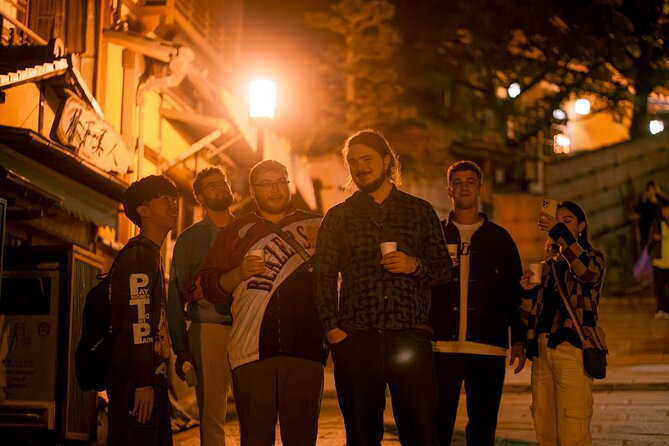
Next up is Gion itself, followed by Hanamikoji Street. These stops matter because they show you Gion in two ways.
Gion gives you the geography of the district: narrow lanes, traditional wooden machiya houses, and teahouse-lined streets that make you feel like you stepped into an older Kyoto layer. Hanamikoji Street is the famous historic spine of the neighborhood, the place where you expect to see the classic Gion vibe, especially after dark.
Two things I like here:
- You are not just walking past famous names. The guide commentary helps you understand what the street layout and architecture are trying to communicate.
- The pacing is relaxed enough to actually look up, not only forward.
What to be mindful of: Gion is still a living neighborhood. Even when you see famous scenery, you are not visiting a theme park. Keep your voice low when you are near homes and side streets.
Yasui-Konpiragu Shrine: a quick ritual stop with meaning
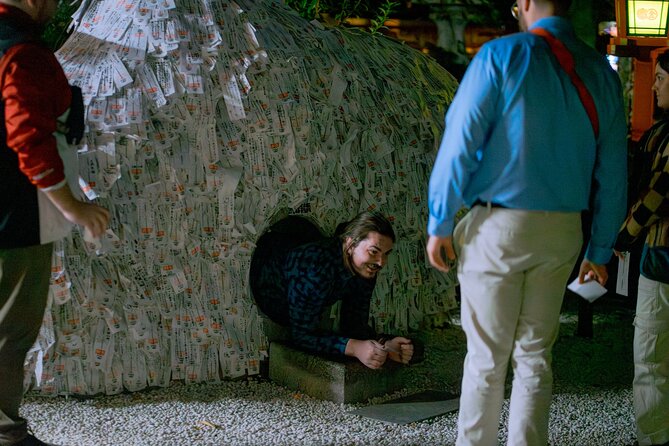
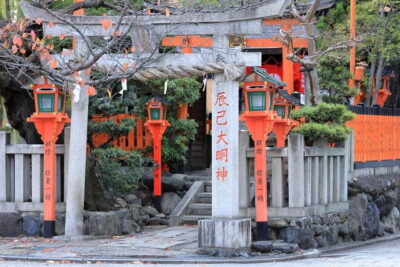
After the main Gion lanes, the route includes Yasui-Konpiragu Shrine in the Higashiyama area. This shrine is known for severing bad relationships and bringing good ones. It is also famous for a large Enki theme (the shrine’s big Enki-related feature is part of what draws people in).
Why it is a good tour stop: it adds a different side of Kyoto than the “geisha district postcard.” You get a moment of spirituality and symbolism, which helps explain why people treat shrine visits as part of everyday life, not just a tourist activity.
Time-wise, you should expect about 15 minutes at this stop. That is enough to slow down, take a few photos from respectful angles, and listen to the guide’s context without turning it into a long detour.
Hokan-ji Temple (Yasaka Pagoda): the Kyoto skyline moment
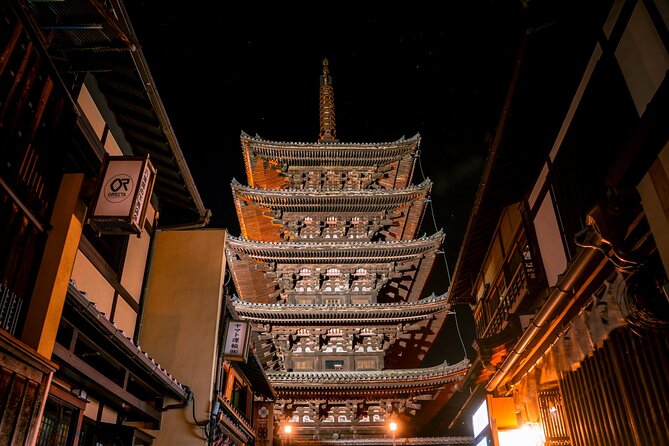
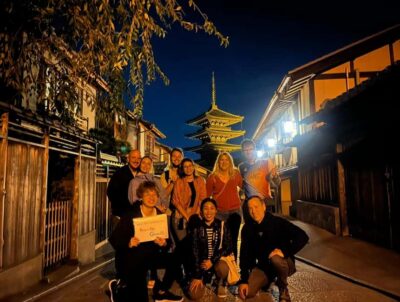
Hokan-ji Temple, often called Yasaka Pagoda, is the next key landmark. This iconic five-story pagoda is located in Higashiyama, and the tour gives you time to notice its presence and significance. It is also tied to a much longer Kyoto timeline, with origins dating back to the 6th century.
This stop is where the walk starts to feel like more than a neighborhood stroll. Pagodas are visual anchors. When you see them in person at night, the structure feels both solid and delicate, and it is easier to connect the dots between “historic Kyoto” and the city’s current rhythm.
A good habit here: look first, then photograph. If you photograph immediately, you miss the way the pagoda pulls your eyes through the area.
You can also read our reviews of more food & drink experiences in Kyoto





Sannenzaka and Ninenzaka: stone lanes that slow your feet down

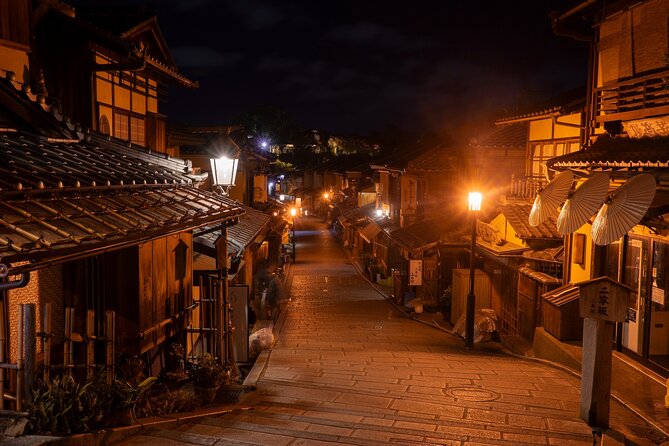
The tour moves into the Sannenzaka and Ninenzaka area, the classic Higashiyama pedestrian streets known for their preserved atmosphere and stone-paved slopes. In the schedule you will see short blocks at each, with a brief turn through the neighborhood texture rather than a long sit-down.
These lanes are worth your attention for one simple reason: they feel like you are walking through time. The stairs and slopes change your pace naturally. You will likely slow down without realizing it, which is exactly what you want on an evening tour.
Why I think these stops work on this particular route:
- They bridge the shrine-temple side with the old-street shopping street vibe.
- They give you constant visual variety, so the walking never feels monotonous.
Nene-no-Michi: a calmer connection between temples and streets
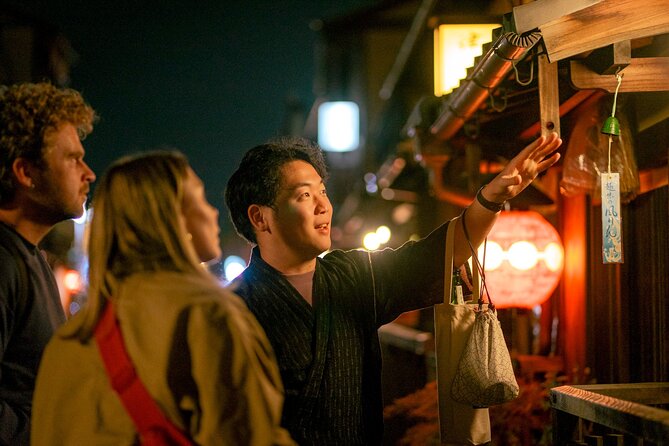
Then you head to Nene-no-Michi, named after Nene, the wife of Toyotomi Hideyoshi. This section is quieter, a stone-paved path that connects the broader temple zone feel, linking areas you can associate with Kodaiji and Maruyama surroundings.
Even if you do not know the story at first, the tour context helps. Naming a path after a historical figure makes it more than scenery. It becomes a line that carries meaning.
What to expect: about 10 minutes here, enough time to walk it slowly and appreciate the sense of flow. This is also a good spot to take a breather before you finish at Yasaka Shrine.
Yasaka Shrine to the finish: wrapping the evening in lantern light

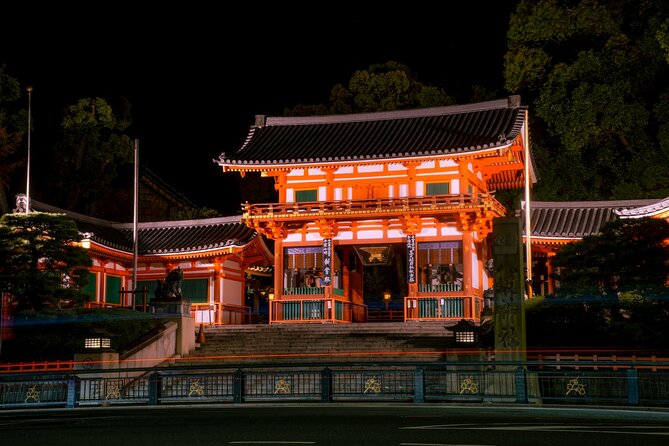
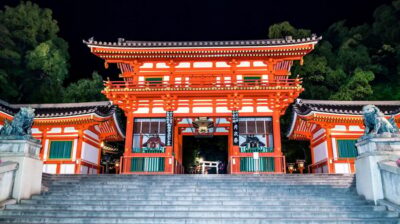
The last major stop is Yasaka Shrine, also called Gion Shrine. It is historically significant, dating to 656 AD, and the tour gives it time, roughly 20 minutes, so it is not rushed.
This finish works because Yasaka Shrine sits at the center of the story you started learning. By the time you arrive, you have already seen Gion’s structure, the old streets, and the spiritual landmarks. So the shrine feels like the emotional capstone: a place with atmosphere and history, not just a place to check off.
If you want to go somewhere after the tour, the guide will help you with options like catching a taxi. This matters because public transport can be less convenient once night progresses. You do not want the evening ending with stress.
Sake-in-hand tasting: turning a simple pour into part of the lesson
The sake tasting is one of the main reasons this tour is priced the way it is. At $27.84 per person, you are paying for the guide plus the route plus alcohol included. Many walking tours cover scenery. This one builds in a cultural drink moment so you remember the experience as more than a map walk.
You should still plan responsibly. The tour includes alcohol, and the instructions emphasize drinking responsibly. If you are planning to stay active after, pace yourself, or you can choose to take smaller samples.
Why it enhances the tour: sake changes your sense of comfort. It can make narrow streets feel warmer and more social, especially in a group of up to 10 people where conversation is easy.
Price and value: is $27.84 fair for what you get?
Let’s break down the value in practical terms.
- Duration: about 1 to 1.5 hours means you get a full evening experience without losing half your night.
- Group size: a maximum of 10 travelers is a real value driver. It is not about luxury. It is about whether you can actually ask questions and get answers.
- Sake included: the tour is not just “sightseeing plus a photo op.” You get a tasting as part of the walk.
- Multiple major landmarks: you cover Gion, a well-known historic street, Yasui-Konpiragu Shrine, Hokan-ji, Sannenzaka/Ninenzaka area, Nene-no-Michi, and Yasaka Shrine.
At this price, you should feel like the tour is targeting first-timers and casual Kyoto visitors who want context fast. If you already know Kyoto deeply and you prefer total freedom, you may find you could do parts solo. But if you want a smooth route plus stories, $27.84 feels reasonable.
Walking at night in residential Kyoto: the comfort checklist
Because this is a night walking tour through neighborhoods, comfort and etiquette matter as much as timing.
Here is what you should do before you go:
- Wear comfortable shoes. You will be moving a lot.
- Keep clothing practical for walking, especially if the pavement is uneven or slightly wet.
- Keep your voice down when you are in residential areas. The tour specifically calls out respect for local residents.
- Have a moderate fitness level. This is not a slow stroll with long rests at benches.
Weather also matters. The tour notes good weather is required, and if it is canceled due to poor weather, you will be offered another date or a full refund. So check the forecast the day of, and do not count on rain turning into a miracle.
Who this tour is best for
This is a good fit if:
- You want a guided path through Gion without getting lost.
- You care about geisha culture context and want to understand what you are seeing as you walk.
- You prefer a small group, up to 10 people, where your questions are likely to land.
- You would like a quick intro to several major Higashiyama landmarks in one evening.
It might not be ideal if:
- You hate walking or you want minimal time on your feet.
- You want a totally self-paced tour with no commentary at all.
- You are sensitive to alcohol, since the tasting is included and the tour explicitly provides alcohol.
Should you book Kyoto: Gion Geisha District & Sake-in-Hand Walking Tour?
I would book this tour if your goal is to see Gion at night in a structured, low-stress way and you genuinely want cultural context, not just photos. The combination of narrow backstreets, shrine and pagoda landmarks, and a sake tasting makes it feel like one coherent evening plan.
If you are unsure, pick based on your tolerance for walking. Comfort shoes and a calm, respectful attitude go a long way here. If you can do that, you will likely leave feeling like you understood Gion better, and you will have something memorable beyond the standard itinerary.
FAQ
How long is the Gion Geisha District and Sake-in-Hand walking tour?
It runs about 1 hour to 1 hour 30 minutes.
How big is the group?
The tour has a maximum of 10 travelers.
Does the tour include sake?
Yes. The experience includes a sake tasting, and alcohol is provided, so drink responsibly.
Is there an age limit?
Yes. Participants must be 20 years old or older.
What are the main stops during the walk?
You will go through Gion and Hanamikoji Street, visit Yasui-Konpiragu Shrine and Hokan-ji Temple, walk in the Sannenzaka and Ninenzaka area, pass Nene-no-Michi, and finish at Yasaka Shrine.
Where does the tour start and end?
It starts at Kikunoi Roan in Kyoto and ends at Yasaka Shrine (Gionmachi Kitagawa, Higashiyama Ward, Kyoto).
Is it cancelable if plans change?
Yes. You can cancel for a full refund up to 24 hours in advance of the experience start time.
More Walking Tours in Kyoto
More Tours in Kyoto

More Tour Reviews in Kyoto
Not for you? Here's more nearby things to do in Kyoto we have reviewed




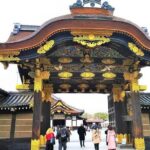
Gion & Geisha District Tours, compared.
 ★ 4.7Kyoto Geisha Walking Tour: Gion District & Hidden GemsFrom $253,273 reviews
 ★ 4.9Gion Magical Night Walking Tour with Geisha TriviaFrom $242,393 reviews
 ★ 4.7Gion Geisha District Walking Tour – Stories of GeishaFrom $202,187 reviews
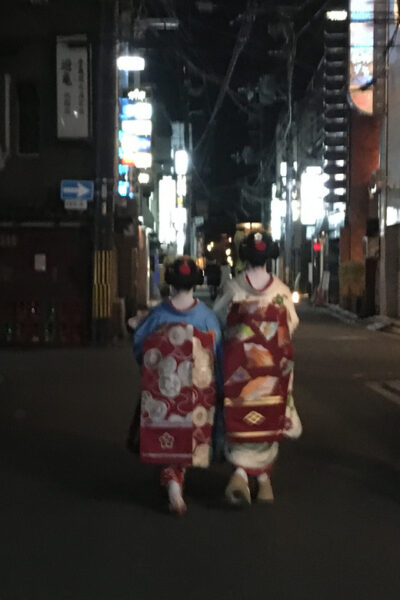 ★ 4.9Best of Kyoto: Gion, Geisha, Pagodas & CobblestonesFrom $242,058 reviews
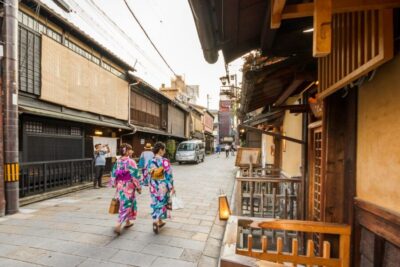 ★ 4.5Night Walk in Gion: Kyoto’s Geisha DistrictFrom $212,003 reviews
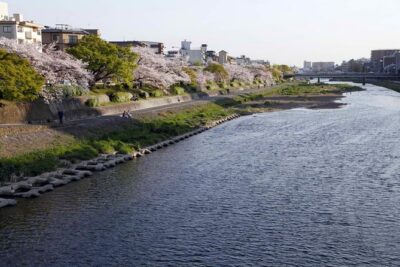 ★ 5.0Kyoto Night Foodie Tour in Gion (9+ dishes + 6 Sake tastings)From $1631,762 reviews
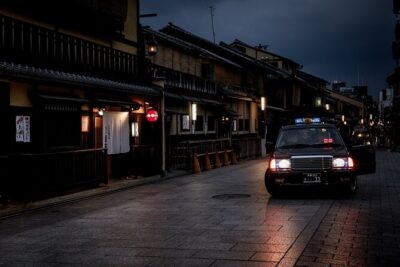 ★ 5.0Kyoto Gion Geisha District Walking Tour – The Stories of GeishaFrom $251,441 reviews
 ★ 5.0Kyoto Gion: 2-Hour Geisha Culture & History Walking TourFrom $231,186 reviews
Browse the lists this tour appears in