
Reviewed · GION & GEISHA DISTRICT TOURS
Kyoto: Gion Magical Night Walking Tour
A good Gion night is when the district feels human. This tour takes you through Gion before the day crowds, then slows down at sacred spots and streets most first-timers miss. You’ll learn how geisha culture developed, plus the everyday rules of polite behavior in this neighborhood.
Two things I really like: the small group size (kept very intimate) and the focus on geisha history and etiquette, not just photos. Guides such as Karen, Ricky, Hina, Sho, Pam, and May all bring stories that make Gion feel less like a postcard and more like a living community.
One thing to consider: you’re on foot for about 1 hour 40 minutes, with slopes and stairs along the way. If your legs are not great, plan on moving carefully and consider a flatter option instead.
Key things to know before you go
- Starts before the biggest crowds so you can actually enjoy Gion’s lanes at night
- Small-group format (maximum eight, kept to a total cap of 10) for a less intrusive experience
- Geisha etiquette included, including what to do if you spot a maiko or geiko
- Several free, meaningful stops around Gion, from shrines to classic temple approach streets
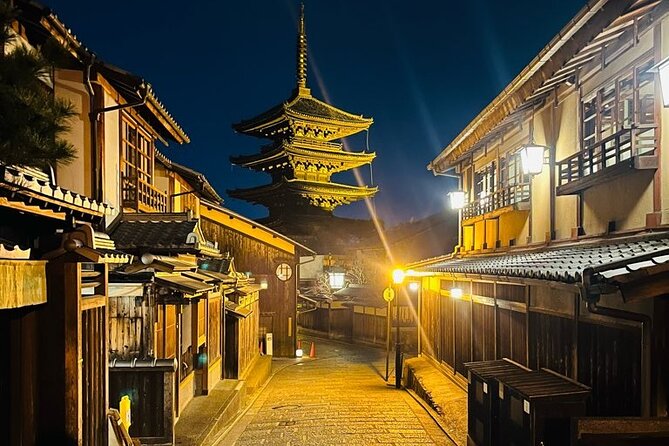
- Night lighting is a big part of the appeal, especially around shrines, pagoda views, and lantern areas
- Comfort matters, because the route includes slopes and stairs
Why a Gion night walk feels different from daytime
Gion is famous for geisha heritage, but daytime often turns into a jam of tour groups. At night, the lights soften the streets, and it feels easier to notice the details, like how lanes bend, where lantern glow gathers, and how shrines sit quietly inside ordinary neighborhoods.
This tour leans into that timing. You’re guided through the area before the day crowds fully re-form, so you can see landmarks and smaller side spots without constantly squeezing past people.
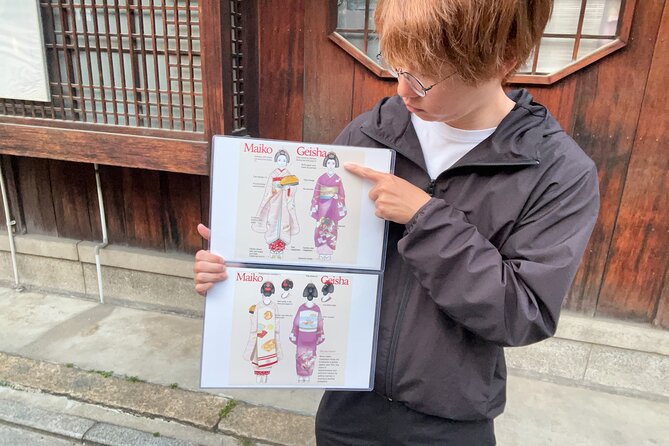
You also get a cultural lens while you walk. Instead of treating Gion as scenery, you learn what geiko and maiko life is tied to, and why etiquette matters in a district where tradition still shapes daily behavior.
You can also read our reviews of more walking tours in Kyoto
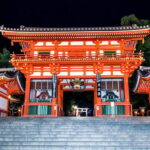
Meeting point at Minamiza Theater and how the tour stays manageable
The walk starts at Minamiza Theater on the Higashiyama side of Kyoto, then ends around Gionmachi Kitagawa. Having a clear start and end point matters in Kyoto, where trains, buses, and foot traffic can tangle up your timing.
The tour is built around a small-group cap, and that changes the whole feel. You can ask questions, hear the guide clearly, and actually keep up with the route without the constant stop-start rhythm that bigger groups bring.
Also, you’ll use a mobile ticket. That’s one less thing to worry about once you’re out in the evening.
Stop 1 on the route: Gionmachi Minamigawa and the maiko-geiko etiquette moment
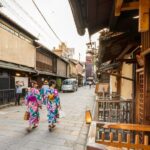
Your first stop is Gionmachi Minamigawa, one of the district’s best-known streets. This is exactly the kind of place where you might spot a maiko or geiko, especially if you’re lucky and pay attention as you walk.
What I find useful here is the practical etiquette you get ahead of time. If you see a maiko or geiko, the guidance is simple: greet with a smile and say Konnichiwa. It’s a respectful, low-pressure way to acknowledge what you’re seeing without turning it into a spectacle.
One drawback at this type of street, even at night, is that the roads can still be active. Keep your pace calm and your attention on the guide’s direction, so you don’t accidentally drift into the wrong spot for photos or blocking foot traffic.
Stop 2: Yasui-Konpiragu shrine and the theme of love, protection, and repair
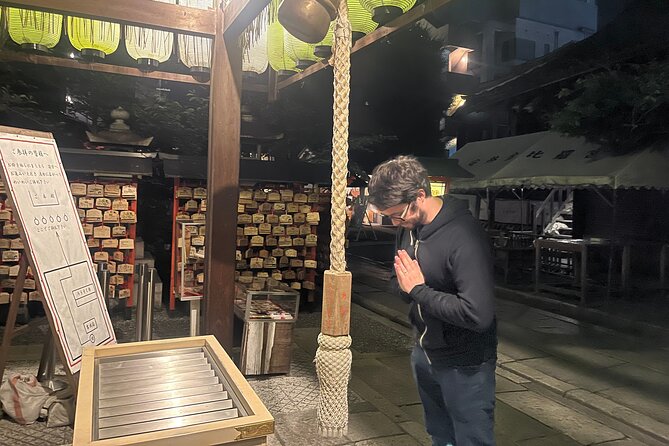
Next you visit Yasui-Konpiragu, a shrine with a very human theme: it’s associated with helping men and women meet and with cutting off bad relationships. If you’re traveling as a couple, it’s one of those stops that feels personal, not museum-like.
The tour frames it with an idea you can remember: for a married couple or a couple, the bond is said to grow stronger. Even if you’re not chasing matchmaking luck, it’s a good reminder that these sites often serve real emotional needs, not just tourists with camera lenses.
A good way to approach this stop is to slow down. Look at what people are doing there, then listen to the guide’s context. Kyoto shrines often feel ordinary until you understand what people believe they’re asking for.
Stop 3: Sannenzaka and Ninenzaka for lantern-lit Kyoto streets
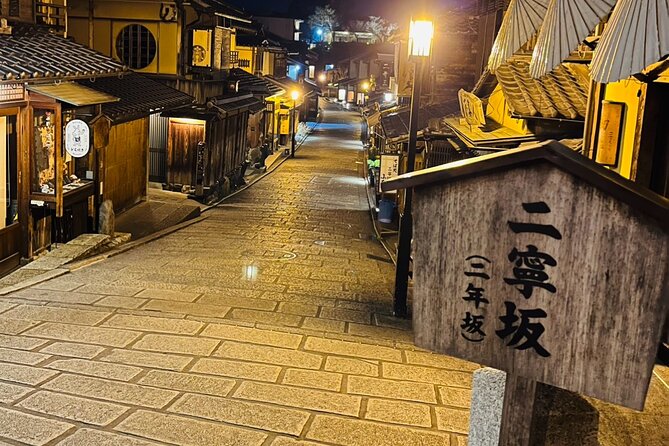
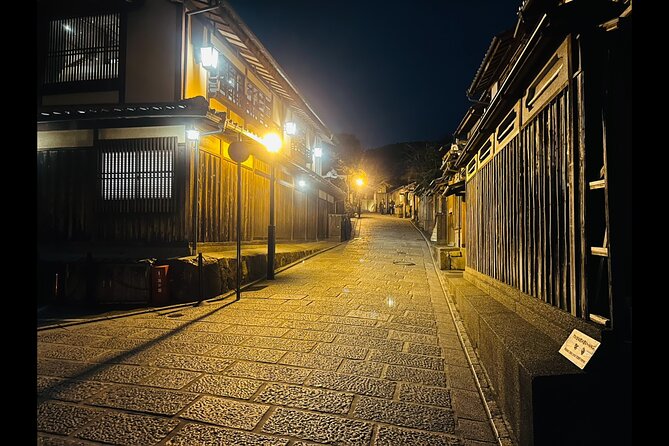
After that, the route moves through Sannenzaka and Ninenzaka, classic approach streets near Kiyomizu-dera. These lanes are loved for their traditional townscape, and at night that look changes. Darker streets make signage less loud and building details more noticeable.
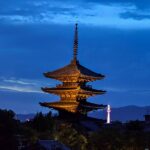
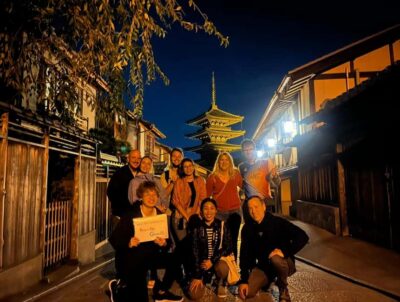
This stop also ties into a familiar landmark. Yasaka-no-to (Yasaka Pagoda) is especially popular here, and the area makes a great setting for night photography because lights bounce off stone and wood textures.
One practical note: these streets often mean uneven walking. Even if you’re comfortable, move deliberately on the slopes and keep a steady gap from the person in front of you, especially in tight sections.
You can also read our reviews of more evening experiences in Kyoto


The WWII Kannon memorial stop, and why it belongs on a night walk
You’ll also visit a memorial connected to World War II, built in 1955 to pray for the repose of the souls of the victims. There’s a very large statue of Kannon, which gives this part of the tour a quieter, more reflective mood.
I like that the tour doesn’t keep everything light and pretty. Kyoto does night atmospheres well, but it also holds memory. This stop gives you a break from the nonstop visuals and helps the whole walk feel more balanced.
If you’re the type who rushes through religious spaces, slow down here. Take a full minute, then continue. You’ll appreciate how the mood of Gion shifts again once you head back into the livelier lanes.
The shogun’s widow temple garden stop, with tea house and bamboo grove calm
Another highlight is a temple-like visit connected to a story of loss and mourning. This place was built about 400 years ago by the wife of a shogun, in memory of her husband. In practice, that means you get a strong sense of intent, not just pretty grounds.
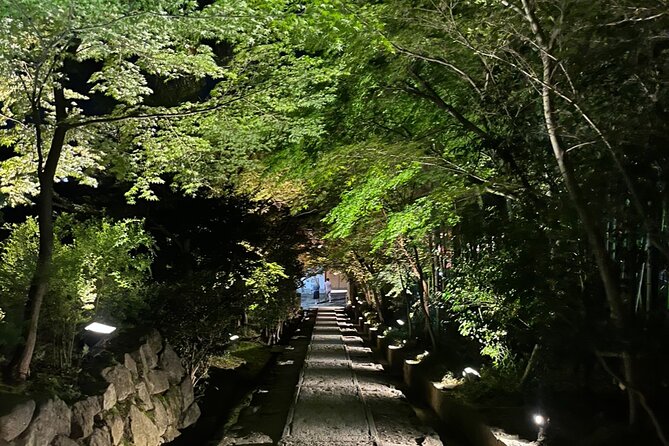
The tour points you toward specific features: a beautiful garden, a 400-year-old tea ceremony house, and a bamboo grove. Even if you don’t go inside every structure, these are the kinds of elements that make Kyoto feel like Kyoto.
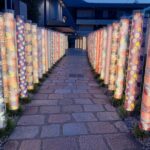
The value here is pacing. After busy streets, the garden space gives your eyes somewhere to rest. At night, bamboo and lantern light can feel extra cinematic, but the real win is mental, not photographic.
Stop 4: Yasaka Shrine, also known as Gion-san
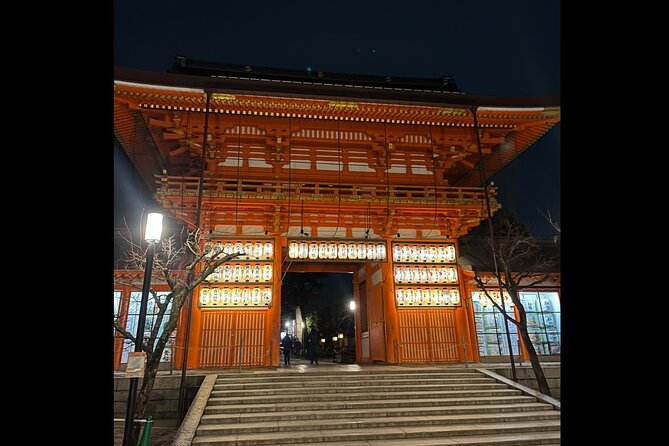
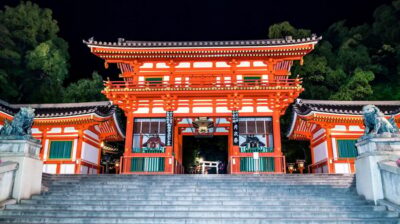
Your final shrine stop is Yasaka Shrine. It’s the head shrine of roughly 2,300 related shrines throughout Japan, so it’s not just a neighborhood stop, it’s a central one.
The tour also highlights why people link this area to protection and beauty. Yasaka Shrine is known as Gion-san, with blessings that ward off bad luck, bring good luck, and promote beauty. It’s a nice wrap-up theme after geisha history and etiquette, because it ties culture, identity, and everyday hopes into one place.
If you want a small strategy for this last stop, it’s simple: take in the main areas first, then watch how other people approach prayers and wishes. You’ll learn more from observation than from trying to read everything at once.
What your guide teaches you about geisha culture and etiquette
The best part of this tour is that it’s not only geography. It’s people and manners.
Guides on this walk tend to be locals, and names that come up include Karen, Ricky, Hina, Sho, Pam, and May. Some guides share personal family connections to geisha heritage, which makes the stories feel less like a lecture and more like lived experience passed through a Kyotan lens.
Expect a clear talk track at each stop. You’ll learn the history of geisha culture, plus etiquette that helps you behave well when you’re in close proximity to traditional workers and spaces.
I also like that you get the chance to ask questions as you walk. Because the group is kept small, you’re less likely to get ignored or rushed, and that matters if you want to clarify things like terms, roles, or customs.
One more practical note: language quality can vary by guide. On one run, a guide named Sho was still working on English questions. If you’re picky about conversation, keep it simple and ask one or two focused questions, then let the guide’s stories do most of the heavy lifting.
Walking time, hills, and what shoes to bring
The duration is listed at about 1 hour 40 minutes. That’s long enough to cover several major and side lanes, but short enough that you won’t feel like you lost your whole evening.
Still, the route includes slopes and stairs, and the tour isn’t recommended if you struggle with uneven ground. If you know you get sore in Kyoto’s hills, wear shoes with grip and plan for slow, careful steps.
Comfort also affects your enjoyment. When your legs feel good, you can focus on lantern light, shrine details, and guide explanations. When your feet hurt, you’ll just count minutes.
Price and value: what $29.60 really buys you
At $29.60 per person, this tour is priced like an evening activity, not a big-ticket attraction. For that money, you get three types of value at once.
First, you get structure. Gion at night is gorgeous, but without guidance it’s easy to miss the quieter lanes and the meaningful stops. A guide gives you a route that flows logically, with stops that make sense one after another.
Second, you get cultural context. Geisha history and etiquette are hard to pick up on your own unless you already know what to look for. Here, you’re taught why places matter and how to behave with respect.
Third, multiple stops are free admission, including streets, shrines, and the approach areas you visit. That means your money goes mainly to the guide and the experience design, not entry fees.
Small-group format also boosts value. The difference between eight to ten people and a bigger crowd is real, especially for questions, pacing, and photo moments.
Who should book this tour, and who might skip it
This is a great match if you want:
- a short night walk with real explanations
- a chance to spot a maiko or geiko, if luck aligns
- a more respectful, less crowded way to see Gion
- photo-friendly night streets and lantern lighting with guidance
You might skip it if you:
- need a flat route with minimal walking
- want a highly flexible itinerary with long free time at each site
- prefer to read everything on your own instead of listening to guided storytelling
It’s especially good for first-timers to Kyoto who already saw a few temples in the daytime and want a different side of the city at night.
Should you book the Kyoto Gion Magical Night Walking Tour?
I’d book it if your goal is Gion after dark with less noise and more meaning. The tour’s core strengths are timing before heavy crowds, a small-group size, and guide-led geisha culture and etiquette that helps you understand what you’re seeing.
Just be honest with yourself about walking. If you’re comfortable on uneven ground and can handle slopes and stairs, you’ll likely enjoy the pacing and the atmosphere. If not, you’ll spend too much energy managing your legs and less on the stories.
If you want a night in Kyoto that feels respectful, calm, and guided, this one makes a lot of sense.
FAQ
How long is the Kyoto Gion Magical Night Walking Tour?
It’s listed at about 1 hour 40 minutes.
What is the group size limit?
The tour is described as a small-group experience with a maximum of eight, and the activity information also notes a maximum of 10 travelers.
Do I need to buy admission tickets for the stops?
Admission is free for the stops listed in the itinerary.
Where do I meet the tour?
The meeting point is at Minamiza Theater in Kyoto (松竹南座 2F西ロビ). The tour ends at Gionmachi Kitagawa.
Is the tour suitable for people with mobility issues?
It is not recommended for those who are not comfortable with walking, because the route includes slopes and stairs.
What ticket format do I get?
You’ll receive a mobile ticket.
Does the tour run in any weather?
The experience requires good weather. If it’s canceled due to poor weather, you’ll be offered a different date or a full refund.
Can I bring a service animal?
Yes, service animals are allowed.
What is the cancellation window for a full refund?
You can cancel up to 24 hours in advance for a full refund. If you cancel less than 24 hours before the start time, the amount you paid will not be refunded.
More Walking Tours in Kyoto

More Tours in Kyoto

More Tour Reviews in Kyoto
Not for you? Here's more nearby things to do in Kyoto we have reviewed



Gion & Geisha District Tours, compared.
 ★ 4.7Kyoto Geisha Walking Tour: Gion District & Hidden GemsFrom $253,273 reviews
 ★ 4.9Gion Magical Night Walking Tour with Geisha TriviaFrom $242,393 reviews
 ★ 4.7Gion Geisha District Walking Tour – Stories of GeishaFrom $202,187 reviews
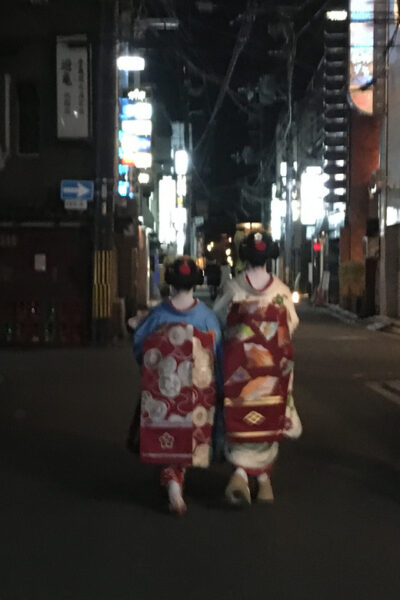 ★ 4.9Best of Kyoto: Gion, Geisha, Pagodas & CobblestonesFrom $242,058 reviews
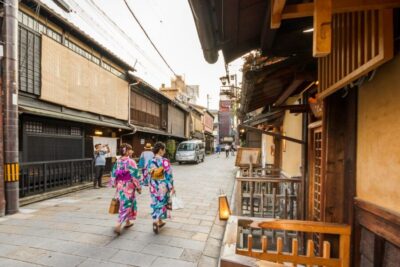 ★ 4.5Night Walk in Gion: Kyoto’s Geisha DistrictFrom $212,003 reviews
 ★ 5.0Kyoto Night Foodie Tour in Gion (9+ dishes + 6 Sake tastings)From $1631,762 reviews
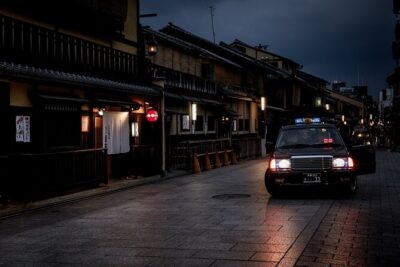 ★ 5.0Kyoto Gion Geisha District Walking Tour – The Stories of GeishaFrom $251,441 reviews
 ★ 5.0Kyoto Gion: 2-Hour Geisha Culture & History Walking TourFrom $231,186 reviews
Browse the lists this tour appears in