
Reviewed · GION & GEISHA DISTRICT TOURS
Kyoto Nighttime All-Inclusive Eats and Streets, Gion and Beyond
Kyoto feels different after dark. This nighttime Kyoto food and streets walk mixes local bar snacks with a real sense of how entertainment works, from geiko culture to today’s hostess world. You’ll follow the glow along the Gion lanes, then taste Kyoto-style dishes at places most visitors never stumble into.
I love the pacing. In about 3 hours, you get a guided walk plus a two-stop food night, and the portions are sized so you stay happy, not stuffed. I also like that you’re not locked into one kind of drink, since you can choose between beer or options like shochu or sake.
One consideration: you do a fair amount of walking, and at the standing-bar style restaurants, the space can feel tight. If you hate crowded counter seating, plan for that, and expect it more than you would at a sit-down dinner.
Key Highlights Worth Noting
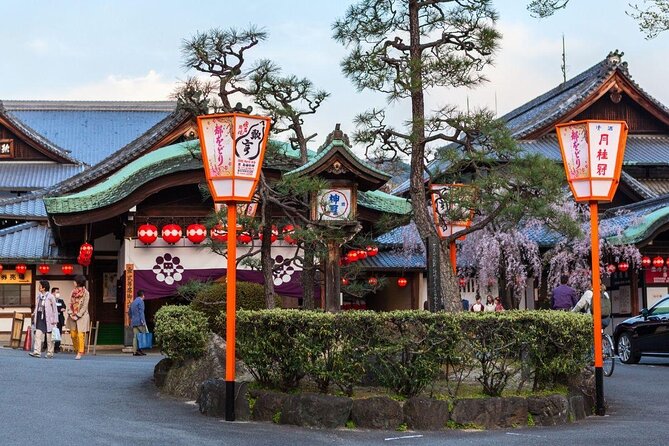
- Gion at night, with explanations of geiko culture and why Kyoto uses its own words
- Two food stops with included drinks, so you taste more than one side of Kyoto nightlife
- Stories that connect tradition to modern hostess clubs, not just sightseeing photos
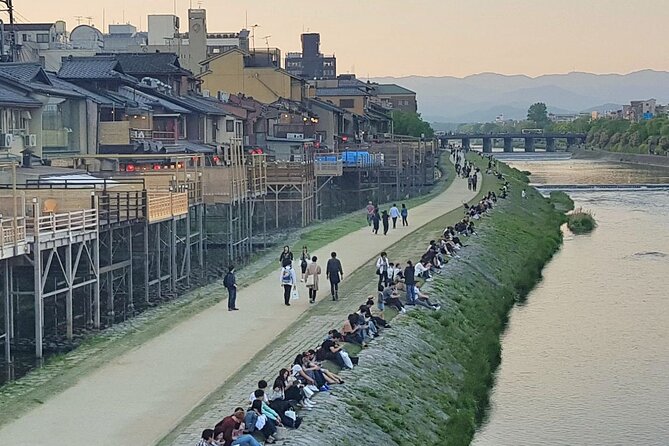
- Strolls across the Kamogawa River, from classic lanes like Pontocho to livelier areas near Kawaramachi
- Small group size (max 6), which makes it easier to ask questions and adjust for diets
Kyoto After Dark: Why This Walk Makes Sense
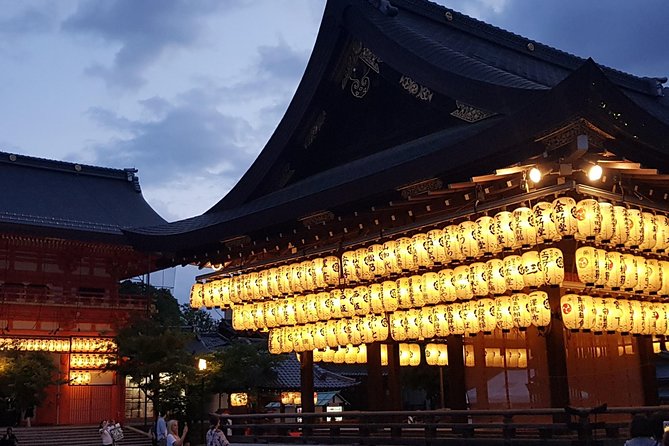
Kyoto’s daytime is all temple steps, garden paths, and quiet corners. But when the sun drops, the city switches gears. That’s when the nightlife economy comes into focus, especially around Gion, where entertainment isn’t just a scene, it’s a system with rules, etiquette, and long-standing neighborhoods.
What makes this tour click is the mix of street walking plus food. You’re not only seeing places, you’re learning why they matter at night. You get context on geiko culture, plus how the evening entertainment world has changed over time into the hostess clubs you’ll hear about today.
And you get to taste Kyoto’s local bar rhythm right away. The night isn’t staged as a single big meal in a fancy dining room. Instead, it’s more like how people actually eat out, by ordering small dishes, sipping along, and moving your attention between the street and the counter.
You can also read our reviews of more tours and experiences in Kyoto.

The 6:30 Meet Time and How the Evening Flows
This tour starts at 6:30pm at Minamiza Theater, near the west side lobby area. It’s a practical start point because you’re not hunting for a random backstreet address in the dark. You’re also coming in after a typical day of temples and sightseeing, so the timing works well if you want to rest in the afternoon, then switch your brain from “history mode” to “Kyoto after dark mode.”
The evening moves in clean segments. You’ll begin with Gion’s educational walk, then shift into food right around 7:30. After that, there’s a stretch of walking across neighborhoods on the west side of the Kamogawa River, including areas like Pontocho, Kiyamachi, and Kawaramachi. Finally, you finish with a last restaurant stop and another included drink, so you close the loop on the night’s tastes.
Total time is about 3 hours, and the group stays compact. Pinpoint Traveler caps this at a maximum of 6 travelers (and the outfit notes groups up to 8 are possible when everyone is booked together). That matters, because small groups are easier to guide through narrow streets and into tight dining setups.
Gion Shijo Streets: Geiko Culture and the Language Kyoto Uses
Your first big “aha” moment is Gion itself. The tour is framed around the east side of the Kamogawa River, and it makes sense because Gion is one of Kyoto’s most recognizable nightlife zones. You’ll walk through streets that feel traditional in layout and still active in daily life.
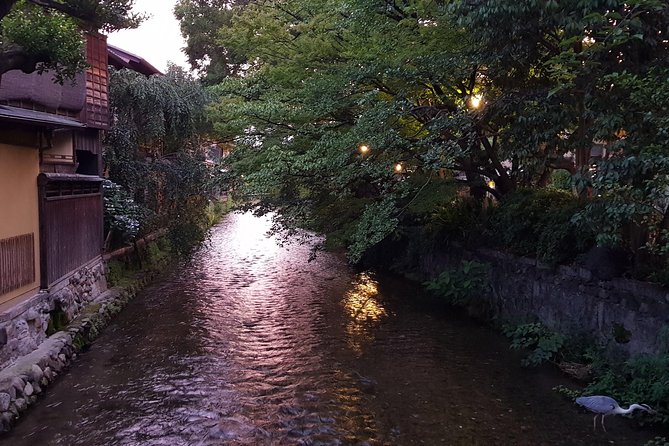
A key piece of the storytelling is language. In Kyoto, you’ll hear the term geiko instead of what many people call geisha. The tour explains why Kyoto uses its own word choice, and that difference is more than trivia. It reflects how the culture is organized and presented locally.
You’ll also get insight into how entertainment has evolved. The tour doesn’t treat the hostess world as a random modern add-on. Instead, it connects evening entertainment practices over time, including how we see modern hostess clubs today. It’s one of the most interesting parts of the night because it helps you connect what you see on the street to a bigger social story.
Some evenings may also include a visit connected to local religious life, since the tour includes cultural walking moments beyond only entertainment districts. One highlight that came up repeatedly is the way guides explain the difference between Shinto shrines and Buddhist temples, which helps you spot cues even when you’re just passing by at night.
Food at 7:30: Standing Bars, Small Plates, and Real Choices
Around 7:30pm, the food part starts. This is where the tour turns from “cool stories” into “okay, I get it because I can taste it.” You’ll try multiple dishes that fit Kyoto’s regional flavors and evening dining style, and you’ll have an included drink.
Drink choices depend on the night and your preferences, but the tour structure makes room for either alcohol or a non-alcohol option. You may be offered beer, and you can request alternatives like shochu or sake. That flexibility is useful because Japan’s alcohol scene can feel intimidating if you’re not sure what you like yet.
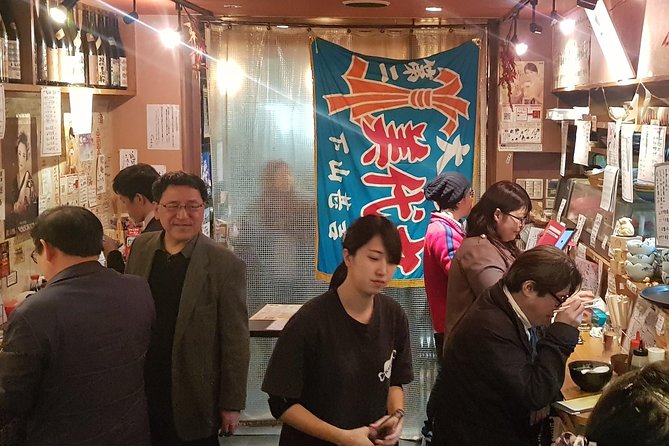
The format is also part of the value. These are standing-bar or counter-style places where people order small things and share the vibe with whoever is next to them. That’s great for immersion, but it comes with the reality of tight seating and casual chatter. If your idea of a perfect dinner is slow, wide spacing, this will be different.
The upside is that it’s exactly the kind of meal you can’t easily recreate yourself without some local guidance. One reason people love these tours is they get you into spots where you’d either feel lost ordering, or you’d never notice the door in the first place.
Dietary needs are handled. The tour notes that vegetarians are accommodated, and multiple guide experiences mention adjustments for specific dietary requirements, including gluten-free needs. Still, I’d recommend telling your guide clearly at booking so they can plan the right substitutions from the start.
And quick practical note: Japan’s minimum drinking age is 20. If you’re under that or prefer not to drink, you can still enjoy the included non-alcohol beverage option.
The Kamogawa Shift: Pontocho, Kiyamachi, and Kawaramachi at Night
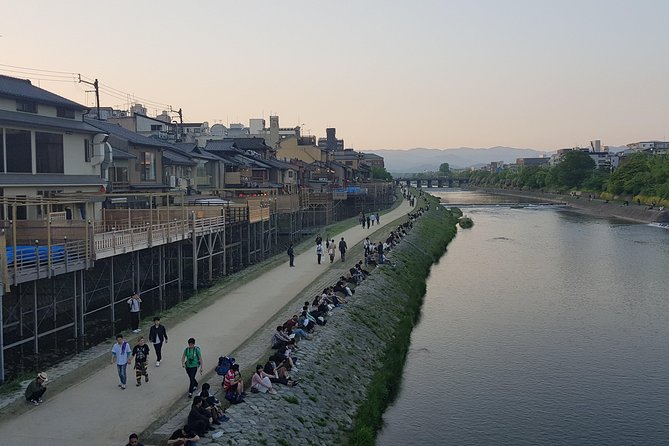
At about 8:15pm, you transition from food to walking again. Now you’re moving to the west side of the Kamogawa River, and the neighborhoods change their mood as you go.
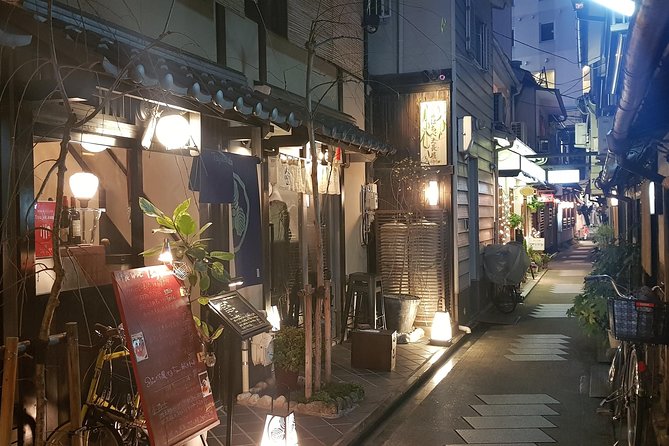
The tour includes Pontocho, Kiyamachi, and the area around Kawaramachi Street. This is a smart way to spend time because you see how Kyoto protects tradition and also keeps moving forward. Pontocho’s narrow lanes and old street feel give you that classic “Kyoto at night” look, and the tour frames why locals care about preserving what’s there.
Then a couple streets away, you’ll notice a more youthful, present-day vibe near Kawaramachi. The contrast helps you understand that Kyoto night life isn’t only about the oldest aesthetics. It’s also about what locals keep choosing now.
This segment is also where your guide’s storytelling matters most. Without context, these streets can blur together into a sea of signs and lantern light. With context, you start noticing differences in street design, pacing of foot traffic, and the tone of what’s happening inside.
The Final Restaurant Stop at 9pm: More Food, Another Drink
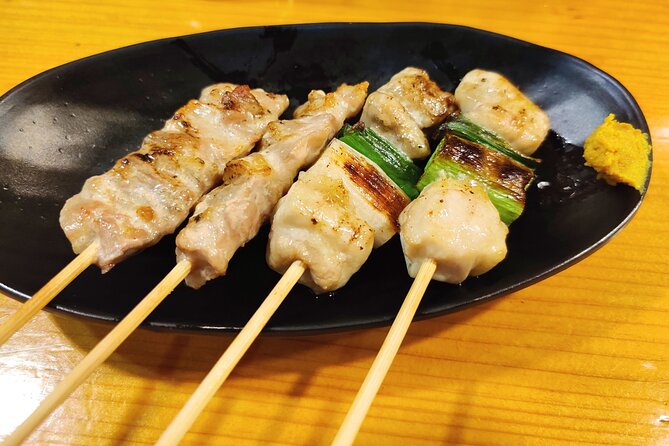
Around 9pm, you visit a second vetted spot. The tour is designed so you don’t just get one “main” dining moment. Instead, you taste, walk, then taste again, so the evening feels varied rather than repetitive.
Expect more food to keep the flavor moving, plus another included drink. This second stop is where you often see people relax into the night. By now, you’ve learned how the group dynamic works in tight spaces, and you can focus on enjoying what’s on the menu rather than figuring out how to order.
One useful thing about the structure is that it reduces decision fatigue. Kyoto restaurant choices can be overwhelming on your first night. With this tour, your choices are guided, and you can also switch your drink decision based on how your first stop treated you.
Guides and Group Size: What Small Groups Improve
This experience is small by design, with a maximum of 6 travelers. That has real benefits. In narrow streets and counter seating, large groups struggle to move and talk. Small groups make it easier to keep up, ask questions, and hear your guide without yelling.
Guides seem to be a strong part of the experience. Names that came up across different departures include Hugo, Lin, Joshua, Maya, Laura, Jamie, Brian, and Rin. Across these, the consistent theme is that guides bring personality, not just facts. Several also helped adapt food to dietary needs without making the experience feel like a compromise.
If you care about the cultural angle, you’ll appreciate that the tour doesn’t treat entertainment districts as a one-note subject. It gives you a framework, including why certain terms are used in Kyoto, how the entertainment world is structured, and how it connects to modern nightlife.
Also, because groups are limited, you’re more likely to get personal recommendations for the rest of your trip. That’s one of the quieter values of tours like this: after you’ve had your bearings, you can spend the remaining days with better instincts.
Value Check: Is $119 Worth It for a 3 Hour Night
At $119 per person, you’re paying for a bundle: guided walking time, dinner-style food across two restaurant stops, and two included beverages (alcoholic or non-alcoholic). For many visitors, the cost is less about the meals alone and more about saving the effort of figuring out where to go, what to order, and how to make sense of the nightlife around Gion.
If you’ve ever planned a night out in Kyoto, you know how quickly time gets eaten by research. This tour solves that by giving you a ready-made plan with vetted places and a guide to explain what you’re seeing while you’re there.
The other value lever is drinks. Two included beverages reduces the risk factor of ordering alcohol you later regret. Even if you choose non-alcohol options, you still get the full “night out” flow without feeling like you have to calculate every purchase.
What you should watch: additional drinks are not included. You can absolutely buy more on site if you want, but plan your spending so you do not feel surprised later.
Who This Tour Fits Best, and Who Might Want a Different Plan
This tour fits best if you want a night that feels like Kyoto, not a generic nightlife crawl.
You’ll probably love it if:
- You’re staying near the Gion to Kawaramachi corridor and want easy logistics for a first-night taste of Kyoto nightlife
- You like food that comes in smaller bites, especially at izakaya-style places
- You want culture that connects tradition and modern life, not just a museum lecture
- You’re traveling with teens or older kids, since the experience is listed as 13+
You might consider a different option if:
- You hate walking and tight restaurant seating
- You want a longer sit-down dinner with no street walking between courses
- You prefer a night focused only on temples or only on nightlife without cultural context
If you’re worried about weather, the tour notes that it requires good weather. If conditions are poor, you’re offered a different date or a full refund, so it’s not a “lost day” situation.
Should You Book This Kyoto Nighttime Eats Tour?
I’d book it if you want a confident first taste of Kyoto after dark, with food, drinks, and a guide who explains why the streets look the way they do. The small group size, the two included restaurant moments, and the Gion to Pontocho to Kawaramachi walk make it a strong way to spend an evening without wasting time.
Skip it if you’re chasing a quiet, slow, sit-down experience. This is a night with motion. It’s also a night where the restaurant style is part of the point, so plan to enjoy counter-and-standing energy.
If your idea of a great Kyoto night is standing at a local bar, trying several dishes, then walking lantern-lit streets while someone gives you the story behind them, this is one of the better ways to do it.
FAQ
What is the duration of the tour?
The tour runs for about 3 hours.
What time does the tour start?
The start time is 6:30pm.
Where does the tour start and end?
It starts at Minamiza Theater in Kyoto (shown in the provided meeting point details) and ends at Kyoto-Kawaramachi Station.
What food and drinks are included?
Dinner is included, along with two alcoholic or non-alcoholic beverages, with one beverage served at each restaurant.
Are vegetarians able to join?
Yes. Vegetarians are accommodated.
Is there a minimum age?
All participants must be 13+.
What is Japan’s minimum drinking age?
The minimum drinking age in Japan is 20 years old.
How many people are in the group?
This experience has a maximum of 6 travelers.
Can I cancel and get a full refund?
Yes, you can cancel for a full refund if you cancel at least 24 hours before the experience’s start time. If you cancel less than 24 hours in advance, the amount paid is not refunded.
More Tour Reviews in Kyoto
Not for you? Here's more nearby things to do in Kyoto we have reviewed

Gion & Geisha District Tours, compared.
 ★ 4.7Kyoto Geisha Walking Tour: Gion District & Hidden GemsFrom $253,273 reviews
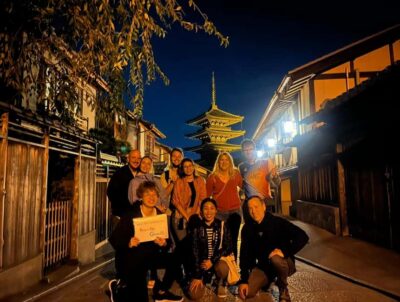 ★ 4.9Gion Magical Night Walking Tour with Geisha TriviaFrom $242,393 reviews
 ★ 4.7Gion Geisha District Walking Tour – Stories of GeishaFrom $202,187 reviews
 ★ 4.9Best of Kyoto: Gion, Geisha, Pagodas & CobblestonesFrom $242,058 reviews
 ★ 4.5Night Walk in Gion: Kyoto’s Geisha DistrictFrom $212,003 reviews
 ★ 5.0Kyoto Night Foodie Tour in Gion (9+ dishes + 6 Sake tastings)From $1631,762 reviews
 ★ 5.0Kyoto Gion Geisha District Walking Tour – The Stories of GeishaFrom $251,441 reviews
 ★ 5.0Kyoto Gion: 2-Hour Geisha Culture & History Walking TourFrom $231,186 reviews
Browse the lists this tour appears in