
Reviewed · GION & GEISHA DISTRICT TOURS
Kyoto: Tea Ceremony with Maiko Premium
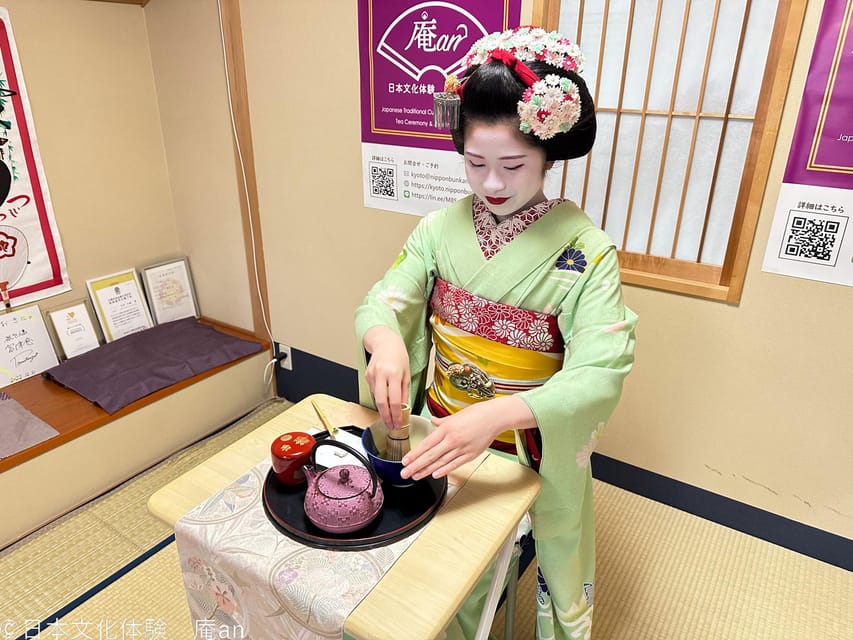
Maiko at arm’s length is a Kyoto plot twist. This Kyoto tea ceremony with Maiko Premium mixes a matcha lesson with a real, live introduction to maiko culture, plus a chance to meet her up close and hear her speak. I love that it feels personal without pretending to be a private ceremony.
Two things I really like: the Q&A session where you can ask questions directly, and the matcha-making part where you do the movements yourself, not just watch. One consideration, though, is the setting is not an ochaya or classic tatami room, so the vibe is cultural but the room is still a modern building with seating.
Quick hits you will care about
- Close Q&A with a Maiko (or Geiko): You get direct answers, not just a scripted performance.
- Hands-on matcha prep: Maiko shows you how, then you make your own.
- Two traditional dances plus interactive game: Expect more than tea and photos.
- Photo right beside the performer: This is one of the strongest reasons to pick this experience.
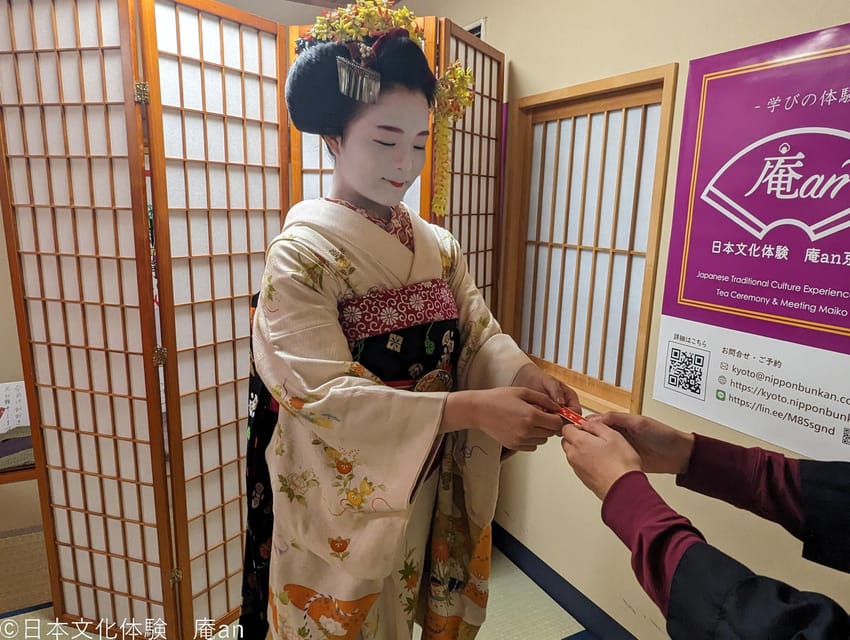
- A Senjyafuda lucky charm gift: You take home something tied to the moment.
- Not a traditional tatami venue: You trade architectural authenticity for convenience and access.
Why a Maiko Matcha Moment Feels Different in Kyoto
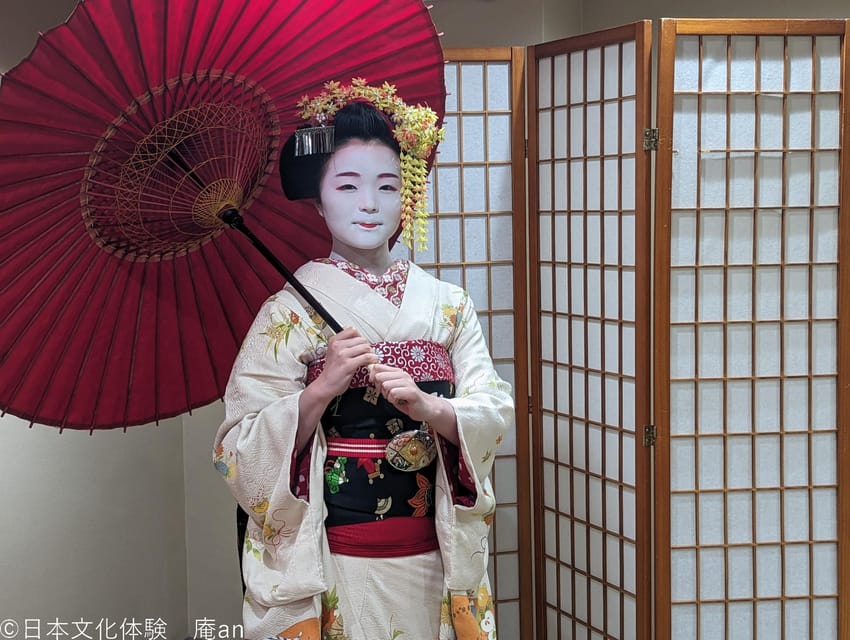
Kyoto is full of temples, gardens, and tea-related stops. This experience is different because the focus is not the room or the utensils, it is the person. You meet a maiko, learn why her lifestyle matters, and then you translate that learning into a bowl of matcha.
The core idea is simple: maiko represent a living tradition. You hear how their training and daily routines keep traditional arts alive even after other eras have faded. That cultural thread makes the tea ceremony feel like more than a neat activity, it becomes context.
You also get entertainment that actually connects to culture. The program includes maiko dance performances with expressive movements tied to seasons, love stories, and everyday life. Then you get an interactive game, where the tone shifts from formal lesson to playful hospitality.
You can also read our reviews of more tours and experiences in Kyoto.

The 90-Minute Flow, From Greeting to Senjyafuda
The timing is tight but clear, and it helps if you know what each block is for. Here is how the experience typically runs in order:
- Greeting from the Maiko
You start by meeting her in person, then the host guides you into the tea rhythm.
- Tea ceremony with matcha and two Japanese sweets
You get the matcha experience, plus two dried-type Japanese sweets. The tea is part lesson, part practice.
- Q&A session
This is one of the main reasons people book. It is your chance to ask about her life as a maiko, her training, and what daily dedication looks like.
- Photo opportunity right beside her
The photo time is close range, not across a stage.
- Senjyafuda lucky charm present
After the photo, she presents a lucky charm called a Senjyafuda.
- Dance performance, two dances
You see two traditional dances, connected to themes like seasons and everyday stories.
- Interactive game with the Maiko
You might be invited to participate, or you can cheer from your seat. Either way, the goal is to feel included.
- Chatting time, then departure
You get a short wrap-up before you leave.
Most sessions end around the 75-minute mark, with a brief chatting buffer to stretch the experience a bit, then you are done at the 90-minute mark.
Matcha Making: What You Learn and What You Actually Do
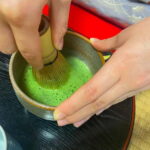
The matcha segment is not just a tasting. You watch, learn the basic approach, and then you make your own matcha tea.
From the way the program is described, you will learn the steps directly from the maiko. The pacing is meant to keep it fun and understandable, even for people who have never touched a whisk before. And you get sweetness on the side, two dried-type Japanese sweets, which helps balance the bitterness you might get from a stronger brew.
One practical thing: the matcha is part of a structured flow, so you should pay attention during the demonstration. If you only drift through the motions, you might miss the small technique tips that make the difference between thin matcha and a satisfying cup.
Also, keep expectations realistic. This is a group experience and the matcha lesson is focused on basics, not an ultra-long ritual. If you want a slow, private, fully traditional tea setting, this may not be that. If you want hands-on matcha plus culture and personality, it is a good match.
Q&A and Close Photos: The Value Is the Human Connection
If there is a single highlight that keeps landing in people’s memories, it is the direct interaction. The maiko gives a talk, then answers questions.
This matters because it shifts you from spectator mode to participant mode. You are not learning about geisha or maiko culture through a brochure, you are asking and getting answers from someone in the role. Many people specifically mention that the maiko explains her journey, training, and daily life in a way that feels genuine.
Then you get the photo opportunity. The program is designed for you to take a commemorative photo right beside the performer. Several reviews call out how close this feels, including the moment with the Senjyafuda charm.
Small photo reality check: the venue is in a modern building. Some people noted visible branding in the background, and the room is not styled like a traditional tea house. If photography matters to you, arrive ready to shoot quickly and test angles before the camera time starts.
Maiko Dance, Geiko Possibilities, and the Game Factor
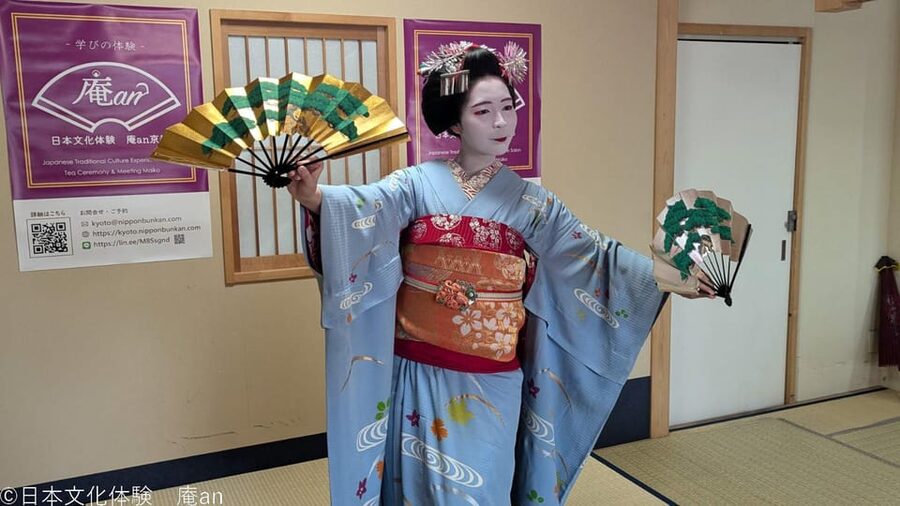
The dancing is a real part of the show. You see two traditional dances, and the themes are explained as expressing seasons, love stories, or everyday life. The point is not just pretty movement, it is storytelling with choreography.
A fun twist: depending on the situation, you might meet a Geiko instead of a Maiko. That does not sound like a marketing gimmick, it sounds like operational flexibility. Reviews also suggest you can get Geiko dance and added activities when the program aligns that way. In practical terms, this means your evening could still feel complete even if the exact performer title changes.
Then comes the game. This is not subtle. The program includes an interactive game with the maiko, and the vibe becomes social. Some visitors get invited to join, others just watch and cheer. Either way, it breaks the fourth wall in a way that pure tea lessons do not.
If you like cultural activities that let you participate, not just observe, this is one of the best segments. It is also a good way for families to stay engaged.

Price and What You Are Really Paying For
The price is $50 per person for a 90-minute program. That sounds straightforward, but value here depends on what you care about most.
You are paying for four things that most Kyoto experiences often separate into different tours:
- hands-on matcha making
- a direct Q&A with a maiko
- a close photo moment and a Senjyafuda gift
- performances, including two dances and an interactive game
You are not paying for a private room, a tatami-only setting, or a long, slow ceremony that lasts for hours. The venue itself is not the traditional ochaya style, and that is a real trade-off.
There are also optional seating upgrades. The program lists additional charges for better views: SS seat at 3,300 JPY, S2 seat at 2,200 JPY, and S3 seat at 1,100 JPY. If you want better photo angles, paying for a higher seat can matter more than you think.
My take: if your priority is meeting the performer up close and doing matcha plus photos, this is good value. If your priority is a highly authentic traditional room, you may feel less satisfied.
Venue Reality: Modern Building, Stairs, and Background Stuff
This is not in a classic tea-house interior. The venue is a building, and the room uses tables and stools. You might sit on the first floor in an organized setup rather than a tatami room. Some people described it as less visually authentic than they expected, with a plain wall and posters, and in some photos they saw vendor advertising in the background.
This matters because your brain may go looking for the aesthetic cues that signal tradition. When those cues are missing, the experience can still be meaningful, but it will feel more like a cultural show plus lesson than a fully immersive traditional space.
Logistics also add one constraint. There is no elevator, and you will take stairs to reach each venue area. If you have mobility issues or you are traveling with bulky bags, plan a slower pace when you arrive.
If you care about arrivals and photos outside the main room, there is a helpful tip from real experience: arrive 10 to 15 minutes early. People note you can sometimes see maikos arriving by taxi to enter the building. That does not guarantee it, but it is a low-cost way to add a small extra moment to your day.
Who This Is For, and Who Should Think Twice
This works best if you want a short, high-density cultural experience. It is also great for people who enjoy Q&A formats, family-friendly activities, and not feeling rushed through culture.
It is especially strong for these profiles:
- You want matcha hands-on plus a live explanation from a maiko
- You want close photos and a small souvenir tied to the moment
- You like performances, not just a single demonstration
- You are traveling with kids and want them to stay engaged with games
You might think twice if you are chasing an old-school tea house atmosphere. If you want quiet, tatami-only, candle-soft ambiance, this will likely feel too modern and too structured.
Also, remember it is a group setting. That can make it feel a little less intimate than you would get from a private lesson. Still, the Q&A portion is interactive enough to offset that for many people.
Should You Book Kyoto: Tea Ceremony with Maiko Premium?
Book it if your top goal is meeting a maiko (or Geiko), making matcha, asking questions, and getting close to the performer for photos. The mix of tea lesson plus dance plus a game is exactly the sort of Kyoto experience that feels like a story you will remember later.
Skip or adjust expectations if you mainly want a traditional ochaya room experience or a slow, quiet, museum-like tea ritual. The room is functional and modern. The cultural value still comes through, but the aesthetics may not be what you imagined.
If you can, pick your seating based on what you plan to photograph. And arrive a bit early if you like catching the moment before the program starts.
FAQ
How long is the Kyoto tea ceremony with Maiko Premium?
The experience is 90 minutes long.
Where do I meet for the experience?
The meeting point is 1 minute walk from Exit 1 of the Subway Karasuma Line Gojo Station. The store entrance faces Gojo-dori.
What does the Premium experience include?
It includes tea ceremony with a maiko, matcha, two dried-type Japanese sweets, a Q&A session, a photo opportunity with the maiko, presentation of a Senjyafuda lucky charm, two traditional dance performances, and an interactive game with the maiko. Free snacks and a drink are also included.
Is it always a Maiko, or could it be a Geiko instead?
Depending on the situation, they may invite Geiko instead of Maiko.
Are meals or drinks included beyond the sweets and matcha?
Free snacks and drink are included as part of the experience.
Are there extra costs for seating?
Yes. SS seat (First row) is 3,300 JPY, S2 seat (Second row) is 2,200 JPY, and S3 seat (Third row) is 1,100 JPY.
Is the venue accessible by elevator?
No. There is no elevator in the building, and you will need to take stairs.
More Tour Reviews in Kyoto
Not for you? Here's more nearby things to do in Kyoto we have reviewed







Gion & Geisha District Tours, compared.
 ★ 4.7Kyoto Geisha Walking Tour: Gion District & Hidden GemsFrom $253,273 reviews
 ★ 4.9Gion Magical Night Walking Tour with Geisha TriviaFrom $242,393 reviews
 ★ 4.7Gion Geisha District Walking Tour – Stories of GeishaFrom $202,187 reviews
 ★ 4.9Best of Kyoto: Gion, Geisha, Pagodas & CobblestonesFrom $242,058 reviews
 ★ 4.5Night Walk in Gion: Kyoto’s Geisha DistrictFrom $212,003 reviews
 ★ 5.0Kyoto Night Foodie Tour in Gion (9+ dishes + 6 Sake tastings)From $1631,762 reviews
 ★ 5.0Kyoto Gion Geisha District Walking Tour – The Stories of GeishaFrom $251,441 reviews
 ★ 5.0Kyoto Gion: 2-Hour Geisha Culture & History Walking TourFrom $231,186 reviews
Browse the lists this tour appears in