
Reviewed · KYOTO PRIVATE GUIDED TOURS
Nara 8hr Private Tour – Kyoto DEP. with Licensed Guide
Deer, temples, and old-town streets in one day. This private Nara tour from Kyoto is built around choice, so you can focus on the Nara Park deer and top temples without feeling rushed. I like how the day stays personalized around 3 to 4 stops, and how you get a licensed local English speaking guide who helps you make smart use of limited time. One thing to plan for: it is a walking tour, and entrance fees plus transportation and lunch are not included, so the day can add extra costs.
The biggest payoff is how well the tour turns major landmarks into a coherent story. When guides like Junichi, Taku, Ken, and Yuka are on, you get practical context for what you are seeing plus tips for navigating Nara, and even help communicating in shops. My only caution is timing, because Todaiji Temple and Nara Park can get crowded, and the 8 hours can feel tight if you try to do too much beyond your chosen stops.
Key points to know before you go
- Pick 3 to 4 sites from a strong list, so you do not waste time repeating what everyone else does
- Deer park time is built into the flow, not a last minute afterthought
- Todai-ji and Kasuga Taisha are included as the core spiritual highlights on most routes
- Naramachi old town gives you a break from temple intensity with preserved merchant district streets
- Optional additions like Horyu-ji, museums, palace ruins, and Japanese gardens help you tailor the day
- Private pacing means your guide can adjust on the fly if the weather or crowds change
From Kyoto to Nara in 8 hours, with a plan that actually fits
A day trip to Nara can be a classic “see it all” trap. The smart move here is to treat this as a guided route, not a checklist. You choose 3 to 4 stops, then your guide builds the walking path to match your interests, so you end up with a day that feels intentional.
You will start in Kyoto and meet your guide on foot within a designated area. This is helpful if you prefer not to coordinate lots of group logistics, and it also signals the style of the day: walking, sightseeing, and interpretation. Reviews often highlight how guides ask for preferences upfront and then organize the day around real priorities.
If you want a day that balances famous sights with a little room to breathe, this format is a good fit. It is also a solid value if you care about context, because a licensed guide can help you understand what you are looking at without you needing to study ahead.
You can also read our reviews of more guided tours in Kyoto
How the 3 to 4 site choice works in real life
The tour offers a list of major locations, including Todai-ji, Nara Park, Kasuga Taisha, Wakakusayama Hill, Horyu-ji, Naramachi, Kofuku-ji, Yakushiji, Shin-Yakushiji, the Nara National Museum, the Heijo Palace Site Historical Park, Toshodai-ji, Isuien Garden, and Yoshikien.
In practice, that means you will not hit all of these. Instead, you pick what matters most to your group, and your guide helps stitch them into a route that makes sense geographically and thematically.
Here are a few combinations that tend to work well for different travel styles:
- Temple icons plus the deer and old town: Todai-ji + Nara Park + Kasuga Taisha + Naramachi
This gives you a full “Nara feeling,” from the massive Buddha to the deer and then a calmer stroll through traditional streets.
- Early Buddhism focus: Horyu-ji + Todai-ji + Nara Park + Kofuku-ji
You get the older temple story (Horyu-ji) plus the later Nara capital impact through big temple complexes.
- Art, palace, and gardens leaning: Nara National Museum + Heijo Palace Site + Isuien Garden + Todai-ji (or Yakushiji)
If you like architecture and slower scenic pacing, this mix can keep the day from turning into temple-to-temple sprinting.
Because this is private, you can also steer toward specifics, like Yakushiji on a route that might be less obvious for first-time visitors. One guide, Yuka, was specifically praised for tailoring around Yakushiji, and that kind of customization is exactly the point.
Todai-ji, Nara Park deer, and the first wow factor
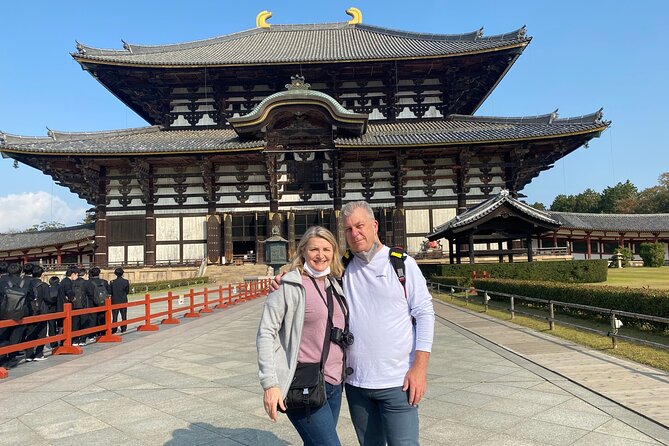
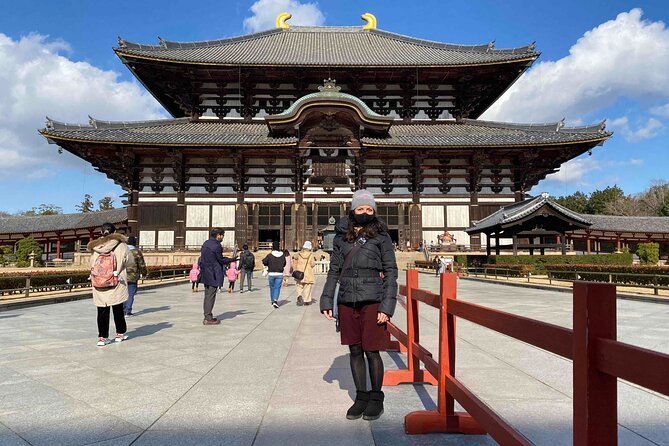
Most good Nara days start at Todai-ji, and this tour treats it like the centerpiece. Todai-ji was built in 752 and is famous as the Great Eastern Temple, with a colossal Buddha hall that anchors Nara’s identity.
Expect to spend about 30 minutes at Todai-ji on this itinerary build. Admission is not included, so plan to handle that directly. What makes this stop worth your time is how your guide can explain the temple’s role in Nara’s early Buddhist power, not just the photos.
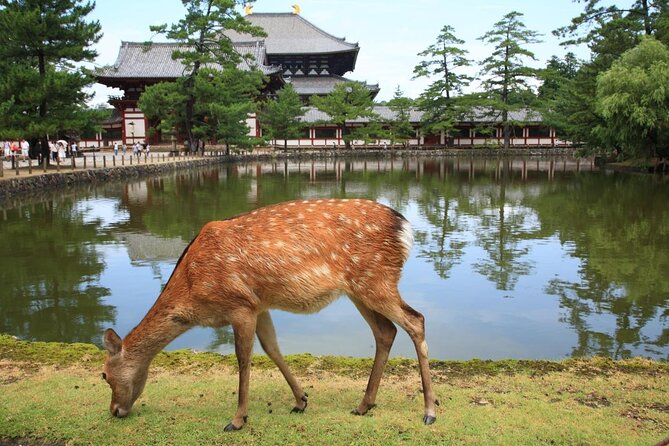
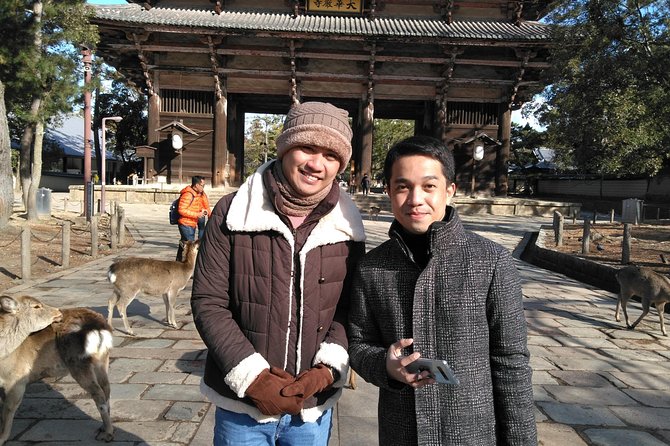
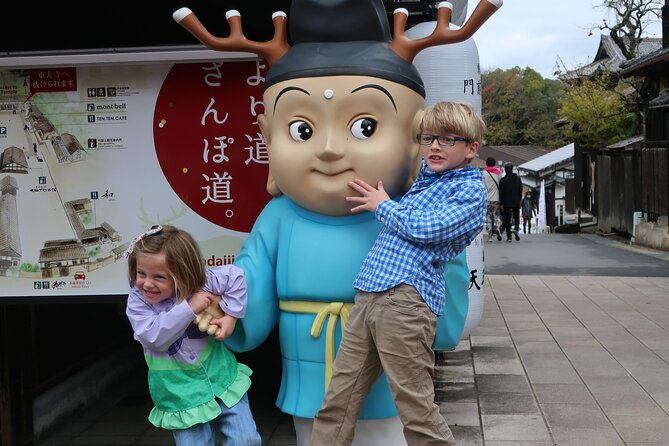
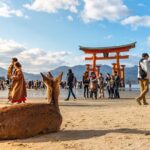
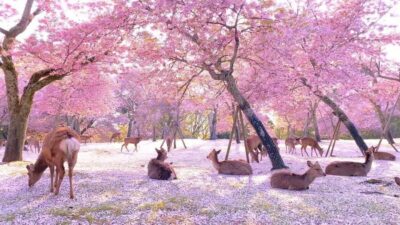
Then you move into Nara Park, where the deer are free to roam. Nara Park is also the area where major attractions cluster, including Todaiji, Kasuga Taisha, Kofuku-ji, and the Nara National Museum. The park time is free, so you can use it for a short break, deer spotting, and photos without feeling like you are paying entrance fees for every step.
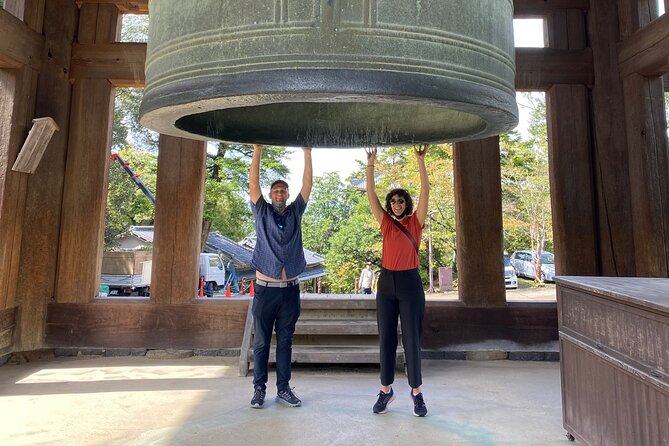
A fun cultural detail that comes up in real visits is the playful tradition connected to Todai-ji, where people try a famous opening in a pillar for luck tied to academics. You might not do it, but it is the kind of small ritual your guide can explain so it feels meaningful rather than random.
Kasuga Taisha and Wakakusayama Hill, where the mood changes
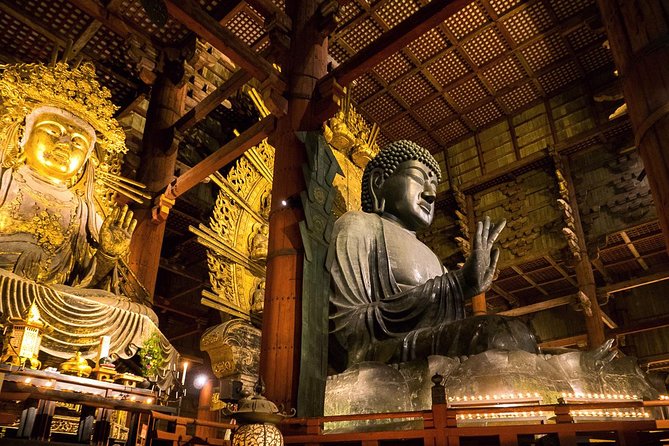
Kasuga Taisha is Nara’s celebrated shrine and is dedicated to the deity believed to protect the city. It is typically a free stop, and it is often paired with a walk that feels calmer than the main crowds around Todai-ji.
Expect about 30 minutes here, which is enough to see the shrine area properly if you do not get stuck behind a bus group. Your guide can help you read what you are looking at, like the shrine’s connection to long-running city protection traditions.
Wakakusayama Hill is the grass-covered hill behind Nara Park, between Todai-ji and Kasuga Taisha. It is a shorter “view stop” rather than a full hike, with 30 minutes in the schedule and admission not included. The payoff is the perspective, letting you step back and understand the layout of the park and temple cluster from higher ground.
If you want a break from dense temple corridors, this combination helps. It also works well if you plan your day for the nicest light, because hill viewpoints can feel different from the shaded shrine paths.
Horyu-ji Temple, the older timber landmark you can tack on
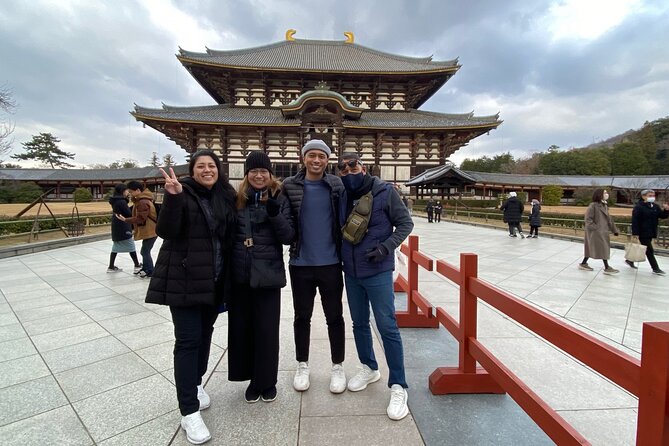
Horyu-ji Temple is often the surprise highlight for people who thought Nara was only about Todai-ji and deer. It was founded in 607 by Prince Shotoku, and it is known for being among the oldest temple sites in Japan.
This is another stop where admission is not included and time is usually about 30 minutes. Even with limited time, Horyu-ji can feel special because older wooden architecture changes how you experience the site. Your guide can also connect it to the broader history of Buddhism spreading and taking root in Japan.
One review praised the morning at Horyu-ji as the highlight of a multi-day trip. The key takeaway for you: if you can, place Horyu-ji earlier in your day. Older sites tend to feel better before the crowds peak.
You can also read our reviews of more private tours in Kyoto

Naramachi: Edo-era merchant streets for a calmer pace
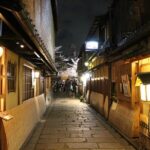
After temples, Naramachi gives you something different. Naramachi is the preserved merchant district of Nara, with traditional residential buildings and warehouses you can walk through. It is typically a free stop with about 30 minutes.
This is where you can slow down and look at details. Your guide can point out what to notice in old town architecture, and you can usually find small shops and cafes without the pressure of buying something every minute.
I like adding Naramachi to at least one of your selected slots because it makes the day feel like more than religion and monuments. It also gives you a break if your group has been walking a lot of temple stairs and long corridors.
Kofuku-ji, museum time, and Buddhist art fans
Kofuku-ji is tied to the powerful Fujiwara family and is one of the major temple complexes in Nara’s story. It is typically an admission-not-included stop with about 30 minutes. Depending on your route, it pairs naturally with nearby museum options.
If you pick Nara National Museum, you get Buddhist art in a more controlled indoor setting. The museum is in Nara Park and is known for displaying Japanese Buddhist art. Admission is not included, and the visit is usually built for a 30-minute slice, so you should choose what you want to focus on with your guide.
This is a great pairing if you want to understand themes behind the buildings. Outside, your eyes catch the size and details. Inside, your mind gets a better grip on what objects represent and why they matter.
If you are traveling with teens, this can also be a win. One guide, Ken, was praised for tailoring the route around a teen’s interests and still making the day feel organized.
Heijo Palace Site, early capital layers, and temple complexes beyond Todai-ji
Heijo-kyo was Japan’s capital during much of the Nara period, and the Heijo Palace Site Historical Park marks that ancient grid-like history. This is an admission-not-included stop with about 30 minutes.
If you choose this slot, you can start connecting the dots between the religious power of the temples and the political organization that supported it. Your guide can help you understand why the capital mattered and how the layout shaped what rose around it.
You also have options to add temple stops that broaden the day:
- Yakushiji, constructed in the late 7th century, with a symmetric layout. Admission is not included, time is about 30 minutes.
- Shin-Yakushiji (Shin-Yakushiji), founded in the Nara period for the Yakushi Buddha tradition. Admission is not included, time is about 30 minutes.
- Toshodai-ji, founded in 759 by Ganjin, a Chinese priest invited to Japan. Admission is not included, time is about 30 minutes.
These can be great choices if you want variety beyond the most famous temple circuit. They also help if you are visiting during a season when one of the top sites is extra crowded. One key advantage of private touring is that you can shift focus without feeling like you are failing a checklist.
Japanese gardens: Isuien and Yoshikien when you want scenery and structure
If your group likes calm pacing, Isuien and Yoshikien are worth serious consideration. Isuien uses borrowed scenery, using elements like Mount Wakakusayama and the Nandaimon Gate of Todai-ji as visual anchors. It is an admission-not-included stop with about 30 minutes.
Yoshikien is another Japanese garden option in central Nara, named after the Yoshikigawa River and built on the former priest site connected to Kofuku-ji. It is also typically an admission-not-included, 30-minute stop.
Garden time is not just “pretty.” It is a different way to understand Nara’s design thinking and how sacred spaces connect to nature. If your day includes crowded shrines and deer park minutes, gardens can reset your energy fast.
Price and value: what $201.51 per person really buys
At $201.51 per person for an 8-hour private tour, the value comes down to two things: time saved and interpretation gained.
You are paying for a licensed local English speaking guide, plus the customization that comes with private guiding. Multiple reviews praise guides for being organized, prepared, and responsive to preferences. One highlight from the feedback: hiring a guide helped save time compared to self-routing, because the guide already knew where to go and how to structure the day.
What is not included matters, though:
- Transportation fees from Kyoto to Nara and back are not included.
- Entrance fees are not included for many stops.
- Lunch is not included.
- A private vehicle is not included.
So think of this as paying for the guide and the route intelligence, not as an all-in package. If you budget entrance fees and plan where you will eat, the price can feel very fair for a full-day private experience.
Logistics that can make or break your day
This tour is a walking tour, and pickup is on foot within a designated area in Kyoto. That detail matters because you will need to be at the meeting spot your guide uses, not a hotel lobby across town.
Also, your guide entry fees are covered only for sights listed in the selected route. In plain terms, if you choose a mix of paid and free sites, your day still runs smoothly, but you should expect entrance fees to be your responsibility.
Timing is the other logistics factor. The itinerary slots about 30 minutes per stop, even though your total day is 8 hours. That means you get a lot of “important moments,” but not endless wandering in any one location.
If you want extra time for shopping or slow photos, choose fewer, more meaningful stops. If your group wants maximum variety, keep to your 3 to 4 selection and trust the guide to keep the pacing realistic.
Weather and crowds: how guides help you stay comfortable
Weather can change the vibe fast in Japan, and this tour can handle it because you are private. In reviews, there are specific mentions of guides continuing smoothly during rain, still covering key sites and keeping the day productive.
Crowds are another reality, especially around Todai-ji and popular deer moments. The best guides manage flow and help you understand what is most worth seeing first, so you do not spend your short time just standing.
My practical advice: if you care about photos or empty-feeling space, prioritize early slots and avoid squeezing extra stops after your chosen sites. Let the guide do the matching for time, not your wish list.
Who this Nara private tour is best for
This tour works especially well if you:
- Want a day trip with big landmarks but still want it explained, not just photographed
- Prefer a flexible route that can include things like museums or Japanese gardens
- Travel with mixed ages, since your guide can adapt the emphasis and pacing
- Like asking questions and want a guide who can clarify the meaning behind temple and shrine traditions
It is also a good choice if you do not want to manage complex self-guided routing across multiple Nara sites. Your guide keeps the flow tight, and you can spend your energy on the places themselves.
Should you book this Nara day trip from Kyoto?
If you only have one day in Nara, I would book it, with two conditions. First, be realistic about the 3 to 4 site limit, so you choose what your group really wants. Second, budget entrance fees and transportation and plan a lunch option, so surprise costs do not steal your momentum.
You will get the most from this tour if you treat it like a guided story of Nara, not a theme park schedule. With the right guide, you end up with deer park fun, serious temple highlights, and old-town streets, all in one smooth day you will actually remember.
FAQ
How long is the Nara private tour?
The tour is about 8 hours.
What does the tour cost?
The price is listed as $201.51 per person.
Is this tour private?
Yes. It is a private tour/activity, and only your group participates.
How many places do I visit?
You choose between 3 to 4 sites from the tour’s list of possible stops.
Where do we meet the guide in Kyoto?
You meet the guide on foot within a designated area in Kyoto.
Is it a walking tour?
Yes. The tour is described as a walking tour, with pickup on foot.
Are entrance fees included?
No. Entrance fees are not included. The itinerary lists which stops may require admission tickets or note tickets as free.
Are transportation fees included?
No. Transportation fees are not included, and a private vehicle is not included.
Is lunch included?
No. Lunch is not included.
Is free cancellation available?
Yes, free cancellation is available up to 24 hours in advance for a full refund.
Are the guides English speaking and licensed?
The tour includes a licensed local English speaking guide.
Are service animals allowed?
Yes, service animals are allowed.
More Guided Tours in Kyoto

More Tours in Kyoto

More Tour Reviews in Kyoto
Not for you? Here's more nearby things to do in Kyoto we have reviewed


Kyoto Private Guided Tours, compared.
 ★ 5.0Private Kyoto Tour with a Local, Highlights & Hidden Gems, PersonalisedFrom $1021,543 reviews
 ★ 5.0Kyoto 6hr Private Tour with Government-Licensed GuideFrom $1551,369 reviews
 ★ 5.010 Must-see Spots in Kyoto One Day Private Tour (up to 7 people)From $1791,108 reviews
 ★ 5.0Kyoto 4hr Private Tour with Government-Licensed GuideFrom $109629 reviews
 ★ 4.8Private Tour with Local Licensed GuideFrom $106463 reviews
 ★ 5.0Private Kyoto Tour with Licensed Guide & Vehicle (Max 15 persons)From $634417 reviews
 ★ 5.0Kyoto Customized Private Tour: See Top Attractions in 1 DayFrom $132342 reviews
 ★ 4.6Kyoto/Osaka: Kyoto and Nara Customized Private Guided TourFrom $477258 reviews
Browse the lists this tour appears in