
Reviewed · KYOTO PRIVATE GUIDED TOURS
Nara Private Tour: Flexible Pickup from Kyoto, Osaka, or Nara
Nara hits different when you have a good plan. This private tour is built for an efficient day, with a local guide helping you choose 3 to 4 must-see stops and stitching them together in the most logical order. You can start from Kyoto, Osaka, or Nara (pickup offered), then work your way through classic sites like Nara Park and Todai-ji, with time for quieter temple moments too.
I especially love two things: first, the guide-led pacing. Names like Toshi, Kiyoto, and Chiko show up in past experiences, and the common thread is clear, human storytelling plus real city know-how. Second, I like that you can shape the day. Want deer and big temples? Prefer shrine lights, palace ruins, or UNESCO architecture? You choose what fits.
One consideration: entrance fees are not fully included, and not every stop is ticket-free. So you will want to budget a bit extra for the sites that list admissions as not included, especially if you add multiple paid temples.
Key highlights that make this Nara private tour work
- Flexible pickup from Kyoto, Osaka, or Nara, so you do not burn half your day getting set
- Private, guide-led pacing with local storytelling that makes iconic places feel personal
- Pick 3 to 4 must-see spots so you are not forced into a rigid checklist
- Classic Nara in one circuit, deer at Nara Park plus temples like Todai-ji and Kasuga Grand Shrine
- Optional UNESCO-worthy time for Horyu-ji, famous for old wooden buildings
- Rain or shine planning, with comfortable shoes recommended for the walk time
The smart advantage: a local guide turns famous Nara into an easy day
Nara can feel straightforward on a map, but the real challenge is flow. Temples are spread out, crowds rise and fall by hour, and it is easy to waste energy bouncing between far-apart sights. This tour tackles that with a professional local guide who helps you move efficiently and understand what you are seeing while you are there.
The biggest payoff is how the guide connects the dots. At Todai-ji, it is not only the Great Buddha and the giant hall, it is also the sense of scale and why that building mattered. At Kasuga Grand Shrine, it is the meaning behind those thousands of stone and bronze lanterns, plus the gentle rhythm of walking through an old forest. You get more than photos, you get context you can actually use.
And there is a human layer too. Past guides such as Toshi, Kiyoto, and Chiko are described as friendly, patient, and willing to adapt. That matters because Nara has one big unpredictable factor: deer. When the park is active, a guide who can steer you safely and calmly changes the whole experience.
You can also read our reviews of more private tours in Nara
Getting from where you are: flexible pickup and private pacing
One reason this works well for real schedules is pickup flexibility. Depending on what you choose, you can start from Kyoto, Osaka, or Nara. That is a big deal if you want to keep your day travel-light and avoid complicated transit transfers on your own.
This is also a private tour, meaning only your group participates. That usually translates into a better pace for photos, fewer bottlenecks, and more room for adjustments. If your group wants an extra minute at a shrine detail, or you need a slower walk because of energy levels, you can usually shape the day.
Length runs about 4 to 8 hours. The wide range is not fluff. It reflects how many stops you select and how much time you want at each one. If you choose fewer sights, you can take it slower. If you choose more, you can still see the major highlights without it feeling like a sprint.
Naramachi old town: the quiet warm-up before the temples
A good Nara day has contrast. You start with something human-scaled, then you move into massive historic landmarks. This tour’s old-town stop is a perfect warm-up: a preserved area with traditional machiya townhouses, plus boutique shops and cozy cafés.
Why this is worth making time for: it gives your brain a baseline for what Nara feels like beyond temples. You get the merchant history vibe, the narrow streets, and the sense that this is not only about religion, it is also about everyday life around the cultural center.
Practical note: this section is a walk. It is not described as a long hike, but it is enough that comfortable shoes matter. If you are prone to sore feet, I would treat this like a real walking tour, not a casual stroll.
Nara Park and Todai-ji together: deer energy plus the Great Buddha
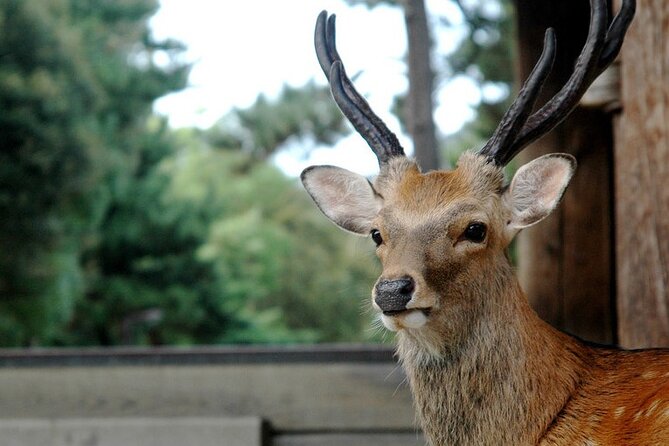
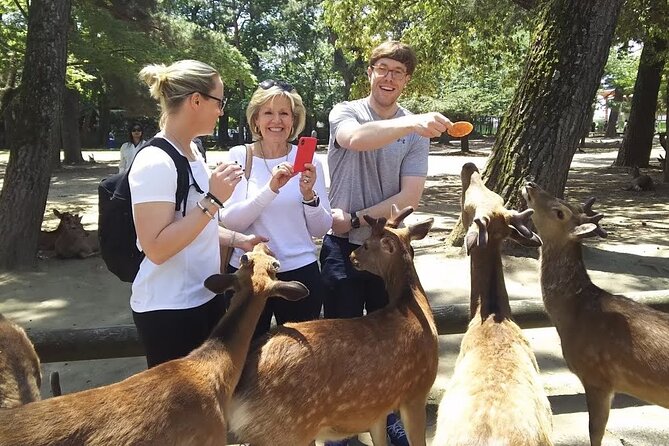
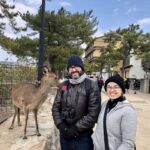
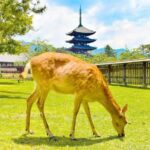
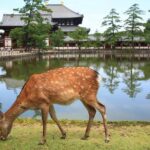
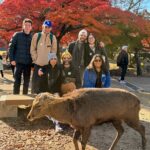
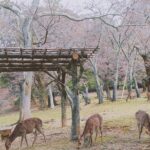
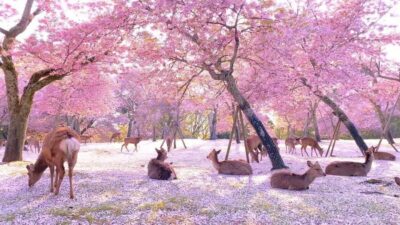
At Nara Park, the headline is the free-roaming deer. This is one of those places where the wildlife is part of the attraction, and it is exactly why the park can feel magical and chaotic at the same time. The upside is obvious: deer are friendly, and the interaction can be surprisingly relaxing once you know how to move around them.
The practical move is simple. Keep your group together, watch your footing on busy paths, and let your guide handle the flow if the deer are close. That is where a local’s experience shows up. If you have ever had a deer moment in a tourist area, you know it can turn fast. A guide who can read the situation makes it smoother.
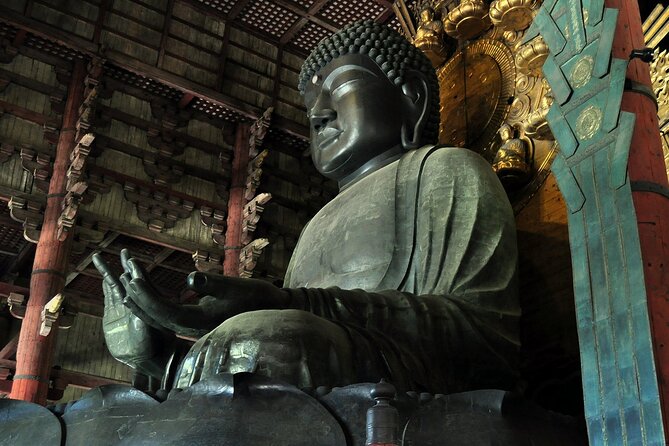
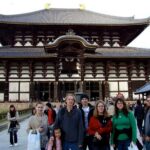
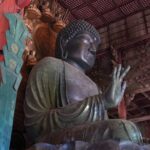
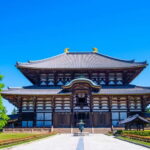
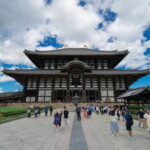
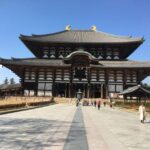
From there, you head to Todai-ji, home to the Great Buddha (Daibutsu). The Daibutsuden hall is one of the largest wooden buildings in the world, and it is hard to exaggerate what that scale does in person. Even if you have seen photos, you will feel the size difference when you are inside.
Timing is generous here: about 1 hour 30 minutes. That matters because Todai-ji is not just one look. You want a moment to orient yourself, then time to absorb details in the hall and grounds without feeling rushed.
Shosoin Temple: imperial artifacts and Silk Road influence
Between the giant architecture moments, Shosoin adds a sharper, quieter kind of interest. It is presented as a historical treasure house preserving imperial artifacts from the Nara period, dating back to the 8th century.
This is where you get object-level history: silk textiles, musical instruments, and items with influences connected to the Silk Road. The details are not just academic. They help you understand how this early Japanese court connected outward through trade and culture, long before modern globalization made that easy to imagine.
The stop is short, around 15 minutes, so I treat Shosoin like a focused breather. You are not meant to linger for hours. You go in, take in what you can, then roll that new understanding into the next stop.
Kasuga Grand Shrine and the lantern forest: quiet drama
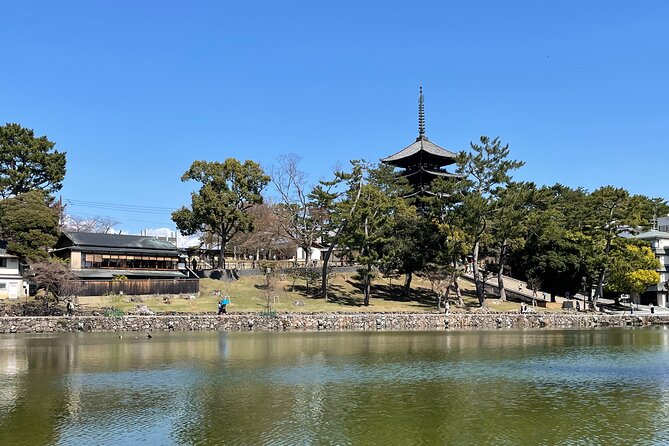
Kasuga Grand Shrine is a standout for atmosphere. You are surrounded by thousands of lanterns, both stone and bronze. It is also tied to the deer tradition as messengers of the gods, which creates a nice thematic link back to Nara Park.
This stop is scheduled for about 1 hour 30 minutes. That gives you time to walk, pause for lantern details, and experience the shrine in a calmer way rather than just checking it off.
A practical heads-up: the admission here is marked as not included. So you should expect at least one ticket cost on your day. I like how Kasuga balances the massive feeling of Todai-ji. Here, the drama is more intimate, more about rhythm and light through trees.
Heijō Palace Site: court life without the guesswork
After shrines, this part brings you back to government and everyday power. The Heijō Palace Site Historical Park is tied to the former imperial palace of Japan’s first permanent capital. Instead of a fully preserved palace you wander through, you get reconstructions and historical structures that help you visualize how court life worked.
This stop is about 1 hour 30 minutes. That duration makes sense because the value is in understanding the layout and what the reconstructions represent. If you like history that you can picture, this works well.
Admission for this stop is listed as not included, so budget for it if it is part of your chosen set. Still, I find the palace concept helps you connect Nara’s religious landmarks to political power.
Yakushi-ji and Horyu-ji: temple architecture that rewards attention
When I think about Nara beyond the postcard icons, I think of temples that reward slow looking. This tour includes two good options: Yakushi-ji and Horyu-ji.
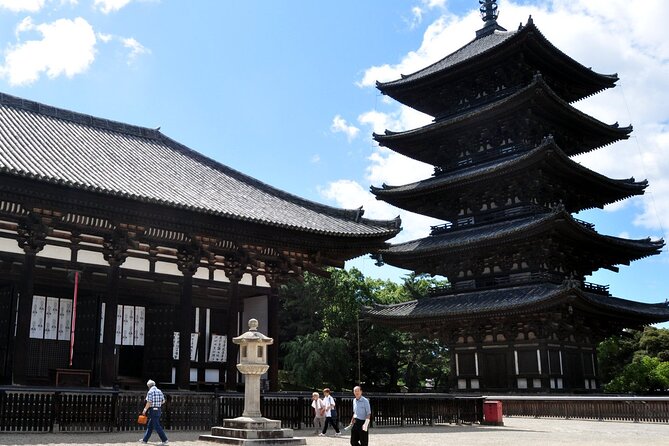
Yakushi-ji is described as a Buddhist temple known for twin pagodas and exquisite architecture, dedicated to Yakushi Nyorai, the Buddha of healing. The stop is about 30 minutes, so it is not meant to drag. It is the quick-hit temple moment that still adds variety to your day.
Then comes Horyu-ji, a UNESCO World Heritage site and home to the world’s oldest wooden buildings (as described). It is founded by Prince Shotoku, and you get to see the five-story pagoda and main hall.
This is your longer architectural stop, scheduled for about 2 hours. That is the right amount of time because old wooden buildings are not only impressive, they are also visually layered. You want a moment to observe from different angles and soak in details without feeling like time is running out.
Admission for both Yakushi-ji and Horyu-ji is marked as not included, so plan on those costs if you want these architecture-heavy stops.
How the itinerary choices change your day (and your energy)
This tour works because you choose 3 to 4 must-see spots. That choice is not minor. It changes how the day feels and how much you can enjoy each place without fatigue.
If you choose the heavier hitters like Nara Park plus Todai-ji plus Kasuga, you are doing a full classic circuit. It will feel packed, but it will also give you the major Nara identity in one shot.
If you add Horyu-ji, you trade some speed for architecture time. That is a good swap if you care about UNESCO sites, building materials, and historic design. If you prefer nature moments, you might find your guide flexible with additional viewpoints and gardens, like Mt. Wakakusa or Isuien Garden. Those kinds of add-ons show up in past experiences, and they can make the day feel more balanced between big monuments and outdoor calm.
Also, this is rain or shine. Outdoors matters here, because deer and shrine grounds live outside. If weather turns, your guide still needs to keep the flow. I recommend keeping a small pack ready with something rain-friendly, and sticking to comfortable shoes.
Price and value: $131.38 per person plus the costs you should expect
At $131.38 per person, this is not a budget bus tour. It is priced like what it is, a private guide experience designed for efficiency. Value depends on your group setup and what you include.
Good news: the tour includes the professional local guide. Also, many core stops like Nara Park, Todai-ji, and Shosoin are listed as having admission ticket free in the provided schedule. That helps keep your day from ballooning.
But do not ignore the other side of the ledger. Entrance fees are not included for you and the guide, and several major stops are listed as admission not included, including Kasuga Grand Shrine, Heijō Palace Site Historical Park, Yakushi-ji, and Horyu-ji. Meals and public transport fares are also not included.
So here is my practical way to budget: figure out which of the paid stops you are likely to choose, then add a cushion for tickets and any transport needs. If you pick a mix of free and paid locations, the $131.38 price starts to feel more reasonable because the guide time is the core cost.
Also, there are group discounts and a mobile ticket. You should ask what that means for your group size when you book, since discount rules are not spelled out in the information you provided. Still, the presence of group discounts is a good sign if you are traveling with friends or family.
Who should book this Nara private tour, and who might want to skip it
This tour makes the most sense if you want:
- A private, flexible guide-led day in Nara without planning headaches
- The classic big names in Nara Park and Todai-ji, paired with shrine or palace time
- A pace that can adapt if your group’s energy or interests shift mid-day
It might be less ideal if you are traveling with someone who cannot manage moderate walking. The tour notes a moderate amount of walking and a moderate fitness level, so it is not designed for a zero-walk day.
It also might not be the best fit if you want to DIY every step and you already know how to string temple tickets and transit together smoothly. In that case, you might save money. But you will lose the time-saving flow and the guided context that helps you see more in less stress.
Should you book this Nara private tour?
If your goal is a stress-free Nara highlight day with a guide who can keep the flow smooth, I think this is a strong pick. The combination of efficient routing, flexible stop selection, and well-regarded guide personalities like Toshi, Kiyoto, and Chiko is exactly what turns Nara from a list of landmarks into a day with meaning.
I would book it if you can handle moderate walking and you are okay budgeting a bit for the stops that are not ticket-free. I would skip it only if you want full DIY control or you want to avoid any ticket costs.
If you want, tell me where you are starting from (Kyoto, Osaka, or Nara) and which 3 to 4 stops you are leaning toward, and I can suggest a simple order that tends to keep the day feeling easy.
FAQ
Where does the tour start and end?
The tour starts at JR Nara Station (meeting point listed as 1 Sanjohonmachi, Nara 630-8122, Japan) and ends back at the meeting point.
Is this a private tour?
Yes. It is a private tour or activity, and only your group participates.
How long is the tour?
The duration is approximately 4 to 8 hours, depending on the stops you choose.
What kind of walking is involved?
The tour includes a moderate amount of walking and is best suited for travelers with moderate physical fitness. Comfortable walking shoes are recommended.
Are entrance fees included?
Entrance fees are not included. Some listed stops show admission ticket free, but other stops have admission ticket not included.
Is the tour affected by weather?
The tour takes place rain or shine.
Can I cancel and get a full refund?
Yes. You can cancel up to 24 hours in advance for a full refund, as long as you cancel at least 24 hours before the experience start time.
More Private Tours in Nara
More Tours in Nara

More Tour Reviews in Nara
Not for you? Here's more nearby things to do in Nara we have reviewed



Kyoto Private Guided Tours, compared.
 ★ 5.0Private Kyoto Tour with a Local, Highlights & Hidden Gems, PersonalisedFrom $1021,543 reviews
 ★ 5.0Kyoto 6hr Private Tour with Government-Licensed GuideFrom $1551,369 reviews
 ★ 5.010 Must-see Spots in Kyoto One Day Private Tour (up to 7 people)From $1791,108 reviews
 ★ 5.0Kyoto 4hr Private Tour with Government-Licensed GuideFrom $109629 reviews
 ★ 4.8Private Tour with Local Licensed GuideFrom $106463 reviews
 ★ 5.0Private Kyoto Tour with Licensed Guide & Vehicle (Max 15 persons)From $634417 reviews
 ★ 5.0Kyoto Customized Private Tour: See Top Attractions in 1 DayFrom $132342 reviews
 ★ 4.6Kyoto/Osaka: Kyoto and Nara Customized Private Guided TourFrom $477258 reviews
Browse the lists this tour appears in