
Ink has never felt this personal. At the historic Nara workshop Kinkoen, you’ll learn why sumi matters to Japanese calligraphy and Buddhist culture, then make Nara ink with your own hands at an old-style bench. It’s a sensory craft experience, not a quick demo, and it centers on traditional technique still done by hand.
Two things I really like about this experience: first, you shape gripped sumi by hand, and you actually feel the ink through warmth, texture, and the aroma infused into it. Second, the finished piece comes packaged in a paulownia wood box, so it feels like a real keepsake instead of a souvenir shop item. The one consideration: plan on comfortable clothes, because you’ll want fabric that can get a bit messy from ink.
Key Highlights You’ll Care About
- Kinkoen workshop tradition: One of the few places still preserving Nara sumi craft in modern times, with handwork throughout.
- English guidance: You’ll be supported in English so you can focus on the process, not decoding instructions.
- A multi-sense ink making: Smell, warmth, texture, and hand pressure all play a role as you knead and shape the ink.
- You leave your mark: Your fingerprints and pressure marks become part of the final ink form.
- Take-home in a paulownia box: Your finished Nara sumi piece is carefully packed for display or gifting.
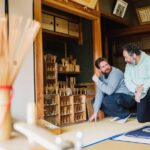
Stepping Into a Nara Sumi Workshop That Still Works Like the Past
This experience takes place at Kinkoen, a historic Nara sumi workshop in Honshu. The big idea is simple: you’re not just learning what ink is, you’re learning what ink making feels like when it’s still done by hand.
What makes this workshop worth your time is continuity. Nara sumi is tied to Buddhist ritual, Japanese calligraphy, and the culture of making and teaching crafts. Kinkoen has kept the tradition alive, so the process you watch and practice has that lived-in, practical quality. You’ll hear background on why ink mattered beyond writing, including its place in education, art, and spiritual practice.
If you like experiences where you can sense the “why” behind the craft, this fits. Ink is often treated like something you buy and forget. Here, it becomes a material you understand through your hands.
You can also read our reviews of more tours and experiences in Nara.


Your Hands Make the Ink, Not a Machine
The core of the workshop is your hands-on making of gripped sumi, also described as nigiri sumi in the process. You’ll knead the soft ink, which is infused with fragrance, then shape it by hand.
Expect your senses to get involved in a way that feels surprisingly direct. As you work, you can smell the ink, feel its warmth, and notice the texture changing as you knead. Pressure matters, too. The workshop emphasizes that when your fingers press, you leave imprints and pressure marks, and that becomes part of your one-of-a-kind ink piece.
That is the magic of this kind of craft. You’re learning technique, but you’re also making something that carries your physical involvement. It’s not just a product at the end, it’s your process preserved.
Learning Nara Ink Through Its Cultural Jobs in Japan
Ink in Japan is not only for calligraphy. This workshop connects sumi to the broader cultural roles ink played over time.
You’ll learn the history and background of ink, including how it has been important to:
- Japanese calligraphy
- Buddhist rituals
- Art
- Education
This context matters because it changes how you view what you’re making. If you only think of ink as a writing tool, the craft feels like a handmade novelty. When you understand that ink was used for ritual, teaching, and artistic expression, the process gains weight. You start to see why craftsmen protected methods and spirit, generation after generation.
I also like that this isn’t presented as a dry lecture. The cultural story is tied to what you do with your hands. Even if your ink piece ends up small, your understanding grows bigger.
What Happens During the Workshop, Step by Step
The session itself is structured around guided making, plus explanation. While you won’t be working in silence, you also won’t be rushed like you’re on a showroom timeline.
Here’s the practical flow you can expect:
- You arrive a little early to get settled and start promptly.
- Your English-speaking guidance introduces the craft and explains the background of Nara sumi.
- You watch a craftsman show key steps so you can copy the method safely and accurately.
- You begin kneading the soft ink infused with fragrance. This is where you’ll notice warmth and texture.
- You shape the ink by hand into the gripped sumi form, paying attention to pressure and finger marks.
- You finish and receive packaging instructions and care so you can take the piece home properly.
Even if you’ve never made anything like this before, the workshop format helps you succeed. It’s built for travelers who want a real cultural experience, not technical expertise.
Why the Kinkoen Craftsman and English Support Make It Easier
One standout detail is communication. The workshop is offered in English, and the craftsman guidance is friendly and direct. That matters more than you might think.
In hands-on crafts, language barriers can turn the experience into a frustrating guessing game. Here, English support helps you understand what you’re doing while you’re doing it. You can focus on the sensations and the technique instead of trying to translate instructions on the fly.
It also helps you ask small questions about ink, texture, and the traditional method. When you can talk normally, the workshop becomes more than a task. It turns into a conversation about culture and craft.


Gripped Sumi as a Memory You Can Actually Hold
Let’s talk about the end product, because that’s usually where workshops either shine or disappoint.
Your finished ink is carefully packaged in a luxurious paulownia wood box. That’s a big deal for value. You’re not just leaving with something fragile and unprotected. You get a presentation that feels intentional, like the craft deserves proper care.
You can display it in your room, and you can also gift it if you want a meaningful present. Ink is a personal kind of souvenir. It’s not a trend object. It’s material culture, made by your own hands, with a process tied to Nara’s Buddhist and calligraphy traditions.
And because your fingerprints and pressure marks become part of the ink’s final form, it doesn’t feel mass-produced. It feels specific to you, even though you’re learning a shared method.
Price and Value: What You’re Really Paying For
The price is listed at $20 per person. For many people, that sounds almost too low for a hands-on cultural craft, especially one tied to a historic workshop.
Here’s what that cost likely represents in real terms:
- Expert guidance in English so you can do the technique correctly
- A traditional hand process still done at Kinkoen
- The materials and careful prep involved in ink making
- Packaging in a paulownia wood box, which adds real presentation value
- A craft experience that involves sensory learning, not just observation
The workshop is also designed for travelers who want depth without a long time commitment. You get a concentrated, memorable cultural skill, plus a take-home item that looks and feels special.
If you’re choosing between a quick stop and a more hands-on activity during your time in Nara, this tends to offer stronger “I did something real” value per minute.
Who This Workshop Fits Best (and Who Might Skip It)
This experience is a good match if you:
- like hands-on cultural activities
- want a souvenir with actual meaning
- enjoy calligraphy culture or Buddhist art connections
- enjoy learning through sensory experience, not just photos
- want an English-friendly craft session
It may be less ideal if you:
- hate messy materials, since you should expect ink getting on clothes
- prefer activities that are mostly viewing with minimal hands-on work
- want a high-energy, nightlife-style outing, since this is a quiet workshop craft setting
The clothes note is the main “consideration.” If you show up in your best shirt, you’ll regret it. Bring comfortable clothing that can handle ink.
Practical Tips to Get the Best Session
A few small choices will make your workshop go smoothly.
- Wear comfortable clothes, and pick something you won’t mind getting stained a little.
- Arrive 10 minutes before your scheduled time. It helps you start promptly without stress.
- If you’re booking very close to the start time, keep expectations flexible, since bookings made within 24 hours may not be accommodated due to preparation constraints.
If you do these things, you’ll be able to focus on the craft itself, and you’ll leave with a better souvenir and a better memory.
Should You Book the Kinkoen Nara Sumi Experience?
Yes, you should book if you want a real, tactile Nara experience tied to Japanese ink, Buddhist culture, and traditional craft technique. The combination of hands-on gripped sumi making, English guidance, and take-home packaging in a paulownia wood box is strong value for the price.
Skip it only if ink mess stresses you out or you really dislike working with your hands. Otherwise, this is exactly the kind of cultural stop that turns a place you’ve read about into something you can remember by touch, smell, and the look of your own ink piece.
FAQ
Where does the Nara sumi ink experience take place?
It takes place at the historic Nara sumi workshop Kinkoen in Honshu, Japan.
What is included in the $20 per person price?
The included activity is the Gripped Sumi Experience at Kinkoen.
Is the workshop offered in English?
Yes, the workshop is offered in English.
What should I wear?
Wear comfortable clothes. You should also wear clothes that can get a bit dirty from ink.
What time should I arrive?
Arrive 10 minutes before the scheduled time to help ensure a prompt start.
Can I get help if I book last minute?
Bookings made within 24 hours of the start time may not be accommodated due to preparation constraints.
More Tour Reviews in Nara
Not for you? Here's more nearby things to do in Nara we have reviewed






Nara Day Trips from Kyoto, compared.
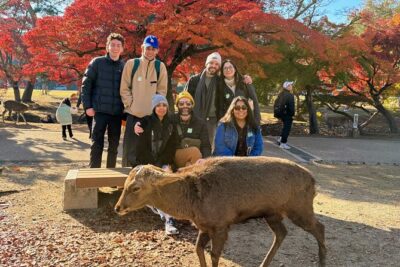 ★ 5.0World Heritage Kyoto & Nara Uji Authentic Matcha ExperienceFrom $1291,573 reviews
 ★ 4.7Kyoto/Osaka: Nara, Fushimi Inari Taisha, Arashiyama Bus TourFrom $521,275 reviews
 ★ 5.0Nara Half Day Trip Walking Tour (Private Option Available)From $105937 reviews
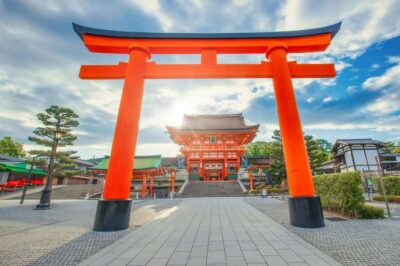 ★ 4.4Osaka/Kyoto: Arashiyama, Nara & Fushimi Inari Shrine w/LunchFrom $61754 reviews
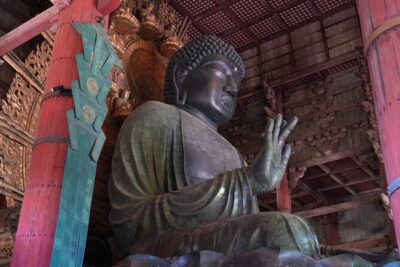 ★ 5.0Nara Early Morning Tour (Kyoto or Osaka Departure Available)From $61676 reviews
 ★ 4.5Kyoto and Nara Day Trip from KyotoFrom $194445 reviews
 ★ 5.0Full Day Guided Tour to Kyoto and Nara from Osaka by VanFrom $106420 reviews
 ★ 4.5Nara Afternoon Tour from Kyoto or OsakaFrom $102390 reviews
Browse the lists this tour appears in