
Reviewed · KYOTO SAMURAI & NINJA EXPERIENCES
Samurai School in Kyoto: Samurai for a Day
Katana practice in Kyoto is hands-on and memorable. You learn formal bowing and the tricky katana draw routine, then you dress up for photos and, if you upgrade, take your training further into kenbu choreography.
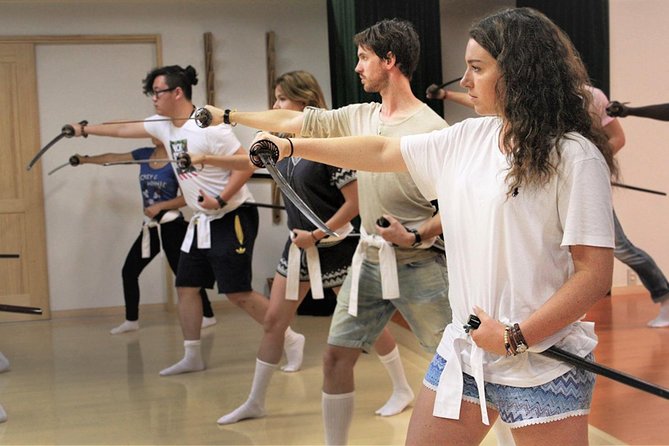
I love that this is not a museum talk. You get guided, step-by-step instruction from a dojo instructor with deep samurai arts background, plus real time with the sword and scabbard.
I also like the full wrap-up package: the costume photo session, a completion certificate, and a tenugui towel. One heads-up, the program can run a bit over your mental schedule, and the photo time can feel rushed if you want lots of posed shots with your own camera.
Key moments worth showing up for
- Small group size (max 10): you get more attention than you would in a huge show-and-sell crowd
- A short intro film first: you start with a 3-minute orientation to set the tone and vocabulary
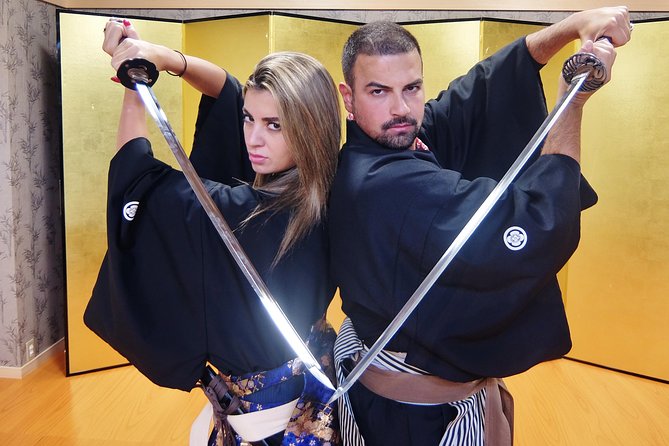
- Formal bow plus katana draw and re-sheath: the course focuses on disciplined basics, not random swings
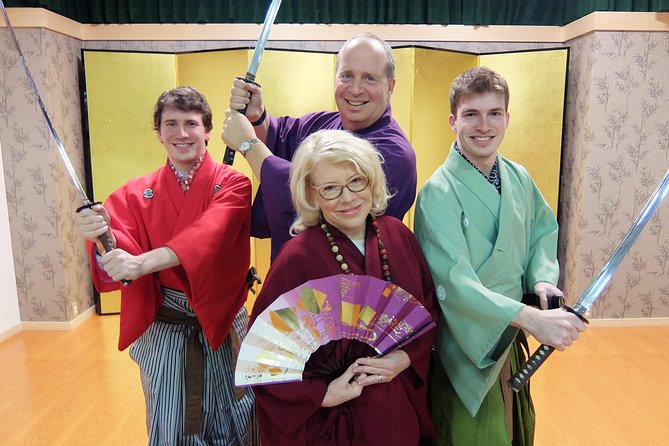
- Costume change plus photo session: you’ll swap into samurai attire and get a real photo moment
- Optional upgrade to kenbu stage practice: longer drills, a folding fan, walking skills, then choreographed performance
- Practical class clothing rules: you’ll move and change outfits, so wear something that makes that easy
Why a samurai lesson in Kyoto feels different than a show
This is a martial arts class with a performance component, not just a staged demonstration. From the moment you arrive, the vibe is “training room” first, “presentation” second. That changes how you experience samurai culture. Instead of only watching skill, you practice the structure behind it.
You’ll learn that samurai arts are as much about control and respect as they are about motion. The lesson starts with basics like bowing, then builds into sword handling, including drawing the blade and placing it back into the scabbard safely and correctly. If you enjoy history but also like doing things with your hands, this format makes the subject stick.
You can also read our reviews of more tours and experiences in Kyoto.

Price and time, what $66.32 is really buying you
At about $66.32 per person, you are paying for three big value pieces in one place:
1) Instruction time with an English speaking instructor in a small dojo setting
2) Hands-on sword training focused on core techniques (draw, re-sheath, striking, thrusting)
3) A complete experience finish with costume photos, a certificate, and a tenugui towel
The stated duration is about 1 hour 30 minutes, but the exact timing shifts based on which session length you choose. The shorter option ends after your training segment, then you bow respectfully and collect your photos and certificate. The longer upgrade adds more drill work and ends with kenbu choreography performed on stage with a poem and music.
Is it cheap? No. But for Kyoto, it is a rare activity where you get real training time, not just a photo op. And it’s also a good indoor option when the weather turns.
Getting to the dojo, and what to wear so you do not waste time
This is a do-it-yourself arrival. You start and end at the same meeting point, and there is no hotel pickup or drop-off. Plan to use public transportation, because the venue is near transit.
Your meeting point is in Kyoto, Higashiyama Ward, Sanchōme (address listed on your confirmation). On the day, you’ll go to the first basement floor from the stairs on the right side of the GOZAN building. Arrive about 10 to 3 minutes before the start time so you are not rushing through costume prep.
For clothing, take the rules seriously. Wear clothes suited for moving around. A single hoodie or tights is not ideal because you’ll need to change for costume time. You are not doing anything extreme, but you are changing outfits and handling a sword, so comfort and flexibility matter.
Quick practical tip: bring a small bag for your everyday items and plan for the dojo to be warm inside after you suit up.
The start of class: film intro, then uniforms and bowing
Before you touch anything, you watch a short 3-minute film that covers the basic practices of the samurai and how the lesson will work. This helps a lot if you are brand new. You’re not just guessing what “proper” looks like.
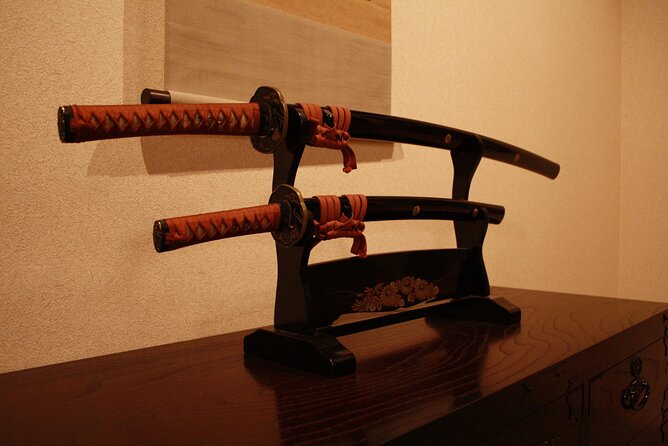
Then you suit up in a samurai training outfit: you’ll wear a white belt, Japanese-style socks, and the sword setup for the class. The instructor begins with respectful bowing, which might feel like a small detail, but it sets the tone for the whole session.
What I like about starting this way is that you get a sense of discipline early. You’re not thrown into fast movements. You learn how the class expects you to hold yourself, how to respond to the instructor, and how to move with control.
Learning the katana draw and basic strikes, step by step
This part is the core of the experience. You start with the formal method of drawing the blade and placing it back into the protective scabbard. The draw-and-sheath sequence is trickier than most people expect. Your hands need accuracy, and your body needs calm focus.
As you practice, the instruction shifts from technique to timing. You’ll also work through methods of striking the sword, plus the idea of striking and thrusting in choreographed practice.
Even if you have zero martial arts background, you should leave knowing the basic “shape” of the movements. You’ll understand how samurai technique is broken into repeatable parts rather than one chaotic swing. That is the main reason this works as a value activity. You don’t just buy a memory, you buy a skill you can explain later.
One more thing: some classes feel more like a strict training environment. The instructor can be firm, especially with kids or anyone moving too casually. If you want a relaxed, zero-pressure vibe, you might find the tone a bit disciplined. If you want structure, that strictness is a plus.

Samurai costume photos, certificate, and that tenugui towel
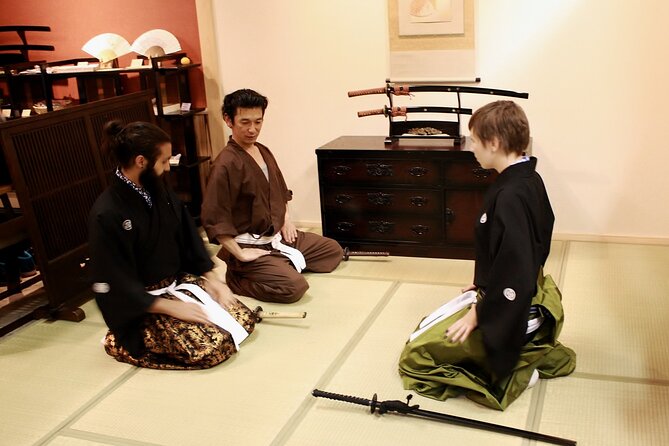
After your sword work, you shift gears. You’ll put on traditional samurai costume for a short photo session. The program includes a photo element and you receive a completion certificate at the end.
You also get a tenugui towel, which is a nice souvenir because it is practical and easy to pack. The certificate is also a fun touch if you like collecting proof that you did the experience, not just taking random pictures.
A realistic consideration: the photo time can feel rushed, especially if you are hoping for lots of composed, sword-forward, slow-shutter portraits. If your goal is more than “one good shot,” bring your patience. Quick coordination with the instructor is the way to get the best results in the time you have.
The optional longer upgrade: walking drills, folding fan, then kenbu on stage
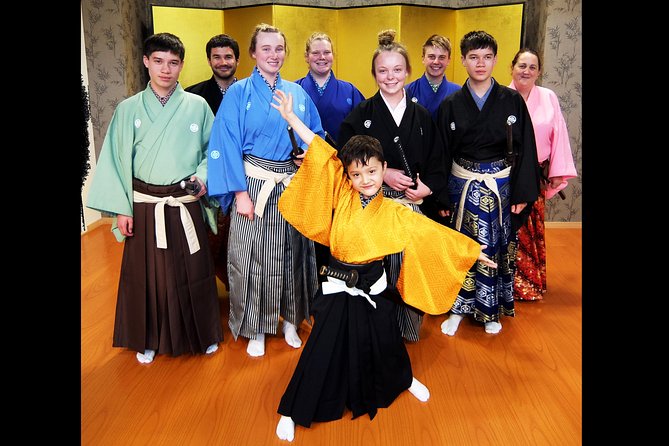
If you book the longer practice option, you add depth and variety. You continue with stylized samurai movements that go beyond the basic draw and initial handling.
Two specific additions are mentioned:
- Walking skills (how to move with control and form)
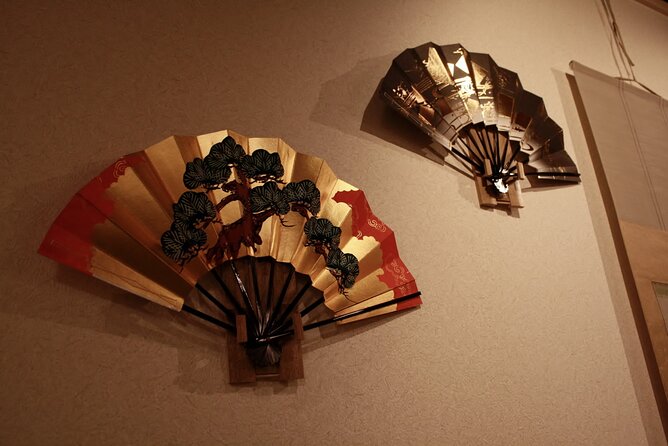
- Using the folding fan as part of the choreography
Then you move into more challenging kenbu choreography. This is the part where your training becomes performance. You’ll perform a sword choreography sequence on stage, with a poem and music.
This upgrade is worth it if you want the samurai art to feel like a full experience, not just a quick skills taste. It is also better for people who enjoy cultural performance, because kenbu is as much about stylized movement and rhythm as it is about sword handling.
If you are short on time, keep in mind that longer sessions may also mean more time spent waiting around for the full flow. The program includes staged elements, and the pacing can extend beyond the minimum you might expect.
Safety expectations and physical limits (so you plan the right day)
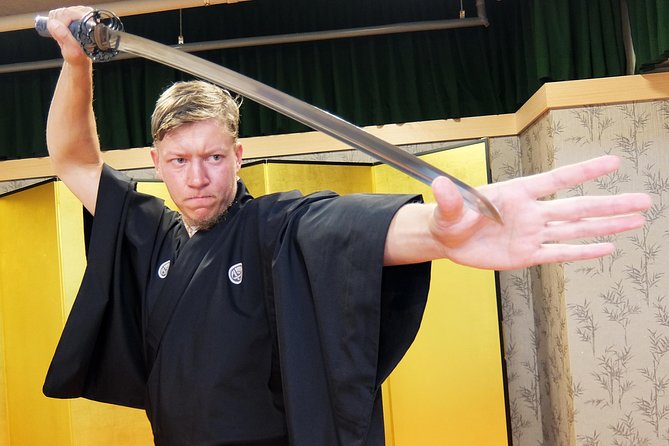
The activity is designed for moderate physical fitness. That usually means you should be comfortable standing, moving your arms, and following instructions without needing frequent breaks.
Safety is handled by instruction. You are told to follow the instructor’s directions for safety reasons. You are not supposed to improvise. That matters with sword work, even when it is choreographed.
Also, consider your comfort with concentration. This class asks you to remember sequences: bowing, draw, placement, and then striking or thrusting drills. If you are someone who gets flustered by instructions in a fast rhythm, arrive a little earlier and take a breath before class starts.
The program has a maximum of 10 travelers, which helps the instructor manage safety and feedback. In some cases, smaller groups may mean you get more individualized attention than you expected, which is a big win.
Who should book this samurai school (and who should skip it)
This is a great fit if you:
- love hands-on history, not just reading about it
- want a short martial arts taste without a long training commitment
- enjoy costumes and want a legit photo moment
- are traveling with teens or adults who do better with activities than museums
It can be less ideal if you:
- hate strict instructions and want a casual vibe
- want a long photo session with unlimited retakes
- are hoping for a fully hands-on “free swordplay” experience (this is choreographed training, with safety and discipline)
For families, there is a note for kids age 5 to 11: it is preferable they attend some kind of class or martial arts school. If you’re traveling with younger kids, choose the timing and your expectations carefully.
Should you book Samurai School in Kyoto?
I think you should book it if you want one of Kyoto’s better value “do something” experiences. For about $66.32, you get sword training basics you can explain later, plus the costume photo moment, certificate, and tenugui towel. The small group size is a real quality factor, and the class format turns samurai culture into something you actively practice.
Skip it if you are mainly looking for a long sightseeing window, or if you want lots of time for posed photos. This is short, structured, and discipline-forward. If that matches your travel style, it’s an easy recommendation.
One last practical tip: if you are on a tight schedule, build in buffer time after the class. The program flow can run a little long, and you will want breathing room for photos and collecting your certificate.
FAQ
How long is the Samurai School in Kyoto experience?
The duration is about 1 hour 30 minutes (approximately). Your exact class time can vary depending on the session option you select.
Is the instructor English speaking?
Yes. The experience includes an English speaking local guide or instructor.
Do I get a photo session and a certificate?
Yes. The activity includes a photo shoot, and you receive a lesson completion certificate. You also get a tenugui towel.
Is there an option to train longer than the basic class?
Yes. There is an optional longer practice session that adds more stylized movements, including walking and use of a folding fan, and it ends with challenging kenbu choreography on stage with a poem and music.
Do I need to bring food or drinks?
Food and drinks are not included. Plan to eat before or after based on your schedule.
Is hotel pickup included?
No. Hotel pickup and drop-off are not included, and the activity ends back at the meeting point.
What is the cancellation window for a full refund?
You can cancel for a full refund if you do it at least 24 hours before the experience’s start time. Free cancellation is offered up to 24 hours in advance.
More Tour Reviews in Kyoto
Not for you? Here's more nearby things to do in Kyoto we have reviewed







Kyoto Samurai & Ninja Experiences, compared.
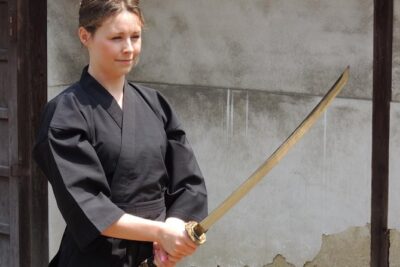 ★ 5.0Kyoto Samurai ExperienceFrom $1191,294 reviews
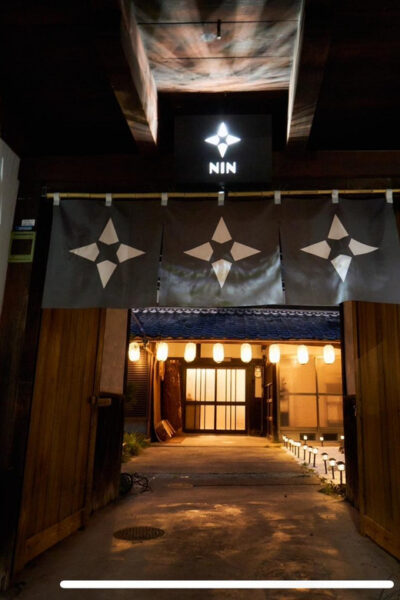 ★ 4.9Kendo and Samurai Experience with Uniform and GearFrom $103815 reviews
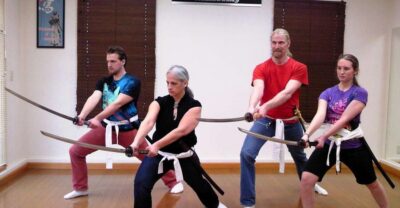 ★ 4.9Samurai Sword Class by Experts in Traditional ArtsFrom $64657 reviews
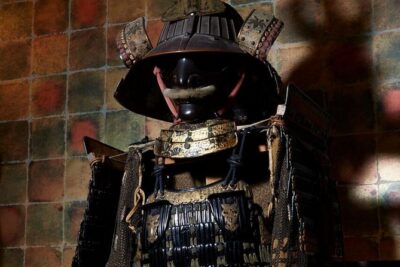 ★ 4.5Skip the lines Basic Ticket at SAMURAI NINJA MUSEUM KYOTOFrom $28632 reviews
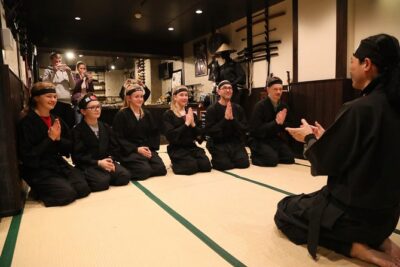 ★ 5.0Ninja 1-hour Hands-on Lesson by Japanese master in Kyoto -EntryFrom $80489 reviews
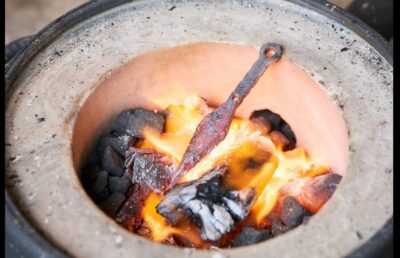 ★ 4.8Ninja Weapon Forging ExperienceFrom $148478 reviews
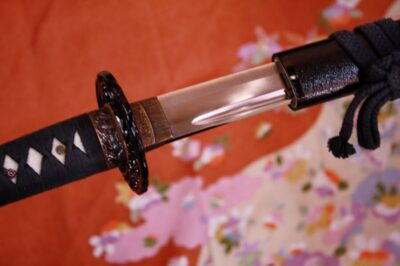 ★ 4.5Samurai Kenbu Traditional Sword Dancing ShowFrom $32426 reviews
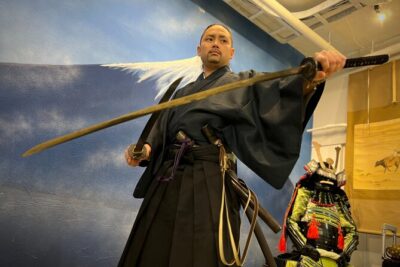 ★ 5.0Samurai Training with Modern day Musashi in KyotoFrom $132256 reviews
Browse the lists this tour appears in