
Reviewed · PRIVATE
SHIRAKAWA Japanese Culture Experiences with private English staff
Knives, brushes, and home cooking in one alley. In Kyoto’s Furukawacho Shopping Arcade, you get hands-on instruction in a spot locals actually use, with a retro-meets-modern feel and lantern-lit atmosphere.
What I like most is the mix of true skills you can take home, not just photos. You can go from learning a whetstone knife technique to making Kyoto-style obanzai with chef-owner Kyo-gohan Nishimura, plus a calligraphy lesson where you finish a personal hanging scroll.
One thing to plan around: your exact workshop choices depend on reservation availability. If they cannot secure the workshop you picked, your prepaid fee for that option should be refunded to the credit card you used.
Key highlights
- Furukawacho Shopping Arcade feels like locals’ daily life, not a staged tourist stop
- Private English-speaking staff stays with your group through both workshops
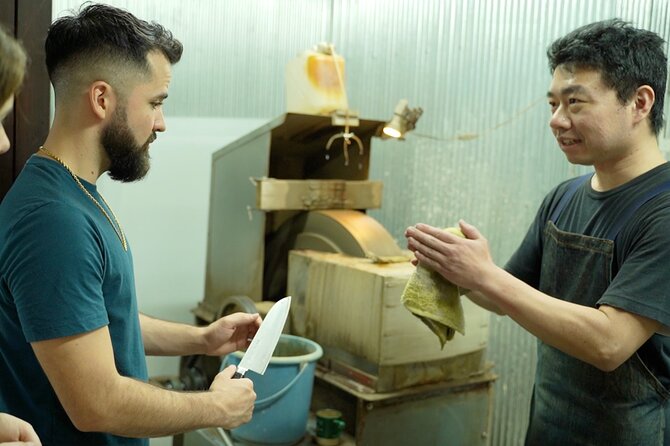
- Learn knife sharpening on a whetstone with an artisan with 26 years of experience
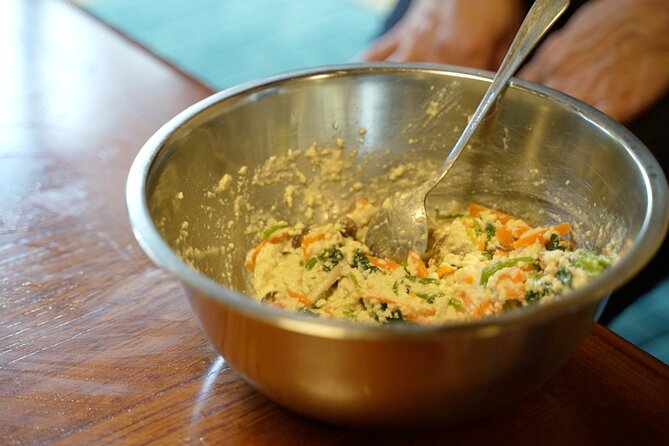
- Make obanzai the Kyoto way, using a family recipe shared by Kyo-gohan Nishimura
- Calligraphy includes brush, ink, and suzuri, plus a one-of-a-kind hanging scroll
- Small private group size, 2 to 6, for a more personal pace
Why Furukawacho Shopping Arcade is the real Kyoto setting
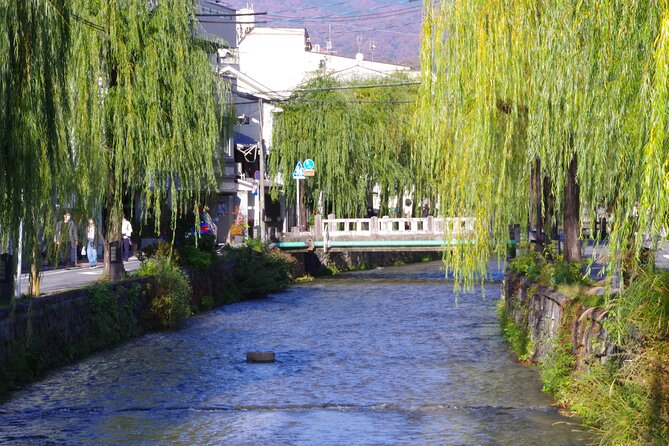
Most Kyoto experiences either stop at a famous street, or they feel like a classroom that could be anywhere. This one starts in a place with a different energy: the Furukawacho Shopping Arcade in the Shirakawa area.
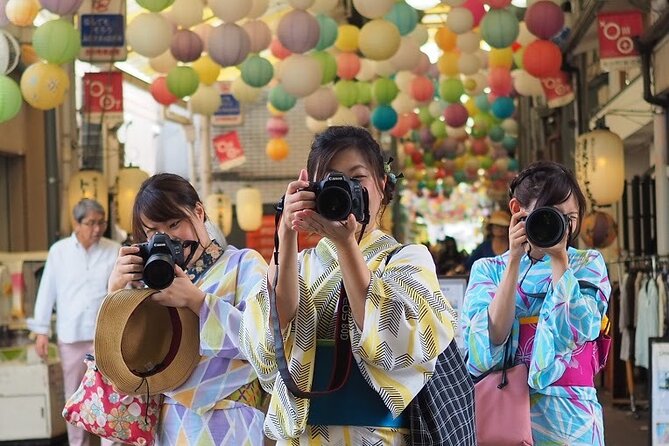
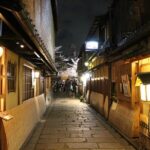
The concept is retro and modern, and the arcade roof with hanging lanterns gives you a cozy glow as you move from shop to shop. It’s also described as the kitchen of locals and the base of their lives. That matters, because the vibe shifts from sightseeing to participation. You’re not just watching craft. You’re doing it in the kind of everyday space where people actually shop, eat, and live.
Also, you’re only in this experience for about three hours, so it fits well even if you have a busy Kyoto plan. You get culture, plus practical skills, without burning an entire day.
You can also read our reviews of more private tours in Kyoto

How the private English setup and choose-two workshops work
This is a private activity for your group only, with an English-speaking staff member attending each workshop. The group size is limited to 2 to 6 people, so you’re not competing with a crowd for attention or translating on your own.
The format is simple: you choose two experiences from three options. The total duration is about 3 hours, which is long enough to learn something real in two different disciplines, but short enough to stay flexible.
Here are your options:
- Knife sharpening for about 90 minutes
- Obanzai making for about 70 minutes
- Calligraphy for about 90 minutes
You can let the staff know by message what you want, and the team will support you during both workshops. One practical catch: your workshop choices can depend on reservation availability. If a specific workshop cannot be arranged, the prepaid fee should be refunded for that workshop.
A final detail that affects planning: private transportation isn’t included, but the meeting point is near public transportation. So you’ll want to build in time to reach the arcade by transit and then walk the small area with your group.
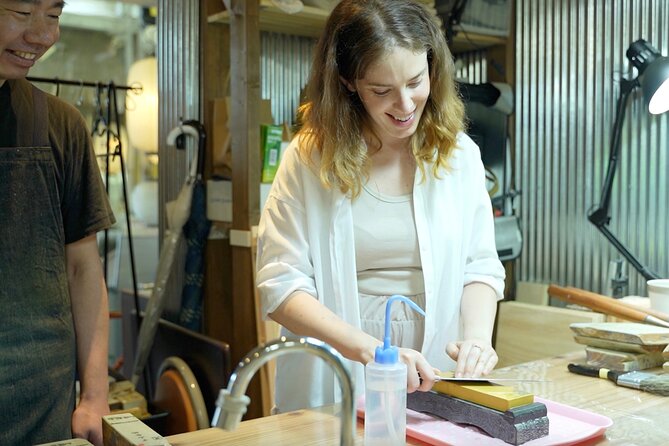
Knife sharpening on a whetstone with a 26-year artisan
Knife sharpening sounds oddly specific until you try it, then you realize it’s one of those skills that improves everything around it. In this workshop, you learn at a store specializing in sharpening cutting tools using a whetstone.
The big draw here is the instructor background. You receive instruction from an artisan with a 26-year career, and the shop is positioned as a place you can access only within this Furukawacho Shopping Arcade setup. That means you’re not getting generic knife tips. You’re learning how to sharpen properly, which is the difference between a knife that cuts and a knife that just looks sharp.
What you should expect, in real terms:
- You’ll get hands-on guidance on the process used for whetstone sharpening
- You’ll learn how to do it in a way that supports daily cooking
Why this is valuable is pretty straightforward. Good knives make cooking faster and safer, because you’re not forcing your way through tough tasks. If you like cooking, the memory of what you learned stays longer than a single photo stop.
Also, because this is one of your two workshop choices, it gives your experience a practical anchor. When the rest of your Kyoto day starts to blur, you’ll still remember the feel of a whetstone technique.
Obanzai making with Kyo-gohan Nishimura, recipe to hands-on cooking
Obanzai is a Kyoto-specific term for home-cooked dishes with recipes passed down through families. That’s more than a label. It hints at why this workshop feels different from many cooking classes you see elsewhere.
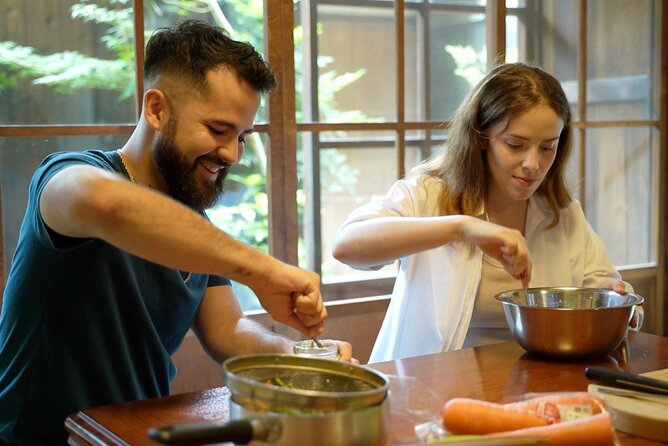
Here, you work with the chef-owner of an obanzai store in the arcade, Kyo-gohan Nishimura. You’ll buy ingredients at stores within the shopping arcade and then cook obanzai dishes with the chef-owner.
A few reasons this workshop tends to land well with people:
- It connects cooking to local sourcing, since you pick ingredients right in the arcade
- It’s not just recipe memorization, it’s family-recipe knowledge shared through a chef-owner
For you, this can be a satisfying type of learning if you want something tactile. You’re not just watching. You’re actively cooking while the process is explained in English with private staff support.
One thing to keep in mind for value: the experience includes ingredient shopping, but the tour info does not explicitly say whether ingredient costs are fully included in the price. Expect that you may pay for ingredients at the shops. If you want to plan tightly, budget a little extra for that part of the class.
Calligraphy practice, kanji shapes, and a personal hanging scroll
If you’ve ever wanted to understand calligraphy beyond copying a character, this workshop is structured to teach you how writing actually works.
You start with how to form kanji and how to use the tools:
- brush
- ink
- suzuri
Then you practice, and you’re encouraged to ask the instructor how to write kanji for your name. That’s a small detail, but it’s exactly the kind of personalization that makes the final product feel truly yours.
The lesson ends with you completing a one-of-a-kind hanging scroll. That matters for two reasons. First, it gives you a finished, usable souvenir that you can hang at home. Second, it turns the activity from a one-time demo into something you create with your own hand.
Timing is also nice. Calligraphy is listed at about 90 minutes, which means you get enough room to learn the method and still leave with a completed scroll, not something half-finished.
If you’re choosing calligraphy as one of your two options, it also pairs well with one craft skill. Knife sharpening feels practical and physical, and calligraphy brings the focus back to precision and controlled movement.
Price and 3-hour timing: what the $98.53 per person buys
Let’s talk value, since this experience is priced at $98.53 per person and runs about 3 hours.
You’re paying for:
- two workshops (each with significant instruction time)
- a private English-speaking staff member
- a small group setting, limited to 2 to 6
In Kyoto, one workshop plus interpretation can sometimes add up fast. Here, you’re stacking two learning experiences into one time block, while still keeping the group small and private. That combination is the main reason the price makes sense if your goal is skill-based learning.
What could affect your final spending is what happens during the obanzai ingredient step. The info says you’ll buy ingredients at stores at the shopping arcade. Since ingredient costs aren’t explicitly described as included, think of the workshop price as covering instruction and the experience structure, and ingredients as a likely extra.
Also, this activity does not include private transportation. The meeting point is near public transportation, so you’ll handle transit on your own. That’s normal in Kyoto, but it’s good to know before you plan your day.
The experience uses a mobile ticket, which is convenient because you’re not dealing with printed vouchers. You typically get confirmation within 48 hours of booking, subject to availability.
Practical ways to get more out of your two workshops
This experience works best when you treat it like participation, not a checklist. Here are a few ways to do that without overthinking it.
First, decide your two choices based on what you want to practice. Knife sharpening is about technique and improving your tools. Obanzai is about flavors, process, and understanding Kyoto home cooking through a chef-owner. Calligraphy is about the mechanics of kanji, brushwork, and finishing with a hanging scroll.
Second, be ready for the reality of workshop availability. Even though you choose two options, reservation availability can affect which ones happen. If you have strong preferences, message the staff as soon as you can, and keep some flexibility.
Third, use the English staff presence for more than logistics. Ask how to do the step you’re doing right now, and ask what mistakes to avoid. That’s how you turn instruction into something usable later.
Finally, plan your day so you’re not rushing between neighborhoods. The start and end both return to the meeting point at Furukawashuzo in the Shirakawa area. That means you can build a smooth schedule around it, with less stress than an activity that drops you somewhere else.
Who should book this Shirakawa culture experience
I’d point this one toward people who want more than sightseeing. It’s ideal if you:
- like learning hands-on skills
- want small-group attention with private English support
- are curious about Kyoto-specific culture like obanzai
- want to take home a real product, like a hanging scroll
It also works well for couples and small groups who want a shared activity that still feels personal. With the group size capped at 2 to 6, you’re less likely to feel like you’re part of a factory line.
The main reason you might not choose it is if you strongly need a specific workshop combination at a specific time and you cannot handle the possibility that availability changes. Also, since cancellations are not described as flexible, this is better as a planned piece of your itinerary rather than something you might gamble on.
Should you book Shirakawa Japanese Culture Experiences with private English staff?
Book it if your Kyoto trip needs one focused block where you actually learn something. The setting at Furukawacho Shopping Arcade brings the experience closer to daily life, and the private English staff keeps the learning smooth.
I’d particularly recommend it if knife sharpening, obanzai cooking with Kyo-gohan Nishimura, or calligraphy are on your list. Two workshops in about three hours is efficient, and the small group size is a big quality-of-life upgrade.
Skip it or think twice if:
- you’re not comfortable with potential workshop availability changes
- you want private transportation handled for you
- you might cancel on short notice, since the experience is described as not refundable
If you’re the type who enjoys craft, food, and making something with your own hands, this is the kind of Kyoto experience you’ll remember past the temple photos.
FAQ
Where does the experience start?
It starts at 古川趣蔵 (Furukawashuzo), also listed at 白川まちづくり会社, 546-1 Furukawachō, Higashiyama Ward, Kyoto, 605-0026, Japan. It ends back at the meeting point.
How long is the experience?
The duration is approximately 3 hours.
How much does it cost?
The price is $98.53 per person.
What is included in the price?
You get 2 workshops plus a private English-speaking staff member.
What is not included?
Private transportation is not included.
Can I choose my workshops?
Yes. You choose two experiences out of the three options: knife sharpening, obanzai making, and calligraphy.
What if I cannot participate in the workshop I chose?
Participation depends on reservation availability. If you cannot join the workshop of your choice, the prepaid fee should be refunded to the credit card used for payment.
How big is the group?
This course accepts 2 to 6 people.
Is there a mobile ticket?
Yes, it includes a mobile ticket.
How soon will I receive confirmation?
You should receive confirmation within 48 hours of booking, subject to availability. The provider also notes they will contact you within 3 business days after your application/payment.
Is the experience refundable if I cancel?
No. It is non-refundable and cannot be changed for any reason. If you cancel or request an amendment, the amount paid will not be refunded.
More Private Tours in Kyoto
More Tour Reviews in Kyoto
Not for you? Here's more nearby things to do in Kyoto we have reviewed

Private, compared.
 ★ 5.0Fushimi Inari Hidden Hiking Tour (Private Option Available)From $631,750 reviews
 ★ 5.0Private Kyoto Tour with a Local, Highlights & Hidden Gems, PersonalisedFrom $1021,543 reviews
 ★ 5.0Kyoto 6hr Private Tour with Government-Licensed GuideFrom $1551,369 reviews
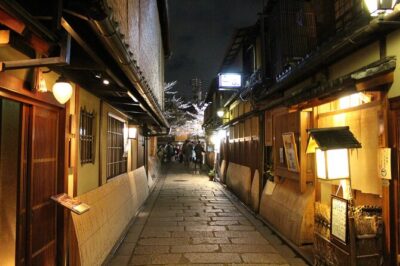 ★ 5.010 Must-see Spots in Kyoto One Day Private Tour (up to 7 people)From $1791,108 reviews
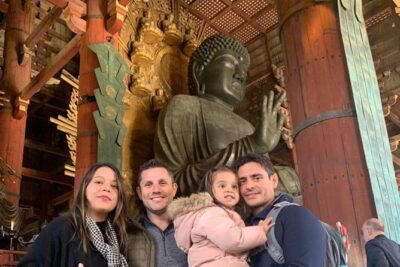 ★ 5.0Nara Half Day Trip Walking Tour (Private Option Available)From $105937 reviews
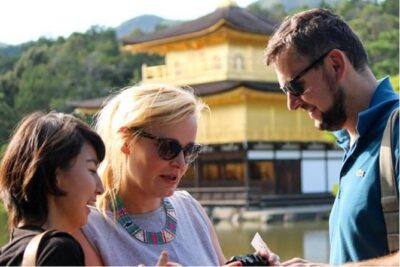 ★ 5.0Kyoto 4hr Private Tour with Government-Licensed GuideFrom $109629 reviews
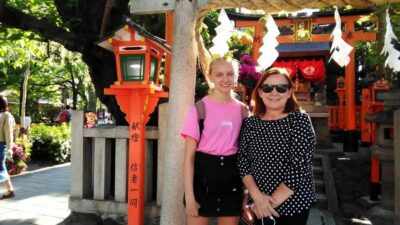 ★ 4.8Private Tour with Local Licensed GuideFrom $106463 reviews
 ★ 5.0Private Kyoto Tour with Licensed Guide & Vehicle (Max 15 persons)From $634417 reviews