
Reviewed · GUIDED
Tour in Kyoto with a Goverment Certified Tour Guide
Kyoto in one day can feel like magic. This government-certified guided loop takes you through famous landmarks and the quieter corners people miss, with stories that connect shrines, castles, and old neighborhoods. I like that it is built for real people, with a guide who can explain what you are seeing and help shape the day around your interests.
What I like most is the mix: Fushimi Inari, Gion, Nishiki Market food time, and Arashiyama bamboo in one flowing plan. You also get cultural extras described in the tour style, like tea stops, calligraphy, kimono dressing, and even rickshaw time, though what fits depends on timing and crowds. One drawback to consider is that this is a lot of ground, and some stops have separate entry fees, so you will want a bit of cash buffer and comfy shoes.
6 key things that make this Kyoto tour tick
- Government-certified guide who can turn temple facts into a day you understand
- A smart route linking Fushimi Inari, Kiyomizu-dera, Gion, Nishiki Market, and the Kyoto temple classics
- Arashiyama time for bamboo and Zen atmosphere, plus time for nearby add-ons if your guide can work it in
- Ginkaku-ji (Silver Pavilion) has a listed admission fee that is not included
- Pickup is offered, but you should confirm the exact meeting point details
- Solo or couple travelers may join others, even if the tour is sold as private
A 6 to 8 hour Kyoto loop, what the pacing really means
This is designed as a half-day-plus day, usually 6 to 8 hours, built around Kyoto’s most requested sights. That sounds straightforward until you realize how much time walking, photo stops, and crowd flow can take in Kyoto. The upside is you get a big snapshot of the city without wasting your limited daylight.
A good thing here is customization. The tour is described as adaptable depending on expectations and time available. In practice, that matters because Kyoto has variables you cannot control: queues, rain, and peak-season bottlenecks. A guide can often shift order slightly or suggest the best side of a viewpoint to stand on.
The big tradeoff is energy. If you want a slow, sit-down, linger-in-one-place day, this route may feel rushed. If you want to cover serious highlights and learn how they connect, this format can work well.
You can also read our reviews of more guided tours in Kyoto


Fushimi Inari Taisha torii gates, the start that sets the mood
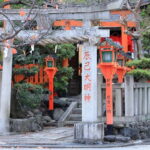
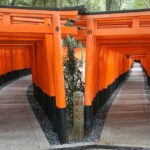
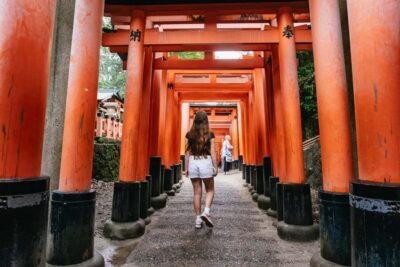
You kick off at Fushimi Inari Taisha, the Shinto shrine tied to Inari, the deity associated with rice. The iconic part is the torii gates, and the feeling is instant Kyoto: orange gates, shrine paths, and a sense you are walking into a story.
This stop is listed as about 1 hour and the admission is free, which is great value early on. The practical tip is to use this time to get your bearings. Once you understand the layout and where you want to pause for photos, the rest of the day feels less chaotic.
Also, wear shoes you trust. Even with a one-hour stop, the area invites wandering. If you are trying to keep the whole day smooth, you will thank yourself for moving at a steady pace and saving the deep detours for a second visit.
Kiyomizu-dera, why this hilltop stop is worth the effort
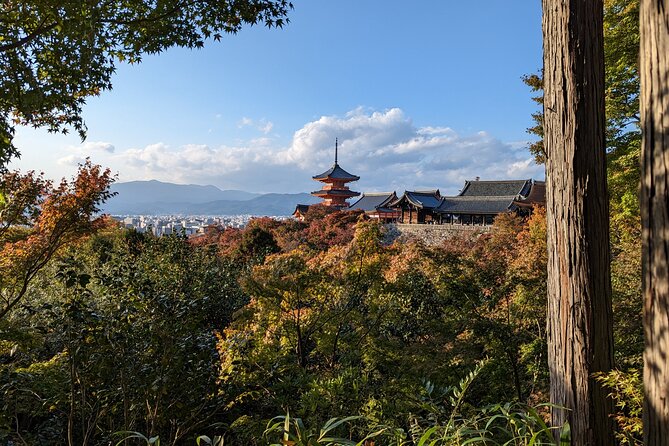
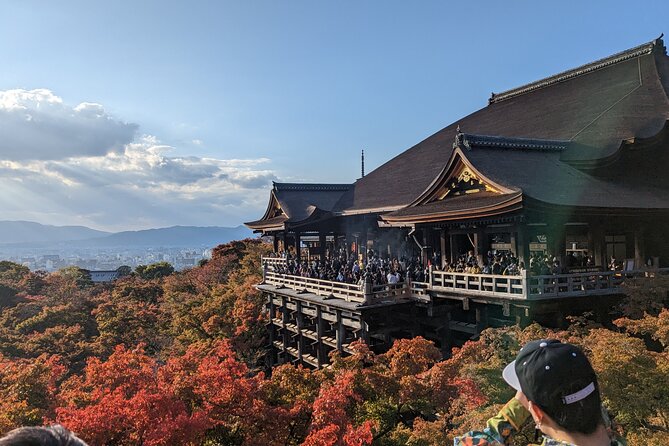
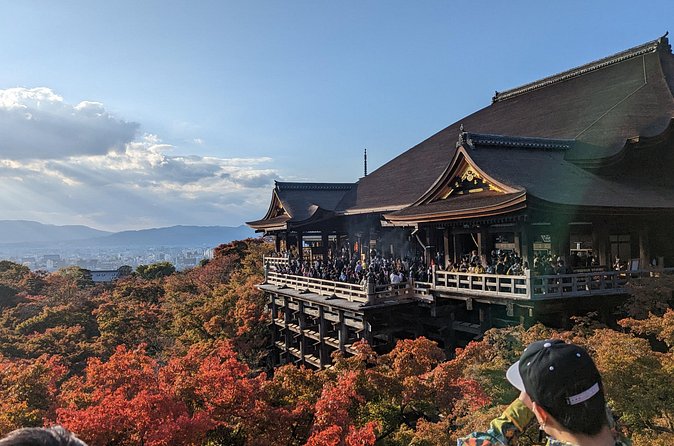
Next is Kiyomizu-dera, one of Kyoto’s most iconic Buddhist temples, perched in the Higashiyama area. It is listed as about 1 hour, also with free admission in the tour data.
What makes this stop special for your day is the viewpoint effect. A hilltop temple like this is not just something you look at, it shapes how you understand the district around it. You are also stepping into a different rhythm than the flat market streets later.
The consideration: crowds and walking paths. Kiyomizu-dera is popular, and Kyoto does not do empty sidewalks. If you are sensitive to long waits, tell your guide early that you prefer shorter lines and quicker viewpoint stops.
Nijo Castle, a history stop with a separate ticket cost
Nijo Castle is a 17th-century stronghold and a symbol of power, built as a residence tied to the era’s ruling presence. You get about 1 hour here, with the note that admission is not included.
This is a nice counterbalance to shrines, because castles give you a different angle on Kyoto: governance, ceremony, and why architecture mattered. If you love history, you’ll enjoy how this slot breaks the day into themes.
Budget note: since admission is not included, plan extra spending here. If you are trying to keep costs tight, ask your guide what tickets you should expect before you commit to time-consuming add-ons.
Gion and Nishiki Market, your Kyoto reset and your food moment
Then you slide into Gion, the famous old district linked with preserved traditional architecture and the geisha world. It is listed for about 1 hour with free entry.
After that comes Nishiki Market, a stretch of shops and food stalls that is often described as Kyoto’s kitchen in miniature. This stop is also listed for about 1 hour and free entry.
This pairing is smart. Gion gives you the atmosphere, and Nishiki gives you something you can actually taste. If you only do one food shopping stop, do this one.
Practical approach: treat Nishiki as a “sample and pick” market, not a full grocery run. Your guide can steer you toward foods you can eat quickly between walking stops. If you try to buy everything, you will lose time and energy.
Kinkaku-ji and Ginkaku-ji, Golden and Silver Pavilion contrast
You visit both major Zen temple stops that people plan their whole Kyoto trip around.
Kinkaku-ji (Golden Pavilion)
Kinkaku-ji is the Golden Pavilion, a UNESCO World Heritage Site in the tour data, with free admission listed and about 1 hour allocated. This is a classic photo stop, but it is also a good place to pause and notice how Zen aesthetics show up in design, not just in “quiet temple vibes.”
Ginkaku-ji (Silver Pavilion)
Then it is Ginkaku-ji, the Silver Pavilion. In the tour description, an important detail is that it does not actually have silver plating, but it still carries historical and cultural weight. You have about 1 hour and admission is not included, with a listed fee of $8.00 per person.
This is where your guide’s framing helps. If you only see it as a name, you miss the point. If your guide explains the meaning behind the design choices and the Zen idea behind the space, your time here feels longer than it is.
Budget tip: if Ginkaku-ji is $8 and other temples have additional fees, the day can quietly add up. Bring a card, but also keep some cash handy.
Arashiyama bamboo and Tenryu-ji, the calm brake pedal
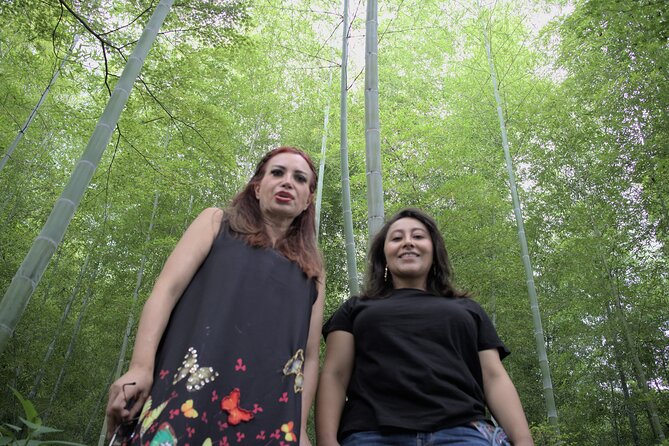
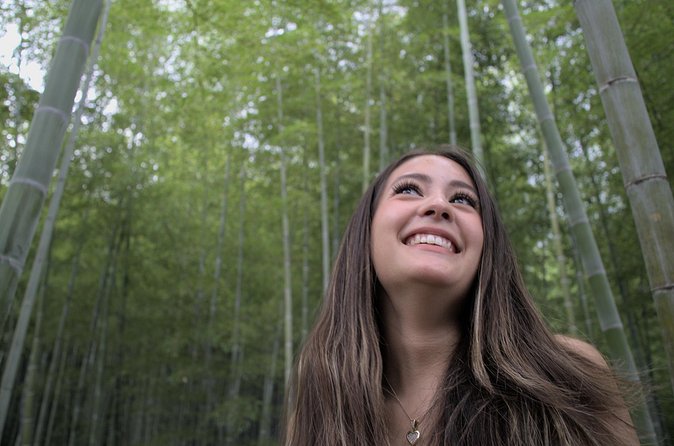
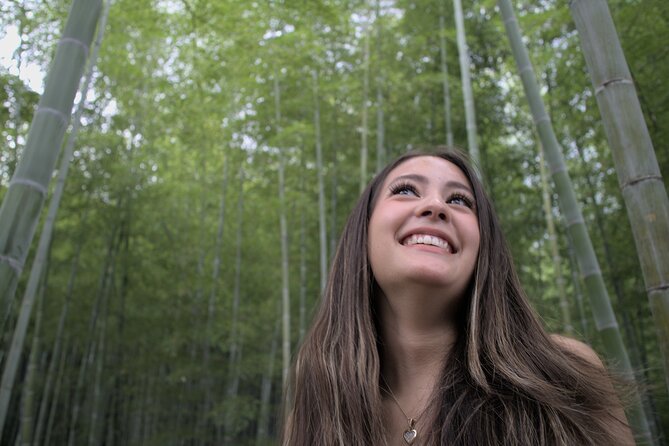
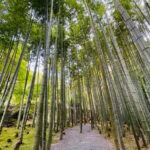
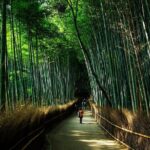
Later, you reach Arashiyama, where the tour data highlights the bamboo forest area and a serene atmosphere. Bamboo alone can be worth the trip, but the real value of this stop is timing. You want at least one part of the day that feels different from the dense shrine-and-market flow.
Arashiyama itself is listed for about 30 minutes, with free admission. That is short, so you need to move with purpose: find the viewpoint you want, take photos quickly, and keep room for any guide-added detours.
Then comes Tenryu-ji, a UNESCO World Heritage Site and one of the most revered Zen temples, founded in the 14th century, listed for about 30 minutes with admission not included.
A helpful detail from actual guide styles in this tour category: some guides also try to include nearby spots in the Arashiyama area, and you might hear about favorites like a Monkey Park-style stop. If that matters to you, ask your guide if it fits with the day’s timing and walking pace.
Price and logistics: where the $110 value is strong, and where to watch costs
At $110 per person, you are mostly paying for the guide time plus the “make it coherent” part of the day. You are not paying for most admissions inside the price, though. The tour includes the guide and says you can customize based on expectations and time available.
What is not included:
- Transportation fees of the guide (listed as 5 to 8 USD)
- Food and drinks
- Transportation fees
- Admission fees for specific sites, with Ginkaku-ji listed at $8 per person
So, where is the value? It is in saving you from decision fatigue. Kyoto is not hard to navigate, but it is easy to plan badly. A solid guide can help you avoid time-wasting backtracking and can guide you toward the parts of each sight that match your interests.
My practical advice: treat the $110 as “guide value,” then add a modest extra budget for entrance fees and snacks. If you go in expecting the tour price to cover everything, you will be surprised.
Who this tour suits best, and who should rethink it
This tour fits best if you want a first-time Kyoto highlights day with explanations that make the places feel connected. It is also a good fit if you like structure: you show up, you follow, you learn, you eat, you move on.
It can also work for solo travelers, with one important note in the tour description: if you are a solo or couple traveler, you might be asked to join another solo or couple. That means you should not assume the day will feel like just you two, even if it is sold as private.
If you hate walking, this may not be your best choice. This is a multi-stop route, and your day will be paced by transit between sites and crowd flow. If you need a slower pace, ask for a more focused plan, or consider splitting Kyoto into fewer neighborhoods across two days.
How to reduce the chance of a day going sideways
Kyoto days can unravel for simple reasons: a missed meeting point, unclear instructions, or a guide who cannot find you quickly. Some people have had problems with meeting clarity in tour situations like this, so protect yourself.
Do this:
- Confirm the exact meeting spot in writing, not just a general location.
- Arrive early enough to handle last-minute subway or bus confusion.
- Save a screenshot or offline copy of your meeting instructions.
- Keep your phone charged for the day, and stay reachable.
If you are relying on pickup, be extra strict about timing. Pickup in a city means extra steps, and extra steps create extra failure points.
Should you book Mystical Kyoto Quest?
I think this tour can be a smart buy if you want a guided Kyoto sampler with a guide who can explain what you are looking at, and you are happy to trade some flexibility for a full day of major stops. The route hits the essentials, and the day is the kind of plan that helps first-timers avoid wasting time.
Skip it or book with caution if you:
- want a slow pace with lots of quiet time
- are very cost-sensitive and do not want additional entrance fees
- need ironclad hotel pickup reliability, or you dislike meeting-point uncertainty
If your priority is seeing Fushimi Inari, Gion, Nishiki Market, Kinkaku-ji, Ginkaku-ji, and Arashiyama with guidance, this tour style can deliver.
FAQ
How long is the Kyoto tour?
It runs about 6 to 8 hours.
How much does the tour cost?
The price is $110.00 per person.
What is included in the ticket price?
The tour includes the guide. You can also customize the tour depending on expectations and time available.
Is pickup included?
Pickup is offered. The tour also notes that it is near public transportation.
Is this a private tour?
The experience is described as private, meaning only your group participates. However, there is a note that solo or couple travelers might be asked to join another solo or couple.
Which main sights are part of the route?
The route includes Fushimi Inari-taisha Shrine, Kiyomizu-dera Temple, Nijo Castle, Gion, Nishiki Market, Kinkakuji Temple, Ginkakuji Temple, Arashiyama, and Tenryu-ji Temple.
Are temple and castle entrance fees included?
Some are included as free in the tour data, but others are not included, such as Nijo Castle and Tenryu-ji. You should expect separate admission for certain stops.
How much is the Ginkaku-ji admission fee?
The tour lists Ginkakuji Temple admission as $8.00 per person, not included.
What about food and drinks?
Food and drinks are not included.
Can I get a refund if I cancel?
Yes. You can cancel up to 24 hours in advance for a full refund. If you cancel within 24 hours, the amount you paid is not refunded.
More Guided Tours in Kyoto

More Tours in Kyoto
More Tour Reviews in Kyoto
Not for you? Here's more nearby things to do in Kyoto we have reviewed


Guided, compared.
 ★ 5.0Kyoto Early Morning Tour with English-Speaking GuideFrom $681,427 reviews
 ★ 5.0Kyoto 6hr Private Tour with Government-Licensed GuideFrom $1551,369 reviews
★ 4.9Early Morning Tour with English-Speaking GuideFrom $1011,128 reviews
★ 5.0Kyoto 6hr Private Tour with Government-Licensed GuideFrom $1551,369 reviews
★ 4.9Early Morning Tour with English-Speaking GuideFrom $1011,128 reviews
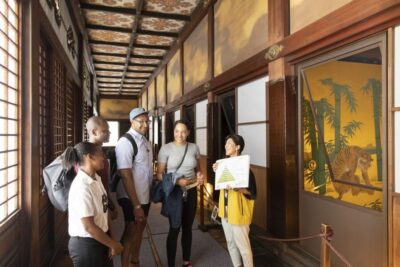 ★ 4.7Nijo-jo Castle and Ninomaru Palace Guided TourFrom $161,020 reviews
 ★ 4.9Izakaya Bars Guided Walking TourFrom $25815 reviews
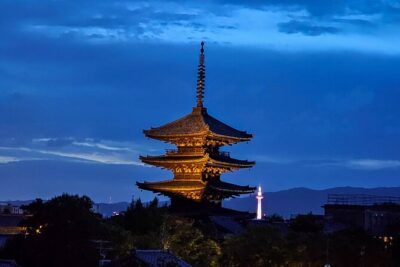 ★ 5.0Kyoto Gion Night Walk & Geisha District Guided TourFrom $18786 reviews
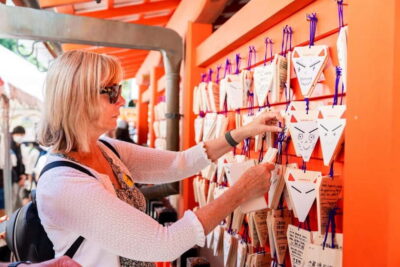 ★ 4.5From Kyoto/Osaka: Kyoto Top Highlights 1-Day Guided Bus TourFrom $51714 reviews
 ★ 4.7Nijo Castle, Kiyomizu & Fushimi Inari Guided TourFrom $54700 reviews