
Reviewed · KYOTO GARDENS & ZEN RETREATS
Zen Meditation for Life in Kyoto
Zen calm in a Kyoto machiya feels rare. This private 4.5-hour workshop with Zen Buddhist priest Brian Victoria sits near Nishi Honganji and puts you into hands-on practice quickly. I love the private format, so you can ask questions without feeling rushed, and I love the posture-first coaching for seated Zen (zazen) and walking Zen (kinhin). One thing to consider: the teaching is detailed, and a few people may feel it is a lot to take in at once, and the day can run a little longer than you expect.
You also get the full sequence, zazen sitting followed by kinhin walking, so it is not just an idea lecture. Afterward, you get coffee or tea during the session, then end with green tea and a traditional Kyoto sweet. That makes it easier to leave with a calmer mind and a practical next step.
If you want Kyoto to feel less like a checklist and more like one meaningful experience, this is a great bet.
Key highlights you should care about
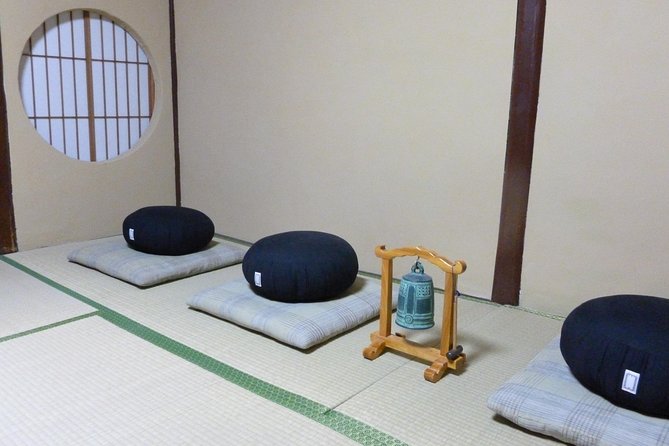
- Private workshop in a machiya: one group, a traditional Kyoto home setting, not a crowded class
- Brian Victoria teaches the fundamentals: breath, posture, and how to train attention in Zen practice
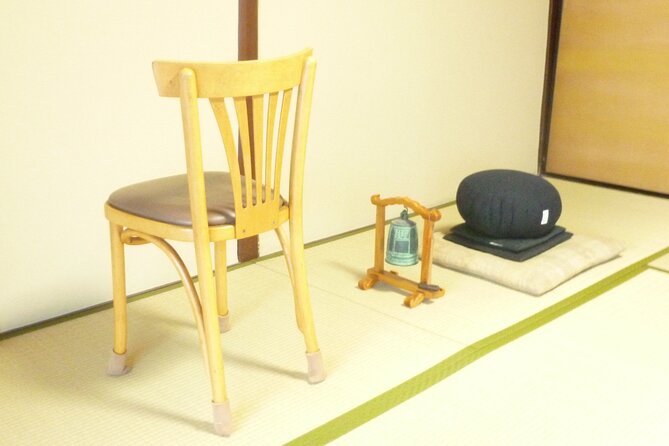
- Chair option: you can meditate seated traditionally or use a chair if your body needs help
- Real practice time: two seated meditation periods, plus walking meditation in between
- Tea and a Kyoto sweet at the end: included, and it closes the loop on the lesson
- Near Kyoto Station: a short ride from the station area, so getting there does not eat your whole day
Where this Zen class happens, and why the machiya matters
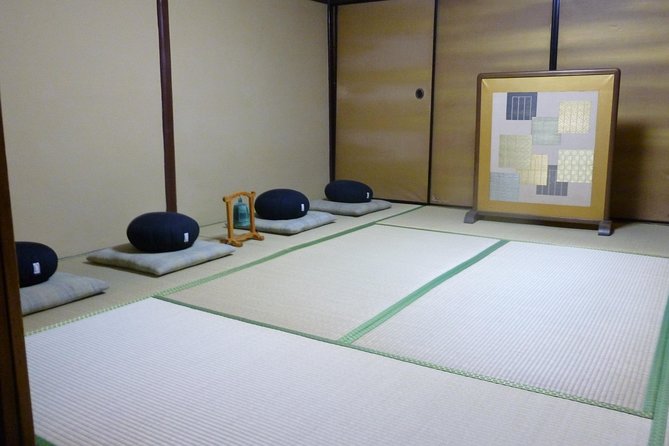
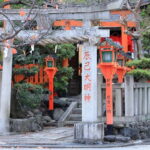
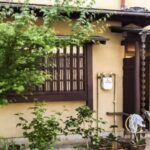
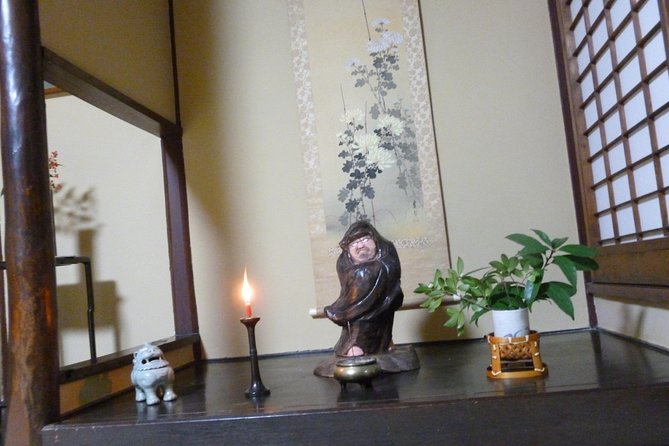
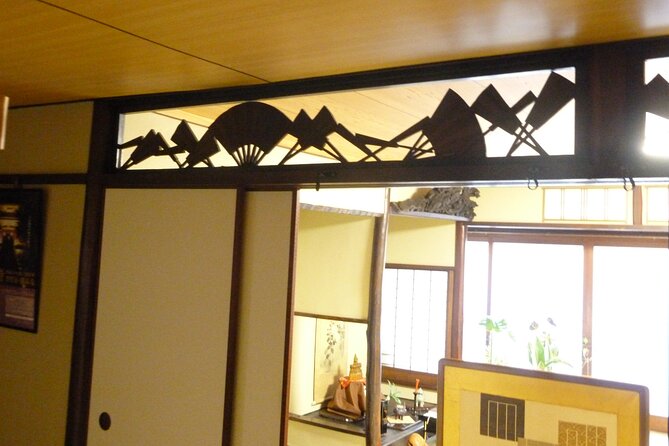
This workshop takes place in a traditional Kyoto townhouse setting, a machiya. That is more than a cute detail. Zen meditation is all about attention, stillness, and the feel of your body in one moment. A quiet home setting helps your mind stop scanning for what is next, which is exactly the kind of mental habit the practice is trying to change.
You start in the Kyoto Station area, and then you move to the meditation space near Nishi Honganji. The location is close enough that you are not spending most of your afternoon in transit. That matters because meditation has a way of being sensitive to how tired or impatient you feel. When the trip is short, you arrive ready to sit.
Also, Kyoto has a reputation for “spiritual” experiences that sometimes become sightseeing. Here, you are not just walking by temples. You are learning how a Zen priest frames breath and mind control, then trying it in a structured way. The machiya setting reinforces that this is practice, not performance.
You can also read our reviews of more tours and experiences in Kyoto.
Getting there from Hotel Granvia Kyoto, and how the timing works
Meet at Hotel Granvia Kyoto, at the JR Kyoto Station Central Entrance. Start time is 1:00 pm, and you return back to the meeting point when the experience ends.
You may need local transit to get from Kyoto Station to the meditation hall area. The tour notes public transportation as not included, with an extra cost of ¥240 per person. Translation for your planning brain: keep a little cash or card access handy, because you do not want to burn time negotiating tickets while you are supposed to be winding down.
The actual meditation space is described as about a five-minute bus or taxi ride from Kyoto Station. That is a sweet spot. It keeps the workshop convenient, but it also takes you out of the station chaos. If you arrive early, I suggest giving yourself a little buffer so you can settle your nerves before you step into the calmer environment.
One more timing reality: even though the tour is listed at about 4 hours 30 minutes, some past participants noted it ran longer than expected. So if you are planning dinner reservations right after, give yourself extra breathing room. Your brain deserves it.
Stop at Nishi Honganji, and what you learn from seeing it in context
Nishi Honganji is part of the experience. That means you are not only learning meditation in a vacuum. You are placing it in Kyoto’s religious landscape, with at least one major temple stop connected to the neighborhood you are in.
What makes this useful is framing. The teaching focuses on Zen meditation, including posture for mindfulness-style practice, and the meaning behind breath and attention training. Seeing a temple environment nearby helps your brain connect the lesson to a real place where these ideas have lived for generations.
You should not expect a “temple tour with 10 photo stops” here. This is guided, and it is centered on meditation instruction. Still, the Nishi Honganji connection gives your practice a stronger sense of place, especially if your Kyoto day so far has been mostly shrines, crowds, and gift shops.
The 90-minute Zen primer: posture, breath, and mind control
The heart of the workshop is a thorough 90-minute introduction covering both theory and practice. The priest-led lesson focuses on the fundamentals of Zen meditation, especially:
- proper posture for Zen mindfulness meditation
- breathing as an anchor for attention
- how to relate to your mind as it wanders
The most practical part is the posture coaching. Zen is often shown as a perfect lotus pose in photos. In real life, bodies vary. Here, you are taught that seated meditation can be done in lotus or half-lotus, but there is also the option to use a chair. If you have knee issues, tight hips, or you just do not want to spend the first 20 minutes fighting your legs, the chair option is one of the most valuable features of the whole experience.
This also helps beginners. When your body feels stable, you can focus on breath and attention rather than pain and fidgeting. And that is what the workshop is trying to get you to do, not just to sit quietly but to learn the mechanics of training your mind.
One small caution: because the session includes both theory and practice, it can be mentally “full.” A few people may experience it as information overload. If you tend to absorb better by doing than listening, keep reminding yourself that the guided sitting and walking moments are the payoff. Let the lesson build, then use practice time to sort what clicks.
Zazen and kinhin: how the session actually feels in motion
After the introduction, you get guided practice that mixes seated and walking meditation.
You will experience:
- two periods of seated meditation (zazen), each lasting 20 minutes
- a walking meditation period (kinhin) lasting 10 minutes between the seated rounds
This structure is smart. Many beginners think of meditation as purely sitting. But in Zen, walking meditation trains the same attention skills while your body moves. It is like learning both “letters” and “sentences,” not just reading about it.
During zazen, you focus on posture and breath. The teacher’s guidance matters here, because even small adjustments can change how your mind reacts. Upright but relaxed posture tends to make it easier to stay present, while collapsed posture tends to encourage sleepiness or mental drift.
During kinhin, you practice mind control while stepping. That is harder than it sounds. Your attention has to switch gears from stillness to movement, without losing the anchor of breath. This is one of the best ways to make meditation transferable to real life. You learn that the goal is not only to be calm while sitting in silence, but to keep attention steady in daily motion.
If you come in expecting a quiet “sit and think about nothing” session, you might be surprised by the focus on technique. But if you are curious and want to understand what to do, this guided approach is exactly what helps you leave with confidence.

Coffee, tea, and a Kyoto sweet: why the ending matters
The session includes drinks. Coffee and/or tea are provided during the visit, and it ends with green tea plus a traditional Kyoto sweet.
This ending has practical value. Meditation can stir up thoughts, emotions, or simple body sensations. A calm tea break gives your brain time to land. It also creates a natural moment for questions. The workshop notes that you can ask questions during the tea portion.
The Kyoto sweet is not just a snack. It anchors you in the cultural rhythm of the day, which helps if you worry that meditation experiences can feel too abstract. Eating a simple local treat after guided practice turns the experience into something tangible you can carry forward.
If you are the type who gets hungry mid-activity, plan around this. Since tea and a sweet are included, you are likely covered at the end of the session. But the workshop does not mention a full meal, so consider how your morning and lunch were timed so you are not running on low energy.
Brian Victoria’s teaching style, and what you should expect from the priest
The teacher for this workshop is Brian Victoria, described as an academic and cleric in participant feedback. That combination usually means two things:
- the lesson is grounded in spiritual and historical context, not only technique
- the teaching tries to connect meditation to how you live and think
You should also expect clarity around what the practice is for. The goal is not to make you a Zen expert by the end of a single afternoon. It is to help you feel confident if you want to continue meditating on your own, and to understand the purpose of Zen meditation.
One detail I like: the workshop emphasizes breath and mind control with posture as the foundation. That means you are not left with vague advice like just calm down and breathe. You get a structure, plus a direct experience in both sitting and walking.
The only caveat is the pace of information. If you prefer short explanations and lots of quiet, you might find the theory section heavy. The fix is simple: treat practice time as the main course, and let the theory be sauce.
Price check: is $108 good value for a private Zen workshop?
At $108 for about 4 hours 30 minutes, this is not the cheapest thing you can do in Kyoto. But it is also not meant to be.
Here is why the value can make sense:
- it is a private experience, so you are paying for one-on-one group teaching rather than sharing the moment with strangers
- you get a long 90-minute guided introduction plus structured practice time
- coffee or tea and the end-of-session green tea and Kyoto sweet are included
- the teaching is in a machiya setting near Nishi Honganji, not just a random room somewhere
If you compare it to typical temple entrances, guided city walks, or standard museum tours, the pricing feels different because you are paying for instruction plus guided practice. This is not entertainment. It is training.
Also, private can be a real money-saver in disguise. If you have questions and you would otherwise book multiple tours or try to piece together information from guidebooks, one focused session can be more efficient than spreading your time across several stops.
The main value risk is your learning style. If you hate explanations and prefer silence only, the cost might feel less justified. If you like structured guidance, even with a bit of “mind-work” from the theory side, it is likely a good deal.
Who should book this Kyoto Zen meditation session
This workshop is best for you if:
- you are curious about Zen meditation basics and want more than a quick overview
- you like asking questions and getting direct coaching on posture
- you want a private group experience, not a big group class
- you are a beginner and want confidence to meditate on your own afterward
It is also a strong fit for people who might feel intimidated by traditional sitting. The chair option matters. Even if you choose chair meditation, you still get to learn the posture logic and breath focus that Zen practice revolves around.
If your Kyoto travel style is fast and always-on, this may slow you down in a good way. If your travel style is calm and reflective already, it will likely feel like a natural highlight rather than a detour.
Practical tips so you get the most from the workshop
A few practical notes that can make your afternoon smoother:
- Plan to arrive a few minutes early at Hotel Granvia Kyoto. Settling matters for meditation.
- Wear comfortable clothing you can sit in for the guided zazen periods.
- If you have knee or hip limits, think ahead about using the chair option, so you do not have to decide mid-session.
- Keep your schedule flexible. Since it may run longer than expected, avoid stacking another demanding activity right after.
- After practice, give yourself time to absorb the tea and questions. Do not rush off.
If you are new to Zen, bring a beginner mindset. You do not need spiritual background. What you need is attention, patience, and a willingness to try what the teacher guides you to do.
Should you book? My honest take
I’d book this if you want a real introduction to Zen meditation, not just temple photos. The private format plus the focus on posture, breath, and mind control creates a structured learning experience. Add in the guided mix of zazen and kinhin, and the included coffee or tea plus green tea and a Kyoto sweet at the end, and you get something that feels both practical and meaningful.
Skip it if you only want silence with zero instruction. This workshop includes theory, and it can feel like a lot at first. But if you are curious and open to technique, it is a thoughtful use of time in Kyoto, especially because the setting is a real machiya home near Nishi Honganji.
If you are trying to build one memorable Kyoto day that is quiet, human, and grounded, this is a strong pick.
FAQ
What is the duration of Zen Meditation for Life in Kyoto?
The experience is approximately 4 hours 30 minutes.
Is this a private experience or a group tour?
It is a private tour/activity, so only your group participates.
Where do I meet, and when does it start?
You meet at Hotel Granvia Kyoto, JR Kyoto Station Central Entrance. The start time is 1:00 pm.
Where does the tour take place?
The meditation hall is near Nishi Honganji and is about a five-minute bus or taxi ride from Kyoto Station, in a traditional machiya house.
What meditations will I do during the workshop?
You will practice seated meditation (zazen) twice, with two periods of 20 minutes, and walking meditation (kinhin) once for 10 minutes between the seated periods.
Can I meditate sitting traditionally, or is a chair available?
You can meditate in lotus or half-lotus postures, or alternatively use a chair if that is more comfortable for you.
What is included with the price?
Coffee and/or tea are provided during the visit, and the workshop ends with green tea and a traditional Kyoto sweet.
Can I cancel and get a full refund?
Yes. You can cancel up to 24 hours in advance for a full refund. If you cancel less than 24 hours before the start time, the amount paid will not be refunded.
More Tour Reviews in Kyoto
Not for you? Here's more nearby things to do in Kyoto we have reviewed

Kyoto Gardens & Zen Retreats, compared.
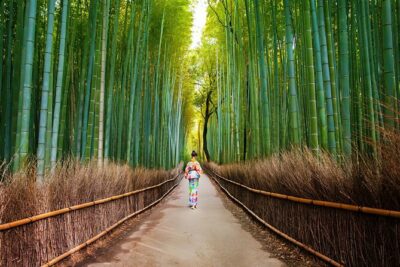 ★ 5.0Kyoto Arashiyama Walking Tour: Bamboo, Monkeys, Gardens & SecretsFrom $651,216 reviews
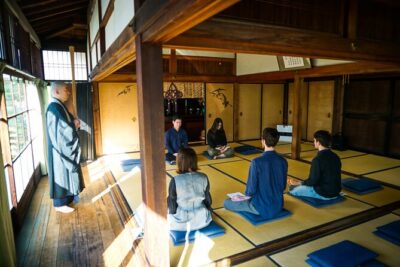 ★ 5.0Kyoto Zen Meditation & Garden Tour at a Zen Temple with LunchFrom $110441 reviews
 ★ 5.0Zen Experience in a Hidden TempleFrom $109437 reviews
 ★ 5.0Kyoto Arashiyama Bamboo forest & Garden Half-Day Walking TourFrom $129413 reviews
 ★ 4.8Tea Ceremony Meditation – Make Matcha with Tea MasterFrom $45406 reviews
 ★ 5.0Zen Meditation at a Private Temple with a MonkFrom $91202 reviews
 ★ 5.0Zen Garden, Zen Mind (Private)From $380126 reviews
 ★ 5.04.5-Hour Kyoto Bike Tour with Lunch and UNESCO Zen TemplesFrom $99122 reviews
Browse the lists this tour appears in