
Reviewed · KYOTO COOKING CLASSES
Home style Ramen and Homemade Gyoza in Kyoto
Ramen tastes better when you cook it. This Kyoto class focuses on home-style ramen soup and homemade gyoza made from scratch, plus cucumber pickles, all in a small group inside Nariko’s Kitchen. You leave with the confidence to recreate the flavors at home.
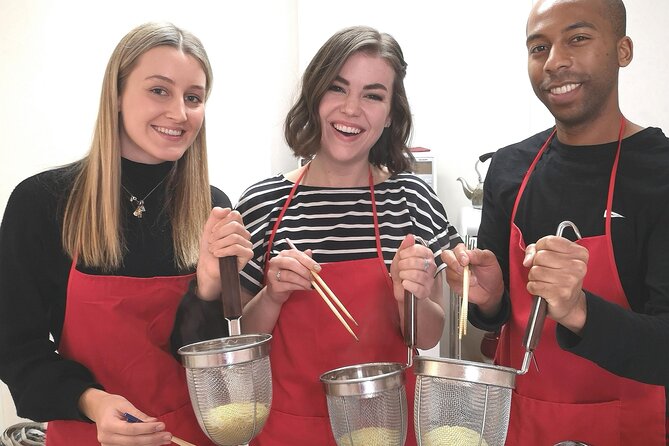
I love the hands-on parts you cannot fake, like making the gyoza wrappers and learning how the dumplings should come together before they hit the pan. I also like that the meal is part of the lesson, so you taste what you made rather than just watching.
One clear consideration: this is not a vegetarian class. The ramen soup uses dried fish, and it also does not include ramen noodles, so if either of those matters to you, you will want to plan accordingly.
Quick hits you’ll care about
- Gyoza skins from scratch, not store-bought wrappers
- Ramen broth focus, using Nariko’s family-style recipe for soup (no ramen noodles)
- Small group, up to 8 people, so you can actually work with your hands
- Knife work is part of the process, with a minimum age of 10
- You also make cucumber pickles, so the meal feels balanced
- You eat what you cook, right after the cooking finishes
A Kyoto home-kitchen lesson near Matsugasaki
This class starts at 5-6 Matsugasaki Rokunotsubochō, Sakyo Ward, Kyoto (606-0915), with a 10:00 am start. The activity ends back at the meeting point, which is handy if you want to stay in the neighborhood afterward. It is also close to public transportation, so you are not forced into a long taxi shuffle.
What makes the location more than just a starting pin is the setting. This is taught inside a real home kitchen, not a showroom or a demo room. That matters for learning because you get a calmer flow, proper tools, and a more normal kitchen rhythm.
The maximum group size is 8 travelers, which is large enough to meet people but small enough for personal check-ins. Expect a practical session, with plenty of hands-on prep and clear instruction.
You can also read our reviews of more tours and experiences in Kyoto.

What you actually make: ramen broth, gyoza wrappers, cucumber pickles
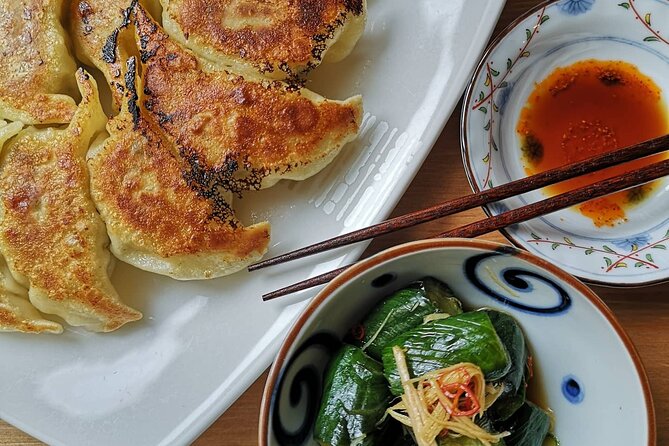
You will build a full Japanese meal in about 3 hours 30 minutes. The menu is simple on paper and satisfying in practice: homemade ramen soup, homemade gyoza (with homemade skins), and cucumber pickles.
Ramen soup without noodles
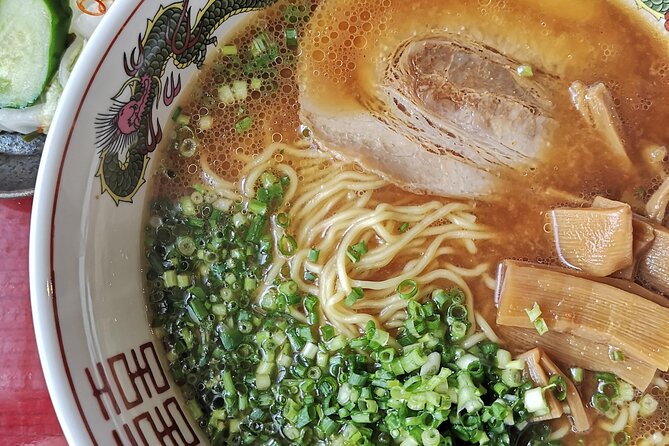
You make ramen soup using a family-style approach. The key point for planning is that you do not make ramen noodles in this class. So your takeaway is the broth and the ramen-style flavor system, not how to roll fresh wheat noodles.
Also, this class uses dried fish for the ramen soup, which is common in many Japanese ramen broths. If you are avoiding fish for religious or dietary reasons, you should treat this class as a no-go. If you are fine with fish-based soup, you will probably be surprised by how approachable the process feels once you are in it.
Gyoza dumplings, including wrapper-making
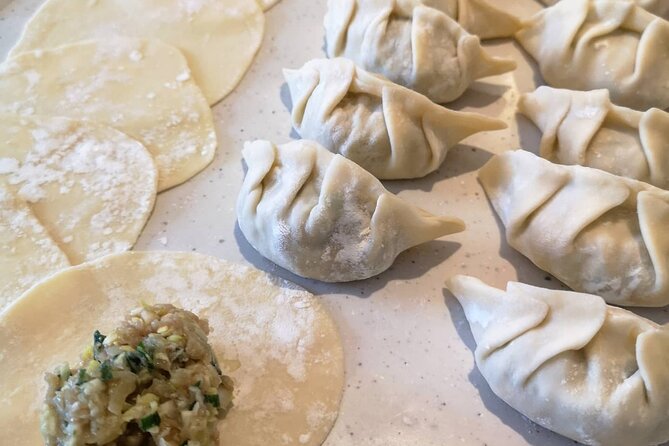
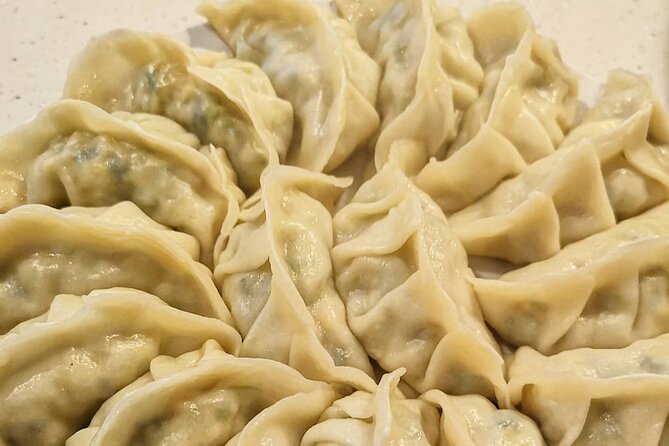
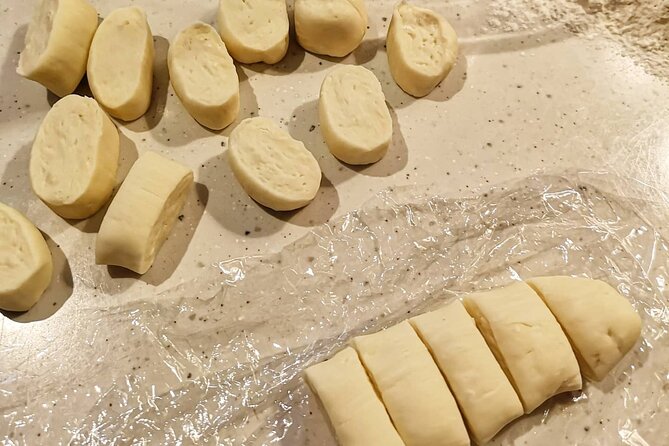
This is the star skill set. You make gyoza wrappers from scratch, then shape and cook gyoza. The wrappers matter because store-bought skins can hide technique. When you make the dough and roll or shape the skin yourself, you learn what texture you are aiming for and how thickness changes the result.
The gyoza experience also teaches you the folding and forming steps that affect whether dumplings seal well and fry up nicely. It is not just busywork. It is the difference between dumplings that look like food and dumplings that actually taste right.
Cucumber pickles for contrast
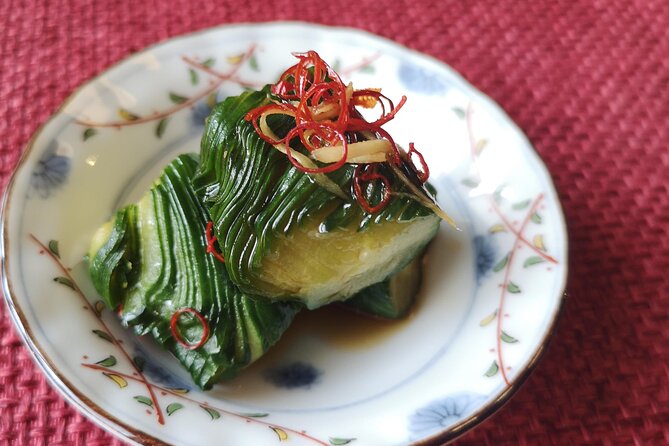
You also make cucumber pickles. This is a smart addition because it gives you sharp, tangy balance against rich soup and fried dumplings. It also means the class covers more than one flavor style, so you get a broader feel for how Japanese meals build contrast.

The flow of the class, from prep to plated tasting
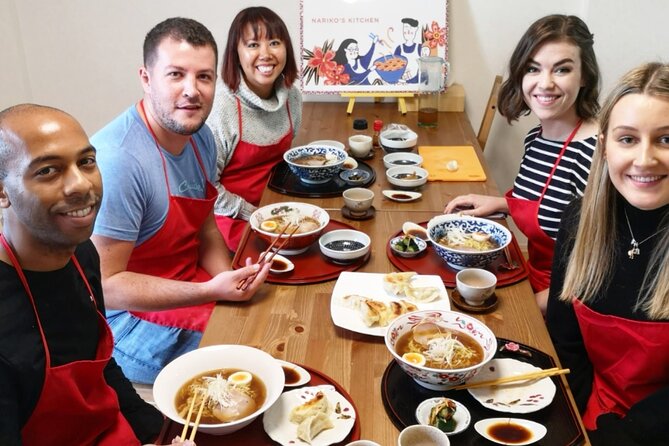
The structure is straightforward: hands-on prep, cooking in stages, and then sitting down to eat. You will work through broth prep, wrapper making, gyoza assembly, and the pickle component, then finish with a tasting of what you made.
You are not expected to bring prior cooking skills. The pace is designed for real learners, and the instruction is typically delivered step by step so you know what matters before you move on. That is the best kind of cooking class energy: focused and practical, not frantic.
Because this is a home kitchen, you will likely notice how the tools and workspace are set up to match real cooking. That sounds small, but it helps you translate the technique back home. The goal is not just a one-time meal. The goal is that you can cook again later with the same logic.
Why this class is valuable for taking food skills home
A lot of cooking classes teach a method. This one also tries to give you the reason behind the method.
You learn the “why,” not only the “do this”
When you build ramen soup from a recipe that leans on common Japanese ingredients, you start understanding the flavor backbone. When you make gyoza wrappers, you see how dough texture and thickness change the outcome. When you pickle cucumbers, you learn how small changes create big shifts in taste.
That is why people often feel confident after the class, because they can repeat the process in a normal kitchen. You are not just buying a dish. You are building a skill.
Knife work is part of the deal
There is a minimum age of 10, and kids must be able to use a knife. This is not a glass-of-iced-tea kind of class. If you have a younger kid, or someone who is uncomfortable with chopping, you should consider a different activity.
If you are an adult or older teen who can handle basic cutting, you will find the knife portion fits the overall lesson well. You are doing real cooking tasks, not only stirring.
Group size and the instructor vibe with Nariko
The instructor is Nariko, and the teaching style is patient, clear, and personable. You will get real attention in a small group setting, which helps if you get stuck at any step like dough texture or forming dumplings.
A frequent theme in how this class runs is inclusiveness. Nariko works to keep everyone moving through the process without leaving anyone behind. In a group of up to 8, that is easier to do, and it shows in how the class feels: calm, organized, and focused on getting the meal finished well.
If you care about more than cooking, this is also the kind of setting where conversation naturally happens. Nariko’s approach tends to include cultural context, which can make the recipes feel less like an import and more like a local tradition you can understand.
Some people also note Nariko can help with practical dining planning while you are in Kyoto. That is not something you should expect every time, but it is a nice bonus if you ask.
Price and value: what $118.92 gets you in Kyoto time
At $118.92 per person for about 3.5 hours, this is not the cheapest activity in Kyoto. But it also is not a short demo where you do nothing.
You are paying for:
- a small-group, hands-on cooking experience
- the use of a real home kitchen setup
- instruction while making multiple components from scratch (including gyoza skins)
- sitting down to eat the meal you created
When you compare it to other paid activities of similar length, the value comes from the output. You leave with practical skills, a full meal experience, and recipes you can use later. Several past participants highlight that the recipes are shared after the class, which turns the session into an at-home cooking option rather than a one-day memory.
If you like cooking, the price starts to make sense fast. If you do not like cooking at all, you might feel the cost more than the payoff. This class works best when you want to do the work and enjoy the results.
Logistics that make mornings easier
This session is scheduled for 10:00 am and runs about 3 hours 30 minutes. That timing is useful in Kyoto because it gives you the rest of the day to plan sightseeing, shopping, or a second meal.
You will receive confirmation within 48 hours of booking, as long as space is available. The ticket is mobile, so you can keep things simple on your phone.
Only participants are allowed due to limited space, and there are no spectators. So if you are traveling with someone who just wants to watch, plan a separate activity for them.
Also, since this class involves knives, plan for the youngest member based on the age 10 rule. If you have any dietary restrictions, message Nariko before booking. Accommodation may not be possible, and this class cannot be vegetarian.
Who should book this class, and who might skip it
You should book if you want:
- a hands-on Kyoto cooking experience in a home kitchen setting
- the ability to recreate gyoza and ramen-style soup at home
- a calm morning plan that ends with you eating what you made
You might skip or reconsider if:
- you need a vegetarian menu, since dried fish is used
- you were hoping to learn classic ramen noodle making, since this class does not include noodles
- you are bringing a child under the minimum age or someone who cannot use a knife
If you are traveling as a couple, this often feels like a great way to slow down. If you travel with friends, the small group size makes it easy to share tasks without feeling lost in a crowd.
Should you book Nariko’s home-style ramen and gyoza class?
My take: book this if you want skills, not just photos. The combination of broth-focused ramen, gyoza wrapper-making, and cucumber pickles gives you a full meal with real technique built into it. Add the small-group size and the home kitchen setting, and it becomes more memorable than typical assembly-line cooking classes.
Skip it if dried fish is a hard no for your diet, or if you specifically want to make ramen noodles. In those cases, you would get a lot less from the experience, and you may end up feeling like you paid for the wrong learning target.
If you fit the basic requirements, this is one of the better bets in Kyoto for a cooking class that actually changes what you can cook later.
FAQ
What dishes do I make in this Kyoto class?
You make ramen soup, homemade gyoza with homemade skins, and cucumber pickles. You also eat what you cook.
Do you make ramen noodles in the class?
No. This class makes ramen soup, but it does not include ramen noodle making.
Is this class vegetarian-friendly?
No. The ramen soup uses dried fish, and the class cannot be made vegetarian.
How long is the experience?
The duration is about 3 hours 30 minutes.
What is the minimum age for participants?
Participants must be older than 10. The class requires knife use, so children should be at least 10 and able to use a knife.
What group size should I expect?
The class has a maximum of 8 travelers.
Where do I meet, and what time does it start?
You start at 5-6 Matsugasaki Rokunotsubochō, Sakyo Ward, Kyoto, 606-0915, Japan. The start time is 10:00 am.
If I cancel, do I get a refund?
No. This experience is non-refundable and cannot be changed for any reason.
More Tour Reviews in Kyoto
Not for you? Here's more nearby things to do in Kyoto we have reviewed







Kyoto Cooking Classes, compared.
 ★ 5.0Ramen Cooking Class at Ramen Factory in KyotoFrom $1311,937 reviews
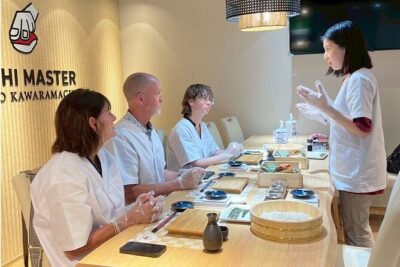 ★ 5.0Sushi Making in Kyoto! Same-day bookings welcome!From $53713 reviews
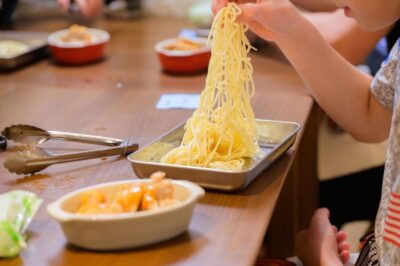 ★ 4.9Ramen Cooking Class at a Ramen Factory with SouvenirFrom $127532 reviews
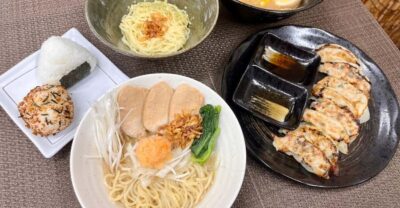 ★ 5.0Ramen, Gyoza, and Onigiri Cooking ClassFrom $90445 reviews
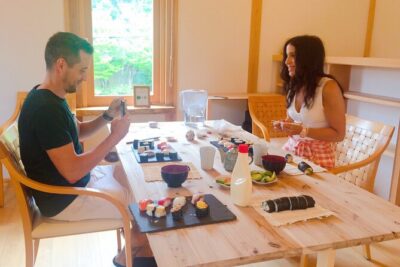 ★ 5.0The Original Small-Group Sushi Making Class in KyotoFrom $69436 reviews
 ★ 5.0Japanese Washoku Bento Small Group Cooking ClassFrom $58380 reviews
 ★ 5.0Kyoto Ramen and Gyoza Cooking Class with Professional ChefsFrom $86282 reviews
 ★ 4.9Afternoon Japanese Izakaya Cooking ClassFrom $67241 reviews
Browse the lists this tour appears in