
Reviewed · KYOTO COOKING CLASSES
Kyoto: Ramen, Gyoza, and Onigiri Cooking Class
Kyoto cooking sounds fun, but this one teaches the parts you can’t buy ready-made. You’ll work on ramen broth, perfect gyoza wrapping, and classic onigiri shaping in a hands-on, English-friendly class in central Kyoto. The goal is simple, you leave with dishes you can actually repeat at home, not just a full plate.
I love that the broth lesson is the real focus. You’ll learn to build miso and shoyu style flavor using ingredients you can find back home, then you get clear steps for how to balance toppings so they do not drown out the soup. I also like the class setup, limited to a small group (up to 8), with instructors like Nori and Kairi keeping the pace moving and the directions easy to follow.
One drawback to plan around: this is not a flexible dietary class. There are only two menu choices, regular and vegetarian with pork swapped for tofu, and it does not accommodate vegan, pescatarian, gluten-free, or other special diets.
Key highlights you’ll care about
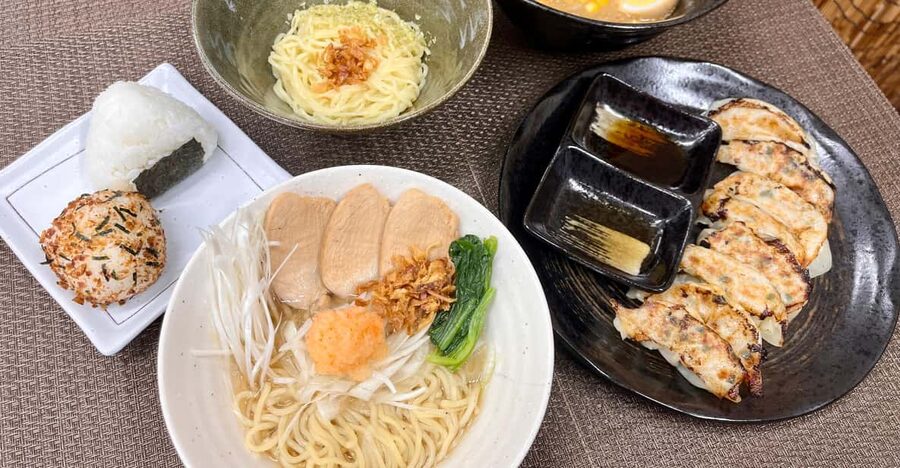
- Broth-first ramen training: you learn soup-making, not noodles.
- Two ramen styles in one session: miso and shoyu flavors plus topping balance rules.
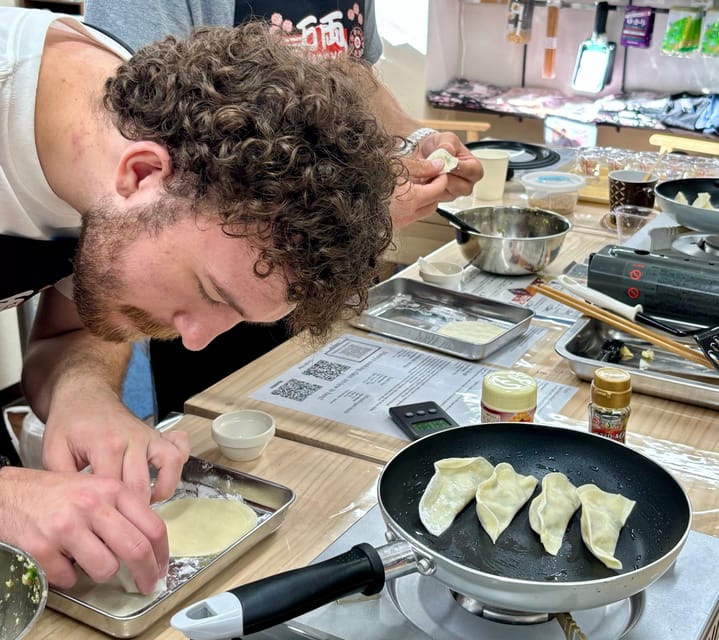
- Gyoza mastery, start to seal: filling, portioning, and the wrap technique.
- Onigiri shaping practice: learn how to form neat rice balls for a snack or lunch.
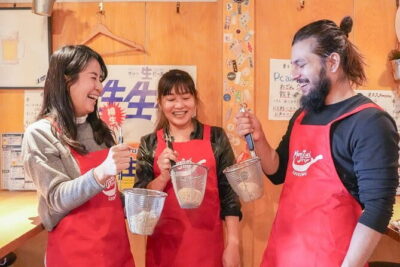
- Small-group attention: up to 8 people, multiple cooking stations, quick help.
- Food and recipes included: you eat what you cook, with printed recipes for ramen and gyoza, plus coffee and tea.
Ramen broth is the secret, and you learn it here
Most ramen experiences stop at toppings, or they serve you a bowl and call it authentic. This class starts earlier, with the part that makes ramen taste like ramen: the broth.
You are not making noodles here. Instead, you learn how to assemble a rich base from ingredients that are straightforward, things like soy sauce, miso, garlic, ginger, mirin, sesame oil, and stocks or seasonings such as chicken stock powder and fish powder. You also work with pork elements in the regular menu, and for the vegetarian menu, the class replaces pork with tofu while keeping the rest of the ingredient approach the same.
Why this matters for your life after Kyoto: noodles are easy to find. Flavor is not. When you learn broth construction, you can adapt your own at-home ramen using what you like, and you can fix what tastes flat. The class teaches the logic, not just the steps.
You can also read our reviews of more cooking classes in Kyoto
Inside the 90 minutes, what you actually do
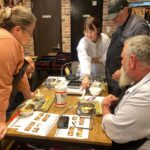
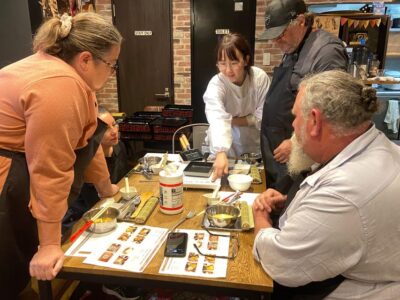
This is a compact, well-run session. Ninety minutes is not long, so the instructors keep everything moving and organized by stations. You should expect a bit of hands-on pressure. You are cooking, not watching.
Step 1: Get oriented in the classroom
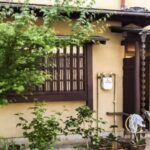
You meet in the classroom at B1 of Life Building. It is not on the main street. It is one street down, which is exactly the kind of detail that can cost you time if you do not check ahead.
If you are coming by cab, ask the driver to drop you at Family Mart at Sanjo Keihan. From there it is about a two minute walk. If you want the easiest search term, look up Manryo cooking class on Google Maps.
Wear comfortable clothes and shoes. Cooking space can get warm, and you will stand and work while you wrap and shape.
Step 2: Build ramen broth the Kyoto way, miso and shoyu
The ramen portion is broth-focused, and the class teaches two flavor directions:
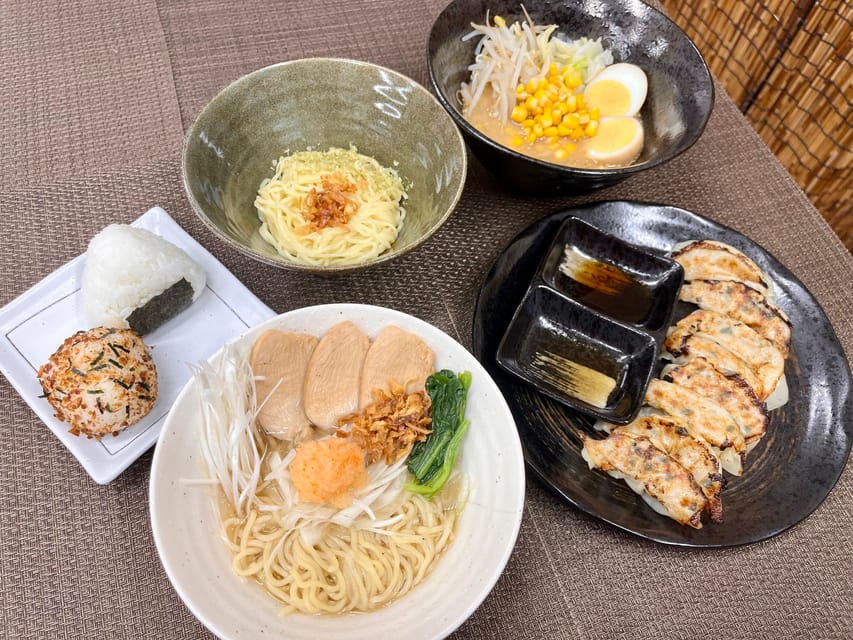
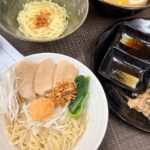
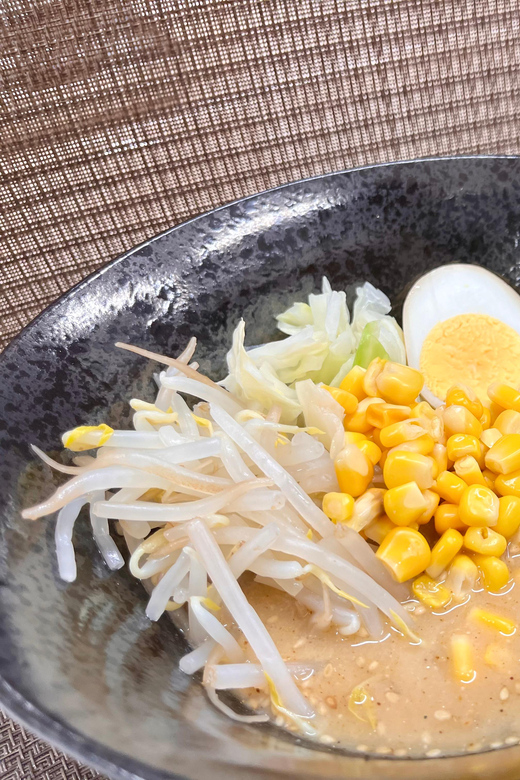
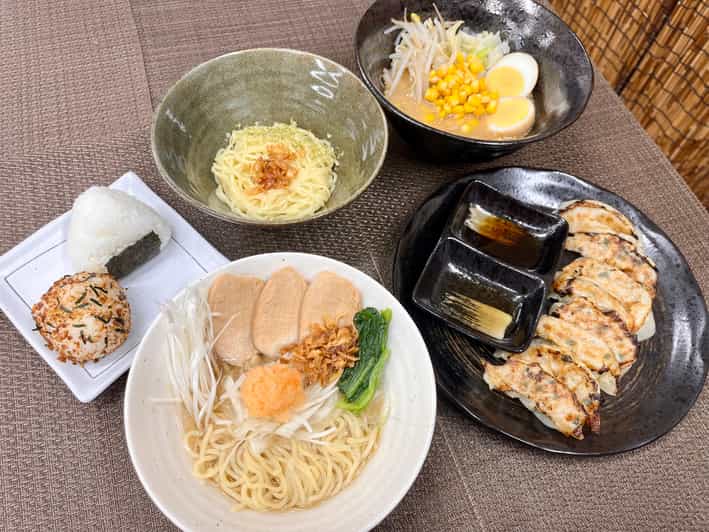
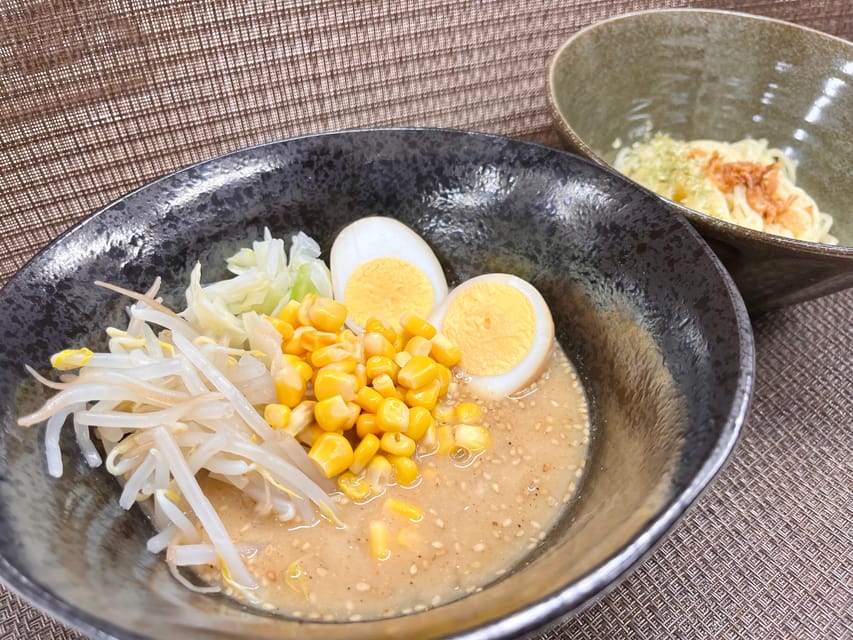
- Miso ramen, paired with toppings like boiled egg, bean sprouts, green onions, and sweet corn.
- Shoyu ramen, paired with chicken, bamboo shoots, and green vegetables.
Here is what I would watch for if you are trying to get the results at home: the class emphasizes that toppings should not have heavy, competing flavor. The broth already carries the main personality. So you learn to think in balance, rich soup first, toppings second.
You also learn how to handle ingredients that sound simple but matter a lot in the final taste, things like garlic and ginger for aroma, and miso or soy sauce for the body. Even the way the class uses fats and seasonings, such as lard and butter in the ingredient list, connects to the final mouthfeel. In other words, it is not just salty soup. It is texture plus depth.
Step 3: Make gyoza filling, then wrap with confidence
Gyoza is the other headline skill. This is where you will feel the learning curve, because wrapping is a real technique.
The class trains you from the foundation:
- Get the filling flavor balanced, with meat, vegetables, and seasonings.
- Portion it so each gyoza is even.
- Wrap it and seal it properly so it looks right and cooks well.
Multiple people in the class feedback talk about how much they improved during the session. That is not magic. It is because the instructors teach the method and watch your hands while you practice.
If you want a practical goal, aim to leave knowing how much filling to use and how to pinch the edges so the shape holds. That is what lets you recreate gyoza for a weeknight meal.
More Kyoto temple visits, food tours, tea experiences, and day trips to compare
Step 4: Shape onigiri so they look like you mean it
Onigiri sounds like a simple snack, but the technique is the point. You learn how to make perfectly shaped rice balls and how to treat them like a real Japanese lunch alternative to sandwiches.
Even if you already eat onigiri, this part is useful because it changes how you handle rice texture and forming. Neat onigiri is less about perfection and more about getting consistent shape so it eats well and stays tidy to pack.
Step 5: Eat what you made, then relax
By the end, you eat the results. Multiple people note that you leave full because you make a lot within 90 minutes. Come hungry, because this class is not a tiny appetizer demo.
You also get free coffee and tea. And while it is not listed as part of the included items, there is an option to purchase beer after the meal, if you feel like toasting your handiwork.
Who this Kyoto ramen gyoza onigiri class fits best
This is a hands-on cooking class, so “fits best” matters.
Great choice if you want repeatable home cooking
If your goal is to make Japanese food at home without guessing, this class is a strong pick. You focus on broth structure, gyoza technique, and onigiri shaping, so you can rebuild the dishes later with the same flavor logic.
The fact that you get printed recipes for ramen and gyoza helps a lot. You are not relying on memory after you fly home.
Choose it if you like small-group attention
The class is limited to 8 participants, and the setup uses multiple stations so you are not stuck waiting. Instructors like Nori and Kairi, plus supporting staff, are part of what people describe as clear, patient coaching. That matters when you are wrapping gyoza and shaping rice, where tiny corrections make a big difference.
Skip it if your needs do not match the menu rules
This class does not accommodate vegan, pescatarian, gluten-free, or other special diets. The only dietary alternative is the vegetarian menu, where pork is replaced with tofu and other ingredients remain the same.
Also, the class is not suitable for children under 12 and you must be 13 and able to cook by yourself without staff assistance. So it is not ideal if you need constant hand-holding or if you are recovering from recent surgery.
Price value: $90 is fair when you factor in what’s included
Ninety dollars per person can sound steep until you look at what you are actually paying for.
You get:
- English-speaking instruction
- All ingredients and equipment
- The food you make
- Printed recipes for ramen and gyoza
- Free coffee and tea
- A small-group format (up to 8), which lowers the “waiting around” problem
So you are paying for coaching plus real kitchen time plus a full meal you cooked. If you tried to replicate this on your own in Kyoto, you would still spend money on ingredients, and you would not get the technique feedback on gyoza wrapping and onigiri shaping.
If you enjoy cooking already, you are buying a shortcut to correct method. If you are a beginner, you are buying structure. Either way, $90 feels more like “class value” than “restaurant price,” because you leave with skills.
The location detail that can make or break your start time
Cooking classes punish lateness. The meeting spot is in the B1 area of Life Building, and it is not on a major street.
Do yourself a favor and check Google Maps the day you arrive. If you are unsure, plan to be early. People specifically note that showing up about 10 minutes early helps.
Once you find the place, the experience tends to flow smoothly because stations are set up and ingredients are ready for you to cook.
What you learn that actually transfers to home
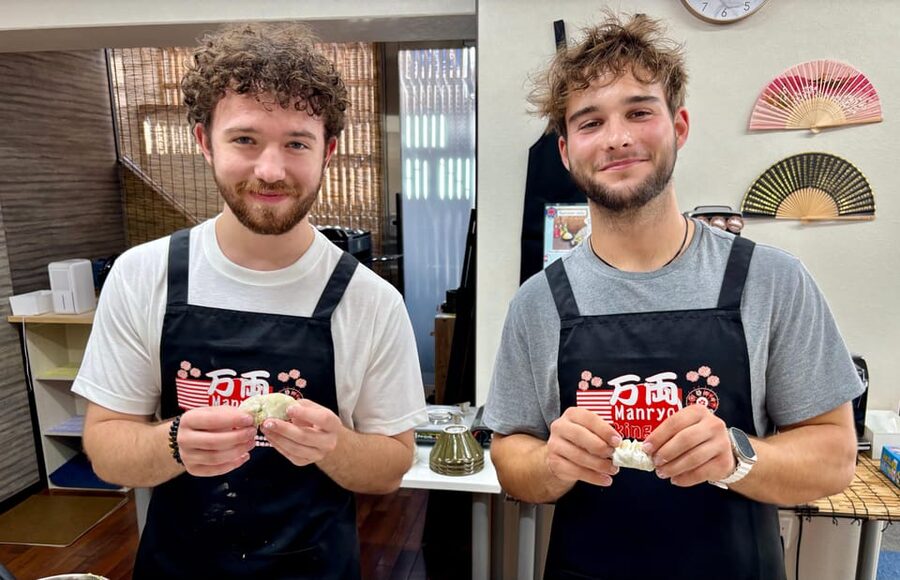
The most practical part is that you are not just making food, you are learning decisions.
Broth decision-making
You learn to treat toppings as supporting cast. If you put too much flavor into the toppings, the broth disappears. That is a real ramen lesson you can use at home, whether you are doing miso ramen, shoyu ramen, or improvising your own style.
Gyoza technique you can repeat
You learn how to wrap and seal. When you can do that consistently, gyoza becomes a make-at-home option, not a takeout craving.
Onigiri consistency
You learn the shaping approach so your rice balls look right and pack well. It is the kind of skill that turns onigiri from occasional snack to regular lunch option.
Quick practical tips before you go
- Plan to arrive early so you do not feel rushed when you start cooking.
- Wear comfy shoes because you will stand and work.
- Come hungry because you eat what you make.
- If you pick vegetarian menu, remember it is tofu swap only for pork, and the class does not adjust for other diets.
- If you are traveling with friends or family, the small group format can feel more intimate, so talk to the instructor and ask questions while you are at your station.
Should you book this Kyoto ramen, gyoza, and onigiri class?
Book it if you want hands-on Japanese cooking with real technique: broth construction, gyoza wrapping, and onigiri shaping. You get a small-group setup, English instruction, and you eat a full meal you made yourself. It is especially worth it if you like the idea of bringing back a home cooking skill, not just a souvenir.
Skip it if dietary needs go beyond the vegetarian tofu swap, or if you need a class that’s friendly for younger kids, wheelchair access, or post-surgery recovery. Also skip it if you expect a casual, watch-only experience. This one is for people willing to cook.
If you match those fit points, this is one of the most practical ways to spend 90 minutes in Kyoto, because you walk out with food, confidence, and recipes you can use the same week you get home.
FAQ
What dishes do I make during the class?
You make homemade style ramen broth (focusing on broth rather than noodles), gyoza, and onigiri.
Do you make ramen noodles in this class?
No. The class does not make noodles. You learn how to prepare the broth so you can recreate ramen at home.
Is there a vegetarian option?
Yes. The vegetarian menu replaces pork with tofu. Other ingredients remain the same.
Can the class accommodate vegan or gluten-free diets?
No. Vegan, pescatarian, gluten-free, and other special diets are not accommodated.
How long is the experience?
The class lasts 90 minutes.
How big is the group?
It is a small group limited to 8 participants.
Where is the meeting point in Kyoto?
The classroom is on B1 of Life Building. It is not on the main street, but one street down. By cab, get off in front of Family Mart at Sanjo Keihan, then walk about two minutes.
What should I bring and wear?
Wear comfortable clothes and comfortable shoes. You do not need to bring ingredients or equipment.
More Workshops & Classes in Kyoto

More Cooking Classes in Kyoto
More Tour Reviews in Kyoto
Not for you? Here's more nearby things to do in Kyoto we have reviewed



Kyoto Cooking Classes, compared.
 ★ 5.0Ramen Cooking Class at Ramen Factory in KyotoFrom $1311,937 reviews
 ★ 5.0Sushi Making in Kyoto! Same-day bookings welcome!From $53713 reviews
 ★ 4.9Ramen Cooking Class at a Ramen Factory with SouvenirFrom $127532 reviews
 ★ 5.0The Original Small-Group Sushi Making Class in KyotoFrom $69436 reviews
 ★ 5.0Japanese Washoku Bento Small Group Cooking ClassFrom $58380 reviews
 ★ 5.0Kyoto Ramen and Gyoza Cooking Class with Professional ChefsFrom $86282 reviews
 ★ 4.9Afternoon Japanese Izakaya Cooking ClassFrom $67241 reviews
 ★ 5.0Izakaya Style Cooking ClassFrom $71219 reviews
Browse the lists this tour appears in